
You are here
Europäische Union
Russische Diesel-Tanker brechen Fahrt in die USA ab
Trumps Diesel-Deal mit Putin wackelt: Von vier russischen Tankern fährt laut «Spiegel» nur noch einer Richtung Nordamerika. Ob das Abkommen hält, ist offen. Gleichzeitig redet Donald Trump von einem «grossen Abkommen» im Hinblick auf die Ukraine.
Categories: Europäische Union, Swiss News
Die Schweizerinnen gehen gegen die USA klar unter
Vereinzelt lässt die Nati ihre Klasse aufblitzen. Zum Schluss setzen sich die US-Frauen zum WM-Auftakt gegen die Schweiz aber klar durch.
Categories: Europäische Union, Swiss News
Paiement par TPE : Algérie Poste rappelle les réflexes à adopter pour sécuriser chaque transaction
Payer en quelques secondes, sans manipuler le moindre billet : le terminal de paiement électronique (TPE) s’est installé dans les commerces algériens comme un geste […]
L’article Paiement par TPE : Algérie Poste rappelle les réflexes à adopter pour sécuriser chaque transaction est apparu en premier sur .
Categories: Afrique, Europäische Union
Pourquoi un essai vaccinal financé par les États-Unis sur des nourrissons a-t-il été annulé en Guinée-Bissau ?
L'essai a été condamné comme étant « contraire à l'éthique » et « néocolonial » car la moitié des bébés ne seraient pas vaccinés.
Categories: Afrique, Europäische Union
Protokoll - Dienstag, 1. September 2026 - PE792.096v01-00 - Ausschuss für auswärtige Angelegenheiten
Quelle : © Europäische Union, 2026 - EP
Categories: Europäische Union, European Union
"Un vide impossible à combler" : hommages rendus aux obsèques de De Miguel
La famille de Jesus de Miguel affirme que "l'empreinte qu'il a laissée sur tant de personnes" est quelque chose dont ils se souviendront toujours, alors que les funérailles du footballeur ont lieu en Espagne.
Categories: Afrique, Europäische Union
Discharge 2025: General budget of the EU - Commission - PE797.374v01-00
Discharge 2025: General budget of the EU - Commission
Ausschuss für auswärtige Angelegenheiten
Hilde Vautmans
Quelle : © Europäische Union, 2026 - EP
Ausschuss für auswärtige Angelegenheiten
Hilde Vautmans
Quelle : © Europäische Union, 2026 - EP
Categories: Europäische Union, European Union
ÄNDERUNGSANTRÄGE 1 - 300 - Entwurf eines Berichts Menschenrechte und Demokratie in der Welt und die Politik der Europäischen Union in diesem Bereich – Jahresbericht 2026 - PE797.432v01-00
ÄNDERUNGSANTRÄGE 1 - 300 - Entwurf eines Berichts Menschenrechte und Demokratie in der Welt und die Politik der Europäischen Union in diesem Bereich – Jahresbericht 2026
Ausschuss für auswärtige Angelegenheiten
Isabel Wiseler-Lima
Quelle : © Europäische Union, 2026 - EP
Ausschuss für auswärtige Angelegenheiten
Isabel Wiseler-Lima
Quelle : © Europäische Union, 2026 - EP
Categories: Europäische Union, European Union
ÄNDERUNGSANTRÄGE 601 - 838 - Entwurf eines Berichts Menschenrechte und Demokratie in der Welt und die Politik der Europäischen Union in diesem Bereich – Jahresbericht 2026 - PE797.439v01-00
ÄNDERUNGSANTRÄGE 601 - 838 - Entwurf eines Berichts Menschenrechte und Demokratie in der Welt und die Politik der Europäischen Union in diesem Bereich – Jahresbericht 2026
Ausschuss für auswärtige Angelegenheiten
Isabel Wiseler-Lima
Quelle : © Europäische Union, 2026 - EP
Ausschuss für auswärtige Angelegenheiten
Isabel Wiseler-Lima
Quelle : © Europäische Union, 2026 - EP
Categories: Europäische Union, European Union
5 joueurs dont la vie a été écourtée par le football
Le décès récent de l’attaquant de Tenerife, Jesus de Miguel, a fait resurgir le souvenir d’autres événements tragiques survenus sur des terrains de football à travers le monde.
Categories: Afrique, Europäische Union
Qui sont les grands vainqueurs de la soirée triomphale des démocrates lors des élections de mi-mandat aux États-Unis ?
Nous vous présentons quelques-unes des figures de proue de la « vague bleue » démocrate qui a remporté mardi une victoire écrasante, portant un coup dur aux politiques de Trump.
Categories: Afrique, Europäische Union
I Also Accuse
This is the second article in a four-part series. The remaining two will follow.
I wish to warn distinguished readers that a distorted and unauthorized version of my first article, 'I Accuse', has been posted on the [https://www.thenewyorkernews.com] site.
The original version, published by IPS, is available at [https://www.ipsnews.net/2026/11/i-accuse/].
By Saber Azam
GENEVA, Nov 5 2026 (IPS)
Following my first article with a similar title, I must note that many actors have contributed, and continue to contribute, to the world’s current appalling state and the calamities that may await future generations. When historical injustices committed by colonial powers and their ramifications are ignored; when the drums of war sound in many corners of the world; when international institutions remain powerless; when vulgarity permeates politics and diplomacy; and when heads of state in rich and “poor” countries, along with the leadership of the United Nations (UN), are unable or unwilling to address issues affecting humanity’s destiny, I also declare:
Saber Azam
I Accuse Other LeadersAt the national level, leaders are elected, selected, or imposed with firm claims that they will lead their nations toward a more secure, peaceful, and prosperous future and serve their people with dedication, honesty, and vision. I do not argue here about their accession to power, but rather about their “obligation” to protect their nations’ interests without prejudice toward any constituent group and in concert with other nations, all naturally pursuing similar objectives. Yet bigotry has become a preferred tool and strategy for many leaders seeking to gain or retain power, even in societies considered “democratic.” Moreover, the wealth of a few too often determines the destiny of the many.
Most leaders of countries commonly referred to as “poor or developing” have failed their people. Mired in incompetence, many neglect their duties, serve other interests, and misuse national treasuries to amass personal wealth and property. At the same time, despite possessing enormous natural resources, their populations still lack access to basic social services, their infrastructure lies in ruins, and their economies remain in disarray, requiring support from foreign countries or financial institutions at high interest rates. In contrast, powerful countries appear entrenched in strategies of lip service. The clearest example is so-called “development aid,” often used as a guise to pressure “the needy to submit to the will of the rich.” Like multilateral development initiatives, bilateral aid has produced limited tangible results despite decades of existence and trillions of US dollars spent.
As a standard operating procedure, some states use proxy groups to sow insecurity and to circumvent international law. In both technologically advanced and less developed countries, politics often seems driven by short-term personal or party interests.
International cooperation has lost much of its meaning and substance, becoming “international competition.” While powerful countries may have the military and economic might to pursue this political philosophy, it harms the welfare of less powerful or technologically disadvantaged nations. Honest and sincere cooperation therefore remains elusive. The mighty seek to impose their vision of the world, bullying the less powerful, who often lack the courage to free themselves from dependency and compromise. Many leaders in both groups of countries therefore bear responsibility for the world’s lack of equitable peace, stability, and progress.
I Accuse the UN Leadership
Article 97 of the UN Charter establishes the Secretariat, comprising the Secretary-General and such staff as the Organization may require. Article 99 provides that the “Secretary-General may bring to the attention of the Security Council any matter which in his opinion may threaten the maintenance of international peace and security.” Article 100 further states that “in the performance of their duties, the Secretary-General and the staff shall not seek or receive instructions from any government or from any other authority external to the Organization. They shall refrain from any action which might reflect on their position ….” Article 101 emphasizes that “the paramount consideration in the employment [recruitment] of the staff and in the determination of the conditions of service shall be the necessity of securing the highest standards of efficiency, competence, and integrity.”
When judging the performance of UN Secretaries-General, their senior management teams, and the heads of UN agencies, few have truly met the required standards. This is also a major reason the Organization has failed to fulfill its duties and obligations. Many factors have contributed to UN leadership’s shortcomings in serving humanity. Political and funding pressure from powerful countries seeking to impose their views and preferred candidates—mostly former politicians, ministers, or other prominent figures—for senior UN positions has been a significant obstacle. Such individuals have often proved more loyal to their countries’ policies or political alliances than to the “world-loving” spirit and the principles of impartiality and fairness outlined in the UN Charter. Furthermore, the desire to secure a second term, remain in senior roles for as long as possible, or work in prestigious headquarters such as New York, Geneva, Paris, or Vienna—where political prominence and financial remuneration are most attractive—has left parts of the Organization’s leadership willing to compromise on key principles. As a result, powerful member states have turned such positions into “bargaining chips.” The willingness of some of the most senior UN leaders to yield to external pressure has seriously damaged the Organization’s efficiency and reputation.
The Secretary-General, senior Secretariat officials, and agency heads are expected to uphold international morality and law. They must unequivocally denounce violations of human rights and lawlessness by any state, organization, business, or individual and take decisive action. Leaders who resist political pressure to fulfill their duties have been pushed out. Inefficiency and a lack of accountability are other trademarks of some senior UN managers. In the worst cases, behind-the-scenes deals appear to be the preferred solution because “scandals tarnish the image of the organization.” The internal justice system frequently appears to protect senior managers while being applied more readily to junior staff.
Almost all development agencies, especially the UN Development Program, have failed to meet expectations despite decades of operation and trillions of US dollars spent. Many agencies have overlapping mandates, prompting competition for relevance and funding and leaving them vulnerable to exploitation. No Secretary-General has dared to suggest shutting down some of these agencies, or at least replacing them with more effective bodies and streamlining their mandates. Likewise, reform efforts have amounted to little more than superficial fixes, allowing senior managers to remain in place and the status quo to persist. Therefore, since its inception more than eighty years ago, UN leadership has also played a significant role in the world’s deplorable situation by remaining silent, yielding to external pressure, and accepting unacceptable compromises on crucial issues of peace, security, human rights, and development.
[To be continued]
Saber Azam is a former United Nations official who served at UNHCR and UN-DPKO. He is the author of Soraya: The Other Princess and Hell’s Mouth: A Journey to the Heart of West African Jungles. His third book, Nowhere to Go, will be published soon.
IPS UN Bureau
Excerpt:
This is the second article in a four-part series. The remaining two will follow. I wish to warn distinguished readers that a distorted and unauthorized version of my first article, 'I Accuse', has been posted on the [https://www.thenewyorkernews.com] site.The original version, published by IPS, is available at [https://www.ipsnews.net/2026/11/i-accuse/].
Categories: Africa, Europäische Union
ENTWURF EINER STELLUNGNAHME zu der Entlastung 2025: Gesamthaushaltsplan der EU – Europäischer Auswärtiger Dienst - PE797.375v01-00
ENTWURF EINER STELLUNGNAHME zu der Entlastung 2025: Gesamthaushaltsplan der EU – Europäischer Auswärtiger Dienst
Ausschuss für auswärtige Angelegenheiten
Hilde Vautmans
Quelle : © Europäische Union, 2026 - EP
Ausschuss für auswärtige Angelegenheiten
Hilde Vautmans
Quelle : © Europäische Union, 2026 - EP
Categories: Europäische Union, European Union
ENTWURF EINES BERICHTS über eine Empfehlung des Europäischen Parlaments an den Rat, die Kommission und die Vizepräsidentin der Kommission und Hohe Vertreterin der Union für Außen- und Sicherheitspolitik zum Engagement der EU am Horn von Afrika und zu...
ENTWURF EINES BERICHTS über eine Empfehlung des Europäischen Parlaments an den Rat, die Kommission und die Vizepräsidentin der Kommission und Hohe Vertreterin der Union für Außen- und Sicherheitspolitik zum Engagement der EU am Horn von Afrika und zu den damit verbundenen Herausforderungen und strategischen Prioritäten
Ausschuss für auswärtige Angelegenheiten
Marta Temido
Quelle : © Europäische Union, 2026 - EP
Ausschuss für auswärtige Angelegenheiten
Marta Temido
Quelle : © Europäische Union, 2026 - EP
Categories: Europäische Union, European Union
Press release - MEPs to host parliamentarians from Africa, Caribbean and Pacific
Next week about 160 parliamentarians from the African, Caribbean and Pacific states and MEPs will meet in the European Parliament to discuss global challenges.
Source : © European Union, 2026 - EP
Source : © European Union, 2026 - EP
Categories: Europäische Union, Swiss News
Historic Low Fertility Rate in the United States
As is the case in many other countries, the low fertility rate in the United States reflects a combination of economic, social, and cultural factors. Credit: Shutterstock
By Joseph Chamie
PORTLAND, USA, Nov 5 2026 (IPS)
Approximately 110 countries, including the United States, have fertility rates below the replacement level of 2.1 births per woman.
In 2025, the U.S. fertility rate fell to a historic low of approximately 1.6 births per woman, extending a long-term downward trend that began in 2007 when the rate was still well above the replacement level of 2.1 births per woman (Figure 1).
Source: U.S. National Vital Statistics Report.
The decline in U.S. fertility to well below the replacement level has raised serious concerns among government officials, economic advisors, and business leaders. It has prompted two key questions: What is causing the low fertility rate in the United States, and what can be done to increase fertility?
As is the case in many other countries, the low fertility rate in the United States reflects a combination of economic, social, and cultural factors. These include rising living costs, financial uncertainty, declining marriage rates, greater control over pregnancy, a shortage of suitable partners for starting families, delayed childbearing, increasing childlessness, and fewer teenage pregnancies.
The historic low fertility rate in the United States of approximately 1.6 births per woman is unlikely to return to the replacement level of about 2.1 births per woman any time soon. As deaths are expected to outnumber births around 2040, immigration will play an increasingly important role in shaping the country’s demographic future. Without immigration, the U.S. population could experience a substantial decline by the end of the century
Given the strength and complexity of these factors, the U.S. fertility rate is unlikely to return to the replacement level of about 2.1 births per woman anytime soon.
Another contributing factor to the low fertility level is the high cost and limited availability of child care, which often makes it difficult for many parents to balance work and family responsibilities. In 2023, two-thirds of U.S. parents with young children spent at least 20% of their household income on child care.
The decline in teenage childbearing has also contributed to lower fertility. Since 1991, the teenage fertility rate has declined by 81 percent, reflecting factors that include improved access to long-acting, reversible contraception and expanded public health education. Whereas in 1991 teenage childbearing accounted for 13% of U.S. births, by 2025 the proportion had declined to approximately 3%.
Another possible factor is the widening educational and social gap between young U.S. men and women. Boys are falling behind girls in educational achievement and some measures of the transition to adulthood. For example, approximately 47% of U.S. women ages 25 to 34 have a bachelor’s degree, compared with 37% of U.S. men. These differences may affect relationship formation, making it more difficult for some women to find compatible partners and potentially delaying marriage and childbearing.
As young women surpass men in educational attainment in the U.S., some report difficulty finding partners with similar educational backgrounds and values. Other concerns include emotional compatibility, a limited pool of similarly educated men, and a dating culture that places less emphasis on long-term commitment.
Greater financial independence has also given women more freedom to decide whether and when to marry and have children. At the same time, some men struggle to establish careers and achieve financial stability, potentially creating mismatched expectations among prospective partners. Many women are also prioritizing education and careers and are less willing to enter relationships they do not consider suitable for long-term partnership and parenthood.
Women in the United States are also having children later in life. In 2023, the average age at which women had their first child reached a record high of nearly 28 years, reflecting a steady multi-decade climb from 22 years in 1960.
This shift reflects several factors, including higher educational attainment, career development, and greater access to contraception. First births among women aged 35 and older have increased, while births to women under 25 have declined, reflecting a growing tendency to delay motherhood.
Childlessness among U.S. women has increased across nearly all reproductive age groups, particularly among women in their 20s and early 30s. Approximately 40% of 30-year-old women in the United States are now childless, compared with around 18% in 1976 (Figure 2).
Source: U.S. Census Bureau.
The current U.S. administration’s efforts to raise the country’s low fertility rate are unlikely to reverse the downward trend. Relatively small financial incentives alone are unlikely to overcome the broader economic, social, and personal factors influencing decisions about childbearing.
The administration’s efforts are modest compared with the pronatalist programs adopted by many other low-fertility countries, which have had limited success in raising birth rates. Moreover, the underlying factors keeping U.S. fertility well below the replacement level are unlikely to be adequately addressed by the country’s current administration and will probably persist for years to come.
With fertility remaining low, deaths in the United States are projected to outnumber births around 2040, with the gap widening thereafter. By 2080, the Census Bureau projects that annual deaths will exceed births by approximately one million (Figure 3).
Source: U.S. Census Bureau.
Immigration, however, is expected to sustain population growth, bringing the U.S. population to nearly 370 million by 2080. Without immigration, the Census Bureau projects that the country’s current population of 343 million would begin declining in about 15 years and fall to roughly 226 million by 2100.
In conclusion, the historic low fertility rate in the United States of approximately 1.6 births per woman is unlikely to return to the replacement level of about 2.1 births per woman any time soon. As deaths are expected to outnumber births around 2040, immigration will play an increasingly important role in shaping the country’s demographic future. Without immigration, the U.S. population could experience a substantial decline by the end of the century.
Joseph Chamie is a U.S. consulting demographer, a former director of the United Nations Population Division, and the author of numerous publications on population issues.
Categories: Africa, Europäische Union
Aéroport d’Alger : que révèle le dernier classement africain de novembre 2026 ?
Après un premier repli en octobre, l’aéroport international Houari Boumediene d’Alger cède à nouveau du terrain. Selon le dernier rapport d’OAG (Official Airline Guide) publié […]
L’article Aéroport d’Alger : que révèle le dernier classement africain de novembre 2026 ? est apparu en premier sur .
Categories: Afrique, Europäische Union
ÄNDERUNGSANTRÄGE 301 - 600 - Entwurf eines Berichts Menschenrechte und Demokratie in der Welt und die Politik der Europäischen Union in diesem Bereich – Jahresbericht 2026 - PE797.438v01-00
ÄNDERUNGSANTRÄGE 301 - 600 - Entwurf eines Berichts Menschenrechte und Demokratie in der Welt und die Politik der Europäischen Union in diesem Bereich – Jahresbericht 2026
Ausschuss für auswärtige Angelegenheiten
Isabel Wiseler-Lima
Quelle : © Europäische Union, 2026 - EP
Ausschuss für auswärtige Angelegenheiten
Isabel Wiseler-Lima
Quelle : © Europäische Union, 2026 - EP
Categories: Europäische Union, European Union
Algérie-Corée du Sud : automobile, énergie et technologies au cœur du rapprochement
L’Algérie et la Corée du Sud veulent donner une nouvelle dimension à leur partenariat économique. À l’occasion du 20e anniversaire de leur partenariat, les deux […]
L’article Algérie-Corée du Sud : automobile, énergie et technologies au cœur du rapprochement est apparu en premier sur .
Categories: Afrique, Europäische Union
Spéculation sur la viande et la banane : l’État se mobilise pour stabiliser les prix
Le ministère du Commerce intérieur et de la Régulation du marché national a engagé une série de rencontres sur le terrain et de réunions d’orientation, […]
L’article Spéculation sur la viande et la banane : l’État se mobilise pour stabiliser les prix est apparu en premier sur .
Categories: Afrique, Europäische Union
Pages
the old site is here


© 2012-2015 Europa Varietas Foundation © 2015-2020 Europa Varietas Association
www.europavarietas.org | info(@)europavarietas(dot)org | Switzerland
This is a GDPR ready site


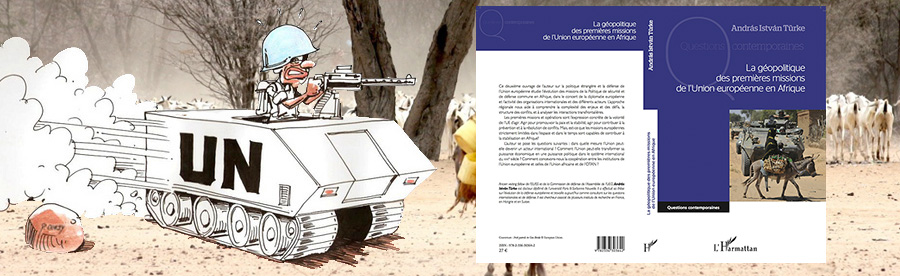
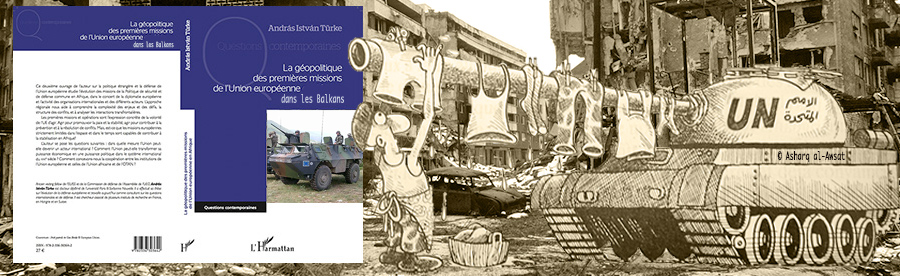
We are looking for sponsors for the English translation of these books, please contact turkeandras(at)gmail(dot)com