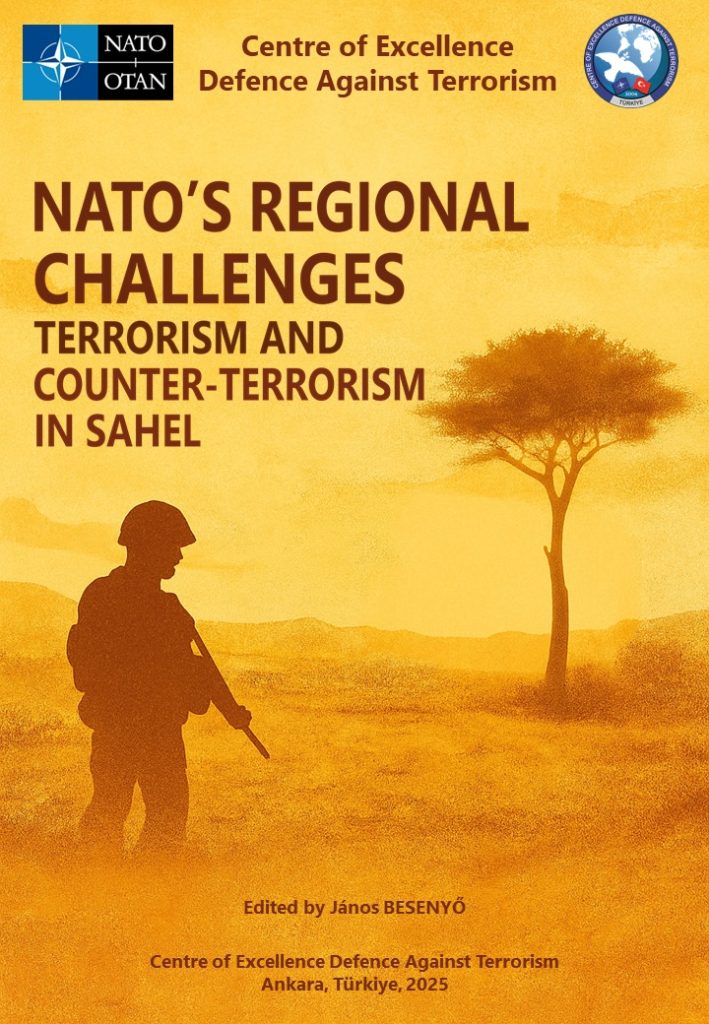
Janos Besenyö (Ed.) :
NATO’s Regional Challenges – Terrorism and Counter-Terrorism in Sahel
2025, NATO CoE-DAT (Centre of Excellence – Defence Against Terrorism), Ankara
Download
> EUVI/ CERPESC Contribution: History of the Sahel (András István Türke)
The Centre of Excellence Defence Against Terrorism (COE-DAT) is pleased to present this book on the topic of NATO’s Regional Challenges: Terrorism and Counter- Terrorism in Sahel.
Many political analysts have been forecasting inevitable conflicts driven by the different challenges characterized by regions where the Alliance might have to deal with the situation that no other power can or wish to handle singlehandedly. Amongst these geographically determined areas stand out a vast part of Africa, that is facing great problems generated by climate change, overpopulation, social discrepancies, ideological differences, poverty and armed conflicts including terrorism. This area includes countries like Senegal, Gambia, Mauritania, Guinea, Mali, Burkina Faso, Niger, Chad, Cameroon and Nigeria or on commonly understood as the SAHEL region.
Amongst many international and national efforts to support better security and well-being of the people living in the vast dry land also NATO planners are monitoring closely their strategic southern flank in order to be prepared to conduct wide range of activities. One of these is supporting counter-terrorism with the toolset that only the Alliance has. To be prepared includes updated Situational Awareness or better to say, Situational Understanding.
In order to support planners, decision-makers or troops of NATO to be deployed to the region COE DAT launched a research project having a large sum of well-known SMEs from around the world. The research aimed for providing an appreciation of the area discussing geography, history, culture and also addressing the challenges that affect the everyday life of the people who must face with them. The focus is directed on the evolving terrorism and its direction with the aim of finding answers and recommendations to the Alliance to counter it as this book concludes.