
You are here
Afrique
Beszédet akar mondani a parlamentben az alkotmánybíróság elnöke
TASR: Felszólalási lehetőséget kért a törvényhozásban Ivan Fiačan, a SzK Alkotmánybíróságának az elnöke, hogy megsürgesse a hiányzó alkotmánybíró megválasztását. A kassai testület már több mint két éve csak 12 bíróval működik, 13 helyett – erősítette meg pénteken a TASR-nek Martina Ferencová, az alkotmánybíróság szóvivője.
Categories: Afrique, Határon túli magyar portálok összesített hírei
Plenary round-up – October I 2025
Written by Clare Ferguson and Katarzyna Sochacka.
Parliament’s first October plenary session featured a formal address by Jens-Frederik Nielsen, Prime Minister of Greenland. Members discussed the European Union’s relations with countries outside the Union in various debates, including on the EU’s role in supporting peace efforts for Gaza and a two-state solution; a united EU response to Russian violation of EU Member States’ airspace; an EU strategy to face Iran’s nuclear threat and on EU sanctions; the situation in Afghanistan; and the Second World Summit for Social Development. Members also considered and rejected two motions of censure of the Commission. A debate addressed rising antisemitism in Europe. Members also debated intergenerational fairness; completing the single market; and promoting EU digital rules. Finally, a debate marked World Mental Health Day (10 October), and Members debated the public health risks exacerbated by global warming.
This is Europe debateThe October I 2025 session featured the first ‘This is Europe‘ debate of the current term, with the Prime Minister of Luxembourg, Luc Frieden.
Visa suspension mechanismMany non-EU nationals can visit the Schengen area for 90 days without having to apply for a visa. To protect the system from abuse, the visa suspension mechanism allows the EU to temporarily end the visa exemption for citizens of certain countries for security reasons. A proposal to strengthen the mechanism has been on the table since 2023. Members held a debate and adopted the text agreed between Parliament’s Committee on Civil Liberties, Justice and Home Affairs (LIBE) and the Council, which emphasises the links between the EU’s external relations and the need to revise the visa suspension mechanism to cover, for instance, cases of state-sponsored instrumentalisation of migrants, investor-citizenship schemes and human rights violations.
Common agricultural policy simplificationFollowing a debate on the common agricultural policy (CAP), Members approved a report on the European Commission proposal to amend the current rules on payments to farmers, aimed at cutting red tape, one of the farming community’s key demands. Parliament’s Committee on Agriculture and Rural Development proposes the CAP simplification include more flexibility on environmental rules, easier access to crisis payments and increased support for small and medium-sized farms. The vote sets Parliament’s position for negotiations with the Council.
European works councilsMembers debated and adopted a provisional agreement reached by Parliament’s negotiators on a revision of the European Works Councils Directive. European works councils represent workers employed by multinationals operating in at least two EU countries. The revision of the legislation aims at strengthening the enforcement of transnational information and consultation rights, excluding trivial issues and including stronger provisions on gender balance. Parliament has succeeded in including rules to ensure penalties will be dissuasive, effective and proportionate.
Amending budget No 2/2025Members adopted amending budget No 2/2025, updating the revenue side of the current year’s EU budget. The report from Parliament’s Committee on Budgets (BUDG) endorsed the Council position on the Commission proposal to take revised revenue forecasts into account and notes the need for increased gross national income contributions from the Member States. The committee also reiterates that the EU must endeavour to find fresh funding streams for new EU policy priorities.
Inland waterway transport: River Information ServicesMembers adopted an agreed revision to the legislation ensuring safety and environmental protection on the EU’s inland waterways. Parliament’s Committee on Transport and Tourism (TRAN) reached an agreement with the Council that the revision should establish a single digital information platform, ensure harmonised reporting, introduce a feedback mechanism and update privacy and security requirements. The committee would, however, prefer that the scope of the revision of harmonised river information services apply only to waterways and ports that are part of a cross-border network.
Extension of the derogation for heavy-duty vehicles with zero emissionsThe EU aims at reducing CO2 emissions from heavy-duty vehicles by 43 % by 2030, with higher targets to follow. However, as zero-emission heavy-duty vehicles remain expensive, EU law allows governments to encourage their use by granting reductions or exemptions to road charges for such vehicles. Members approved, under the urgent procedure, an extension of the derogation for heavy-duty vehicles with zero emissions to June 2031.
New strategic EU-India agendaMembers held a debate on Council and Commission statements on a joint communication, which lays out the path for negotiations on a new strategic EU-India agenda, set for adoption at a bilateral summit in 2026. The debate covered progress on a free trade agreement, financial supervision arrangements and security and defence ties.
EU-Côte d’Ivoire Fisheries Partnership AgreementFollowing a recommendation from Parliament’s Committee on Fisheries (PECH), Members granted Parliament’s consent for the conclusion of a new protocol covering the EU’s fisheries agreement with Côte d’Ivoire. The protocol sets opportunities for EU vessels from Spain, France and Portugal to fish for tuna in Côte d’Ivoire’s waters, in exchange for a financial contribution to the country’s sustainable fisheries sector.
Opening of trilogue negotiationsFour decisions to enter into interinstitutional negotiations, from: the Employment and Social Affairs (EMPL) and Internal Market and Consumer Protection (IMCO) Committees on the public interface connected to the Internal Market Information System for the declaration of posting of workers; from the EMPL committee on improving and enforcing working conditions of trainees and combating regular employment relationships disguised as traineeships (‘Traineeships Directive’); from the IMCO committee on market availability of measuring instruments: electric vehicle supply equipment, compressed gas dispensers, and electricity, gas and thermal energy meters; and from the Industry, Research and Energy (ITRE) Committee on incentivising defence-related investments in the EU budget to implement the ReArm Europe Plan were approved without a vote.
Read this ‘at a glance’ note on ‘Plenary round-up – October I 2025‘ in the Think Tank pages of the European Parliament.
Categories: Afrique, European Union
Mysteriöser Vorfall in Gebenstorf AG: Verletzter (22) in Trainerhose gibt Polizei Rätsel auf
Rettungsdienst und Polizei fanden in der Nacht in Gebenstorf AG einen jungen Mann, der erheblich verletzt war. Weil die Umstände unklar sind, sucht die Kantonspolizei Augenzeugen.
Categories: Afrique, Swiss News
«Kiew stand unter Beschuss»: Nemo verbringt Nacht im Schutzbunker
Turbulente Nacht für Nemo am Tag seines Albumreleases: Das Bieler Musiktalent befindet sich gerade in Kiew – und muss dort im Schutzbunker des Hotels schlafen.
Categories: Afrique, Swiss News
Nach Bewerbungsfrust: Armeechef Süssli wirbt für Verständnis fürs Militär
Armeechef Thomas Süssli und Arbeitgeber-Präsident Severin Moser treten gemeinsam für Dienstpflichtige ein. Mit einem offenen Brief an die Wirtschaft fordern sie mehr Unterstützung für den Militärdienst. Die Zeiten seien unsicherer geworden, heisst es dazu.
Categories: Afrique, Swiss News
Braut wirkte ängstlich: Zürcher Standesbeamtin verhindert Zwangsheirat
Eine Standesbeamtin des Zivilstandsamt Dietikon hat eine Zwangsheirat verhindert. Die Braut wirkte eingeschüchtert, der Bräutigam schien sie am Sprechen zu hindern.
Categories: Afrique, Swiss News
Mega-Hype um seltene Münzen: Diese Goldvreneli werden auf eine Million Franken geschätzt
Mehrere rare und äusserst wertvolle Schweizer Goldmünzen könnten im Oktober an Auktionen den Besitzer wechseln. Wir stellen die seltenen Goldvreneli und weitere Raritäten vor.
Categories: Afrique, Swiss News
Bruxelles se prépare à durcir ses règles en matière de visas pour certains pays
Bruxelles se prépare à durcir les conditions d’octroi de visas et de révision des exemptions de visas pour les pays tiers non coopératifs, selon une note de la Commission.
The post Bruxelles se prépare à durcir ses règles en matière de visas pour certains pays appeared first on Euractiv FR.
Categories: Afrique, Union européenne
Signature d'accord d'exemption de visa entre le Bénin et Koweït
En visite officielle au Koweït, le ministre béninois des Affaires étrangères, Olushegun Adjadi Bakari, s'est entretenu, ce mercredi 8 octobre 2025, avec son homologue koweïtien, Abdullah Al-Yahya. La rencontre a débouché sur la signature d'un accord bilatéral d'exemption de visas pour les titulaires de passeports diplomatiques et de service des deux pays.
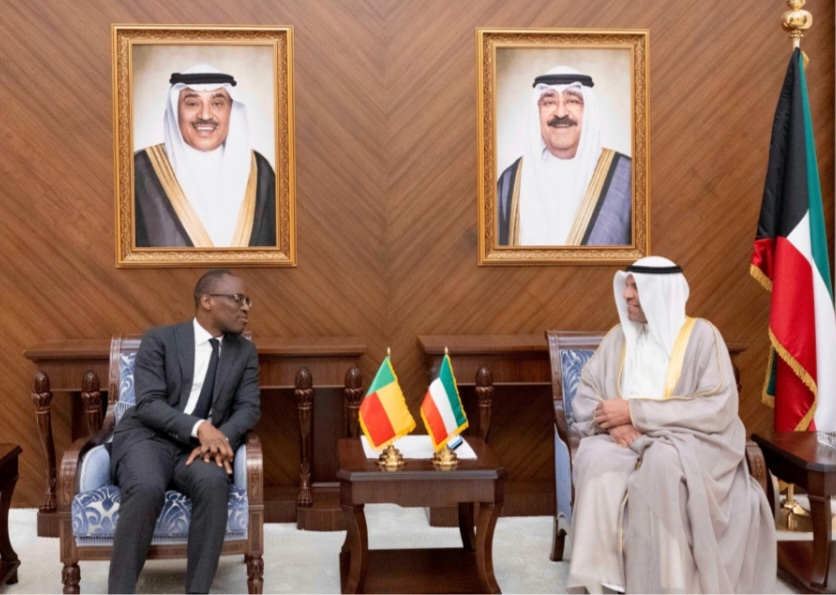
La visite du ministre des Affaires étrangères au Koweït a abouti à la signature d'un accord bilatéral d'exemption de visas pour les titulaires de passeports diplomatiques et de service des deux pays.
Ce déplacement marque une nouvelle étape dans le renforcement de la coopération entre Cotonou et Koweït City, notamment dans les domaines économique, technique et diplomatique. Les deux responsables ont également échangé sur la consolidation des relations entre l'Afrique et le Golfe, avec la volonté d'intensifier les investissements koweïtiens au Bénin dans les années à venir.
Cette rencontre s'inscrit dans une série d'initiatives destinées à approfondir les partenariats Sud-Sud et à faciliter la mobilité diplomatique entre les États. Ce déplacement du chef de la diplomatie béninoise au Koweït intervient quelques jours après la 80ᵉ Assemblée générale des Nations Unies à New York, en marge de laquelle le Bénin a également signé plusieurs accords d'exemption de visa avec les Emirats arabes unis, le Kenya, le Tchad, Antigua-et-Barbuda, les Îles Marshall et les États fédérés de Micronésie. En outre, des relations diplomatiques officielles ont été établies avec la Trinité-et-Tobago ainsi qu'avec Palaos.
Ces initiatives traduisent la vision d'une diplomatie béninoise proactive, tournée vers la mobilité internationale, le renforcement des liens Sud-Sud et la promotion de la présence du Bénin sur la scène mondiale.
Categories: Afrique, Swiss News
Croissance économique 2025 : L’Algérie derrière la Palestine, le Maroc et Djibouti
La Banque Mondiale sonne le signal d’un optimisme ciblé pour le monde arabe, mais les nouvelles prévisions pour 2025 placent l’Algérie, pourtant en croissance solide, […]
L’article Croissance économique 2025 : L’Algérie derrière la Palestine, le Maroc et Djibouti est apparu en premier sur .
Categories: Afrique
María Corina Machado venezuelai ellenzéki vezető kapja idén a Nobel-békedíjat
María Corina Ma María Corina Machado venezuelai ellenzéki vezető kapja idén a Nobel-békedíjat - jelentette be pénteken (10. 10.) Oslóban a Norvég Nobel-bizottság.
Categories: Afrique, Határon túli magyar portálok összesített hírei
Me Kato Atita s'en est allé
Le barreau béninois est en deuil. Me Kato Atita, avocat émérite a tiré sa révérence ce vendredi 10 octobre 2025, des suites d'une maladie au Centre hospitalier départemental (CHD) de l'Ouémé.
Le regretté est l'avocat personnel de l'ancien président Boni Yayi.
Paix à son âme !
Categories: Afrique, Swiss News
L'enregistrement des dossiers de candidatures démarre ce vendredi à la CENA
C'est à partir de ce vendredi 10 octobre 2025 que la Commission électorale nationale autonome (CENA) reçoit des dossiers de candidatures des duos candidats à l'élection présidentielle d'avril 2026 au Bénin. Cette étape importante du processus selon le calendrier électoral, s'achève le mardi 14 octobre prochain.
La Commission électorale nationale autonome entame une étape importante du processus d'organisation de la présidentielle de 2026. Les duos candidats à cette élection peuvent déposer leurs dossiers de candidatures à partir de ce vendredi 10 octobre 2025. Et ce, jusqu'au 14 octobre 2025, dernier délai.
Ces dossiers selon la décision 2025/n°012/Céna/Pt/Rap/Dge/Sp en date du 10 juillet 2025, de la CENA, contient des pièces communes et des pièces individuelles.
A. Pièces communes :
– Une (01) déclaration de candidature physique en double exemplaire, contenant le nom, prénoms, profession, date et lieu de naissance, ainsi que l'adresse complète des candidats aux fonctions de Président de la République ou Vice-Président de la République. Ce document doit également mentionner la couleur, le signe ou le logo des candidats.
– Une (01) déclaration de candidature dématérialisée, contenant le nom, prénoms, profession, date et lieu de naissance, ainsi que l'adresse complète des candidats aux fonctions de Président de la République ou Vice-Président de la République. Elle doit également mentionner la couleur, le signe ou le logo des candidats.
– Vingt-huit (28) parrainages d'élus (députés et/ou maires) provenant d'au moins quinze (15) circonscriptions électorales législatives. Ces parrainages sont attestés par des formulaires nominatifs de parrainage délivrés par la CENA et valables pour le duo Président de la République et Vice-Président de la République. L'ensemble des formulaires de parrainage doit provenir de quinze (15) circonscriptions électorales législatives.
– Une (01) quittance attestant le versement d'un cautionnement de vingt-cinq millions (25.000.000) de francs CFA à la caisse des dépôts et consignations du Bénin.
B- Pièces individuelles :
– Un (01) certificat de nationalité.
– Un (01) bulletin n°3 du casier judiciaire datant de moins de trois (03) mois.
– Un (01) extrait d'acte de naissance ou toute pièce en tenant lieu.
– Un (01) certificat de résidence.
– Un (01) quitus fiscal des trois (03) dernières années (2022, 2023, 2024), délivré par le Directeur général des impôts, attestant que le candidat est à jour du paiement de ses impôts.
– Les preuves de l'appartenance des bénéficiaires ou de leur désignation par le parti ou coalition de partis des parrains.
– Une (01) déclaration sur l'honneur du candidat ou de la candidate certifiant qu'il/elle ne se trouve dans aucun des cas d'inéligibilité prévus par la loi.
– Une (01) photo d'identité format passeport et
– Une (01) pièce d'identification en cours de validité.
Selon la configuration politique actuelle, trois duos candidats sont en lice pour cette élection. Il s'agit du duo de la mouvance présidentielle (Romuald Wadagni-Mariam Chabi Talata), le duo du parti Forces cauris pour un Bénin émergent (FCBE) dont le colistier n'est pas encore connu, et du duo du parti Les Démocrates qui sera présenté officiellement le dimanche 12 octobre prochain.
F. A. A.
Categories: Afrique, Swiss News
La Banque européenne d’investissement prête à investir dans la défense anti-drones
La Banque européenne d’investissement (BEI) est prête à investir plusieurs millions d’euros dans la défense européenne contre les drones, explique sa présidente, Nadia Calviño, dans une lettre adressée au président du Conseil européen, António Costa.
The post La Banque européenne d’investissement prête à investir dans la défense anti-drones appeared first on Euractiv FR.
Categories: Afrique, Union européenne
PS: Fico a költségvetéssel elismeri a kudarcát
A Progresszív Szlovákia (PS) pénteki (10. 10.) sajtótájékoztatója
Categories: Afrique, Határon túli magyar portálok összesített hírei
What if the EU ran on microelectronics?
Written by Andrés García Higuera.
When asked how many microcontrollers they have on their desk, most people would only consider the one in their laptop, whereas in fact, a laptop alone contains several. Besides the microprocessor hosting the Control Processing Unit (CPU), which is not a microcontroller properly speaking, microcontrollers govern laptop functions such as communications, drivers, the power supply, touchpad and screen. There may also be another microcontroller (or several) in their smartphone, plus those in their landline phone, watch, earphones, mouse, calendar, thermometer, printer, chargers, external screen – and even in the coffee machine and the desk lamp. Microelectronics technology is everywhere: it includes semiconductors and components, but is far broader than that. It ranges from the control units for cars, planes and drones to small appliances, medical equipment or mobile phones, reaching over US$600 billion in revenue, up by 19.7 % year-on-year, excluding software development for artificial intelligence (AI).
The microelectronics industry is a strategic asset for Europe, which the European Commission ranks as one of the most research and development (R&D) intensive sectors. The sector supports around 200 000 jobs directly and more than 1 000 000 indirect jobs in Europe. However, the EU share in global chip capacity has decreased from 13 % in 2010 to 7‑8 % in 2025. This can be attributed to factors such as growing manufacturing costs – including energy – and low public investment in the required R&D to deploy the complex supply chain and to support initial investment in manufacturing equipment.
The major manufacturers of semiconductor chips are based in the USA (Intel, Micron), Taiwan (TSMC) and South Korea (Samsung, SK Hynix), and most designers (or Fabless semiconductor companies) are also based in the USA (NVIDIA, AMD). Nevertheless, the EU has traditionally been at the forefront of the global semiconductor value chain, holding specific know-how, such as in the production of equipment for manufacturing semiconductors (e.g. ASML in the Netherlands). Furthermore, and although they are decreasing and insufficiently widespread, Europe retains the basic skills for non-advanced everyday (but highly strategic) versions of microelectronics technology.
Potential impacts and developmentsMicroelectronic components are complete miniaturised circuits composed of standard electronic parts, such as transistors, capacitors, diodes, and resistors, which operate at microscopic scale. These circuits are designed to perform specific functions and, therefore, are closely linked to optimisation in the assembly of new products and devices. Modern versions of technological products rely on microelectronics technology to the extent that no product can compete in the market today without it, which risks excluding the small and medium-sized enterprises that are – and will remain – vital to the EU and usually lack the required skills and resources. This is not always about the newest technologies and the highest levels of integration for big production series, it is also about everyday components in a broad variety of industrial sectors. The competitive advantage of already strong microelectronic players has become overwhelming.
According to the European Semiconductor Industry Association (ESIA), in the EU this sector has a multiplier effect of around 2.5 (meaning that every euro invested in the industry generates an additional €2.5 in economic activity), whereas this same factor is 4.3 in the USA and 3.5 in China. Microelectronics accounts for around 1.4 % to 1.6 % of the EU’s GDP (€230 billion to €250 billion), 2.2 % to 2.5 % of the USA’s GDP (€380 billion to €440 billion) and 2.5 % to 3.0 % of China’s GDP (€390 billion to €480 billion).
Strategic sectors such as the automotive industry, AI, telecommunications and defence are fast evolving to models that are ever more dependent on microelectronics to provide new functionalities, which are becoming key market assets. The European Chips Act entered into force on 21 September 2023, together with the Critical Raw Materials Act; they have become key pillars for EU open strategic autonomy, setting a reliable foundation for a competitive EU.
Anticipatory policymakingWhile addressing competitiveness in her 2025 State of the Union speech, European Commission President Ursula von der Leyen stressed the need to ‘keep up the speed’. The Commission will therefore ‘propose an industrial accelerator act for key strategic sectors and technologies’. Von der Leyen concluded that, ‘when it comes to digital and clean tech’, the EU aims to be ‘faster, smarter and more European’. However, and although she particularly referred to critical raw materials and this was implicit in her speech, she did not specifically mention microelectronics or semiconductors. However, they are fundamental to achieving the proposed goals of a competitive knowledge economy and enhanced defence capacity.
Pillar I of the European Chips Act establishes the chips for Europe initiative, which will support technological capacity building and innovation in the Union by bridging the gap between the Union’s advanced research and innovation capabilities and their industrial (and dual-use) exploitation. Horizon Europe allocates significant funding for R&D in the microelectronics sector, while the Chips Joint Undertaking (Chips JU) aims to support its development. Related technologies such as the internet of things, edge computing and AI benefit from complementary initiatives such as smart anything everywhere (SAE) and the European processor initiative (EPI). The EU is addressing the skills shortage through programmes such as the digital education action plan and the more specific large-scale partnership (LSP) in microelectronics, which promotes specialised training. Additionally, the Important Project of Common European Interest (IPCEI) in microelectronics allows EU Member States to support related projects with State aid, and initiatives such as Eurostack aim to improve the EU’s strategic autonomy.
While the Chips Act is a definite step forward, the strong strategic aspect of this sector requires continued monitoring and sustained action. Policymakers and industry leaders can work together to promote public and private investment and the development of a sustainable business environment suitable for the microelectronics industry, including to support the development of skills, talent, innovation and risk-taking that will bolster European prosperity and security.
Read this ‘at a glance’ note on ‘What if the EU ran on microelectronics?‘ in the Think Tank pages of the European Parliament.
Categories: Afrique, European Union
15.000 jeunes mobilisent 30 millions FCFA pour la caution de Wadagni
La plateforme d'engagement citoyen « JE DONNE POUR ROW » a réussi son pari en mobilisant la caution du candidat de la mouvance à l'élection présidentielle d'avril 2026 au Bénin. L'initiative lancée en septembre dernier, a permis de mobiliser la somme de 30 millions de francs CFA.
L'initiative « JE DONNE POUR ROW » atteint son objectif de mobilisation de la caution du duo candidat Romuald Wadagni-Mariam Chabi Talata. Lancée le 9 septembre 2025 à Cotonou, elle avait pour objectif de mobiliser la jeunesse béninoise à l'intérieur comme à l'extérieur du pays, autour d'un geste concret de soutien. Dès le lendemain, les organisateurs annonçaient près de 15.000 contributions enregistrées. Le don le plus faible s'élève à 100 francs CFA, et le plus élevé, à un (01) million, pour une moyenne de 2.308 FCFA.
15.000 jeunes donateurs ont mobilisé plus de 30 millions de francs CFA pour la caution de Romuald Wadagni. Les initiateurs de la campagne ont annoncé la clôture des contributions, promettant de transmettre le chèque correspondant au candidat dans les prochains jours. Romuald Wadagni, désigné « candidat de l'unité et de la jeunesse », semble désormais évoluer dans une dynamique qui dépasse les clivages habituels.
Marina HOUENOU (Stag)
Le communiqué officiel des organisateurs
À l'attention de l'opinion publique nationale
Le mardi 09 septembre 2025 à midi, nous avons procédé au lancement de la plateforme d'engagement citoyen « JE DONNE POUR ROW ».
L'objectif de cette initiative était, dans un premier temps, de mobiliser la jeunesse béninoise, d'ici et d'ailleurs, afin de constituer la caution du candidat Romuald WADAGNI, le candidat de l'unité et de la jeunesse.
Le lendemain, mercredi 10 septembre 2025, soit seulement 24 heures après le lancement, nous avons enregistré la contribution de près de 15.000 donateurs, pour un montant total dépassant 30 millions de francs CFA.
La plus faible contribution est de 100 FCFA, la plus importante de 1.000.000 FCFA, avec une contribution moyenne de 2.000 F CFA.
Fait remarquable, près de 95 % des contributions sont inférieures à 1.000 F CFA, confirmant que cette mobilisation est avant tout celle du peuple, de la jeunesse et des petites bourses, soutenue par quelques contributions plus importantes.
Cette réussite est collective. Nous la devons à toutes et à tous. À chacun, nous disons merci pour cet élan de générosité, de solidarité et d'engagement.
En conséquence, nous vous annonçons que les contributions pour la constitution de la caution sont désormais closes.
Un chèque correspondant à la somme mobilisée sera transmis au candidat dans les prochains jours.
Notre engagement aux côtés de Romuald WADAGNI, candidat de l'unité et de la jeunesse, se poursuivra autrement : en donnant de notre temps, de notre intelligence, de nos prières et de notre énergie pour la réalisation de cette cause commune.
Merci ! Merci ! Merci !
Categories: Afrique, Swiss News
Voici les nouveaux responsables d'Unités de Formation et de Recherche
Les doyen et vice-doyens des Unités de Formation et Recherche (UFR) dans les Universités publiques du Bénin ont été nommés par décret en date du 24 septembre 2025. LISTE
Categories: Afrique, Swiss News
ENTWURF EINES BERICHTS über die Umsetzung der Gemeinsamen Sicherheits- und Verteidigungspolitik – Jahresbericht 2025 - PE776.984v01-00
ENTWURF EINES BERICHTS über die Umsetzung der Gemeinsamen Sicherheits- und Verteidigungspolitik – Jahresbericht 2025
Ausschuss für Sicherheit und Verteidigung
Thijs Reuten
Quelle : © Europäische Union, 2025 - EP
Ausschuss für Sicherheit und Verteidigung
Thijs Reuten
Quelle : © Europäische Union, 2025 - EP
Categories: Afrique, Europäische Union
Pages
the old site is here



© 2012-2015 Europa Varietas Foundation © 2015-2020 Europa Varietas Association
www.europavarietas.org | info(@)europavarietas(dot)org | Switzerland
This is a GDPR ready site




We are looking for sponsors for the English translation of these books, please contact turkeandras(at)gmail(dot)com