
You are here
Feed aggregator
From 9/11 to the Iran War, Pakistan-US Ties Remain Transactional
There’s a reason the nation's relationship with the U.S. has fluctuated while India’s has largely held steady.
Categories: Diplomacy & Crisis News
Contre la résignation
Ouverte par l'« automne chaud » de 1969 — une vague de grèves massives et de contestations sociales sans précédent en Italie et peu à peu vaincue par le ressac libéral —, la décennie des années dites « de plomb » en Italie a laissé de nombreux héritages, dont les récits littéraires consacrés au (…)
/ Italie, Mouvement de contestation, Histoire, Littérature, Travail
Categories: Diplomacy & Crisis News
La Russie prévoit d'ouvrir davantage de centres culturels en Afrique dans le cadre de sa stratégie d'expansion de son influence
Ces centres auront pour vocation de promouvoir la langue, l'éducation, la science et la culture russes.
Categories: Afrique
En parallèle de la présidentielle, la campagne de David Lisnard pour rester à la tête des maires de France
Le président sortant de l’AMF, qui va affronter le maire UDI de Sceaux, Philippe Laurent, apparaît en position favorable pour l’emporter fin novembre, après un accord de gouvernance partagée trouvé avec les socialistes.
Categories: France
Washington Spirit sign Luvanga - but is it a record deal?
Tanzanian striker Clara Luvanga has joined Washington Spirit from Al-Nassr in a deal believed to be one of the most costly in the history of women's football - and possibly one that sets a world record.
Categories: Africa
David Lisnard au Figaro : « Je veux poursuivre notre action à la tête des maires de France »
ENTRETIEN EXCLUSIF - Le maire de Cannes dévoile les raisons pour lesquelles il sollicite un nouveau mandat à la tête de l’AMF et comment il compte concilier cette mission avec sa candidature à la présidentielle.
Categories: France
Sicherheitspolitiker des Ständerats spannen ein Sicherheitsnetz unter den Rüstungsfonds
Der Spezialfonds für Rüstungsbeschaffungen soll über eine Mehrwertsteuererhöhung finanziert werden. Nun fordert die Kommission eine Entkoppelung der beiden Themen.
Categories: Swiss News
What the AfD’s Rise in Germany Means for China-EU Relations
China’s economic success is bringing industrial disruption that empowers populist groups in Europe. That could lead to significant long-term challenges for the Chinese government and businesses.
Categories: Diplomacy & Crisis News
Publications - Results of the AFET votes on 10 September 2026 - Committee on Foreign Affairs
Categories: Europäische Union
Publications - Results of the AFET votes on 10 September 2026 - Committee on Foreign Affairs
Categories: European Union
Dollar détonateur ?
« Carry trade »… C'est obscur. C'est névralgique. On sait déjà, entre « private credit » et krach IA, dans quel état est la finance. On ne sait pas si ce qui est en train de se passer sur les taux d'intérêt souverain, sur le front du change yen / dollar notamment, entre dans la catégorie des explosifs ou dans celle des détonateurs — peut-être bien un peu des deux.
- La pompe à phynance / États-Unis, Monnaie, Crise financière
Categories: Défense
Another New Job for Saida Mirziyoyeva: Manager of the Tashkent International Financial Center
The daughter of the Uzbek president is head of the presidential administration and now also manager of Tashkent’s ambitious gambit to attract foreign investors.
Categories: Diplomacy & Crisis News
Communiqué de presse - Les députés modernisent les règles en matière d'infrastructures énergétiques pour faire baisser les prix de l'énergie
La mise à jour du règlement RTE-E vise à renforcer la sécurité d'approvisionnement énergétique, à contribuer à la baisse des prix, et à soutenir les objectifs climatiques de l'UE.
Commission de l'industrie, de la recherche et de l'énergie
Source : © Union européenne, 2026 - PE
Commission de l'industrie, de la recherche et de l'énergie
Source : © Union européenne, 2026 - PE
Categories: Union européenne
Can Southeast Asia Benefit From the China-US AI Race?
As Washington and Beijing compete to turn technology into influence, the region needs to negotiate what it gains and what it is expected to give up.
Categories: Diplomacy & Crisis News
Lourdes, l'économie du miracle
Fin septembre, Lourdes sera, avec Paris et Metz, l'une des trois destinations françaises du pape Léon XIV. Malgré les millions de pèlerins qui affluent chaque année du monde entier, près d'un quart de la population demeure sous le seuil de pauvreté, et les saisonniers, aussi précaires (…)
/ Religion, France, Travail, Tourisme, Pauvreté
Categories: Diplomacy & Crisis News
DRAFT REPORT Institutional aspects of the Common European Defence Union - PE790.810v01-00
DRAFT REPORT Institutional aspects of the Common European Defence Union
Committee on Constitutional Affairs
Committee on Security and Defence
Niclas Herbst, Salvatore De Meo
Source : © European Union, 2026 - EP
Committee on Constitutional Affairs
Committee on Security and Defence
Niclas Herbst, Salvatore De Meo
Source : © European Union, 2026 - EP
Categories: Europäische Union
DRAFT REPORT Institutional aspects of the Common European Defence Union - PE790.810v01-00
DRAFT REPORT Institutional aspects of the Common European Defence Union
Committee on Constitutional Affairs
Committee on Security and Defence
Niclas Herbst, Salvatore De Meo
Source : © European Union, 2026 - EP
Committee on Constitutional Affairs
Committee on Security and Defence
Niclas Herbst, Salvatore De Meo
Source : © European Union, 2026 - EP
Categories: Defence`s Feeds, European Union
Marcel Fratzscher: „EZB sendet klares Signal, dass sie Preisstabilität ernst nimmt“
Der Rat der Europäischen Zentralbank (EZB) hat heute beschlossen, den Leitzins auf nun 2,5 Prozent zu erhöhen. Dazu eine Einschätzung von Marcel Fratzscher, Präsident des Deutschen Instituts für Wirtschaftsforschung (DIW Berlin):
Die EZB hat mit der Zinserhöhung einen notwendigen Schritt getan, um die Inflationserwartungen zu stabilisieren und ihre Glaubwürdigkeit zu schützen. Allerdings dürfte die Zinserhöhung nichts Substanzielles an der derzeit hohen Inflation ändern – auch nicht über das kommende Jahr. Denn die Inflation ist fast ausschließlich durch den Energiepreisschock infolge des Krieges im Nahen Osten verursacht worden. Gegen solch einen externen Schock hat die EZB nicht wirklich etwas in der Hand.
Die Inflationserwartungen im Euroraum sind zwar noch gut verankert, aber die EZB verschafft sich mit dem heutigen Schritt eine bessere Absicherung gegen mögliche Zweitrundeneffekte durch Unternehmen und Gewerkschaften. Sie sendet ein Signal an alle wirtschaftlichen Akteure, dass sie ihr Ziel der Preisstabilität ernst nimmt und dafür auch gewillt ist, die Wirtschaft im Euroraum zu bremsen.
Die EZB hält sich völlig zu Recht alle Optionen für die Zukunft offen, denn die Unsicherheit ist enorm hoch. Eine erneute Eskalation des Konflikts im Nahen Osten könnte die Energiepreise und damit die Inflation noch deutlich weiter erhöhen.
Allerdings ist Vorsicht geboten, den Bogen nicht zu überspannen. Denn die langfristigen Zinsen sind vor allem wegen der Zweifel von Wirtschaft und Märkten an der Handlungsfähigkeit der Politik – nicht nur, aber vor allem in den USA – deutlich gestiegen. Das reduziert den Druck auf die EZB, die Zinsen noch deutlich weiter zu erhöhen.
Categories: Diplomacy & Defense Think Tank News
ELIAMEP Explainer – E pur si muove? An Explainer of Recent Developments in the Modus Operandi of the EU CFSP
Spyros Blavoukos, Head, EU Institutions & Policies Programme, ELIAMEP; Head of the ‘Ariane Condellis’ European Programme; Professor, Athens University of Economics & Business; Apostolos Samaras, Research Fellow, European Programme ‘Ariane Condellis’ and Panos Politis Lamprou, Research Fellow, Defence Hub, ELIAMEP examine the recent debate over the future of the EU’s Common Foreign and Security Policy (CFSP), focusing on two developments that have brought questions about the Union’s foreign-policy architecture back to the forefront: proposals to reform the European External Action Service (EEAS) and renewed discussions on the use of qualified majority voting in CFSP decision-making. It places these developments in their broader institutional and historical context, exploring what is genuinely new in the current debate and what they could mean for the way the EU organises and conducts its external action.
Read the ELIAMEP Explainer here.
Categories: Diplomacy & Defense Think Tank News
Which development do you think will dominate the European agenda in the coming period and have the greatest geopolitical significance? – ELIAMEP experts’ views
Which development will be at the centre of the European agenda in the coming months? The war in Ukraine, geopolitical shifts in the Eastern Mediterranean and the wider region, as well as the remarkable rise of the far right across Europe, are contributing to an increasingly complex environment. Which of these developments will have the greatest geopolitical significance and have the strongest impact on Europe’s future? ELIAMEP Analysts share their assessments. (the post in available only in Greek)
Categories: Diplomacy & Defense Think Tank News
Pages


© 2012-2018 Europa Varietas Foundation © 2015-2018 Europa Varietas Association
www.europavarietas.org | info(@)europavarietas(dot)org | Switzerland
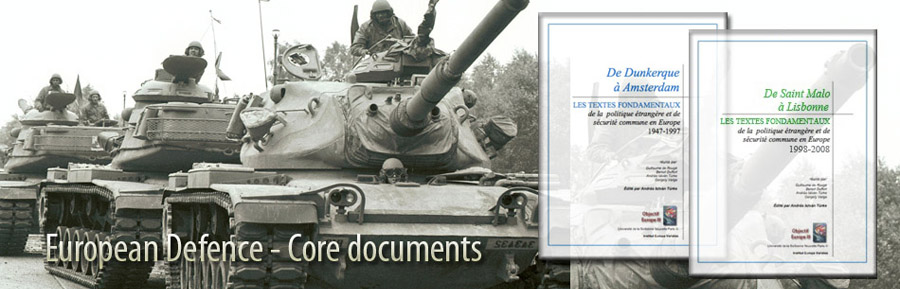
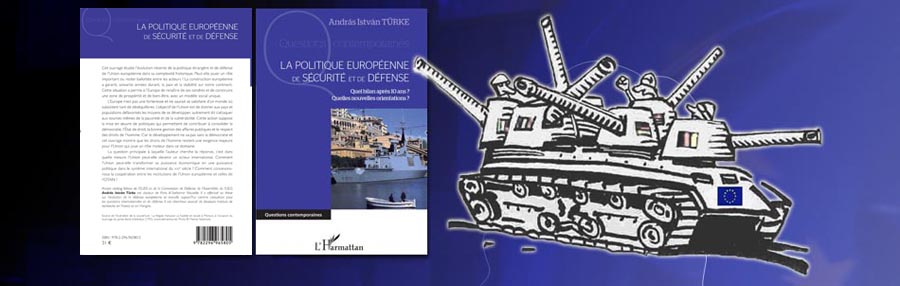
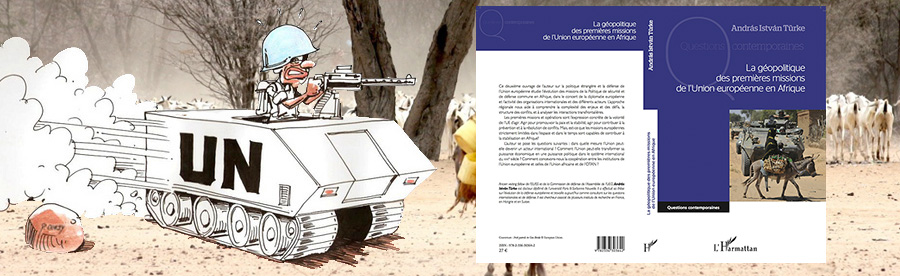
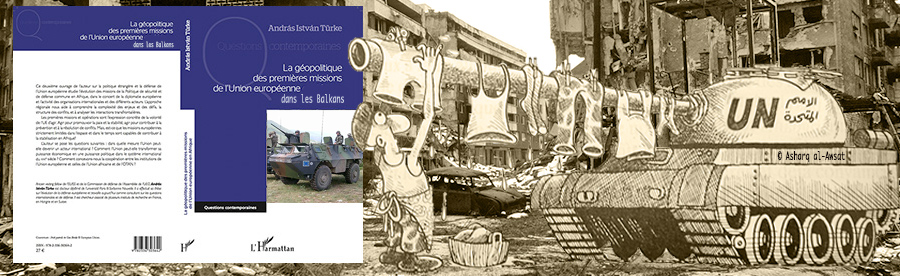
We are looking for sponsors for the English translation of these books, please contact turkeandras(at)gmail(dot)com