
You are here
Feed aggregator
Un revolver et des balles : qu'ont fait les dirigeants de l'OTAN de ce cadeau insolite qu'Erdogan leur a offert en Turquie ?
À l'issue de la réunion de deux jours à Ankara, chaque dirigeant de l'OTAN a reçu un cadeau insolite de la part du président Erdogan. La difficulté était de savoir quoi faire de ce cadeau.
Categories: Afrique, Swiss News
Press release - Better enforcement of rules needed for a safer social media and online environment
Companies should guarantee that the use of social media and the digital environment is safe, particularly for children and young people, MEPs say.
Committee on Culture and Education
Source : © European Union, 2026 - EP
Committee on Culture and Education
Source : © European Union, 2026 - EP
Categories: Afrique, Europäische Union
Press release - Better enforcement of rules needed for a safer social media and online environment
Companies should guarantee that the use of social media and the digital environment is safe, particularly for children and young people, MEPs say.
Committee on Culture and Education
Source : © European Union, 2026 - EP
Committee on Culture and Education
Source : © European Union, 2026 - EP
Categories: Európai Unió : hírek magyarul, Swiss News
Press release - Better enforcement of rules needed for a safer social media and online environment
Companies should guarantee that the use of social media and the digital environment is safe, particularly for children and young people, MEPs say.
Committee on Culture and Education
Source : © European Union, 2026 - EP
Committee on Culture and Education
Source : © European Union, 2026 - EP
Categories: European Union, Swiss News
Press release - Better enforcement of rules needed for a safer social media and online environment
Companies should guarantee that the use of social media and the digital environment is safe, particularly for children and young people, MEPs say.
Committee on Culture and Education
Source : © European Union, 2026 - EP
Committee on Culture and Education
Source : © European Union, 2026 - EP
Romuald Wadagni prend part à la retraite stratégique d'Afreximbank
Le président de la République, Romuald Wadagni, a effectué, lundi 13 juillet 2026, une visite de travail à Addis-Abeba, en Éthiopie. Ce déplacement a été marqué par sa participation à la retraite stratégique d'Afreximbank ainsi que par des échanges avec les autorités éthiopiennes.
À son arrivée dans la capitale éthiopienne, le chef de l'État béninois a été accueilli par le vice-Premier ministre, Tiruneh Temesgen. Il a ensuite rencontré le président-directeur général d'Afreximbank, George Elombi, avant de prendre part aux travaux de la banque panafricaine d'import-export, d'Afreximbank, en qualité d'invité d'honneur.
Lors du panel inaugural consacré aux défis de l'industrialisation en Afrique, Romuald Wadagni a partagé l'expérience du Bénin en matière de réformes économiques. Il a notamment évoqué les conditions favorables à une industrialisation durable et les obstacles susceptibles de freiner cette dynamique.
En marge de cette rencontre, le président béninois s'est entretenu avec le Premier ministre éthiopien, Abiy Ahmed, au Palais Menelik. Les échanges ont porté sur le renforcement des relations de coopération entre le Bénin et l'Éthiopie.
Le chef de l'État a regagné Cotonou dans la soirée, au terme de cette visite d'une journée consacrée à la promotion des intérêts du Bénin sur les plans économique et diplomatique.
Categories: Afrique, Határon túli magyar portálok összesített hírei
Plusieurs arbres déracinés par la pluie à Cotonou
La forte pluie qui s'est abattue sur la ville de Cotonou dans la journée de ce lundi 13 juillet 2026 a occasionné la chute de plusieurs grands arbres.
A l'Etoile Rouge, un imposant caïlcédrat a été déraciné ce lundi 13 juillet 2026, s'affaissant sur une partie de la chaussée et perturbant momentanément la circulation.
La pluie a entraîné la chute d'autres arbres, notamment dans le secteur de Caboma.

Face à la situation, Gilbert Déou Malè, le préfet du Littoral s'est rendu dans l'après-midi sur les sites touchés. A l'issue de cette descente, il a instruit les services techniques de procéder sans délai au dégagement des arbres tombés.
M. M.

Categories: Afrique, Határon túli magyar portálok összesített hírei
Parakou accueille le 2e showroom de la marque SùSù
Le « Made in Benin » poursuit son expansion sur le territoire national. Après son implantation à Cotonou, la marque béninoise de linge de maison SùSù renforce sa présence avec l'ouverture officielle de son deuxième showroom à Parakou, dans le département du Borgou.
La société Bénin Textile SA (Btex) et son distributeur agréé DIXTRI Textile, offrent la possibilité aux populations de Parakou, dans le Nord-Bénin, de se procurer la marque béninoise de linge de maison SùSù. Un showroom a été ouvert le vendredi 26 juin 2026, marquant ainsi une étape importante dans la stratégie de déploiement national de la marque. La cérémonie s'est déroulée en présence du chef du 3ᵉ arrondissement de Parakou ainsi que du représentant du maire, qui ont salué une initiative contribuant à la valorisation de la production locale.

Fabriqués au sein de la Zone industrielle de Glo-Djigbé (GDIZ), les produits SùSù sont entièrement conçus au Bénin. La marque propose une large gamme de linge de maison destinée à répondre aux besoins des ménages, avec une offre alliant qualité, confort et savoir-faire local.
À travers cette nouvelle implantation, Bénin Textile SA entend d'une part, rapprocher les produits fabriqués localement des consommateurs du septentrion, et d'autre part, promouvoir davantage la consommation des produits « Made in Benin ». Pour l'entreprise, le choix de Parakou s'inscrit dans une vision d'inclusion économique et de développement du marché national.
« Parakou n'est pas un hasard. C'est un choix. Celui d'une marque qui croit que chaque ville, chaque foyer, chaque famille du Bénin mérite d'accéder à des produits de qualité, fabriqués ici, par nous, pour nous », a souligné le représentant de Bénin Textile SA lors de la cérémonie d'ouverture du showroom.
Avec cette nouvelle ouverture, SùSù confirme son ambition de rendre les produits textiles béninois plus accessibles et de renforcer la présence du Made in Benin dans le quotidien des consommateurs.
Le nouveau showroom est situé au rond-point Aérodrome, en face du restaurant La Vieille Marmite, dans le quartier Wanssirou.


F. A. A.
Categories: Afrique, Swiss News
Die große weiße Leinwand
Acht Staaten, unzählige indigene Völker, rivalisierende Großmächte: Die Arktis ist Heimat, Klimaindikator, Ressourcenreservoir und geopolitisches Terrain zugleich. Vor allem aber ist sie keine klar umrissene Region, sondern eine Projektionsfläche - geprägt von konkurrierenden Interessen, Narrativen und der Frage, wessen Stimme zählt.
Categories: Afrique, Diplomacy & Defense Think Tank News
Die große weiße Leinwand
Acht Staaten, unzählige indigene Völker, rivalisierende Großmächte: Die Arktis ist Heimat, Klimaindikator, Ressourcenreservoir und geopolitisches Terrain zugleich. Vor allem aber ist sie keine klar umrissene Region, sondern eine Projektionsfläche - geprägt von konkurrierenden Interessen, Narrativen und der Frage, wessen Stimme zählt.
Arab Regions Remain the Most Underrepresented in the Global Trade System
Aerial view of the Port of Dubai Emirate located in Jebel Ali district, Dubai, United Arab Emirates. Credit: WikiMedia/Imre Solt
By Maximilian Malawista
UNITED NATIONS, Jul 14 2026 (IPS)
Despite the importance of international trade as an engine for economic growth and development, only fourteen of the twenty-two Arab states are members of the World Trade Organization (WTO). The remaining Arab states risk missing out on opportunities for greater integration into the global economy and the multilateral trading system facilitated by the WTO.
A new joint study produced by the WTO, the Arab Monetary Fund, the Islamic Development Bank, and the Islamic Centre for Development of Trade examines the benefits of WTO membership, the barriers facing Arab states seeking accession and the economic characteristics which define the region.
According to the publication, WTO membership has “facilitated and secured significant export opportunities in the markets of other WTO members,” while also developing “competitive market conditions and a business-friendly environment.” Membership can create the predictability and stability needed to attract foreign direct investment, while encouraging economic diversification and supporting regulatory reform.
The potential benefits of WTO membership can also be reflected by logistics performance of Arab economies. According to the World Bank’s 2023 Logistics Performance Index, Arab members of the WTO generally outperform non-member economies across infrastructure, international shipments, logistics competence, and other logistics related sectors.
The Index recorded that Arab WTO members had an average logistics score of 3.17 compared to an average of 2.25 among non-member states. The United Arab Emirates (UAE) ranked the highest among Arab economies with a score of 4.0. In contrast, non-member states such as Somalia and Libya received scores of 2.0 and 1.9.
Source: Author’s visualizations using data from International Logistics Performance Index (LPI) 2023, World Bank Group
Despite the potential benefits of WTO membership, WTO accession has proven to be a lengthy process for Arab states. Seven countries seeking membership — Algeria, Iraq, Lebanon, Somalia, Sudan, Libya, and Syria — have been engaged in accession processes for an average of 18 or more years, with negotiations for some countries remaining inactive for extended periods.
The report attributed these delays to a combination of institutional challenges, political instability and economic turmoil. Political instability and conflict have especially disrupted investment and infrastructure which has halted much needed development across parts of the region, while weak regulatory frameworks have complicated efforts to align national policies with WTO requirements.
For accession to occur, it requires extensive legal and institutional reforms, coordination among regulatory agencies and ministries, and sustained political commitment throughout the years of negotiations. The report identifies the history of centrally planned economies as one of the defining characteristics which has complicated accession for some Arab states.
“An inevitable consequence of this history was the limited experience gained in regulating and governing a competitive private sector-led economy.” the report states. “A transformation from a centrally planned economy to a market economy model normally requires a fundamental shift in the government’s role from being a producer to becoming a regulator.”
These challenges are further complicated by the considerable economic differences among the Arab economies seeking integration within the global trading system.
Dependence on oil and gas for exports remains particularly significant. In 2020, 97 percent of Iraq’s total exports and 95 percent of both Algeria and Libya’s exports were fuel, all three of which are seeking WTO membership. The report argues that this dependence leaves economies vulnerable to fluctuations in global commodity markets and calls for greater economic diversification.
Economic disparities in the region can also be seen through merchandise trade composition. During 2022, Saudi Arabia had recorded a merchandise trade surplus of USD 221.3 billion, followed by the UAE at USD 112.3 billion and Qatar at USD 97.5 billion. Egypt on the other hand recorded a USD 37 billion trade deficit, while Morocco and Lebanon recorded deficits of USD 30.3 billion and USD 15.1 billion, reflecting their respective trade.
These trade compositions highlight the vastly different economic characteristics between Arab states and how they partake in the global trading system. Several of the region’s largest commodity exporters depend heavily on oil and gas, including Saudi Arabia, the United Arab Emirates, Qatar, Oman, Kuwait, Iraq, Algeria, and Libya. Other Arab economies such as Egypt, Jordan, Tunisia, Morocco, and Lebanon, have smaller hydrocarbon sectors and greater dependence on imported goods.
These structural differences alongside varying levels of political stability and institutional capacity, mean that strategies for greater integration into the global trade system cannot be uniform. The report argues that WTO accession strategies must instead be tailored to individual economic and institutional circumstances of each country.
Although the Arab states might differ in how they trade, trade remains central to the region’s economic engine, accounting for 87 percent of GDP across the Arab economies in 2023. Intra-Arab trade on the other hand only accounted only for 9.9 percent of total exports, while intra-Arab imports represented 12.1 percent of total imports during the same period.
International organizations have sought to address some of the barriers facing countries seeking WTO membership. In Iraq, the European Union (EU) funded “strengthening the Agriculture and Agri-Food Value Chain and Improving Trade Policy project” (SAAVI) which has provided aid to Iraq’s WTO accession. SAAVI aims to align Iraq’s trade policies and international standards with the WTO framework through technical assistance, capacity building, and advisory services.
The report argues that greater involvement in the multilateral trading system can greatly support economic diversification and further integrate Arab economies into global value and supply chains. Especially when looking at the model of the gulf countries, where vital energy, petrochemicals, and metals have become nonnegotiable parts of the international trade system. However the report indicated that WTO membership alone cannot guarantee these outcomes. For the seven Arab states seeking accession, strengthening regulatory institutions, improving coordination across government agencies and maintaining sustained political commitment will be critical to advancing accession processes that have already lasted an average of more than 18 years.
IPS UN Bureau Report
Follow @IPSNewsUNBureau
!function(d,s,id){var js,fjs=d.getElementsByTagName(s)[0],p=/^http:/.test(d.location)?'http':'https';if(!d.getElementById(id)){js=d.createElement(s);js.id=id;js.src=p+'://platform.twitter.com/widgets.js';fjs.parentNode.insertBefore(js,fjs);}}(document, 'script', 'twitter-wjs');
Categories: Africa, Central Europe
The Tale of Two Countries: Elite Stake and Development
By Anis Chowdhury
SYDNEY, Jul 14 2026 (IPS)
Philippines was the most advanced Southeast Asian country with the highest per capita GDP until about the early 1960s. Its per capita GDP in purchasing power parity terms were about the same as South Korea’s and above that of Thailand in the early 1970s.The Nobel Laureate economist, Gunnar Myrdal, did not have much hope for “disease infested” Indonesia when in 1968 he published his famous Asian Drama: An Enquiry Into the Poverty of Nations. But Indonesia surged ahead since the late 1960s with growth acceleration exceeding that of Philippines; thus, eventually overtaking Philippines in GDP per capita in the mid-1980s. What factors separated Indonesia from Philippines?
Elite Stake
It has been the elite stake in the country that played the critical role. The Indonesian elite put their trust in the country, whereas the Filipino elite began to think that their future was in the United States (US). Incidentally, this coincided with President Ferdinand Marcos’ turning into a despot by imposing martial law in 1972 and embracing a policy of “constitutional authoritarianism”.
Anis Chowdhury
The Indonesian elite built the national system, e.g., reasonably well-resourced public health and education facilities. On the other hand, the Filipino elite took their money to the US. For example, over 52 years (1960-2011), an estimated US$133 billion was taken out of Philippines illicitly primarily through trade mis-invoicing. Estimates have consistently ranked Philippines among the top 20 countries with the highest illicit flow of funds (IFFs) worldwide.It does not mean that IFFs do not occur in Indonesia. In recent years, IFFs have become a major concern for Indonesia; however, there the main actors are multinational corporations, especially in the mining sector. The mining sector in Indonesia accounted for 10.5% of total of IFFs out of Indonesia.
The difference is in the scale and actors.
Good governance myth
Poor governance, especially corruption, is seen as a critical barrier to development. However, the Philippines and Indonesia tale casts doubt on the “good governance” thesis.
Indonesia ranks 109th out of 180 countries in the Corruption Perceptions Index (CPI), while Philippines ranks 120th. Although Philippines is placed at a lower place than Indonesia, corruption is endemic in both countries and the scale is not much different.
However, the difference is where the ill-gotten money is being invested. Without condoning corruption, the tale of these two countries implies that if the ill-gotten money is invested domestically instead of siphoned-off, the country will experience a better development outcome. One can call this “patriotic” corruption as a means of primitive capital accumulation. Where the corrupt money is siphoned-off, corruption is “predatory” analogous to colonial plundering.
Bangladesh is a glaring example of predatory corruption. A 2011 UNDP report ranked Bangladesh no 1 among least developed countries in IFFs. Between 1990 and 2008 the cumulative illicit outflow of funds from Bangladesh was estimated at US$34.8 billion. An estimated US$234 billion was plundered from Bangladesh during Sheikh Hasina’s 15-year autocratic reign.
Authoritarianism debunked
The East Asian development success created a perception, codified in the “Lee hypothesis”, that authoritarian regimes deliver better development outcomes than democracies. Sheikh Hasina, like many other despots, used this argument to consolidate her autocratic rule by brutal suppression of human and democratic rights.
As highlighted earlier, in the case of Indonesia, the elite displayed trust in the country, while in the case of Philippines and Bangladesh, the elite plundered to siphon-off with the aid of repressive kleptocratic regimes.
At the end, however, all three autocratic regimes collapsed; but rebuilding the trust and elite stake in the country remains a challenge in plundered countries like Philippines and Bangladesh.
Anna Karenina principle
Leo Tolstoy in his 1877 novel, Anna Karenina, laid down the Anna Karenina principle: “All happy families are alike; each unhappy family is unhappy in its own way”. The Anna Karenina principle implies that a deficiency in any one of several critical factors dooms a complex endeavour to failure even if all other essential factors are present. In technical jargons, they constitute the “sufficient” condition for the “necessary condition” to work.
Both Indonesia and Philippines share many common factors – they are both archipelago consisting of thousands of small islands dispersed over vast areas of the South China Sea like a garland. They are ethnically diverse; while Indonesia is a Muslim majority country, Catholics dominate in Philippines. Both faiths are regarded as un-worldly, focusing more on the hereafter compared with the Protestant ethics, which is more conducive for capitalism to flourish. Both countries also experienced ethnic separatist armed conflicts.
Both Indonesia and Philippines had pro-US regimes, and the two countries witnessed repressive autocratic rules lasting for decades. Both pro-US regimes also received large US aid and access to the US market as well as foreign direct investment.
Yet their development experiences have differed.
The missing factor is elite stake, the glue to hold all other essential conducive factors together.
Anis Chowdhury, Emeritus Professor, Western Sydney University (Australia). He held senior UN positions in Bangkok and New York and served as Special Assistant to the Chief Advisor for Finance (with the status and rank of State Minister) in the Professor Yunus-led Interim Government. Anis has written extensively on East and Southeast Asian economies, including The Newly Industrialising Economies of East Asia (Routledge) and The Political Economy of East Asia (Oxford University Press). E-mail: anis.z.chowdhury@gmail.com; a.chowdhury@westernsydney.edu.au
IPS UN Bureau
Follow @IPSNewsUNBureau
!function(d,s,id){var js,fjs=d.getElementsByTagName(s)[0],p=/^http:/.test(d.location)?'http':'https';if(!d.getElementById(id)){js=d.createElement(s);js.id=id;js.src=p+'://platform.twitter.com/widgets.js';fjs.parentNode.insertBefore(js,fjs);}}(document, 'script', 'twitter-wjs');
Related Articles
Categories: Africa, Central Europe
Votre Banque UBA et Mobile Money désormais connectés
Voir en ligne : https://www.ubabenin.com/push-pull/
Categories: Afrique, Swiss News
Près de 20 milliards FCFA pour le Musée d'art contemporain de Cotonou
Les députés ont approuvé, le 10 juillet 2026, l'accord de financement conclu entre le gouvernement béninois et l'Agence Française de Développement (AFD) dans le cadre du projet de Musée d'art contemporain de Cotonou (MACC).
Après les projets muséaux lancés à Ouidah, Porto-Novo et Abomey, Cotonou s'apprête à accueillir un musée consacré à l'art contemporain, dont le financement a été entériné, vendredi 10 juillet 2026, par l'Assemblée nationale.
Le financement de l'Agence Française de Développement (AFD), comprend un prêt de 25 millions d'euros et une subvention de 5 millions d'euros, soit près de 19,7 milliards de FCFA.
Il couvrira la construction du Musée d'art contemporain de Cotonou (MACC), la conception de son parcours muséal, son lancement ainsi que des actions de formation au profit des professionnels du secteur culturel.
Le futur établissement s'inscrit dans la politique de valorisation du patrimoine culturel engagée par le gouvernement depuis 2016.
Lors des débats parlementaires, plusieurs députés ont appelé à une forte implication des entreprises et de la main-d'œuvre nationales afin que les retombées économiques bénéficient pleinement au pays. Ils ont également insisté sur la nécessité d'un suivi rigoureux de l'exécution du projet.
Pour le ministre de la Culture, des Arts et du Patrimoine, Yassine Latoundji, le MACC constitue un levier de développement économique autant qu'un équipement culturel. Selon lui, le projet doit stimuler les industries culturelles et créatives, favoriser la création d'emplois et accroître la visibilité des artistes béninois et africains grâce à un partenariat de long terme avec l'AFD.
M. M.
Categories: Afrique, Swiss News
La Cour constitutionnelle tire les leçons de la présidentielle de 2026
La Cour constitutionnelle a ouvert, lundi 13 juillet 2026 à Grand-Popo, un séminaire consacré à l'évaluation de l'élection présidentielle d'avril 2026.
Pendant plusieurs jours, conseillers, cadres, assistants juridiques et rapporteurs adjoints à la Cour constitutionnelle passeront en revue le déroulement de l'élection présidentiel d'avril dernier.

Présidant la cérémonie d'ouverture, lundi 13 juillet 2026 à Grand-Popo, au nom du président de l'institution, empêché, le vice-président, Nicolas Assogba, a rappelé que la Cour est investie par la Constitution de la mission de veiller à la régularité de l'élection présidentielle, de connaître du contentieux électoral et de proclamer les résultats définitifs.
Il a salué le travail accompli par la haute juridiction tout au long du processus électoral, depuis l'examen des candidatures jusqu'à la proclamation des résultats et à la prestation de serment du président élu le 24 mai, en passant par le suivi des opérations de vote et le traitement des recours. Selon lui, ces différentes missions ont contribué à la transparence du scrutin et au renforcement de la confiance dans les institutions.
Le séminaire doit permettre d'identifier les points forts et les insuffisances du processus, de formuler des recommandations et de définir des outils destinés à améliorer l'organisation des futures consultations électorales.

Le secrétaire général de la Cour, Romuald Irotori, a indiqué que les participants travailleront également à l'élaboration d'une première version d'un manuel des procédures. Ce document, appelé à être enrichi puis adopté, doit servir de référence pour les futures interventions de la haute juridiction en matière électorale.
La première journée a été marquée par plusieurs communications techniques suivies de débats entre les participants.
Les travaux se poursuivent ce mardi avec de nouvelles sessions consacrées à la consolidation des recommandations issues des échanges.
M. M.
Categories: Afrique, Swiss News
Une nouvelle loi pour moderniser la protection de l'environnement
L'Assemblée nationale a adopté à l'unanimité, lundi 13 juillet, une nouvelle loi encadrant la protection de l'environnement au Bénin.
La loi n°2026-15 portant protection de l'environnement a été adoptée ce lundi 13 juillet 2026 par les députés. Le texte remplace la loi-cadre en vigueur depuis 1999 afin d'adapter la législation aux nouveaux défis environnementaux et aux engagements internationaux.
La réforme fixe un cadre juridique plus actuel pour la prévention des pollutions, la préservation des ressources naturelles, l'évaluation des impacts environnementaux ainsi que la répression des infractions.
Elle prévoit également une implication accrue des collectivités territoriales, du secteur privé et des organisations de la société civile dans la gouvernance environnementale.
Composé de 138 articles, le nouveau dispositif harmonise aussi les règles avec plusieurs textes en vigueur, notamment le Code pénal, le Code d'hygiène publique et d'autres lois sectorielles. Il intègre également les conventions internationales ratifiées par le Bénin en matière de protection de l'environnement.
L'une des principales nouveautés concerne le renforcement des sanctions. Selon la gravité des faits, les contrevenants s'exposent à des amendes allant de 50 000 FCFA à 10 milliards FCFA, ainsi qu'à des peines pouvant atteindre 20 ans de réclusion criminelle.
Au cours des débats, plusieurs députés ont plaidé pour une large vulgarisation de la loi, notamment dans les langues nationales. Ils ont aussi souhaité que les procédures d'obtention des certificats de conformité environnementale soient simplifiées et que l'application des nouvelles dispositions ne fragilise pas les petites et moyennes entreprises.
Présent au nom du gouvernement, le ministre de la Justice et de la Législation, Yvon Détchénou, a assuré que les évolutions prévues par la réforme ne remettent pas en cause l'existence des structures intervenant dans la gestion environnementale, même si leur organisation ou leur appellation pourraient évoluer.
M. M.
Categories: Afrique, Swiss News
From the Nuclear Age to the Age of Artificial Intelligence: Can Humanity Build a New Architecture for Peace?
A conceptual illustration of the Global Nobel Laureates Assembly at Castel Gandolfo, where Nobel laureates, AI experts, religious leaders and civil society representatives will confront the intertwined risks of artificial intelligence, nuclear weapons and war while seeking a new architecture for peace. Credit: INPS Japan
By Katsuhiro Asagiri
VATICAN CITY, Jul 13 2026 (IPS)
More than eight decades after the atomic bombings of Hiroshima and Nagasaki ushered humanity into the nuclear age, the world is confronting another technological revolution whose consequences extend far beyond science and industry.
Global Nobel Laureates Assembly on AI and Nuclear War
Nuclear weapons still possess the capacity to destroy civilization within hours. At the same time, artificial intelligence is transforming military planning, intelligence gathering, cyber operations and strategic decision-making in ways that the institutions established after World War II were never designed to govern.Against this backdrop, more than 200 participants — including around 30 Nobel laureates and representatives of Nobel Prize-winning organizations, former heads of state and government, leading artificial intelligence researchers, scientists, Catholic figures and civil society representatives — are set to gather from July 14 to 16 at Borgo Laudato Si’ in the Pontifical Gardens of Castel Gandolfo.
The Global Nobel Laureates Assembly on Artificial Intelligence and Nuclear War will bring together some of the world’s most prominent voices in science, technology, peacebuilding and ethics to consider one of the defining questions of the twenty-first century:
Can artificial intelligence become a force for peace, or will it deepen the dangers of war in an already unstable nuclear age?
The three-day gathering will conclude in Rome on July 16 with the presentation of the Rome Declaration for an Unarmed and Disarming Peace, intended to set out principles and recommendations for addressing artificial intelligence, nuclear weapons, autonomous weapons, digital governance and emerging models of technological development.
Source: Progressive Hub
A World at a Strategic CrossroadsThe timing of the Assembly is no coincidence.
The international security environment has become increasingly fragile. Russia’s war in Ukraine has shaken Europe’s post-Cold War security order. Conflicts in the Middle East have heightened fears of wider regional escalation. Relations among the major powers have deteriorated, while nuclear rhetoric has returned to international politics with an intensity not seen for decades.
At the same time, all nine nuclear-armed states are modernizing or expanding their arsenals. Many of the arms-control arrangements that once helped manage strategic rivalry have weakened, expired or become politically paralyzed. Channels of communication among adversaries have narrowed, increasing the danger of misunderstanding and miscalculation.
Artificial intelligence is entering this volatile environment at extraordinary speed.
AI systems can already process vast quantities of intelligence, identify patterns, assist military planning, strengthen cyber capabilities and accelerate decisions that once required hours or days of human deliberation. They may eventually provide new tools for crisis prevention, verification and early warning.
But those same capabilities could also make crises more dangerous.
Artificial intelligence may shorten the time available to political and military leaders during emergencies. It may generate unreliable or misleading assessments, magnify disinformation, increase the vulnerability of command systems to cyberattacks and encourage states to delegate more authority to automated technologies.
A conceptual illustration of world leaders confronting the growing influence of artificial intelligence on military power and nuclear decision-making, as technological advances threaten to outpace political judgment and international governance. Credit: INPS Japan
The central concern is not necessarily that a machine will independently decide to launch a nuclear weapon. The more immediate danger is that AI-generated information, predictions or recommendations could influence human decision-makers during moments of extreme pressure, when information is incomplete and the consequences of error are irreversible.
Humanity is therefore confronting a challenge unlike any it has faced before.
The question is no longer simply how nuclear weapons should be controlled. It is also how the relationship between artificial intelligence, military power and nuclear decision-making should be governed before technological developments outpace political judgment.
Pope Leo XIV, photographed in October 2025 during an audience with President of Brazil Luiz Inácio Lula da Silva in the Vatican Credit: Wikimedia Commons
Why the Vatican?The choice of the Vatican as host is deeply symbolic.
The Holy See commands no nuclear arsenal and exercises little conventional military power. Yet it maintains diplomatic relations with most of the world’s states and has long sought to place human dignity, moral responsibility and the protection of civilians at the center of debates about war and peace.
The Assembly is being held at Borgo Laudato Si’, an educational and ecological center established in the gardens of the papal residence at Castel Gandolfo. According to the organizers, the meeting is inspired by Pope Leo XIV’s encyclical Magnifica humanitas, devoted to the protection of the human person in the age of artificial intelligence.
Its guiding vision — an “Unarmed and Disarming Peace” — suggests a concept of peace that goes beyond the absence of war.
An unarmed peace rejects the assumption that security can be permanently sustained through ever-greater military force. A disarming peace seeks not only the reduction of weapons but also the transformation of the political fears, rivalries and economic structures that perpetuate militarization.
This approach broadens the discussion beyond questions of technological safety.
It asks what kind of society humanity wishes to build as increasingly powerful systems reshape politics, economics, communication and warfare. It also raises a deeper ethical question: whether innovation will remain subordinate to human dignity, or whether human beings will gradually be subordinated to the technologies they create.
Beyond Governments
Perhaps the Assembly’s most significant feature is its recognition that governments alone can no longer govern all the technologies shaping the future.
During the Cold War, nuclear diplomacy belonged primarily to states. Agreements such as the Treaty on the Non-Proliferation of Nuclear Weapons and the Comprehensive Nuclear-Test-Ban Treaty were negotiated among governments because states controlled nuclear arsenals, delivery systems and the materials needed to build them.
Artificial intelligence presents a fundamentally different reality.
Many of the world’s most advanced AI systems are being developed by private companies, universities and research laboratories. Technology firms possess computing resources, data and specialized expertise that rival or exceed the capacities of many governments. Decisions made inside corporate research divisions can have global political, social and security consequences.
Effective governance will therefore require more than traditional diplomacy.
It will require sustained cooperation among states, technology companies, scientists, universities, international institutions, religious communities and civil society.
That is precisely why the Assembly will bring together Nobel laureates, AI companies, leading universities and research institutions, nuclear disarmament organizations, Catholic figures centered around the Vatican, and civil society organizations, including Soka Gakkai, a Buddhist-based movement engaged in peacebuilding, dialogue and nuclear abolition.
Global Nobel Laureates Assembly on Artificial Intelligence and Nuclear War
Participants and supporting institutions include representatives associated with OpenAI, Google DeepMind, Anthropic and AARU, as well as the Nobel Women’s Initiative, International Physicians for the Prevention of Nuclear War, the Pugwash Conferences on Science and World Affairs, the Yunus Center and the Bulletin of the Atomic Scientists.
Universities and research institutions from Europe, Asia, North America and Australia are also expected to take part.
The significance of this gathering lies not simply in the prominence of those attending, but in the diversity of the communities represented.
Instead of relying exclusively on governments, the Assembly reflects an emerging model of global governance in which science, technology, ethics, religion and civil society seek common ground in addressing shared existential risks.
From Warheads to Algorithms
For much of the nuclear age, arms-control negotiations focused on physical objects: warheads, missiles, bombers, submarines, nuclear materials and testing facilities.
The AI age introduces a different set of challenges.
Algorithms are less visible than missiles. Software can be modified rapidly. Data can cross national borders almost instantaneously. Commercial systems developed for peaceful purposes can also have military applications. Verification, accountability and transparency become far more difficult when the relevant technologies are embedded in code, networks and privately controlled computing infrastructure.
This means that future arms-control and security frameworks may need to govern not only weapons but also the digital systems that inform, guide or accelerate their use.
Questions that once appeared theoretical are becoming increasingly urgent.
Should artificial intelligence ever be integrated into nuclear command-and-control systems? What level of human oversight must be maintained over autonomous weapons? How should states respond when AI systems produce conflicting warnings during a crisis? Can private technology companies be held accountable when their products are adapted for military purposes? And what international institutions are capable of establishing credible safeguards?
The Assembly cannot resolve all these questions in three days.
But by placing nuclear experts, Nobel laureates, AI developers, scholars, religious figures and peace advocates in the same forum, it may help establish a common vocabulary for debates that have until now often taken place in isolation from one another.
The Treaty on the Prohibition of Nuclear Weapons, signed 20 September 2017 by 50 United Nations member states. Credit: UN Photo / Paulo Filgueiras
A New Chapter in Global Governance?History suggests that humanity has repeatedly responded to existential threats by creating new ideas, institutions and norms.
The Russell-Einstein Manifesto of 1955 warned that nuclear weapons had placed the survival of the human species in jeopardy. The first Pugwash Conference in 1957 opened channels of communication among scientists divided by the Cold War. The Nuclear Non-Proliferation Treaty later became the central framework of the international nuclear order.
The Treaty on the Prohibition of Nuclear Weapons, adopted in 2017, further strengthened the humanitarian and moral challenge to nuclear deterrence by declaring nuclear weapons incompatible with international humanitarian principles.
Whether the Global Nobel Laureates Assembly will eventually be regarded as part of that historical lineage remains uncertain.
Declarations issued at international conferences rarely transform policy overnight. They may lack legal force, enforcement mechanisms or immediate political support. Their language can be aspirational, and their influence may not become visible for years.
Yet declarations can also change the terms of international debate.
The Russell-Einstein Manifesto did not eliminate nuclear weapons, but it helped inspire a movement. The first Pugwash meeting did not end the Cold War, but it established relationships that later contributed to arms-control diplomacy. The Universal Declaration of Human Rights was not initially binding, yet it became a foundational reference for international law and political legitimacy.
The importance of the Rome Declaration may therefore depend less on whether it produces immediate agreements than on whether it begins a sustained process involving governments, technology companies, universities, international organizations and civil society.
The larger question is whether it can help create norms before dangerous practices become entrenched.
Looking Toward the Rome Declaration
Palazzo Senatorio Credit: Di Tournasol7 – Opera propria, CC BY-SA 4.0
The Assembly will culminate on July 16 with a formal session at the Capitoline Hill in Rome, where the Rome Declaration for an Unarmed and Disarming Peace is expected to be presented.The document is intended to address the age of artificial intelligence, nuclear and autonomous weapons, new digital protocols and emerging models of digital development. According to the organizers, it will seek to promote international security based on cooperation, human dignity, integral development and peace among peoples.
The critical test will be whether the Declaration moves beyond broad ethical appeals.
Will it call for meaningful human control over nuclear and autonomous weapons systems? Will it propose restrictions on the role of AI in nuclear decision-making? Will it outline responsibilities for private AI companies? Will it recommend new international monitoring, dialogue or verification mechanisms? And will it establish a continuing process capable of translating principles into policy?
The answers will determine whether the meeting remains primarily symbolic or becomes the starting point of a broader “Rome Process” on artificial intelligence, nuclear risk and human security.
More than eight decades after Hiroshima and Nagasaki, humanity once again faces technologies capable of reshaping the future of civilization.
Nuclear weapons remain the most immediate means by which human beings could destroy their own societies. Artificial intelligence, meanwhile, is beginning to influence the speed, complexity and character of the decisions that could determine whether those weapons are ever used.
The defining challenge is therefore no longer simply whether humanity can control nuclear arms.
It is whether humanity can build institutions capable of ensuring that artificial intelligence strengthens human judgment rather than displacing it, reduces the danger of catastrophic error rather than magnifying it, and serves peace rather than war.
The answer will not emerge from three days of deliberation at Castel Gandolfo.
But the conversation beginning there may help shape international debates over technology, security and human responsibility for years to come.
Credit: UN photo
INPS Japan will report from Castel Gandolfo and Rome during the Assembly and will publish follow-up analysis after the Rome Declaration is presented on July 16. This article is brought to you by INPS Japan in collaboration with Soka Gakkai International in consultative status with UN ECOSOC.
Follow @IPSNewsUNBureau
!function(d,s,id){var js,fjs=d.getElementsByTagName(s)[0],p=/^http:/.test(d.location)?'http':'https';if(!d.getElementById(id)){js=d.createElement(s);js.id=id;js.src=p+'://platform.twitter.com/widgets.js';fjs.parentNode.insertBefore(js,fjs);}}(document, 'script', 'twitter-wjs');
Categories: Africa, Central Europe
Pages
the old site is here


© 2012-2015 Europa Varietas Foundation © 2015-2020 Europa Varietas Association
www.europavarietas.org | info(@)europavarietas(dot)org | Switzerland
This is a GDPR ready site
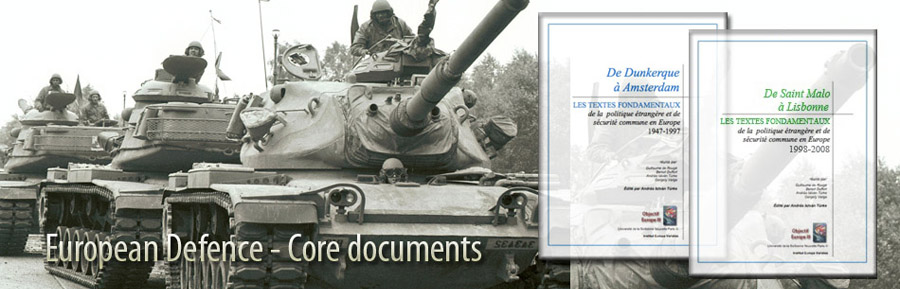
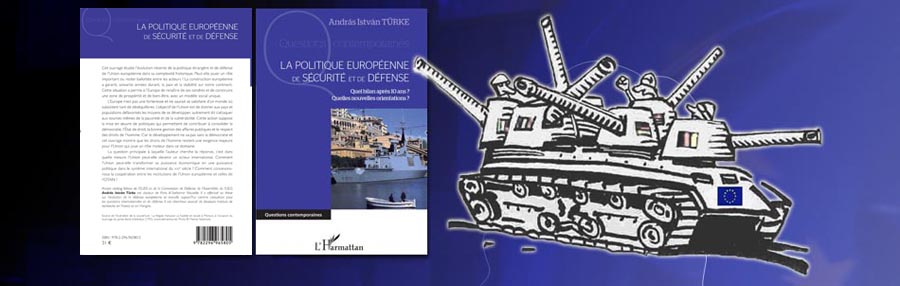
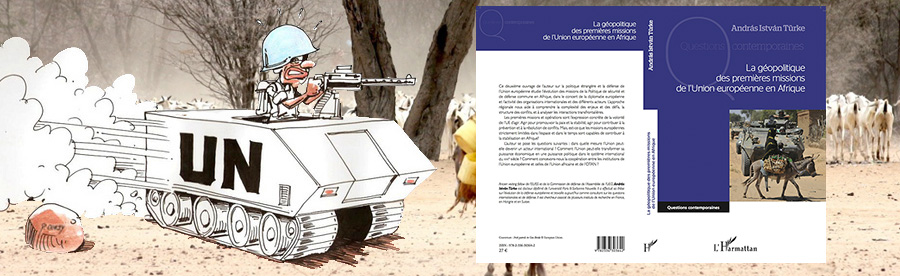
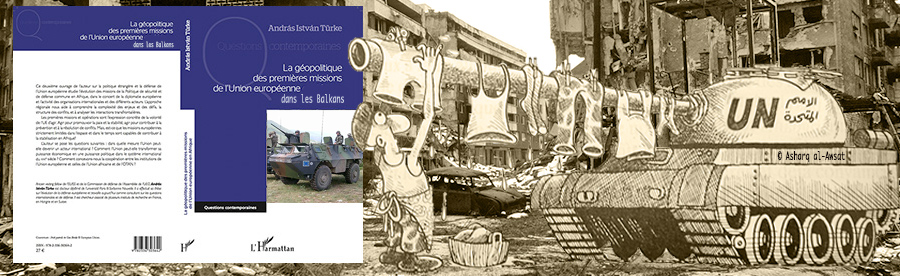
We are looking for sponsors for the English translation of these books, please contact turkeandras(at)gmail(dot)com