
You are here
Feed aggregator
Petites corruptions entre amis
Avec Caledonian Road, son septième roman, l'Écossais Andrew O'Hagan reprend l'ambition du « grand récit de Londres » : celui qui, de Charles Dickens à Anthony Powell, de John Lanchester à Sebastian Faulks, veut tenir une époque entière dans le flux d'une grande histoire. La Caledonian Road, (…)
/ Ecosse, Littérature, Inégalités
Categories: Diplomacy & Crisis News
Is BRICS Actually Benefiting India?
As India prepares to host the group's summit, what does it want from BRICS? And what is Delhi actually getting from the group?
Categories: Diplomacy & Crisis News
Le vin du septentrion
Au XIXe siècle, l'épidémie de phylloxéra a provoqué l'arrachage massif des pieds de vigne français. Un siècle et demi plus tard, le changement climatique produit un bouleversement semblable. Mais il déracine également les viticulteurs, en les obligeant à quitter les terroirs qu'ils ont façonnés. (…)
/ France, Agriculture, Climat, Eau, Sécheresse
Categories: Diplomacy & Crisis News
Pékin à la conquête de l'espace
La Chine a annoncé son intention d'envoyer des taïkonautes sur la Lune avant 2030. Les États-Unis ont fait savoir que leurs astronautes seraient « sur place pour les accueillir ». Le développement d'un secteur spatial chinois compétitif est perçu comme une menace existentielle par Washington. (…)
/ Espace, Technologie, États-Unis, Chine
Categories: Diplomacy & Crisis News
Africa’s Rangelands Are the Frontline of Resilience – COP17 Showed Why
Healthy rangelands are built through long-term commitment, local leadership and sustained investment. Credit: Shutterstock
By Samson Kuraru
NAIROBI, Kenya, Sep 4 2026 (IPS)
Across the Kenya-Tanzania rangelands, communities have long understood a reality that the global community is increasingly recognising: healthy rangelands support livelihoods, wildlife, water resources and local economies. They are among Africa’s most important natural assets and a foundation for resilience in a changing climate.
That lesson is especially relevant today. As East Africa prepares for the potential impacts of a strengthening El Niño, the focus should not be on rainfall totals alone. Forecasts point to an increased likelihood of wetter-than-normal conditions across much of the region, although the timing and distribution of rainfall may vary significantly.
Increased rainfall can improve pasture and water availability, but it can also increase flood risks and disrupt livelihoods, infrastructure and ecosystems. These conditions underscore the importance of healthy rangelands, reliable water sources and strong community-led approaches that help people prepare for and adapt to climate shocks.
One of the strongest messages to emerge from COP17 was the recognition of Indigenous Peoples, local communities and pastoralists as essential partners in restoring land and building resilience. Across Africa, communities are not simply beneficiaries of conservation and restoration efforts; they are often the people leading them
It was against this backdrop that governments, communities and development partners gathered in Ulaanbaatar, Mongolia, for UNCCD COP17.
The conference highlighted a growing global understanding that drought, land degradation, biodiversity loss, climate change, water security and livelihoods are closely linked challenges that must be addressed together. It also signalled a stronger focus on turning commitments into action through new partnerships, investments and initiatives aimed at strengthening resilience on the ground.
For Africa, this attention could not be more timely.
Rangelands cover nearly half of the continent’s land surface and support hundreds of millions of people. They underpin pastoral and livestock-based economies, sustain biodiversity and tourism, contribute to water security, and help communities adapt to a changing climate. Yet many of these landscapes face increasing pressure from recurring droughts, land degradation and growing climate risks.
The Kenya-Tanzania rangelands illustrate both the scale of the challenge and the opportunity. Stretching across some of East Africa’s most important wildlife and livestock landscapes, they support people, livestock and wildlife across interconnected ecosystems. Their future depends on how effectively land and water resources are managed today.
One of the strongest messages to emerge from COP17 was the recognition of Indigenous Peoples, local communities and pastoralists as essential partners in restoring land and building resilience. Across Africa, communities are not simply beneficiaries of conservation and restoration efforts; they are often the people leading them.
Across Kenya’s rangelands, community conservancies demonstrate what can be achieved when local knowledge is matched with investment and long-term partnerships.
A community conservancy is a locally governed institution through which landowners voluntarily work together to manage land, wildlife and other natural resources for shared social, economic and environmental benefits. These conservancies help protect wildlife while supporting livelihoods and improving the management of land and water resources.
A good example can be found in northern Kenya, where community conservancies operate across connected landscapes that support both pastoral livelihoods and wildlife. In these drylands, healthy grass is not simply an environmental asset; it underpins household income, livestock production and food security.
Community-led grazing systems help manage when and where livestock graze, protecting critical grazing areas during dry periods and allowing grasslands time to recover. Together with improved water management and restoration efforts, these approaches strengthen drought preparedness while supporting wildlife, livestock and local economies. They show that conservation and development do not have to compete. When communities are supported to lead, both people and nature can thrive.
These experiences point to an important lesson: while restoring degraded land remains essential, preventing degradation in the first place is often more effective and less costly. Healthy rangelands are built through long-term commitment, local leadership and sustained investment.
COP17 also elevated the importance of sustainable rangeland management through the Steppe Action Agenda and the Rangelands Flagship Initiative.
Together, these efforts seek to advance the conservation, sustainable management and restoration of rangelands while increasing investment and coordinated action to strengthen the resilience of pastoral and rangeland-dependent communities. They reflect growing recognition that healthy rangelands are essential for resilient communities, thriving biodiversity, water security and adaptation to climate risks.
Importantly, the conference also underscored that restoring land is not a financial burden. It is a strategic investment in resilience, livelihoods and prosperity.
This was reflected in the launch of the Drought Resilience Investment Facility (DRIF), which aims to help countries move from responding to drought crises to preparing for them. COP17 also announced approximately US$1.3 billion in new and pipeline financing for land restoration and drought resilience across 23 countries. Together, these commitments signal a growing shift towards proactive resilience-building rather than repeated emergency responses.
The challenge now is ensuring that investment reaches the communities doing the work on the ground. Success will depend not only on the amount of funding available, but also on strengthening the institutions, conservancies and partnerships that help manage land and water resources over the long term.
As governments, development partners, philanthropies and the private sector look to scale solutions across Africa, rangelands deserve far greater attention. They are among the continent’s most valuable assets for food security, biodiversity conservation, economic development and climate resilience.
COP17 highlighted what communities across Africa’s rangelands have known for generations: healthy land supports healthy communities. The task now is to turn that recognition into action through sustained investment, stronger partnerships and greater support for the people already managing these landscapes for the benefit of current and future generations.
Samson Kuraru is Northern Kenya Conservation Coordinator, The Nature Conservancy
Categories: Africa
Rückkehrzentren in der europäischen Migrationspolitik
Die EU-Rückführungsverordnung schafft eine Rechtsgrundlage dafür, Personen, gegen die eine rechtskräftige Ausreiseanordnung ergangen ist, in aufnahmebereite Drittstaaten zu überstellen, auch wenn sie zu diesen Staaten keinerlei vorherige Verbindung haben. Die Einrichtung sogenannter Rückkehrzentren wird damit zu einer realistischen Option. Politisch sind diese attraktiv: Sie bieten Regierungen eine Möglichkeit, auf besonders sichtbare Weise Durchsetzungsfähigkeit zu demonstrieren – zu einem Zeitpunkt, an dem die Glaubwürdigkeit des gerade erst in Kraft getretenen EU-Migrations- und Asylpakets davon abhängt, dass seine neuen Verfahren in der Praxis funktionieren. Politische Sichtbarkeit ist jedoch nicht mit operativer Wirksamkeit gleichzusetzen. Präzedenzfälle aus Europa und die jüngere US-Praxis sprechen dafür, dass Überstellungen in entfernte Drittstaaten auf wenige Fälle beschränkt, teuer und von fragilen Absprachen abhängig bleiben dürften. Als zusätzliches Instrument könnten Rückkehrzentren allenfalls für eine kleine Gruppe besonders schwer rückführbarer Personen relevant sein; eine allgemeine Antwort auf niedrige Rückkehrquoten sind sie nicht. Ihr Nutzen sollte daran gemessen werden, ob sie rechtmäßige und tragfähige Ergebnisse ermöglichen, die sich mit den bestehenden Instrumenten der Rückkehrpolitik nicht erzielen lassen.
Categories: Diplomacy & Defense Think Tank News
Kenya's Sichenje out for season with knee injury
Charlton Athletic defender Collins Sichenje is set to miss the remainder of the 2026-27 season with a knee injury.
Categories: Africa
Qui gouverne la Guinée-Bissau ?
On parle rarement de la Guinée-Bissau. Ce petit pays d'Afrique de l'Ouest, coincé entre le Sénégal et la Guinée, vient pourtant de vivre un moment politique assez saisissant. / Guinée-Bissau, Coup d'État, Démocratie, Élections, Politique, Narcotrafic
/ Guinée-Bissau, Coup d'État, Démocratie, Élections, Politique, Narcotrafic
Categories: Diplomacy & Crisis News
Nepalese Experts, Victims Contemplate the Future After the Flood
That day, Subash Tamang was mining sand along the banks of the Trishuli River near the Trishuli Hydropower Project, working alongside his wife, brother, sister-in-law, and two other family members. Suddenly, he noticed water gushing down from above the hydropower site. His first thought was that the dam had burst. In an instant, everything changed. […]
Categories: Africa
WHO Announces New Ebola Vaccine Guidelines for the DRC
Children accompanied by their mothers receive routine vaccinations during a vaccination session at the Bunia health center in Ituri province in the Democratic Republic of Congo.
By Shreya Komar
UNITED NATIONS, Sep 4 2026 (IPS)
While Uganda announced the end of its Ebola outbreak last week, the Democratic Republic of Congo (DRC) continues to battle its deadliest Ebola outbreak to date. As of September 1st, there have been over 6,000 cases, including over 3,000 deaths, with Ituri standing as the most affected province.
In a post on X on September 2, Tedros Adhanom Ghebreyesus, Director-General for the World Health Organization (WHO) expressed his concern that most deaths were still occurring in communities rather than in treatment centres, and among people who were not known contacts. This implies that there may be several methods of transmission that are unknown and several underreported cases.
“Until every chain is broken, the epidemic will continue to pose a threat to the DRC, its neighbours and the region as a whole,” said Dr. Tedros.
The outbreak has spread substantially, and with continued transmission, high mortality, and an urgent need to reduce preventable deaths, there have been talks of using the Ervebo® vaccine, the only currently licensed Ebola vaccine available, to treat patients. The vaccine was licensed and prequalified by the WHO in 2019 for the prevention of Ebola virus disease caused by Ebola virus (EBOV) in individuals aged one year or older. This vaccine, however, is not licensed for use against Bundibugyo virus (BDBV), and therefore the use of Ervebo® against BDBV would be considered off-label use for the current virus.
The Bundibugyo virus (BDBV), which is causing the current outbreak, differs from the last outbreak caused by the Ebola virus (EBOV). BDBV and EBOV cause Ebola disease that is clinically similar but are different in the genetic material they contain. Although the vaccine is highly effective against EBOV, the WHO said it remains unknown how much the immunity provided by the approved vaccine protects against the virus causing the current outbreak (BDBV).
In its most recent published emergency guidance on the use of Ervebo®, the WHO has concluded that evidence available to date remains insufficient to support the programmatic use of Ervebo® for the prevention of BDBV disease, and the vaccine should only be used within the context of a research protocol.
The WHO recommends testing Ervebo® vaccine in a carefully run trial to determine whether it protects against BDBV. During a serious outbreak, wider use may be considered, but only as part of research with a clear safety plan. They emphasized that communities should be told that vaccination does not replace proven outbreak-control measures.
Additionally, there has been promising progress in efforts to create targeted treatments against the new virus variant. “Two new vaccines against Bundibugyo virus are now in safety trials in the UK and Canada,” Dr. Tedros told reporters in Geneva on Wednesday. He announced that the phase 1 clinical trials are being held by the U.S.-based Moderna group using mRNA technology, and another by the University of Oxford.
IPS UN Bureau Report
Follow @IPSNewsUNBureau
!function(d,s,id){var js,fjs=d.getElementsByTagName(s)[0],p=/^http:/.test(d.location)?'http':'https';if(!d.getElementById(id)){js=d.createElement(s);js.id=id;js.src=p+'://platform.twitter.com/widgets.js';fjs.parentNode.insertBefore(js,fjs);}}(document, 'script', 'twitter-wjs');
Categories: Africa
IA, le mur
Il faut se rendre à l'évidence : que le moral faiblit. La croyance IA, mieux que la dialectique, allait casser les briques, et la voilà qui flanche. Il y a des médisants et des malfaisants, qui trouvent à redire. Jusqu'ici ils étaient une anomalie sans conséquence, voilà qu'on les écoute, qu'on y ajoute foi même. Et le doute commence à s'insinuer : tout ceci – ces trillions en tous sens –, est-ce bien raisonnable ?
- La pompe à phynance / États-Unis, Banque, Finance, Informatique, Technologie, Crise financière
Categories: Défense
Liverpool target Minteh can still get dream move - Hurzeler
Brighton boss Fabian Hurzeler says Yankuba Minteh can still "fulfil his dream" move in future after the Seagulls turned down Liverpool's offers for the winger.
Categories: Africa
SEDE Opinion on the draft general budget of the European Union for the financial year 2027 - PE791.003v01-00
SEDE Opinion on the draft general budget of the European Union for the financial year 2027
Committee on Security and Defence
Mārtiņš Staķis
Source : © European Union, 2026 - EP
Committee on Security and Defence
Mārtiņš Staķis
Source : © European Union, 2026 - EP
Categories: Europäische Union
SEDE Opinion on the draft general budget of the European Union for the financial year 2027 - PE791.003v01-00
SEDE Opinion on the draft general budget of the European Union for the financial year 2027
Committee on Security and Defence
Mārtiņš Staķis
Source : © European Union, 2026 - EP
Committee on Security and Defence
Mārtiņš Staķis
Source : © European Union, 2026 - EP
Categories: Defence`s Feeds, European Union
Russian military spending soars, upending the Kremlin’s budget plans
When Vladimir Putin takes the stage at a major public event, little is left to chance. Speeches, questions and answers are usually choreographed down to the smallest detail. Putin’s appearance at the Eastern Economic Forum in Vladivostok on September 3 was no exception. The plenary session began with a largely boilerplate speech by Putin on the socio-economic development of Russia’s Far East. But when Putin left the podium and returned to his seat on stage, the moderator immediately shifted the discussion to a different topic. He asked Putin about the state of the federal budget, pointing to the rapidly widening hole in Russian government finances.
The choice of question was certainly no coincidence. The Kremlin apparently wanted to send a reassuring message about the budget. “There is nothing critical here,” Putin told the audience of economic and financial elites gathered in the plenary hall in Vladivostok.
But Russia’s economic elites have plenty of reasons to be worried: The fiscal situation is deteriorating quickly as the costs of the war continue to soar. Newly released data on Russian spending in the first half of 2026 shows that military spending rose by 30 per cent compared with the same period last year, reaching 10.7 trillion rubles, or 4.7 per cent of projected GDP for 2026. Russia had originally planned to cut military spending this year. So far, the opposite is happening: If military spending continues at this pace, it will exceed 9 per cent of GDP by December, marking a new record in Russia’s post-Soviet history.
Fiscal pressures are increasingThe unplanned growth of military spending is undoing the fiscal consolidation on which Russia’s budget for the current year was built. By the end of September, the Russian government is expected to present its budget plans for 2027. “Maybe we should start saving a little more?” the moderator suggested to Vladimir Putin at the Eastern Economic Forum, almost as if to pave the way for the president to justify painful new budget cuts. Putin responded that it’s not simply about cuts, but about spending rationally and with clear priorities, effectively laying the rhetorical groundwork for reductions that are increasingly likely to fall on the civilian parts of the budget.
Budget cuts, however, will not free up enough funds to cover the increase in war costs. As revenues are not keeping pace, the higher military spending will translate into a higher budget deficit. By the end of July, budget data showed a deficit of 2.8 per cent of GDP – almost twice the original annual target. In recent years, Russia has used its National Wealth Fund to finance budget shortfalls, but liquid assets in the fund have dwindled to just 1.6 per cent of GDP. This means that the Russian Finance Ministry has to rely on new debt as its primary source of financing. However, domestic borrowing has become extremely expensive for Moscow. Against the backdrop of high public expenditure and concerns about higher inflation, interest rates on long-term Russian government bonds climbed to almost 17 per cent in July.
Doubts are not welcome in publicThe Kremlin has gone to great lengths to shield the Russian public from the impacts of the war, preserving a veneer of normality as the war rages in Ukraine. But in 2026, the strains of the war have become increasingly apparent. Ukrainian long-range strikes on refineries have caused a petrol shortage that the Kremlin has struggled to contain. Attacks on large warehouses have further exposed Russia’s vulnerability to Ukraine’s expanding long-range strike capabilities. Russia’s budget worries add to the mounting pressures that Putin is facing at home.
On the sidelines of the Eastern Economic Forum in Vladivostok, another announcement was made that received little media attention: Russia’s state development bank VEB.RF presented a new chief economist. The position had previously been held by Andrei Klepach, a former deputy economy minister and one of Russia’s most prominent economists. Klepach had been dismissed after publicly warning about the mounting costs of the war and arguing that Russia was falling behind economically and technologically in a prolonged war of attrition.
Klepach’s removal sent a clear signal that such doubts are not welcome in public debate. Those who remain unconvinced by Putin’s reassuring words are apparently better off keeping quiet. But silencing the doubters will not make the mounting costs of the war disappear.
This analysis is based on data from the newly launched SWP Russian Budget Monitor. Click here for more information.
Categories: Diplomacy & Defense Think Tank News
Between the Reef and the StarsA reflection on humanity’s twin longings.
By James Alix Michel
VICTORIA, Seychelles, Sep 4 2026 (IPS)
There is an older wisdom, quieter than the noise of our times, that whispers a simple truth: we are not the architects of nature, only its guests. Long before there were nations, economies, or even language, there was the pulse of the tide, the patience of coral, the breath of forests exchanging air with the sky. Into that ancient conversation we arrived — late, curious, and forgetful — mistaking our cleverness for sovereignty and our tools for wings.
Yet the sea remembers what we have forgotten. It remembers that every drop of rain has travelled through the roots of trees and the bodies of fish before returning to us as thirst quenched or harvest gathered. It remembers that the reef and the child, the mangrove and the fisherman, the albatross and the sailor, are all verses of the same unfinished poem. To live well is to learn that poem by heart — to know that when one line is silenced, the whole song grows thinner.
And still, something in us reaches further. The same species that learned to read the tides also learned to read the stars. From the first firelit night when a human being looked up and wondered, we have carried within us a quiet, luminous restlessness — a longing to know what lies beyond the horizon, beyond the atmosphere, beyond the reach of our brief lives. It is not vanity that drives this longing, but memory. Perhaps some ancient part of us recognises, in the distant glimmer of a star, a trace of our own origin — the stardust from which our bones were made, the cosmic seed from which life on this small blue world first stirred.
To be human, then, is to live in two directions at once. Downward, into the depths of the sea, where life first learned to breathe. Outward, into the vastness of space, where light itself becomes a form of scripture. Both journeys are acts of reverence. Both remind us that we are neither the centre nor the summit of creation, but its wondering witnesses — creatures endowed with the extraordinary gift of consciousness, and with it, the responsibility to use that gift with humility.
This is the paradox of our species: we are small enough to be humbled by a single wave, and large enough in imagination to send our thoughts across galaxies. We build submarines to touch the ocean floor and telescopes to touch the edge of time. Yet both instruments, in the end, do the same thing — they extend our capacity to wonder. Wonder is the beginning of wisdom, and wisdom is the beginning of care.
Perhaps this is the deepest task of our century: not to choose between protecting our planet and exploring the cosmos, but to understand that the two callings are one. We cannot honour the stars while poisoning the seas. We cannot dream of new worlds while abandoning the one that gave us breath. The reef and the galaxy are written in the same handwriting. To care for one is to prepare ourselves, morally and spiritually, for the other.
Small-island nations know this instinctively. We live at the meeting point of sea and sky, where the horizon is a daily teacher. We understand that fragility and vastness are not opposites but companions — that the smallest coral polyp and the most distant nebula belong to the same continuum of creation. When we speak of protecting the ocean, we are not defending a resource; we are defending a relationship. And when humanity looks upward, dreaming of Mars or of life on some far-off moon, we are not escaping the Earth; we are extending the same longing that first drew our ancestors to the sea.
For those of us shaped by the ocean, this is not philosophy — it is instinct. We have always known that the horizon is not a boundary but an invitation, that the sea is not a possession but a companion, and that the night sky is not empty but full of the same silent kinship that binds us to the coral and the whale.
If humanity can learn, once more, to walk softly among its fellow travellers — on this small blue planet and among the countless worlds beyond — then perhaps our story will not end in exhaustion, but in reverence: the quiet dignity of a species that finally remembered it was never alone, and never was meant to be still.
James Alix Michel, is Former President of the Republic of Seychelles
IPS UN Bureau
Follow @IPSNewsUNBureau
!function(d,s,id){var js,fjs=d.getElementsByTagName(s)[0],p=/^http:/.test(d.location)?'http':'https';if(!d.getElementById(id)){js=d.createElement(s);js.id=id;js.src=p+'://platform.twitter.com/widgets.js';fjs.parentNode.insertBefore(js,fjs);}}(document, 'script', 'twitter-wjs');
Categories: Africa
Gólzáporos győzelem Győrben
Categories: Kelet-Közép-Európa
France : From Burgundy brotherhoods to grands crus… How French spymasters make the most of wine diplomacy
During President Emmanuel Macron's first term of office, two of Europe's top spymasters spent an entire weekend travelling along the [...]
Categories: Defence`s Feeds
Monaco : With FATF trip, Monaco holds hopes of financial crime 'grey list' removal
Intelligence Online understands that a delegation from the Financial Action Task Force (FATF) will visit Monaco next week. This will [...]
Categories: Defence`s Feeds
Pages


© 2012-2018 Europa Varietas Foundation © 2015-2018 Europa Varietas Association
www.europavarietas.org | info(@)europavarietas(dot)org | Switzerland
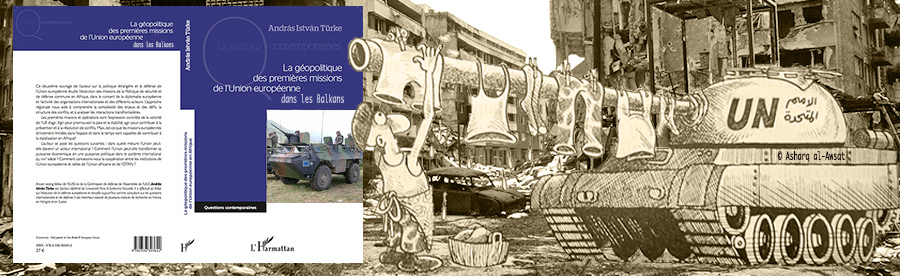
We are looking for sponsors for the English translation of these books, please contact turkeandras(at)gmail(dot)com