
You are here
Feed aggregator
Gilles Boyer (Horizons) : "Je ne suis pas pour qu'on interdise quiconque de s'exprimer"
Après l'attentat de Trappes, la banalisation des discours haineux et racistes est dénoncée par la gauche. Le maire LFI de Saint-Denis, Bally Bagayoko, a appelé à interdire d'antenne le Rassemblement national (RN). Gilles Boyer, codirecteur de la campagne d'Édouard Philippe estime que "le RN ne peut pas être empêché, pas plus qu'un autre". Sur la présidentielle, il affirme que rien n'est joué et que "l'élection présidentielle va véritablement démarrer en janvier".
Categories: France
The new Washington dissensus: Trump, development cooperation and global (dis)order makin
This paper examines the ideological and policy shifts in US development cooperation under the second Trump administration and their implications for international development and the
evolving global (dis)order. Recent US measures, we argue, amount to more than a domestic policy change. They signal a foundational challenge to longstanding norms of the development
cooperation system. We identify and discuss five principles underpinning what we term the ‘new Washington Dissensus’. These five principles shift development cooperation away from
country partnerships and the logic of global public goods and to an overtly transactional, nationalist model of cooperation. The paper situates these developments within broader debates about the fragmentation of global order, focusing on development cooperation as a site of normative contestation and (dis)order-making. We argue the second Trump administration’s approach to development cooperation constitutes a new form of coercive order. This can be termed a ‘nationalist conditionality regime’ in the sense that it seeks to assert national dominance and marginalise universal norms. Beyond the US we explore norm imperialism and the risks of normative contagion. We provide a typology of competing regimes of development cooperation to situate the Trump administration’s approach. We close with a set of implications for decision-makers in governments, multilaterals and recipient agencies.
Categories: Diplomacy & Defense Think Tank News
How to Not Change Your Mind
Even when you’re wrong about the Iran war (or anything else).
Categories: Afrique, Diplomacy & Crisis News
Janvier Yahouédéou prépare l'installation des délégués généraux
Le ministre de la Décentralisation et de la Gouvernance locale, Janvier Yahouédéou, a effectué une tournée nationale du 13 au 24 octobre 2026 dans les cités administratives départementales.
En prélude à l'installation des futurs délégués généraux des six pôles de développement territorial, le ministre de la Décentralisation et de la Gouvernance locale, Janvier Yahouédéou, a effectué une tournée nationale.
Au cours de cette tournée, le ministre s'est rendu à Parakou, Kandi, Natitingou, Djougou, Dassa-Zoumè, Porto-Novo, Pobè, Abomey, Aplahoué, Lokossa et Allada. Il y a échangé avec les préfets et les responsables administratifs, tout en visitant les infrastructures susceptibles d'accueillir les futurs délégués généraux et leurs équipes.
Les visites ont permis d'évaluer les locaux disponibles et de relever les besoins matériels et organisationnels nécessaires au fonctionnement des six pôles. L'objectif est d'anticiper les conditions pratiques de leur installation et de faciliter leur mise en service.
Cette initiative constitue une étape préparatoire à la mise en œuvre de la réforme des pôles de développement territorial.
Categories: Afrique
Flooding and Food Security: The Urgent Need for Research
Flooding is a complex, sequential plant stressor, and its negative impacts on crops persist even after floodwaters recede. Credit: Shutterstock
By Esther Ngumbi
URBANA, Illinois, US, Oct 28 2026 (IPS)
Recently, countries around the world, including the United States of America, celebrated the United Nations 2026 World Food Day. This year’s theme, “Innovate Today. Nourish Tomorrow,” highlighted how efforts to foster innovation and forward-thinking solutions can help to ensure that everyone in our world has access to sufficient, diverse, safe, and nutritious foods while safeguarding the planet for future generations.
But realizing this vision and developing forward-thinking solutions to help nourish 9 billion people including the 645 million people who still face hunger, requires recognizing and investing in research on emerging agricultural challenges, specifically those that remain overlooked and underestimated.
Many of the currently grown agricultural crop varieties cannot withstand flooding and crop and yield losses of up to 100 percent have been reported both nationally and globally. Crops and yield losses arising because of flooding translate into economic losses and ultimately food insecurity
Arguably, flooding is one of the emerging yet underestimated and underappreciated threats to important agricultural crops, including rice and corn, and to food security, which has increased in frequency and intensity in recent years because of climate change.
Globally, between 2008 and 2018, according to a Food and Agriculture Organization of the United Nations report, flooding was ranked as the second driving factor resulting on crop production losses.
Flooding deprives soil and plant roots of oxygen, a necessary ingredient for all plant-sustaining life processes, including water uptake, respiration, and photosynthesis. Consequently, plants’ cellular, physiological, metabolic, and biochemical processes are disrupted, impacted, and impaired. Without oxygen, plants’ growth and development is impacted, and if flooding persists for days, they suffocate and die.
Sadly, many of the currently grown agricultural crop varieties cannot withstand flooding and crop and yield losses of up to 100 percent have been reported both nationally and globally. Crops and yield losses arising because of flooding translate into economic losses and ultimately food insecurity.
Alarmingly, flooding also negatively impacts soil biology, chemistry, functioning, quality, and microbial communities while disrupting the many beneficial relationships plants form with microbes, relationships that help plants deal with other stressors and promote growth and resilience.
Concerningly, flooding is a complex, sequential plant stressor, and its negative impacts on crops persist even after floodwaters recede. After floodwater subsides, agricultural crops enter the second phase of flooding stress, referred to as the post-flooding stress phase.
During the post-flooding stress phase, plants face additional stresses, including reoxygenation and dehydration, impaired root function, and nutritional deficiencies due to altered nutrient uptake. At the same time, plants are vulnerable to pathogens, diseases, and pests, threats that can collectively lead to agricultural crop losses.
The good news, however, is that science, research, and scientific discoveries can provide the forward-thinking solutions needed to safeguard our food systems against emerging threats.
But for research to provide these solutions, researchers working to address these questions must be funded.
Take the case of flooding. With funding and investments, researchers can pursue multiple research pathways to understand flooding while also pursuing bold and innovative ideas with the goal of developing and advancing science-based solutions to mitigate the negative and detrimental impacts flooding has on agricultural crops and soils that underpin plant and ecosystem health.
First, scientists can build a comprehensive understanding of flooding, including discovering the many strategies plants use to resist and recover from flooding and post-flooding stress.
Second, researchers can pursue both short- and long-term field-based experiments that incorporate thousands of crop varieties, including wild varieties, across different soil types to establish a more comprehensive understanding of flooding and post-flooding impacts on plant and soil health, biology, chemistry, and microbes, as well as the legacy and cascading effects of flooding.
Concurrently, this research can identify microbial taxa, communities, functions, and traits that improve flooding tolerance. Additionally, researchers can work to determine whether the current management practices that have been put in place to protect soil health and help plants resist biotic and abiotic threats, including regenerative practices, are keeping pace with intensifying flooding events.
Third and most importantly, with funding, scientists from multiple disciplines, including plant biology, entomology, engineering, agronomy, microbial ecology, predictive modelling, breeding, and soil health biology, can collaborate to design innovative solutions and accelerate the discovery of new solutions to flooding.
Ultimately, mitigating threats like flooding that could derail and undermine progress toward building climate-resilient crops and improving soil health and biology requires a comprehensive understanding of flooding and its impact on soil health, biology, and plants.
With sufficient funding and investment, scientists, in collaboration with stakeholders, can develop transformative solutions to address flooding and fulfill 2026 World Food Day theme “Innovate today. Nourish tomorrow.” Time is of the essence.
Esther Ngumbi, PhD, is an Associate Professor in the Department of Entomology at the University of Illinois Urbana Champaign.
Categories: Africa
Un enfant de 18 mois victime d'une attaque de chien
Un chien en divagation a mordu un garçon de 18 mois au pied, vendredi 23 octobre 2026, au quartier Ganon, dans le premier arrondissement de Parakou.
Les animaux sans surveillance font des dégâts dans les rues de Parakou. À Ganon, un enfant de 18 mois a été mordu par un chien. Selon Fraternité FM, le garçon se rendait chez son grand-père lorsqu'il a été attaqué près d'un portail. Le petit garçon a été conduit à l'hôpital pour recevoir des soins.
La même source précise que le chien aurait déjà mordu un autre enfant. Des jeunes du quartier ont abattu l'animal et remis son corps aux services vétérinaires pour analyse.
Categories: Afrique
The Quiet Power of International Orders
What 2 percent milk reveals about our system of rules and norms.
Categories: Afrique, Diplomacy & Crisis News
Chinese mainland spokesperson slams reports of TSMC asking suppliers to assess alternatives that do not use mainland rare earths
A spokesperson for the Taiwan Affairs Office of the State Council on Wednesday slammed reports of TSMC asking suppliers to assess alternatives that do not use mainland rare earths amid the mainland's export controls on rare earth materials, magnets and related processing technologies.
Categories: Balkan News, Defence`s Feeds
Safeguarding national sovereignty a shared duty of all Chinese people including Taiwan compatriots: mainland spokesperson on Kevin Tsai's remarks
Asked about a recent social media post in which Kevin Tsai Kang-yong said he had "never supported Taiwan independence," Chen Binhua, a spokesperson for the State Council Taiwan Affairs Office, said on Wednesday that safeguarding national sovereignty and territorial integrity is a shared obligation of all Chinese people, including compatriots in the Taiwan region.
Categories: Balkan News, Defence`s Feeds
PLA activities in the waters and airspace around Taiwan
No description
Categories: Balkan News, Defence`s Feeds
U.S. military raises cost estimate of Iran war to 47 bln USD
The cost of the U.S. military campaign against Iran has risen to at least 47 billion U.S. dollars, up 3.5 billion dollars from early September, local media reported Tuesday.
Categories: Balkan News, Defence`s Feeds
UNRWA Situation Report #237 on the Humanitarian Crisis in the Gaza Strip and the occupied West Bank, including East Jerusalem
No description
Categories: Balkan News, Defence`s Feeds
Coalition: Air Defenses Intercept, Destroy Ballistic Missile Launched by Terrorist Houthi Militia Toward Taif
Official Spokesperson for the Coalition to Restore Legitimacy in Yemen Major General Turki Al-Malki stated that air defenses intercepted and destroyed a ballistic missile launched by the terrorist Houthi militia toward Taif
Categories: Balkan News, Defence`s Feeds
Japan-U.S. Defense Ministerial Meeting (Summary)
On October 28, 2026, while visiting the Philippines to participate in the ASEAN Defence Ministers' Meeting Plus (ADMM-Plus), Defense Minister Koizumi and Secretary of War Hegseth held discussions from 8:30 (local time) for approximately 30 minutes. The summary is as follows.
Categories: Balkan News, Defence`s Feeds
Netanyahu's rival Eisenkot says ready to form government as exit polls show Israeli election deadlock
Israeli opposition leader Gadi Eisenkot said Tuesday night that exit polls showing his bloc ahead of Prime Minister Benjamin Netanyahu's ruling coalition reflected a "complete lack of confidence" in Netanyahu's government, vowing to move swiftly to replace it, as the projections pointed to a parliamentary election deadlock.
Categories: Balkan News, Defence`s Feeds
Respected Comrade Kim Jong Un Has Photo Session with Participants in Third Meeting of Company Leaders of KPA
Respected Comrade Kim Jong Un, General Secretary of the Workers' Party of Korea and President of the State Affairs of the Democratic People's Republic of Korea, had a photo session with the participants in the Third Meeting of Company Leaders of the Korean People's Army on Oct. 27.
Categories: Defence`s Feeds
Chinese envoy calls for immediate end to US embargo, pressure on Cuba at UN General Assembly
China has once again strongly demanded that the US immediately lift its blockade of Cuba and stop exerting pressure on the country, and will continue to firmly support Cuba's just cause of safeguarding its national sovereignty, security and right to development, Fu Cong, China's Permanent Representative to the UN, said in an address to the General Assembly on Tuesday.
Categories: Defence`s Feeds
Lula calls Flavio Bolsonaro's departure from Brazil "shameful"
Brazilian President Luiz Inacio Lula da Silva on Tuesday criticized defeated presidential candidate Flavio Bolsonaro for leaving the country following the election, calling the move "shameful."
Categories: Defence`s Feeds
Pages


© 2012-2018 Europa Varietas Foundation © 2015-2018 Europa Varietas Association
www.europavarietas.org | info(@)europavarietas(dot)org | Switzerland

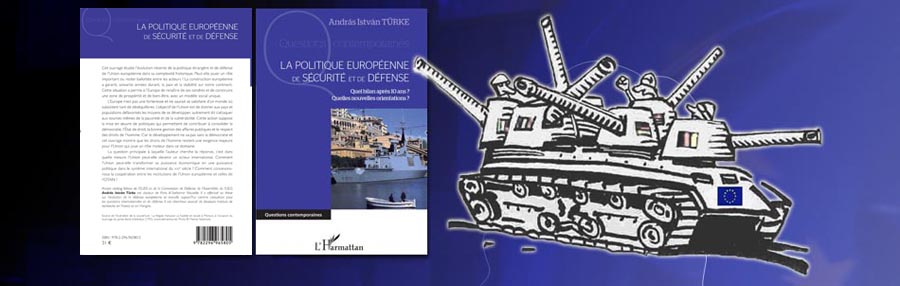
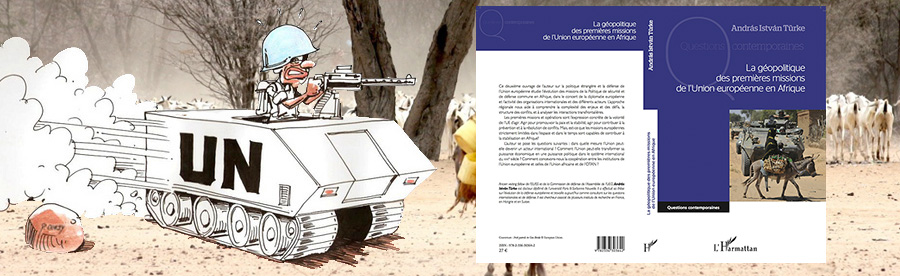
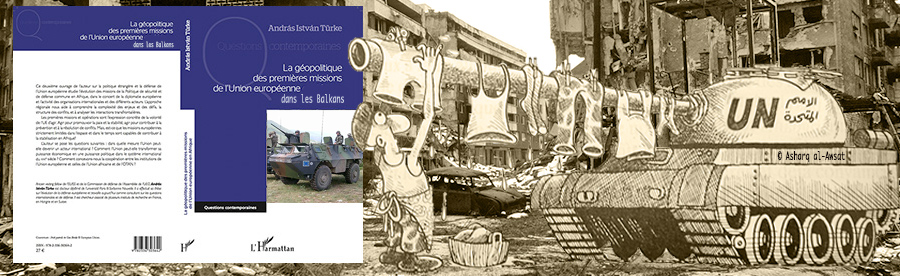
We are looking for sponsors for the English translation of these books, please contact turkeandras(at)gmail(dot)com