
You are here
European Union
Bündner Polizei schnappt ihn: Italiener (37) fährt neun Kilometer als Falschfahrer auf Autobahn
Ein Lieferwagenfahrer ist am Dienstag auf der Autobahn A13 rund neun Kilometer als Falschfahrer auf der Südspur gefahren. Die Kantonspolizei Graubünden konnte ihn in Lostallo ermitteln.
Categories: European Union, Swiss News
Mehrere Fälle gemeldet: iPhone weg? Diese SMS ist eine Falle!
Die Hoffnung stirbt zuletzt; das wissen auch Betrüger. Monate nach dem iPhone-Klau schlagen sie zu. Mit einer Nachricht, die das verspricht, was man sich wünscht: Gerät gefunden. Doch wer jetzt klickt, verliert noch viel mehr.
Categories: European Union, Swiss News
Video einer Ausschusssitzung - Mittwoch, 5. November 2025 - 10:00 - Ausschuss für Sicherheit und Verteidigung
Dauer des Videos : 120'
Haftungsausschluss : Die Verdolmetschung der Debatten soll die Kommunikation erleichtern, sie stellt jedoch keine authentische Aufzeichnung der Debatten dar. Authentisch sind nur die Originalfassungen der Reden bzw. ihre überprüften schriftlichen Übersetzungen.
Quelle : © Europäische Union, 2025 - EP
Categories: Europäische Union, European Union
Brussels airport to resume flights after drone sightings
The main airport in Belgium’s capital is expected to resume normal operations on Wednesday, after halting some 80 flights after suspected drone sightings, a spokeswoman said. Some 400-500 passengers had to spend the night at Zaventem airport because of the sightings, Brussels Airport spokesperson Ariane Goossens told AFP. “The situation will return to normal during […]
Categories: European Union
Christian Lagnidé défend un mandat unique à compter de 2031
L'ancien ministre dans le gouvernement du président Mathieu Kérékou, Christian Enock Lagnidé, a adressé une lettre de contribution au chef de l'État Patrice Talon dans le cadre du débat sur la révision de la Constitution béninoise du 11 décembre 1990. Le candidat aux présidentielles de 2011 et 2016 y formule plusieurs propositions qu'il juge nécessaires pour adapter la loi fondamentale aux réalités actuelles du Bénin.
Dans sa correspondance transmise également au président de l'Assemblée nationale, Christian Lagnidé salue les acquis démocratiques du pays, tout en soulignant la nécessité d'une « révision éclairée » de la Constitution, après trente-cinq ans d'application. Selon lui, les mutations sociales, économiques et institutionnelles appellent des ajustements pour renforcer la stabilité, la justice et la gouvernance.
Un mandat présidentiel unique pour garantir la stabilité
L'une des propositions phares de l'ancien ministre est l'instauration d'un mandat présidentiel unique de cinq ou sept ans, non renouvelable, à compter de 2031. Une mesure qui, selon lui, permettrait de « garantir la stabilité du pouvoir exécutif, d'éviter les tensions liées au renouvellement du mandat » et d'encourager une gouvernance orientée vers l'intérêt national plutôt que vers la recherche de réélection.
Abaisser l'âge d'éligibilité et promouvoir la jeunesse
L'ex ministre suggère également d'actualiser l'âge d'éligibilité à la présidence de la République entre 35 et 70 ans, toujours à partir de 2031. Cette réforme viserait à « permettre à la jeune génération, déjà précoce en maturité politique et en engagement patriotique, de pouvoir servir le Bénin au niveau le plus élevé ».
Un vote obligatoire ou récompensé
Sur le plan civique, il recommande de faire du vote un devoir obligatoire ou, à défaut, d'instaurer un mécanisme incitatif pour récompenser les citoyens qui participent régulièrement aux scrutins. Pour lui, la vitalité démocratique dépend aussi de la participation citoyenne active.
La création d'un Sénat comme chambre de sagesse
Abordant enfin la question du bicaméralisme envisagé dans le projet de révision, Christian Enock Lagnidé se déclare favorable à la création d'un Sénat, qu'il conçoit comme une « véritable chambre de sagesse et de mémoire nationale ». Cette institution, selon sa vision, devrait garantir la stabilité politique, la qualité de la gouvernance et le consensus national.
Il propose une composition mixte. Des membres de droit à vie, dont les anciens présidents de la République, de l'Assemblée nationale et de la Cour constitutionnelle. Des membres désignés pour un mandat de cinq ans renouvelable, parmi lesquels six représentants des collectivités territoriales (à raison d'un pour deux départements) et cinq anciens ministres ou hauts fonctionnaires.
Pour Christian Lagnidé, ce Sénat incarnerait « la continuité de la République » et servirait d'instance morale, capable d'arbitrer les divergences politiques et de réguler le fonctionnement des institutions. Il appelle à une réforme constitutionnelle mesurée et anticipatrice, tournée vers la consolidation de la démocratie béninoise à l'horizon 2031.
A.A.A
Categories: Afrique, European Union
Lezuhant egy teherszállító repülőgép Kentuckyban
Hirado.hu: Többen meghaltak, amikor kőolaj-újrahasznosító üzemre zuhant egy teherszállító repülőgép a Kentucky állambeli Louisville nemzetközi repülőtere közelében kedden (11. 4.). A beszámolók alapján a Honolulu felé induló repülőgépet felszállás közben érte a szerencsétlenség. A legfrissebb adatok szerint legalább 7 ember életét vesztette és legkevesebb 11-en megsérültek. (MTI)
"Ma peau pelait" : les femmes africaines piégées pour fabriquer des drones russes
Une enquête de la BBC révèle que de jeunes femmes africaines sont piégées et contraintes de construire des drones russes.
Categories: Afrique, European Union
Video einer Ausschusssitzung - Mittwoch, 5. November 2025 - 08:00 - Ausschuss für Sicherheit und Verteidigung
Dauer des Videos : 120'
Haftungsausschluss : Die Verdolmetschung der Debatten soll die Kommunikation erleichtern, sie stellt jedoch keine authentische Aufzeichnung der Debatten dar. Authentisch sind nur die Originalfassungen der Reden bzw. ihre überprüften schriftlichen Übersetzungen.
Quelle : © Europäische Union, 2025 - EP
Haftungsausschluss : Die Verdolmetschung der Debatten soll die Kommunikation erleichtern, sie stellt jedoch keine authentische Aufzeichnung der Debatten dar. Authentisch sind nur die Originalfassungen der Reden bzw. ihre überprüften schriftlichen Übersetzungen.
Quelle : © Europäische Union, 2025 - EP
Categories: Europäische Union, European Union
Power-Sharing —Boomers and Gen Z Face Off at the ICSW
A session titled Youth Movements and Democratic Futures in South Asia at International Civil Society Week, held at Bangkok’s Thammasat University. Credit: Zofeen Ebrahim/IPS
By Zofeen Ebrahim
BANGKOK, Nov 5 2025 (IPS)
The message is clear: today’s youth are not “wishy-washy.” They are not just the future—they are the present, full partners in shaping it, and “power-sharing” is the new mantra. The veterans of activism are being reminded not merely to listen but to hear and to leave their egos at the door.
These were among the many resonant takeaways from the five-day International Civil Society Week, held at Bangkok’s Thammasat University.
Yet beneath the optimistic rhetoric, a different mood lingered. Many young participants seemed despondent, feeling short-changed by their elders—empowered in words, but excluded in practice.
At a session titled “Youth Movements and Democratic Futures in South Asia,” young voices from Bangladesh, Sri Lanka, India, Pakistan, and Nepal shared their frustrations and fears for the future.
Student activist Ammad Talpur at the Youth Movements and Democratic Futures in South Asia session at International Civil Society Week, held at Bangkok’s Thammasat University. Credit: Zofeen Ebrahim/IPS
In Pakistan, said student activist Ammad Talpur, nepotism runs deep, inequality is horrific and brutal, and the powerful break laws with impunity. “We long for change, but fear silences us, as those in power will not brook dissent.”
A similar sense of frustration echoes beyond Pakistan.
“Though sometimes its exercise may come at a cost, youth in India are free to say anything and freedom of speech does exist,” Adrian D’ruz, another panelist, told IPS after the session. And journalists, academics, students, and comedians who questioned those in power, he said, reportedly faced legal action, online harassment, or institutional pressure.
To curb dissent, legal provisions are misapplied, resulting in people “leaning towards self-censorship rather than risking consequences,” said D’Cruz, a member of a network of NGOs in India called Wada Na Todo Abhiyan, which promotes governance accountability and inclusion of marginalized communities.
While Pakistan and India illustrate the pressures youth face under entrenched power, in Nepal the response has taken a more visible, street-level form, riding a wave of unrest that began in Sri Lanka and Bangladesh.
In Kathmandu, “rising unemployment, corruption, nepotism, and broken promises” fueled the unrest, said Tikashwari Rai, a young Nepali mother of two daughters, worried for their future.
Tikashwari Rai, a Nepali mother of two daughters, at the Youth Movements and Democratic Futures in South Asia session at International Civil Society Week, held at Bangkok’s Thammasat University. Credit: Zofeen Ebrahim/IPS
“We don’t want to work as domestic help in the Middle East; we want opportunities here, in our own country. But because there are none, many young people are forced to leave,” she explained.
Yet, she admitted, the protests came at a heavy cost—lives lost and infrastructure destroyed. “Our youth need guidance and stronger organization to lead social movements effectively,” she added.
Beyond the immediate triggers of street protests, some activists argue that deeper systemic issues fuel youth disenchantment.
Melani Gunathilaka, a climate and political activist from Sri Lanka, at the Youth Movements and Democratic Futures in South Asia session at International Civil Society Week, held at Bangkok’s Thammasat University. Credit: Zofeen Ebrahim/IPS
Melani Gunathilaka, a young climate and political activist from Sri Lanka, who was also on the panel, believed the roots of disenchantment ran deeper. “While these protests are often labeled as anti-government, at their core, they demand systemic change and true accountability from those in power.”
The immediate triggers seem to spread across corruption, authoritarian governments, repression, lack of access to basic needs and more,” she said.
A closer look at the situation in countries like Nepal, Bangladesh, Sri Lanka and Kenya, however, exposed economic hardship, debt burdens, and deepening inequalities. And this trend is also observed globally, she pointed out.
Despite these frustrations, the conference also explored how young and older activists can work together, not just to protest, but to reshape movements constructively.
“Across civil society, there is growing recognition that youth must be meaningfully included in development and nation-building. While progress varies from group to group, the direction of change is unmistakably forward,” said D’cruz.
Talpur further fine-tuned D’Cruz’s sentiment. “It’s not about taking over; it’s about working together through collaboration.” He also found it “unfair for the boomers to create a mess and leave it to the millennials and Gen Z to fix it.”
Interestingly, the sentiment found an echo among the older generation itself. Founder of the Alternative ASEAN Network on Burma, Debbie Stothard, said it was unfair to leave the mess her generation had created to the young and then expect them to “fix it.”
Speaking at the closing plenary titled “Futures We’re Building: Youth, Climate and Intergenerational Justice, she noted that she had been talking about “intergenerational equity” for 40 years, yet many in her generation of activists still fail to “walk the talk” in how they live and lead. Still, she added, it is not too late: “We can still make space.”
That space, she explained, begins with a change in mindset. “It’s not our job to empower the youth; it’s recognizing that they have power,” she said—a reminder that true equity lies not in giving power away, but in acknowledging it already exists.
This shift in perspective is already reshaping how movements operate. Youth no longer need to “look up to” traditional authority figures for inspiration, said D’cruz. Many within their generation are already leading change.
Mihajlo Matkovic, a member of the Youth Action Team at CIVICUS, from Serbia, also at the closing, demonstrated how real change required innovation and persistence. “Because our generation did not have any great example of what a direct democracy looks like,” he said, adding, “We had to basically reinvent it.”
But success depends on civil society letting go of their ego and letting the youth enter the arena, he pointed out.
Matkovic’s example showed the potential of youth-led innovation—but for such change to succeed, civil society must genuinely make space and resist old hierarchies it claims to challenge, because these patterns have also fueled a climate of mistrust. “It’s hard to trust civil society,” said Rai. “They’re not sincere to the causes of ordinary people.”
Gunathilaka echoed this sentiment, noting that civil society has often been co-opted by the very systems the youth seek to change. “Ignoring the influence of private capital and international financial structures that prioritize the needs of global trade while sidelining the needs of communities has only deepened the mistrust among youth,” she added.
This climate of mistrust, while not explicitly mentioned in the final declaration of the ICSW—which urged governments to protect democracy, human rights, the rights of minorities and excluded groups, and to ensure environmental protection and climate justice—nonetheless underscored a broader challenge: civil society itself must look inward, confront its shortcomings, and reimagine how it engages meaningfully with the next generation.
IPS UN Bureau Report
Follow @IPSNewsUNBureau
!function(d,s,id){var js,fjs=d.getElementsByTagName(s)[0],p=/^http:/.test(d.location)?'http':'https';if(!d.getElementById(id)){js=d.createElement(s);js.id=id;js.src=p+'://platform.twitter.com/widgets.js';fjs.parentNode.insertBefore(js,fjs);}}(document, 'script', 'twitter-wjs'); Related Articles
Categories: Africa, European Union
Élargissement : quatre candidats à l’adhésion à l’UE réalisent des progrès significatifs
L’Albanie, le Monténégro, la Moldavie et l’Ukraine ont réalisé des progrès significatifs dans les réformes clés que l’UE considère comme essentielles pour rejoindre le bloc, apprend-on dans le rapport annuel sur l’élargissement de la Commission, publié mardi 4 novembre.
The post Élargissement : quatre candidats à l’adhésion à l’UE réalisent des progrès significatifs appeared first on Euractiv FR.
Categories: European Union, Union européenne
FIREPOWER: Long-term perspective means EU jobs, says Patria
Plus mini-omnibus, green opt-outs, and Ukraine defence corruption
Categories: European Union
L’UE s’accorde sur son objectif climatique pour 2040, à temps pour la COP30
Les ministres européens de l’Environnement ont approuvé mercredi 5 novembre un objectif de réduction de 90 % des émissions de gaz à effet de serre d’ici 2040 par rapport aux niveaux de 1990. L’accord, conclu après près de 20 heures de négociations, donne à Ursula von der Leyen un mandat concret avant son départ pour la COP30 qui s’ouvre cette semaine au Brésil.
The post L’UE s’accorde sur son objectif climatique pour 2040, à temps pour la COP30 appeared first on Euractiv FR.
Categories: European Union, Union européenne
Pozsony – Felállították a főváros karácsonyfáját
Kedden (11. 4.) felállították a karácsonyfát – egy körülbelül 11 méter magas kaukázusi fenyőt – Pozsonyban, a Fő téren (Hlavné námestie). November 28-án gyúlnak ki a fények a karácsonyfán. A pozsonyi karácsonyi vásár is ezen a napon nyílik meg hivatalosan, de a standok egy nappal korábban, már november 27-én várják a vásárlókat.
Boualem Sansal de nouveau récompensé : les Renaudot lui décernent un prix
L’écrivain Boualem Sansal, emprisonné à Alger depuis bientôt un an pour « atteinte à l’intégrité nationale« , a reçu des marques de soutien de la part des […]
L’article Boualem Sansal de nouveau récompensé : les Renaudot lui décernent un prix est apparu en premier sur .
Categories: Afrique, European Union
Rechargez 500 DA et gagnez un chèque de 5 millions de dinars
Fidèle à son esprit d’innovation et à sa volonté d’offrir à ses clients des expériences toujours plus ludiques et engageantes, Ooredoo Algérie annonce le lancement […]
L’article Rechargez 500 DA et gagnez un chèque de 5 millions de dinars est apparu en premier sur .
Categories: Afrique, European Union
Eleventh-hour deal on EU climate action to 2040
A hard-won compromise gives the EU something to show at the COP30 climate jamboree but sees domestic ambition slashed
Categories: Europäische Union, European Union
EU erzielt vorläufige Klimaeinigung kurz vor COP30-Gipfel
Die Einigung, die voraussichtlich noch im Laufe des Mittwochs formell bestätigt wird, stellt sicher, dass die EU nicht ohne Ergebnis zur COP30 in Brasilien reist.
Categories: Europäische Union, European Union
MEPs attempt to stall the EU-Singapore digital trade agreement
The EU-Singapore digital trade agreement is not in compliant with EU rules and fundamental rights and should be assessed by the EU Court of Justice, left-wing MEPs argue
Categories: Europäische Union, European Union
A Progresszív Szlovákia kassai főpolgármester-jelöltjének bemutatása
A Progresszív Szlovákia (PS) szerdai (11. 5.) kassai sajtótájékoztatója, amelyen bemutatták a mozgalom kassai főpolgármester-jelöltjét, Martin Mudrákot
SM le Roi décrète le 31 octobre "Fête de l'Unité"
Sa Majesté le Roi Mohammed VI décrète le 31 octobre "Fête de l'Unité". Cette décision fait suite à la résolution historique adoptée par le Conseil de securité de l'ONU sur le Sahara marocain.
La nouvelle de l'institution de la "Fête de l'Unité" a été annoncée mardi à travers un communiqué du Cabinet royal.
"Eu égard au tournant historique qu'a connu le processus de la Cause Nationale et ayant à l'esprit les développements décisifs apportés par la résolution 2797/2025 du Conseil de sécurité, qui a fait l'objet du récent Discours adressé par Sa Majesté le Roi Mohammed VI, que Dieu L'assiste et Le glorifie, à Son peuple fidèle, il a été décidé de décréter la journée du 31 octobre de chaque année une fête nationale et une occasion lors de laquelle Sa Majesté le Roi accorde Sa grâce. Sa Majesté le Roi, que Dieu Le préserve, a bien voulu donner à cette fête nationale le nom de "Aid Al Wahda" (Fête de l'Unité), avec tout ce qu'elle implique en termes de significations et de références à l'unité nationale et à l'intégrité territoriale inébranlable du Royaume. Cette fête constituera une occasion nationale fédératrice pour l'expression de l'attachement aux sacralités nationales du Royaume et à ses droits légitimes.Il a été aussi décidé que le Discours Royal sera prononcé à l'avenir en deux occasions officielles : la première à travers le Discours de la glorieuse fête du Trône et la seconde à l'occasion de l'ouverture du Parlement. Ce faisant, Sa Majesté le Roi, en tant qu'Amir Al-Mouminine et Chef de l'Etat, Se réserve la décision et l'appréciation de S'adresser à Son peuple fidèle à tout moment et à toute occasion que Sa Majesté le Roi, que Dieu Le préserve, juge opportuns. Il sera également procédé au maintien des festivités programmées pour la célébration du cinquantenaire de la glorieuse Marche Verte, sans que le Souverain n'adresse un Discours à la Nation à cette occasion"., précise le communiqué du Cabinet royal.
L' "Aid Al Wahda" que vient de décréter Sa Majesté le Roi Mohammed VI est la première fête nationale instituée depuis celle de la récupération d'Oued Eddahab en 1979. Elle marque ainsi la première célébration nationale proclamée par le Souverain depuis Son avènement. L'officialisation du Nouvel An amazigh venait reconnaître une tradition festive pluriséculaire profondément ancrée dans l'identité marocaine.
Aujourd'hui, la décision de Sa Majesté de célébrer « l'Unité » le 31 octobre, à la lumière du nouveau tournant dans la question du Sahara, vient consacrer la notion d'un « Maroc indivisible ». Indivisible dans son territoire comme dans la communauté de destin de sa Nation.
Un Royaume riche de ses différences, mais uni et indivisible : diversité des affluents religieux, pluralité des cultures, variété des milieux sociaux. Autant de singularités qui, loin de diviser, nourrissent la force de la nation marocaine.
Cette résolution historique du Conseil de sécurité sur le Sahara marocain montre le soutien de la communauté internationale à une cause juste que défend le Royaume du Maroc sous la Vision éclairée de SM. Le Roi Mohammed VI.
Categories: Afrique, European Union
Pages
the old site is here


© 2012-2015 Europa Varietas Foundation © 2015-2020 Europa Varietas Association
www.europavarietas.org | info(@)europavarietas(dot)org | Switzerland
This is a GDPR ready site
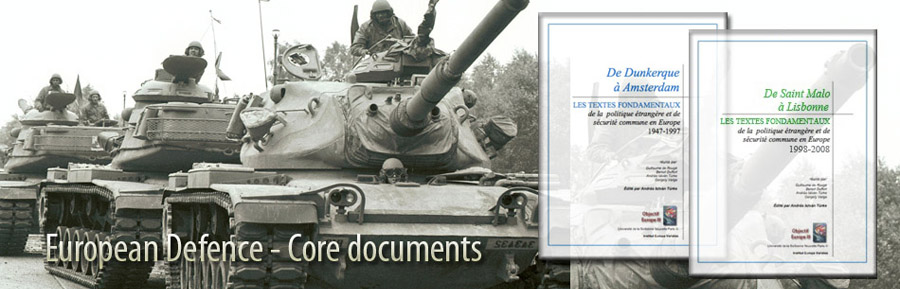
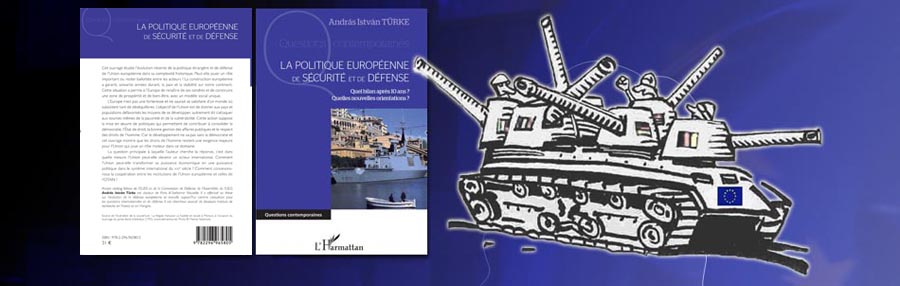
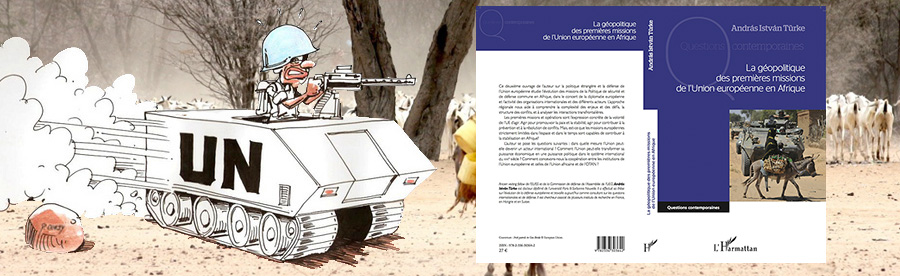
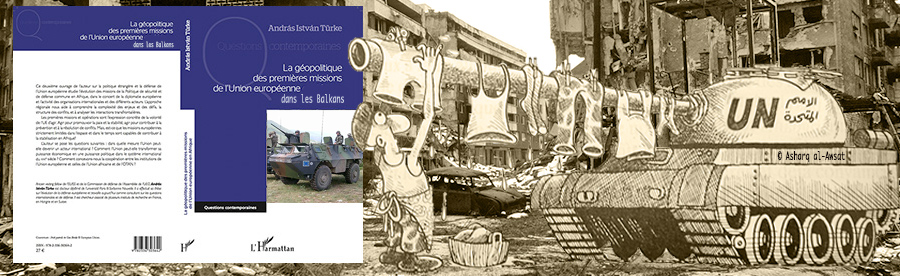
We are looking for sponsors for the English translation of these books, please contact turkeandras(at)gmail(dot)com