
You are here
Feed aggregator
What Did Chinese Analysts Think of the Trump-Xi Summit?
To some, Trump's hospitality was “historic.” To others, it was an attempt to “lull China into a false sense of security.”
Categories: Diplomacy & Crisis News
Don’t Ban Diesel Exports
Trump’s proposed solution to rising diesel prices would backfire economically and geopolitically.
Categories: Diplomacy & Crisis News
Green Defence: Deconstructing NATO and EU Green Defence in a Changing Climate
I was fortunate to receive the UACES Microgrant, which provided additional support to attend the UACES 56th Annual Conference in Prague, hosted by Charles University. During the conference, I presented a paper titled Green Defence: Deconstructing NATO and EU Green Defence Policies in A Changing Climate, as part of the ‘Thinking about Resilience and Responsibility’ session.
The paper introduced the conceptual framework of my PhD and provided an overview of my early empirical findings, arguing that current attempts to green defence in NATO and the EU appear to reproduce assumptions that limit how environmental harm can be understood and addressed, as well as what kinds of action can be considered possible.
The Empirical Puzzle: Integrating Climate Into Defence
There is growing acknowledgement that, as the rest of the world transitions to greener technologies, defence has a carbon problem. However, the environmental harms of defence – its ‘bootprint’ – have gone largely overlooked and have avoided attention in high-level discussions.
The EU has attempted to address this oversight by publishing the Climate Change and Defence Roadmap in 2020, which recommends a series of concrete short-, medium-, and long-term measures to address climate change and the nexus between defence, climate, and security, committing the Union to making military operations greener. Similarly, NATO introduced its Climate Change and Security Action Plan in 2021, which aims to advance the Alliance’s climate agenda around awareness, adaptation, mitigation, and outreach.
These efforts signal a shift toward a more environmentally conscious policy approach and demonstrate a policy-level recognition that defence contributes to environmental harm. However, critics have labelled the integration of climate change into defence as greenwashing, with the defence sector often portraying itself as green while still contributing to environmental damage. This is often linked to the military-industrial complex, the prioritisation of military effectiveness over sustainability, and the way militarised knowledge can act as a barrier to systemic change.
These criticisms also apply to the Roadmap and Action Plan. However, the processes that produced these policy frameworks remain under-researched, and these decision-making processes are where ideas and assumptions about greening defence are perpetuated and institutionalised.
Presenting My Research: Starting to Deconstruct the Roadmap and Action Plan
To examine approaches to policymaking and the emergence of the Roadmap and Action Plan, I analyse three dimensions of the policymaking processes developed from my early empirical research and conceptual framework. I presented these three dimensions at the conference to demonstrate how they can be applied to the Roadmap and Action Plan:
1. Plurality and perspectivity:
To unpack who was involved in developing the Action Plan and Roadmap and assess whether established or dominant understandings of green defence took precedence.
2. Assumptions about predictability and linearity:
To question linear, rationalist approaches that assume political problems, in this case environmental ones, can be known, modelled and managed predictably.
3. The humans-nature relationship:
To analyse whether defence doctrines value ecosystems only insofar as they serve military and operational efficiency.
Presenting this research was a great experience, and I received insightful comments and feedback that will be valuable as I move into the next stage of the research and my PhD.
Overall: A Fantastic Week
The Annual Conference was a wonderful three days of thoughtful academic exchange, building new connections in European studies and, as a PhD researcher, a key opportunity to develop skills important for career development.
In addition to presenting my research, I attended the UACES Graduate Forum Doctoral Training Academy (DTA). The DTA was organised around topics tailored towards PhD researchers and early careers, such as publishing, EDI, leadership in academia, and career development. This was a great experience, where I had the opportunity to engage with experienced academics, meet other PhD researchers, and (most importantly) make new friends! The Graduate Forum also organised evening social events, which encouraged socialising, relaxing after the conference, and exploring Prague.
Overall, I had a fantastic week, and I’m very much looking forward to hopefully attending the UACES Annual Conference again in future!
The post Green Defence: Deconstructing NATO and EU Green Defence in a Changing Climate appeared first on Ideas on Europe.
Categories: European Union
«Barbouzerie», «il devrait démissionner» : la classe politique s’enflamme après la révélation d’écrits antisémites attribués à Jordan Bardella
Un article de Mediapart publié ce lundi prête au président du RN des propos antisémites, écrits lorsqu’il était jeune adhérent du Front national. Si l’intéressé les conteste, la nature des accusations a suscité de vives critiques et des appels à la démission.
Categories: France
Rahul Bajoria, BofA India Chief Economist, on India’s Manufacturing Ambitions
Why has India's manufacturing sector has remained stuck at around 15 percent of GDP despite decades of rapid growth?
Categories: Diplomacy & Crisis News
Why Has the Maldives Inserted Itself Into the Chagos Sovereignty Dispute?
Muizzu has promised to submit evidence supporting the Maldives’ claim to Chagos to relevant international bodies.
Categories: Diplomacy & Crisis News
Cotonou abrite le 8ª Congrès des Experts-Comptables de l'UEMOA
« L'Expert-Comptable, garant de la transparence et de la souveraineté financière dans l'espace UEMOA »
L'Ordre des Experts-Comptables et Comptables Agréés du Bénin(OECCA-Bénin) annonce la tenue du 8° Congrès des Experts-Comptables de l'UEMOA. Il réunira les 21 et 22 octobre 2026 à Cotonou, au Palais des Congrès, l'ensemble des acteurs de la profession comptable et financière de la sous-région ouest-africaine.
La profession comptable régionale au cœur de la souveraineté financière
Dans un contexte marqué par les enjeux de mobilisation des ressources internes, de gestion transparente des finances publiques et de renforcement de l'intégration économique au sein de l'UEMOA, ce congrès placera la profession comptable au cœur des débats. Organisé sous le thème « L'Expert-Comptable, garant de la transparence et de la souveraineté financière dans l'espace UEMOA », il rassemblera experts-comptables, auditeurs, régulateurs et acteurs économiques venus des huit pays de l'Union, avec une ouverture à l'espace OHADA. Organisée par l'OECCA-Bénin, cette édition célèbre également les 20 ans de l'Ordre (2006-2026).
Elle constituera une plateforme d'échanges privilégiée au service d'une profession comptable plus forte, plus intégrée et plus influente à l'échelle sous-régionale et internationale.
Les huit pays de l'UEMOA réunis à Cotonou
Le congrès réunira les professionnels du chiffre des huit pays de l'UEMOA et d'ailleurs. Entre 300 et 500 professionnels sont attendus. On comptera parmi eux des experts-comptables et commissaires aux comptes, des comptables agréés, des experts-comptables exerçant en entreprise, des experts-comptables stagiaires, des dirigeants d'entreprises et directeurs administratifs et financiers des secteurs privé, public ou para-public.
Des représentants d'institutions telles que la BCEAO et la Commission de l'UEMOA, du secteur bancaire, des assurances et des institutions de financement participeront également aux travaux, de même quedes universitaires, enseignants chercheurs, étudiants des filières comptables et financières et partenaires techniques et financiers du développement.
Categories: Afrique
US Republicans Weren’t Happy With Trump’s Hosting of Xi
A spate of Republican senators took umbrage at Trump's reception of “a brutal, unelected, and oppressive dictator.”
Categories: Diplomacy & Crisis News
Új felszerelések a kolozsvári tüdőkórházban
Új, korszerű tüdőfunkciós készülékekkel bővült a kolozsvári tüdőkórház. Az új berendezés a korábbi vizsgálatoknál részletesebb képet ad a tüdő működéséről. A légzési térfogatok mellett a teljes tüdőkapacitás és a tüdőben rekedt levegő mennyisége is pontosan meghatározható, a DLCO-vizsgálattal pedig az is mérhető, hogy milyen hatékonyan jut át az oxigén a tüdőből a véráramba. Ez a […]
Articolul Új felszerelések a kolozsvári tüdőkórházban apare prima dată în Kolozsvári Rádió Románia.
Categories: Határon túli magyar portálok összesített hírei
Pakistan and Terrorism: When the Tables Turn
Islamabad cannot use its own people’s suffering to erase its record of supporting forces that have devastated lives in other countries.
Categories: Diplomacy & Crisis News
Au Maroc, l’attente anormalement longue de la nomination d’un nouveau premier ministre
Lors des deux précédentes élections législatives, le roi Mohammed VI a désigné le nouveau chef du gouvernement en moins de trois jours. Une semaine après la victoire du Parti Authenticité et modernité (PAM) aux législatives du 23 septembre, le silence du palais relance les interrogations sur la santé du monarque.
Categories: Afrique
Department of War and U.S. Navy Award Contract for F/A-XX Program
Today, the Department of War announces a contract awarded by the U.S. Navy to Boeing for the Sixth-Generation F/A-XX Strike Fighter under the Next Generation Air Dominance (NGAD) program. The contract is valued at more than $20B for the full-scale development phase. The contract procures multiple test aircraft for ground, airworthiness, systems, and weapons integration testing.
Categories: Defence`s Feeds
DAF awards F-15EX Lot 7 contract for 22 aircraft
The Department of the Air Force awarded Boeing a contract for 22 F-15EX Eagle II aircraft under Lot 7 - preserving the buying power of congressionally provided reconciliation funding and sustaining F-15EX production.
Categories: Defence`s Feeds
Navy to Procure 30 Medium Unmanned Surface Vessels Following Completion of Phase I At-Sea Testing
Today, the U.S. Navy announced its plans to procure 30 Medium Unmanned Surface Vessels following the completion of Phase I at-sea testing marking a key milestone for the program and demonstrating the Department's commitment to deliver asymmetric capability to Fleet warfighters to counter evolving threats.
Categories: Defence`s Feeds
Navy Conducts Preliminary Acceptance of Future USS John F. Kennedy (CVN 79)
Following successful completion of Acceptance Trials in August, the Navy has taken "preliminary acceptance" of the nation's next aircraft carrier, the future USS John F. Kennedy (CVN 79) from Newport News Shipbuilding, a division of HII (HII-NNS) on Sept. 29.
Categories: Defence`s Feeds
Operation Economic Outcast Takes Down Iranian Military Procurement Networks
Today, under Operation Economic Outcast, the U.S. Department of the Treasury's Office of Foreign Assets Control (OFAC) sanctioned 10 individuals and entities in multiple jurisdictions that have procured weapons and weapons components for Iran's Ministry of Defense and Armed Forces Logistics (MODAFL), the entity responsible for weapons research, production, and acquisition for Iran's armed forces. MODAFL also oversees organizations engaged in the development of Iran's ballistic missiles and unmanned aerial vehicles (UAVs).
Categories: Defence`s Feeds
Iran Threatens Energy Sites, Pens Letter To US Voters As It Awaits Official Response To Plan
Iran threatened to attack energy infrastructure across the Middle East if its security isn't guaranteed as it ratcheted up its rhetoric while waiting for the United States to officially respond to a plan Tehran says would reopen the Strait of Hormuz.
Categories: Defence`s Feeds
Ukrainian service members conduct first logistics mission using an amphibious UGV
Service members from one of the separate mechanized brigades of the Armed Forces of Ukraine conducted the first logistics mission using a Ukrainian-developed amphibious unmanned ground vehicle (UGV).
Categories: Defence`s Feeds
As Russia Targets Civilians, Pressure Mounts On Trump To Use Sanctions Powers
A new wave of deadly Russian attacks on civilian infrastructure in Ukrainian cities is fueling bipartisan calls in Washington for US President Donald Trump to use sweeping new sanctions powers against Moscow, with lawmakers arguing that greater economic pressure could strengthen efforts to end the war.
Categories: Defence`s Feeds
Military awareness in space: EDA to develop access to data for EU countries
Fifteen European Union countries have agreed to set up a new mechanism run by the European Defence Agency (EDA) to let their militaries access and share data on objects and activity in orbit. The goal is a common, up-to-date picture of what's happening in space, for military use.
Categories: Defence`s Feeds
Pages


© 2012-2018 Europa Varietas Foundation © 2015-2018 Europa Varietas Association
www.europavarietas.org | info(@)europavarietas(dot)org | Switzerland

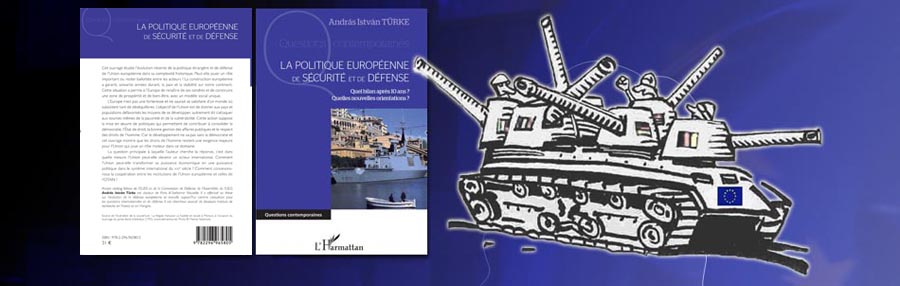
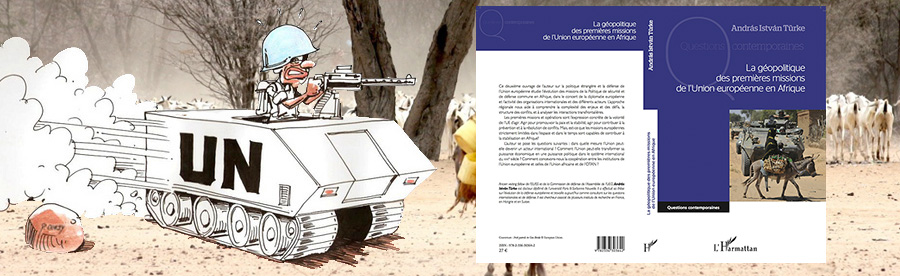
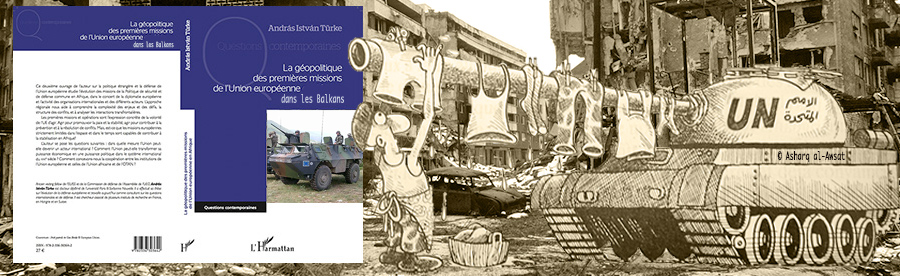
We are looking for sponsors for the English translation of these books, please contact turkeandras(at)gmail(dot)com