
You are here
Feed aggregator
Offshore Patrol Vessels to be homeported in Cairns: supporting jobs and industry in North Queensland
At least two Royal Australian Navy Arafura Class Offshore Patrol Vessels (OPVs) will be homeported at HMAS Cairns, strengthening defence industry and regional security in Northern Australia.
Categories: Defence`s Feeds
Norway steps up efforts for deported Ukrainian children, detained civilians and prisoners of war
Norway is increasing support for humanitarian efforts in support of deported Ukrainian children, detained civilians and prisoners of war through UNICEF and the International Committee of the Red Cross (ICRC). Norway is also co-hosting a conference in Toronto to raise international awareness of their situation.
Categories: Defence`s Feeds
China's top diplomat urges Japan to correct erroneous words, deeds of its leaders on Taiwan question
China's top diplomat Wang Yi on Monday said that for Japan, the pressing task is to correct the erroneous words and deeds of its leaders on the Taiwan question as soon as possible.
Categories: Defence`s Feeds
Araghchi: US response to Iran's proposals to be conveyed through Qatar
Foreign Minister Abbas Araghchi says Tehran has held another round of discussions with Qatari mediators on ideas that will be presented to the United States, with Washington's final response to be conveyed to Iran through the mediators.
Categories: Defence`s Feeds
Media reports on Qatar-mediated talks 'baseless speculation': Iran FM spokesman
Iran's Foreign Ministry spokesman Esmaeil Baghaei has dismissed published reports about the content of consultations with the Qatari mediator on the sidelines of the United Nations General Assembly, saying such accounts have no basis in reality and that no discussion of the details of the issues took place.
Categories: Defence`s Feeds
DPRK Foreign Ministry's Memorandum Issued to Disclose Truth and Danger of U.S. Nuclear Proliferation
The Foreign Ministry of the Democratic People's Republic of Korea on September 27 issued a memorandum to disclose the truth and danger of nuclear proliferation by the U.S., which has irresponsibly neglected its disarmament duty as a nuclear weapons state, plunging the international nuclear non-proliferation system into the worst crisis.
Categories: Defence`s Feeds
Protecting security and livelihoods
ADV Reliant recently joined Pacific partners to conduct maritime surveillance patrols to detect and deter illegal fishing during Operation Nasse 2026.
Categories: Defence`s Feeds
Fragmented Policies Hold Back Agroecology Adoption in Africa’s Congo Basin
Agricultural, land, forestry, environmental and trade policies in the Congo Basin remain compartmentalised at country levels, leaving proven agroecological models trapped at pilot stages due to a lack of advisory services, organic inputs, market outlets and sustainable financing. In a declaration made following the Second Congo Basin Convening on Agroecology held in Yaounde, Cameroon, in […]
Categories: Africa
Affrontements à Masisi : la société civile dénonce la mort de civils dans des attaques de drones et des tirs de balles perdues
Categories: Afrique
Les déchets menacent les routes et les caniveaux à Kananga : des initiatives de recyclage se développent
La gestion des déchets constitue un problème environnemental et sanitaire préoccupant à Kananga, chef-lieu du Kasaï-Central. Le constat a été fait par Radio Okapi lors d’une série de productions de terrain réalisées du 21 au 26 septembre 2026.
Dans plusieurs quartiers, les déchets s’accumulent sur les voies publiques et obstruent les caniveaux, menaçant notamment les infrastructures routières.
Categories: Afrique
Les familles saluent le verdict de culpabilité prononcé dans l'accident d'avion au Mali qui a fait 116 morts
Les proches des victimes ont confié à la BBC être soulagés d'avoir enfin un verdict, douze ans après l'accident.
Categories: Afrique
African–European Relations (Vol. 22)
After two years of limited high-level exchanges during which Europe and Africa found themselves on different sides of principal geopolitical fault-lines, 2025 brought about a partial reset in EU–Africa relations, centred on pragmatism and investment rather than political convergence. The year carried symbolic weight: it marked a quarter-century since the inaugural Africa–EU summit in Cairo in April 2000. This anniversary added impetus to the convening of the seventh summit between the AU and the EU in Luanda, Angola, on 24 and 25 November. This is not to say that this year strengthened political convergence between the two groupings on the divisive issues of Gaza and Ukraine, or a clear course of action on the ongoing civil war and ethnic cleansing in Sudan. Nor did it see a breakthrough in ongoing disputes on EU policy frameworks such as its Carbon Border Adjustment Mechanism. Yet at the summit, continuing the pattern started at the previous Brussels summit of 2022, signs were visible of a more pragmatic approach to partnering. The preceding AU–EU Business Forum underlined that even though a rights-based agenda and commitments to peace and security still mattered to the partnership, the primary focus was now on promoting investment and economic development. This was in line with the global trend of further aid cuts and an increased focus on business relations. The same dynamics could be seen in the latest Africa strategies and guidelines adopted in Germany and Spain, which, just like the prominent Mattei Plan of Italy, stressed the promotion of mutual (economic) benefits and investment. The abrupt cutting of the USAID budget was in part justified by similar logics, referring to a corrupt and inefficient aid sector and the strength of business partnerships in fostering economic development. Another important highlight concerned the European Commission’s publication of its legislative proposals for the next EU budget covering the period 2028–34. As part of this package, the Commission proposed a budget of € 200 bn for an overarching Global Europe Instrument. The Commission proposed that out of this total budget for the Instrument, there should be € 60.5 bn for cooperation with sub-Saharan Africa, as well as € 42.9 bn for the Middle East and North Africa region, which includes the North African states. However, unlike in the current budget, the funding reserved for Africa is listed as indicative, without legal text guaranteeing them as minimum spend, leaving it more vulnerable to changes in priorities and unforeseen challenges.
Categories: Diplomacy & Defense Think Tank News
African–European Relations (Vol. 22)
After two years of limited high-level exchanges during which Europe and Africa found themselves on different sides of principal geopolitical fault-lines, 2025 brought about a partial reset in EU–Africa relations, centred on pragmatism and investment rather than political convergence. The year carried symbolic weight: it marked a quarter-century since the inaugural Africa–EU summit in Cairo in April 2000. This anniversary added impetus to the convening of the seventh summit between the AU and the EU in Luanda, Angola, on 24 and 25 November. This is not to say that this year strengthened political convergence between the two groupings on the divisive issues of Gaza and Ukraine, or a clear course of action on the ongoing civil war and ethnic cleansing in Sudan. Nor did it see a breakthrough in ongoing disputes on EU policy frameworks such as its Carbon Border Adjustment Mechanism. Yet at the summit, continuing the pattern started at the previous Brussels summit of 2022, signs were visible of a more pragmatic approach to partnering. The preceding AU–EU Business Forum underlined that even though a rights-based agenda and commitments to peace and security still mattered to the partnership, the primary focus was now on promoting investment and economic development. This was in line with the global trend of further aid cuts and an increased focus on business relations. The same dynamics could be seen in the latest Africa strategies and guidelines adopted in Germany and Spain, which, just like the prominent Mattei Plan of Italy, stressed the promotion of mutual (economic) benefits and investment. The abrupt cutting of the USAID budget was in part justified by similar logics, referring to a corrupt and inefficient aid sector and the strength of business partnerships in fostering economic development. Another important highlight concerned the European Commission’s publication of its legislative proposals for the next EU budget covering the period 2028–34. As part of this package, the Commission proposed a budget of € 200 bn for an overarching Global Europe Instrument. The Commission proposed that out of this total budget for the Instrument, there should be € 60.5 bn for cooperation with sub-Saharan Africa, as well as € 42.9 bn for the Middle East and North Africa region, which includes the North African states. However, unlike in the current budget, the funding reserved for Africa is listed as indicative, without legal text guaranteeing them as minimum spend, leaving it more vulnerable to changes in priorities and unforeseen challenges.
Categories: Diplomacy & Defense Think Tank News
African–European Relations (Vol. 22)
After two years of limited high-level exchanges during which Europe and Africa found themselves on different sides of principal geopolitical fault-lines, 2025 brought about a partial reset in EU–Africa relations, centred on pragmatism and investment rather than political convergence. The year carried symbolic weight: it marked a quarter-century since the inaugural Africa–EU summit in Cairo in April 2000. This anniversary added impetus to the convening of the seventh summit between the AU and the EU in Luanda, Angola, on 24 and 25 November. This is not to say that this year strengthened political convergence between the two groupings on the divisive issues of Gaza and Ukraine, or a clear course of action on the ongoing civil war and ethnic cleansing in Sudan. Nor did it see a breakthrough in ongoing disputes on EU policy frameworks such as its Carbon Border Adjustment Mechanism. Yet at the summit, continuing the pattern started at the previous Brussels summit of 2022, signs were visible of a more pragmatic approach to partnering. The preceding AU–EU Business Forum underlined that even though a rights-based agenda and commitments to peace and security still mattered to the partnership, the primary focus was now on promoting investment and economic development. This was in line with the global trend of further aid cuts and an increased focus on business relations. The same dynamics could be seen in the latest Africa strategies and guidelines adopted in Germany and Spain, which, just like the prominent Mattei Plan of Italy, stressed the promotion of mutual (economic) benefits and investment. The abrupt cutting of the USAID budget was in part justified by similar logics, referring to a corrupt and inefficient aid sector and the strength of business partnerships in fostering economic development. Another important highlight concerned the European Commission’s publication of its legislative proposals for the next EU budget covering the period 2028–34. As part of this package, the Commission proposed a budget of € 200 bn for an overarching Global Europe Instrument. The Commission proposed that out of this total budget for the Instrument, there should be € 60.5 bn for cooperation with sub-Saharan Africa, as well as € 42.9 bn for the Middle East and North Africa region, which includes the North African states. However, unlike in the current budget, the funding reserved for Africa is listed as indicative, without legal text guaranteeing them as minimum spend, leaving it more vulnerable to changes in priorities and unforeseen challenges.
Categories: Diplomacy & Defense Think Tank News
Szeptemberi starthelyzetünk
Tanári felkészítők, tankönyvkérdés, reálszakos oktatóhiány, új érettségi ütemterv, PISA-adatsor… meg egy kis egyenruha-passzus. Mindez belefért abba a beszélgetésbe, amelyet sulikezdés után két héttel ejtettünk meg a Tetőteraszon Mihályfalvi Katalinnal, az RMDSz oktatási ügyvezető alelnökével. Házigazda: Rostás-Péter István A beszélgetés 2026. szeptember 23-án készült.
Articolul Szeptemberi starthelyzetünk apare prima dată în Kolozsvári Rádió Románia.
Categories: Határon túli magyar portálok összesített hírei
Trafic de stupéfiants : Près de 86 kg de cannabis saisis à Ouagadougou
La Police nationale a annoncé, ce mardi 29 septembre 2026, le démantèlement d'un réseau présumé impliqué dans le trafic et la vente de stupéfiants à Ouagadougou. L'information a été publiée sur la page Facebook officielle de l'institution.
L'opération a été menée par l'Unité anti-drogue de la Direction de la police judiciaire (DPJ), dans le cadre des actions engagées contre le trafic et la consommation de drogues dans la capitale.
Selon la Police nationale, le réseau démantelé était également impliqué dans la vente et la consommation de boissons frelatées, de cigarettes de contrebande et de produits psychotropes.
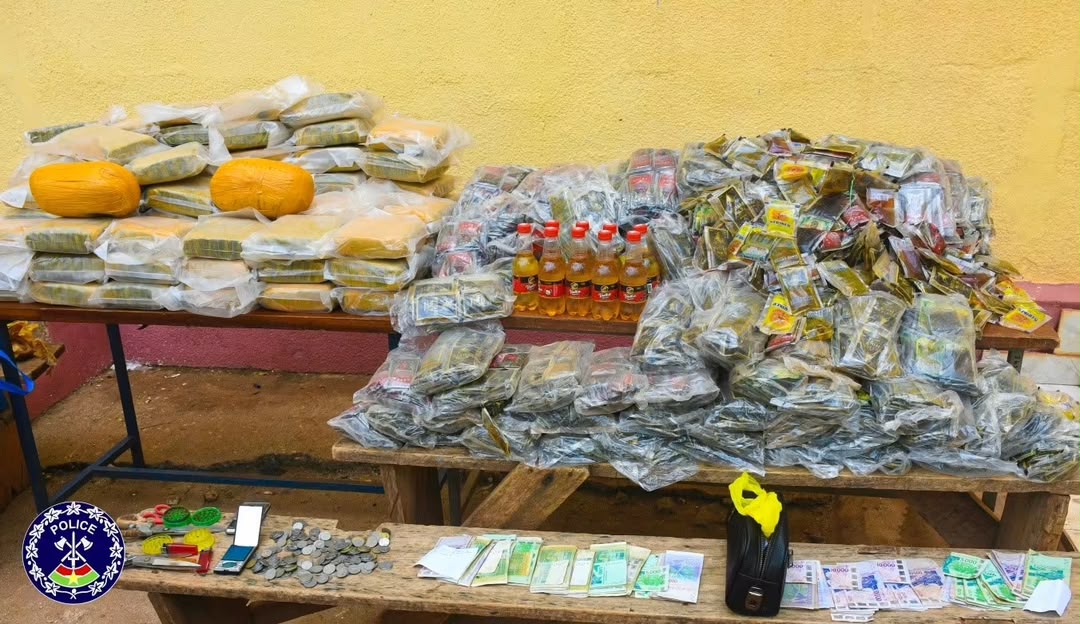
D'après les éléments communiqués par la Police, les membres du réseau s'approvisionnaient en marchandises depuis un pays voisin. Les produits étaient ensuite acheminés vers Ouagadougou à bord de véhicules de transport en commun ou de véhicules personnels. Une fois dans la capitale, les marchandises étaient stockées avant d'être vendues ou redistribuées. Une partie du cannabis était notamment destinée à des revendeurs et grossistes opérant sur plusieurs sites d'orpaillage à travers le pays, notamment Boromo et Poura dans la province des Balé, Zanténé dans la province du Sanguié, Sabcé dans la province du Bam, et Mogré et Bittou dans la province du Boulgou.
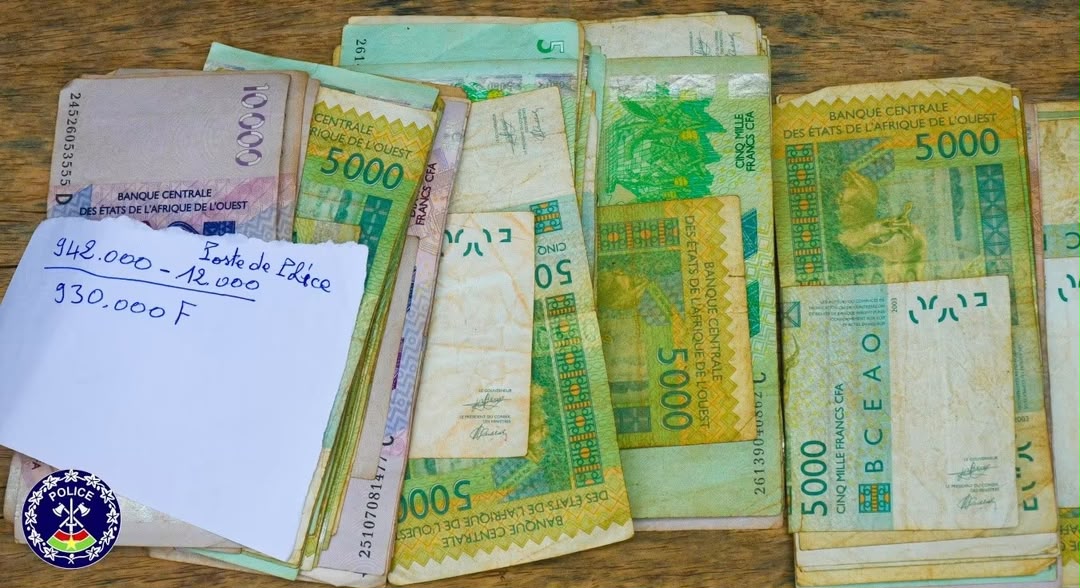
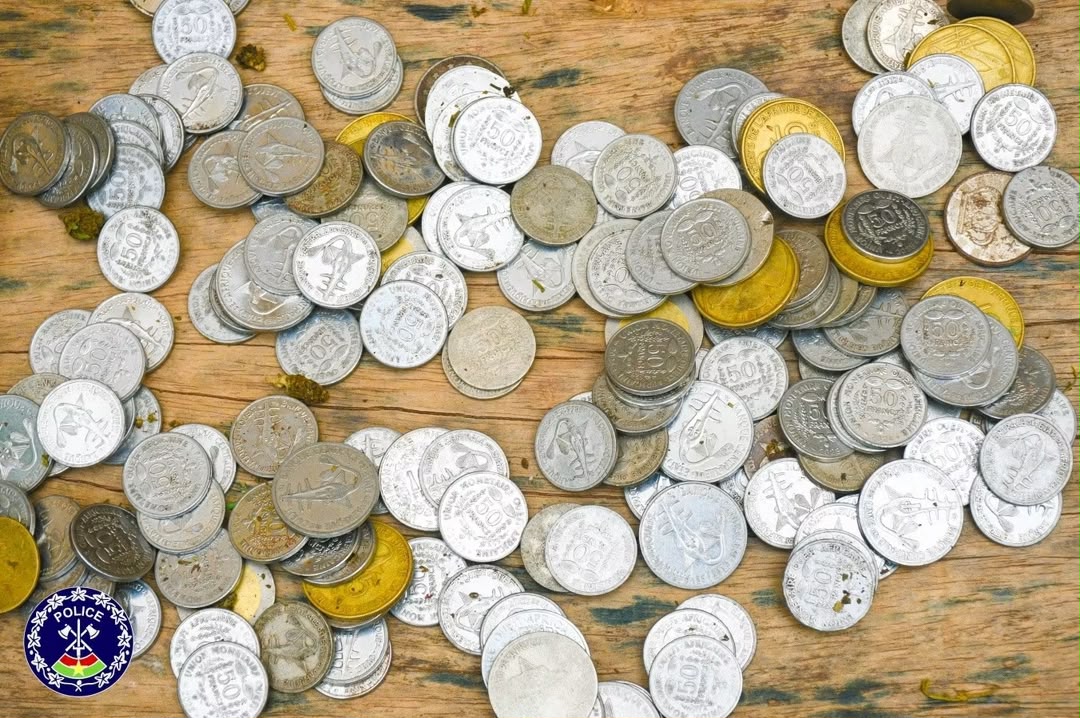
Au cours de l'interpellation des membres du réseau, les enquêteurs ont saisi, selon la Police nationale, près de 86 kilogrammes de cannabis. Des motos, des boissons alcoolisées frelatées, des paquets de cigarettes de contrebande, des plaquettes de produits psychotropes ainsi que du numéraire ont également été saisis.
La Police nationale souligne que cette opération a notamment été rendue possible grâce à la collaboration des populations. Elle remercie les citoyens ayant contribué à l'aboutissement de l'enquête.
L'institution appelle par ailleurs la population à davantage de vigilance et invite particulièrement les parents d'élèves et les responsables d'établissements scolaires à signaler tout comportement ou fait suspect susceptible de contribuer à la circulation des stupéfiants.
Elle rappelle que les numéros verts 17, 16 et 1010 restent disponibles pour permettre aux citoyens de signaler les situations nécessitant l'intervention des services compétents.
Lefaso.net
Source : Page Facebook de la Police nationale
Categories: Afrique
Un instituteur et son fils périssent dans les eaux
Les recherches engagées depuis lundi 28 septembre 2026 à Djidja ont pris fin avec la découverte des corps d'un instituteur et de son fils, emportés par les eaux après la pluie.
Wilfried Houngbadji, enseignant à l'Ecole primaire publique d'Agonhohoun à Djidja, regagnait son domicile à moto après les cours, lundi 28 septembre 2026, avec son fils en classe de CM1, lorsque le pire est survenu.
Les eaux ont emporté les deux occupants de la moto lorsqu'ils ont tenté de franchir un passage submergé sur le bras du fleuve Mono appelé Akpalo, après de fortes pluies.
Les sapeurs-pompiers, les forces de sécurité et des habitants se sont mobilisés pour les retrouver.
La moto avait été récupérée dans les eaux, tandis que les recherches se poursuivaient pour localiser le père et l'enfant. Elles ont finalement abouti ce mardi 29 septembre avec le repêchage des deux corps.
L'information a été confirmée à La Nouvelle Tribune par Dah Atômin Houmbadji, chef de la collectivité Houmbadji et premier adjoint au maire d'Abomey.
Le drame intervient alors que plusieurs localités connaissent une montée des eaux consécutive aux fortes pluies. Il rappelle la dangerosité des traversées de passages submergés par les eaux.
M. M.
Categories: Afrique
Plus de 2 000 familles déplacées dans une situation humanitaire précaire à Walikale et Kalehe
Près de 2 350 familles déplacées vivent dans des conditions humanitaires précaires à Lukaraba, dans le territoire de Walikale au Nord-Kivu, et à Hombo Sud, dans le territoire de Kalehe au Sud-Kivu, selon le Club des Filles Reporters RDC (CFR RDC).
Categories: Afrique
Protokoll - Dienstag, 14. Juli 2026 - PE791.927v01-00 - Ausschuss für auswärtige Angelegenheiten
Quelle : © Europäische Union, 2026 - EP
Categories: Europäische Union
Pages



© 2012-2018 Europa Varietas Foundation © 2015-2018 Europa Varietas Association
www.europavarietas.org | info(@)europavarietas(dot)org | Switzerland




We are looking for sponsors for the English translation of these books, please contact turkeandras(at)gmail(dot)com