
You are here
Swiss News
Briefing - Monthly Highlights: Research digest for committees - October 2026 - PE 789.227 - Committee on Legal Affairs - Committee on Civil Liberties, Justice and Home Affairs - Committee on Employment and Social Affairs - Committee on Culture and...
Source : © European Union, 2026 - EP
Categories: Europäische Union, Swiss News
International Day for the Eradication of Poverty 2026
By External Source
Oct 15 2026 (IPS)
A safe home is more than a roof over our heads.
It is the foundation of health, security, opportunity and human dignity.
Yet for billions of people, that foundation remains out of reach.
According to UN-Habitat, 2.8 billion people worldwide face some form of inadequate housing.
More than one billion live in slums and informal settlements.
And over 300 million people are homeless.
The housing crisis is unfolding alongside a wider struggle against poverty.
The United Nations estimates that 826 million people will live in extreme poverty in 2026 — surviving on less than three dollars a day.
That’s one in every ten people worldwide.
And having a job offers no guarantee of escaping poverty.
In 2025, 284 million workers were living in extreme poverty.
Meanwhile, 3.8 billion people remain without any form of social protection.
Conflict, climate-related disasters, displacement and rising living costs are placing further pressure on vulnerable communities.
Against this backdrop, the 2026 International Day for the Eradication of Poverty calls for Safe Homes for All, under the theme United for Peace and Human Rights.
The United Nations is urging governments to prioritize adequate housing, mobilize resources and involve people experiencing poverty in decisions that affect their lives.
Because ending poverty means more than increasing incomes.
It means ensuring that everyone has a safe place to live, access to essential services, and the opportunity to build a secure future.
This October 17th, the message is clear:
A safe home is not a privilege. It is a human right.
IPS UN Bureau
Categories: Africa, Swiss News
Afghanistan’s Stolen Peace: The Women Who Refuse to Be Silenced
By Sania Farooqui
BENGALURU, India, Oct 15 2026 (IPS)
When the Taliban took control of Afghanistan in August 2021, Zahra Nader was pursuing a doctorate in Women and Gender studies at York University in Canada. Nader had planned to return to Afghanistan to continue her research, possibly teach at Kabul University, and continue exploring Afghan women’s role in political history.
Zahra Nader, Editor-in-Chief, Zan Times
Then came the Taliban.Seeing the freedoms and opportunities that women had enjoyed being stripped away, Nader could not help but do something. A journalist with experience in Afghan newsrooms as well as with The New York Times in Kabul, she knew how dangerous life could be for women journalists under Taliban control.
“I knew who the Taliban are, what they will do if they took over. So I had no illusion about Taliban 2.0 and how the Taliban has changed. We knew they have not changed. And so we started Zan Times,” says Nader. Set up in 2022, Zan Times, is a news agency run by women who investigate human rights abuses under the Taliban government. Operating out of exile, the news agency works in collaboration with journalists operating within Afghanistan, most of them working under pseudonyms to remain anonymous.
“I was here in Canada, safe, my rights are protected, but the rights that I grew up with, the opportunities that I had in Afghanistan, going to school, going to university, are now being denied to millions of women,” Nader says.
According to this report by the United Nations, five years since the Taliban have seized power, women and girls in Afghanistan have been systematically stripped of their rights. De facto authorities have issued more than 100 decrees curbing “education, including one that’s left 2.4 milion girls excluded from secondary education, work and freedom of movement – restrictions now compounded by deep cuts to aid on the ground”. The report states that the unprecedented restrictions have triggered a mental health crisis.
“The results are devastating,” the agency added, stressing that shorter life expectancy, higher risks of maternal death, child marriage and gender-based violence alongside the loss of education, work and freedom of movement have also triggered a mental health crisis.”The systemic erasure of women from public life, including their exclusion from higher education and employment, also removes the visible role models that show what is possible and narrows what Afghan women and girls can imagine for their own futures, this report adds.
For Nader, these are examples of efforts to strip women of their presence in the world around them. Nader refutes the assumption that it is the Afghan culture itself that stops women from getting involved in public affairs and activities. She mentions her personal experience of how she was encouraged by her family to get educated and work as a journalist. “What I really want the world to know about us is that our culture does not prevent Afghan women from joining public life and social activities.” The marginalization of women is not an inevitable or predestined cultural process; it is something that is being imposed on them through specific policies.
One of the groups most visible to suffer from these measures has been women journalists. “Since taking over Afghanistan five years ago, the Taliban have made Afghanistan one of the world’s hardest places for journalists to report,” says this statement by the Committee to protect Journalists. “Women in the media face particularly severe and escalating discrimination. Taliban authorities have banned women’s voices from radio and TV in Helmand, prevented them from attending press conferences, and mandated that they cover their faces when appearing on TV.”
Limitations imposed on women’s dress code and activities have diminished the opportunities for women journalists to perform their duties even more. Taliban’s 2024 Law on the Promotion of Virtue and Prevention of Vice includes additional limitations regarding the voice of Afghan women in public space.
Women journalists also encounter limitations on freedom of movement by having to travel with a male guardian in most places. Investigating topics like the education of girls and the wellbeing of women exposes journalists to intimidation and questioning.
Insecurity of income is another problem that women journalists face. Nader argues that women journalists have claimed being offered unpaid jobs, exclusion from staff positions since their presence would make them vulnerable to questioning by Taliban officials, and sexual abuse in job hunting.
Journalists who opt to continue working under such conditions also expose themselves to danger. In the case of Zan Times, journalists working in Afghanistan do so clandestinely, using pseudonyms.
Despite all the restrictions, Afghan women keep finding ways of resisting their marginalization.
Women teachers turn their own homes, bedrooms, and even basements into informal schools, where girls could still get education. Other women organize online classes and educational programs, but the lack of Internet connection and funds is preventing many people from participating.
Women also create private literary clubs, exchange books, and attend meetings of poets. These places enable them to communicate, share knowledge, and stay in touch despite the prohibition of public gatherings.
Nader considers such actions to be strong examples of women’s resistance. The work of women journalists who document cases of violation belongs to this form of struggle since through their activity, Afghan women manage to keep their stories visible in public sphere.Their work is especially important because not only they observe the restrictions imposed on women, but they experience them too.
Nader appeals for increased efforts from the international community in protecting Afghan refugees from any kind of forced return.
Moreover, there should be support for Afghan women, particularly in matters such as education and resettlement. There should also be increased protection for journalists under threat. Accountability is equally significant. Through international legal proceedings, there is a possibility of those who perpetrate persecution being taken to book in the future.
At the end of the day, the situation in Afghanistan, along with that of women’s rights and of press freedom, is that of peace. In order to have peace, you need to have half the country educated and involved into public life. You need to have the other half able to earn money on its own without being afraid of demanding anything. Even if the Taliban managed to establish control over Afghanistan, this is not the same thing as peace.
Afghanistan has been unable to give its women peace because its system relies on their complete isolation from the process of development of the country, their participation, dignity and freedom. Without the establishment of justice and rights for all the citizens, there is no peace. The Afghan women who are still fighting and educating, organising and reporting under extremely tough conditions prove that peace should not be confused as absence of war.
To Nader, the crisis in Afghanistan is an indicator of the vulnerability of women’s rights throughout the world.
“Failure to hear from Afghanistan does not mean that all is well and peaceful. Failure to hear from Afghanistan means that we don’t know what is happening,” Nader says.
Sania Farooqui is an independent journalist and host of The Peace Brief, a platform dedicated to amplifying the voices of women in peacebuilding and human rights.
IPS UN Bureau
Categories: Africa, Swiss News
BERICHT zu dem Pakt für den Mittelmeerraum als neue gemeinsame Verantwortung für die Zukunft der Beziehungen zwischen der EU und dem Mittelmeerraum - A10-0239/2026
BERICHT zu dem Pakt für den Mittelmeerraum als neue gemeinsame Verantwortung für die Zukunft der Beziehungen zwischen der EU und dem Mittelmeerraum
Ausschuss für auswärtige Angelegenheiten
Nicola Zingaretti
Quelle : © Europäische Union, 2026 - EP
Ausschuss für auswärtige Angelegenheiten
Nicola Zingaretti
Quelle : © Europäische Union, 2026 - EP
Categories: Europäische Union, Swiss News
Press release - Press briefing on next week’s plenary session
Spokespersons for Parliament and for the political groups will hold a briefing on the 19 – 22 October plenary session, on Friday at 11.00 in Parliament’s Anna Politkovskaya press room.
Source : © European Union, 2026 - EP
Source : © European Union, 2026 - EP
Categories: European Union, Swiss News
30 Years of War, 30 Years of Impunity in DR Congo
Impunity for past crimes has fueled decades of violence and human rights abuses in the Democratic Republic of Congo. Credit: MONUSCO/Aubin Mukoni
By Ida Sawyer
WASHINGTON DC, Oct 15 2026 (IPS)
It has been 30 years since Rwanda-backed rebel forces attacked Lemera hospital in what was then eastern Zaire, killing 37 patients and medical staff. This was one of the first major atrocities during what became known as the First Congo War, helping to unleash decades of foreign-backed rebellions and grave abuses against civilians by all sides, including ethnic-based massacres, widespread rape and sexual violence, forced recruitment of children, abductions, torture, mutilation, and forced displacement.
The Congolese Nobel Peace Prize laureate, Dr. Denis Mukwege, began his career as a doctor at Lemera hospital, and he was there on October 6, 1996 when the place he thought was safe, protected by international humanitarian law, became the scene of carnage. Dr. Mukwege has since dedicated his life to supporting survivors of sexual violence in the Democratic Republic of Congo and to advocating justice for victims.
The attack on Lemera hospital was one of the 617 incidents in the United Nations Mapping Report, which documents alleged serious violations of international humanitarian and human rights law in Congo between 1993 and 2003.
What’s missing now is the political will to prioritize justice for the Congolese people. With millions killed during hostilities or dying from conflict-related causes, the war in Congo is widely regarded as the deadliest conflict for civilians since World War II
Yet the serious crimes went on. Despite the important work of the International Criminal Court (ICC) and Congolese military courts, the vast majority of alleged perpetrators remain unpunished, including high-level government and military officials from Congo, Rwanda, and Uganda.
Attacks as horrific as the one on Lemera hospital continue today, as an abusive Rwanda-backed armed group, known as the M23, controls large swathes of North and South Kivu provinces, while numerous other armed groups as well as Congolese army forces and their allies continue to target civilians.
Many of the commanders responsible for abuses that Human Rights Watch and others have documented in recent months are the same ones whose crimes we have documented for decades – often as they move from one armed group to another, integrate into the Congolese army, and then leave again when they have new grievances. Impunity for these past crimes has fueled the abuses we’re documenting today.
What’s missing now is the political will to prioritize justice for the Congolese people. With millions killed during hostilities or dying from conflict-related causes, the war in Congo is widely regarded as the deadliest conflict for civilians since World War II. Yet despite, or perhaps because of, its brutal and seemingly intractable nature, the conflict rarely dominates headlines or high-level diplomatic agendas.
When Congo does capture the world’s attention, it is more often for its natural resources than the plight of its citizens. Powerful foreign countries and companies – facilitated and enabled by self-serving national leaders – exploit and plunder the country’s wealth. Congo’s minerals help power the technological revolution driving so much of global economic growth, all while a litany of grave abuses go unpunished and undeterred.
To break this culture of violence and impunity, world leaders should put meaningful pressure on both the Congolese and Rwandan governments to end all support to abusive armed groups operating in Congo.
They should also press the Congolese government to implement a vetting program, with international support, to remove those implicated in serious human rights abuses from the Congolese security forces, intelligence services, and government positions.
And they should support a multi-tiered justice response to address the scale and gravity of Congo’s impunity gap. This should include support to the ICC and its ongoing investigation in Congo, the pursuit abroad of universal jurisdiction cases wherever possible, and continued support to improve Congo’s military justice system.
There also needs to be an internationalized justice mechanism to complement the work of the ICC and purely domestic courts, and a comprehensive reparations program for victims of serious international crimes.
I was honored to join Dr. Mukwege in Brussels and Strasbourg in recent days to initate a campaign, “30 Years of War, 30 Years of Impunity,” during events organized by the Panzi Foundation, the René Cassin Foundation, the city of Brussels, and the Eurometropolis of Strasbourg, to raise awareness about the conflict in Congo and to mobilize strong international action to end the cycles of violence, abuse, and impunity.
As Dr. Mukwege said in Strasbourg: “Thirty years of war is thirty years too many. Thirty years of impunity is thirty years too many. … . It is time to place the right of millions of victims to justice at the heart of efforts to establish peace and consolidate the rule of law.”
Ida Sawyer is crisis, conflict, and arms director at Human Rights Watch.
Categories: Africa, Swiss News
Press release - Metsola: We cannot agree on Europe's ambitions and cut the means to achieve them
At the European Council, President Metsola called for a long-term EU budget that matches Europe's ambitions, faster progress on competitiveness, and continued momentum for enlargement.
Source : © European Union, 2026 - EP
Source : © European Union, 2026 - EP
Categories: European Union, Swiss News
SA chief pledges review over 'disappointing' Test crowds
A senior South African cricket official pledges to order a review into the low crowd which attended the first Test against Australia in Durban.
Categories: Africa, Swiss News
AMENDMENTS 20 - 255 - Draft opinion EU Gender Action Plan IV – priorities for gender equality and women’s rights in external action - PE796.424v01-00
AMENDMENTS 20 - 255 - Draft opinion EU Gender Action Plan IV – priorities for gender equality and women’s rights in external action
Committee on Foreign Affairs
Hannah Neumann
Source : © European Union, 2026 - EP
Committee on Foreign Affairs
Hannah Neumann
Source : © European Union, 2026 - EP
Categories: Europäische Union, Swiss News
Kenia Hernández: Indigenous Rights Defender Imprisoned for Her Activism
Kenia Inés Hernández Montalván. Credit: @CDHVitoria
By Clare Quirk
JOHANNESBURG, South Africa, Oct 15 2026 (IPS)
Kenia Hernández is an Indigenous Mexican lawyer and human rights defender dedicated to advancing women’s rights and social justice.
Arrested in October 2020, she has faced multiple criminal proceedings that human rights organisations, including CIVICUS, have denounced as politically motivated and linked to the criminalisation of her activism. This piece is the second in our series on the campaign that advocates for the immediate release of unjustly imprisoned or persecuted human rights defenders globally.
Additional reference: Five years of resistance: The case of Kenia Hernández and the battle against the fabrication of crimes
Additional research and reporting: Cecilia Russell
Note: This feature is published with the support of CIVICUS: Stand As My Witness Campaign.
IPS is solely responsible for the editorial content, and it does not necessarily reflect the views of CIVICUS.
IPS UN Bureau Report
Categories: Africa, Swiss News
Press release - Steady progress on the One Europe, One Market roadmap
In their second review of the joint declaration and roadmap, designed to boost economic growth, the EU institutions reaffirmed their commitment to timely delivery.
Source : © European Union, 2026 - EP
Source : © European Union, 2026 - EP
Categories: European Union, Swiss News
Coe aims for African 'legacy' with 2029 World Championships
Hosting the World Athletics Championships in Nairobi in 2029 will leave a "legacy of experience and expertise", according to the sport's top official Sebastian Coe.
Categories: Africa, Swiss News
Press release - European Parliament press kit for the European Council of 15 – 16 October 2026
This press kit includes a selection of European Parliament press releases outlining MEPs’ key priorities regarding the issues on the summit agenda.
Source : © European Union, 2026 - EP
Source : © European Union, 2026 - EP
Categories: European Union, Swiss News
Entwurf der Tagesordnung - Donnerstag, 22. Oktober 2026 - PE796.356v01-00 - Ausschuss für auswärtige Angelegenheiten
Quelle : © Europäische Union, 2026 - EP
Categories: Europäische Union, Swiss News
Wer sagt im Krimi um den Fall Fischer die Wahrheit?
Ein teurer Bericht, ein kurzes Telefonat und zwei Aussagen, die sich ausschliessen. In der Affäre Fischer gerät SIHF-CEO Martin Baumann in den Fokus.
Categories: Diplomacy & Defense Think Tank News, Swiss News
Lufthansa-Piloten hamstern Sprit im Ausland
Wegen verstopfter Nachschubwege am Flughafen Frankfurt greift die Lufthansa zu einer Notmassnahme: Um Engpässe zu vermeiden, müssen Piloten vor dem Anflug auf das deutsche Drehkreuz zusätzlichen Sprit im Ausland auftanken.
Categories: Határon túli magyar portálok összesített hírei, Swiss News
Real schockt die Roma mit furiosem Schlussspurt
0:1 im Rückstand, dann sogar 1:3 im Hintertreffen – und am Ende doch drei Punkte eingefahren. Real Madrid gewinnt ein ereignisreiches Champions-League-Spiel in Rom mit 4:3.
Categories: Határon túli magyar portálok összesített hírei, Swiss News
Geburi-Kind Manzambi beschenkt sich mit Debüt-Tor in Königsklasse
Johan Manzambi feiert an seinem 21. Geburtstag sein Champions-League-Debüt – und sein erstes Tor und seinen ersten Sieg. Aston Villa überfährt Fenerbahce gleich mit 6:0.
Categories: Határon túli magyar portálok összesített hírei, Swiss News
Nati-Star Kurashev sieht, wie Lausanne Ajoie ausspielt
In Zusammenarbeit mit Mysports präsentiert dir Blick die Highlights der Partie Lausanne – Ajoie (6:3).
Categories: Swiss News
Erst Mitleid von PSG-Coach, dann Watsche für ManCity
PSG überfährt Manchester City in der Startphase und kommt danach nicht mehr wirklich in Gefahr. Zuvor hat Trainer Luis Enrique noch für viel Wirbel gesorgt.
Categories: Swiss News
Pages
the old site is here


© 2012-2015 Europa Varietas Foundation © 2015-2020 Europa Varietas Association
www.europavarietas.org | info(@)europavarietas(dot)org | Switzerland
This is a GDPR ready site
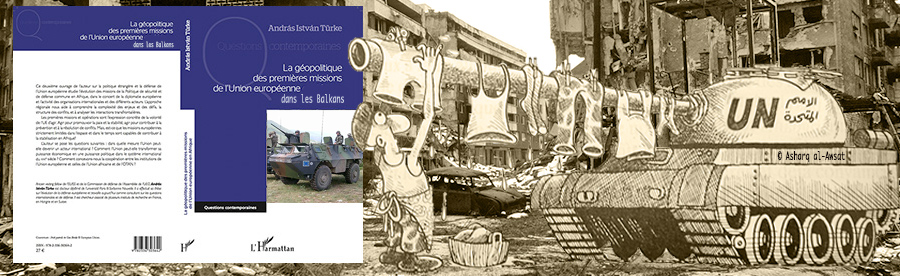
We are looking for sponsors for the English translation of these books, please contact turkeandras(at)gmail(dot)com