
Vous êtes ici
Agrégateur de flux
How to Secure the Straits
Why Iran and the Houthis keep winning the waterways.
Catégories: Diplomacy & Crisis News
The Backdoor to American Innovation
How military partnerships make Washington vulnerable to its adversaries.
Catégories: Diplomacy & Crisis News
16 combattants du FRN et de leurs alliés se rendent aux FARDC à Fizi (autorité)
Catégories: Afrique, Európai Unió : hírek magyarul
Israël : les partis arabes pourraient jouer un rôle clé, car Netanyahu et Eisenkot n'ont pas obtenu la majorité absolue
Les deux principaux blocs semblent disposer d'un nombre de sièges insuffisant pour former le prochain gouvernement sans dépendre des partis arabes.
Catégories: Afrique
French Senate passes bill to make protesters pay for unrest damage
The bill would allow authorities to demand the rapid removal of social media content calling for "insurrection or taking up arms against the state"
Catégories: European Union
Subjektive Einkommensarmut ist gesunken, bleibt bei Sozialleistungs- beziehenden aber hoch
Tatsächliche Einkommen stiegen 2002 bis 2022 stärker als die zum Zurechtkommen benötigten Einkommen – Anteil der Befragten mit subjektiver Einkommenslücke sinkt auf rund 20 Prozent – Arbeitslose Sozialleistungsbeziehende bleiben aber unverändert häufig betroffen
Die Einkommen in Deutschland sind ...
Catégories: Diplomacy & Defense Think Tank News
Nucléaire civil: pourquoi la Russie veut renforcer ses liens avec l'Afrique
À l'occasion de la troisième édition du forum économique Russie-Afrique, qui s'ouvre à Moscou ce mercredi 28 octobre, le nucléaire civil figure parmi les sujets au cœur des discussions. Pour les pays africains, confrontés à des besoins croissants d'électricité, l'atome représente une piste pour soutenir leur développement industriel. Pour Moscou, ces projets constituent aussi un marché de long terme et un moyen de renforcer son influence sur le continent.
Catégories: Afrique
Urban failures, political gains: how shadow interests shape new city development
The development of new cities has become a defining feature of contemporary global urbanisation. More than 150 new cities are currently in planning worldwide, predominantly in low- and middle-income countries. While new city projects often claim to address pressing urban challenges, many such initiatives fail to achieve their stated urban development goals. A significant number of new city developments, for example, remain underpopulated or entirely abandoned. Yet despite this mixed record, over 40 governments continue to promote their construction. In this policy brief, we argue that shadow interests – hidden political economic interests pursued by powerful elites – explain why certain governments continue to promote new city developments even when they fail. New cities can significantly underperform regarding their stated urban development objectives and nevertheless serve hidden political agendas very effectively. Urban failures must therefore not preclude political gains. Three examples illustrate our argument: new town planning in Egypt between the 1970s and 1990s, Masdar City in Abu Dhabi and Forest City in Malaysia. In all three cases, political goals complemented urban development objectives, and some of these political goals were realised even after the projects themselves fell short of their declared urban development goals. We recommend that international development actors, including donor governments, multilateral development banks and bilateral development agencies, exercise particular caution when invited to participate in new city developments. Even though many of these projects claim to tackle pressing urban challenges, their stated urban objectives must not necessarily reflect their underlying political economic motivations. Any technical or financial support ideally builds upon two complementary analyses: first, a political economy analysis of the interests motivating the project, including potential shadow interests; and second, an alternatives analysis comparing the proposed project with more limited and incremental interventions in existing cities. Incorporating such analyses into project approval processes will help discipline public and private investment in urban development and thereby reduce the risk that new city developments serve the interests of political elites rather than the needs of urban residents.
Catégories: Diplomacy & Defense Think Tank News
Associating with Canada gets complex
Also, in Wednesday's edition: Finland briefs ambassadors on Putin call
Catégories: European Union
Législatives en Serbie: les étudiants demandent la démission de la direction de la télévision publique
Ils ne sont pas encore officiellement députés, puisque les résultats de l'élection ne sont pas encore officiels, mais les députés serbes de la liste étudiante ont, d'une certaine façon, commencé leur travail. Ils ont adressé, entre autres, une lettre ouverte aux médias de service public, à l'autorité de régulation des médias et au Parlement, au sujet de leurs priorités en matière de médias.
Catégories: Union européenne
We Cannot Afford to Manage Chemicals One at a Time
By Sheila Aggarwal-Khan
GENEVA, Oct 28 2026 (IPS)
Governments today face an extraordinarily difficult set of tasks: cutting emissions, protecting nature, reducing pollution, creating jobs, strengthening economies, and improving people’s health, all while public finances remain under pressure.
Sheila Aggarwal-Khan
Chemicals sit at the centre of many of those tasks. They are essential to almost every economy and embedded in more than 95 per cent of manufactured goods. An estimated 40,000 to 60,000 industrial chemicals are in commerce globally, moving through increasingly complex supply chains and into billions of products used every day.For much of my career, I have worked at the intersection of industry, the economy, and the environment. One lesson has become increasingly clear to me over the decades: the greatest gains come when chemical safety is built into economic and industrial decisions from the outset, rather than addressed only after harm has occurred. The global construction sector makes this particularly clear; chemicals and materials selected today can remain in buildings for decades. Safer choices at the design stage can prevent risks that otherwise become costly and difficult to manage decades later.
At the first International Conference of the Global Framework on Chemicals, taking place in Geneva this November, this lesson will come to the fore as governments, industry, workers, scientists, and civil society, including NGOs, consider how to accelerate implementation across the full life cycle of chemicals and products through sectors where change can happen at scale.
This matters because managing chemicals one substance at a time – while essential in some cases – cannot be the full strategy.
Agriculture offers a clear example. Under the Framework, stakeholders have committed to take effective measures by 2035 to phase out highly hazardous pesticides where risks remain unmanaged, and where safer and affordable alternatives are available. A new Global Alliance on Highly Hazardous Pesticides aims to turn that commitment into coordinated action, while projects supported by the Global Framework on Chemicals Fund are already helping farmers in East and West Africa move towards safer approaches.
Textiles offer another example. Argentina is testing a digital product information system that allows chemical information to move with products through the value chain. That kind of transparency can help businesses identify hazardous inputs, exposure risks, the liability that can come with that, and then choose safer alternatives and determine whether fabrics can be safely used, reused or recycled.
Exposure risks cannot be separated from the economic systems in which chemicals are used. This is also why chemicals policy cannot be driven by single ministries. Agriculture, environment, industry, health, labour, trade, and fiscal policies all influence which chemicals are used, how products are made, traded, and whether safer alternatives can compete.
The objective is not more bureaucracy. It is greater coherence in which multiple, often competing objectives across sectors, can be discussed together to find solutions that work.
Governments have a particularly important role to play in creating the conditions in which better solutions can compete and scale. Clear regulation can give businesses confidence to invest in safer alternatives. Better information can move through supply chains. Industrial and fiscal policies can support cleaner production, while chemical safety and the safety of the sectors in which chemicals are used—from agriculture, to construction, to electronics, and textiles-can be considered alongside circularity, competitiveness, jobs, and health from the outset.
The economic case for doing so is strong. The global chemicals market was valued at roughly US$5 trillion in 2017 and projected to double by 2030. A 2023 study estimated that lead exposure alone was associated with trillions of dollars in global economic losses in 2019.
Countries building industries today also have an opportunity to avoid the costly legacies inherited by economies that industrialized first as they can leapfrog to clean, prosperous economies without having to go through an era comprising pollution, health and environment impacts, and clean up. Strong institutions, modern chemicals legislation, safer technologies, and green and sustainable chemistry can help countries build competitive industries without locking in the same liabilities.
Finance, of course, is the engine of implementation. Incentivizing industries towards safer chemicals, safer products and production practices, strengthening national chemicals management systems, and scaling safer alternatives all require investment. The way in which public finances can leverage private investment, the type of fiscal policy that incentivizes these investments, and the right enabling regulatory environment, can make this journey viable. Unlocking domestic resources in this way, coupled with funding from financing mechanisms such as the Global Environment Facility and the Global Framework on Chemicals Fund and private investment all have a role.
The challenge is therefore bigger than only managing a longer and longer list of harmful chemicals. It is to make chemical and product safety part of how whole sectors grow, innovate, and compete.
If we can get that right, safer chemistry can become part of how stronger economies are built, with safety built in from the start for people and planet.
Sheila Aggarwal-Khan is Director of the UNEP Industry & Economy Division
IPS UN Bureau
Follow @IPSNewsUNBureau
!function(d,s,id){var js,fjs=d.getElementsByTagName(s)[0],p=/^http:/.test(d.location)?'http':'https';if(!d.getElementById(id)){js=d.createElement(s);js.id=id;js.src=p+'://platform.twitter.com/widgets.js';fjs.parentNode.insertBefore(js,fjs);}}(document, 'script', 'twitter-wjs');
Catégories: Africa
Deux personnes interpellées après la disparition des yeux d'une défunte
Une affaire de disparition présumée d'organes sur le corps d'une femme décédée suscite l'émoi à Gbannavé, une localité de l'arrondissement d'Ayomi, dans la commune de Dogbo, département du Couffo.
Insolite à Dogbo, dans le département du Couffo. La disparition d'organes d'une femme décédée au petit matin du mardi 20 octobre 2026, à la suite d'un malaise, suscite l'émoi. Agée de la quarantaine et mère de trois enfants, les familles organisaient ses obsèques lorsqu'elles ont remarqué que ses yeux n'étaient plus en place.
Alertés le vendredi 23 octobre 2026, les éléments du commissariat de Dévé ont interpellé deux personnes suspectées, dont le mari de la défunte. Une enquête a été ouverte pour élucider les circonstances des faits.
Pour le mari, les yeux de son épouse défunte auraient été rongés par des souris. Cette déclaration reste toutefois à confronter aux éléments que permettra de recueillir l'enquête. Trois autres suspects seraient actuellement en fuite.
Une enquête policière est ouverte afin de déterminer les circonstances exactes de la disparition présumée des yeux de la défunte et de situer les responsabilités.
En attendant les conclusions des investigations, le corps a été déposé à la morgue de Dogbo. Les deux personnes interpellées devraient être présentées au procureur de la République dans les prochains jours, selon les informations.
F. A. A.
Catégories: Afrique
Congo Nouveau : « Pendant que l’opinion s’attendait à une condamnation du FRN, Rome : la C64 met Tshisekedi et Kabila au banc des accusés »
À la une ce matin, la démarche de la Coalition Article 64 (C64) retient l’attention de plusieurs médias de la capitale. Réunie en conclave à Rome du 25 au 27 octobre, la plateforme d’opposition annonce vouloir rencontrer séparément le président Félix Tshisekedi et son prédécesseur Joseph Kabila, avec pour objectif de favoriser un dialogue national inclusif et de rechercher une issue politique à la crise en RDC.
« Rome : la C64 met Tshisekedi et Kabila au banc des accusés », titre Congo Nouveau
Catégories: Afrique
The World Is Watching Norway. Will the Country Protect Antarctica?
Credit: Liv Arnesen
By Liv Arnesen
OSLO, Norway, Oct 28 2026 (IPS)
A global boycott of Antarctic krill products is gathering support. As a Norwegian, I want my country – the world’s largest krill-fishing nation – to change course when it comes to protecting Antarctica.
Scientists, explorers and ocean advocates are urging consumers to stop buying supplements and pet food containing Antarctic krill and to avoid farmed fish raised on feed containing it. This follows earlier moves by retailers – from Holland & Barrett in Britain to dm-drogerie markt in Germany and supermarket giants Woolworths and Coles in Australia – to remove krill supplements from their shelves.
I hope my government is listening. This boycott is highlighting a little-known industry and putting pressure on governments that support it. From 19 October, the 27 members of CCAMLR – the international commission responsible for conserving Antarctic marine life – will gather in Hobart, Australia, to negotiate fishing rules and marine protection for the last pristine place on our planet. Norway’s choices will matter far beyond our borders.
Liv Arnesen
In 1994, I skied alone to the South Pole, as the first woman to do so solo and unsupported. Six years later, Ann Bancroft and I crossed Antarctica, skiing from Queen Maud Land through the South Pole to the Ross Sea. Those journeys made headlines worldwide, highlighting women’s achievements. For me, they began a lifelong connection with Antarctica.Antarctica taught me what it means to live on nature’s terms. Its vastness felt almost timeless. But as I have returned as a guide and lecturer, and paddled through its waters, my sense of its permanence has given way to concern. Human activity is changing this remote place. What once seemed beyond our reach is increasingly exposed to our appetite for resources.
Among those is krill: small, shrimp-like animals that sustain whales, penguins, seals and seabirds. Yet we harvest krill for supplements, pet food and aquaculture feed while climate change alters the conditions on which the ecosystem depends.
This month, scientists reported that the chinstrap penguin population on Zavodovski Island has declined by almost two-thirds since 2011, as warming waters are changing the availability of krill, their main food source. This raises an urgent question: how can we justify expanding industrial fishing when the ecosystem it depends on is changing so profoundly?
As the largest Antarctic krill-fishing nation, Norway cannot continue to claim leadership in ocean protection while treating the needs of Antarctic wildlife as secondary to commercial expansion.
For two consecutive seasons, the krill fleet has reached the 620,000-tonne catch threshold months before the season’s end, forcing an early closure. This is not evidence that governance is working. That total catch figure masks how heavily the fishing became concentrated in feeding grounds for whales, penguins and seals after regional limitations expired in 2024.
Krill may be abundant across a vast ocean, but wildlife needs its food where it can reach it. A penguin feeding chicks must return repeatedly to its colony. Krill hundreds of kilometres away cannot replace food removed from nearby waters. Fisheries management must account for those local needs.
CCAMLR decisions require consensus among all 27 members. Norway cannot secure an agreement alone, but the Norwegian government must use its influence to push for stronger protection. It must support a moratorium on Antarctic krill fishing until binding, science-based rules protect vital wildlife feeding grounds. Fishing should resume only when up-to-date evidence shows it will not harm the ecosystem.
Protected areas need effective restrictions that safeguard habitats and wildlife in the long term. Norway must support all the proposed marine protected areas – around the Antarctic Peninsula, East Antarctica and the Weddell Sea – and work to secure their adoption. These areas must provide meaningful, lasting protection, without making it conditional on permission to catch even more krill elsewhere. China and Russia must stop blocking their adoption.
The Norwegian krill industry says it supports marine protection and better fisheries management. That commitment should include accepting a moratorium. But we should also ask: why do Norwegian companies continue taking this food source from Antarctica at all? Algae-based sources of the omega-3s used in supplements already exist. A moratorium is the immediate priority. In the longer term, governments and businesses should invest in alternatives, and plan a phase-out of commercial krill fishing.
Norway’s krill industry is closely tied to one of the country’s wealthiest billionaires. Our government must explain whose interests it is defending: private businesses or one of Earth’s last great wildernesses?
I have carried Norway’s flag across Antarctica. I want our delegation to carry a clear commitment to its protection into Hobart: support a moratorium on commercial krill fishing, secure meaningful protected areas and reject higher catches.
The world is watching. Norway should give it a reason to believe that protection can still prevail over profit.
Liv Arnesen is Norwegian polar explorer, educator and ambassador for Our Antarctica
IPS UN Bureau
Catégories: Africa
Le FIDA accorde 37,1 millions de dollars pour financer le ProPEA
Le Fonds international de développement agricole (FIDA) et le gouvernement béninois ont signé un accord de financement de 37,1 millions de dollars, soit environ 21,7 milliards de FCFA, destiné au Projet d'appui à l'insertion professionnelle et à l'entrepreneuriat agricole (ProPEA). Prévu sur une durée de huit ans, ce programme dispose d'un budget global de 149,1 millions de dollars, équivalant à près de 87,2 milliards de FCFA.
Le ProPEA bénéficie de l'appui financier du FIDA. Un accord de 21,7 milliards de FCFA est signé avec le gouvernement. Il vise notamment la création de 21 000 emplois pour les jeunes à l'horizon 2033.
Le ProPEA entend contribuer au développement d'entreprises agricoles résilientes, au renforcement des chaînes de valeur agroalimentaires et à l'amélioration des opportunités économiques en milieu rural. Pour atteindre ces objectifs, le programme prévoit une approche combinant formation professionnelle, accompagnement entrepreneurial, accès au financement, conseil aux entreprises, assurance et développement de partenariats productifs.
Près de 50 000 ménages ruraux ciblés
Le projet selon La Marina, prévoit d'accompagner près de 50 000 ménages ruraux, représentant plus de 360 000 personnes réparties dans les différents pôles de développement agricole du Bénin. Les jeunes devraient constituer selon le média, 60 % des bénéficiaires, contre 45 % pour les femmes et 2 % pour les personnes handicapées.
À travers ces objectifs, le programme vise à favoriser l'insertion professionnelle des jeunes, à soutenir les initiatives économiques en milieu rural et à renforcer l'inclusion des groupes ciblés dans les activités agricoles. L'accompagnement proposé doit également permettre aux bénéficiaires de développer des compétences techniques et entrepreneuriales adaptées aux besoins des filières agroalimentaires.
De l'exploitation agricole à l'entreprise
L'entrepreneuriat constitue l'un des axes centraux du ProPEA. Selon La Marina, les interventions prévues porteront sur la formation technique et entrepreneuriale des porteurs de projets, afin de faciliter la création, la structuration et le développement d'activités agricoles génératrices de revenus durables.
Le programme prévoit également des mesures destinées à améliorer l'accès au foncier. À ce titre, 6 000 hectares devraient être mobilisés pour les activités de production végétale. Des Espaces de pré-insertion agricole (EPIA) sont aussi annoncés pour permettre aux jeunes bénéficiaires d'accéder à des terres sécurisées et de développer leurs projets dans de meilleures conditions.
Les actions concerneront plusieurs filières à potentiel de croissance, notamment l'agriculture, l'aquaculture et l'aviculture. Le programme prévoit, en outre, un accompagnement des microentreprises et petites entreprises agricoles pour améliorer leur accès aux marchés, aux financements et aux mécanismes de gestion des risques.
Renforcer les chaînes de valeur agroalimentaires
Au-delà de la production, le ProPEA entend encourager le développement d'activités de transformation et de commercialisation des produits agricoles. Cette orientation vise à permettre aux entreprises accompagnées de mieux valoriser leur production, de diversifier leurs sources de revenus et de consolider leur position sur les marchés.
À travers le financement annoncé et les différents dispositifs d'accompagnement prévus, le programme ambitionne ainsi de renforcer le tissu entrepreneurial agricole béninois et de favoriser la création d'emplois durables en milieu rural. Son déploiement s'inscrit dans une perspective de développement des chaînes de valeur agroalimentaires et d'amélioration des perspectives professionnelles offertes aux jeunes et aux autres catégories de bénéficiaires ciblées.
F. A. A.
Catégories: Afrique
Fifty Years at the Table: What Small Nations Need from the Next UN Secretary-General
Credit: Shutterstock
By James Alix Michel
VICTORIA, Seychelles, Oct 28 2026 (IPS)
On 21 September 1976, less than three months after independence, Seychelles took its seat in the General Assembly of the United Nations. We became the 145th member of the Organisation. For a young nation of scattered islands in the Indian Ocean, with a small population and no army to speak of, it was far more than a ceremony. It was a promise that, in the family of nations, size would not decide whose voice was heard.
Fifty years later, I still believe in that promise. But I also know that it has never been kept automatically. It has to be renewed by every generation of leaders, and it now faces one of its hardest tests.
On 24 October, the United Nations marked its 81st anniversary. In his final United Nations Day message as Secretary-General, António Guterres reminded the world that the UN is not only an organisation but an idea: that humanity’s future depends on our ability to work together to advance peace, development and human rights.
Those words land at a sobering moment. Wars continue in several regions, often with civilians paying the highest price. The climate crisis is accelerating faster than our responses to it. Inequality is widening within and between nations. New technologies are advancing more quickly than our ability to govern them. And the UN itself is under severe financial strain, while its Security Council is too often paralysed by the very powers entrusted with keeping the peace.
It is in this climate that the Security Council is now deliberating, through its private straw polls, on who should become the tenth Secretary-General when Mr Guterres’s term ends on 31 December. For small island states, it matters more than most people realise.
Why should a small island care so deeply about who leads the United Nations? Because for nations like ours, multilateralism is not a matter of preference. It is a matter of survival.
We will never be the largest economies or the strongest military powers. Our protection has always been the rule of law, the strength of partnership and a seat at the table where every nation, large or small, has one vote. When the rules hold, a nation of just over 100,000 people can stand beside a nation of a billion and be heard. When the rules weaken, the small are the first to be pushed aside.
The UN has given small states some of their greatest achievements. The Law of the Sea gave island nations sovereign rights over vast ocean territories. The Paris Agreement set the aim of limiting warming to 1.5 degrees, a line that small islands fought hard to draw. And in January this year, the High Seas Treaty entered into force, bringing nearly two thirds of the world’s ocean, for too long a lawless frontier, under a framework for conservation and shared benefit. None of these would have been possible without the patient, often frustrating, work of multilateral diplomacy.
Yet I will not pretend the system is working as it should. A Security Council designed for the world of 1945 does not reflect the world of 2026. Africa, home to more than a quarter of the UN’s members, still has no permanent seat. Climate finance promised to vulnerable nations arrives slowly, in complicated forms, and often as loans that deepen debt.
The answer to an imperfect system of cooperation, however, is better cooperation, not less.
So what should the world, and especially its smaller nations, ask of the next Secretary-General?
First, courage. The Secretary-General has no army and a limited budget. The office’s greatest power is moral authority: the willingness to speak plainly to the powerful, to name injustice and to stand with those who have no other platform.
Second, the ability to build bridges. In a world divided between rival blocs, the UN’s leader must be trusted in Washington and Beijing, in Moscow and Brussels, but also in Victoria, Suva and Port Louis. Small states, which cannot afford permanent enemies, understand this better than most.
Third, a commitment to put the climate and the ocean at the centre of global security. For island nations, rising seas, coral collapse and extreme storms are not distant environmental issues. They are threats to our existence. In October, the International Union for Conservation of Nature warned that 96 percent of the world’s shallow-water coral reef ecosystems face an extremely high risk of collapse by 2075. Here in Seychelles, October storms have reminded us how fragile our coastlines and communities are. The next Secretary-General must treat the health of the ocean as the foundation of peace, food security and prosperity, and must ensure that the High Seas Treaty moves quickly from text to action as its first Conference of the Parties approaches.
Fourth, reform that people can feel. That means more than reorganising departments in New York. It must mean a fairer Security Council, a financial architecture that rewards resilience instead of punishing vulnerability, and a UN that delivers on the ground, where families, farmers and fishers live.
There is also a question of history. In 81 years, the United Nations has never been led by a woman. Without favouring any candidate, I believe it is time for the Organisation to show, at its highest level, the equality it rightly asks of its members.
Fifty years ago, Seychelles came to the United Nations as one of its smallest members, full of hope. We came because we believed that the ocean which surrounds us connects us to the world rather than isolating us from it. That belief has not changed.
The next Secretary-General will inherit a divided world and a weary institution. But they will also inherit the most important idea humanity has ever agreed upon: that our future is shared, and that no nation, however small, should face it alone.
Dialogue over division. Cooperation over confrontation. Solidarity over fear. Those words deserve to be more than a message for one day in October. They should be the test of the next ten years.
James Alix Michel is a former President of Seychelles, a Blue Economy pioneer and a champion of ocean protection.
IPS UN Bureau
Catégories: Africa
Fin des métiers en tension le 31 décembre : pourquoi les Algériens n’y ont jamais eu droit
Les sans-papiers qui travaillent dans un métier en tension peuvent demander leur régularisation jusqu’au 31 décembre 2026. Les Algériens, eux, n’y ont jamais eu accès, […]
L’article Fin des métiers en tension le 31 décembre : pourquoi les Algériens n’y ont jamais eu droit est apparu en premier sur .
Catégories: Afrique
Horaires de prière : le ministère des Affaires religieuses lance une nouvelle version de son application
Le ministère des Affaires religieuses et des Wakfs met en ligne une nouvelle version de son application « Adhan El Djazair officiel ». Gratuite et […]
L’article Horaires de prière : le ministère des Affaires religieuses lance une nouvelle version de son application est apparu en premier sur .
Catégories: Afrique
Pages


© 2012-2018 Europa Varietas Foundation © 2015-2018 Europa Varietas Association
www.europavarietas.org | info(@)europavarietas(dot)org | Switzerland

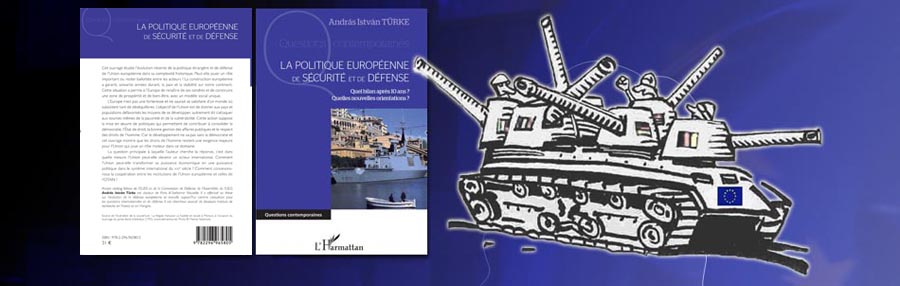
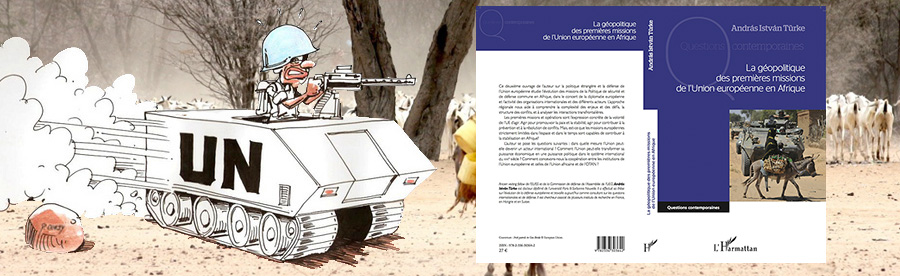
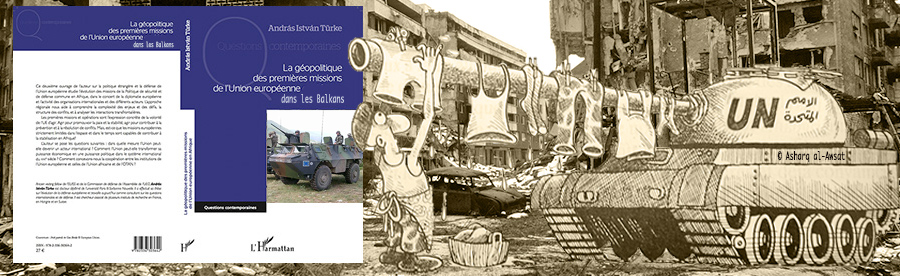
We are looking for sponsors for the English translation of these books, please contact turkeandras(at)gmail(dot)com