
Vous êtes ici
Agrégateur de flux
Les résultats du DIGITAL 08 H
DIGITAL 08H : Avez-vous tenté votre chance ?
Le tirage DIGITAL 08H N°265 a livré son verdict !
Mercredi 14 Octobre 2026
Avez-vous joué ?
Avez-vous misé sur vos numéros porte-bonheur ?
RÉSULTAT : 60 • 84 • 08 • 16 • 01
Félicitations aux heureux gagnants !
Pas encore cette fois ? Gardez le sourire.
Rendez-vous à 11H pour le prochain tirage.
Jouez dans les points de vente ou : Tapez *590# ou rendez-vous sur lnbloto.bj
Jouez avec modération et responsabilité. Le jeu doit rester un plaisir.
A TOI DE JOUER #XòGbɔnAlɔkpaVo
#LNBSA #JeuResponsable #LaChanceAvecModération
LA CROIX DE CE MERCREDI 14 OCTOBRE 2026

Catégories: Afrique
La CCI Bénin porte les opportunités d'accompagnement de l'ADPME aux entreprises
Dans le cadre de l'édition 2026 du Mois du « Consommons local », dédié à la promotion du Made in Benin, la Chambre de commerce et d'industrie du Bénin (CCI Bénin) a organisé un webinaire, mardi 13 octobre 2026, à l'intention des chefs d'entreprises. L'objectif visé est d'exposer les opportunités d'accompagnement qu'offre l'Agence de développement des petites et moyennes entreprises (ADPME), aux promoteurs d'entreprises.
« Les dispositifs d'accompagnement de l'ADPME au profit des entreprises béninoises », telle est la thématique au cœur d'un webinaire organisé mardi dernier, à la Chambre de commerce et d'industrie du Bénin. Plusieurs chefs d'entreprises ont pris part à ce rendez-vous riche et inspirant animé Dédé F. BEKOU, conseillère d'entreprise à l'ADPME.
Au cours du webinaire, la conseillère a rappelé le cadre légal ayant conduit à la création de l'ADPME, qui s'inspire de la création du Guichet unique, notamment, le Décret 20-22-199 du 23 mars 2022. Sa mission, a-t-elle rappelé, consiste à orienter, informer, et accompagner les entreprises pour l'accès au marché et au financement.
Dédé F. BEKOU a cité lors des échanges, plusieurs dispositifs d'accompagnement dont notamment, le Programme d'appui à l'entrepreneuriat au Bénin (PAEB). Il s'agit d'un dispositif qui vise à renforcer l'écosystème entrepreneuriale béninois, structurer les services financiers et non financiers, et accroître la compétitivité et la croissance des micros, petites, et moyennes entreprises, avec un accent particulier sur l'entrepreneuriat féminin. Elle a précisé que le PAEB finance également les entreprises selon plusieurs dispositifs d'accompagnement (les entreprises ayant un chiffre d'affaires de 0 à 2 milliards de francs CFA).
A cela s'ajoute les instruments de cofinancement qui se font de façon transversale avec les institutions financières, notamment les banques ; qui peuvent « venir et entrer dans le capital de l'ADPME, et financer la contrepartie ».
D'autres dispositifs de pré-amorçage sur tout ce qui concerne les études du marché, les subventions et l'accès au financement existent et aident les entreprises à accroitre leurs potentialités. Il en est de même des startups et structures intervenant dans le domaine du numérique.
Pour solliciter un accompagnement de l'ADPME, il faut, selon la conseillère, envoyer une demande via la plateforme e-PME. S'inscrire et exprimer le besoin de l'entreprise.
Eclairer les entreprises à l'occasion du Mois du « Consommons local »
Ce webinaire selon Lydie ADISSO, responsable en charge de la communication de la CCI Bénin, s'inscrit dans le cadre du Mois du « Consommons local », célébré tout le mois d'octobre de chaque année.
Le but visé selon ses explications, est de valoriser « le savoir-faire local ». « Cette année, nous avons voulu mettre plus en avant les structures qui accompagnent les entreprises pour qu'elles se développent davantage et produisent des produits de qualité à valoriser au Bénin et à l'international », a-t-elle confié. Et pour le faire, l'ADPME est la structure la mieux indiquée pour « expliquer aux promoteurs d'entreprises et aux opérateurs économiques, les dispositifs d'accompagnement qui existent et dont elles peuvent bénéficier pour se développer davantage ».
Pour l'institution consulaire, il s'agit selon sa responsable en charge de la communication, de porter la bonne information aux opérateurs économiques. Ainsi, ils pourront « mieux bénéficier des opportunités qu'offre l'ADPME ».
F. A. A.
Catégories: Afrique
Près de 300 habitations endommagées par une pluie à Kasongo
Près de 300 habitations ont été endommagées par une forte pluie qui s’est abattue mardi 13 octobre sur le territoire de Kasongo, dans la province du Maniema. Les dégâts touchent quatre quartiers et ont laissé de nombreuses familles sans abri. La société civile alerte sur les risques sanitaires, alors que la zone fait déjà face à des cas de diarrhée.
Catégories: Afrique
Mouvement lycéen : les blocages se poursuivent avant la nouvelle journée de mobilisation samedi
Le blocage des lycées continue mercredi avec "4 % des établissements fermés", selon l'Éducation nationale. À l'approche des vacances, les lycéens et étudiants appellent à poursuivre le mouvement, notamment en rejoignant le mouvement des "gilets jaunes" le 17 octobre.
Catégories: France
France : des lycées toujours bloqués, mais la mobilisation en baisse
À l’approche des vacances scolaires de la Toussaint, les blocages se poursuivent dans certains lycées, notamment au lycée Hélène Boucher, dans le XXe arrondissement de Paris. Ici, les élèves se mobilisent surtout en solidarité avec les autres établissements. Mais à l’approche des vacances, qui débutent ce vendredi, ils s’interrogent sur la suite du mouvement. Les lycéens sont aussi un peu moins nombreux à se mobiliser qu’au début de la contestation. Les précisions du journaliste de France 24 Karim Yahiaoui depuis Paris.
Catégories: France
Arzneimittelpreise in Deutschland im Visier der USA
Am 18. Juni 2026 leitete der US-Handelsbeauftragte nach Section 301 des Trade Act von 1974 eine Untersuchung ein, die sich gegen die deutsche Arzneimittelpolitik richtet. Die Untersuchung könnte letztlich zur Verhängung von Zöllen gegen Deutschland führen. Erstmals nutzt die US-Regierung diese rechtlichen Befugnisse, um die Preisgestaltung für Arzneimittel in anderen Ländern in Frage zu stellen. Zwar fällt die Regulierung von Arzneimittelkosten in die nationale Zuständigkeit; Abwehrmaßnahmen gegen Zölle, die die USA erheben, fallen jedoch in die ausschließliche Zuständigkeit der EU und könnten den Einsatz ihres Anti-Zwang-Instruments rechtfertigen. Die Bundesregierung sollte gemeinsam mit der EU und anderen Mitgliedstaaten auf den Versuch, von außen in die nationale Arzneimittelpreisgestaltung einzugreifen, reagieren. Weitere Partnerschaften mit Drittländern könnten dazu beitragen, das transnationale Problem der Arzneimittelpreisgestaltung anzugehen.
Catégories: Diplomacy & Defense Think Tank News
Régularisation en France : un titre de séjour de 4 ans bientôt possible par le travail ?
Une nouvelle étape vers l’intégration professionnelle et administrative vient de franchir les portes du Palais Bourbon. Déposée le 6 octobre 2026 par la députée Céline […]
L’article Régularisation en France : un titre de séjour de 4 ans bientôt possible par le travail ? est apparu en premier sur .
Catégories: Afrique
Après les JOJ, Dakar accueillera les Jeux de la Francophonie en 2031
En décrochant l’organisation des Jeux de la Francophonie 2031, le Sénégal ajoute un nouveau rendez-vous majeur à son calendrier sportif et culturel, dans le sillage des Jeux olympiques de la jeunesse qui démarrent le 31 octobre prochain..
Catégories: Afrique
Les FARDC mettent en garde les miliciens Mobondo réfractaires au désarmement à Kwamouth
Les Forces armées de la République démocratique du Congo (FARDC) appellent les miliciens Mobondo encore actifs dans le territoire de Kwamouth, dans la province du Maï-Ndombe, à déposer volontairement les armes. Mardi 13 octobre, l’armée a mis en garde ceux qui continuent d’imposer des taxes illégales aux agriculteurs, malgré les avancées du processus de désarmement.
Catégories: Afrique
Le cas du journaliste Moussa Kaka évoqué à la réunion de la Commission des droits de l'Homme de l’UA à Dakar
Alors que la Commission africaine des droits de l’homme tient pendant dix jours sa réunion annuelle, des organisations de la société civile demandent à l’Union africaine de se prononcer sur la dégradation des libertés publiques dans les pays du Sahel. Une table ronde sur la fermeture de l'espace civique dans la région, et ses conséquences pour les journalistes et la société civile s’est tenue en marge de la conférence. Le cas de notre confrère Moussa Kaka y a été évoqué.
Catégories: Afrique
After Iran, Washington Needs a New Basing Strategy
The decades-old model has been upended by a war that favors movement and dispersal.
Catégories: Diplomacy & Crisis News
Épidémie d'Ebola en RDC: comment s'organise la riposte?
La 17e épidémie de maladie à virus Ebola qui touche la République démocratique du Congo, officiellement depuis le 15 mai dernier, s'annonce déjà comme la plus meurtrière pour le pays d'Afrique centrale. Ce sont désormais sept provinces qui sont concernées par des cas confirmés et le décès, le 6 octobre, d'un citoyen kényan, de retour dans son pays après avoir contracté le virus Ebola en RDC, replace la maladie émergente à la une de l'actualité internationale et pose la question de la mobilité des malades et de leur traçage.
Catégories: Afrique
ECPR Knowledge Politics and Policies 2026

Knowledge Politics and Policies Standing Group at the 2026 ECPR General Conference in Krakow
The 2026 edition of the European Consortium for Political Research (ECPR) General Conference took place at Jagiellonian University in Krakow (Poland), 8-11 September. Over four conference days more than 2000 participants presented in over 500 panels discussing some of the most important topics of our times including democratic backsliding and resilience, radicalisation, climate change, and technological transformation.
This is a special year for our ECPR Standing Group Knowledge Politics and Policies, as we celebrate the 10th anniversary of our Standing Group and the 15th time of organizing our section at the ECPR General Conference. Our Standing Group (initially under the name ‘Politics of Higher Education, Research and Innovation’) was established in 2016 following earlier successful sections at the ECPR General Conference and the previous UACES collaborative research network ‘European Research Area’ (2013-2016). Our section and Standing Group has evolved into an active research network with currently more than 200 members having initiated and supported a range of collaborations leading to joint projects, special issues, and edited volumes.
This year our section had 10 excellent panels on topics such as politics and policies of Artificial Intelligence, academic freedom, science diplomacy, research security and more. To learn more about the questions discussed, please see below panel summaries prepared by the panel chairs.
Artificial Intelligence
Inga Ulnicane
The panel on politics and policies of Artificial intelligence has become a traditional element of our section, taking place the 7th year in a row. If in 2020 our first panel on this topic seemed to be the only one in the General Conference dedicated to AI, then over the years the number of panels discussing AI across various sections has grown considerably. It is good to see that our AI panel keeps attracting a lot of interest and continues to be a place where field shaping publications and next steps are discussed. This year again speakers included authors of some of the most cited publications on AI governance and policy.
Based on her recent World Bank working paper, Roxana Radu discussed the global landscape of national AI strategies. Tero Erkkilä presented his joint work with Konstantinos Kostas comparing various global governance indices on AI readiness. Inga Ulnicane talked about her research on limitations and alternatives to offering AI as a quick technological fix to complex societal challenges. Meng-Hsuan Chou provided findings from her study on how platform workers are portrayed on legacy and social media in Singapore. Finally, Susan Robertson’s talk was based on her recent article co-authored with Michele Martini on the use of AI in education.
The panel was followed by an informal meet-up of AI politics researchers bringing together participants from the ECPR General Conference with attendees of the European Association for the Study of Science and Technology (EASST) conference that took place at the same time just across the road. Enthusiastic response and interest to the informal meet-up invitation exceeded expectations and led to vibrant interdisciplinary conversations. The meet-up confirmed high demand for more activities of high-quality research focusing on AI politics . If you are interested in upcoming activities, please get in touch!
Knowledge, Politics and the Changing Academic Profession
Panel chairs and presenters
What happens to the academic profession when both its mission to contribute to the public good and its authority over the production of knowledge are increasingly contested? This was the question at the heart of the panel Changing Profession, Changing Times. Chaired by Meng-Hsuan Chou (Nanyang Technological University, Singapore) and Eva Hartmann (University of Cambridge, UK), the panel zoomed in on four areas to examine this question, with contributions from Yiran Zhou (University of St Andrews), Premysl Rosulek (University of West Bohemia), Christopher Pokarier (Waseda University), and Eva Hartmann. The four contributions demonstrate that the challenges facing the academic profession cannot be reduced to questions of working conditions or institutional management. They concern the societal role of academia itself.
The increasing securitisation of research raises questions about academic autonomy and the purposes of science. Using Australia mainly as a case study, Christopher Pokarier explores how nationalist pressures challenge the cosmopolitan orientation of higher education. The rise of “pseudoscience” – knowledge presented as scientific despite lacking a scientific foundation – adds a new dimension to the politicisation of academic knowledge, further pressuring the authority of scientific expertise, as Premysl Rosulek pointed out for the Czech Republic. In addition, the acceleration of academic work underpinned by a publish-or-perish culture raises questions about the conditions necessary for producing reliable and meaningful knowledge, as Yiran Zhou demonstrated in her study of Chinese academics. Reflecting on these developments therefore means asking not only how universities are changing, but also what kind of profession academia is becoming—and what role it can play in increasingly polarised societies.
Data and International PoliticsThe panel on data and knowledge interdependencies in international relations featured four presentations. Ivan Josipovic started his talk with a vignette around a German platform that traces knifing incidents in Germany, which, he argued, was difficult to comprehend using established conceptions of data activism. He proposed a more differentiated typology of civic data activism in migration governance along two dimensions: degree of epistemic alignment with state institutions and degree of centralized control over data infrastructures. Martin Albrecht Haenig presented a mixed methods research proposal on the landscape of European think tanks and their knowledge production about China. His research features a large-scale analysis of discourses derived from policy documents as well as process tracing to establish an understanding of how discourses translate into political decision-making.
Yamini Yogya presented research on the circulation and mediation of knowledge in the context of the Science-Policy Platform on Biodiversity and Ecosystem Services (IPBES) and the Intergovernmental Panel on Climate Change (IPCC). Yamini showed structurally divergent national knowledge flow networks and discussed how such structures affect the implementation of effectiveness of such science-policy-initiatives. Paul Dunshirn presented an interdisciplinary research paper on data interdependencies in global biodiversity monitoring, for which he systematically extracted data sources used in biodiversity research using a machine learning approach. His findings indicate strong global dependencies on publicly-funded U.S. American data sources, highlighting the vulnerability of biodiversity monitoring to ongoing funding cuts. Overall the panel highlighted emerging political questions affecting global flows of knowledge and data across policy contexts and different methods for capturing the interdependent relationships between involved actors. It provided a vantage point for further research on both the factors shaping such interdependencies and the effects they have on political decision-making and policy.
Knowledge, Power, and CitizenshipThe panel Epistemic Governance in Higher Education: Knowledge, Power, and Citizenship, chaired by Hila Zahavi, brought together three papers exploring how institutions shape knowledge, education, and their political and administrative consequences. Yuan Zhou presented joint work with Duancheng Yang on how China’s National Social Science Fund reshapes political science through research funding and disciplinary priorities. Tao Zou presented joint research with Tatiana Fumasoli examining the unequal effects of Erasmus Without Paper digital infrastructure across European higher education institutions. Finally, Martin Dybdahl examined the political returns to higher education in Germany and the UK, distinguishing the effects of university education from selection into higher education.
European Higher Education GovernanceThe panel European Higher Education Governance in Practice and Context, chaired by Lise Moawad (Humboldt-Universität zu Berlin), explored the practical dynamics of European higher education governance through a variety of case studies, revealing how the deployment of academic infrastructures (university alliances, doctoral reforms, quality standards, and scholarly communities) produce differing effects depending on national and disciplinary contexts. The presentations highlighted the tensions between European coordination, local adaptations and structural inequalities, and questioned the validity of certain commonly held notions in higher education studies.
David Joshua Schröder (Humboldt-Universität zu Berlin) began by outlining the different modes of engagement found in publicly funded university alliances, and the relationships these maintain with their member universities and external stakeholders, against the backdrop of the question of agency. Next, Jacek Lewicki (SGH Warsaw School of Economics) presented a pilot study on the implementation of a political programme for developing doctoral studies in Poland. He focused in particular on the 2018 shift in the structuration of doctoral education and what this entailed in terms of quality assurance.
Teresa Teixeira Lopo (Universidade Lusófona), for her part, examined the standardised roll-out of the Bologna Process from a critical perspective, using a case study of Paris-Saclay. She explored the various meanings of ‘pedagogical innovation’, a term that is often positively connoted and value-laden. Finally, Stanisław Krawczyk (University of Wrocław), Tessa DeLaquil (Norwegian University of Science and Technology) and Rasmus Harsbo (Adam Mickiewicz University) examined what the regionalisation of scholarly communication might reveal. To do so, they compared Polish history, where regionalisation is experienced as a constraint, and Danish game studies, where regionalisation is naturalised.
Governing Grand Challenges Through Transnational Strategic Partnerships
Agata Lambrechts
The Panel on Governing Grand Challenges Through Transnational Strategic Partnerships chaired by Agata Lambrechts and Alina Felder-Stindt, focused on the emergence of these partnerships as flagship instruments in European and global governance. Setting the macro-level context, Agata Lambrechts examined how grand societal challenges themselves function as distinct ‘governance means’ in European policymaking within the education and training field. Through an analysis of the European Universities initiative and Centres of Vocational Excellence, her work demonstrated how challenges orient collective action, mobilise diverse stakeholders, and enable EU steering toward broader societal goals beyond mere economic competitiveness. Complementing this, Alina Jasmin Felder-Stindt introduced a joint conceptual framework with Linda Wanklin to systematically categorise transnational skills initiatives. By mapping configurations like cross-border education clusters and higher education alliances, she illustrated the diverse governance logics at play.
Moving from macro-policy to institutional realities, the panel also looked into the organisational design and everyday tensions of implementing these partnerships. Kim Waechtler addressed the structural friction within European Universities initiative alliances, introducing the concepts of Temporary and Permanent Meta-Organisations to capture how institutions navigate the clash between long-term strategic ambitions and strict, project-based deadlines. Her analysis suggested that these alliances actively sustain this temporal tension, resulting in a distinctive hybrid governance model. Building on this institutional focus, Lukas Fuchs explored how universities use these novel transnational channels to renegotiate their core purpose. He argued that as external pressures mount to address practical societal needs, alliances serve as crucial networks for moral reflexivity, allowing institutions to self-confidently re-imagine their material relationship with society beyond traditional appeals to academic freedom.
Governing the Politics of Research and Knowledge SecurityResearch and knowledge security have become prominent concerns for governments, funders and universities. Decisions about international partnerships, access to data, researcher mobility and emerging technologies are increasingly framed in terms of risk and strategic competition. Yet the meanings of research and knowledge security remain contested, as do their implications for academic openness and cooperation. This panel examined how these concepts are constructed, translated into policy and put into practice across different institutional and regional settings.
Chaired by Cristina Pinna (University of Groningen), Governing the Politics of Research and Knowledge Security: Rethinking Knowledge, Power, and Global Academic Cooperation brought together five papers. Gabriele Manca examined how references to China shape definitions of risk and justifications for research security measures in European academic and policy debates. Cristina Pinna and Annina Lattu compared how the EU and China govern open science alongside research security, identifying different approaches to openness and protection and their implications for EU–China academic cooperation.
Moving from policy debates to institutional responses, Mitchell Young, Zuzana Krulichová and Tomas Nigrin compared the Czech Republic and the Netherlands. They examined how relationships between states and universities shape responses to higher education interference. Monika Szkarłat studied the securitization of scientific cooperation in the European Arctic, focusing on Svalbard and the roles of states, EU institutions and scientific organisations amid geopolitical tensions.
Building on her experience in France, Valérie Zwilling shared a practical perspective on the shift from openness towards greater awareness of security concerns. Her paper brought the panel back to the practical challenge researchers face in sustaining collaboration while recognising the vulnerabilities that openness can create. Together, the papers showed how research security is defined and put into practice across different contexts. They raised questions about how institutions can address security concerns while maintaining the conditions for international scientific cooperation.
Academic FreedomKrakow marks the second time for a panel on academic freedom at the Knowledge Politics and Policies section, coinciding with a still growing scholarly and policy interest in the theme. Anna Gall presented a paper titled “Unpacking Performances of Science Politicisation” where she explored the process through which science becomes politicized as the “rightful place” for science is being negotiated. Drawing on perspectives from STS and political science, the paper built on cases from sustainability science and security-related research as vignettes. Mari Elken and Peter Maassen presented the paper titled “Academic Freedom and Political Polarization in Europe”. Exploring particularly the role of illiberal regimes, the paper analysed the different versions of the illiberal playbook in Hungary, Italy and Poland, to explore the various ways in which such regimes have tried to take control over higher education, comparing this to experiences in countries where such regimes have not obtained a strong position. The presentations were followed by a rich discussion on the issue of academic freedom and how securitization of science, increased political polarization and politization of science shape the conditions for research in Europe.
Science DiplomacyThe panel Science Diplomacy’s Competitive Orientation included three contributions and was chaired by Mitchell Young of Charles University. The panel was influenced by the recent turn towards research security, which has become a key pillar in science diplomacy. Two of the papers related to this. Rachel Fishberg from Aarhus University presented her co-authored paper “Critical research as classificatory work from within”, which examined how the category of “critical research,” as it appears in policy discussions around critical materials and technologies, is translated from EU and state policy levels into institutional research governance.
Adam McCarthy from University of Manchester presented a comparative study, titled “Science Diplomacy and the Making of AI Governance: A Comparative Study of UNESCO’s Ethics of AI and the EU AI Act View Paper Details”. As the lead author of a team working on these topics, he provided insights into this broad ranging examination of two different AI governance processes, comparing four aspects: definitional work, expertise legitimisation, authority building, and governance tools. Finally, Wojciech Szczerbowicz from University of Wrocław presented “Small states, knowledge hubs and the Arctic: science diplomacy in the foreign policy of the Nordic states” which was drawn from parts of the newly published book Science Diplomacy and Foreign Policy in Northern Europe (Szkarłat et al, 2026). He talked about the intersection of foreign policy and science diplomacy, which were addressed in tandem in each country case studied in the book.
European University Alliances
Panel chairs and speakers
The panel The External Dimension of European University Alliances: Universities as Transnational Actors, co-chaired by Marina Cino Pagliarello and Andrew Gunn, examined how European University Alliances are increasingly moving beyond their original role in internal European integration and developing a more visible external dimension. Bringing together work on academic diplomacy, expert knowledge, policy transfer and institutional change, the panel explored how universities and alliances operate across the boundaries of higher education, transnational governance and European external action. Contributions included research on the European Commission’s role and influence in Indonesian higher education, the policy effects of the European Universities Initiative in Serbia, and European University Alliances as infrastructures of higher education diplomacy, including the case of CIVICA for Ukraine as well as examples of alliance engagement in Africa and Asia through academic partnerships, capacity-building and wider transnational cooperation.
A central theme emerging from the discussion was the need to look beyond conventional accounts of EU influence based solely on normative power and to consider more closely the role of knowledge power: the capacity to shape institutional practices, policy agendas and transnational relationships through expertise, research, education and sustained cooperation. At the same time, the panel stressed that universities and alliances should not be treated as formal foreign-policy actors. Their significance lies precisely in the hybrid space they occupy, where institutional autonomy, national priorities, EU-level strategies and local adaptation intersect. The discussion therefore highlighted both the growing diplomatic relevance of higher education cooperation and the importance of examining how knowledge travels, is translated and becomes influence beyond the EU.
Standing Group Business MeetingAt our Standing Group Business meeting, we discussed our recent successes and future plans. Former include an international workshop on AI politics research that took place at the ECPR Harbour House earlier this year and was supported by the ECPR Research Development Grant awarded to our Standing group. As in every Business meeting, we celebrated our most recent winner of the excellent paper award from an emerging scholar, Synne Lysberg from University of Bergen (Norway). We also took our traditional group photo that together with similar photos from previous years allows us to trace continuities and changes in our Standing Group and section. Our future plans include preparing the section for the next ECPR General Conference that will take place at the Pompea Fabra University in Barcelona, 7-10 September 2027. If the topics discussed in our section are of interest to you, watch out for the next call for applications for our excellent paper award and join us for our future activities!
The post ECPR Knowledge Politics and Policies 2026 appeared first on Ideas on Europe.
Catégories: European Union
Turquie: le pouvoir prend le contrôle de la principale télévision de l'opposition
La police turque a pris le contrôle mercredi 14 octobre du siège de la principale chaîne privée d'opposition et interpellé onze de ses salariés, dernier avatar d'une vaste campagne du pouvoir contre les milieux médiatiques, politiques et associatifs du pays.
Catégories: Union européenne
Artificial intelligence and inequality
This study examines the relationship between artificial intelligence and income and wealth inequality, combining theoretical analysis with empirical investigation. It focuses on skill demand, wage polarization, capital and market concentration, the digital divide and financial applications. The findings show that AI accelerates existing inequality when its adoption combines with unequal distributions of skills and economic power. This relationship depends on the institutional framework. Digital inclusion, social protection, skill development and economic policy interventions can help distribute the benefits of technological change more broadly and fairly.
Read here (in Greek) the Working paper by Manthos Delis, Professor; Audencia Business School; Sofia Anyfantaki, Senior Economist, European Central Bank; Maria Iosifidi, Associate Professor, Montpellier Business School and Nikolaos Mylonidis, Professor, University of Ioannina.
Catégories: Diplomacy & Defense Think Tank News
Plus de 200 véhicules immobilisés après une grève des transporteurs sur l’axe Bunia-Kasenyi
Le trafic est paralysé depuis lundi 12 octobre sur la route Bunia-Kasenyi, en Ituri, où les transporteurs de marchandises en provenance de l’Ouganda observent une grève pour dénoncer le délabrement de cet axe routier d’environ 60 kilomètres, longeant le lac Albert. Plus de 200 véhicules sont immobilisés de part et d’autre du poste de péage de Dele, selon des témoignages concordants.
Catégories: Afrique
Plus de 10 000 cas de violences basées sur le genre recensés depuis janvier 2026 en Ituri
Plus de 10 000 cas de violences basées sur le genre (VBG) ont été recensés en Ituri depuis le début de l’année 2026, après plus de 20 000 cas enregistrés en 2025.
Catégories: Afrique
Pourquoi l'Iran s'inquiète-t-il du renforcement des relations entre Israël et les Émirats arabes unis ?
La récente visite du Premier ministre israélien Benjamin Netanyahu à Abou Dhabi a ravivé les inquiétudes de Téhéran concernant les Émirats arabes unis (EAU).
Catégories: Afrique
Pourquoi l'Iran s'inquiète-t-il du renforcement des relations entre Israël et les Émirats arabes unis ?
La récente visite du Premier ministre israélien Benjamin Netanyahu à Abou Dhabi a ravivé les inquiétudes de Téhéran concernant les Émirats arabes unis (EAU).
Catégories: Afrique
Ukraine Can Turn Imminent Peril to Its Advantage
How a true “energy cease-Fire” can curb Putin.
Catégories: Diplomacy & Crisis News
Pages


© 2012-2018 Europa Varietas Foundation © 2015-2018 Europa Varietas Association
www.europavarietas.org | info(@)europavarietas(dot)org | Switzerland
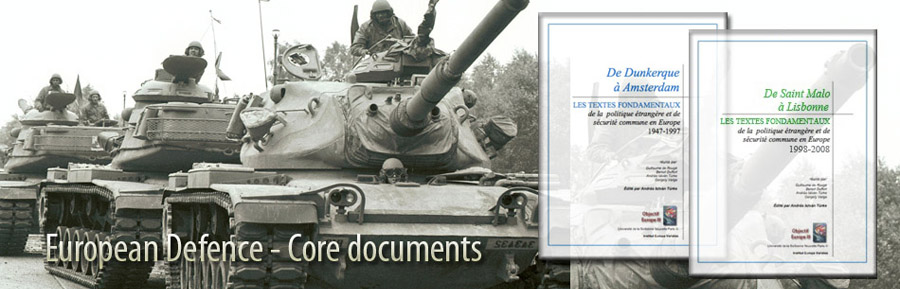
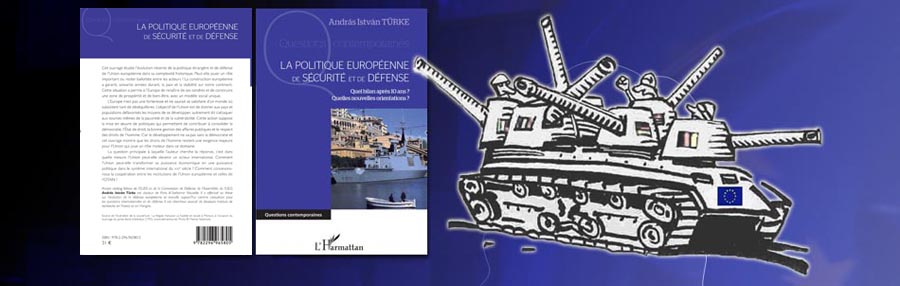
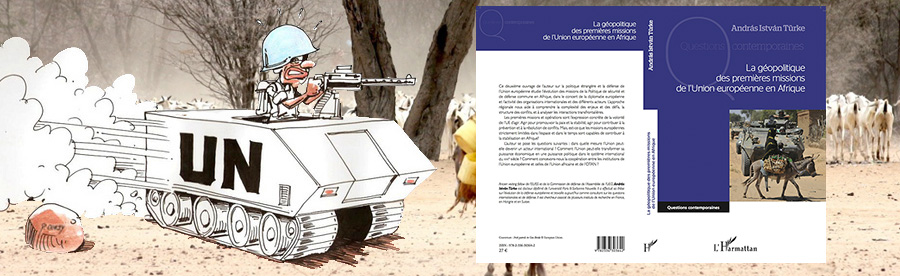
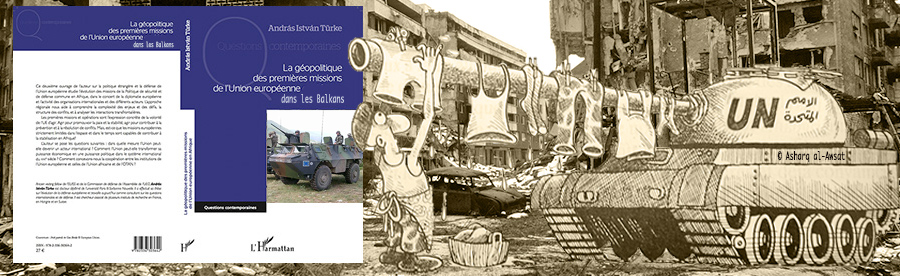
We are looking for sponsors for the English translation of these books, please contact turkeandras(at)gmail(dot)com