
You are here
Feed aggregator
Cyberattaques russes: l'Union européenne et le Royaume-Uni sanctionnent, la France convoque l'ambassadeur
Le Royaume-Uni et l'Union européenne ont annoncé ce 13 juillet de nouvelles sanctions contre la Russie, accusée d'orchestrer une vaste campagne de cyberattaques contre plusieurs pays européens. La France annonce également la convocation de l'ambassadeur russe à Paris « dans les prochains jours ». La Russie dénonce des accusations « gratuites ».
Categories: Union européenne
Sur les côtes, les villes, dans l'« outback », les terres aborigènes
/ Australie, Ville, Région, Frontières, Aborigènes - Océanie
/ Australie, Ville, Région, Frontières, Aborigènes
Categories: Diplomacy & Crisis News
Flambée de diarrhée aiguë à Shabunda : Dr Pacifique Kapimbu alerte sur un taux de létalité de 21 %
Une urgence sanitaire critique secoue le territoire de Shabunda. Entre le 23 juin et le 7 juillet 2026, la zone de santé de Mulungu a enregistré 52 cas de diarrhée aiguë, ayant déjà entraîné 11 décès.
Categories: Afrique
Les relais communautaires face aux agressions et au déni dans la traque d'Ebola à Bunia
Alors que leurs efforts permettent de briser le déni face à la 17e épidémie d'Ebola, les relais communautaires de Bunia travaillent désormais la peur au ventre. En première ligne dans l'aire de santé de Bigo et au site de déplacés de Kigonze, ces volontaires essuient quotidiennement insultes, menaces et agressions physiques de la part d'habitants réfractaires.
Categories: Afrique
Jean Leonetti au Figaro : «Tout se passe comme si les défenseurs du texte sur le droit à mourir craignaient que l’opinion s’inverse»
ENTRETIEN – Pour l’auteur des lois sur la fin de vie de 2005 et 2016, le nouveau texte attendu à l’Assemblée le 15 juillet témoigne d’une «réflexion collective inachevée» et se retrouve privé de garde-fous. Le maire LR d’Antibes dénonce une « régression ».
Categories: France
Lutte contre la dépravation des mœurs : Douze jeunes interpellés par la Police municipale
La Police municipale de Ouagadougou est intervenue le 12 juillet 2026 dans une villa située au quartier Kouritenga, dans l'arrondissement n° 6, à la suite du signalement d'un citoyen. Selon les informations reçues, les lieux étaient utilisés par des jeunes pour des activités jugées contraires aux bonnes mœurs.
Les vérifications menées par les agents sur place ont permis de confirmer les faits rapportés. L'opération s'est soldée par l'interpellation de douze jeunes, âgés de 13 à 19 ans, dont huit garçons et quatre filles. Ils ont ensuite été conduits pour effectuer des travaux d'intérêt général.
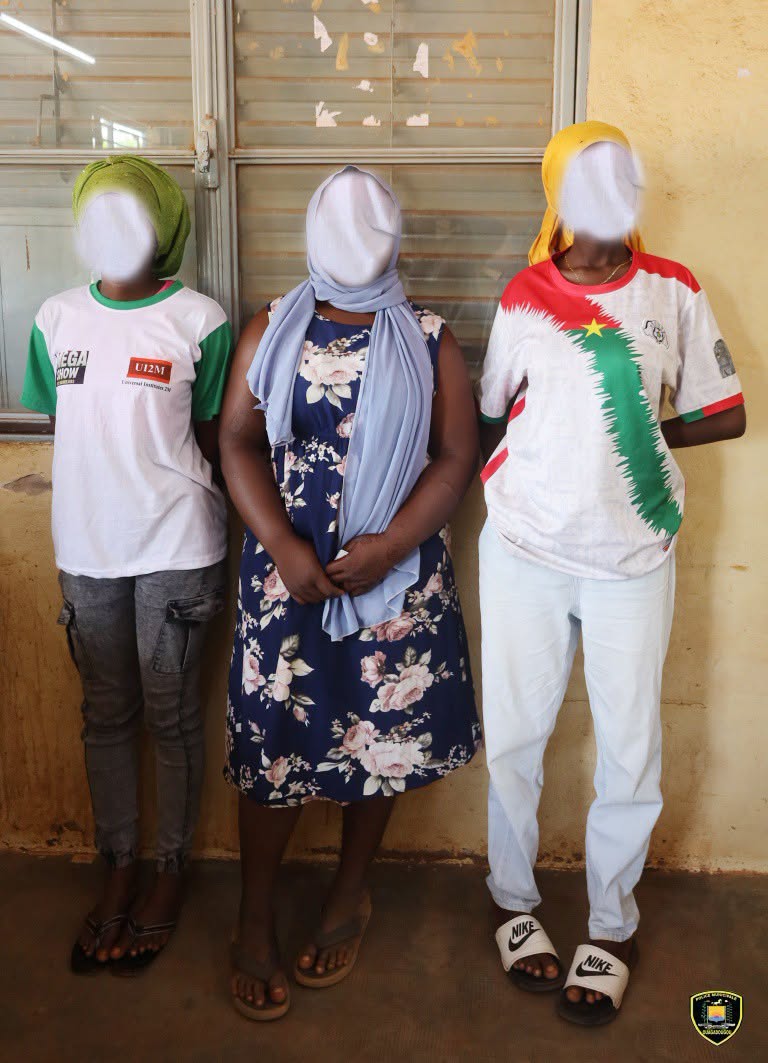
Les parents des adolescents concernés ont été invités à se présenter auprès des services de la Police municipale. Au cours de cette rencontre, ils ont été informés des circonstances de l'interpellation et sensibilisés sur l'importance de leur rôle dans l'éducation, l'encadrement et le suivi de leurs enfants.
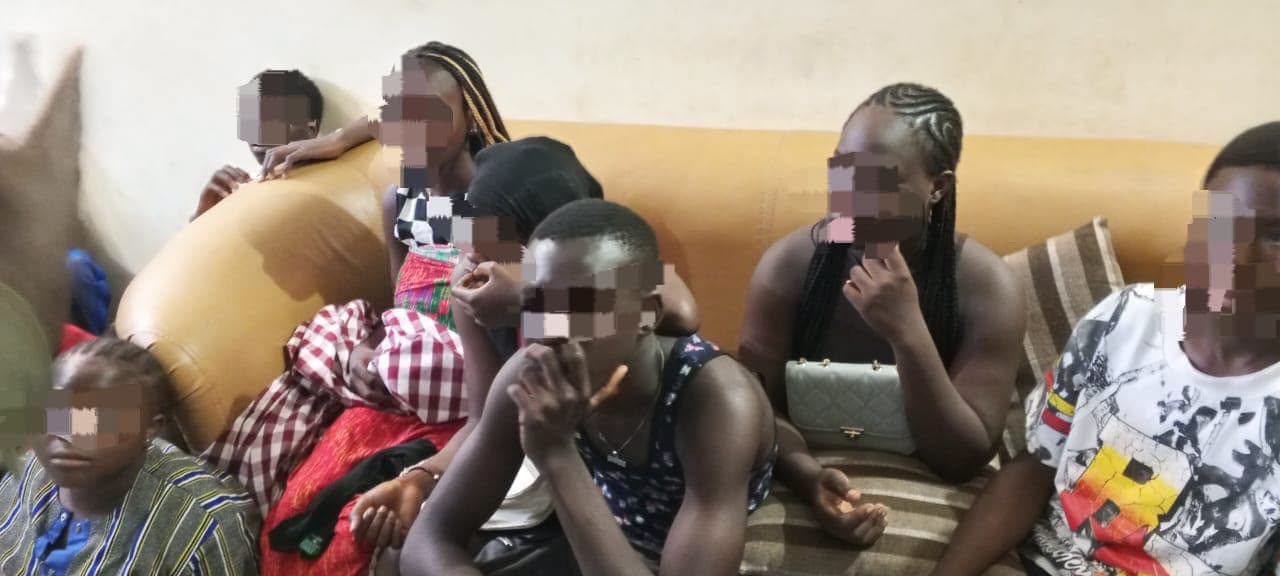
La Police municipale a, par ailleurs, exprimé sa reconnaissance envers les citoyens dont la vigilance et l'esprit de collaboration contribuent au maintien de l'ordre public, de la sécurité et à la préservation des bonnes mœurs. Elle exhorte enfin la population à continuer de signaler toute situation ou tout comportement susceptible de compromettre la tranquillité publique.
Lefaso.net
Source : Page Facebook de la police municipale
Categories: Afrique
Afrique du Sud : Le footballeur Jayden Adams décédé, la piste du suicide évoquée
Le football sud-africain est sous le choc après le décès de l'international Jayden Adams, survenu à l'âge de 25 ans. Alors que la police a ouvert une enquête pour déterminer les circonstances exactes de sa mort, plusieurs médias dont RMC Sport, avancent l'hypothèse d'un suicide. Une information qui n'a toutefois pas été confirmée par les autorités.
Selon le média sus-cité, Jayden Adams traversait une période particulièrement difficile depuis le décès de sa grand-mère, survenu deux semaines plus tôt. Cette disparition l'avait profondément affecté. Au cours de la Coupe du monde 2026, le joueur avait lui-même confié combien cette perte avait été éprouvante, expliquant avoir disputé une rencontre internationale alors que son « cœur était au ciel » auprès de sa grand-mère.
Si plusieurs publications évoquent la possibilité qu'il ait mis fin à ses jours, cette hypothèse est du domaine des spéculations. Les autorités sud-africaines n'ont confirmé ni les circonstances ni la cause du décès, tandis que le ministre des Sports, Gayton McKenzie, a appelé le public et les médias à éviter toute spéculation et à respecter la douleur de la famille.
Natif du Cap, Jayden Adams était considéré comme l'un des plus grands espoirs du football sud-africain. Révélé à Stellenbosch FC, il avait rejoint Mamelodi Sundowns, avec lequel il avait remporté le championnat et la Ligue des champions de la CAF. International sud-africain, il venait de participer à la Coupe du monde 2026, où il avait pris part aux trois matches de la phase de groupes des Bafana Bafana.
Depuis l'annonce de sa disparition, les hommages affluent de toute l'Afrique du Sud. Clubs, dirigeants, anciens coéquipiers et supporters saluent la mémoire d'un joueur talentueux dont la disparition brutale laisse le football africain dans une profonde consternation. Les conclusions de l'enquête devraient permettre d'établir les circonstances exactes de ce drame.
Erwan Compaoré
Lefaso.net
Categories: Afrique
Chinas geheime Nukleartests
Die USA werfen China vor, geheime Atomwaffentests durchzuführen, die gegen internationale Normen und Testmoratorien verstoßen. Wegen der vergleichsweise kleinen historischen Testbasis besitzt China starke Anreize, zusätzliche Testdaten für die Modernisierung seines Atomwaffenprogramms zu gewinnen. Für Washington wäre es dennoch nachteilig, wenn es als Antwort darauf seine unterirdischen Nukleartests wiederaufnähme, da Russland und China von der Erosion internationaler Testnormen stärker profitieren würden. Deutschland und Europa können nur begrenzt handeln, indem sie auf mehr Transparenz und vertrauensbildende Maßnahmen hinwirken.
Categories: Diplomacy & Defense Think Tank News
South Korea and Mongolia Enter a ‘Golden Era’ of Partnership
Lee’s state visit emphasized a new level of Mongolia-South Korea ties in a changing regional geopolitical environment.
Categories: Diplomacy & Crisis News
Coupe du monde FIFA 2026 : Messi, Mbappé, Kane ou Bellingham… qui décrochera le Soulier d'or ?
À l'approche de la dernière semaine de la Coupe du monde de la FIFA 2026, coorganisée par les États-Unis, le Canada et le Mexique, la lutte pour le Soulier d'or demeure plus ouverte que jamais. Lionel Messi et Kylian Mbappé dominent actuellement le classement des buteurs avec huit réalisations chacun, tandis que les Anglais Harry Kane et Jude Bellingham restent en embuscade. À quelques rencontres de la finale, le suspense est total.
La Coupe du monde de la FIFA, coorganisée par les États-Unis, le Canada et le Mexique, aborde sa dernière semaine de compétition. Il ne reste plus que les demi-finales, prévues les 14 et 15 juillet, le match pour la troisième place, ainsi que la grande finale, programmée le 19 juillet prochain.
Si l'ambition des quatre sélections encore en lice – l'Argentine, tenante du titre, la France, vice-championne du monde, l'Espagne et l'Angleterre – est de soulever le prestigieux trophée, d'autres distinctions individuelles restent également très convoitées, notamment celle du meilleur buteur, récompensée par le Soulier d'or.
À ce stade de la compétition, cette distinction pourrait revenir à l'Argentin Lionel Messi, auteur de huit buts, ou au Français Kylian Mbappé, également crédité de huit réalisations. Mais les Anglais Harry Kane et Jude Bellingham, avec six buts chacun, restent en embuscade. Quant au Norvégien Erling Haaland, auteur de sept buts, il n'est plus en compétition. Une question demeure : qui sera le goléador de ce Mondial ?
Jude Bellingham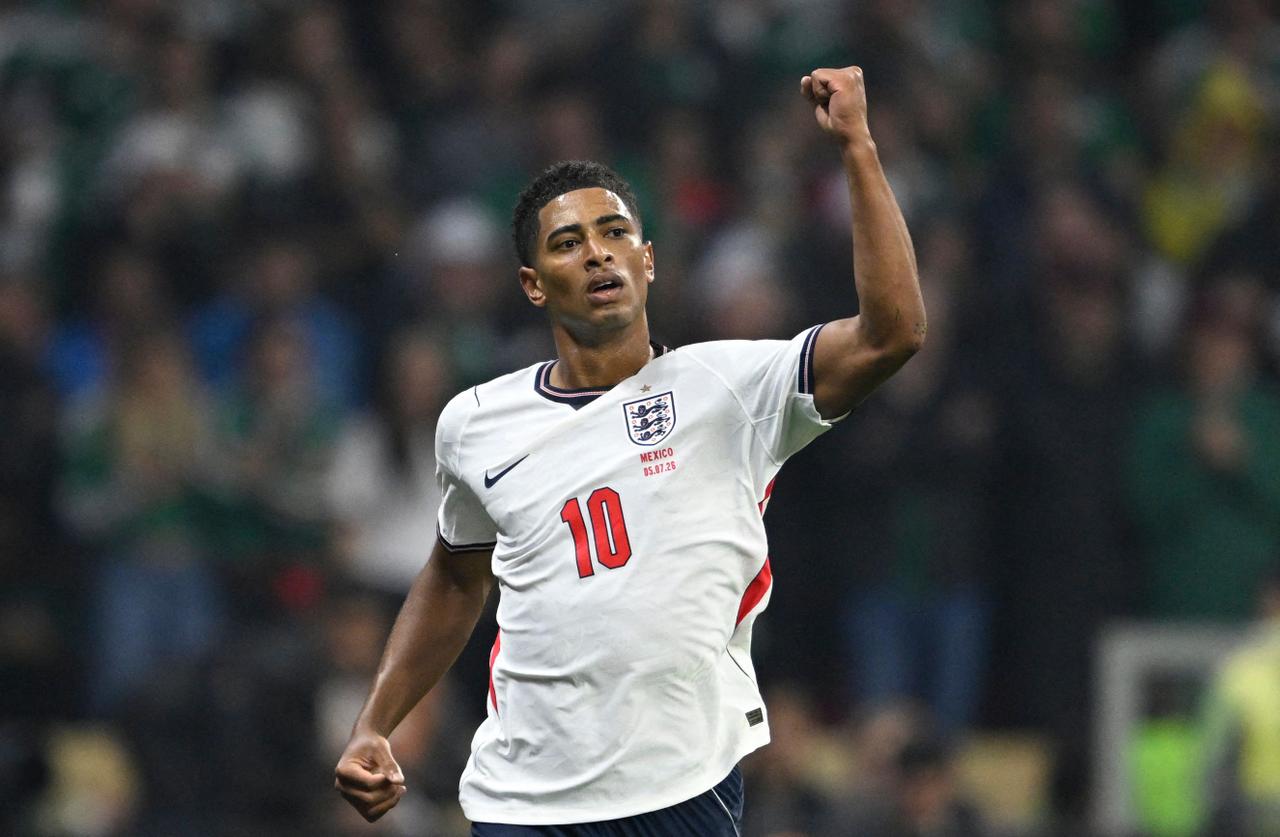
La course au Soulier d'or de cette Coupe du monde des Amériques 2026 s'annonce particulièrement disputée. Après quatre semaines de compétition, aucun joueur n'a réussi à creuser l'écart. Lionel Messi et Kylian Mbappé se livrent un véritable duel, avec huit réalisations chacun. Derrière eux, Harry Kane et Jude Bellingham entretiennent l'espoir grâce à leurs six buts.
Il ne reste désormais, au maximum, que deux rencontres à disputer pour chacun des prétendants : une demi-finale, puis soit la finale, soit le match de classement. Dans ces conditions, chaque but pourrait s'avérer décisif.
Décrocher le titre de meilleur buteur d'une Coupe du monde est loin d'être une tâche aisée. Les statistiques des dix dernières éditions en témoignent. Entre 1978 et 1998, soit durant six éditions consécutives, le meilleur réalisateur avait systématiquement terminé avec six buts. Il a fallu attendre 2002 pour voir le Brésilien Ronaldo porter ce total à huit réalisations.
Lors des éditions 2006 et 2010, le meilleur buteur s'est contenté de cinq buts. En 2014, le Colombien James Rodríguez a ramené le total à six réalisations. Ce chiffre a été de nouveau atteint lors du Mondial Russie 2018 grâce à Harry Kane. Enfin, à la Coupe du monde Qatar 2022, Kylian Mbappé a fait remonter la barre à huit buts.
Les lignes vont-elles encore bouger lors de cette Coupe du monde ? Parmi les quatre prétendants au Soulier d'or, qui aura le dernier mot ?
En attendant la grande finale, Lionel Messi disputera sa demi-finale face à l'Angleterre de Harry Kane et Jude Bellingham, deux de ses concurrents directs pour le Soulier d'or. De son côté, Kylian Mbappé sera opposé à l'Espagne. Les quatre attaquants poursuivront donc leur duel à distance, dans une lutte qui promet de tenir toutes ses promesses.
Le suspense reste entier pour l'attribution du Soulier d'or.
Barthélemy Kaboré (collaborateur)
Lefaso.net
Photos
Categories: Afrique
Monastère Saint-Benoît de Koubri : Le Frère Dasambwendé Samuel Kima s'engage définitivement, le frère Edmond Amos Zongo célèbre 25 ans de vie monastique.
Le monastère Saint-Benoît de Koubri, situé à la périphérie sud de Ouagadougou, a célébré, le samedi 11 juillet 2026, deux grands événements de la vie monastique : la profession solennelle du Frère Dasambwendé Samuel Kima et le jubilé d'argent du Frère Edmond Amos Zongo, marquant ses 25 années de profession monastique. Présidée par le nonce apostolique au Burkina Faso et au Niger, Mgr Éric Soviguidi, la célébration a été marquée par le recueillement, la joie et l'action de grâce.
À l'intérieur comme à l'extérieur de la chapelle du monastère Saint-Benoît de Koubri, fidèles, parents et proches sont venus nombreux accompagner la communauté monastique à l'occasion de la profession solennelle du Frère Dasambwendé Samuel Kima et du jubilé d'argent du Frère Edmond Amos Zongo, qui célébrait ses 25 années de profession monastique.
Assis entre ses parents, vêtu de sa tunique monastique et la tête rasée, le Frère Dasambwendé Samuel Kima a prononcé le « oui » de son engagement définitif dans la vie monastique. Sa réponse, « Me voici, Seigneur, puisque tu m'as appelé », a retenti dans la chapelle sous les acclamations de l'assemblée. Par ces mots, il a répondu officiellement à l'appel de Dieu en s'engageant pour la vie selon la règle de saint Benoît.
Le Frère Dasambwendé Samuel Kima a exprimé sa reconnaissance à la communauté monastique.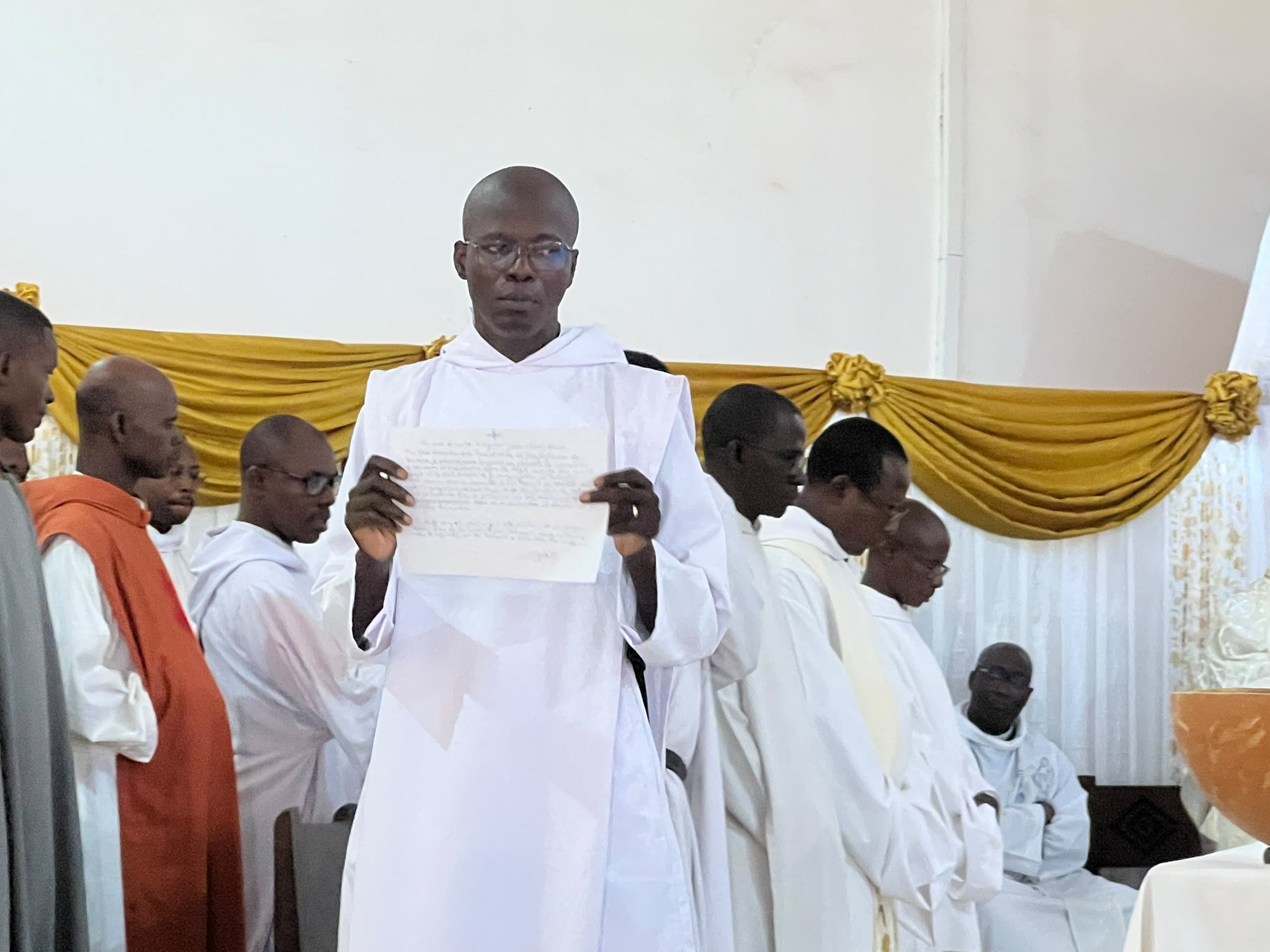
Après avoir proclamé solennellement son engagement, il s'est tourné vers ses parents, qui l'avaient accompagné jusqu'à l'autel. En langue mooré, ceux-ci lui ont adressé leurs bénédictions avant que le président de la célébration eucharistique, Mgr Éric Soviguidi, nonce apostolique au Burkina Faso et au Niger, ne lui remette les insignes de sa profession.
Mgr Éric Soviguidi, nonce apostolique au Burkina Faso et au Niger.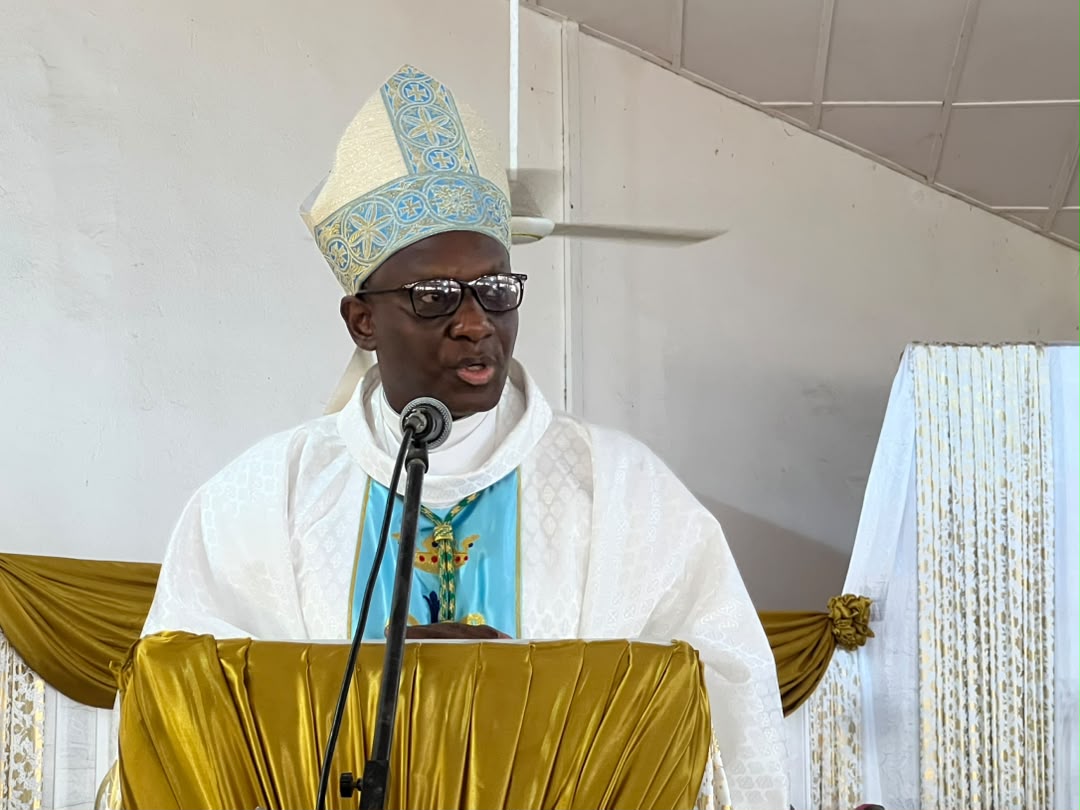
Le Frère Edmond Amos Zongo, pour sa part, a renouvelé ses engagements à l'occasion de ses 25 ans de profession monastique. Devant le représentant du Saint-Père, il a rendu grâce à Dieu pour ce quart de siècle de vie religieuse et a réaffirmé sa volonté de poursuivre fidèlement son cheminement spirituel. À l'instar du Frère Dasambwendé Samuel Kima, il a reçu les bénédictions de l'Église à travers son représentant.
Dans son homélie, Mgr Éric Soviguidi a exhorté les deux religieux à demeurer fidèles à leur vocation. « Demeurez fermes dans votre vocation, en cultivant la sagesse, la fidélité et les valeurs propres à la vie monastique », leur a-t-il lancé, rappelant que cette célébration était placée sous la protection de saint Benoît.
Le fondateur de l'ISCOM, Dr Cyriaque Paré, a invité les fidèles à rendre grâce à saint Benoît, saint patron de son établissement.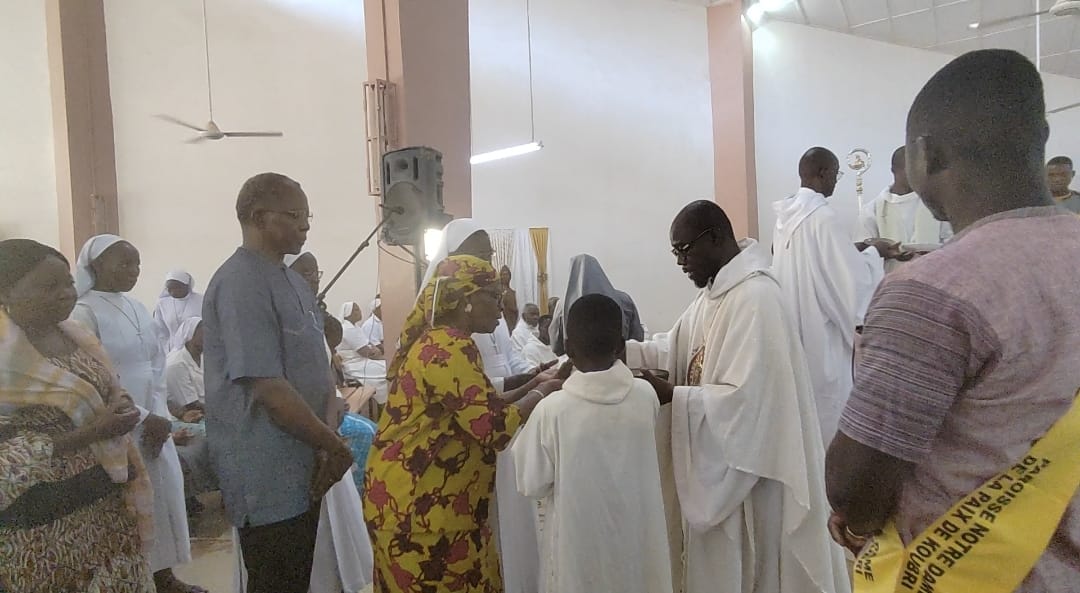
Il les a invités à incarner pleinement l'esprit du fondateur de l'ordre bénédictin. « Vivez dans la Parole de Dieu, par la Parole, pour la Parole et selon la Parole », a-t-il déclaré, avant de souligner que, selon saint Benoît, l'écoute « n'est pas seulement une information, mais une disposition intérieure qui ouvre à une véritable relation ». « Servez Dieu de toute votre âme et servez votre prochain comme vous-mêmes », a conclu le nonce apostolique.
Le Frère Edmond Amos Zongo a célébré ses 25 ans de profession monastique.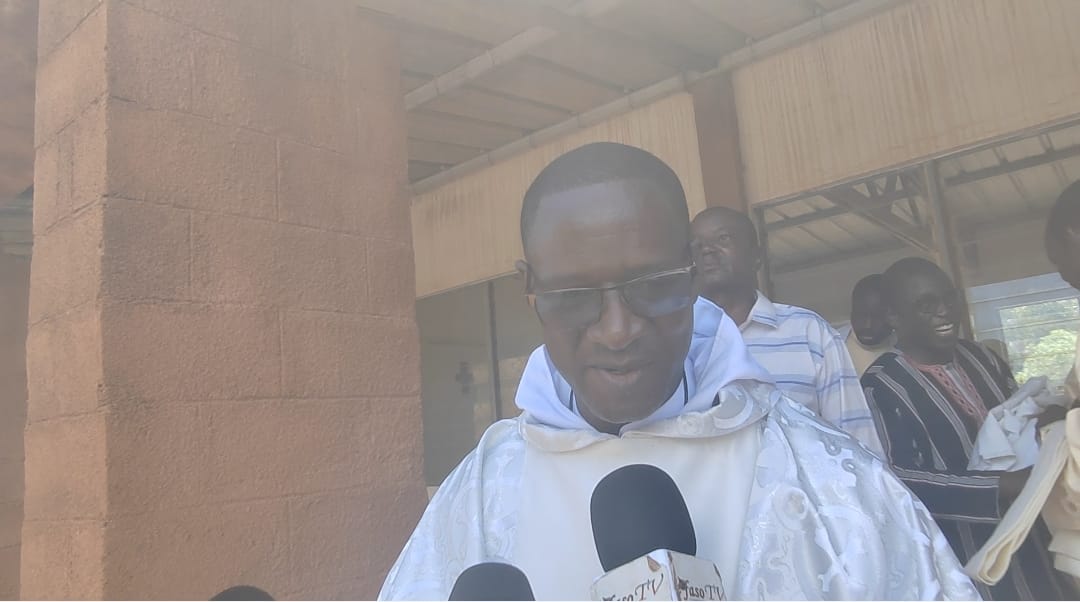
Les deux frères, ainsi que plusieurs autorités présentes, ont exprimé leur reconnaissance au nonce apostolique pour sa disponibilité et sa présence à cette célébration. « Je suis très heureux. Vingt-cinq ans, c'est un temps d'action de grâce, un temps d'abandon entre les mains de Dieu », a confié le Frère Edmond Amos Zongo.
Pour rappel, le 11 juillet correspond à la fête de saint Benoît, père du monachisme occidental.
Serge Ika Ki
Lefaso.net
Categories: Afrique
Décès de Claire Hélène TRAORÉ : Remerciements
À la suite du rappel à Dieu de leur très chère
survenu le 30 juin 2026 à Bobo-Dioulasso, ainsi que des obsèques tenues le 4 juillet 2026, la grande famille TRAORÉ et les familles alliées renouvellent leurs sincères remerciements à toutes les personnes qui, de près ou de loin, leur ont témoigné leur compassion, leur affection et leur solidarité en cette douloureuse circonstance.
Elles expriment leur profonde reconnaissance, tout particulièrement :
* au Révérend Père Curé de la Cathédrale de Bobo-Dioulasso, ainsi qu'à l'ensemble des prêtres du diocèse, pour leur accompagnement spirituel, leurs prières et leur disponibilité ;
* à la Chorale de la Chapelle Sainte Jeanne d'Arc de Colsama (Secteur 21), pour la qualité de l'animation liturgique et son précieux soutien ;
* au catéchiste de l'Église Notre-Dame de la Salette de Bobo-Dioulasso ;
* aux voisins, aux jeunes du Secteur 21, ainsi qu'à toutes les personnes qui se sont généreusement mobilisées pour l'organisation et le bon déroulement des obsèques.
Les familles adressent également leur gratitude à tous les parents, amis, collègues, connaissances, communautés religieuses, associations et à toutes les personnes qui, par leurs visites, leur présence, leurs messages de compassion, leurs prières, leurs encouragements, ainsi que leurs soutiens moral, matériel et financier, leur ont apporté réconfort et réconfort dans cette épreuve.
Qu'elles trouvent ici l'expression de la profonde reconnaissance des familles endeuillées.
Elles prient le Dieu Tout-Puissant, dans son infinie miséricorde, de combler chacun de Ses grâces, de bénir abondamment tous leurs bienfaiteurs et d'accorder à leur regrettée Madame Claire Hélène TRAORÉ le repos éternel dans la lumière de Son Royaume.
« Heureux dès à présent les morts qui meurent dans le Seigneur… Oui, dit l'Esprit, qu'ils se reposent de leurs travaux, car leurs œuvres les suivent. »
Apocalypse 14, 13.
Que son âme repose en paix.
Amen. ✝️
Categories: Afrique
Coupe du monde 2026 : Quatre nations en lice pour décrocher le trophée
Les quarts de finale de la Coupe du monde 2026 se sont achevés le dimanche 12 juillet. La France, l'Espagne, l'Angleterre et l'Argentine sont désormais les quatre nations encore en lice pour le sacre mondial. Tour d'horizon des demi-finales.
Les quatre nations les mieux classées au classement FIFA se retrouvent dans le dernier carré de la Coupe du monde 2026. La France, l'Espagne, l'Angleterre et l'Argentine nourrissent toutes l'ambition d'inscrire leur nom au palmarès de cette édition du Mondial.
Première équipe qualifiée pour les demi-finales, la France disputera une troisième demi-finale consécutive en Coupe du monde.
En quarts de finale, les Bleus ont éliminé le Maroc sur le score de 2 buts à 0. Ce succès a permis à Kylian Mbappé et à ses coéquipiers de rejoindre le dernier carré de la compétition. En six matches disputés dans ce Mondial, la France a signé six victoires et n'a encaissé que deux buts.
Championne du monde en 2018 et finaliste en 2022, l'équipe de France confirme son statut de prétendante au titre au regard des performances affichées depuis le début du tournoi. En cas de qualification face à l'Espagne, elle dispute une troisième finale consécutive de Coupe du monde.
Deuxième demi-finaliste, l'Espagne a validé son billet pour le dernier carré en éliminant la Belgique en quarts de finale.
Actuellement meilleure défense du tournoi avec seulement un seul but encaissé depuis le début de la compétition, la Roja figurait déjà parmi les favoris du mondial. Vainqueur de l'Euro 2024, l'Espagne confirme ses ambitions de soulever le trophée lors de la finale du mondial. Après la Coupe du monde 2010 remportée en Afrique du Sud, la Roja a désormais une chance de décrocher une deuxième étoile.
Lors de la demi-finale de l'Euro 2024, l'Espagne avait éliminé la France avant de remporter le trophée lors de la finale. Les deux équipes se retrouvent en demi-finale de coupe du monde ce mardi 14 juillet 2026 à 19h GMT dans un match qui s'annonce déjà très disputé au regard des enjeux.
Le troisième demi-finaliste est l'Angleterre. Victorieux de la Norvège après les prolongations en quarts de finale, les Three Lions retrouvent le dernier carré de la compétition, après leur demi-finale disputée lors du Mondial 2018. Face à l'Argentine, Jude Bellingham et ses coéquipiers tenteront de décrocher leur qualification pour la finale.
Finaliste malheureuse de l'Euro 2024 face à l'Espagne, l'Angleterre confirme sa montée en puissance sur la scène internationale. Après avoir terminé en tête de son groupe, elle a su écarter tous ses adversaires depuis les huitièmes de finale pour s'offrir une place parmi les quatre meilleures équipes du tournoi.
La quatrième équipe qualifiée pour les demi-finales est l'Argentine. Championne du monde en titre, l'Albiceleste ambitionne de conserver sa couronne. Qualifiée pour une troisième demi-finale lors des quatre dernières éditions de la Coupe du monde, la sélection argentine, emmenée par Lionel Messi, tentera de décrocher une deuxième finale consécutive.
Après avoir remporté deux Copa America d'affilée, Lionel Scaloni et ses joueurs espèrent poursuivre leur dynamique jusqu'au sacre mondial. Le match entre l'Angleterre et l'Argentine est prévu le mercredi 15 juillet 2026 à 19h GMT.
Les affiches des demi-finales promettent des confrontations de très haut niveau entre des sélections regorgeant de talents capables de faire basculer une rencontre à tout moment. Avec des effectifs riches et des collectifs bien rodés, les quatre demi-finalistes devraient offrir un spectacle à la hauteur des attentes.
La finale de la Coupe du monde 2026 se disputera le dimanche 19 juillet au MetLife Stadium, aux États-Unis, à 19 h GMT.
Jean Élysée Nikiéma
Lefaso.net
Categories: Afrique
Coupe du monde 2026 : favoris, grandes stars, rivalités historiques, à quoi s'attendre des demi-finales ?
La France retrouve l'Espagne tandis que l'Argentine défie l'Angleterre dans deux demi-finales qui opposent les quatre meilleures nations au classement FIFA. Enjeux, statistiques, joueurs à suivre, clés tactiques et scénarios possibles : voici tout ce qu'il faut savoir avant les demi-finales.
Categories: Afrique
Women Peacebuilders: The Missing Voices at the Negotiating Table
By Sania Farooqui
BENGALURU, India, Jul 13 2026 (IPS)
For most individuals, the process of peace starts with the signing of a ceasefire or an agreement among politicians. However, those who live in regions experiencing violence understand that peace is made long before politicians meet at the negotiating table. Peace is created among communities by people who work everyday to ensure that no violence takes place, and that disputes are sorted out.
Muna Luqman, Yemeni peacebuilding advisor and humanitarian leader.
Women have been playing central roles in the process of making peace, but their role is largely ignored in official peacebuilding processes.Speaking to IPS Inter Press Service, Yemeni peacebuilding advisor and humanitarian leader Muna Luqman challenged conventional thinking about who builds peace and where peacebuilding truly begins, “Communities never wait until peace happens,” Luqman said. “They’re working to protect peace on a daily basis.”
Based on her extensive experience working in Yemen for more than 15 years, Luqman explained how local communities, especially women, resolve disputes, provide crucial services, negotiate humanitarian assistance and create dialogical spaces way ahead of any intervention of international organizations.
Luqman is the founder and chairperson of Food for Humanity, has seen first-hand the changes conflict brings about in society. While living through the Yemeni civil war, she faced airstrikes and negotiated the evacuation of civilians caught up in the war zone. These experiences led her to realize that humanitarian response alone is inadequate.
“If we only respond to the consequences of conflict without addressing its causes, we will always be a step behind,” she reflected. Her experience also exposed one of the greatest challenges facing local peacebuilders and that is of recognition.
“We thought we would be the first to be supported,” she said, referring to local organisations that led humanitarian responses before international actors arrived. “But we found out that it was a long process.”
According to a report by UN Women, around 676 million lived within 50 kilometers of deadly conflict in 2024 – the highest figure since the 1990s. Sima Bahous, Executive Director of UN Women, said, “Women and girls are being killed in record numbers, shut out of peace tables, and left unprotected as wars multiply. Women do not need more promises, they need power, protection, and equal participation.”
Data collected by the United Nations from 2020-2024 found that, “Women’s representation as negotiators, mediators and signatories in peace processes is far below the target set by the UN. In 2024, women made up only seven percent of negotiators on average worldwide, and nearly nine out of ten negotiation tracks included no women negotiators”. The report stated, women were slightly more represented in mediation roles, averaging 14 percent but still, two-thirds of mediation efforts did not include women.
The discrepancy for Luqman pointed to an underlying problem in international peacebuilding. While local groups responded immediately to communities in need, other institutions were bound by mandates, funding, and procedures. It becomes evident, she says, why true inclusion in peacebuilding should be more than merely symbolic in nature.
True inclusion requires recognizing women not as mere recipients of help or observers of processes, but as active participants in negotiating, mediating, and taking crucial decisions. It is proven that peace treaties are much more sustainable in those cases where women are actively involved in the negotiation process. Women broaden the agenda from purely political aspects like political power-sharing to such crucial areas as justice, education, health care, livelihoods, displacement, and community reconciliation.
Luqman believes that local women possess a unique understanding of these realities because they remain deeply embedded within their communities. “Women mediators are willing to prevent disagreements before they become violence,” she explained. She has witnessed women in Yemen securing the release of prisoners, organizing their communities to rebuild schools and water supplies, and preventing children from joining armed groups. This is often done discreetly, outside the limelight of the international community.
“The strength of women peacebuilders is their ability to mobilize their communities,” she said. However, it is precisely these women who find themselves in extraordinary circumstances. They are threatened, intimidated, forced to flee, and often lack funds despite helping others. Protecting women peacebuilders must be a priority on the global agenda, Luqman asserts.
“They do this work while they are facing either lack of funding or no funding at all. They remain resilient, they remain vulnerable at the same time, and they remain under threats.”
She believes that the international community needs to go beyond recognizing the contribution of women and work to provide financial support to women-led organizations that are trusted and credible within the local communities.
While serving as the United Nations National Coordinator on Inclusion in the Peace Process of Yemen, Luqman developed an approach that would allow local people to speak up. The initiative did not consider participation just as a formal aspect but actually aimed to bring in the community perspective. “It wasn’t symbolic participation,” she told me. “We really took that analysis and used it in our system.” This is because peace processes cannot be made by the political elite only; they need to be inclusive of communities that have been experiencing conflict.
In Luqman’s opinion, local governance, climate challenges, livelihoods, transitional justice, and building trust are not marginal questions but rather central factors in avoiding further outbreaks of violence.
Luqman insists on the need for peacebuilding to involve listening: “Sometimes listening to the people themselves and giving them a space is in itself a peace process.”
In the context of rising complexity of conflicts, the importance of inclusion into peace processes has never been so urgent. Women’s involvement in the processes cannot be considered as some kind of equality issue or simply as an obligation under international mechanisms.
On the contrary, it is strategically necessary based on experience and community trust. The message from Luqman to policymakers is obvious: local women peacebuilders are not marginal figures in peacebuilding but its cornerstone. “The local women peacebuilders are the structure and the backbone of these societies,” Luqman said. “They are valuable. They should be treated as valuable assets. They should be supported and protected.” Constructing sustainable peace is not possible only through negotiations of the parties involved in armed conflict but also through investing in people who have done so many years of keeping communities together despite the situation being unrecognizable.
Sania Farooqui is an independent journalist and host of The Peace Brief, a platform dedicated to amplifying the voices of women in peacebuilding and human rights.
IPS UN Bureau Report
Follow @IPSNewsUNBureau
!function(d,s,id){var js,fjs=d.getElementsByTagName(s)[0],p=/^http:/.test(d.location)?'http':'https';if(!d.getElementById(id)){js=d.createElement(s);js.id=id;js.src=p+'://platform.twitter.com/widgets.js';fjs.parentNode.insertBefore(js,fjs);}}(document, 'script', 'twitter-wjs');
Categories: Africa
10 Years Ago, the Philippines Won a Major Victory in the South China Sea. Did It Matter?
What did the arbitral tribunal's award actually achieve?
Categories: Diplomacy & Crisis News
Un virement introuvable coûte 23,4 millions FCFA à PROXIMITY GROUP AFRICA
Le Tribunal de commerce de Cotonou a condamné, le 25 juin 2026, PROXIMITY GROUP AFRICA SA à payer 23.399.298 FCFA à STRALIX SARL.
L'émission d'un ordre de virement bancaire ne suffit pas, à elle seule, à éteindre une dette. Encore faut-il que les fonds parviennent effectivement au bénéficiaire. C'est le principe qu'a rappelé le Tribunal de commerce de Cotonou dans son jugement n°057/2026/CJ1/S2/TCC du 25 juin 2026, rendu dans un litige opposant STRALIX SARL à PROXIMITY GROUP AFRICA SA.
L'affaire trouve son origine dans l'exécution de prestations réalisées par STRALIX pour la succursale guinéenne de PROXIMITY GROUP AFRICA dans le cadre d'un marché conclu avec ECOBANK Guinée. Une facture n°0117-AG-SC-ST-25, émise le 8 décembre 2025, d'un montant de 36.672 euros, soit 23.399.298 FCFA, demeure impayée.
Pour régler cette créance, PROXIMITY GROUP AFRICA affirme avoir initié, le 17 décembre 2025, un virement international depuis son compte domicilié chez ECOBANK Guinée. Son compte aurait bien été débité. Mais plusieurs mois plus tard, STRALIX assure n'avoir reçu aucun paiement.
Selon PROXIMITY GROUP AFRICA, sa banque lui aurait indiqué que le virement avait été rejeté par la BIIC avant d'être retourné. La banque béninoise soutient au contraire n'avoir jamais reçu les fonds.
Face à cette situation, STRALIX assigne, le 27 mars 2026, PROXIMITY GROUP AFRICA, ECOBANK Guinée et la BIIC devant le Tribunal de commerce de Cotonou. Elle réclame le paiement de sa facture, 400 millions FCFA de dommages-intérêts ainsi que des frais irrépétibles.
En défense, PROXIMITY GROUP AFRICA reconnaît devoir la somme réclamée mais estime s'être libérée de son obligation dès lors que le virement a été ordonné et que son compte a été débité. Elle demande que la responsabilité soit transférée à ECOBANK Guinée.
Pour le Tribunal, « le virement international initié, le 17 décembre 2025 (...) n'a pu atteindre la société STRALIX SARL » et « la BIIC SA n'a pas non plus reçu les fonds ».
La juridiction ajoute que « les raisons pour lesquelles la société ECOBANK Guinée SA n'a pas exécuté l'ordre de virement ne sont pas connues de la juridiction de céans », ce qui ne permet pas d'apprécier la responsabilité de cette banque dans l'échec de l'opération.
S'appuyant sur l'article 1315 du Code civil, le Tribunal rappelle que « celui qui réclame l'exécution d'une obligation doit la prouver. Réciproquement, celui qui se prétend libéré doit justifier le paiement ». Les magistrats en déduisent que, STRALIX n'ayant jamais reçu les fonds, « c'est à bon droit qu'elle en sollicite le paiement ».
En conséquence, PROXIMITY GROUP AFRICA est condamnée à payer à STRALIX 36.672 euros, soit 23.399.298 FCFA, correspondant à la facture impayée.
Le Tribunal a rejeté la demande de 400 millions FCFA de dommages-intérêts formulée par STRALIX. Il considère que PROXIMITY GROUP AFRICA « a manifesté sa bonne foi en effectuant un ordre de virement » et que le préjudice invoqué ne se distingue pas de celui résultant du simple non-paiement de la créance.
Les juges déboutent également PROXIMITY GROUP AFRICA de sa demande de 50 millions FCFA de dommages-intérêts contre ECOBANK Guinée, estimant que les pièces du dossier montrent que les fonds ont finalement été recrédités sur son compte et que le préjudice allégué n'est pas établi.
Ce jugement rendu en premier ressort est susceptible d'appel.
Categories: Afrique
Canicule : 26 millions de personnes en alerte rouge, fin de l'épisode de chaleur à partir de jeudi
Vingt-six millions de Français sont toujours concernés par la vigilance rouge à la canicule, alors que les chaleurs doivent amorcer leur décrue mardi. La fin de ce troisième coup de chaud sur la France en moins de deux mois est espérée jeudi.
Categories: France
La foudre tue deux personnes à Nikki
Deux (02) personnes ont perdu la vie après avoir été frappées par la foudre, dimanche 12 juillet 2026, à Daroukpara, dans la commune de Nikki.
Drame à Daroukpara, un village de l'arrondissement de Suya. Deux personnes ont été mortellement frappées par la foudre selon les informations rapportées. Alertés, les éléments de la Police républicaine se sont rendus sur les lieux afin d'effectuer les constats. À l'issue des formalités, les dépouilles ont été remises aux familles pour l'inhumation.
A.A.A
Categories: Afrique
Kelemen Hunor: fegyverszüneti kormány kellene
Fegyverszüneti kormány kellene, legalábbis ideiglenesen – mondta rádiónknak Kelemen Hunor RMDSZ-elnök, aki ott volt a pártoknak az államelnökkel való újabb egyeztetésén. A tárgyalás eredménytelenül zárult. Miért nem sikerült ezúttal sem megegyezni? Meg tudják-e hozni a szükséges törvénymódosításokat a PNRR-s alapok lehívásához és mekkora esélyt lát az előrehozott választásokra? – kérdeztük Kelemen Hunort. Forrai Szerénke interjúja
Articolul Kelemen Hunor: fegyverszüneti kormány kellene apare prima dată în Kolozsvári Rádió Románia.
Categories: Határon túli magyar portálok összesített hírei
Pages



© 2012-2018 Europa Varietas Foundation © 2015-2018 Europa Varietas Association
www.europavarietas.org | info(@)europavarietas(dot)org | Switzerland




We are looking for sponsors for the English translation of these books, please contact turkeandras(at)gmail(dot)com