
You are here
Africa
Medeama SC crowned champions of 2025/26 Ghana Premier League season
Medeama SC were officially crowned champions of the 2025/26 Ghana Premier League on Wednesday night after a spirited 2-1 comeback victory over Basake Holy Stars at the TnA Stadium in Tarkwa, in a vibrant coronation ceremony that brought the curtain down on a memorable campaign.
Categories: Africa, Swiss News
2026 World Cup: Black Stars adapting to Carlos Queiroz’s intense training regime - Gideon Mensah
Black Stars defender Gideon Mensah has revealed that the national team is still adjusting to the high-intensity training methods introduced by head coach Carlos Queiroz, who has taken over from Otto Addo ahead of the 2026 FIFA World Cup.
Categories: Africa, Swiss News
2026 World Cup: I am mentally stronger and ready to contribute - Ghana forward Antoine Semenyo
Antoine Semenyo says he is mentally prepared and eager to play a major role as Ghana targets a strong campaign at the 2026 FIFA World Cup. The forward, who was instrumental in the Black Stars rsquo; qualification for the tournament, is expected to be one of the key figures for Ghana when the competition kicks off across the USA, Canada an .
Categories: Africa, Swiss News
2026 World Cup: Let us rally behind Black Stars - Ex-GFA president Kwesi Nyantakyi urges Ghanaians
Former Ghana Football Association president, Kwesi Nyantakyi, has called on Ghanaians to throw their full support behind the Black Stars as they prepare for the 2026 FIFA World Cup. Ghana will make their fifth appearance at the global tournament this summer and have been drawn in Group L alongside Panama, England and Croatia.
The Coming Crisis of NATO Deterrence
Nuclear guarantees cannot replace U.S. forces in Europe.
Categories: Africa, Diplomacy & Crisis News
Trump’s Least Bad Option in Iran
The logic behind a limited deal.
Categories: Africa, Diplomacy & Crisis News
Ebola-hit DR Congo faces 'catastrophic collision' of disease and conflict, WHO warns
Tedros Adhanom Ghebreyesus said fighting in DR Congo was hampering efforts to stop spread
DR Congo seek World Cup ticket refunds after Ebola outbreak
DR Congo fans hoping to watch their side's return to the World Cup face a major hurdle as the US imposes travel restrictions following the latest Ebola outbreak.
First Ghanaians evacuated from South Africa over immigration protests land in Accra
It follows recent protests that have led to fears there could be a resurgence in xenophobic violence.
Ghana welcomes Pope's apology over Catholic Church's role in slavery
The West African nation was one of the main gateways for the transatlantic slave trade.
How Europe’s Waste Could Supply Over Half of Critical Material Demand – Report
Vast amounts of valuable materials buried inside old batteries, electronic waste, and end-of-life vehicles should be collected for critical materials. Credit: FutuRaM
By Umar Manzoor Shah
SRINAGAR, India, May 27 2026 (IPS)
Europe’s growing mountain of waste could become one of its most important sources of critical raw materials, according to a major new report that warns of rising geopolitical risks and growing global competition for minerals needed in the green and digital economy.
The report, released by the Horizon Europe-funded FutuRaM project, says Europe’s “urban mine” now contains vast amounts of valuable materials buried inside old batteries, electronic waste, end-of-life vehicles, construction debris and dismantled wind turbines.
Researchers behind the project say Europe must urgently improve recycling, recovery and tracking systems if it wants to reduce dependence on imported critical raw materials, many of which are dominated by a handful of countries.
“The FutuRaM project represents a substantial step forward in strengthening the knowledge base on secondary raw materials and CRMs within Europe’s urban mine,” the report states.
Kees Baldé, Senior Scientific Specialist, Sustainable Cycles at the United Nations Institute for Training and Research (UNITAR), told Inter Press Service (IPS) in an exclusive interview that the research mapped 42 Carbon-based Conductive Materials [CMS] in seven waste streams. It shows that the current substitution potential for primary materials in the final consumption of CRMs is a maximum of 27% overall.
“By 2050, the substitution potential could increase to over 50%. At the same time, 10 more than now (so, up to 24 different CRMs) could be sourced from the analysed waste streams. The new ones include rare earth elements found for instance in permanent magnets, such as Nd, Dy, Tb, Sm and Pr, but also Li, Co and Ce in batteries,” Baldé said.
The study comes at a time when European governments are racing to secure supplies of lithium, cobalt, nickel and rare earth elements used in electric vehicle batteries, wind turbines, solar panels and digital technologies.
Researchers said the project was developed amid “increasing geopolitical uncertainty, accelerating energy and digital transitions, and growing concerns regarding the security of supply of critical raw materials.”
When asked how vulnerable Europe is today when it comes to materials like lithium, cobalt and rare earth elements, Baldé said that most of them are sourced outside of the EU and supplied from single or only a few countries.
“Yet, they are critical for digitisation, renewable energy technology, and the military. Hence, they are on the critical raw material lists from the EU, and make the EU vulnerable.”
The report covers seven major waste streams, including waste batteries, construction and demolition waste, end-of-life vehicles, mining waste, slags and ashes, waste electrical and electronic equipment, and dismantled wind turbines.
One of the project’s key findings is that Europe still loses significant amounts of valuable materials because of weak collection systems, fragmented reporting rules and illegal waste flows.
“Persistent fragmentation of waste classifications, reporting systems and end-of-waste criteria across EU Member States undermines the functioning of the single market for secondary raw materials,” the report warns.
According to Baldé, the best sectors in terms of highest recovery rates and lowest tonnages of losses in tonnages are end-of-life vehicles and construction and demolition waste.
“Both have high collection rates and separate collection for some CRM rich components, such as Al and Cu. Despite this, there are still losses for several CRMs, such as rare earth metals, as indicated above. Biggest weaknesses in terms of tonnages of losses are industrial residues, such as slags and ashes,” Baldé said.
Using long-term modelling up to 2050, the project examined how different policies and recycling systems could affect future material recovery. Researchers developed three scenarios called business as usual, recovery, and circularity.
The report says improved recovery systems could significantly increase the amount of usable materials extracted from waste streams. Researchers also created a new recovery model that distinguishes between raw materials hidden inside waste and the materials that can actually be recovered after treatment.
Waste electrical and electronic equipment, commonly known as ‘e-waste’, has emerged as one of the most important future sources of valuable minerals. The study examined critical materials, including silver, gold, cobalt, gallium, neodymium, palladium and tungsten, found in electronic products.
Construction and demolition waste has one of the highest rates of waste recovery. Credit: FutuRaM
The project also studied batteries in detail, focusing on materials such as lithium, cobalt, nickel, graphite and copper. Researchers looked at both current recycling technologies and future recovery systems.
At the same time, the report acknowledged major data gaps and uncertainty surrounding Europe’s waste streams.
“A comprehensive assessment of data quality is essential for ensuring that the conclusions and recommendations developed in FutuRaM are scientifically sound and fit for policymaking,” the report said.
Researchers noted that many datasets remain incomplete, commercially sensitive or inconsistent between countries. In some cases, industry data could only be used after anonymisation due to confidentiality concerns.
To improve transparency, the project developed a data quality framework based on six factors, including validity, accuracy, consistency, timeliness and completeness.
The project’s influence has already reached European policymakers. According to the report, FutuRaM worked closely with the European Commission and the Joint Research Centre to support implementation of the EU Critical Raw Materials Act.
“FutuRaM has provided data and intelligence to assist Member States in complying with this Article by identifying products, components and waste streams containing relevant CRMs,” the report states.
Researchers also carried out 20 case studies using a United Nations-based classification framework known as UNFC to assess the viability of recovery projects.
The project has drawn global attention beyond Europe. According to the report, FutuRaM findings were presented at 132 external events and conferences in countries including Singapore, Brazil, Thailand, Canada, Japan, Kenya and Panama.
A related report published for International E-Waste Day 2025 was picked up by almost 900 online news outlets across 55 countries and published in 27 languages.
“All actors that have access to and handle e-waste should report their activities for tracing purposes, while enforcement mechanisms and the role of authorities should be enhanced,” Pascal Leroy, Director General of the WEEE Forum, an international association representing global electronic waste producer responsibility organisations, told IPS News in an exclusive interview.
He said that we should also improve the infrastructure for e-waste management, along with making greater investments in relevant technologies.
“Additionally, awareness campaigns and proper funding are essential, and the Urban Mine Platform should be institutionalised. Finally, adherence to treatment standards must be made legally binding,” he said.
The researchers argue that Europe now needs stronger laws, standardised reporting systems and better recycling infrastructure to turn waste into a reliable strategic resource.
Among its recommendations, the report has pitched for a “harmonised European framework for classification, reporting, and life cycle tracking of secondary raw materials”.
It also urges European governments to strengthen enforcement against illegal waste exports, improve market surveillance and invest in recycling capacity and digital reporting systems.
“Supply from EU-recycling and demand from the EU-manufacturing industry need to be matched together,” Baldé said.
IPS UN Bureau Report
Follow @IPSNewsUNBureau
!function(d,s,id){var js,fjs=d.getElementsByTagName(s)[0],p=/^http:/.test(d.location)?'http':'https';if(!d.getElementById(id)){js=d.createElement(s);js.id=id;js.src=p+'://platform.twitter.com/widgets.js';fjs.parentNode.insertBefore(js,fjs);}}(document, 'script', 'twitter-wjs');
Iran and the Forever War Trap
In trying to avoid a quagmire in Iran, America found a dead end.
Categories: Africa, Diplomacy & Crisis News
The Right Way for Europe to Spend More on Defense
America should cofinance the continent’s rearmament.
Categories: Africa, Diplomacy & Crisis News
PSG's Hakimi in Morocco squad despite injury
Morocco captain Achraf Hakimi is named in the Atlas Lions' World Cup squad despite the injury he sustained in the Champions League semi-finals against Bayern Munich.
South African president mounts legal challenge against report that could lead to impeachment
Cyril Ramaphosa argues that the authors of the report "misconceived" their mandate.
Nigerian winger Udoh dies aged 21
Southampton FC and Royal Antwerp announce the death of former academy player Victor Udoh at the age of 21.
Senegal's sacked PM Sonko elected parliamentary Speaker in challenge to president
As speaker, Sonko could use his position to challenge the policies of the president, his one-time ally.
Partey in preliminary Ghana squad for World Cup
Former Arsenal midfielder Thomas Partey has been named in Ghana's preliminary squad for the World Cup.
Rights group accuses UAE of being transit point for mercenaries on way to Sudan
The United Arab Emirates has denied any involvement in the civil war and says it investigates alleged links.
Ebola Outbreak in the DRC Raises Global Health Concerns Amid Conflict and Displacement
Elongo, 12, washes her hands at Epo‑Ville Primary School in Bunia, Ituri Province, DR Congo, on 22 May 2026. She had just taken part in a handwashing demonstration led by UNICEF WASH Officer Ciza Nyalundja. Credit: UNICEF/Carmel Ndomba Mbikayi
By Oritro Karim
UNITED NATIONS, May 26 2026 (IPS)
Since May 16, there has been a significant increase in the number of laboratory-confirmed and suspected Ebola cases reported across the Democratic Republic of the Congo (DRC), primarily in Ituri Province, with additional unrelated cases identified in Kampala, Uganda. Although the outbreak has remained largely confined to that region, it has been heavily linked to areas affected by insecurity, civilian displacement, and mining-related migration, raising concerns among global health experts that the outbreak could spread without effective monitoring and response efforts.
As of May 17, the World Health Organization (WHO) has determined that the Ebola outbreak caused by the Bundibugyo virus in the DRC and Uganda constitutes a public health emergency of international concern (PHEIC), while the Centers for Disease Control and Prevention (CDC) has issued health alerts to healthcare workers and travelers regarding the spread in the region. Current projections of the virus spreading to other continents remain low at this time, with WHO stating that the outbreak does not meet the criteria of a pandemic, as defined in the 2005 International Health Regulations (IHR).
“We are now revising our risk assessment to very high at the national level, high at the regional level, and low at the global level,” said Tedros Adhanom Ghebreyesus, Director-General of WHO, on May 22 at a United Nations (UN) press briefing in Geneva, noting that there have been 82 confirmed Ebola cases and seven deaths in the DRC. However, these figures are expected to be far higher, with nearly 750 suspected cases and 177 reported suspected deaths.
Two additional confirmed cases linked with travel from the DRC have also been reported in Uganda, one of which ended in death. Furthermore, two American nationals have been transferred to Europe for treatment after being suspected of contracting the virus following prolonged “high-risk contact.”
Response efforts have been largely limited as a result of widespread civilian displacement and prolonged conflict. On May 21, the UN reported that a hospital in the Ituri province was set on fire by angry relatives after the local police refused to release the body of an infected individual to the family due to concerns of contamination.
Additionally, the outbreak has been most pronounced in the Ituri and North Kivu provinces, which have historically been the center of armed conflict and humanitarian suffering in the DRC. Over the past few months alone, there have been more than 100,000 civilians displaced in this region as a direct result of violence, which has severely constrained humanitarian response efforts.
“These are some of the most difficult operating environments in the world for our life-saving work,” said Tom Fletcher, UN Under Secretary-General for Humanitarian Affairs and Emergency Relief Coordinator, in a statement shared to X. “We face conflict and high population movement. We are working to secure safe and sustained access for frontline responders, including to areas controlled by armed groups. It is essential that there is no obstruction to our response. We must have access to all routes — air, land, and water — across the affected areas.”
According to Ghebreyesus, approximately four million people are in dire need of humanitarian intervention, two million are displaced, and ten million are facing acute food insecurity. Women will be disproportionately affected, as they often serve in caregiving roles, domestic labour, and frontline services, all of which increase their risk of infection. Pregnant women are particularly vulnerable, while quarantine measures have been linked with rising rates of gender based violence.
These risks have been exacerbated by the collapse of health systems in the North Kivu and Ituri provinces, where needs are most dire. In 2025, WHO recorded more than 1.5 million people across these provinces who lost access to primary healthcare facilities. Approximately 85 percent of healthcare centers face critical drug shortages.
“Even if people are sick, they may be suspected cases, they cannot access health services, and therefore they cannot be detected, they cannot be diagnosed,” said Teresa Zakaria, WHO’s Unit Head of Humanitarian Operations. “Within the outbreak response as well, we need to really make sure that essential health services for everyone in the two provinces are safeguarded, especially for those who have been forcibly displaced and extremely vulnerable.”
Humanitarian experts have stressed that restoring the public’s confidence in agencies’ capability to contain the outbreak will be crucial moving forward. Following the 2013-2016 Western Africa Ebola epidemic, many communities are still carrying trauma and have harbored a deep distrust in the humanitarian response.
Many residents across the region continue to seek treatment, while others believe that Ebola is “fabricated,” according to Gabriela Arenas of the International Federation of Red Cross and Red Crescent Societies (IFRC).
“They remember the fear. They remember the rumours spreading to villages. They remember neighbours disappearing into treatment centres,” said Arenas. “During an Ebola outbreak, trust and community acceptance can mean the difference between containment and wider transmission.”
Supplies handed over by UNICEF Chief Field Office Ibrahim Abdi Shire hands over supplies to the Provincial Health Directorate in Bukavu, South Kivu Province, DR Congo, on 20 May 2026. Credit: UNICEF/Christian Kalengera
On May 22, Fletcher announced that up to $60 million USD from the UN’s Central Emergency Response Fund will be allocated to support containment, treatment, and monitoring efforts in DRC and surrounding countries. WHO also announced that it has deployed 22 international staff to provide direct frontline assistance and released $3.9 million USD from its contingency fund. The agency, in collaboration with Africa’s CDC, has established a continental incident management team to support frontline responders and protect vulnerable communities.
“We are applying lessons from previous outbreaks,” said Fletcher. “Containment depends on fast, coordinated action at the community level. We need strong communication with governments and effective early warning and detection systems across affected countries. Community trust is essential: we will continue delivering wider humanitarian support to people affected, engage closely with them to understand their needs, preposition supplies where possible, and avoid militarised delivery of support.”
IPS UN Bureau Report
Follow @IPSNewsUNBureau
!function(d,s,id){var js,fjs=d.getElementsByTagName(s)[0],p=/^http:/.test(d.location)?'http':'https';if(!d.getElementById(id)){js=d.createElement(s);js.id=id;js.src=p+'://platform.twitter.com/widgets.js';fjs.parentNode.insertBefore(js,fjs);}}(document, 'script', 'twitter-wjs');
Pages

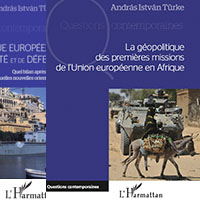

© 2012-2018 Europa Varietas Foundation © 2015-2018 Europa Varietas Association
www.europavarietas.org | info(@)europavarietas(dot)org | Switzerland
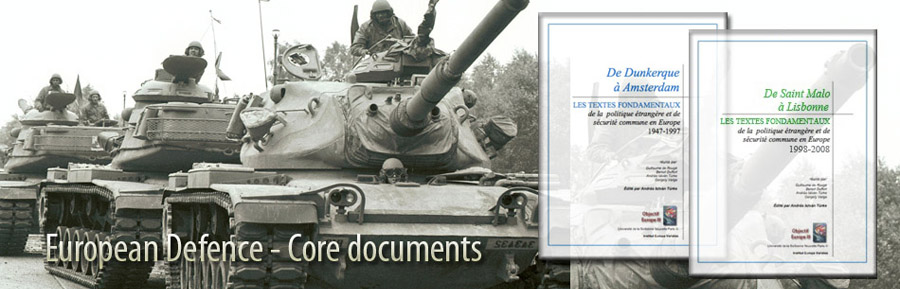
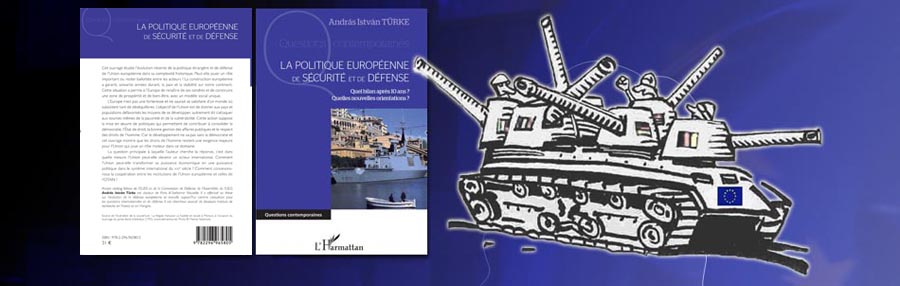
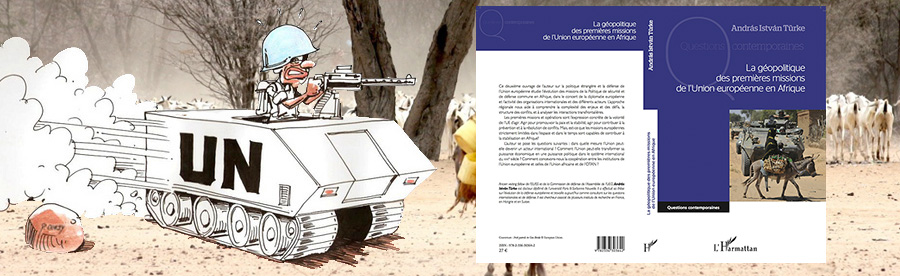
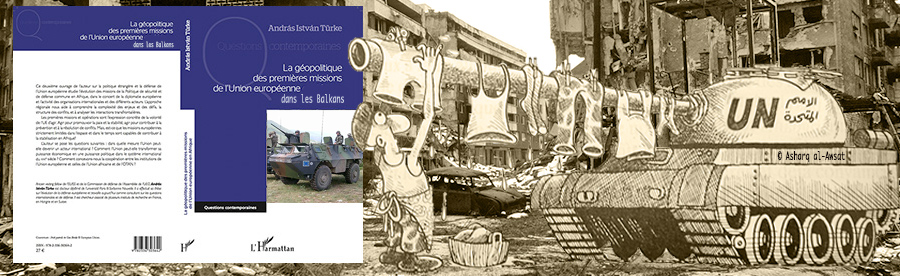
We are looking for sponsors for the English translation of these books, please contact turkeandras(at)gmail(dot)com