
Vous êtes ici
Agrégateur de flux
Max Schmeling gegen Joe Louis: Wie die Kämpfe zweier Boxlegenden in den 1930er-Jahren Geschichte schrieben - Neue Doku auf dem HISTORY Channel
The HISTORY Channel: München (ots) - - 1936 und 1938 sorgten die Duelle der beiden Schwergewichtsboxer weltweit für Aufsehen. - 90 Jahre nach dem ersten der beiden Kämpfe beleuchtet die Dokumentation "Kampf der Giganten - Joe Louis gegen Max Schmeling" die Rivalität ...
L’extrême droite bat le pavé en Pologne, un hôpital de Gaza bombardé par Israël, un massacre au Soudan du Sud… Notre récap de l’actualité internationale
Des dizaines de partisans de l’extrême droite polonaise réunis pour la « Marche de l’Indépendance », à l’enquête d’Amnesty International sur un massacre au Soudan du Sud, en passant par la poursuite du génocide des Palestiniens par Israël et une inculpation historique en Colombie, retour sur l’actualité internationale de ces dernières heures.
Catégories: France
La société civile de Mahagi dénonce une disparité tarifaire sur les produits pétroliers aux postes douaniers de Mahagi et d’Aru
La société civile/Forces vives de Mahagi dénonce une inégalité tarifaire dans le dédouanement des produits pétroliers entre les postes frontaliers de Mahagi et d’Aru, en Ituri. Dans une correspondance datée du 9 novembre 2026 et adressée au ministre de l’Économie nationale, dont Radio Okapi a reçu une copie mercredi 11 novembre, cette structure citoyenne affirme que cette situation contribue à la hausse du prix du carburant dans le territoire de Mahagi.
Catégories: Afrique
Kinderschutz- und Treppenschutzgitter sicher montieren: So prüfen Eltern den Halt
TÜV-Verband e. V.: Berlin (ots) - Treppenschutzgitter schützen Kleinkinder vor schweren Stürzen. Schlecht verarbeitet oder falsch montiert, können sie sich beim Rütteln oder Ziehen lösen. Der TÜV-Verband gibt Sicherheitstipps. Sobald Kleinkinder krabbeln oder ...
Braun Recruiting: Wie Speditionen trotz Fahrermangel wieder planbar Mitarbeiter gewinnen
Braun Recruiting: Rorschach (ots) - Ein LKW ohne Fahrer kostet Speditionen wertvolle Kapazitäten sowie Geld- und Umsatzverlust und kann geplantes Wachstum ausbremsen. Dennoch beginnt die Personalsuche in vielen Betrieben erst, wenn eine Stelle bereits unbesetzt ist. ...
BVR-Präsidentin Kolak: "Aus der konjunkturellen Erholung muss dauerhaftes Wachstum werden"
BVR Bundesverband der Deutschen Volksbanken und Raiffeisenbanken: Berlin (ots) - Der BVR teilt die zuversichtlichere Konjunktureinschätzung, die der Sachverständigenrat in seinem Jahresgutachten vorlegt. Mit einer auf 1,3 Prozent angehobenen Wachstumsprognose für 2026 zeichne sich nach mehreren wirtschaftlich ...
Türkamera erwischt Studentinnen bei Affen-Imitation
Eine Türkamera an der Universität von Mississippi filmt, wie zwei Studentinnen vor der Wohnung schwarzer Kommilitoninnen rassistische Gesten machen. Die Aufnahmen gehen viral und sorgen für Empörung. Die Mutter einer Betroffenen fordert Konsequenzen, die Universität untersucht den Vorfall.
Catégories: Swiss News
Sabalenka muss nach Abreibung um Halbfinal zittern
Coco Gauff wettert nach ihrer Niederlage gegen Linda Noskova gegen den Modus der WTA Finals. Aryna Sabalenka verliert gegen Mirra Andrejewa deutlich und muss um die Halbfinalqualifikation zittern.
Catégories: Oroszország és FÁK, Swiss News
Neuer Team-Partner für Bencic bei United Cup
Am United Cup 2027 treten Belinda Bencic und Jérôme Kym für die Schweiz an. In der Gruppenphase gibts das Nachbarduell mit Deutschland und die Neuauflage des Finals 2026 gegen Polen.
Polarise plant bis Ende 2028 rund 150 Megawatt neue KI-Kapazität in Deutschland - Auszeichnung als „Hidden Champion“ durch den KI Bundesverband
Polarise GmbH: Hürth / Düsseldorf (ots) - Nächste AI Factories entstehen in Bayern, Hessen und Nordrhein-Westfalen – Auszeichnung würdigt den Aufbau souveräner KI-Infrastruktur Polarise baut seine KI-Kapazität in Deutschland bis Ende 2028 um rund 150 ...
Centrafrique: dans le procès de l'ancien commandant de la Seleka devant la CPI, la défense à la barre
La Cour pénale internationale de La Haye examine depuis le début de la semaine le dossier de Mahamat Saïd Abdel Kani, ancien commandant de la Seleka en Centrafrique. Fin septembre, il a été reconnu coupable de crimes contre l’humanité commis à l’Office de répression du banditisme à Bangui. Mardi, le procureur a requis une peine minimum de vingt ans de prison et hier, mercredi, la parole était à la défense.
Catégories: Afrique
18-Jährige stürzt mit Auto in Hirzel ZH Hang hinunter
Eine 18-jährige Autofahrerin ist am Mittwochabend in Hirzel ZH einen Hang hinuntergestürzt und verletzt worden.
Heftiger Hauseinsturz in New York – mindestens zwei Tote
In New York ist am Mittwochnachmittag ein dreistöckiges Wohn- und Geschäftshaus teilweise eingestürzt. Mindestens zwei Personen kam ums Leben, 17 weitere wurden verletzt. Die Feuerwehr sucht nach weiteren Verschütteten.
Grosse Sorge um «Malcolm mittendrin»-Star Frankie Muniz
Bei einem Training auf dem Daytona International Speedway wurde der Schauspieler und Rennfahrer Frankie Muniz in einen Crash verwickelt. Der «Malcolm mittendrin»-Star wurde umgehend in ein Spital gebracht.
Pflege: 10 % der Erwerbstätigen von 25 bis 64 Jahren betreuen Angehörige
Statistisches Bundesamt: WIESBADEN (ots) - - 55- bis 64-jährige Erwerbstätige leisten besonders viel Betreuung für erwachsene Angehörige - Im Alter von 35 bis 54 Jahren unterstützen 4 % der Erwerbstätigen regelmäßig erwachsene Angehörige und betreuen zugleich ...
Tízezrek vonultak utcára Spanyolország nagyvárosaiban
Spanyoloroszág nagyvárosaiban a szakadó eső ellenére tízezrek vonultak utcára szerdán az egynapos országos sztrájk eseményeinek csúcspontjaként, hogy megfizethető lakhatást, magasabb béreket, az áremelkedések elleni intézkedéseket és a közszolgáltatások javítását követeljék.
A városi rendőrség szerint Barcelonában 40 ezren, a szervezők szerint 400 ezren vettek részt a belvároson áthaladó tüntetésen. A skandáló menetet dobokkal kísérték. „Élni, nem túlélni” – skandálta a tömeg, amely magasban tartott transzparenseken hirdette: „ha az élet luxus, akkor a lázadás szükségszerűség”.
A résztvevők közül sokan viseltek narancssárga ruhadarabot, mint a felvonulást meghirdető bérlők szakszervezete (Sindicat de Llogateres) nevű érdekképviselet színét, amely egyben a tiltakozás közös jelképévé vált.
Forrás: MTI
Nyitókép: korábbi felvétel. Forrás: AFP/Reuters
The post Tízezrek vonultak utcára Spanyolország nagyvárosaiban appeared first on Kárpátalja.ma.
Catégories: Határon túli magyar portálok összesített hírei
Mariana Enriquez, autrice de « J’irai marcher sur vos tombes » : « Les cimetières regorgent d’histoires extraordinaires, d’érotisme, de politique, de quiétude »
Dans « J’irai marcher sur vos tombes », l’écrivaine argentine Mariana Enriquez se livre à un tour du monde des cimetières, qui tient à la fois du voyage esthétique, sensoriel, poétique et militant.
Catégories: France
I Sustain My Accusation
This is the final article in a four-part series.
By Saber Azam
GENEVA, Nov 12 2026 (IPS)
This is the final article in a four-part series with related titles, highlighting the responsibility of mainstream media and religious leaders for the world’s current appalling state and the calamities that may await future generations if proper measures are not taken in time. When megalomania is given a “human face,” historical facts are distorted, acts of aggression are whitewashed, unlawful wars are portrayed as vehicles of “democracy, human rights, and morality,” other people’s intelligence is undermined and mocked, bias overshadows international norms, and religion becomes an instrument of bigotry, I sustain my accusation:
Saber Azam
I Accuse the Mainstream MediaThe media is often described as a primary mechanism for informing the public about crucial social, political, and economic issues that can directly or indirectly affect society. Across mass, community, and small- and medium-sized outlets, it also educates and connects people, shapes public opinion, and gives whistleblowers a platform. Impartiality, truthfulness, and investigative rigor are among the principal pillars of its credibility. The most important red lines no media outlet should cross include the propagation of hatred in any form, racism, lies and defamation, deliberately false information, and violations of privacy and personal data. Core principles also include freedom of expression, pluralism, and fact-based reporting.
To date, no single body of international legislation governs the media. Countries and regions apply their own laws and regulations. Since World War II, many powerful countries have funded mainstream media outlets that primarily serve as tools for domestic and foreign-policy propaganda and narrative control. Some wealthy individuals and institutions have done the same to advance their own interests.
In some wealthy and powerful countries, domestic injustices and violations of human dignity are often overlooked, while political assassinations, bloody regime changes, covert subversive operations, denial of facts, and other harmful policies and practices carried out abroad against less powerful countries have been presented to the public as necessary responses to alleged “violations” of certain principles or rights.
In many cases, blatant falsehoods have been transformed into absolute truths, and unlawful acts of aggression have been whitewashed. Without diminishing the good work they have accomplished, these media networks bear responsibility for “justifying” many unjustifiable acts, resulting in countless deaths, material destruction, and shattered lives. The tragedy is that this continues: even when hundreds of journalists are brutally murdered, many mainstream media outlets still fail to denounce these misdeeds.
However, with the rise of the internet, mobile phones, social media, independent podcasters, alternative news networks, and other tools, timely information can now reach vast audiences instantly, while independent audio and video creators and hosts dig deeper to uncover facts. Anyone can capture a photo or video of an event and share it immediately on social media. Younger generations across continents seek facts about the past and present to build a better future. They consult historical archives and draw on multiple sources to form informed opinions on issues that matter to them. Of course, they are not immune to misinformation or malicious manipulation. Yet many people can find accurate information from well-informed alternative sources, even if those outlets lack the political backing and financial power of mainstream media organizations, which bear an even greater responsibility to speak the truth, especially when it matters most.
I Accuse the Religious Leaders
Religion may be understood as a divine philosophy through which God establishes principles intended to ensure harmonious, respectful, equitable, and peaceful living. It can also define the relationship between the Creator and the created, among human beings, and between humans and their environment. Some religions also outline political, economic, and scientific frameworks or rules. Scholars have long sought to explain the foundations of religious belief and have advanced testimonial, philosophical, and extraordinary arguments. Faith, however, is rooted in a profound qualitative appreciation of life and its meaning. Human values and dignity form important common ground among monotheistic, polytheistic, pantheistic, and atheistic convictions. Therefore, those who carry the banner of any belief bear a great responsibility to denounce violations of the principles they profess.
Over time, politics intruded into the sphere of faith and influenced decision-makers, business leaders, and society at large. Rulers often defined their own versions of particular beliefs. Divisions followed, and people of the same religion began killing one another in the name of God. Later, interfaith conflicts arose, leading to devastation and massacres.
One of the most despicable developments in recent human history was the initiation, expansion, and full implementation of the Doctrine of Discovery, through which faith became a justification for bigotry, discrimination, oppression, and expansionism, contributing to centuries of slave trading, gratuitous exploitation, and the devastation of the colonial era. Shamefully, some so-called scholars have characterized the decrees issued in this regard as “international law,” enabling the promulgation of appalling “codes,” political statements, and acts of violence. In the process, hundreds of millions of people were massacred, their treasures looted, and their capacity for self-defense crushed. In some parts of the world, native peoples were nearly erased. Serious crimes continue to be committed in the name of religion; yet, for various reasons, few leaders have come forward to say, “Not in our name!”
The intertwining of religion with politics and business has pulled faith away from its moral and social foundations and placed it in the service of those in power. In some cases, religious principles are invoked to sow division and violence among peoples.
Many faith leaders who persuade people to accept their teachings fail to demonstrate the moral courage and vision needed to take concrete action against injustices committed in the name of their beliefs and to oppose present-day misdeeds. They bear a heavy responsibility for the loss of innocent lives and for the world’s deteriorating condition.
Final Words
It is painful to witness dictatorships commit transgressions, but it is even more devastating to see “democratic societies” commit or condone similar acts. We may be approaching a major and extremely violent global calamity. Will the leaders mentioned in my four-part series of related articles realize they have strayed, take the needed corrective actions, or step aside and let younger, talented, and responsible generations take over and lead our world toward a more secure, promising, and prosperous future? If not, will the world’s youth launch a billion-signature vote-of-no-confidence petition to help save the planet and humanity?
Saber Azam is a former UN official. He is the author of Soraya: The Other Princess and Hell’s Mouth: A Journey to the Heart of West African Jungles. His third book, Nowhere to Go, will be published soon.
IPS UN Bureau
Excerpt:
This is the final article in a four-part series.
Catégories: Africa
Guerre en Ukraine: la Russie cherche à redessiner l'architecture de paix européenne
Après une séquence de discussions tripartites à Abou Dhabi entre représentants russes et ukrainiens sous médiation des Etats-Unis, les émissaires américains sont attendus à Moscou ce matin. Ils doivent y rencontrer Vladimir Poutine et évoquer avec lui, entre autres, la question épineuse de la place des Européens dans les négociations.
Catégories: Union européenne
12 civils tués dans de nouvelles attaques attribuées aux ADF à Mambasa
Au moins douze civils ont été tués mercredi 11 novembre dans quatre villages de la chefferie de Babila Babombi, en territoire de Mambasa (Ituri), lors de nouvelles attaques attribuées aux rebelles des Forces démocratiques alliées (ADF). Ce nouveau bilan porte à environ 23 le nombre de personnes tuées depuis dimanche dans cette partie de la province.
Catégories: Afrique
Pages


© 2012-2018 Europa Varietas Foundation © 2015-2018 Europa Varietas Association
www.europavarietas.org | info(@)europavarietas(dot)org | Switzerland
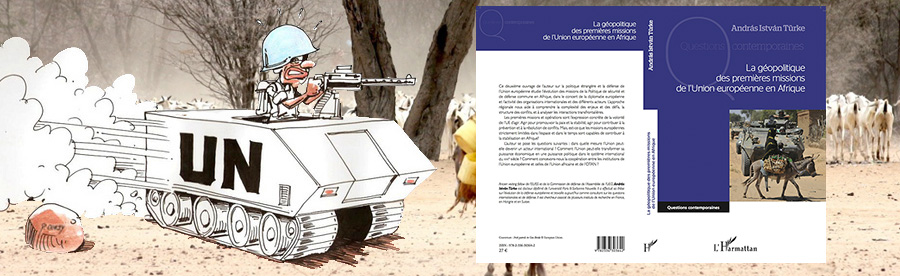
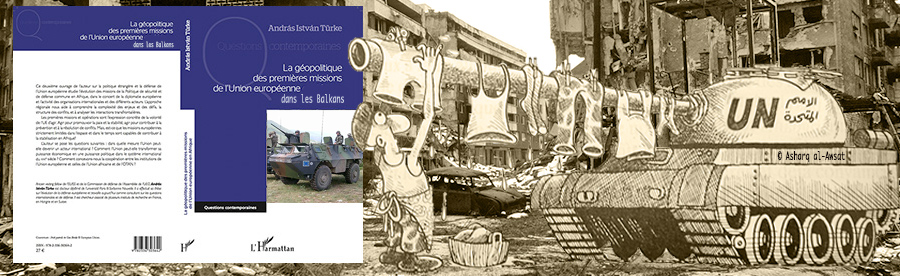
We are looking for sponsors for the English translation of these books, please contact turkeandras(at)gmail(dot)com