
Vous êtes ici
Agrégateur de flux
Wawrinka kann doch noch gewinnen
Stan Wawrinka ringt in der ersten Runde des ATP-Turniers in Lyon den Spanier Martin Landaluce in drei Sätzen nieder. Für den Romand ist es der erste Sieg auf dieser Stufe seit dem vergangenen Mai.
Catégories: Swiss News
Bangladesh’s Hidden Climate Bill: How Much Are We Losing Without Counting It?
By Shahiduzzaman
DHAKA, Bangladesh, Oct 22 2026 (IPS)
Bangladesh has earned global recognition for reducing deaths from cyclones and floods. Early warning systems, cyclone shelters, embankments and community preparedness have transformed the country’s disaster response. Yet another climate crisis is receiving far less attention: the economic damage climate change is quietly inflicting on households, farmers, workers, businesses and public finances.
Shahiduzzaman
The question is no longer whether climate change is costing Bangladesh. It clearly is. The real question is how much we are losing, who is paying the price and whether the country is doing enough to prevent these losses.The uncomfortable reality is that Bangladesh still lacks a comprehensive annual system for calculating climate induced microeconomic damage. Losses are recorded separately through agricultural damage, disaster assessments, health costs, infrastructure destruction, lost working days, business interruption, declining household income and climate induced migration. As a result, much of the country’s real climate bill remains invisible.
Available evidence shows that the cost is already enormous. The World Bank estimates that tropical cyclones cost Bangladesh around US$1 billion annually. It has also warned that a severe flood could reduce national GDP by as much as 9 percent, while climate change could cause around one third of agricultural GDP to be lost by 2050. As many as 13.3 million people could become internal climate migrants by 2050 because of climate related pressures on agriculture, water and land. The economic burden is no longer limited to cyclones and floods. Extreme heat is emerging as a major source of economic loss. A 2025 World Bank assessment found that heat related physical and mental health conditions resulted in an estimated 250 million lost workdays in Bangladesh in 2024. The resulting economic loss was estimated at between US$1.33 billion and US$1.78 billion, equivalent to around 0.3 to 0.4 percent of GDP.
This should fundamentally change how Bangladesh understands climate damage. A disaster does not have to destroy a house, factory or bridge to cause economic loss. When extreme heat reduces the productivity of a construction worker, garment worker, farmer, transport worker or street vendor, the economy loses output.
The hidden climate bill therefore extends far beyond physical destruction.
Consider a farmer in coastal Bangladesh. Rising salinity may gradually reduce agricultural production. The immediate result is lower household income. But the consequences do not end there. A family may sell livestock, borrow money, reduce food consumption or withdraw children from school. Eventually, one or more family members may migrate to Dhaka or another city.
A climate shock that begins in a field can therefore become a problem for the labour market, housing, education, health services and urban infrastructure.
The same chain of losses occurs during floods. A small shopkeeper can lose inventory. A transport worker can lose several days of income. A factory may remain physically undamaged but stop production because roads are submerged or workers cannot reach their workplace. Households may spend their savings on repairs instead of education, healthcare or investment.
At the same time, the government must spend more on emergency relief, damaged roads, embankment repair, reconstruction and public health.
Climate change therefore creates a double burden: private income and productive assets are lost while public expenditure increases.
This is why Bangladesh urgently needs a national climate loss accounting system. It should systematically measure household and productive asset losses, agricultural and fisheries damage, lost income and working days, health and productivity costs, business interruption, supply chain disruption, displacement and loss of human capital.
Such a system would tell policymakers not simply how much a cyclone or flood costs in physical damage, but how much income ordinary citizens lose and how much economic activity Bangladesh sacrifices.
This is particularly important because a large share of Bangladesh’s workers remain in informal employment. Agricultural labourers, construction workers, transport workers, street vendors and small entrepreneurs often have limited access to paid leave, insurance or social protection. When a flood, cyclone or heatwave prevents them from working, their income can disappear immediately.
Climate change is therefore also an inequality crisis.
A wealthier household may be able to repair its home, relocate temporarily or pay medical expenses. A poor household may have to sell productive assets or take on debt. For families living close to the poverty line, one climate shock can erase years of economic progress.
Bangladesh has taken important steps toward adaptation. Its National Adaptation Plan for 2023 to 2050 identifies major adaptation priorities and recognises the enormous investment required to protect people, livelihoods and development. (UNDP) But the gap between ambition and implementation remains a serious concern.
The first major gap is data. Bangladesh cannot effectively manage climate related economic damage without knowing its full scale. The government should publish an annual National Climate Economic Loss Report covering households, agriculture, businesses, labour productivity, health and public infrastructure.
The second gap is institutional coordination. Climate adaptation cannot remain primarily the responsibility of environmental or disaster management agencies. Climate risks must be integrated into agriculture, finance, labour, health, housing, transport, industry, education and urban planning.
The third gap is prevention. Bangladesh has become relatively successful at responding after disasters, but prevention deserves much greater economic priority. A resilient drainage system that prevents repeated business disruption may be more valuable than repeatedly repairing flood damage. A climate resilient crop can protect rural income for years. A heat resilient workplace can preserve thousands of working days.
The fourth challenge is finance. Bangladesh cannot meet its enormous adaptation needs through public budgets alone. International climate finance, concessional financing, private investment, insurance and innovative financial mechanisms will all be necessary.
International experience offers useful lessons. The Netherlands demonstrates how flood protection can be integrated into long term spatial planning, infrastructure and water management. Its experience shows that flood resilience can be treated as an economic strategy rather than simply an emergency response.
Singapore offers another important lesson, particularly for Bangladesh’s cities. Its approach to rising temperatures combines urban greenery, heat modelling, climate sensitive planning and protection of vulnerable populations. Dhaka could similarly treat trees, shaded public spaces, cool buildings, drainage and water management as economic infrastructure rather than merely environmental amenities.
Bangladesh can also build on its own success. Its cyclone warning system and community preparedness programmes demonstrate that locally rooted approaches can deliver remarkable results. The same principle should now be applied to protecting livelihoods, small businesses, agriculture and workers.
Most importantly, adaptation should be judged by economic outcomes. Instead of simply reporting how much money is spent on a climate project, the government should measure how many jobs are protected, how much income is safeguarded, how many working days are preserved and how much future economic loss is avoided.
The real climate bill is not simply the cost of rebuilding a bridge after a flood. It is the farmer who produces less for years because of salinity. It is the worker who loses productive days because of extreme heat. It is the small entrepreneur whose capital disappears in a flood. It is the child whose education is interrupted because household income collapses. It is the family forced to migrate after losing its land.
When millions of such individual losses accumulate, they become a national economic crisis.
Bangladesh has demonstrated that it can protect its people from the deadliest consequences of climate disasters. The next challenge is to protect their livelihoods and economic future.
The country cannot manage what it does not measure. It is time to move from simply counting disasters to counting lost income, lost jobs, lost working days, damaged productive assets and the GDP that climate change prevents Bangladesh from generating.
The objective should not simply be to calculate how much climate change costs Bangladesh. It should be to determine how much Bangladesh can save by investing in resilience today.
Climate adaptation is no longer merely an environmental responsibility. For Bangladesh, it is an investment in GDP, employment, poverty reduction, human development and long term economic security. The climate bill is already being paid. The failure is that we still do not know its full size.
The author is the Editor and CSO of News Network.
IPS UN Bureau
Catégories: Africa
Un partenariat renforcé au service du développement
Le Bénin et l'Union européenne (UE) veulent consolider leur partenariat et accélérer la mise en œuvre de leurs engagements communs. Les deux parties ont tenu, mercredi 21 octobre 2026 à Cotonou, la deuxième édition de leur dialogue de partenariat. Les échanges ont porté sur le bilan de la coopération et les perspectives de collaboration dans plusieurs secteurs prioritaires.
La deuxième édition du dialogue de partenariat entre le Bénin et l'Union européenne a eu lieu ce mercredi 21 octobre 2026. Plusieurs membres du gouvernement ont pris part à cette importance rencontre. Il s'agit notamment de la ministre des Affaires étrangères, Corinne Amori Brunet, de Janvier Yahouédéou, ministre de la Décentralisation et de la Gouvernance locale ; Édouard Dahomé, ministre de l'Énergie, de l'Eau et des Mines ; Yassine Latoundji, ministre de la Culture, des Arts et du Patrimoine ; Djibril Mama Cissé Moussa, ministre délégué chargé de l'Intérieur et de la Sécurité publique ; Gildas Agonkan, ministre délégué chargé de la Défense nationale ; ainsi que Hugues Oscar de Lokossou, ministre délégué chargé de la Mobilisation des ressources extérieures et de la Gestion de la dette.
Les discussions, selon un communiqué du gouvernement, ont porté sur les pôles de développement territorial, l'extension du réseau électrique, l'intégration régionale, la modernisation du Port autonome de Cotonou, l'accès des PME au financement, l'eau et l'assainissement, la formation professionnelle, la prévention de l'extrémisme violent, la transformation numérique, le tourisme et la formalisation du secteur privé.
À l'ouverture des travaux, la ministre des Affaires étrangères, Corinne Amori Brunet, a souligné l'importance du dialogue pour approfondir les relations entre le Bénin et l'Union européenne. Elle a également insisté sur la nécessité de veiller à ce que les retombées de cette coopération profitent effectivement aux populations.

Pour Hugues Oscar de Lokossou, ministre délégué chargé de la Mobilisation des ressources extérieures et de la Gestion de la dette, cette rencontre constitue un cadre de concertation sur des enjeux stratégiques, politiques et géopolitiques. L'objectif est de favoriser des résultats concrets au service du développement du Bénin.
Pour sa part, le chef de la délégation de l'Union européenne au Bénin, Stéphane Mund, a mis l'accent sur l'intérêt de ces échanges pour évaluer les acquis du partenariat, examiner les difficultés rencontrées et identifier de nouvelles perspectives de coopération.
À travers cette deuxième édition du dialogue de partenariat, le Bénin et l'Union européenne réaffirment leur volonté de renforcer la coopération et de traduire leurs engagements en actions concrètes. Ce cadre de concertation vise à soutenir la transformation économique et sociale du pays, tout en favorisant la création d'opportunités et l'amélioration des conditions de vie des populations. L'ambition affichée étant de faire de ce partenariat, un levier de développement durable, en cohérence avec les objectifs nationaux de lutte contre la pauvreté et d'amélioration du bien-être des populations.
F. A. A.
Catégories: Afrique
Le Ghana veut interdire les exportations de matières premières d’ici à 2030
À l'occasion du sommet Afrique du Financial Times à Londres, le président ghanéen a fait plusieurs déclarations mercredi 21 octobre, notamment en annonçant son souhait d’arrêter les exportations de matières premières d’ici à 2030. John Dramani Mahama cherche à développer la transformation locale de ces minerais, soit un changement de stratégie dans la région.
Catégories: Afrique
So will Selenski ein Ende vom Krieg erreichen
Mit diesem Satz lässt Wolodimir Selenski (48) aufhorchen: «Ja, jetzt müssen wir einfrieren.» Im US-Sender Fox News wurde der ukrainische Präsident am Mittwoch gefragt, ob er einen Deal akzeptieren würde, der alles so belässt, wie es ist. Die Ukraine würde dabei rund drei Viertel ihres Landes behalten. Selenski sagte, das sei ein realistischer Weg, den Krieg zu beenden.
Catégories: Swiss News
Schweizer NHL-Keeper erlebt bitteren Abend
Die Florida Panthers müssen in der Nacht auf Donnerstag in Ottawa eine 1:5-Pleite hinnehmen. Dabei im Tor der Gäste: der Schweizer Akira Schmid.
Catégories: Swiss News
Jetzt setzt auch Captain Fernandes Carrick unter Druck
1:4 gegen Como, sieben Spiele ohne Sieg: Manchester United taumelt weiter. Captain Bruno Fernandes fordert mehr Mut im Pressing – und erhöht damit den Druck auf Trainer Michael Carrick.
Catégories: Swiss News
Zugchaos im Raum Zürich
Im Raum Zürich kam es am Donnerstag zu Problemen im Bahnverkehr. Es kam zu Verspätungen und Ausfällen.
Catégories: Swiss News
Ebola: «Aucun pays n'est à l'abri si on ne renforce pas la surveillance», affirme le Dr Jean Kaseya
Le Nigeria est sous le choc après l'annonce d'un premier cas Ebola en provenance d'Ouganda. Le docteur Jean Kaseya informe jeudi 22 octobre que cette patiente n'est jamais passée au préalable par la RDC, ce qui veut dire que, contrairement au discours officiel de Kampala, le virus circule en Ouganda. Cette patiente n'a été diagnostiquée Ebola que 16 jours après son arrivée au Nigeria, poursuit le médecin, ce qui signifie qu'il y a aujourd'hui beaucoup de cas contacts. Jean Kaseya est le directeur général d'Africa CDC, le Centre africain de contrôle et de prévention des maladies, et répond à Christophe Boisbouvier.
Catégories: Afrique
Halmozott örökség
Szakértői-PSD-s kormány lépett hivatalba a 89 utáni Románia talán leghosszabb belpolitikai patthelyzete után. A Niculescu-kabinetnek nincs több pénze, feladata viszont szakajtónyi. A kormány hat hónapra kalibrált ténykedése mögött-mellett folytatódik az immár hármas tagolású arénában a küzdelem, fél szemmel a szereplők már a 2028-as választásokra figyelnek. Cseke Péter jött el értékelni a Tetőteraszra. Házigazda: Rostás-Péter István
Articolul Halmozott örökség apare prima dată în Kolozsvári Rádió Románia.
Catégories: Határon túli magyar portálok összesített hírei
Das ist der teuerste Parkplatz der Welt
Autofahren kann Freude machen, das Parkieren weniger. In vielen Städten wird es zudem immer teurer. Auch in der Schweiz ziehen die Gebühren an. Ein aktuelles Beispiel ist der Flughafen Zürich. Wo das Parkieren weltweit am teuersten ist, erfährst du im Video.
Catégories: Swiss News
Kolwezi : retour progressif au calme après deux jours de manifestations des creuseurs artisanaux
Un calme progressif est revenu mercredi 21 octobre dans plusieurs quartiers de Kolwezi, dans la province du Lualaba, après deux jours de manifestations violentes menées par des creuseurs artisanaux. Selon des sources locales, les troubles ont paralysé les activités socio-économiques et causé plusieurs blessés ainsi que d'importants dégâts matériels.
Catégories: Afrique
Keep Europe Moving: The Independent Aftermarket Meets in Brussels
Every journey depends on more than the vehicle itself. Behind Europe’s mobility is a vast and dynamic automotive aftermarket, working every day to ensure that motorists have access to the parts, services and expertise they need. This is the world FIGIEFA represents: the independent automotive aftermarket and the businesses that help keep Europe moving. And […]
Catégories: European Union
Atemberaubende Weinlandschaft zwischen Adria und Apennin
Die Weinregion Abruzzen gehört zu den urtümlichsten Landschaften Italiens. Sie liegt zwischen Adria und Apennin. Dort sorgt die Sorte Montepulciano für stoffige Rotweine, während Pecorino saftige Weissweine für Fischgerichte liefert.
Catégories: Swiss News
ECR eyes top job in 2029
Also, in Thursday’s edition: Ireland defends work on EU-wide taxes
Catégories: European Union
Propos menaçants de Fils Mukoko : le Gouvernement, le CSAC et la Justice montent au créneau
Les autorités congolaises ont multiplié les réactions après les déclarations controversées de Fils Mukoko, cadre de l’UDPS qui, dans un message publié sur les réseaux sociaux, avait menacé d’armer des jeunes pour s’en prendre aux ressortissants occidentaux à la suite des perquisitions menées dans certaines résidences proches de la famille présidentielle.
Catégories: Afrique
What a Seawater Sample Can Tell Scientists About Ocean Health
UNESCO is growing its environmental DNA, or eDNA, expedition programme. This ambitious and cost-effective project can give usable ocean data in a couple of weeks using a small number of seawater samples collected by citizen scientists.
Catégories: Africa
Déshabillé, presque noyé, ligoté à une chaise… Le voyage au bout de l’enfer d’un salarié d’Aéroports de Paris
Depuis bientôt dix ans, un salarié d’Aéroports de Paris mène une bataille judiciaire pour dénoncer les brimades dont il se dit victime. Deux décisions de justice rendues cette année, dont le groupe a fait appel, reconnaissent la « faute inexcusable » de son employeur. Anatomie d’un cas extrême de violence au travail.
Catégories: France
Auch der Luzerner Nationalrat Franz Grüter sagt für die Nachfolge von Bundesrat Parmelin ab
In der Schweizerischen Volkspartei positionieren sich die aussichtsreichsten Papabili. Das Kandidatenkarussell.
Catégories: Swiss News
22 octobre 1936 : des antifascistes du monde entier rejoignent l’Espagne pour former les Brigades internationales
Il y a quatre-vingt-dix ans, le 22 octobre 1936, le gouvernement espagnol publiait le décret de constitution des Brigades internationales alors que la guerre contre les franquistes faisait rage. Ces femmes et ces hommes accourus du monde entier pour défendre le Front populaire, la République et la démocratie face à la menace fasciste ont signé l’une des belles pages de la solidarité internationaliste.
Catégories: France
Pages


© 2012-2018 Europa Varietas Foundation © 2015-2018 Europa Varietas Association
www.europavarietas.org | info(@)europavarietas(dot)org | Switzerland
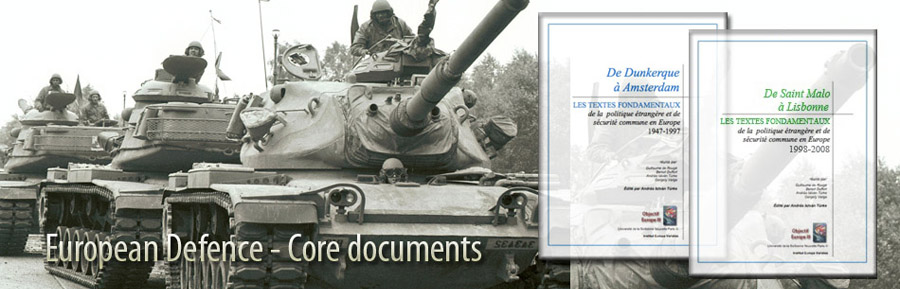

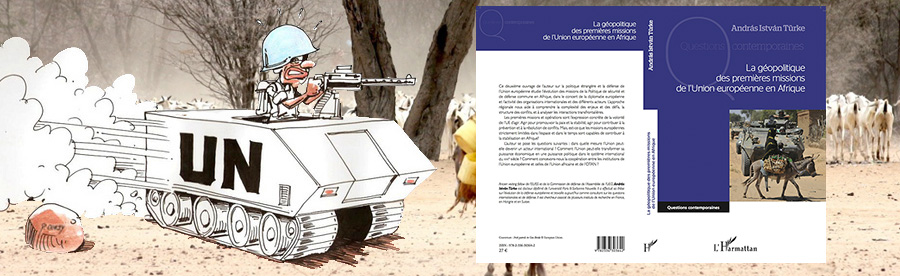
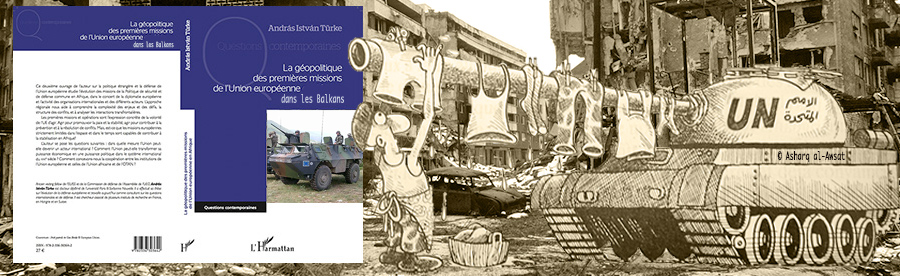
We are looking for sponsors for the English translation of these books, please contact turkeandras(at)gmail(dot)com