
Vous êtes ici
Agrégateur de flux
Belgian former energy minister is new face of European wind power industry
Energy crisis veteran to head industry association suffering from setbacks
Catégories: European Union
« Traqué et harcelé » : l'ancienne pop star s'attaque au président de longue date de l'Ouganda
Bobi Wine, ancien musicien, a été arrêté à plusieurs reprises pour avoir contesté le président Yoweri Museveni.
Catégories: Afrique
Accord de libre-échange UE-Inde: l’Allemagne mise sur une alternative indienne à la Chine
Au premier jour de sa visite en Inde, le chancelier allemand Friedrich Merz a appelé à conclure rapidement un accord de libre-échange entre l’Inde et l’Union européenne, estimant ce partenariat essentiel dans un contexte de profonds bouleversements géopolitiques. Berlin et New Delhi entendent d'ailleurs renforcer leur coopération dans l'industrie de la défense.
Catégories: Union européenne
Beijing hails Brussels’ move to help Chinese EV makers avoid EU tariffs
The news indicates a thawing in tensions between Brussels and Beijing
Catégories: European Union
Controversial video sparks top-level resignations in Cyprus amid ‘hybrid war’ claims
The controversy came just days after Cyprus assumed the EU rotating Presidency
Catégories: European Union
Le Bénin séduit les investisseurs régionaux
Le Bénin a levé 60 milliards de FCFA sur le marché financier régional de l'UMOA à l'issue d'une adjudication de Bons et Obligations assimilables du Trésor (BAT et OAT), clôturée jeudi 8 janvier 2026, selon les résultats officiels publiés par UMOA-Titres.
Le jeudi 8 janvier 2026, l'État du Bénin, par l'intermédiaire de son Trésor public et sous la supervision du Ministère de l'Économie et des Finances, a procédé à une double émission de Bons et Obligations Assimilables du Trésor (BAT et OAT) sur le marché financier de l'Union Monétaire Ouest Africaine (UMOA).
L'opération, pilotée par le Trésor public sous la supervision du ministère de l'Économie et des Finances, a suscité un intérêt soutenu des investisseurs régionaux. Le montant global des soumissions a atteint 78,24 milliards de FCFA, soit un taux de couverture de 130,41 % du montant mis en adjudication.
Au total, 60 milliards de FCFA ont été retenus, correspondant à un taux d'absorption de 76,68 %.
« Cette adjudication confirme l'attractivité des titres publics béninois sur le marché régional », selon une source financière.
Quatre instruments étaient proposés, répartis entre un bon du Trésor à court terme et trois obligations de moyen et long terme.
Le BAT à 91 jours, arrivant à échéance le 9 avril 2026, a mobilisé 22,37 milliards de FCFA sur 30,07 milliards sollicités, soit un taux d'absorption de 74,39 %. Le taux marginal s'est établi à 5,10 %, pour un taux moyen pondéré de 4,95 %.
Les OAT à trois ans, échéance janvier 2029, ont concentré la plus forte demande, avec 32,73 milliards de FCFA de soumissions.
Seuls 22,18 milliards ont été retenus, traduisant un taux d'absorption de 67,78 %.
Le prix marginal est ressorti à 97,50 %, pour un prix moyen pondéré de 98,30 %.
Les maturités longues ont, en revanche, été entièrement absorbées.
L'OAT à cinq ans (échéance janvier 2031) a permis de lever 8,15 milliards de FCFA, avec un prix marginal de 96,55 %.
L'OAT à sept ans (échéance janvier 2033) a permis de mobiliser 7,30 milliards de FCFA, à un prix marginal de 94,00 %.
Une participation active des investisseurs régionaux
Au total, 10 participants ont pris part à l'adjudication sur le BAT, contre 8 sur l'OAT 3 ans et 6 sur chacune des maturités longues. Le nombre total de soumissions s'est élevé à 43 ordres, traduisant une activité soutenue, notamment sur le segment court et moyen terme. Les investisseurs non compétitifs (ONC) ont représenté une part limitée des montants retenus, avec 772 millions de FCFA acceptés sur l'ensemble de l'opération.
Cette levée de fonds s'inscrit dans la stratégie de financement du budget de l'État pour 2026. Elle permet au Bénin de sécuriser ses ressources, tout en étalant sa dette sur plusieurs maturités.
Les taux servis, compris entre 5,70 % et 6,00 % pour les obligations, reflètent une prime de confiance accordée par les investisseurs au profil de crédit du Bénin, dans un contexte régional marqué par une sélectivité accrue. Avec cette opération, le Bénin confirme sa présence régulière et crédible sur le marché régional des titres publics, tout en consolidant sa relation avec les investisseurs institutionnels de l'UMOA.
M. M.
Catégories: Afrique
Police nationale : Le Commissariat de Police Mobile s'installe au Marché de Yamtenga dans l'Arrondissement n°11 de Ouagadougou pour une semaine
Afin de se rapprocher davantage des populations, le Commissariat de Police Mobile, dans la poursuite de ses activités, va s'implanter, au cours de la semaine du 12 au 16 janvier 2026, dans le Marché de Yamtenga, Arrondissement n°11 de la ville de Ouagadougou, indique la police nationale sur sa page Facebook. Les populations riveraines sont donc invitées à y faire un tour pour bénéficier des prestations de ce service de Police mobile.
En rappel, au cours de la période du 05 au 09 janvier dernier dans l'Arrondissement n°06 de la ville de Ouagadougou, Terrain Cité Abdoul Service de Boassa, les données chiffrées de quelques prestations du Commissariat de Police Mobile se présentent comme suit :
– Nombre de légalisations Copie conforme : 108 ;
– Nombre de déclarations de perte ou de vol : 12 ;
– Nombre de certifications matérielles de signature : 01 ;
– Nombre de CNIB inscrits : 61
www.lefaso.net
Source : Page Facebook de la Police Nationale
Catégories: Afrique, European Union
The Tropical Forest Forever Facility and Its Role in International Forest Finance
As climate negotiators gathered in Belém for the 30th Conference of the Parties to the United Nations Framework Convention on Climate Change (COP30), the surrounding rainforest was in the spotlight, with COP30 being dubbed a “forest COP”. As one of its key projects, the Brazilian government launched the Tropical Forest Forever Facility (TFFF). The fund for the conservation and restoration of standing rainforests aims to serve as a successful and innovative initiative in multilateral cooperation through blended finance. However, there remains a gap between current forest finance and what is needed to reach the Rio Convention targets. Germany and a few other European states have pledged investments into the fund and could shape its implementation. Additional financing mechanisms for forest restoration play a complementary role and should be enhanced. Still, not all success lies in finance. Forest finance mechanisms must reconcile targets of increasing carbon sequestration and storage in forests along with biodiversity and sustainability targets, while upholding the rights of local populations.
Catégories: Diplomacy & Defense Think Tank News
Incendie sur le site de PDI de Bigtogo : Le ministre de l'action humanitaire apporte sa compassion aux sinistrés
Le vendredi 9 janvier 2026, un incendie est survenu sur le site spontané de personnes déplacées internes de Bigtogo, causant la mort d'un enfant de deux ans et de nombreux dégâts matériels. Le Ministre de l'Action humanitaire et de la Solidarité nationale le Commandant Passowendé Pélagie Kaboré, accompagnée du Gouverneur de la région du Kadiogo Abdoulaye Bassinga, s'est rendue sur les lieux pour traduire la compassion et la solidarité du gouvernement aux familles sinistrées.
Selon la direction de la communication du ministère de l'action humanitaire qui rapporte l'information, le Ministre et sa délégation ont parcouru les abris ravagés par les flammes et se sont recueillis sur la tombe du jeune enfant décédé. La visite a permis de mesurer l'ampleur des dégâts et la détresse des familles affectées.

Le Chef de service social de Pabré Zakaria Ouédraogo a indiqué que le site, occupé depuis le 5 mai 2022 par des déplacés originaires de Pobé Mengao, Namissigian et Kouraogo, comptait auparavant 140 ménages. L'incendie a touché 336 personnes issues de 75 ménages, entraînant de lourdes pertes matérielles et humaines.

Le Ministre a salué la réaction rapide et solidaire des populations hôtes et des PDI non sinistrés qui ont contribué à maîtriser les flammes et accueilli les familles touchées en attendant les secours. Elle a exprimé, au nom du gouvernement et du Président du Faso, sa gratitude pour cet élan de fraternité qui illustre les valeurs de solidarité et de cohésion sociale du peuple burkinabè. Elle a également rassuré les populations quant à la mobilisation des autorités pour un retour progressif à une situation normale, dans la perspective d'un retour des personnes déplacées dans leurs localités d'origine dès que les conditions le permettront. Les chefs de Bigtogo et de Pobé Mengao ont exprimé leur reconnaissance pour la présence des autorités, geste fort de réconfort et de proximité en ces moments difficiles.

Dans le but de répondre à l'urgence, le Secrétariat permanent du CONASUR a déclenché une assistance d'un mois comprenant vivres et articles ménagers essentiels. Cette aide comprend notamment quatre tonnes de céréales, des spaghetti, sardines, huile, sel, sucre, ainsi que 168 nattes, couvertures et moustiquaires, des savons, seaux, bouilloires et des lots d'effets d'habillement pour enfants, femmes et hommes. La Croix-Rouge burkinabè est également venue en renfort avec 100 kits d'articles ménagers essentiels et 100 kits d'abris légers, dont l'installation est prévue le 12 janvier 2026 avec l'appui logistique du CONASUR.
La Ministre a appelé à une mobilisation collective pour la reconstitution rapide des abris des 336 sinistrés.

Source : DCRP/MAHSN
Catégories: Afrique, European Union
Entwurf der Tagesordnung - Donnerstag, 15. Januar 2026 - PE782.218v01-00 - Ausschuss für Sicherheit und Verteidigung
Quelle : © Europäische Union, 2026 - EP
Catégories: Europäische Union
Top EU trade official reassures MEPs over Mercosur’s provisional application
The official said Mercosur countries would also need to ratify the deal and notify the EU accordingly
Catégories: European Union
Des supporters rentrés à Cotonou sans bagages après la CAN
Retour compliqué pour des supporters béninois après la CAN 2025 au Maroc !
Une partie de la délégation béninoise ayant pris part à la Coupe d'Afrique des Nations (CAN) 2025 au Maroc est rentrée à Cotonou sans ses bagages. Plus de 200 passagers étaient à bord de l'appareil.
L'avion affrété pour le retour de la deuxième vague de supporters du Bénin est arrivé à Cotonou, jeudi 8 janvier 2026, avec seulement une dizaine de valises à bord. Le reste des bagages serait resté sur le tarmac de l'aéroport de Casablanca. Les passagers concernés ont été informés qu'ils les recevraient ultérieurement.
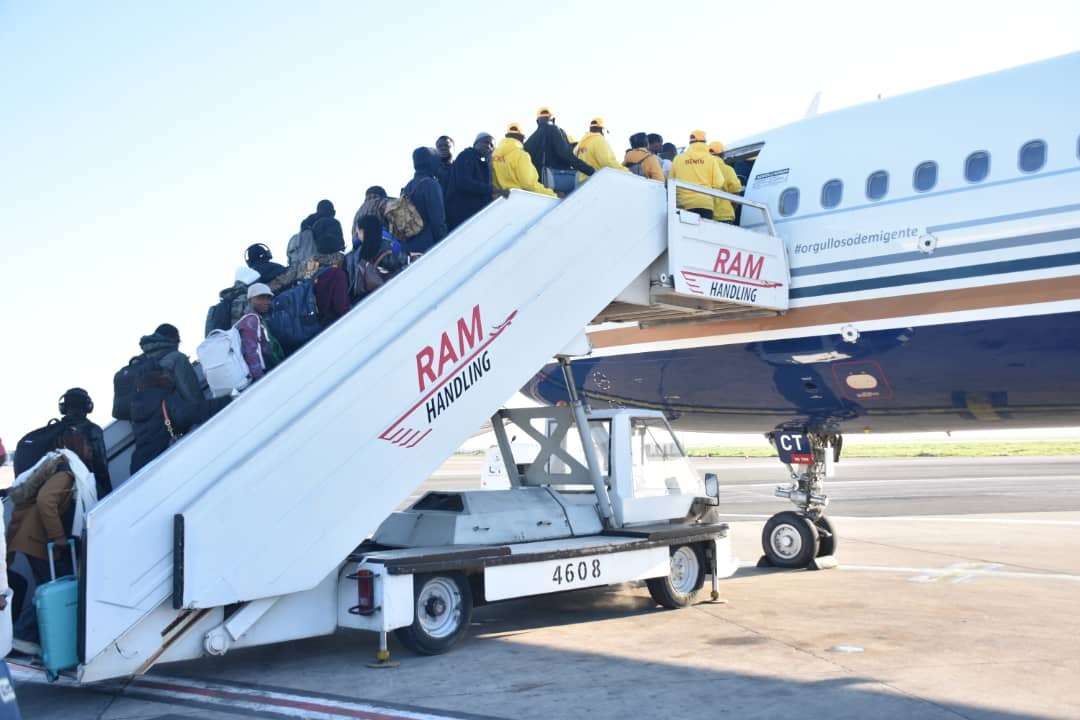
D'après un membre de la délégation, le départ de l'hôtel vers l'aéroport a eu lieu vers 4 heures du matin. Les voyageurs auraient ensuite attendu toute la journée avant de décoller vers 18 heures.
L'avion affrété par le ministère béninois des Sports avait quitté Madrid en Espagne, selon le témoignage d'un passager.
L'appareil a atterri à Cotonou vers 23h30. Dans le hall de livraison des bagages, l'attente s'est prolongée plus de deux heures. Et, la majorité des bagages n'était pas arrivé, selon les mêmes sources.
Les circonstances exactes de cet incident n'ont pas été officiellement précisées. Certains voyageurs s'interrogent sur les modalités du contrat entre le comité d'organisation de la CAN et la compagnie aérienne concernée.
Aujourd'hui, personne ne sait le sort réservé à ces bagages abandonnés à l'aéroport de Casablanca. Certains bagages contenaient des produits périssables. Les passagers s'inquiètent de savoir s'ils pourront retrouver le contenu de leurs bagages intacts. Cette situation pourrait conduire les passagers à réclamer des dommages pour les pertes subies.
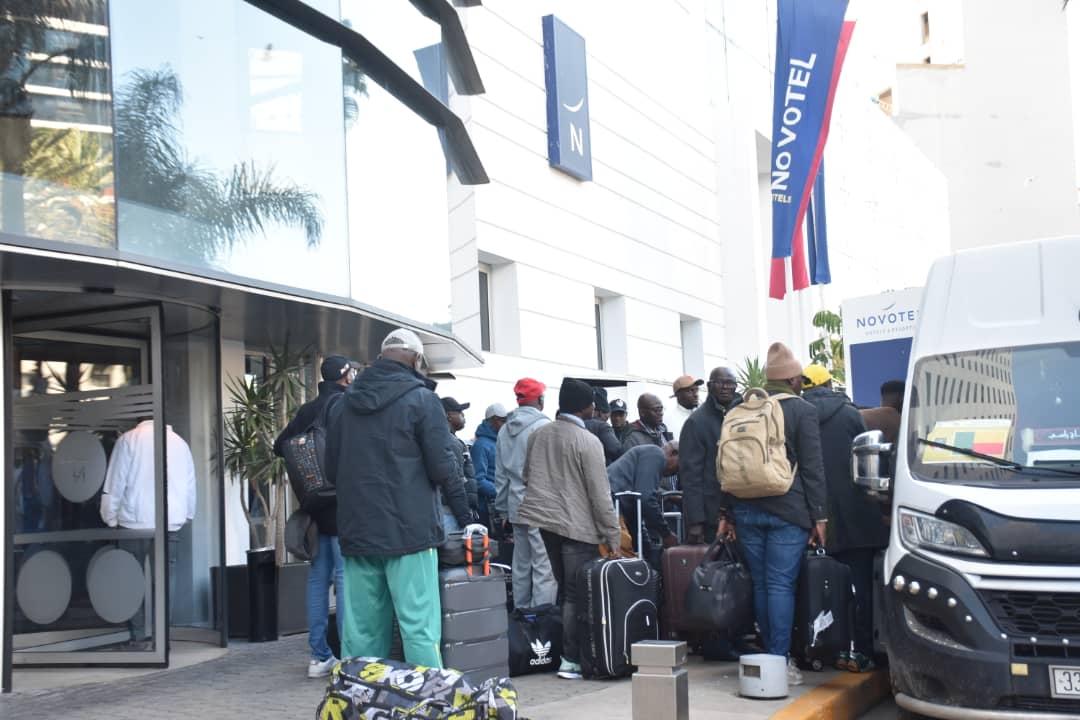
Les Guépards du Bénin ont pris part à la CAN Maroc 2025. Ils ont disputé trois matches de phase de groupes. Le Bénin s'est d'abord incliné (1-0) face à la République démocratique du Congo. Il a ensuite signé une victoire (1-0) contre le Botswana. Une première historique pour le pays en phase finale de CAN. Lors du dernier match de poule, les Guépards ont été battus (3-0) par le Sénégal. Qualifié pour les huitièmes de finale, le Bénin a affronté l'Égypte. Il a été éliminé (3-1) après prolongation. Malgré l'élimination, la participation béninoise a mobilisé de nombreux supporters, présents sur plusieurs sites de la compétition.
M. M.
Catégories: Afrique
Le mouvement social continue au Louvre, à nouveau fermé lundi
Le musée le plus visité au monde a été de nouveau contraint de fermer ses portes lundi après la reconduction de la grève de ses agents, mobilisés depuis mi-décembre pour de meilleures conditions de travail, ont fait savoir le musée et des syndicats.
Catégories: France, Határon túli magyar portálok összesített hírei
Emmanuel Grégoire : « Je souhaite être un maire de Paris qui apaise et qui protège »
ENTRETIEN - À la tête d’une liste d’union de la gauche, le socialiste veut renforcer le rôle de la police municipale dans la capitale, et propose notamment des « mini-postes » mobiles à déployer dans certains quartiers.
Catégories: France, Határon túli magyar portálok összesített hírei
Développement durable : au Bénin, le vaudou au secours de la mangrove
Des fétiches vaudou pour protéger la nature ? La méthode fait ses preuves au Bénin. Alors que 30 % de la mangrove a disparu dans ce pays en 30 ans, les zones sacralisées ces 10 dernières années restent intactes.
Catégories: Afrique
Our New Colonial Era
UN’s ‘responsibility to deliver’ will not waver, after US announces withdrawal from dozens of international organizations. Credit: UN Photo/Loey Felipe
“Take up the White Man’s burden — Send forth the best ye breed… By all ye cry or whisper, by all ye leave or do, [T]he silent, sullen peoples shall weigh your gods - and you…” -- Rudyard Kipling, The White Man’s Burden: The United States and the Philippine Islands (1899)
By Azza Karam
NEW YORK, Jan 12 2026 (IPS)
We’re living in an age where the world is loudly proclaiming the death of empire, yet reproducing its structures. This is not nostalgia for colonial postcards — it’s a reinvention of foreign policy, international governance and global economic power that resembles colonial logic far more than it does meaningful cooperation.
The term “New Colonialism” feels extreme until you look not at poetry, but at power in motion — from military takeovers and genocides, to diplomatic withdrawal, to institutions that still perpetuate inequality and human rights’ abuses under the guise of neutrality.
I – Where Are We Today
“Imperialism after all is an act of geographical violence through which virtually every space in the world is explored, charted, and finally brought under control.”
— Edward Said, Culture and Imperialism (1993)
In January 2026, the United States executed what amounts to the most dramatic foreign intervention in Latin America in decades: a military incursion into Venezuela resulting in the abduction of President Nicolás Maduro. President Donald Trump openly declared that the U.S. would “run the country until such time as we can do a safe, proper and judicious transition.” This is not coded language — it is overt control.
Critics and allies alike see the move not as a limited counternarcotics or law enforcement operation (as the Administration frames it), but as a return to the old playbook of hemispheric domination. Latin American governments from Mexico to Brazil condemned it as a violation of sovereignty — a modern mirror to the regime-change interventions of the 20th century.
Analysts at Foreign Policy have highlighted precisely how this intervention fits into a larger pattern of U.S. foreign policy ambition. Rishi Iyengar and John Haltiwanger note that under the banner of battling “narcoterrorism,” the United States has expanded the role of its military into actions that blur the distinction between security and political control — “adding bombing alleged drug traffickers to its ever-growing list of duties.”
Such actions reflect a foreign policy that is increasingly militarized and deeply unilateral in its execution.
This intervention was not an isolated blip. It fits into a broader dynamic which suggests Washington’s moves in Venezuela are less about drug interdiction and more about strategic positioning and resource control — especially Venezuela’s vast oil reserves.
In the context of a “World-Minus-One” global order where U.S. power is contested by China and Russia, interventionist impulses have resurfaced not as humanitarian projects but as geopolitical gambits.
Viewed through the lens of colonial critique, the language of “rescuing” Venezuelans from an accused dictator echoes Kipling’s exhortation to take up the supposed moral burden. But those centuries-old justifications masked violence and labour exploitation; today’s rhetoric masks geopolitical self-interest.
The U.S. claims to be liberating Venezuelans from authoritarianism, yet asserts control over governance and economic infrastructure — a 21st-century version of telling another nation it cannot govern itself without direction from Washington. The result is not liberation, but dependency — a hallmark of colonial relationships.
II. The U.S. Withdrawal from Multilateral Institutions
“The White Man’s Burden, which puts the blame of the new subjects upon themselves without acknowledging the real burden — the systematic, structural and often violent exploitation — is the oldest myth of empire.”
Kumari Jayawardena, The White Woman’s Other Burden: Western Women and South Asia During British Colonial Rule, (1995)
If the takeover of Venezuela reads like old-fashioned empire building, the withdrawal from multilateral institutions is a disengagement from the very forums meant to prevent that kind of unilateralism.
In early 2026, the United States signed a presidential memorandum seeking to withdraw support and participation from 66 international organizations — including numerous United Nations agencies and treaty frameworks seen as “contrary to U.S. interests.” This list contains both U.N. bodies and other treaty mechanisms, extending a pattern of U.S. disengagement from global governance structures.
Among the organizations targeted are the U.N.’s population agency and the framework treaty for international climate negotiations. Already, U.S. participation in historic climate agreements like the Paris Agreement has been rolled back, and the World Health Organization was officially exited — marking a return to a transactional, bilateral focus rather than deep multilateral cooperation.
U.N. Secretary-General António Guterres responded to the announcement with regret and a reminder of legal obligations: assessed contributions to the regular and peacekeeping budgets are binding under the U.N. Charter for all member states, including the United States. He also underscored that despite U.S. withdrawal, the agencies will continue their work for the communities that depend on them.
This move comes against a backdrop in which the U.N. and other institutions are already grappling with serious internal challenges — problems that critics argue undermine their legitimacy and point to deeper governance failures. For instance, allegations of sexual exploitation and abuse by U.N. peacekeepers and staff have repeatedly surfaced, with hundreds of cases documented and concerns raised about the trustworthiness of leadership responses.
In 2024 alone, peacekeeping and political missions reported over 100 allegations, and internal surveys showed troubling attitudes among staff toward misconduct.
Such abuses are not random flukes; scholars and advocates have documented persistent organizational cultures where power imbalances enable exploitation and harassment, and where transparency and accountability often lag.
These structural issues do not delegitimize the idea of multilateral cooperation — but they certainly challenge claims that these institutions function as equitable and effective global governance mechanisms.
International non-governmental organizations (INGOs) are likewise under scrutiny. Critics point to cases where aid workers have perpetrated sexual abuse and exploitation or where organizational priorities have at times aligned more with donor interests than with local needs.
A 2024 study on sexual exploitation and harassment in humanitarian work highlights how power imbalances and weak enforcement mechanisms within the sector contribute to ongoing abuses that remain under-reported and inadequately addressed.
These issues — within the U.N. and the humanitarian sector — fuel frustration that multilateralism too often protects institutional reputation at the expense of victims and local communities. That frustration helps explain why some U.S. policymakers see these organizations as outdated or corrupt.
But the response of walking away rather than strengthening accountability mechanisms plays directly into the hands of those who would hollow out global governance altogether.
III. It Takes Two to Tango
So, is the United States the villain in this unfolding story of fractured cooperation and revived colonial impulses? Yes — but only partially.
There is no denying that recent U.S. foreign policy has made unilateral moves that harm global norms: military intervention in sovereign states, withdrawal from key treaties and organizations, and politicized rejection of multinational cooperation reflect a retreat from shared leadership. Yet, the belief that multilateral institutions are inherently effective, just and beyond reproach is equally misplaced.
Structural weaknesses in international governance — from slow, opaque accountability mechanisms to insufficient representation of Global South voices — have long been recognized by scholars and practitioners. These deficiencies leave global organizations vulnerable to political capture, ineffectiveness in crisis response and the perpetuation of inequalities they are meant to dismantle.
The failures inside the U.N. and the aid sector are not the sole fault of the United States, but of a global system that institutionalized power hierarchies sustained by western donors, from the beginning.
The New Colonialism era does not show up as 19th-century conquest; it’s woven into the language of “interest,” “security,” and “institutional reform.” Whether it is a powerful state flexing military might under humanitarian pretences or “self defence”, or powerful states walking away from agreements that protect smaller nations’ interests, the pattern is the same: power asserts itself where it can, and multilateral norms are treated as optional.
If this moment teaches us anything, it’s that saving multilateralism requires both accountability and renewal — not abandonment. Countries that champion global cooperation must address colonial legacies in governance, ensure institutions are transparent and accountable, and democratize decision-making.
Likewise, powerful states must recognize that withdrawing from shared systems or using them to further their own limited interests, does not reset power imbalances — it entrenches them.
In the end, meaningful global cooperation cannot be the project of a single nation or a network of powerful elites. It must be rooted in shared accountability and genuine equity — a coalition of efforts for the common good, prepared not only to compromise, but to sacrifice.
Azza Karam is President of Lead Integrity and Director of Occidental College’s Kahane UN Program.
IPS UN Bureau
Follow @IPSNewsUNBureau
!function(d,s,id){var js,fjs=d.getElementsByTagName(s)[0],p=/^http:/.test(d.location)?'http':'https';if(!d.getElementById(id)){js=d.createElement(s);js.id=id;js.src=p+'://platform.twitter.com/widgets.js';fjs.parentNode.insertBefore(js,fjs);}}(document, 'script', 'twitter-wjs');
Catégories: Africa
'Hounded and harassed': The former pop star taking on Uganda's long-time president
Bobi Wine - a former musician - has been arrested numerous times as he challenges President Yoweri Museveni.
Catégories: Africa
He once criticised African leaders who cling to power. Now he wants a seventh term
Yoweri Museveni, 81, says he has brought stability to Uganda. His critics complain of political oppression.
Catégories: Africa
Importing Empire: Why America’s Legacy of Dehumanization in Foreign Wars Is Now a Reality at Home
By Melek Zahine
BORDEAUX, France, Jan 12 2026 (IPS)
Before military aid is appropriated, troops deployed, or bombs dropped, the United States lays the groundwork for its political violence by first stripping adversaries of their humanity. Diplomacy is sidelined, legal restraints are treated as inconveniences, and profit is valued over human life. This machinery of dehumanization, imposed around the world for decades and honed in Gaza the past three years, has now returned home, turned inward against Americans by the elected officials and systems meant to protect them.
Melek Zahine
The human and financial costs of America’s addiction to war were a constant presence in my childhood. For my generation, war was relentlessly pursued by the political establishment, laundered through media narratives, and imposed on the working class and the poor in taxes and blood. I was not yet two when my family immigrated to the United States in April 1970, as the Vietnam War raged and Nixon ordered the invasion of Cambodia. By the time those wars ended, new interventions, proxy wars, coups, and “wars on terror” followed, with the language of dehumanization used to sell and sustain each conflict. Vietnamese civilians were reduced to “free-fire targets,” and indigenous farmers in Cold War Latin America were labeled “peasants and subversives” to justify massacres. After 9/11, Iraqis were written off as “collateral damage,” and during America’s longest war, Afghan “military-age males” were presumed “terrorists” and “guilty by default.” In every instance, dehumanization preceded and justified the violence.The Laboratory for Dehumanization
And always, decade after decade, lingered U.S. patronage for Israel’s own wars, especially towards Palestinian self-determination. Israeli human rights abuses in the occupied Palestinian territories—excessive force, collective punishment, illegal settlement expansion, and arbitrary detention—have been documented in U.S. State Department reports since the 1970s. Yet Washington continued to expand military aid, making Israel the largest cumulative recipient of U.S. foreign assistance in history. After October 7, despite warnings from multiple U.S. government officials that Israel’s response to Hamas amounted to the collective punishment of Gaza’s 2.1 million population, nearly half of which is children, both the Biden and Trump administrations approved tens of billions of dollars in emergency arms transfers. These transfers proceeded despite evidence that U.S.-supplied arms, including chemical weapons and 2,000-pound bombs, were being used by Israel on Gaza’s densely populated civilian neighborhoods—violating both international law and domestic laws, namely the U.S. Arms Export Control Act and the Leahy Law. Over decades of support, but especially the past three years, U.S. support to Israel helped refine its own language of dehumanization towards Palestinians by consistently framing the killing of civilians as nameless and “unavoidable” incidents of Israel’s right to self-defense and laying the rhetorical foundation for the genocide in Gaza.
The Empire Comes Home
The militarized ICE raids now taking place across the United States rely on tactics, equipment, and doctrines supplied by the very military industrial complex that has profited from Gaza. The same officials who reduced Palestinians to “terrorists” or those shielding them now use that language at home, casting Americans protecting their communities as “threats to be neutralized” rather than citizens with inalienable rights. President Trump’s reluctance to say Renée Good’s name after a federal ICE agent fatally shot her in Minneapolis last week—framing the encounter as “self-defense”—echoes how Palestinians killed in Gaza by U.S.-supplied weapons and political cover are discussed as abstract, unnamed casualties. Naming the powerful while rendering the vulnerable nameless shields perpetrators and exposes the persistent logic of dehumanization that now bridges U.S. foreign policy and domestic policing.
Reclaiming Our Humanity
In his 1961 Farewell Address, Dwight D. Eisenhower warned that an unchecked military-industrial complex could distort democratic governance at home. Yet even as he spoke, he oversaw the very coups and interventions that entrenched permanent militarization. We are now living in the reality he feared. Washington’s ongoing complicity in Gaza, its increasingly aggressive posture toward Venezuela and Greenland, and its authoritarian behavior at home are a stark reminder: when dehumanization goes unchecked in U.S. foreign policy, it is only a matter of time before it goes unchecked domestically.
If Gaza and America’s long history of dehumanization have taught us anything, it’s that Americans cannot depend on their political elites to restrain their appetite for abusive authority. Average citizens must move beyond mere condemnation and toward sustained civic action. This means voting out officials beholden to war-profiteering lobbies, reasserting congressional power over the executive branch, and demanding the enforcement of laws designed to prevent U.S. complicity in human rights abuses overseas and the rule of law at home. The challenge ahead is truly immense—but ending the machinery of dehumanization is not inevitable and remains within the reach of those Americans determined to reclaim their shared humanity for one another and the world.
Melek Zahine is a writer and advocate focusing on the intersection of humanitarian assistance and U.S. foreign policy.
IPS UN Bureau
Follow @IPSNewsUNBureau
!function(d,s,id){var js,fjs=d.getElementsByTagName(s)[0],p=/^http:/.test(d.location)?'http':'https';if(!d.getElementById(id)){js=d.createElement(s);js.id=id;js.src=p+'://platform.twitter.com/widgets.js';fjs.parentNode.insertBefore(js,fjs);}}(document, 'script', 'twitter-wjs');
Catégories: Africa
Pologne: poursuivi en justice, un ex-ministre nationaliste dit avoir obtenu l'asile politique en Hongrie
Zbigniew Ziobro, un ancien ministre du parti conservateur polonais Droit et Justice (PiS, nationaliste), poursuivi dans son pays pour malversations, a affirmé ce lundi 12 janvier, avoir obtenu l'asile politique dans la Hongrie de Viktor Orban.
Catégories: Union européenne
Pages



© 2012-2018 Europa Varietas Foundation © 2015-2018 Europa Varietas Association
www.europavarietas.org | info(@)europavarietas(dot)org | Switzerland




We are looking for sponsors for the English translation of these books, please contact turkeandras(at)gmail(dot)com