
Vous êtes ici
Agrégateur de flux
Neuer Vorschlag für das Rüstungsbudget: Die Steuern sollen weniger stark erhöht werden, dafür länger
Die Finanzpolitiker des Ständerats haben am Dienstag eine neue Lösung für das Armeebudget präsentiert. Der Clou dabei: Wenn die Steuererhöhung scheitert, hätte nicht die Armee ein Problem, sondern der Bundeshaushalt.
Catégories: Swiss News
Le non-fonctionnement de l’abattoir public fait craindre des maladies à Bandundu
L’Union des consommateurs du Congo, dans la province du Kwilu, tire la sonnette d’alarme sur le non-fonctionnement de l’abattoir de la ville de Bandundu. Elle s’inquiète des risques sanitaires auxquels la population est exposée, faute d’un contrôle vétérinaire régulier des animaux abattus et de la viande destinée à la consommation.
Catégories: Afrique
Son prix passe de 850 à 420 DA/kg : l’État recadre le marché de la banane
Il y a encore quelques semaines, la banane était devenu un luxe inaccessible, frôlant des sommets absurdes jusqu’à 850 DA/kg, voire 1 000 DA, avant […]
L’article Son prix passe de 850 à 420 DA/kg : l’État recadre le marché de la banane est apparu en premier sur .
Catégories: Afrique
Via sa filiale américaine, le français Exosens va fournir 1 600 dispositifs de vision nocturne à l’US Army
En mars dernier, l’administration américaine avait annoncé que l’US Army venait d’attribuer trois contrats d’une valeur totale de 1,3 milliard de dollars pour «le développement, la production et les essais d’un dispositif d’observation nocturne binoculaire» appelé BiNOD [Binocular Night Observation Device]. Les deux plus gros contrats furent notifiés à L3Harris [466 millions de dollars] et...
Cet article Via sa filiale américaine, le français Exosens va fournir 1 600 dispositifs de vision nocturne à l’US Army est apparu en premier sur Zone Militaire.
Catégories: Défense
Le Réseau des Caisses Populaires du Burkina vous souhaite une bonne célébration de Maouloud à toutes et à tous !
Catégories: Afrique
Iran’s Economy May Outlast Trump’s Presidency
A defiant Tehran has many tools for economic resilience.
Catégories: Diplomacy & Crisis News
Romuald Wadagni à Nikki pour la Gaani
Le président de la République, Romuald Wadagni, est arrivé ce mardi 25 août 2026 à Nikki, à l'occasion de la célébration de l'édition 2026 de la Gaani.
Le Chef de l'Etat a effectué le déplacement ce mardi à Nikki. Romuald Wadagni prend part aux festivités de la Gaani. Dès son arrivée, le chef de l'Etat s'est rendu auprès de Sa Majesté Séro Torou Tuko Sari, empereur de Nikki.
La présence du président de la République à cette célébration vient donner un relief particulier à cette édition de la Gaani organisée pour la première fois par l'État béninois. Cette implication traduit l'importance accordée à la valorisation du patrimoine culturel et des traditions du Bénin.
Trois jours au cœur du patrimoine baatonu
Placée sous le thème « Un peuple, une histoire, une couronne », la Gaani 2026 se déroule du 25 au 27 août à Nikki. L'événement met à l'honneur le patrimoine vivant baatonu à travers trois jours de cérémonies, de rites, de processions et d'animations culturelles.
La première journée est consacrée au lancement des festivités, avec notamment l'entrée solennelle des têtes couronnées, les cortèges équestres, les animations traditionnelles et la sortie des tambours sacrés.
Le mercredi 26 août sera marqué par la procession du « Sinaboko » à travers la cité de Nikki. Cette journée prévoit également les cérémonies d'allégeance des dignitaires et des princesses, avant un grand concert réunissant des artistes de la scène béninoise moderne et traditionnelle.
La dernière journée sera consacrée à la Kayessi, rite de transmission organisé au palais de la reine mère, avant le spectacle de clôture.
Catégories: Afrique
WOW! The Treasury Dept just became the lead agency in the war against Iran...
Iran’s leadership is admitting what the world can now see: the pressure is working.
President Masoud Pezeshkian acknowledged Iran’s economic shortages, saying, “The war must come to an end at some point.”
Mohammad Bagher Ghalibaf, Iran’s parliamentary speaker, was even more… pic.twitter.com/IEopNO1cT8
IF! IF the issue isn't with the troops or the gear then it swings toward leadership.
IF! IF its a leadership issue then you have to ask if its civilian or military leadership that is the problem.
Looking at Iraq & Afghanistan I come down solidly on the side of a failure of civilian leadership of BOTH parties. IMO Bush Jr was a fucking idiot. Obama didn't cover himself in glory. Trump didn't shine either. Biden? Biden was a fucking disgrace who lost his damn mind midway thru his term and his "camp followers" were even more pathetic.
But we don't know what advice they were given by our military leadership either so maybe they aren't as bad as I'm thinking.
Either way we have a serious problem.
We like to think that as jacked up as the federal govt is, at least the DOW is semi-capable.
I'm not so sure it is.
Now we have an apparent changing of the guard. Instead of a war being won by the DOW while being supported by the rest of govt, it seems that the Treasury Dept has taken the lead while the Services attempt to reset while engaging....if you can call an extended ceasefire as engaging.
Catégories: Defence`s Feeds
Nigeria's president orders manhunt after kidnappers upload victim video
The footage shows dozens of men, women and children sitting in a forest.
Catégories: Africa
L'Éthiopie soumet sa candidature officielle pour accueillir la CAN 2028
L'Éthiopie soumet sa candidature pour accueillir la Coupe d'Afrique des Nations 2028 malgré un nombre insuffisant de stades pour un tournoi à 24 équipes.
Catégories: Afrique
Pour la première fois, des J-16 chinois se mesurent à des Rafale égyptiens lors de l’exercice «Aigles de la civilisation»
En avril 2025, la composante aérienne de l’Armée populaire de libération [APL] avait envoyé des avions de combat J-10C en Égypte, dans le cadre de l’exercice conjoint «Aigles de la civilisation». Le détachement chinois comprenait également au moins six Xi’an Y-20 [transport], des ravitailleurs YY-20A, un Shaanxi KJ-500 [détection et commandement aéroportés] et des hélicoptères...
Cet article Pour la première fois, des J-16 chinois se mesurent à des Rafale égyptiens lors de l’exercice «Aigles de la civilisation» est apparu en premier sur Zone Militaire.
Catégories: Défense
Burkina/Environnement : CIM METAL SA met 150 plants en terre sur la ceinture verte de Ouagadougou
CIM METAL SA a procédé, le lundi 17 août 2026, à une opération de plantation de 150 arbres sur la ceinture verte, au quartier Tanghin de Ouagadougou. À travers cette initiative, l'entreprise entend contribuer à la préservation de l'environnement, tout en apportant son soutien aux activités maraîchères développées sur le site.
C'est sous un soleil matinal, que des plants de néré, de baobab et de Kigelia africana ont pris place dans la terre. Cette opération de plantation initiée par CIM METAL SA s'inscrit dans le cadre de sa politique de Responsabilité sociétale d'entreprise (RSE), mais se veut surtout, selon les responsables de la société, une action concrète en faveur de l'environnement et des générations futures.
A entendre le directeur général de CIM METAL SA, Waël Baalbaki, l'initiative relève d'abord d'une responsabilité humaine avant d'être une responsabilité sociétale. « Cette initiative va au-delà d'une simple cérémonie. Il s'agit d'un engagement concret en faveur de la préservation de notre environnement et des générations futures », a-t-il expliqué.
Le choix des espèces plantées n'est pas fortuit. CIM METAL SA a notamment privilégié des arbres présentant des intérêts nutritifs et médicinaux. Le baobab figure parmi les espèces retenues pour ses nombreuses vertus, mais également pour son potentiel à créer, à terme, des zones d'ombrage.
« Par sa grandeur, c'est quelque chose qui pourra aider les maraîchers à obtenir plus de zones d'ombre et donc à travailler de façon plus pérenne », a souligné Waël Baalbaki.
Pour le directeur général, l'objectif est de créer un espace pouvant bénéficier directement aux producteurs qui exploitent les terres maraîchères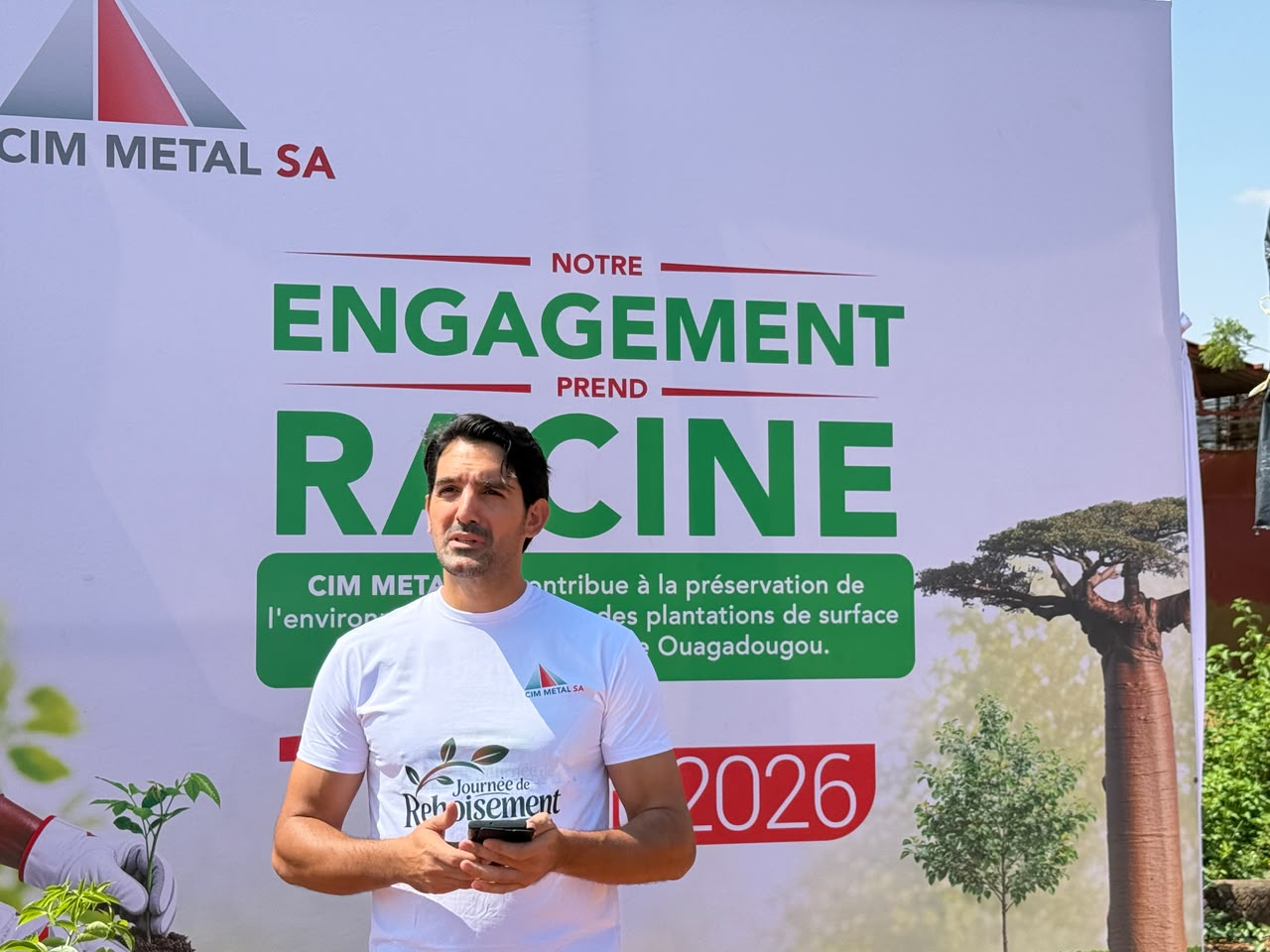
Cette dimension sociale et économique occupe une place importante dans le projet. La parcelle attribuée à l'entreprise au sein du Jardin nutritif de Toudoubweogo doit ainsi progressivement accueillir des espèces à vocation nutritive et médicinale. Au-delà de la restauration du couvert végétal, l'objectif est de créer un espace pouvant bénéficier directement aux producteurs qui exploitent les terres maraîchères.
Pour CIM METAL SA, cette action constitue donc une manière d'associer protection de l'environnement et soutien aux communautés qui tirent leurs revenus des activités agricoles en milieu urbain.
Consciente que planter ne suffit pas à garantir la survie des arbres, l'entreprise entend assurer le suivi des plants mis en terre. Des visites mensuelles sont prévues afin de veiller à leur entretien et à leur croissance.
« On veut pouvoir être en mesure chaque mois de venir prendre soin de nos arbres pour qu'au fil des années, on puisse voir les résultats de ce qu'on fait », a indiqué le directeur général.
Ce sont au total 150 plants qui ont été mis en terre par CIM METAL SA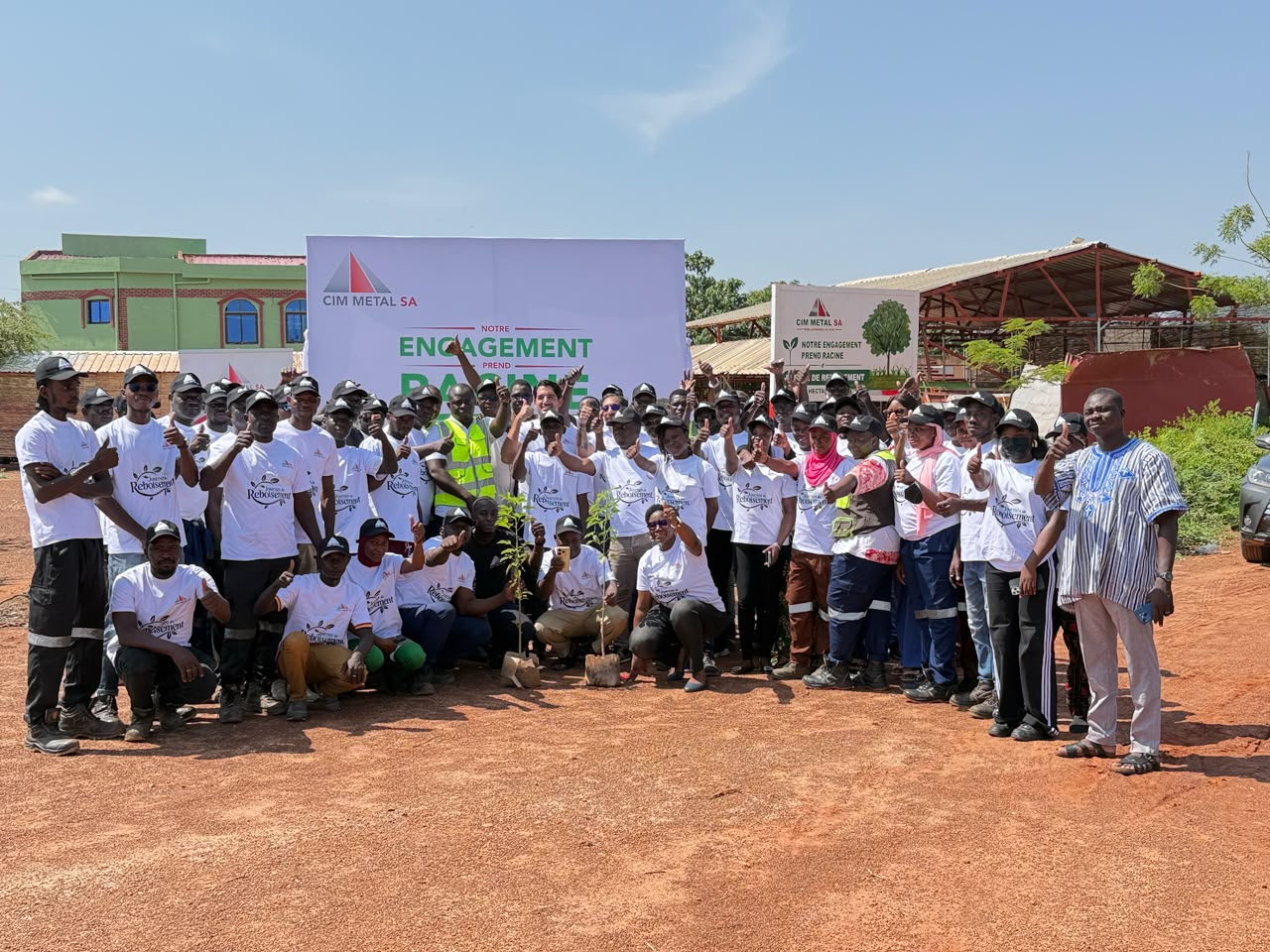
Cette volonté de suivi dans la durée est également mise en avant par le directeur des opérations, Serge Minh. Pour lui, les actions RSE constituent une composante importante de l'identité de CIM METAL SA et les 150 arbres plantés cette année devraient ainsi être suivis d'autres initiatives.
« Ce n'est pas notre première édition et cette année, on le fait sur la ceinture verte. L'année prochaine, ce sera ici ou ailleurs. C'est quelque chose de très formidable pour nous », a-t-il ajouté.
À travers cette initiative, CIM METAL SA souhaite également encourager les autres entreprises à renforcer leur engagement en faveur de l'environnement.
Pour Waël Baalbaki, les entreprises ne doivent pas se limiter à leur activité économique, mais contribuer également au développement de la société qui les entoure. « On n'est pas là juste pour prendre, on est là pour donner également. Il faut qu'on puisse faire les deux », a-t-il lancé.
Hanifa Koussoubé
Lefaso.net
Catégories: Afrique
En RDC, la colère des soignants, en première ligne face à Ebola, mais rarement payés
Depuis début juillet, les agents de santé confrontés à l’épidémie multiplient les grèves sporadiques pour réclamer le paiement de leur salaire. Le gouvernement a reconnu des détournements de fonds qui fragilisent la riposte contre la maladie à virus Ebola.
Catégories: Afrique
L'Union européenne indique considérer «avec intérêt» une éventuelle candidature d’adhésion de l'Arménie
L'Arménie se rapproche un peu plus de l'Union européenne. Le Premier ministre Nikol Pachinian a annoncé lundi 24 août que son pays pourrait bientôt déposer sa candidature d'adhésion aux 27. Une perspective saluée par Bruxelles, qui a indiqué ce mardi 25 août 2026 l'examiner « avec intérêt ».
Catégories: Union européenne
1,6 milliard de centimes volés sous la menace d’une arme : la Cour d’Oran alourdit les peines
La Cour d’Oran vient de durcir sensiblement le sort réservé à l’auteur d’un spectaculaire vol à main armée commis à Bir El Djir. Initialement condamné […]
L’article 1,6 milliard de centimes volés sous la menace d’une arme : la Cour d’Oran alourdit les peines est apparu en premier sur .
Catégories: Afrique
SAFRIMEX signe un contrat pour doter Lusambo de ses premières routes asphaltées
La ville de Lusambo, chef-lieu de la province du Sankuru, s'apprête à franchir une étape importante dans la modernisation de ses infrastructures. Un contrat a été signé vendredi 21 aout 2026 par le gouvernement provincial et l'entreprise SAFRIMEX pour l’asphaltage de 50 kilomètres de routes urbaines et la réhabilitation de l'aéroport de Lusambo.
Catégories: Afrique
Ethiopia submits official bid to host Afcon 2028
Ethiopia submits a bid to host the 2028 Africa Cup of Nations despite lacking enough stadiums to host a 24-team tournament.
Catégories: Africa
Sur les traces d'un fantôme : comment la BBC a retrouvé la trace du chef des services secrets d'Al-Assad, en fuite, après des mois de recherches
Un carnet a permis de retrouver Hussam Luka, alias « La Araña », qui était l'un des hommes les plus redoutés de Syrie à l'époque de Bachar al-Assad.
Catégories: Afrique
49 °C à l’ombre et rafales violentes : l’Algérie face à une météo extrême ces 26 et 27 août
Les bulletins d’alerte s’accumulent et dessinent un tableau météo particulièrement éprouvant pour la fin de semaine. Les prévisionnistes de l’Office national de la météorologie viennent […]
L’article 49 °C à l’ombre et rafales violentes : l’Algérie face à une météo extrême ces 26 et 27 août est apparu en premier sur .
Catégories: Afrique
Présidentielle 2027 : tiraillés entre Raphaël Glucksmann et Jean-Luc Mélenchon, les Verts au bord de l’implosion
RÉCIT - Les Écologistes de Marine Tondelier sont pris en étau entre les partisans d’une alliance avec la social-démocratie, emmenés par Yannick Jadot, et ceux qui défendent un rapprochement avec les Insoumis, comme Sandrine Rousseau.
Catégories: France
Pages



© 2012-2018 Europa Varietas Foundation © 2015-2018 Europa Varietas Association
www.europavarietas.org | info(@)europavarietas(dot)org | Switzerland




We are looking for sponsors for the English translation of these books, please contact turkeandras(at)gmail(dot)com