
Vous êtes ici
Agrégateur de flux
Press release - Sustainability reporting and due diligence: simpler rules for fewer companies
The new draft rules would reduce the required amount of sustainability reporting and simplify due diligence requirements for companies.
Committee on Legal Affairs
Source : © European Union, 2025 - EP
Committee on Legal Affairs
Source : © European Union, 2025 - EP
Catégories: European Union
Vidéo d'une réunion d'une commission - Lundi 13 octobre 2025 - 13:00 - Sous-commission "Droits de l'homme"
Durée de la vidéo : 150'
Clause de non-responsabilité : L'interprétation des débats facilite la communication mais ne constitue en aucun cas un enregistrement authentifié des débats. Seuls le discours original ou la traduction écrite révisée du discours original peuvent être considérés authentiques.
Source : © Union européenne, 2025 - PE
Clause de non-responsabilité : L'interprétation des débats facilite la communication mais ne constitue en aucun cas un enregistrement authentifié des débats. Seuls le discours original ou la traduction écrite révisée du discours original peuvent être considérés authentiques.
Source : © Union européenne, 2025 - PE
Catégories: Union européenne
A-10 Returns from CENTCOM Deployment with UAS Kill Markings
An A-10C was spotted with two Shahed-type UAS shapes painted on the nose while returning to its home base. An A-10C Thunderbolt II of the U.S. Air Force was spotted with two interesting kill markings while returning home from its latest deployment in the U.S. CENTCOM (Central Command) AOR (Area of Responsibility). In fact, the […]
Catégories: Defence`s Feeds
Press release - MEPs set out their red lines for air passenger rights changes
To help air passengers, MEPs suggest maintaining the current right to compensation after a three-hour delay, plus unlocking new rights on free children’s seats and cabin luggage.
Committee on Transport and Tourism
Source : © European Union, 2025 - EP
Committee on Transport and Tourism
Source : © European Union, 2025 - EP
Catégories: European Union
Press release - MEPs set out their red lines for air passenger rights changes
To help air passengers, MEPs suggest maintaining the current right to compensation after a three-hour delay, plus unlocking new rights on free children’s seats and cabin luggage.
Committee on Transport and Tourism
Source : © European Union, 2025 - EP
Committee on Transport and Tourism
Source : © European Union, 2025 - EP
Catégories: European Union
Nach den Krawallen von Bern: vier Vorschläge für Gesetzesverschärfungen – und wie viel sie bringen würden
Enorme Sachschäden, achtzehn verletzte Polizisten, Unsummen für den Polizeieinsatz: Nach der Gewaltorgie von Bern anlässlich der unbewilligten Palästina-Demo diskutiert die Politik, wie man Krawallanten härter anpacken kann.
Catégories: Swiss News
Is Reconciling Cambodia and Thailand Possible?
A conversation with veteran rights advocate Phil Robertson.
Catégories: Diplomacy & Crisis News
Trump Takes a Victory Lap in Israel
The U.S. president addressed the Knesset after Hamas released the last remaining living hostages.
Catégories: Diplomacy & Crisis News, Europäische Union
Some of Australia’s ‘ISIS Brides’ Have Returned
Australian nationals should have been repatriated from Syria long ago – but that doesn’t mean these women aren’t a threat.
Catégories: Diplomacy & Crisis News
Opinion on the proposal for a regulation of the European Parliament and of the Council on information security in the institutions, bodies, offices and agencies of the Union - PE778.158v02-00
Opinion on the proposal for a regulation of the European Parliament and of the Council on information security in the institutions, bodies, offices and agencies of the Union
Committee on Foreign Affairs
David McAllister
Source : © European Union, 2025 - EP
Committee on Foreign Affairs
David McAllister
Source : © European Union, 2025 - EP
Catégories: European Union
Les services secrets allemands alertent sur le risque d'un conflit militaire direct avec la Russie
Les services secrets allemands (BND) ont mis en garde, ce lundi 13 octobre, contre la Russie, prête, selon eux, à « entrer en conflit militaire direct avec l'Otan », une menace qui pourrait se concrétiser avant 2029.
Catégories: Union européenne
How the Gaza War Changed Arab Elites’ Perception of China
The Gaza War has shattered Arab illusions about China as a normative power and recast it as a transactional actor.
Catégories: Diplomacy & Crisis News
SWP-WebMonitor Cybersicherheit und Digitalpolitik Nr. 5/2025
Catégories: Diplomacy & Defense Think Tank News
Une trentaine d'individus arrêtés, des biens et de la drogue saisis
Une opération de la police républicaine du 6 au 12 octobre 2025 a permis d'interpeller 31 individus, la saisie de drogue et la destruction de plusieurs ghettos dans le département de l'Atlantique.
La police renforce la sécurité dans le département de l'Atlantique à travers des opérations sur le terrain. Les éléments du Commissariat d'arrondissement de Godomey ont arrêté 31 individus dont 15 dans les ghettos ciblés selon Peace Fm. Les autres ont été interpellés pour vols de batteries de camions, de marmites, de fer, de compteurs d'eau de la Soneb, ainsi que de motos, télévisions et téléphones portables.
Des boulettes de chanvre indien, des comprimés et autres produits psychotropes ont été saisis. Cinq motocyclettes dépecées, deux motos volées, un poste téléviseur, trois batteries de véhicules, quatorze ventilateurs, deux woofers, deux baffles et deux roues de véhicules ont été récupérés. Huit motos ont également été saisies pour défaut de pièces.
Un bouvier et un faux marabout ont été arrêtés dans une affaire d'escroquerie. Le berger aurait vendu 58 bœufs appartenant à son employeur, pour 14 millions de FCFA qu'il a ensuite remis au faux marabout. Ce dernier prétendait pouvoir multiplier la somme jusqu'à 800 millions de FCFA.
A.A.A
Catégories: Afrique
North Korea Hosts Military Parade With China, Russia Looking On
Commemorating the 80th anniversary of the Workers’ Party of Korea, North Korea showcased its newest ICBM.
Catégories: Diplomacy & Crisis News
State of Play: EU support to Ukraine
Written by Tim Peters and Jakub Przetacznik with Ana Luisa Melo Almeida.
Updated on 07.10.2025
In response to Russia’s full-scale war of aggression against Ukraine, which started in February 2022, the European Union (EU) and its Member States have provided unprecedented financial, military and humanitarian support to Ukraine. According to European Commission figures, Team Europe, consisting of the EU and its Member States, has made available around €173.5 billion in support to Ukraine. This support encompasses macro-financial assistance, financial support through the Ukraine Facility, humanitarian aid and military assistance from Member States and the European Peace Facility, as well as support to Ukrainian refugees in the EU.
The overall support for Ukraine provided by Team Europe is now larger than the support provided by the United States, except in terms of military support allocation, even though Team Europe has provided 83 % of the tanks and 61 % of the air defence systems given to Ukraine since the start of the full-scale war.
The disbursement of EU payments is conditional on Ukraine implementing the Ukraine Plan – an ambitious reform and investment plan drafted by Ukraine’s government and endorsed by the EU. The G7 have agreed upon a further €45 billion loan, with €18.1 billion of the whole amount to be financed by the EU. For that purpose, a Ukraine Loan Cooperation Mechanism has been established, which uses extraordinary revenues originating from Russian sovereign assets immobilised in the G7 member states to repay loans and associated interest costs. The European Parliament has repeatedly called for a full confiscation of immobilised Russian sovereign assets with the objective of making Russia pay for the destruction it has brought on Ukraine. The European Commission has proposed to use those assets for a ‘reparation loan’ to Ukraine.
Read the complete briefing on ‘State of Play: EU support to Ukraine‘ in the Think Tank pages of the European Parliament.
Team Europe financial, humanitarian and military support for Ukraine, February 2022 to September 2025, in € billion Bilateral and EU budget contributions to Ukraine by EU and non-EU Member States, 2022-2025, in € billion and as a % of GNI
Catégories: European Union
Three Reckonings the Gaza Deal Will Force
After the war ends, Israelis face tough questions about relations with their leaders, the Palestinians, and the United States.
Catégories: Diplomacy & Crisis News
‘No Solution Will Work If the Institutions Responsible for Abuses Remain in Charge of Implementing It’
By CIVICUS
Oct 13 2025 (IPS)
CIVICUS discusses enforced disappearances in Mexico with a member of the International Network of Associations of Missing Persons.
The crisis of disappearances in Mexico has reached alarming proportions, with over 52,000 unidentified bodies in morgues and mass graves. On 1 July, the Mexican Congress approved controversial changes to the General Law on Disappearances, which promise to modernise the search process through a national biometric system, but which human rights organisations and victims’ groups claim could establish an unprecedented system of mass surveillance.
What are the main changes and how will they affect searches?
The changes seek to strengthen the mechanisms for searching for, locating and identifying missing persons. The main innovations include the creation of a National Investigation File Database and a Single Identity Platform that will integrate various databases. The revised law also provides for the strengthening of the Unique Population Registry Code (CURP) through the incorporation of biometric data such as iris scans, photographs and fingerprints.
The law obliges authorities and individuals to provide information useful for search processes and incorporates new institutions such as the National Guard and the Ministry of Security into the National Search System. It also increases the penalties for the crime of enforced disappearance.
The new system aims to ensure faster and more efficient searches through technology and inter-institutional coordination. It also provides for the use of satellite imagery and advanced identification technologies, under the coordination of the National Search System.
What risks are posed by the authorities’ access to biometric data?
There are serious concerns that the changes give security and justice institutions, including prosecutors’ offices, the National Guard and the National Intelligence Centre, immediate and unrestricted access to public and private databases, including those containing biometric information. The official argument is that this will speed up searches.
However, civil society warns that the Single Identity Platform and the biometric CURP could become instruments of mass surveillance. It is feared the authorities could misuse the information and, instead of helping to find missing persons, use it to help control the population, putting the rights to privacy and security at risk.
How have victims’ groups reacted?
Victims’ collectives have rejected the reform as opaque and rushed. They complain that, although round table discussions were organised, these were merely symbolic and their proposals were not taken into account.
The families of missing persons argue the changes focus on technological solutions that don’t address the underlying structural problems of corruption, cronyism, organised crime and impunity. But no technological solution will work as long as the institutions responsible for abuses and cover-ups remain in charge of implementing it.
This law runs the risk of repeating the mistakes of the 2017 General Law on Enforced Disappearances. That was an important step forward, as it criminalised the offence, created a national search system and sought to guarantee the participation of families in locating and identifying missing persons. Unfortunately, it was never properly implemented. There are fears this new law, in the absence of effective enforcement mechanisms, will only deepen frustration and perpetuate impunity.
What alternatives do victims’ groups propose?
Their demands go beyond legislative changes: they demand truth and justice through thorough investigations, the prosecution of those responsible in state institutions and organised crime groups and an effective search in the field, with the coordination and active participation of victims’ groups.
The collectives also stress the urgency of identifying the over 52,000 unnamed people in morgues and mass graves, and are calling for the creation of an Extraordinary Forensic Identification Mechanism. And they demand real protection for those searching for their relatives, who continue to face threats and attacks.
Above all, they demand an end to impunity through the dismantling of the networks of corruption and collusion between authorities and organised crime. As one local activist summed it up, at the end of the day, without a genuine National Plan for Missing Persons, none of this will work. Each state also needs its own plan. Otherwise, we will remain in the same situation: without results, without reports and without answers about our disappeared.
SEE ALSO
Mexico’s judicial elections consolidate ruling party power CIVICUS Lens 23.Jun.2025
The disappeared: Mexico’s industrial-scale human rights crisis CIVICUS Lens 22.Apr.2025
‘The discovery of the torture centre exposed the state’s complicity with organised crime’ CIVICUS Lens | Interview with Anna Karolina Chimiak 09.Apr.2025
Follow @IPSNewsUNBureau
!function(d,s,id){var js,fjs=d.getElementsByTagName(s)[0],p=/^http:/.test(d.location)?'http':'https';if(!d.getElementById(id)){js=d.createElement(s);js.id=id;js.src=p+'://platform.twitter.com/widgets.js';fjs.parentNode.insertBefore(js,fjs);}}(document, 'script', 'twitter-wjs');
Catégories: Africa
Burkina/El'bouge : Le sport au service de la santé féminine et de la lutte contre le cancer du sein
Placée sous le thème « Toutes en forme, toutes concernées », la première édition de El'bouge s'est tenue le samedi 11 octobre 2025 à Ouagadougou. Cette initiative, dédiée à la santé de la femme et à la sensibilisation sur le cancer du sein, a combiné sport, dépistage et échanges autour de la prévention. Une première édition qui a tenu toutes ses promesses.
Dès les premières heures de la matinée, les participantes ont répondu présentes à l'appel du mouvement El'bouge, qui vise à encourager les femmes à adopter une vie active pour préserver leur santé. Au programme : un cours de bodybalance pour bien démarrer la journée, suivi d'une séance gratuite de dépistage du cancer du sein.
Dans une ambiance conviviale et motivante, les participantes ont également pu tenter leur chance à un jeu tombola, avec, à la clé, des abonnements à la salle de sport Kosso Cross Fit et des tickets pour le show du “King of Squat”, symbole de vitalité et de dépassement de soi.
Béla Ouédraogo a rappelé, dans son allocution, que la beauté et la force d'une femme résident dans sa résilience.
Au-delà de l'effort physique, cette première édition a été marquée par une séance de sensibilisation riche en échanges. Un panel, tenu autour du thème « Bouger pour la vie : rôle du sport et de la prévention dans la lutte contre le cancer du sein », a réuni trois gynécologues, la présidente d'une association de lutte contre le cancer et un coach sportif.
Les discussions ont permis de mettre en lumière le lien étroit entre activité physique et prévention. Les spécialistes ont rappelé que la pratique régulière du sport réduit significativement les risques de développer un cancer du sein et améliore la qualité de vie des patientes en traitement ou en rémission.
Béla Ouédraogo, en pleine séance de bodybalance
Attentives et curieuses, les participantes n'ont pas manqué de poser des questions sur les signes précoces de la maladie, les méthodes de dépistage ou encore les habitudes de vie à adopter.
Une sensibilisation saluée pour sa clarté et sa pertinence.
Après cette phase d'échanges et d'apprentissage, place à la dépense énergétique collective. Les organisateurs ont invité les participantes à clôturer cette première édition par des sessions intenses de bodycombat et de Zumba, synonymes de joie, d'énergie et de libération.
Les participants ont profité de l'occasion pour soumettre leur question aux panélistes
Dans une atmosphère de fête et de solidarité, femmes et hommes ont bougé, dansé et transpiré ensemble, envoyant un message fort : « Le sport, c'est la vie. »
Béla Ouédraogo, l'une des initiatrices de l'événement, a rappelé avec émotion que « ce qui rend belle une femme, ce n'est pas son visage, son corps ou ses formes, mais sa force intérieure et sa capacité à se relever. » Elle a souligné que la lutte contre le cancer du sein est l'affaire de toutes et de tous, car « la santé d'une femme, c'est la santé d'une famille, d'une communauté, d'un pays. »
L'événement s'est achevé sur des mots d'encouragement et de reconnaissance adressés aux partenaires, notamment Josiane Bambara, directrice générale de Tangui Immobilier et marraine de l'édition ; Hamed Kadiogo, directeur général d'Emprint Forse School ; et Kosso Sangaré, promoteur de la salle Kosso Cross Fit, sans oublier l'ensemble des soutiens techniques et bénévoles.
Vue partielle des participants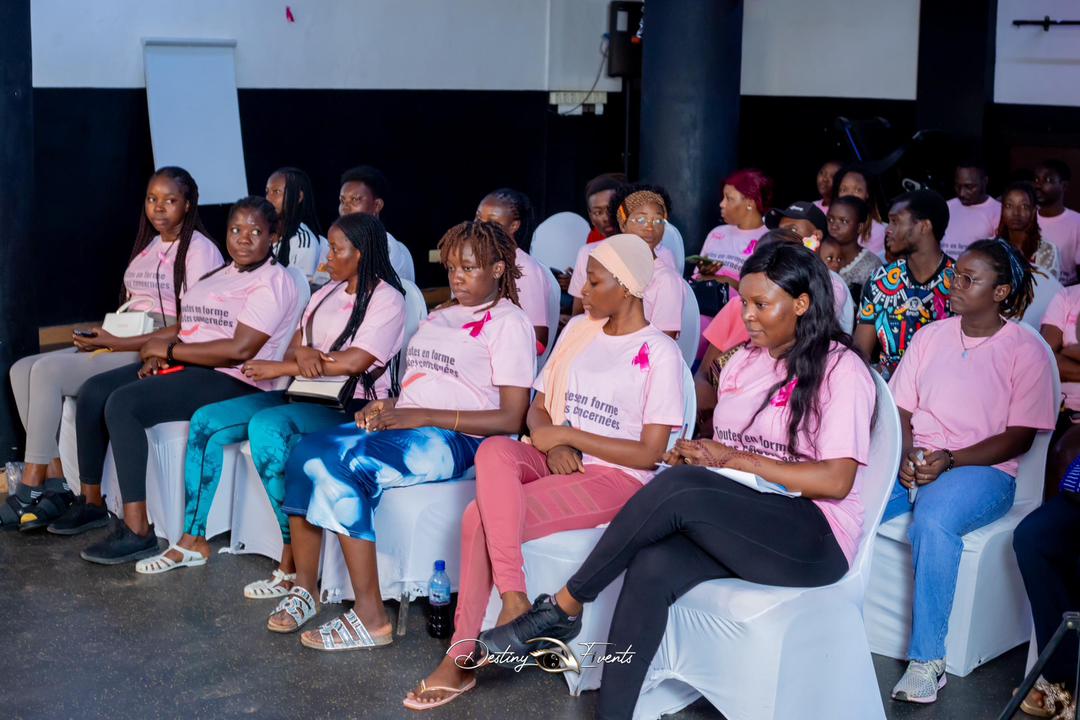
Cette première édition de El'bouge aura su allier sport, sensibilisation et solidarité, tout en rappelant l'importance du mouvement dans la prévention du cancer du sein.
Face à l'enthousiasme suscité et à la pertinence du message, les initiateurs envisagent déjà une seconde édition encore plus inclusive et participative, pour que chaque femme puisse continuer à bouger, prévenir et vivre pleinement.
Anita Mireille Zongo (stagiaire)
Lefaso.net
Catégories: Afrique
Pages



© 2012-2018 Europa Varietas Foundation © 2015-2018 Europa Varietas Association
www.europavarietas.org | info(@)europavarietas(dot)org | Switzerland




We are looking for sponsors for the English translation of these books, please contact turkeandras(at)gmail(dot)com