
Vous êtes ici
Agrégateur de flux
Les usagers des bus Transco dénoncent la résurgence de la pratique du « demi-terrain » à Kinshasa
Les usagers des bus de la société de transport public Transco dénoncent le retour de la pratique du « demi-terrain » sur plusieurs axes de Kinshasa depuis le début du mois d’octobre, selon des témoignages recueillis par Radio Okapi lundi 12 octobre.
Catégories: Afrique
Loto Fortune : Les résultats du tirage 11 H
LES RÉSULTATS LOTO FORTUNE SONT LÀ !
TIRAGE N°164/26
Mardi 13 Octobre 2026 (11H)
48 • 90 • 89 • 78 • 09
Félicitations aux heureux gagnants !
Pas encore gagné ? Gardez le sourire !
Rendez-vous au prochain tirage de 14H pour une nouvelle chance.
Jouez dans les centres de jeux ou en ligne : Tapez 590# ou lnbloto.bj
Jouez avec modération et responsabilité. Le jeu doit rester un plaisir.
A TOI DE JOUER #XòGbɔnAlɔkpaVo
#LNBSA #JeuResponsable #LaChanceAvecModération
Catégories: Afrique
La MONUSCO remet 16 motos aux autorités locales de Beni pour renforcer la sécurité de proximité
La MONUSCO a remis, lundi 12 octobre, 16 motos aux autorités administratives locales de la région de Beni, au Nord-Kivu, afin de faciliter leurs déplacements sur le terrain et de renforcer la collaboration entre les autorités et la population en matière de sécurité.
Catégories: Afrique
Les enfants abîmés : la France face à la crise des violences sexuelles contre les enfants
Une "loi intégrale" entend renforcer la prévention, la justice et l'accompagnement des victimes. Mais sur le terrain, associations, avocats et professionnels de santé dénoncent encore de nombreuses failles.
Catégories: France
Indian IT Companies Are in Trump’s Crosshairs
Top companies like Infosys, Wipro, and Cognizant will not be able to apply for green cards for H-1B visa workers.
Catégories: Diplomacy & Crisis News
Salifou Mouhawya décroche l'argent aux World Skate Games 2026
L'athlète béninois Salifou Mouhawya a remporté la médaille d'argent en Free Jump aux World Skate Games 2026, disputés à Asunción, au Paraguay. Il a réalisé un saut de 1,65 mètre, terminant deuxième de l'épreuve le 8 octobre 2026.
Le Bénin compte désormais un vice-champion du monde en roller sports. Salifou Mouhawya a décroché la médaille d'argent en Free Jump lors des World Skate Games 2026, organisés à Asunción, au Paraguay. Selon les informations publiées par la Fédération béninoise de Roller Sports, l'athlète a franchi une hauteur de 1,65 mètre.
La médaille d'or est revenue à l'Italien Gianmarco Savi, qui a réalisé la même performance. Le Sénégalais Ousseynou Diene a terminé troisième, tandis que le tenant du titre, Dame Fall, s'est classé quatrième.
Une progression sur la scène internationale
Cette deuxième place marque une nouvelle étape dans le parcours de Salifou Mouhawya. En 2025, il avait terminé quatrième au championnat du monde d'Inline Freestyle à Singapour, avec un saut de 1,60 mètre.
En avril 2026, le sportif béninois a remporté la première édition de l'International Challenge Cotonou Skating (I2CS), avec une performance annoncée de 1,68 mètre. En juillet de la même année, il a décroché le bronze à la Hero Battle Cup de Milan, une étape de la Coupe du monde d'Inline Freestyle, avec un saut de 1,65 mètre.
Avec cette médaille d'argent obtenue au Paraguay, Salifou Mouhawya confirme sa présence parmi les compétiteurs de haut niveau de sa discipline.
Catégories: Afrique
Voici les tarifs de passage au poste de péage de Kétou
Le poste de péage de Kétou, situé sur la Route nationale n°26 (RN26), axe Kétou-Idigny, sera mis en service le 19 octobre 2026. Les tarifs varient de 1 000 à 18 000 FCFA selon le type de véhicule et le nombre d'essieux.
Dans un communiqué en date du 7 octobre 2026, la Direction générale de la SIRAT SA a annoncé la mise en exploitation du poste de péage de Kétou. Les droits de passage sont fixés conformément à l'arrêté du 2 juillet 2026 portant sur les modalités de perception au poste de péage de Kétou.
Pour les véhicules légers d'une hauteur inférieure à 2,55 mètres, le tarif est fixé à 1 000 FCFA par passage. Pour les poids lourds et les véhicules d'une hauteur supérieure ou égale à 2,55 mètres, les tarifs varient selon le nombre d'essieux.
Voici les tarifs applicables
– Véhicule poids lourd à deux essieux, vide ou chargé : 2 000 FCFA par passage ;
– Véhicule poids lourd à trois essieux, vide ou chargé : 4 000 FCFA par passage ;
– Véhicule poids lourd à quatre essieux, vide ou chargé : 6 000 FCFA par passage ;
– Véhicule poids lourd à cinq essieux, vide ou chargé : 8 000 FCFA par passage ;
– Véhicule poids lourd à six essieux, vide ou chargé : 10 000 FCFA par passage ;
– Véhicule poids lourd à sept essieux et plus, vide ou chargé : 18 000 FCFA par passage.
La SIRAT SA invite les usagers à respecter les consignes des agents du poste de péage afin de faciliter la circulation et le bon déroulement des opérations.
Catégories: Afrique
Le parti ADDCONGO dénonce la lenteur de l’enquête sur la mort de son militant Manassé Lomboto
Près d’un mois après la mort de Manassé Lomboto, cadre du parti Action pour la Démocratie et le Développement au Congo, ADDCONGO, dirigé par son autorité morale, Prince Epenge, cette formation politique a dénoncé, lundi 12 octobre, l’absence d’avancées dans l’enquête annoncée par le ministère de la Justice.
Catégories: Afrique
Press release - EU Parliament hosts conference with Speakers from the Gulf Cooperation Council
On Friday, Parliament will host Gulf Cooperation Council Speakers and representatives to discuss strengthening strategic ties and parliamentary cooperation.
Source : © European Union, 2026 - EP
Source : © European Union, 2026 - EP
Catégories: Union européenne
Press release - EU Parliament hosts conference with Speakers from the Gulf Cooperation Council
On Friday, Parliament will host Gulf Cooperation Council Speakers and representatives to discuss strengthening strategic ties and parliamentary cooperation.
Source : © European Union, 2026 - EP
Source : © European Union, 2026 - EP
Catégories: Europäische Union
Press release - EU Parliament hosts conference with Speakers from the Gulf Cooperation Council
On Friday, Parliament will host Gulf Cooperation Council Speakers and representatives to discuss strengthening strategic ties and parliamentary cooperation.
Source : © European Union, 2026 - EP
Source : © European Union, 2026 - EP
Catégories: Európai Unió : hírek magyarul
Press release - EU Parliament hosts conference with Speakers from the Gulf Cooperation Council
On Friday, Parliament will host Gulf Cooperation Council Speakers and representatives to discuss strengthening strategic ties and parliamentary cooperation.
Source : © European Union, 2026 - EP
Source : © European Union, 2026 - EP
Catégories: European Union
Press release - EU Parliament hosts conference with Speakers from the Gulf Cooperation Council
On Friday, Parliament will host Gulf Cooperation Council Speakers and representatives to discuss strengthening strategic ties and parliamentary cooperation.
Source : © European Union, 2026 - EP
Source : © European Union, 2026 - EP
Catégories: European Union
La Hongrie adopte une première loi supprimant des dispositions anti-LGBTQ+ de l'ère Orban
Les députés hongrois ont voté, mardi 13 octobre, la suppression des dispositions anti-LGBTQ+ contenues dans une loi de « protection de l'enfance » de 2021, adoptée par l'ancien dirigeant nationaliste Viktor Orban. Cette loi avait été vivement condamnée par l'Union européenne.
Catégories: Union européenne
AMENDMENTS 1 - 754 - Draft report Implementation of the common security and defence policy – annual report 2026 - PE796.331v01-00
AMENDMENTS 1 - 754 - Draft report Implementation of the common security and defence policy – annual report 2026
Committee on Security and Defence
Nathalie Loiseau
Source : © European Union, 2026 - EP
Committee on Security and Defence
Nathalie Loiseau
Source : © European Union, 2026 - EP
Catégories: Europäische Union
AMENDMENTS 1 - 754 - Draft report Implementation of the common security and defence policy – annual report 2026 - PE796.331v01-00
AMENDMENTS 1 - 754 - Draft report Implementation of the common security and defence policy – annual report 2026
Committee on Security and Defence
Nathalie Loiseau
Source : © European Union, 2026 - EP
Committee on Security and Defence
Nathalie Loiseau
Source : © European Union, 2026 - EP
Catégories: Defence`s Feeds, European Union
Pakistan Imposes Emergency and Governor’s Rule in Khyber Pakhtunkhwa
By invoking Articles 232 and 234, the federal government has essentially neutralized PTI’s institutional presence in the province.
Catégories: Diplomacy & Crisis News
The EU and the Internal Defence Market: What Are the National Perspectives?
À télécharger
Since the European Commission announced its intention to revive the project of an internal market for defence, Member States have been on alert. The issue is particularly sensitive. Using the EU budget to strengthen the European Defence Technological and Industrial Base (EDTIB) is one thing, regulating defence markets — and public procurement in particular — is quite another. Some countries are supportive, others remain sceptical, while others are still weighing up what position to take.
The idea of an internal market for defence does, after all, raise major issues. This is no longer simply a matter of supporting industry: it touches on the very exercise of national sovereignty, as governments decide which weapons and military equipment their security will ultimately depend on.
These questions have therefore been the subject of intense debate within the EU institutions for several months. In Brussels, even the terminology remains contested: a Defence Single Market? An Internal Market for Defence? A Defence Equipment Market?
But what is the view from European capitals? How are these issues perceived at national level? And what positions do the main Member States intend to defend in Brussels? To answer these questions, the ARES Group asked nine of its researchers, based in nine EU capitals, to examine the debate from their respective national perspectives. The picture that emerges is a nuanced one. National positions certainly diverge, but they are far from set in stone, and several areas of convergence are beginning to emerge. More importantly, some of these disagreements appear to stem from misunderstandings that could be clarified, potentially opening the way to compromise.
REMINDER: THE CHALLENGE FACING THE INTERNAL DEFENCE MARKET Analysing national perspectives DENMARK FRANCE GERMANY ITALY LITHUANIA POLAND SPAIN SWEDEN THE NETHERLANDS Conclusion CONCLUSION: DIVERGENCES ET CONVERGENCESL’article The EU and the Internal Defence Market: What Are the National Perspectives? est apparu en premier sur IRIS.
Catégories: Diplomacy & Defense Think Tank News
DIGITAL 08 H : le verdict
DIGITAL 08H : Avez-vous tenté votre chance ?
Le tirage DIGITAL 08H N°262 a livré son verdict !
Mardi 13 Octobre 2026
Avez-vous joué ?
Avez-vous misé sur vos numéros porte-bonheur ?
RÉSULTAT : 82 • 54 • 47 • 57 • 26
Félicitations aux heureux gagnants !
Pas encore cette fois ? Gardez le sourire.
Rendez-vous à 11H pour le prochain tirage.
Jouez dans les points de vente ou : Tapez *590# ou rendez-vous sur lnbloto.bj
Jouez avec modération et responsabilité. Le jeu doit rester un plaisir.
A TOI DE JOUER #XòGbɔnAlɔkpaVo
#LNBSA #JeuResponsable #LaChanceAvecModération
LA CROIX DU JOUR

Catégories: Afrique
From Structured Networking to Meaningful Conversations
Held as part of the 2026 UACES Doctoral Training Academy, the Small-Group Networking Session provided PhD students and Early Career Researchers with an opportunity to engage directly with experienced researchers and professionals working across different areas of academic and professional life. The session was designed to complement the broader professional development programme by creating a more informal and interactive space for participants to exchange experiences, ask questions and develop new connections.
The session brought together 12 experts with experience in areas including academic publishing, leadership, diversity and inclusion, and different early career researcher profiles and pathways. Rather than following a traditional panel format, the activity was organised around small rotating groups. Participants moved between the different experts throughout the session, allowing them to engage with a range of perspectives and have more focused conversations in a smaller setting.
The four areas were chosen by asking a fairly simple question: what do Early Career Researchers need to know to navigate academia today? Leadership in Academia focused on the different forms leadership can take at an early career stage: from organising projects and events to taking on responsibilities within your university department, and ultimately contributing to the wider academic community. Career Development focused on the uncertain, and often difficult, transition that comes after the PhD stage. We brought together different experiences and pathways from people working both within and beyond academia, to show that there is no single route forward and that life after the PhD does not have to follow the cookie-cutter transition straight into academia. Publishing gave participants the opportunity to have one-to-one time with our editors and look behind the curtain of a process that can sometimes feel opaque. We gave them space to talk openly about ideas, peer review, rejections, and finding a journal where their work might feel right at home. Equality, Diversity, Inclusion & Community focused on the environments in which academic careers actually unfold, and on what it means to build spaces where people feel welcomed, supported, and able to participate fully in academic life.
This format encouraged participants to take an active role in shaping the discussions. They were able to ask questions about the experts’ professional trajectories, experiences, and career decisions, while also discussing some of the challenges and opportunities associated with developing a career in and beyond academia. The conversations provided practical insights into different career paths, as well as an opportunity for participants to learn from experiences that may not always be visible through more formal conferences or training sessions.
An important outcome of the activity was the opportunity for participants to expand their professional networks. The small-group format made it easier to establish direct contacts with experts and with other participants attending the session. Beyond exchanging advice and experiences, the activity therefore helped create connections that participants could potentially continue developing during the UACES Annual Conference and thereafter. The diversity of the experts’ backgrounds, who hailed from institutions across Europe, also meant that participants were exposed to different approaches to research careers, leadership, publishing, and creating more inclusive academic environments.
Feedback from participants was very positive. The informal nature of the activity was particularly valuable in creating an open atmosphere in which participants felt comfortable asking questions and discussing their own experiences and concerns. The experts also contributed to this atmosphere through their willingness to share personal experiences and engage openly with participants.
The setting contributed significantly to the success of the session. As the conversations developed, most of the groups moved to the courtyard of the Hollar Building at Charles University. This provided a relaxed and pleasant environment for continued discussion and networking, and reinforced the informal character of the activity. The courtyard ultimately became a natural space for participants and experts to continue their conversations beyond the initial structure of the rotations. For us, this was probably the best sign that our format had worked: once the structure and the rigid format of the rotations had faded into the background, people simply kept the conversations going. What started as a planned, and very structured, networking activity gradually evolved into something more natural, with conversations going beyond not only the allotted time, but also the event itself, continuing throughout the Annual Conference and possibly even beyond that.
Overall, the session achieved its main objectives of facilitating peer learning, professional exchange and networking. By combining structured rotations with informal conversation, it created space for participants to gain practical insights, make new contacts, and reflect on their own potential career paths. The positive feedback and continued conversations in the courtyard demonstrated the value of creating informal, accessible spaces for connection within the wider UACES Doctoral Training Academy. We would also like to extend our sincere thanks to all the experts who participated in the session and generously shared their time, experiences, and insights with our participants. Their openness and willingness to engage in conversation were an essential part of what made the session so valuable and helped create the welcoming and informal atmosphere that allowed the discussions to continue well beyond the planned format.
The post From Structured Networking to Meaningful Conversations appeared first on Ideas on Europe.
Catégories: European Union
Pages

© 2012-2018 Europa Varietas Foundation © 2015-2018 Europa Varietas Association
www.europavarietas.org | info(@)europavarietas(dot)org | Switzerland
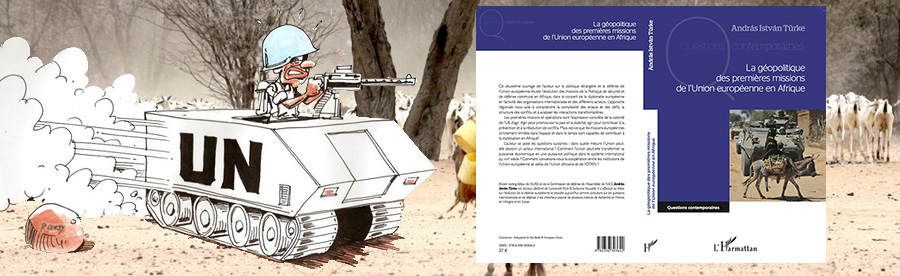
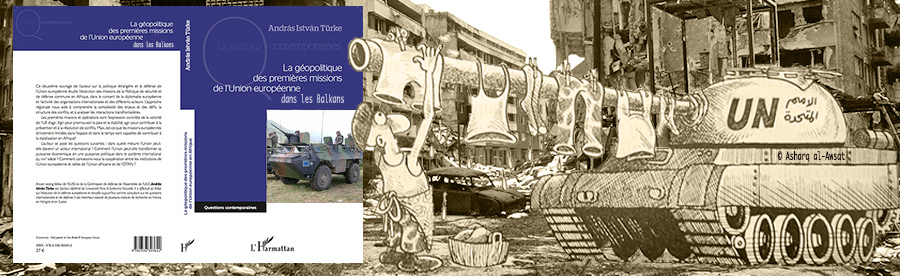
We are looking for sponsors for the English translation of these books, please contact turkeandras(at)gmail(dot)com