
You are here
Feed aggregator
Press release - Ukraine: MEPs welcome reform efforts amid ongoing war
MEPs are encouraged by the EU accession-related reforms carried out by Ukraine’s government, and insist Ukrainians should determine the conditions for peace with Russia.
Committee on Foreign Affairs
Source : © European Union, 2026 - EP
Committee on Foreign Affairs
Source : © European Union, 2026 - EP
Categories: Diplomacy & Defense Think Tank News, Europäische Union
Press release - Ukraine: MEPs welcome reform efforts amid ongoing war
MEPs are encouraged by the EU accession-related reforms carried out by Ukraine’s government, and insist Ukrainians should determine the conditions for peace with Russia.
Committee on Foreign Affairs
Source : © European Union, 2026 - EP
Committee on Foreign Affairs
Source : © European Union, 2026 - EP
Categories: European Union, France
Press release - Ukraine: MEPs welcome reform efforts amid ongoing war
MEPs are encouraged by the EU accession-related reforms carried out by Ukraine’s government, and insist Ukrainians should determine the conditions for peace with Russia.
Committee on Foreign Affairs
Source : © European Union, 2026 - EP
Committee on Foreign Affairs
Source : © European Union, 2026 - EP
Categories: European Union, France
Press release - Ukraine: MEPs welcome reform efforts amid ongoing war
MEPs are encouraged by the EU accession-related reforms carried out by Ukraine’s government, and insist Ukrainians should determine the conditions for peace with Russia.
Committee on Foreign Affairs
Source : © European Union, 2026 - EP
Committee on Foreign Affairs
Source : © European Union, 2026 - EP
Categories: Afrique, European Union
Dombrovskis: EU defence spending nowhere near €650bn projection
Most governments are not using the mechanism to its full extent
Categories: European Union, France
Ouagadougou : 150 batteries solaires et 60 régulateurs non conformes installés sur des équipements marchands saisis
Dans une publication faite sur sa page Facebook, la Police municipale annonce avoir initié une opération d'envergure de contrôle des installations énergétiques en panneaux solaires dans les marchés et yaars.
Cette opération, menée par la Direction de la Police des Services Marchands (DPSM) en collaboration avec l'Agence de développement économique et urbain (ADEU), fait suite aux nombreux cas d'incendie au sein des équipements marchands de la commune de Ouagadougou.
Elle a consisté en un contrôle inopiné sur le site du marché de 10 sis dans le quartier Hamdalaye à l'arrondissement 2 le mardi 2 juin 2026.
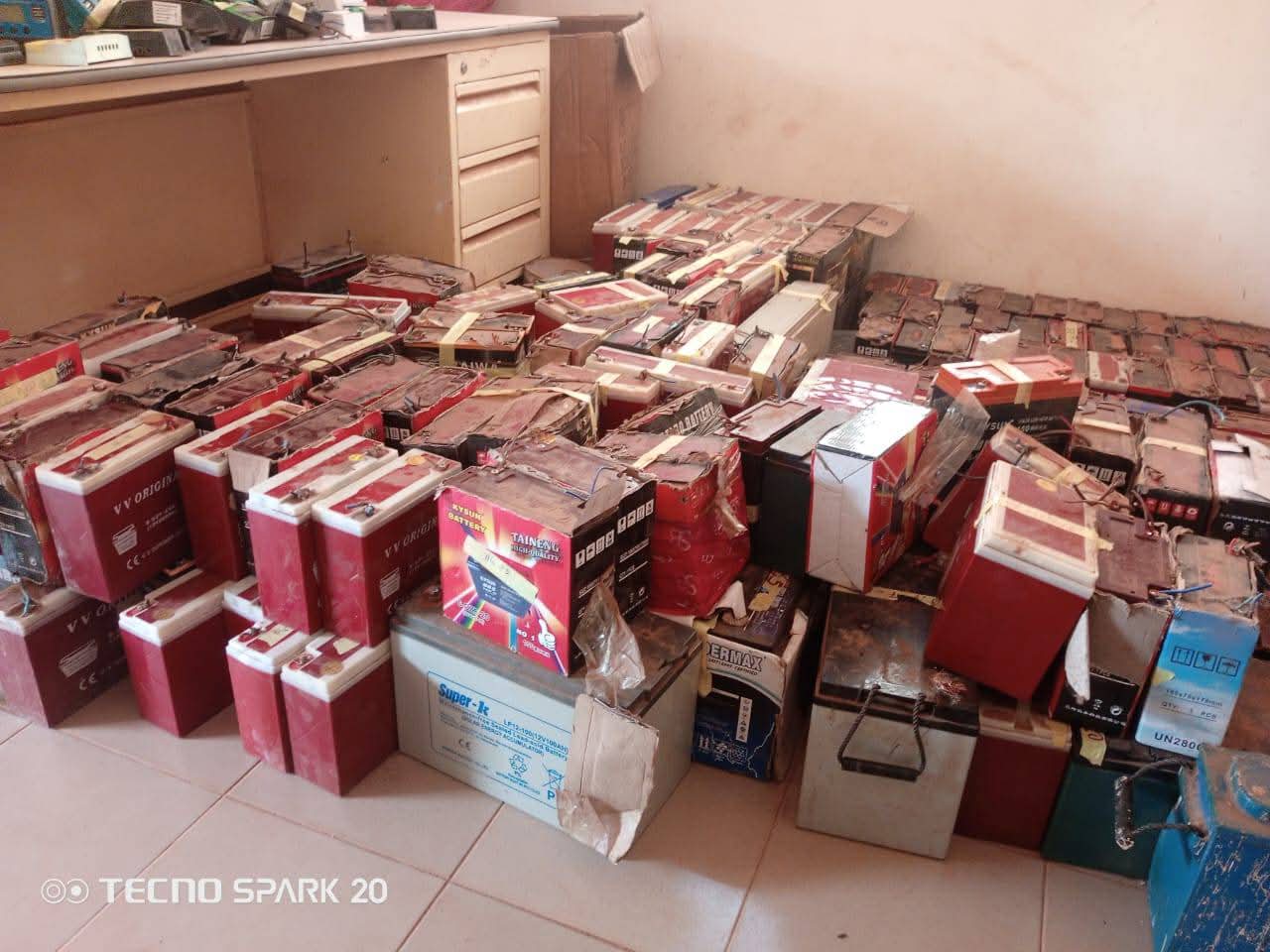
Les différentes installations et le matériel utilisé ont été vérifiés conformément aux normes établies par les services techniques de l'ADEU. Le contrôle a permis de notre que plusieurs installations n'étaient pas conformes aux normes indiquées. C'est ainsi qu'environ 150 batteries solaires et 60 régulateurs ont été saisis.
La Police Municipale invite les commerçants à respecter les normes prescrites afin de minimiser les risques d'incendie dans les marchés et yaars.
Lefaso.net
Source : Police Municipale
Categories: Afrique, Swiss News
Exit Polls Suggest Ruling Democratic Party’s Victory in Local Elections
Exit polls suggest the DP will win 11 of 16 regional posts, with Seoul and Busan producing the night’s most closely watched results.
Categories: Diplomacy & Crisis News, European Union
Nouveau classement MENA des réserves d’or : quelle place pour l’Algérie face aux fortunes du Golfe ?
83 milliards de dollars. C’est le pactole combiné en devises et en or qui propulse l’Algérie sur le devant de la scène financière de la […]
L’article Nouveau classement MENA des réserves d’or : quelle place pour l’Algérie face aux fortunes du Golfe ? est apparu en premier sur .
Categories: Afrique, Diplomacy & Defense Think Tank News
Wie steht es aktuell um die CO2-Entnahme?
Categories: Defence`s Feeds, Diplomacy & Defense Think Tank News
L'imaginaire des dieux
Terrain de jeu des auteurs de science fiction et de fantastique depuis des décennies : l'avenir, cadre idéal de l'inconnu et de nos fantasmes. Si à certaines époques, celui-ci se rêvait radieux, si sa seule évocation activait les désirs de révoltes et autres révolutions, d'après toutes les études, il semblerait que le nôtre soit purement effrayant pour la majorité. Bienvenue dans un temps où les cauchemars du futur n'ont jamais été aussi faciles à raconter.
- Contrebande / Audiovisuel, Science, Technologie, Bande dessinée
Categories: Défense, European Union
A Larger, Older, and More Diverse Population
In 2026, the U.S. population is estimated by the Census Bureau at nearly 343 million, about 135 times larger than the population in 1776. Credit: Shutterstock
By Joseph Chamie
PORTLAND, USA, Jun 3 2026 (IPS)
In 2026, the population of the United States is significantly larger, older, and more diverse than it was 250 years ago when the country declared its independence from the Kingdom of Great Britain on July 4, 1776.
The population of the thirteen British colonies in North America in 1776 is estimated to have been approximately 2.5 million people, or 0.7% of the current size of the United States.
The 1776 estimate included both free inhabitants and enslaved individuals, with around 20% of the population – about half a million people – being enslaved. However, these estimates did not include the indigenous population.
Before the 1770s, the indigenous populations residing in the thirteen colonies of Great Britain had already suffered significant population declines over previous centuries. These declines were the result of diseases brought by Europeans, massacres, displacement from their lands, and continuing conflicts with the colonists over land, water, and natural resources.
Since no census enumerated the indigenous peoples, no official population figures exist for them in 1776. However, modern historical estimates suggest that more than a quarter million indigenous people lived east of the Mississippi River, organized into more than 80 distinct nations and speaking dozens of languages.
Among these indigenous nations were the Wampanoag, Narragansett, Lenni Lenape, Powhatan, Pequot, Mohegan, Mohawk, Oneida, Onondaga, Cayuga, Seneca, Tuscarora, Susquehannock, Abenaki, Cherokee, Catawba, Muscogee, Yamasee, Lenni, and Chickasaw.
The first population census of the expanded United States, mandated by the Constitution and conducted in 1790, counted nearly 4 million residents, of whom close to 18% were enslaved.
Indigenous people living in the United States were not included in the 1790 census. Historical estimates, however, indicate that the indigenous population within the newly established nation was approximately 600,000.
By 1861, at the start of the country’s civil war, the U.S. population had grown to approximately 31.4 million, of which 13% were enslaved, according to the eighth decennial census, which included 33 states and 10 organized territories.
In 1890, the country’s census attempted to enumerate indigenous people living in the United States. Their population was reported to number around 250,000, which is believed to be a significant undercount of the actual size of the indigenous population. The current estimate for the indigenous population in the United States is between 6.8 million and 9.1 million people, making up approximately 2% to 3% of the total U.S. population.
In 1976, two hundred years after the signing of the Declaration of Independence, the population of the United States had grown to approximately 218 million. Looking ahead to 2026, the mid-year estimate for the U.S. population, according to the Census Bureau, is nearly 343 million, which is about 135 times larger than the population in 1776.
According to the Census Bureau’s main series population projections, the U.S. population is expected to reach a peak of nearly 370 million in 2080 before gradually declining to 366 million by 2100 (Figure 1).
Source: U.S. Census Bureau.
International migration played a significant role in the growth of the U.S. population. Without international migration since 1776, the estimated hypothetical population of the United States in 2026 would be approximately 153 million. This figure is roughly 190 million fewer than the actual U.S. population, highlighting the enormous impact migration has had on the country’s demographic development.
While the population of the U.S. is expected to continue growing, it is expected to do so at a slower rate than in recent years. The nation’s growth rate has decreased over the past two decades, going from about 10% growth between 2000 and 2010 to 7.4% between 2010 and 2020 and is predicted to further decline to around 5.5% between 2020 and 2030.
Due to immigration, the U.S. population is expected to continue growing, reaching nearly 370 million by 2080, then slightly declining to 366 million by the end of the century. Without future immigration, the U.S. population is estimated to be 117 million smaller, at 226 million by the end of the 21st century
In the coming decades of the 21st century, the U.S. population will continue to undergo changes due to the three main demographic drivers: births, deaths and migration.
Currently births outnumber deaths, resulting in a positive natural population increase. However, the U.S. fertility rate, which reached lows of 1.63 births per woman in 2024 and 1.57 births per woman in 2025, has been generally below the replacement level of 2.1 births per woman since 1971 and consistently below the replacement level since 2007.
Due to the country’s low fertility rates, deaths in the U.S. are expected to outnumber births by 2040 and are projected to continue doing so throughout the rest of the 21st century. By 2080, the Census Bureau expects that the number of deaths will exceed the number of births by approximately one million.
Immigration to the U.S. is still occurring, but at a slower pace compared to recent years, resulting in a decreased rate of population growth.
The Census Bureau’s main series population projection assumes that net international migration will remain close to one million per year for the rest of the 21st century.
Due to immigration, the U.S. population is expected to continue growing, reaching nearly 370 million by 2080, then slightly declining to 366 million by the end of the century. Without future immigration, the U.S. population is estimated to be 117 million smaller, at 226 million by the end of the 21st century.
Another significant change in the U.S. population is demographic ageing.
In 1776, a notable demographic characteristic of the 13 colonies was their young age structure. For example, the median age of this population was estimated to be approximately 16 years.
In the early years of the United States, individuals over 70 years old were relatively uncommon. In the New England colonies, almost one-third of the population was under 21. Life expectancy at birth was low, approximately 35 to 40 years, mainly due to high rates of infant and child mortality. More than two hundred years later, life expectancy at birth in the U.S. is estimated to be approximately 79 years.
In the first U.S. census in 1790, the median age had changed little, remaining at approximately 16 years.
By 1820, the median age had increased to about 16.7 years. By 1860, the estimated median age of the U.S. population had increased to approximately 19 years, reflecting relatively high fertility levels and short life expectancies.
At the start of the 20th century, the median age of the U.S. population had increased slightly to approximately 23 years and reached 35 years at the end of the 20th century. By 2026, the median age is estimated to have reached about 39 years and it is projected to increase to 41 years by 2050 (Figure 2).
Source: U.S. Census Bureau.
In addition to population growth and demographic ageing, the ethnic composition of the U.S. population has also undergone significant changes. As the country’s composition changes, the major ethnic categories of the U.S. population compiled by the government have also changed.
Since the Declaration of Independence in 1776, the population of the United States has significantly increased from several million to 343 million, largely due to immigration.
The proportion of foreign-born individuals in the U.S. has varied considerably over the past several centuries. During the second half of the 19th century, the proportion hit a high of 14.8% in 1890. Throughout the 20th century, the proportion declined to a low of 4.7% in 1970. More recently, the foreign-born proportion reached a historic high in 2024 at 15.6% (Figure 3).
Source: U.S. Census Bureau.
Approximately half of all U.S. immigrants (52%, or 26.7 million people) were born in Latin America, while around a quarter (27%, or 14 million) were born in Asia.
By 2023, the estimated numbers of immigrants from the top five countries, which make up nearly half of the entire foreign-born population, are: Mexico (11.4 million), India (3.2 million), China (3.0 million), the Philippines (2.1 million), and Cuba (1.7 million).
Additionally, the indigenous population in the United States is estimated to be between 7 and 9 million people, including those who identify as American Indian or Alaska Native, either alone or in combination with other races. This accounts for approximately 2% to 3% of the total U.S. population.
In summary, since declaring its independence from Great Britain 250 years ago, the population of the United States has grown significantly larger, older, and more diverse.
Much of this population growth is credited to the country’s open door immigration policy, as symbolized by the famous lines at the base of the Statue of Liberty: “Give me your tired, your poor, Your huddled masses yearning to breathe free, The wretched refuse of your teeming shore. Send these, the homeless, tempest-tost to me, I lift my lamp beside the golden door!”
With ongoing immigration to the United States, the current population of about 343 million is projected to continue growing and reach a peak of 370 million by 2080. However, without immigration, the U.S. population is expected to start declining in about twelve years and drop to 226 million by the end of the 21st century.
Joseph Chamie is a consulting demographer, a former director of the United Nations Population Division, and author of many publications on population issues.
Categories: Africa
APEN : Les experts agréés invités à transmettre leurs références pour le catalogue 2025
COMMUNIQUE RELATIF A L'EDITION DU CATALOGUE 2025 DES EXPERTS AGREES DE L'AGENCE DE PROMOTION DE L'EXPERTISE NATIONALE
La Secrétaire Exécutive de l'Agence de Promotion de l'Expertise Nationale (APEN), a l'honneur d'informer l'ensemble des Experts agréés (Sociétés d'expertise, entreprises individuelles, agents publics de l'Etat), que dans le cadre de l'exécution de sa mission de promotion de l'expertise nationale en général et des experts agréés en particulier, il sera procédé à l'édition 2025 du catalogue des experts agréés.
Ce catalogue permettra de créer plus de visibilité des experts agréés auprès des partenaires techniques et financiers et autres partenaires de l'APEN tant au niveau national qu'international. Aussi, cet outil pourrait permettre d'élargir les possibilités de sollicitation des experts agréés auprès des différents partenaires de l'APEN.
A cet effet, seuls les experts agréés ayant retiré leurs agréments auprès de l'APEN et qui sont en cours de validité pourront voir leurs références inscrites dans ledit catalogue. Elle invite par conséquent, tous les experts agrées concernés et qui souhaitent voir leurs références et les visuels de leurs structures être insérés dans le catalogue à bien vouloir les transmettre à l'APEN au plus tard le lundi 15 juin 2026.
Les visuels concernent les sociétés d'expertise (experts catégorie A) et doivent être au format PDF vectorisé.
Les différents éléments à transmettre (références et visuels) doivent être transmis à l'APEN via le lien suivant : https://forms.gle/1akSaWtDsbVPWnAx8
Pour toutes informations complémentaires, veuillez contacter le 25 45 45 86/ 76 26 69 72 / 71 57 53 83 / 78 93 45 12.
Hièdiala Sylvie MEDA/SONTIE
Chevalier de l'Ordre du Mérite
Categories: Afrique, Swiss News
Cameroun: Paul Biya nomme les membres du Conseil supérieur de la magistrature
Au Cameroun, le président Paul Biya a nommé, mardi 2 juin 2026, par décret les membres du Conseil supérieur de la magistrature. Des reconductions de mandat pour l'essentiel des quatorze membres titulaires que compte cette institution, qui n'ont plus siégé depuis six ans. Ces nominations étaient attendues depuis un an au sein de cette instance, essentielle au fonctionnement du pouvoir judiciaire.
Categories: Afrique, Diplomacy & Defense Think Tank News
Une centaine de migrants partis de Gambie secourus au large de la Mauritanie
La Mauritanie annonce le sauvetage de 110 migrants au large de Nouakchott. L’embarcation est partie de Banjul en Gambie, et tentait de rejoindre les Îles Canaries. La pirogue a « subi une panne en pleine mer » au large de la capitale mauritanienne mais les passagers ont pu être secourus par les gardes côtes.
Categories: Afrique, Diplomacy & Defense Think Tank News
Video einer Ausschusssitzung - Mittwoch, 3. Juni 2026 - 12:30 - Ausschuss für auswärtige Angelegenheiten - Entwicklungsausschuss
Dauer des Videos : 15'
Haftungsausschluss : Die Verdolmetschung der Debatten soll die Kommunikation erleichtern, sie stellt jedoch keine authentische Aufzeichnung der Debatten dar. Authentisch sind nur die Originalfassungen der Reden bzw. ihre überprüften schriftlichen Übersetzungen.
Quelle : © Europäische Union, 2026 - EP
Haftungsausschluss : Die Verdolmetschung der Debatten soll die Kommunikation erleichtern, sie stellt jedoch keine authentische Aufzeichnung der Debatten dar. Authentisch sind nur die Originalfassungen der Reden bzw. ihre überprüften schriftlichen Übersetzungen.
Quelle : © Europäische Union, 2026 - EP
Categories: Diplomacy & Defense Think Tank News, Europäische Union
Video of a committee meeting - Wednesday, 3 June 2026 - 12:30 - Committee on Foreign Affairs - Committee on Development
Length of video : 15'
Disclaimer : The interpretation of debates serves to facilitate communication and does not constitute an authentic record of proceedings. Only the original speech or the revised written translation is authentic.
Source : © European Union, 2026 - EP
Disclaimer : The interpretation of debates serves to facilitate communication and does not constitute an authentic record of proceedings. Only the original speech or the revised written translation is authentic.
Source : © European Union, 2026 - EP
Categories: Afrique, European Union
Seven African players to watch at World Cup 2026
With a record 10 African sides in action at the 2026 World Cup, BBC Sport Africa picks out some of the players to watch from the continent.
Categories: Africa, Balkans Occidentaux
Seven African players to watch at World Cup 2026
With a record 10 African sides in action at the 2026 World Cup, BBC Sport Africa picks out some of the players to watch from the continent.
Shouting match in Hungarian Parliament over ‘heartbeat’ abortion decree
The new government is set to repeal the 2022 restrictions
Categories: European Union, France
Sondage : après les émeutes liées à la victoire du PSG, la popularité de Jordan Bardella atteint un niveau record
BAROMÈTRE FIGARO MAGAZINE - Selon une étude exclusive effectuée du 31 mai au 2 juin, la cote de confiance du président du Rassemblement national atteint 47 %, en progression de 6 points en un mois.
Categories: European Union, France
Pages



© 2012-2018 Europa Varietas Foundation © 2015-2018 Europa Varietas Association
www.europavarietas.org | info(@)europavarietas(dot)org | Switzerland




We are looking for sponsors for the English translation of these books, please contact turkeandras(at)gmail(dot)com