
You are here
Feed aggregator
En Tunisie, sept militants propalestiniens de la flottille pour Gaza placés en détention
Les organisateurs de la Global Sumud Flotilla sont accusés d’avoir détourné des fonds destinés au financement de l’opération. Plusieurs ONG de la société civile dénoncent des poursuites à caractère politique, dans un contexte de dépendance croissante du pays aux financements extérieurs, notamment américains.
Categories: Afrique, Defence`s Feeds
Au Congo, Denis Sassou Nguesso réélu avec 94,82 % des voix, selon des résultats annoncés par la télévision nationale
Denis Sassou Nguesso se dirige vers un cinquième mandat, prolongeant un règne de plus de quarante ans sur le Congo-Brazzaville.
Categories: Afrique, Defence`s Feeds
Le TGV chinois à la conquête de l'Est
/ Chine, Transports, Infrastructures, Développement - Asie
/ Chine, Transports, Infrastructures, Développement
Iran Conflict: “Civil War Will Be Inevitable”
Iranian protesters demonstrate in the centre of Manchester. Backed by Israel, Reza Pahlavi, the son of the king overthrown in Iran in 1979, has become the most visible face of the fragmented Iranian opposition. Credit: Karlos Zurutuza/IPS
By Karlos Zurutuza
MANCHESTER, United Kingdom, Mar 17 2026 (IPS)
Iranian and Israeli flags fill the centre of Manchester, in northern England. There are also portraits of a king overthrown almost half a century ago and of his son, now a claimant to the throne from exile. It is yet another march of Iranians calling for Reza Pahlavi as an alternative to the regime of the ayatollahs.
“The regime will not last much longer and Reza Pahlavi is the only one who can steer a transition and keep the country united,” Nazanin, a young woman who prefers not to give her full name or be photographed for fear of reprisals against her family in Iran, tells IPS.
The regime will die killing; then we will face a Libyan-style scenario in which everyone tries to extend as much control as possible over the territory. Civil war will be inevitable - Mehrab Sarjov
In fact, she does not know them either. Born in England, she has never visited the country her parents fled in 1982. It was three years after a revolution hijacked by clerics brought an end to almost four decades of an autocracy backed by the West.
Since then, Iran has been ruled by a Shiite Islamic theocracy that harshly punishes dissent. At the beginning of January, a wave of repression left a death toll that varies widely: about 3,000 according to government sources, but tens of thousands according to internal reports cited by doctors and journalists.
From the centre of Manchester, Nazanin says she has placed all her hopes in the bombing campaign launched by Israel and the United States against Iran on February 28.
So far, the bombs have claimed the lives of more than a thousand Iranians, including the Supreme Leader, Ali Khamenei. The fact that his son is taking over the role reflects the regime’s determination to resist. Military targets and key infrastructure on which a population of more than 90 million people depends have also been struck.
“The clerics have always responded to peaceful protests and legitimate demands with violence. It is sad, but there is probably no other way to end the regime,” the young woman says.
Remains of a bombed residence in Tehran, allegedly belonging to a nuclear scientist. The joint bombing campaign by Washington and Tel Aviv has resulted in over a thousand deaths, the vast majority of them civilians. Credit: Mirza Reza/IPS
FragmentationIn a report published on February 24 titled “Tsunami of arbitrary arrests and enforced disappearances,” Human Rights Watch denounced tens of thousands of arrests following what it described as massacres across the country on January 8 and 9.
Opposition to the clerical regime has in fact been growing for almost a decade. In 2017 and 2019, massive protests erupted over the country’s precarious economic situation, eventually turning into calls for the government’s downfall.
Between 2022 and 2023, the Woman, Life, Freedom movement shook the country for months after the killing of a young Kurdish woman by security forces for not wearing the Islamic veil.
Although portraits of Reza Pahlavi have become a recurring feature of protests both inside and outside Iran, fragmentation remains the word that best describes the Iranian opposition.
Monarchists, republicans, federalists and reformists all share a common enemy, yet they have been unable to coordinate among themselves.
“Yemen is a hero,” reads this mural in central Tehran. Despite the ongoing conflict in the Strait of Hormuz, Iran has yet to activate its Houthi allies. Credit: Mirza Reza/IPS
“There are several self-proclaimed leaders in exile, but they have no real roots in the country. Pahlavi is Israel’s preferred option, and it is true that he has attracted some well-known reformists who have abandoned the regime, but it is not enough,” Mehrab Sarjov, an analyst originally from Iran’s Baluch southeast, tells IPS from his residence in London.
Sarjov also points to the People’s Mojahedin Organization of Iran (MEK), an organization founded in 1965 that helped bring down Mohammad Reza Pahlavi in 1979.
“They are highly organized inside the country, run intelligence networks and have the capacity to carry out sabotage operations, but Washington and Tel Aviv appear to have ruled them out,” the analyst says.
The situation is far more complex. Although the Persian majority makes up roughly half the population, Iran is a mosaic of peoples that includes Azerbaijani Turks, Kurds, Baloch and Arabs, among other ethnic groups.
Sarjov points to what he calls the “diversity of the periphery versus the Persian centre,” noting that many advocate decentralization toward a kind of federal model. Neither the ayatollahs, nor Pahlavi, nor the MEK, nor most of the Persian political core are willing to consider such an option.
How would the borders of those new federal entities be drawn? Along ethnic lines, historical ones or geographic ones? The lack of consensus leads the analyst to outline a scenario in which violence drags on over time.
“The regime will die killing; then we will face a Libyan-style scenario in which everyone tries to extend as much control as possible over the territory. Civil war will be inevitable.”
A daily scene in Iranshar, in southeastern Baluchistan, Iran. Sistan and Baluchestan is the most underdeveloped province, as well as the most affected by violence in the entire country. Credit: Karlos Zurutuza/IPS
UncertaintyAt the moment, Washington and Tel Aviv seem focused on the short term, with their strategy revolving around toppling the regime through a bombing campaign. Analysts worldwide have noted that this approach has never succeeded in achieving such a goal.
The US-Israeli offensive is now concentrating on clearing the Strait of Hormuz to restore the flow of oil from the Arabian Peninsula. Washington is keen to mitigate the impact on energy prices caused by the conflict in this crucial oil transit route.
American outlets such as CNN and The New York Times have reported that the CIA may be working to arm Kurdish guerrillas with a view to taking part in a possible ground offensive.
Recently formed amid growing instability in the country, the Coalition of Political Forces of Iranian Kurdistan brings together five clandestine political parties with military capabilities.
So far, they have not explicitly endorsed Washington’s alleged plan. However, they have reiterated their goal of overthrowing the regime and fighting for democratic rights that include the right to self-determination.
They have also expressed willingness to cooperate with other actors inside the country, including Azerbaijani Turks, with whom they maintain historical territorial disputes in places such as Urmia and Tabriz, in the northwest of Iran.
Dünya Başol is a researcher who holds a PhD in Middle Eastern Studies from Bar-Ilan University in Israel with a dissertation on Iran’s Kurds. He admits he finds it difficult to feel optimistic.
“Turkish nationalism in Iran feeds not only on the aggression of Persian nationalism but also on ethnic ties with neighbouring Azerbaijan and Turkey, as well as on the complex Kurdish-Turkish dynamics in Iraq’s Kurdistan Region,” the Turkish analyst tells IPS by phone from Ankara.
“Both Azerbaijani Turks and Kurds are beginning to draw their internal borders in maximalist terms, so all those calls for dialogue and coexistence will not prevent conflict from erupting between them,” he adds.
Başol warns that ethnic conflict could spread across the rest of the country and recalls that it already flared up after the revolution that brought the clerics to power in 1979. That episode, he says, was only contained by the war with Iraq between 1980 and 1988.
“There will be ethnic borders within the country, but what will happen in the large cities where the population is mixed?” the expert asks.
He points to an “unpredictable scenario.”
“If the regime collapses, only a strong government in Tehran will be able to avoid chaos. For now, nothing suggests that either Pahlavi or any of the other options will be capable of achieving that.”
As the Taliban Codify Gender Apartheid, the World Must Criminalize It
Between now and April 30, U.N. member states have a narrow window to publicly support the explicit inclusion of gender apartheid in the draft Convention on Crimes Against Humanity.
Categories: Diplomacy & Crisis News, European Union
La 27e Brigade d’infanterie de montagne a battu le rappel de sa réserve opérationnelle de niveau 2
La Loi de programmation militaire [LPM] 2024-30 prévoit de doubler le former de la réserve opérationnelle de niveau 1 [RO 1] afin d’atteindre le ratio d’un réserviste pour deux militaires d’active à l’horizon 2035. Ce qui suppose d’en recruter et d’en fidéliser 105 000 d’ici là, ce que permettra sans doute le nouveau Service national...
Cet article La 27e Brigade d’infanterie de montagne a battu le rappel de sa réserve opérationnelle de niveau 2 est apparu en premier sur Zone Militaire.
Frédéric Dabi (Ifop) : "Il y a un risque de perte de cohérence avec les accords PS-LFI"
Au lendemain du premier tour des municipales, quels enseignements peut-on tirer des résultats ? Y a-t-il réellement une percée des extrêmes à gauche comme à droite ? Les alliances entre les insoumis et les socialistes, alors qu’Olivier Faure avait rejeté toute "alliance nationale", vont-elles fracturer le PS ? Roselyne Febvre et Frédéric Rivière posent ces questions à Frédéric Dabi, directeur général Opinion de l’Ifop.
Categories: European Union, France
Valérie Pécresse au Figaro : « Le poison de LFI se répand dans toute l’Île-de-France »
ENTRETIEN - Pour la présidente LR de la première région de France, les alliances entre socialistes et mélenchonistes constituent le plus grand danger politique de ces municipales.
Categories: France
USA : Le chef du centre de lutte contre le terrorisme démissionne en raison de la guerre en Iran
Joseph Kent, directeur du centre national de lutte contre le terrorisme aux Etats-Unis, a annoncé ce mardi 17 mars 2026, sa démission en raison de la guerre contre l'Iran. Selon plusieurs médias, il affirme dans une lettre à Donald Trump diffusée sur X que « l'Iran ne représentait aucune menace imminente » pour les Etats-Unis.
Il est le premier responsable de haut rang au sein de l'administration Trump à démissionner en raison de ce conflit déclenché le 28 février par des bombardements israélo-américains sur l'Iran.
« Je ne peux en toute conscience soutenir la guerre en cours en Iran. L'Iran ne représentait aucune menace imminente pour notre pays et il est évident que nous avons commencé cette guerre en raison de la pression exercée par Israël et son puissant lobby », écrit Joseph Kent dans sa lettre au président américain, selon plusieurs médias.
Lefaso.net
KOFI TIME – The Podcast
By External Source
Mar 17 2026 (IPS)
About Kofi Time – The Podcast
Join a journey of discovery as Ahmad Fawzi interviews some of Kofi Annan’s closest advisors and colleagues, including Dr Peter Piot, Christiane Amanpour, Mark Malloch-Brown, Michael Møller, Mark Suzman, Alicia Bárcena and more.
In each episode, Ahmad Fawzi, a former spokesperson and Communication Advisor to Kofi Annan, examines how Annan tackled a specific crisis and its relevance to today’s world and challenges.
Kofi Annan’s call to bring all stakeholders around the table — including the private sector, local authorities, civil society organisations, academia, and scientists — resonates now more than ever with so many who understand that governments alone cannot shape our future.
Brought to you by the Kofi Annan Foundation and the United Nations Information Service.
Ep. 10 | Kofi Annan Up Close With Special Guests
The final episode in our special 10-part series welcomes a variety of guests who worked closely with Kofi Annan during his tenure as the head of the United Nations and as Founder and Chair of the Kofi Annan Foundation. What was it like to work with him, and what made him such an extraordinary leader?
Kofi Time: The Podcast · Kofi Annan: Up Close | Kofi Time with Special GuestsEp. 9 | Democracy in Africa: Then & Now
In episode 9, Ahmad Fawzi welcomes Mohamed Ibn Chambas to discuss democracy in Africa. Together, they discuss the reasons why democracy seems to have lost some of its shine on the continent, especially among young people. And yet, surveys show that a great majority of people reject autocrats and military takeovers. Drawing on Kofi Annan’s leadership, how can we enhance democratic resilience and promote the participation of civil society, women, and young people?
Kofi Time: The Podcast · Democracy in Africa: Then & Now | Kofi Time with Mohamed Ibn ChambasEp. 8 | Ending Poverty: Then & Now Part 2
In episode 8, part 2, Ahmad Fawzi welcomes Alicia Bárcena, former Executive Secretary of the Economic Commission for Latin America and the Caribbean, to continue the discussion on eradicating poverty. Alicia and Ahmad deplore weakened multilateralism, the lack of political will and the economic policies that can undermine development progress. They discuss the need for collective action and for a comprehensive vision to tackle poverty. How can Kofi Annan’s spirit inspire us to push development further and finally make poverty history?
Kofi Time: The Podcast · Ending Poverty Part 2: Then & Now | Kofi Time with Alicia Bárcena IbarraEp. 8 | Ending Poverty: Then & Now Part 1
In episode 8, part 1, Ahmad Fawzi welcomes Mark Suzman, CEO of the Bill and Melinda Gates Foundation, to discuss how we can advance the fight against poverty. Mark discusses how Kofi Annan’s concept for the Millennium Development Goals was a necessary milestone in reducing poverty and brought unprecedented progress in development. Mark and Ahmad discuss Kofi Annan’s approach to sustainable development: combining a long-term vision with short-term goals. How can we reignite Kofi Annan’s global endeavour to eradicate poverty once and for all?
Kofi Time: The Podcast · Ending Poverty Part 1: Then & Now | Kofi Time with Mark SuzmanEp. 7 | Youth & Peace: Then & Now
In episode 7 of Kofi Time, Ahmad Fawzi welcomes two special guests, Hajer Sharief and Jeremy Gilley, to discuss the importance of youth inclusion in global challenges and peacebuilding. Sharing their experiences of meeting and working with Kofi Annan, Hajer and Jeremy highlight Kofi Annan’s ability to connect with young people, giving them a voice and treating them as true counterparts. Kofi Annan knew young people can be powerful agents of change. What can we learn from the ‘Kofi Annan way‘ and how can we ensure youth are included in decision-making?
Kofi Time: The Podcast · Youth & Peace: Then & Now | Kofi Time with Hajer Sharief & Jeremy GilleyEp. 6 | Human Rights: Then & Now
In episode 6 of Kofi Time, our special guest is Zeid Raad Al Hussein. Zeid discusses his friendship with Kofi Annan and how they worked together to protect human dignity and promote human rights. Through the creation of the Human Rights Council and the International Criminal Court, Kofi Annan played a critical role in establishing the mechanisms we have today to protect human rights and combat impunity. How can we uphold Kofi Annan’s legacy and ensure that respect for human rights is not just an abstract concept but a reality?
Kofi Time: The Podcast · Human Rights: Then & Now | Kofi Time with Zeid Raad Al HusseinEp. 5 | Leadership: Then & Now
In episode 5, Ahmad Fawzi interviews diplomat Michael Møller about Kofi Annan’s unique leadership style. A respected leader among his peers and the public, Kofi Annan served the people of the world with empathy and tolerance. Embodying moral steadfastness and acute political acumen, his leadership was one of a kind. What drove him, and how can we emulate his leadership style to face today’s global challenges?
Kofi Time: The Podcast · Leadership: Then & Now | Kofi Time with Michael MøllerEp. 4 | Fighting Hunger: Then & Now
In episode 4, Ahmad welcomes special guest Catherine Bertini. Ms Bertini discusses how she worked with Kofi Annan to combat hunger and malnutrition worldwide. Not only is access to food far from universal, but it is also severely impacted by conflicts and climate change. As food prices rise and access becomes even more challenging, how can we replicate Kofi Annan’s approach to improving food systems to ensure no one is left behind on the path to global food security?
Kofi Time: The Podcast · Fighting Hunger: Then and Now | Kofi Time with Catherine BertiniEp. 3 | Health Crises: Then & Now
In episode 3 of Kofi Time, our special guest is Dr Peter Piot. Dr Piot shares with Ahmad Fawzi how he and Kofi Annan worked together to reverse the HIV/AIDs tide that swept through Africa in the 1990s. Dr Piot explains how they used patient yet bold diplomacy, innovative partnerships, and an inclusive approach to bring previously marginalised communities to the table.
Can this approach be replicated today as the world enters the third year of the COVID-19 pandemic and must prepare for future health emergencies?
Ep. 2 | Making Peace: Then & Now
In episode 2 of Kofi Time, host Ahmad Fawzi interviews renowned journalist Christiane Amanpour. Together, they discuss a world in turmoil, and what would Kofi Annan – who did so much for peace – do today?
Christiane shares her thoughts on the ‘Kofi Annan way’, the difficult job mediators and peacebuilders face, and the courage they must show. Together, they deliberate whether there is a type of ‘calling’ for those who work in this field.
Kofi Time: The Podcast · Making Peace: Then and Now | Kofi Time with Christiane AmanpourEp. 1 | Multilateralism: Then & Now
In our first episode of Kofi Time, Ahmad Fawzi speaks with Lord Mark Malloch Brown about multilateralism.
Lord Malloch Brown shares insights on how Kofi Annan strengthened the United Nations through careful diplomacy and bold reforms, and on the significant advances made during his tenure as Secretary-General. He comments on the state of multilateralism today, as the organisation is buffeted by the crisis in Ukraine and the paralysis of the Security Council.
Kofi Time: The Podcast · Multilateralism: Then and Now | Kofi Time with Lord Mark Malloch-Brown
Éducation et découverte : SITARAIL embarque 300 élèves pour une première expérience ferroviaire
Dans le cadre de sa politique de responsabilité sociétale, la Société internationale de transport africain par rail (SITARAIL) a organisé, ce mardi 17 mars 2026, un voyage éducatif au profit de plus de 300 élèves du primaire. Entre excitation, découverte et apprentissage, cette initiative a permis aux enfants de vivre une première expérience ferroviaire, tout en s'imprégnant de l'histoire et du fonctionnement du chemin de fer au Burkina Faso.
Ce mardi matin, le hall d'attente de la gare de train de Ouagadougou offrait un spectacle peu ordinaire. Plus de 300 élèves du primaire, débordants d'enthousiasme, s'apprêtaient à embarquer pour un voyage à destination de Koudougou. Pour la majorité d'entre eux, il s'agissait d'une première expérience à bord d'un train. Encadrés par leurs enseignants et des responsables, les enfants manifestaient une joie palpable, mêlée d'impatience et de curiosité.
Cette initiative est portée par SITARAIL dans le cadre de sa Responsabilité sociétale d'entreprise (RSE). Elle vise à offrir aux élèves une expérience éducative concrète, au-delà des salles de classe. Avant le départ prévu pour 9h00, les consignes de sécurité ont été minutieusement données. Les encadreurs veillaient à l'organisation et à la discipline, garantissant ainsi un déroulement serein de l'activité du jour.
Les élèves à la gare de train à SITARAIL, écoutant religieusement les consignes
Selon Elie Sama, chef de la circonscription d'exploitation de Ouagadougou, cette activité s'inscrit pleinement dans une vision éducative et citoyenne. « L'activité de ce matin s'inscrit dans la politique RSE de SITARAIL et du groupe AGL. Il s'agit d'accompagner les élèves afin qu'ils découvrent nos entreprises, mais aussi notre manière de travailler. Nous voulons leur offrir un beau voyage de Ouagadougou à Koudougou, tout en leur permettant d'apprendre », a-t-il justifié.
Les jeunes enthousiasmés à l'idée d'emprunter le train pour la première fois
Toujours selon ses dires, ce déplacement relève d'une importance pédagogique qu'il ne faut sous-estimer : « L'objectif est de montrer le paysage de la section Ouagadougou aux enfants, mais aussi de leur parler du chemin de fer. Nous leur avons expliqué son histoire, de 1904 à nos jours, sa construction et sa mise en exploitation. C'est aussi une manière de susciter leur intérêt pour les métiers du rail, qui restent encore peu connus », a-t-il confié.
« Ce voyage peut susciter des vocations pour les métiers du rail », Elie Sama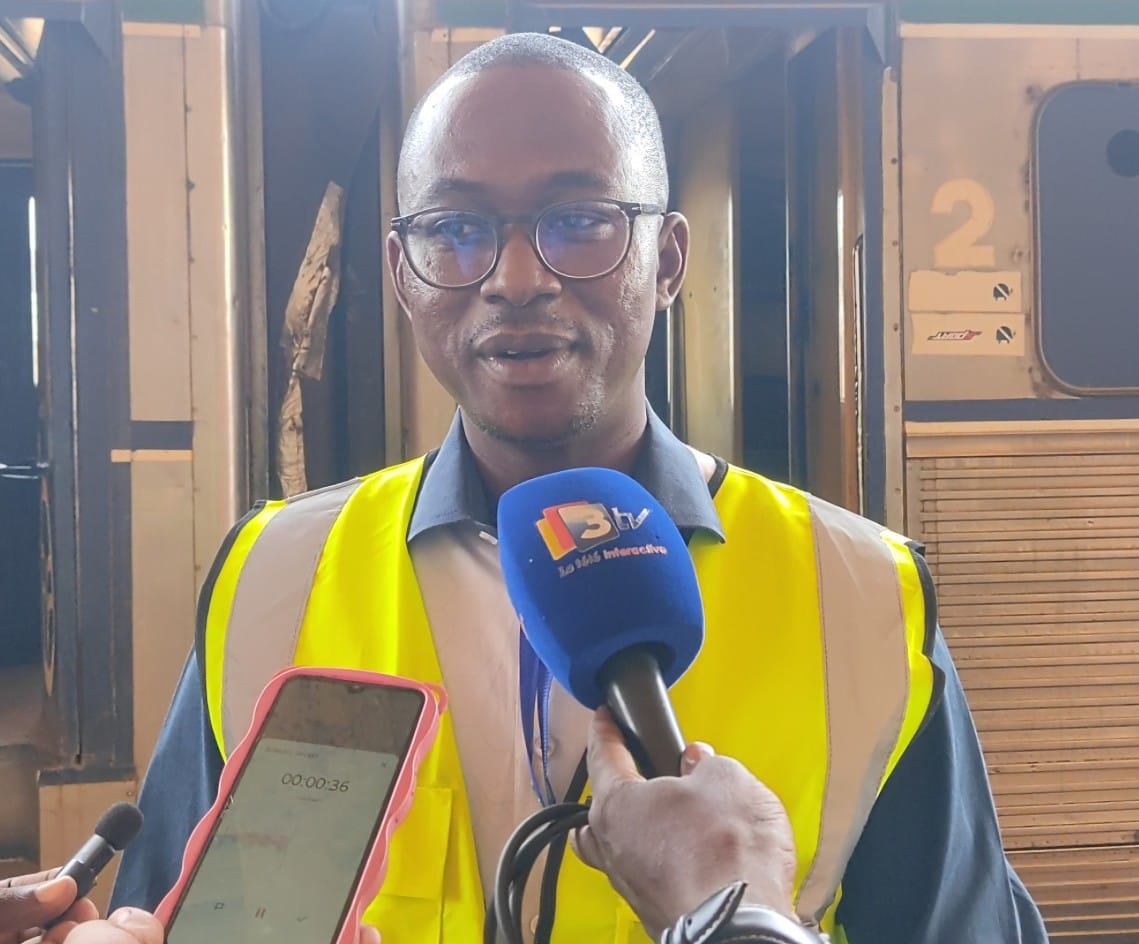
Du côté des élèves, l'expérience a été vivement appréciée. Sharone Bama, élève en classe de CM2 à Nouvelle Vision scolaire, témoigne avec émotion : « C'est ma première fois d'emprunter le train. J'avoue que c'était vraiment chouette ! Nous étions très à l'aise et on s'est bien occupé de nous durant le trajet. Je remercie beaucoup les organisateurs, car c'est grâce à eux que j'ai découvert le train et compris comment il fonctionne. »
Les élèves à l'intérieur du train, avant qu'il ne démarre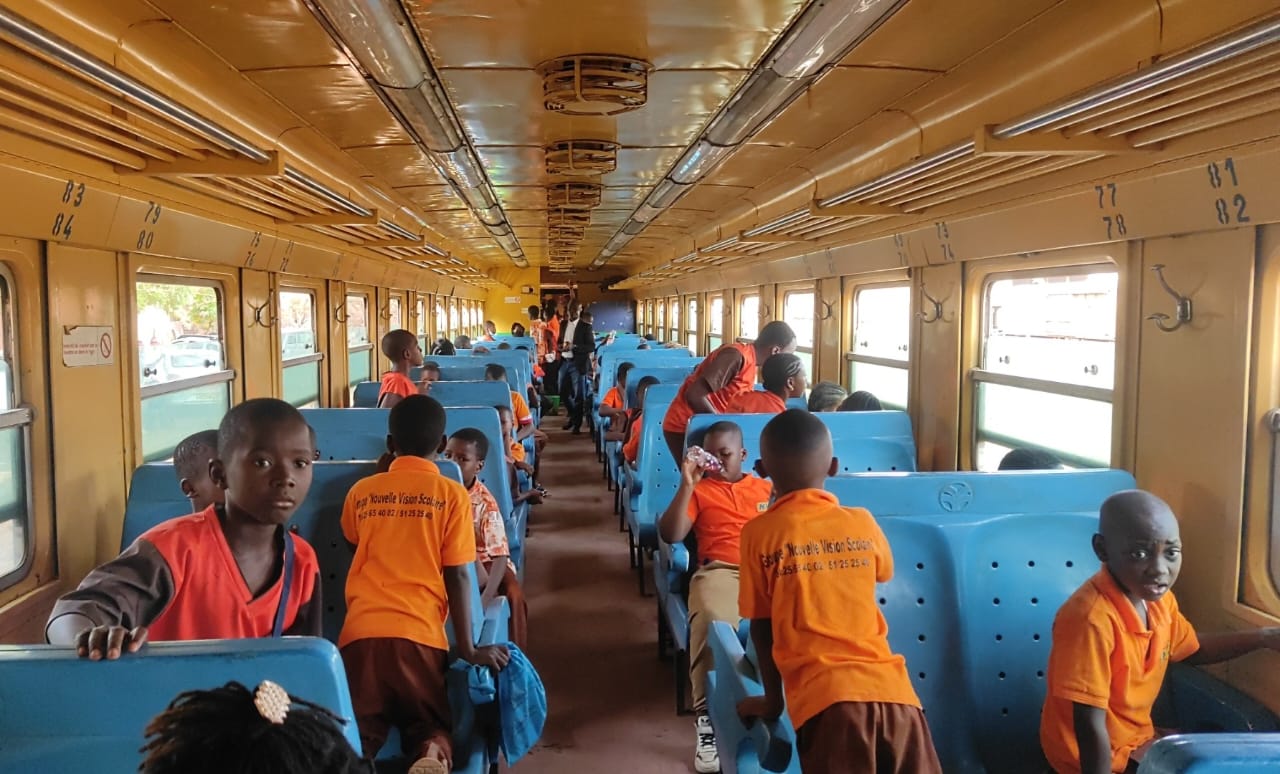
Pour une première expérience, le stress pouvait être au rendez-vous, mais demoiselle Bama avoue avoir positivé avant cette activité. « Je n'avais pas peur du tout. Au contraire, j'ai beaucoup aimé le trajet et tout ce qu'on nous a expliqué », a-t-elle lâché à ce propos. « Si l'occasion se présente encore, je prendrai volontiers le train. C'est une très belle expérience que je n'oublierai pas », a-t-elle ajouté. Des propos qui traduisent l'impact positif de cette immersion sur les jeunes participants.
Les élèves descendant du train après 1h47 minutes de route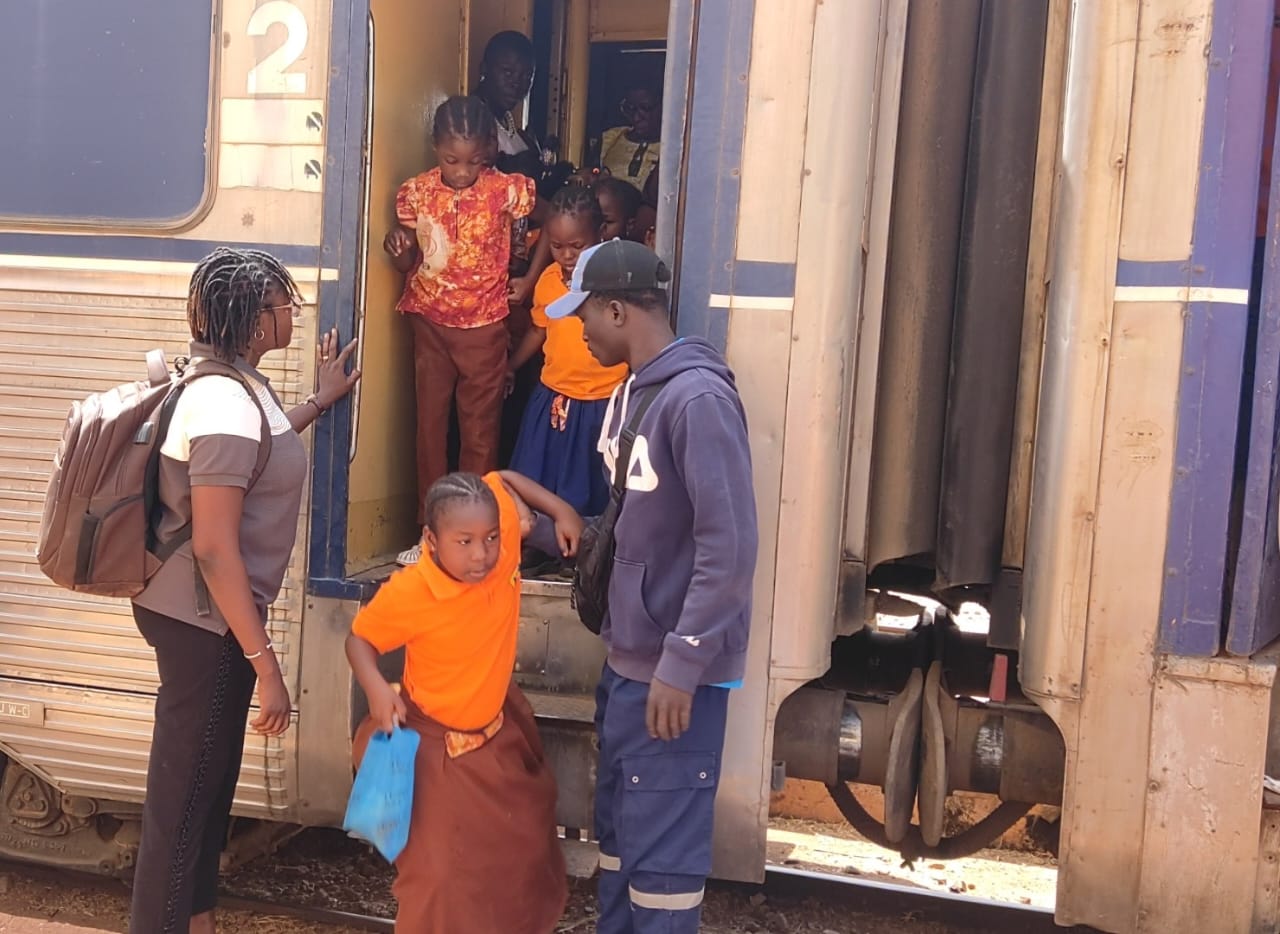
Les encadreurs eux aussi n'ont pas manqué de saluer cette initiative. « Nous concevons l'éducation comme un tout. Chaque année, nous organisons des sorties pédagogiques pour permettre aux enfants de découvrir le monde autrement. Cette année, nous avons choisi le train pour leur faire comprendre qu'il s'agit d'un moyen de transport important », a indiqué Joël Zoma, fondateur de l'établissement Nouvelle vision scolaire.
« Je remercie SITARAIL et AGL pour cette initiative », Sharone Bama
Il poursuit en insistant sur la portée éducative de l'activité : « Beaucoup d'enfants, et même certains parents, n'ont jamais pris le train. Il était donc essentiel de leur offrir cette opportunité. Cela leur permet d'élargir leurs horizons et de mieux appréhender la réalité. Nous remercions également le groupe AGL pour son accompagnement, qui a été une agréable surprise. »
« On était contents de savoir que les membres de SITARAIL et AGL nous accompagnaient pour ce voyage », Joël Zoma
Le voyage s'est déroulé dans de bonnes conditions, avec une arrivée du train à Koudougou à 10h47. Au-delà de l'aspect ludique, cette initiative aura permis de transmettre des connaissances précieuses aux élèves, tout en éveillant leur curiosité. Une expérience enrichissante qui illustre parfaitement le rôle que peuvent jouer les entreprises dans l'éducation et l'ouverture des jeunes générations.
Erwan Compaoré
Lefaso.net
À Saint-Denis, le maire Insoumis Bally Bagayoko veut incarner la «Nouvelle France» de Mélenchon
PORTRAIT - En renversant dès le premier tour le sortant socialiste dans cette ville de Seine-Saint-Denis, le nouvel édile LFI entend faire de la cité des rois la «capitale de l’Insoumission».
Categories: France
Autriche : à Vienne, l’ombre de l’espionnage russe
Derrière ses palais, ses cafés et ses orchestres symphoniques, la capitale autrichienne a la réputation d’être, depuis la guerre froide, un nid d’espions. Siège de nombreuses organisations internationales, Vienne héberge une vaste ambassade russe dont les activités intriguent. Des habitants ont décidé d’enquêter. Reportage de Céline Béal.
Les Kényans ne seront plus enrôlés au sein de l’armée russe, affirme de Moscou le ministre des affaires étrangères kényan
En visite à Moscou, Musalia Mudavadi, premier ministre et chef de la diplomatie kényane, a affirmé lundi que la Russie aurait accepté d’arrêter de recruter des ressortissants kényans pour combattre sur le front russo-ukrainien. Ils seraient plus de 1 000 à avoir été enrôlés, selon le renseignement kényan.
Categories: Afrique, Defence`s Feeds
Aviation strategy will come this year, Tzitzikostas says
Plan will focus on European clean tech and sustainability, EU transport commissioner says
Categories: Afrique, European Union
Diplomatie burkinabè : Le réseau des secrétaires et assistants des missions diplomatiques sollicite l'accompagnement du ministère des Affaires étrangères
Reçu en audience par le ministre des Affaires étrangères, Karamoko Jean Marie Traoré, le Réseau des secrétaires et assistants des chefs de missions diplomatiques (RSACMD) est venu se présenter et plaider pour un renforcement de la collaboration avec le département. Une démarche visant à mieux valoriser leur rôle dans la coopération internationale et à contribuer davantage au rayonnement de la diplomatie burkinabè.
Conduite par la présidente, Madame Reine Nadège Yaunsunnu/Sombré, la délégation est venue présenter le réseau au chef de la diplomatie burkinabè et solliciter son accompagnement ainsi qu'une collaboration avec le ministère des Affaires étrangères en vue de mener à bien ses missions.
Selon la présidente du réseau, cette démarche vise à mieux faire connaître le RSACMD et à valoriser les actions menées par ses membres en faveur du renforcement de la coopération bilatérale et multilatérale.

La délégation a aussi formulé des doléances, en lien avec la reconnaissance de leur rôle, le renforcement de la collaboration avec les services du protocole et la participation aux grands événements qui mobilisent les partenaires bilatéraux et multilatéraux au Burkina Faso.
Pour les membres du réseau, c'est ainsi qu'ils pourront, en tant que collaborateurs directs des diplomates accrédités au Burkina Faso, contribuer au rayonnement de la diplomatie burkinabè.

Le ministre des Affaires étrangères a félicité les membres du réseau pour l'initiative et salué leur démarche visant une meilleure collaboration avec son département.
Karamoko Jean Marie Traoré dit mesurer l'importance du travail fait par cette catégorie de personnel des Représentations diplomatiques, en ce sens que ce personnel facilite le contact entre les représentations diplomatiques et le ministère des Affaires étrangères.
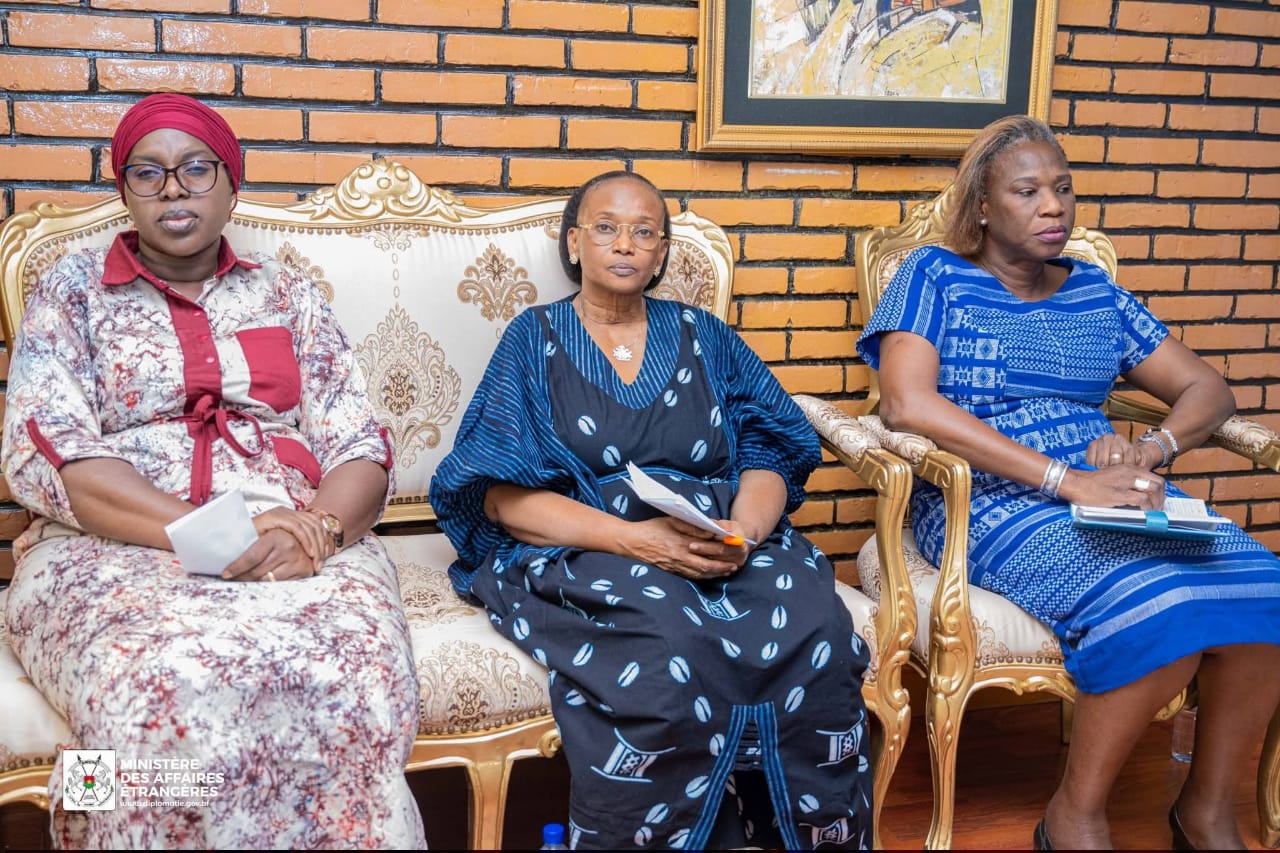
Par conséquent, il a marqué la disponibilité du département des Affaires étrangères à renforcer la collaboration avec le réseau et à appuyer ses actions.
Créé en 2008, le RSACMD compte une trentaine de membres. Il mène des activités de formation, de partage d'expériences et de réseautage visant à renforcer les compétences professionnelles de ses membres.
Lefaso.net
DCRP/MAE
Coopération Burkina–FAO : Cyrille Ganou Badolo renforce le partenariat stratégique avec le Directeur général Qu Dongyu
En audience à Rome le 13 mars 2026, l'Ambassadrice du Burkina Faso auprès des agences onusiennes, Cyrille Ganou Badolo, a échangé avec le Directeur général de la FAO, Dr Qu Dongyu, sur plusieurs programmes clés liés à la sécurité alimentaire, à la santé animale et à la transformation du secteur agropastoral, tout en lui transmettant une invitation officielle à visiter le Burkina Faso.
Elle était pour l'occasion, accompagnée de Ousmane Kabré, ministre conseiller à l'ambassade, de Bekouanan Nabié, directeur de la protection des végétaux et du conditionnement (DPVC), ainsi que de Dominique Ouédraogo, chef du service du contrôle phytosanitaire et de la qualité à la DPVC. Les deux derniers séjournaient à Rome dans le cadre de la participation du Burkina Faso à la 20ᵉ session du Comité des mesures phytosanitaires.

Compte tenu de la sensibilité de certains sujets à aborder, l'audience s'est déroulée en deux phases, conformément à la demande de Son Excellence madame l'ambassadeur. La première phase, tenue en format élargi en présence des équipes des deux délégations, a permis de passer en revue plusieurs projets et programmes auxquels le Burkina Faso accorde une importance stratégique. Il s'agit notamment : du Programme de partenariat mondial de la FAO pour les maladies animales transfrontalières (PPM MATs), dont le lancement est prévu prochainement et pour lequel le Burkina Faso a exprimé un vif intérêt à adhérer, du Projet de développement des filières halieutiques (ProFIH), qui avait déjà fait l'objet de discussions avec le directeur général courant 2025, à l'occasion de la deuxième rencontre officielle entre les deux personnalités, du Programme d'élimination des pesticides, dont la première phase s'est récemment achevée avec succès.
La délégation burkinabè a également présenté la vision stratégique des plus hautes autorités du pays des Hommes intègres, en mettant en lumière le programme de développement Intégré des productions agropastorales et halieutiques, baptisé Initiative Lijeeguoli. Ce programme ambitieux vise une transformation structurelle du secteur agro-pastoral et halieutique, dans la perspective de l'atteinte de la souveraineté alimentaire.

L'audience a également servi de cadre à Son Excellence Madame l'Ambassadeur pour transmettre officiellement au Directeur général l'invitation des autorités burkinabè à effectuer une visite officielle au Burkina Faso. C'est avec un vif intérêt que le Dr Qu Dongyu a accueilli cette invitation et a exprimé sa volonté d'y répondre favorablement. Il a indiqué que cette visite, qui pourrait se tenir très prochainement en marge de la conférence régionale de la FAO prévue courant avril 2026 en Mauritanie, constituerait une occasion pour lui d'apprécier les efforts du gouvernement et de redécouvrir le Burkina Faso, un pays qu'il avait déjà visité par le passé lorsqu'il occupait les fonctions de ministre de l'Agriculture de la république populaire de Chine.

La seconde phase de l'audience, tenue à huis clos entre son excellence madame l'ambassadeur et le directeur général, a abordé plusieurs points d'ordre confidentiel et stratégique. Au terme de cet entretien, dont les objectifs ont été largement atteints pour la délégation burkinabè, il convient de souligner qu'il a notamment permis de faire le plaidoyer sur plusieurs dossiers prioritaires et de recueillir les avis et orientations du directeur général.
L'audience s'est achevée sur une note de satisfaction générale, après une séance photos.
Lefaso.net
Assassinat de Patrice Lumumba au Congo : pourquoi le procès à venir du comte Etienne Davignon est considéré comme « historique » en Belgique
C’est la première fois qu’une juridiction pénale sera appelée à examiner la responsabilité alléguée d’un représentant d’une ancienne puissance coloniale dans la mort d’un leader de l’indépendance africaine.
Categories: Afrique, Diplomacy & Defense Think Tank News
L’US Navy va renforcer ses capacités autonomes de combat avec le drone sous-marin Dive-XL d’Anduril
En avril 2025, l’Unité d’innovation de la défense du Pentagone [DIU – Defense Innovation Unit], chargée de permettre aux forces américaines de s’approprier des technologies commerciales émergentes dans les délais les plus brefs, lança un appel d’offres portant sur l’acquisition d’un grand drone sous-marin pouvant emporter une importante charge utile et parcourir de longues distances...
Cet article L’US Navy va renforcer ses capacités autonomes de combat avec le drone sous-marin Dive-XL d’Anduril est apparu en premier sur Zone Militaire.
Silifatou Bouari, une dame de fer au Lycée militaire des jeunes filles
Pour la première fois depuis sa création, le Lycée militaire de jeunes filles de Natitingou est dirigé par une femme. Depuis septembre 2025, la direction générale de cet établissement d'excellence est assurée par Silifatou Amanké Bouari, une nomination qui marque une étape symbolique dans l'histoire de cette institution réputée du nord du Bénin.
Situé à Natitingou, dans le département de l'Atacora, le Lycée militaire de jeunes filles accueille chaque année les meilleures élèves du pays. L'établissement se distingue par une formation rigoureuse, combinant excellence académique, discipline militaire et leadership, afin de préparer ces jeunes filles à occuper demain des postes de responsabilité.
À la tête de cette institution exigeante, Silifatou Amanké Bouari mesure l'ampleur de la mission qui lui est confiée. « Je sens le poids de la responsabilité. Cela m'exige beaucoup de rigueur, de discipline, d'abnégation, et parfois même des sacrifices »,a-t-elle déclaré à France 24.
Pour les jeunes pensionnaires de l'établissement, la présence d'une femme à ce poste constitue un signal fort. La directrice générale se veut d'ailleurs une source d'inspiration pour ces élèves appelées à devenir les élites de demain. « Je les rassure, ça n'a pas toujours été facile. Il y a eu des moments où j'ai eu des doutes, il y a eu des moments où j'ai trébuché, il y a eu des moments où j'avais envie de repartir chez moi, mais je n'ai jamais abandonné », confie-t-elle.
Selon Silifatou Bouari, l'accès des femmes à des postes de commandement reste un défi qui demande souvent davantage d'efforts et de persévérance. « Lorsqu'on est une femme à ce genre de poste, on doit travailler deux fois, sinon plus qu'un homme pour prouver que cette nomination a été méritée », souligne-t-elle.
Silifatou Amanké Bouari est une ancienne élève du Lycée militaire des jeunes filles de Natitingou. Elle appartient à la première promotion d'enfants de troupe admise en 2000. Après sa formation à l'École royale militaire de Bruxelles, où elle obtient un master en sciences sociales et militaires, elle occupe plusieurs postes au sein de la Marine nationale et de l'état-major des Forces armées béninoises. Elle participe aussi à une mission de paix de l'ONU avec la MONUSCO en République démocratique du Congo.
Sa nomination à la tête du Lycée militaire des jeunes filles de Natitingou apparaît ainsi comme un symbole fort pour la promotion du leadership féminin au Bénin. Elle incarne pour de nombreuses jeunes filles la preuve que la détermination, la discipline et le travail peuvent ouvrir les portes des plus hautes responsabilités.
A. A. A
Categories: Afrique, European Union
Pages



© 2012-2018 Europa Varietas Foundation © 2015-2018 Europa Varietas Association
www.europavarietas.org | info(@)europavarietas(dot)org | Switzerland




We are looking for sponsors for the English translation of these books, please contact turkeandras(at)gmail(dot)com