
You are here
Afrique
Le Bénin au rendez-vous de la création contemporaine et du patrimoine culturel
Le Bénin accueille la 3e édition du festival Oley Africa, un événement culturel et solidaire organisé par l'association Oley' Africa. Plusieurs animations sont au programme de cette édition prévue pour se dérouler du 16 au 18 octobre 2026.
L'édition 2026 du festival Oley' Africa sera officiellement ouverte le vendredi 16 octobre 2026 à 17h. Le lancement sera fait en présence des élus, des artistes et des partenaires du festival.
Après l'ouverture officielle, une conférence sur le thème « Regards croisés sur la création contemporaine et le patrimoine immatériel du Bénin » va réunir André Jolly, ancien directeur du Centre culturel français du Bénin, Segun Ola, fondateur du festival Oley Africa, et Sa Majesté Atoogoun Massi Adjibodou Olawole, chef spirituel vodun. La rencontre sera l'occasion pour les participants, d'examiner la manière de faire vivre et rayonner la richesse culturelle du Bénin. Elle leur permettra également de croiser leurs regards sur la vitalité de la scène artistique béninoise et la valorisation du patrimoine culturel immatériel.
Selon la programmation officielle de cette 3e édition du festival, des ateliers de danse et de musique, des animations surprise et la gastronomie sont prévus. L'autre grand rendez de cette 3e édition du festival Oley Africa, relève des expositions qui couvriront pendant la période du 14 octobre au 4 novembre 2026. Pour cette séquence, 19 artistes contemporains du Bénin exposeront leurs œuvres.
Le vernissage de cette exposition, prévue pour le 14 octobre, sera marquée par une rencontre avec André Jolly, commissaire d'exposition, et ancien directeur du Centre Culturel Français du Bénin autour de son ouvrage Artistes du monde : Artistes contemporains du Bénin.
F. A. A.
Categories: Afrique
En Ethiopie, Abiy Ahmed reconduit à la tête du gouvernement, en pleine guerre au Tigré
Seul candidat, le dirigeant a appelé les groupes armés à déposer les armes, tout en réaffirmant l’exigence d’un accès à la mer Rouge, qui attise les tensions avec l’Erythrée, deux jours après la prise de Makalé par l’armée fédérale.
Categories: Afrique
Cinq aspects majeurs de Cheikh Hamidou Kane, l'auteur de ''L'Aventure ambiguë'', décédé à l'âge de 98 ans
Cheikh Hamidou Kane est décédé samedi soir à Dakar à l'âge de 98 ans. Eminent écrivain et intellectuel sénégalais, Cheikh Hamdiou Kane à travers son œuvre ''L'Aventure ambiguë'' a marqué durablement des générations en Afrique et bien au-delà.
Categories: Afrique
En Ethiopie, l’armée fédérale met en échec l’offensive rebelle, la région craint l’embrasement
Après la reprise, samedi 3 octobre, de Makalé, la capitale régionale du Tigré, par l’armée fédérale, une éventuelle intervention de l’Erythrée, alliée des rebelles, concentre désormais toutes les inquiétudes.
Categories: Afrique
In Memoriam : Yves Guimbien TOE
08 Octobre 2024 – 08 Octobre 2026
« Je suis la résurrection et la vie, celui qui croit en moi, fût-il mort, vivra » Jean 11 : 25
Voilà deux (02) an que le Seigneur a rappelé à lui son serviteur Yves Guimbien Francelin TOE précédemment Directeur des Ressources Humaines et des Affaires Administratives de la Société Cotonnière du Gourma (SOCOMA).
A l'occasion de ce triste anniversaire, les grandes familles TOE, PARE, à Nimina, Toma, Ouagadougou, Bobo-Dioulasso, Dédougou, Abidjan, USA et Canada
,
Les grandes familles, SANOU à Baré, Toundogosso, Bobo-Dioulasso, Ouagadougou, Abidjan,
Les grandes familles, SABA à Bagaré Bobo-Dioulasso, Ouagadougou,
Les familles alliées : BONZI, SANOU, SABA, SOME, KADEOUA, BOLY,
vous invitent à une pensée pieuse en sa mémoire, et vous informent que des messes seront dites pour le repos de son âme le Jeudi 08 Octobre 2026 en l'Eglise Saint jean Bosco à la cité Azimmo Ouaga 2000 à 5h45 et les jours du 6, 7 et 9 Octobre en l'Eglise Notre dame des Apôtres de la pâte d'oie à 5h45.
Que l âme du défunt continue de reposer en paix dans la lumière du Christ.
« Les âmes des justes sont dans la main de Dieu, et aucun tourment ne les atteindra ». Sagesse 3:1
Union de prières !
Categories: Afrique
Deux ans après le naufrage du MV Merveille de Dieu, les enfants des victimes réclament vérité, justice et assistance
Deux ans après le naufrage du bateau Merveille de Dieu (MERDI) sur les eaux du lac Kivu, près de Goma, les enfants des victimes sortent du silence et demandent que toute la lumière soit faite sur cette tragédie qui a endeuillé des centaines de familles.
Categories: Afrique
Foot-Amical : l’Ouganda et la RDC se neutralisent à Johannesbourg (1-1)
Le match retour de la double confrontation amicale entre l’Ouganda et le RDC s’est soldé, ce lundi 5 octobre 2026 à Johannesbourg (RSA), sur le score d’un but partout.
Categories: Afrique
120 000 branchements nouveaux annoncés dans 750 localités
Au Bénin, 750 localités seront bientôt raccordées au réseau de distribution de la Société béninoise d'énergie électrique (SBEE). Ceci, grâce à un financement de l'Agence française de développement (AFD), signé lundi 5 octobre 2026, par le ministre délégué chargé de la mobilisation des ressources extérieures et de la gestion de la dette, à l'occasion de la visite officielle du chef de l'Etat en France.
Le réseau de distribution de l'énergie de la SBEE sera bientôt étendu à 750 localités. Cette extension permettra de réaliser 120 000 branchements nouveaux. Pour y parvenir, le Bénin engage une enveloppe de 52,1 milliards de FCFA (79,4 millions d'euros).
Ce financement selon un communiqué du gouvernement, associe « un prêt de l'AFD de 32,8 milliards de FCFA (50 millions d'euros) et un don de l'Union européenne de 19,3 milliards de FCFA (29,4 millions d'euros) ».
Lors d'une visite officielle du chef de l'Etat en France, le ministre délégué chargé de la mobilisation des ressources extérieures et de la gestion de la dette a procédé, lundi 5 octobre 2026, à la signature de deux conventions de financement d'un montant global de 61,9 milliards de FCFA (94,4 millions d'euros), avec l'AFD.
Selon le communiqué du gouvernement, le projet PEDER+, mis en place à cet effet, impactera plusieurs localités réparties dans 15 communes des départements du Mono, du Couffo et du Borgou : Athiémé, Bopa, Comè, Grand-Popo, Houéyogbé, Lokossa, Aplahoué, Djakotomey, Dogbo, Klouékanmè, Lalo, Toviklin, N'Dali, Parakou et Tchaourou.
Au-delà du nombre d'abonnés, l'initiative selon le gouvernement, vise trois principaux objectifs. Il s'agit d'améliorer la qualité du service ; de réduire les écarts d'accès entre territoires et ; de diminuer les pertes du réseau, condition de l'équilibre financier durable de la SBEE.
F. A. A.
Categories: Afrique
Journée sans taxis-motos à Kindu contre les tracasseries policières
Les activités de transport en commun ont été perturbées ce lundi 5 octobre à Kindu, chef-lieu du Maniema. Les conducteurs de taxis-motos et de tricycles ont cessé leurs activités pour dénoncer ce qu’ils qualifient de « tracasseries policières » sur les voies publiques.
Categories: Afrique
Double Chance : Découvrez les 10 numéros tirés à 14H
LES RÉSULTATS DOUBLE CHANCE SONT LÀ !
LOTO FORTUNE Tirage N°159/26
Lundi 05 Octobre 2026 (14H)
– Zone A (5 premiers numéros) :
39 • 33 •23 • 49 • 50
– Zone B (5 derniers numéros) :
85 • 48 • 80 • 32 • 28
Félicitations aux heureux gagnants.
Pas encore cette fois ? Gardez le sourire !
Rendez-vous à 18H pour le prochain tirage.
Jouez avec modération et responsabilité. Le jeu doit rester un plaisir.
A TOI DE JOUER #Akaxòa
#LNBSA #XòGbɔnAlɔkpaVo #JeuResponsable #LaChanceAvecModération
Categories: Afrique
Le Panel des facilitateurs de l’Union africaine en mission à Goma
Une importante délégation du Panel des facilitateurs de l’Union africaine séjourne à Goma ce lundi 5 octobre 2026 dans le cadre d’une mission de travail consacrée à la recherche de solutions pacifiques à la crise sécuritaire qui secoue l’Est de la République démocratique du Congo.
Categories: Afrique
Le Bénin mobilise plus de 60 millards FCFA pour trois secteurs clés
Deux conventions de financement d'un montant global de 61,9 milliards de FCFA (94,4 millions d'euros), ont été signées ce lundi 5 octobre 2026, entre le Bénin et l'Agence française de développement (AFD). La cérémonie s'est déoulée en marge l'entretien entre les président Romuald Wadagni et Emmanuel Macron à l'Elysée. Une lettre de mandat avec Bpifrance portant sur 3,54 milliards de FCFA (5,39 millions d'euros), a été également signée.
Le Bénin mobilise près de 100 millions d'euros en France pour financer divers projets. Ces différents accords de partenariat ont été signés lundi 5 octobre 2026, en marge de l'entretien entre les présidents Wagadni et Macron. Selon un communiqué du gouvernement béninois, ces engagements ont été signés par le ministre délégué chargé de la mobilisation des ressources extérieures et de la gestion de la dette. Les ressources mobilisées seront investies dans divers projets pour l'accès à l'électricité, à la production agricole et à la modernisation de l'expertise médico-légale.
Trois secteurs bénéficaires
1 - Électricité : 120 000 branchements nouveaux dans 750 localités
Le Bénin engage 52,1 milliards de FCFA (79,4 millions d'euros) pour étendre le réseau de distribution de la SBEE. Le financement associe un prêt de l'AFD de 32,8 milliards de FCFA (50 millions d'euros) et un don de l'Union européenne de 19,3 milliards de FCFA (29,4 millions d'euros).
Concrètement, le projet PEDER+ apportera plus de 120 000 branchements nouveaux à 750 localités réparties dans 15 communes du Mono, du Couffo et du Borgou : Athiémé, Bopa, Comè, Grand-Popo, Houéyogbé, Lokossa, Aplahoué, Djakotomey, Dogbo, Klouékanmè, Lalo, Toviklin, N'Dali, Parakou et Tchaourou.
Au-delà du nombre d'abonnés, l'objectif est triple : améliorer la qualité du service, réduire les écarts d'accès entre territoires et diminuer les pertes du réseau, condition de l'équilibre financier durable de la SBEE.
2 - Agriculture : 9,8 milliards de FCFA pour la pisciculture et les filières de proximité
Le Bénin consacre 6,6 milliards de FCFA (10 millions d'euros) au développement de la filière piscicole, dans dix communes de l'Alibori, de l'Atacora et de la Donga : Banikoara, Gogounou, Kandi, Kérou, Kouandé, Péhunco, Bassila, Copargo, Djougou et Ouaké. L'ambition est de bâtir une filière compétitive sur toute la chaîne de valeur, de l'alevin au marché, pour accroître la production nationale de poisson et en améliorer la qualité.
Un financement complémentaire de 3,3 milliards de FCFA (5 millions d'euros) soutiendra les investissements agricoles productifs dans les filières avicole, cunicole, protéagineuse et oléagineuse, au bénéfice de seize communes du Borgou, de la Donga, des Collines et du Zou.
3 - Santé et justice : un laboratoire national d'expertise ADN
La lettre de mandat signée avec Bpifrance ouvre la négociation du financement de la Plateforme de recherche, d'investigation et d'analyse médico-légale (PRIAM), réalisée avec le Laboratoire d'hématologie médico légale de Bordeaux et adossée à la garantie de Bpifrance Assurance Export.
Le Bénin se dotera d'un laboratoire national d'expertise ADN d'une capacité de 30 000 analyses par an, visant l'accréditation internationale ISO/IEC 17025. Le projet comprend la formation de plus de 500 professionnels et la création d'une filière universitaire dédiée.
Une même finalité : porter l'action publique au plus près des populations
Ces trois engagements traduisent en réalisations la priorité centrale du Président de la République : la lutte contre l'extrême pauvreté, réaffirmée le 23 septembre dernier lors de la présentation de la réforme des pôles de développement territorial, aux côtés du renforcement du capital humain et de la création de richesse à la base.
L'électricité qui arrive dans un village, le poisson produit localement : ce sont les leviers concrets d'une amélioration durable des conditions de vie, en particulier en milieu rural. En couvrant des dizaines de communes dans huit départements, ces programmes alimenteront directement les plans de développement de quatre des six pôles territoriaux.
Une capacité nouvelle, et non le simple renforcement d'une capacité existante
Le laboratoire national d'expertise ADN relève, lui, d'un autre ordre : il crée au Bénin une compétence que le pays ne possède pas. Jusqu'ici, toute analyse génétique à valeur probante supposait l'envoi d'échantillons à l'étranger, avec les délais, les coûts et la dépendance que cela implique. Demain, ces analyses seront réalisées sur le territoire national, par des professionnels béninois.
La portée dépasse le champ judiciaire. Identifier une victime, établir une filiation, confondre ou disculper un mis en cause, documenter une catastrophe : dans chacun de ces cas, la preuve scientifique protège autant qu'elle accuse, et elle protège d'abord ceux qui n'ont pas les moyens de se défendre autrement. Une justice qui dispose d'une expertise scientifique nationale juge plus vite et se trompe moins.
L'accréditation internationale ISO/IEC 17025 visée par la plateforme garantira que ses résultats soient opposables au-delà de nos frontières. Et parce que la formation de plus de cinq cents professionnels et la création d'une filière universitaire dédiée accompagnent l'équipement, le pays ne se contentera pas d'acquérir un outil : il formera ceux qui le feront fonctionner et en assureront la relève. C'est la différence entre un transfert de technologie et un transfert de compétence.
Ces accords illustrent la vitalité du partenariat entre le Bénin, la France et l'Union européenne, et la capacité du pays à mobiliser des ressources extérieures à des conditions maîtrisées, au service de besoins immédiats comme de capacités durables.
Categories: Afrique
La BCEAO veut accélérer l'usage de Pl-SPI dans l'UEMOA
À compter du 2 novembre 2026, de nouvelles règles tarifaires entreront en vigueur pour les transferts de monnaie électronique dans l'UEMOA. La BCEAO entend ainsi accélérer l'inclusion financière, faciliter les transferts de faible montant et faire de la Plateforme interopérable du Système de Paiement Instantané (Pl-SPI), le socle régional des paiements instantanés.
L'accès aux services de paiement instantané pourra bientôt connaître une nouvelle évolution dans l'espace de l'Union économique et monétaire ouest-africaine (UEMOA). Un an après le lancement de la Plateforme interopérable du Système de Paiement Instantané (Pl-SPI), le 30 septembre 2025, la Banque centrale des États de l'Afrique de l'Ouest (BCEAO) a procédé à une évaluation de la mise en œuvre de l'interopérabilité et annoncé une révision des conditions tarifaires applicables aux transferts entre personnes physiques.
Selon un communiqué de l'institution financière en date du 2 octobre 2026, Pl-SPI compte désormais 175 participants connectés et permet à plus de 38 millions de personnes d'accéder aux services de paiement instantané. Pour la banque centrale, cette montée en puissance ouvre une nouvelle étape : élargir l'utilisation de ces services tout en réduisant les barrières tarifaires susceptibles de limiter son adoption.
Des transferts nationaux gratuits jusqu'à 8 000 francs CFA
La principale évolution concerne les transferts nationaux de faible montant. À partir du 2 novembre 2026, les transferts dont le montant cumulé quotidien est inférieur ou égal à 8 000 francs CFA par utilisateur et par participant seront gratuits à l'envoi, sans limitation du nombre d'opérations.
Selon le communiqué, ce seuil permettrait de couvrir environ 75 % des transactions de monnaie électronique dans l'UEMOA, donnant ainsi une portée importante à la mesure.
Pour les transferts nationaux dépassant 8 000 francs CFA, des frais pourront continuer à être appliqués. Leur taux devra toutefois être compris entre 0 et 0,8 % du montant hors taxes du transfert.
Autre changement majeur : la réception des transferts devient gratuite, sans plafond de montant et sans limitation du nombre d'opérations.
Vers une véritable interopérabilité régionale
La réforme ne se limite pas aux transactions effectuées à l'intérieur d'un même pays. La BCEAO prévoit également d'étendre ces conditions aux transferts réalisés entre les différents pays de l'UEMOA. À partir du 1er juin 2027, les transactions de monnaie électronique entre pays de l'Union devront bénéficier des mêmes conditions que les transferts nationaux, aussi bien à l'envoi qu'à la réception. L'objectif visé étant de faciliter les transferts transfrontaliers entre les populations de la région et de renforcer l'utilisation d'une infrastructure de paiement commune à l'échelle de l'UEMOA.
Cette évolution pourrait notamment concerner les travailleurs mobiles, les familles ayant des proches dans un autre pays de l'Union, les commerçants et, plus largement, les acteurs économiques effectuant régulièrement des paiements transfrontaliers.
Pl-SPI devient le passage obligé pour les transactions interopérables
La réforme confère également à Pl-SPI un rôle central dans l'organisation des paiements instantanés régionaux. À compter du 2 novembre 2026, les transactions de monnaie électronique interopérables au sein de l'UEMOA devront obligatoirement transiter par la plateforme Pl-SPI.
Les nouvelles dispositions s'appliqueront notamment aux transferts effectués entre un compte bancaire ou un compte détenu auprès d'une institution de microfinance et un compte ouvert auprès d'un établissement de monnaie électronique ou d'un établissement de paiement. Elles couvriront également les transferts entre établissements de monnaie électronique et établissements de paiement.
Un nouveau cap pour l'inclusion financière
À travers cette révision tarifaire, la BCEAO affiche plusieurs priorités : renforcer l'inclusion financière, élargir la gratuité à davantage d'utilisateurs, améliorer la qualité et la disponibilité des services et encourager l'apparition de nouveaux usages autour du paiement instantané.
La banque centrale entend ainsi faire de Pl-SPI une infrastructure centrale des paiements instantanés dans l'espace communautaire.
Un an après son lancement, la plateforme entre donc dans une nouvelle phase de son développement. La gratuité d'une large part des petits transferts, la suppression des frais à la réception et, à terme, l'harmonisation des conditions pour les transferts transfrontaliers constituent les principaux leviers de cette nouvelle orientation.
Pour les populations et les acteurs économiques de l'UEMOA, l'enjeu sera désormais de transformer cette évolution réglementaire en usages quotidiens et durables, afin que les paiements instantanés deviennent progressivement un outil courant des échanges financiers dans la région.
Categories: Afrique
Prix Nobel de médecine 2026 : L'Américain Karl Deisseroth et les Allemands Peter Hegemann et Georg Nagel lauréats
Le prix Nobel de physiologie ou médecine 2026, prestigieuse récompense, a été attribué à l'Américain Karl Deisseroth et aux Allemands Peter Hegemann et Georg Nagel, pour leurs découvertes sur les canaux ioniques activés par la lumière et l'optogénétique, a annoncé ce lundi 5 octobre 2026, l'Institut Karolinska à Stockholm, en Suède.
Le comité Nobel a salué des travaux qui ont posé « les fondements d'une nouvelle ère en neurosciences », l'optogénétique permettant notamment d'étudier comment les cellules nerveuses façonnent les souvenirs, les émotions et les comportements dans le cerveau vivant. Il s'agit d'une méthode qui permet de montrer comment les cellules nerveuses façonnent les souvenirs, les émotions et les comportements dans le cerveau, expliquent plusieurs médias internationaux.
Peter Hegemann et Georg Nagel ont découvert, dans une algue unicellulaire, une protéine appelée « channelrhodopsine », capable de réagir à la lumière, tandis que Karl Deisseroth a transformé cette découverte en un outil permettant de contrôler l'activité des cellules nerveuses à l'aide de la lumière, ouvrant ainsi la voie à l'optogénétique, une méthode aujourd'hui utilisée pour étudier le fonctionnement des circuits neuronaux.
« L'optogénétique offre la possibilité de cartographier le cerveau d'une manière dont nous ne pouvions autrefois que rêver », a déclaré Per Svenningsson, président du Comité Nobel pour la physiologie ou la médecine. Cette technique permet aux chercheurs, dit-on, d'activer ou d'inhiber certaines cellules nerveuses avec une grande précision et d'observer les conséquences sur les fonctions cérébrales et les comportements.
Les travaux des trois lauréats ont ainsi contribué à transformer l'étude du cerveau en permettant d'examiner directement l'activité de groupes spécifiques de neurones dans des organismes vivants.
Pour rappel, le prix Nobel 2025 de physiologie ou de médecine a été décerné à un trio de scientifiques, deux Américains et un Japonais, pour avoir élucidé la manière dont le système immunitaire protège contre des milliers de microbes différents tentant d'envahir le corps.
Lefaso.net
Categories: Afrique
Romaine Gandonou sacrée meilleur But du Mondial U-20
La jeune attaquante béninoise Romaine Gandonou a été récompensée pour son coup franc inscrit face à la Pologne à la Coupe du monde féminine U-20.
Le goal de la Béninoise Romaine Gandonou a été désigné But du tournoi Hyundai de la Coupe du Monde Féminine U-20 de la FIFA 2026, à l'issue du vote organisé après la compétition.

L'annonce a été faite ce lundi 5 octobre 2026 par la FIFA.
Le but avait été inscrit à la troisième sortie du Bénin dans le groupe A, face à la Pologne. Alors que les Polonaises menaient 4-0, l'attaquante béninoise se charge d'un coup franc et trouve la lucarne d'une frappe parfaitement enroulée.
Le Bénin s'incline finalement 4-1, mais Gandonou offre aux Amazones une dernière image forte de leur passage à Coupe du monde féminine U-20 Pologne 2026.
Cette récompense vient couronner un tournoi déjà remarqué pour la jeune joueuse. Dès son premier match contre le Mexique, soldé par un nul (2-2), elle s'était illustrée avec un doublé.
Malgré l'élimination du Bénin après une lourde défaite face à l'Argentine (8-0), la jeune attaquante aura marqué les esprits. A 15 ans, Romaine Gandonou figurait parmi les plus jeunes joueuses de l'édition 2026. En trois rencontres, elle a affiché sa vitesse, sa qualité de conduite de balle et sa capacité à jouer des deux pieds.
Son sélectionneur, Ouzérou Abdoulaye, estime que la Béninoise dispose encore d'une importante marge de progression. Il met notamment en avant ses qualités techniques et physiques, tout en appelant à un travail continu pour lui permettre d'exprimer pleinement son potentiel.
Le Soulier d'or Adidas lui a échappé, au profit de l'Espagnole Pau Comendador, championne du monde avec la Roja. Mais avec le But du tournoi Hyundai, Gandonou quitte la Pologne avec une distinction individuelle et une visibilité accrue sur la scène internationale.
Romaine Gandonou takes home the @Hyundai Goal of the Tournament for her stunning free-kick against Poland ! ????
Voted by the fans ! ????️
#U20WWC https://t.co/o8tbtr8hJr
— FIFA Women's World Cup (@FIFAWWC) October 5, 2026
Categories: Afrique
TRANCHE COMMUNE ENTENTE (TCE) 2026 : Décrocher des lots allant de 2 000 000 à 20 000 000 F CFA au grand tirage
Categories: Afrique
Ouagadougou : RAYNAL Assurances inaugure un rond-point
À l'occasion de la célébration de son 20ᵉ anniversaire, RAYNAL Assurances a procédé, le vendredi 2 octobre 2026 à Ouagadougou, à l'inauguration d'un rond-point. Cette infrastructure est sur l'axe reliant l'échangeur de Ouaga 2000 au SIAO, à proximité de l'agence de la Société nationale d'électricité du Burkina (SONABEL) de la zone d'activités commerciales (ZAD). Cette initiative s'inscrit dans la volonté de l'entreprise de contribuer à l'embellissement de la capitale burkinabè.
L'aménagement de ce rond-point contribue à l'amélioration du cadre de vie et à l'embellissement de la ville. À travers cet aménagement, RAYNAL Assurances entend répondre à l'appel des autorités en faveur d'une participation accrue des acteurs privés à l'amélioration de l'environnement urbain de Ouagadougou.
Le rond-point Raynal assurances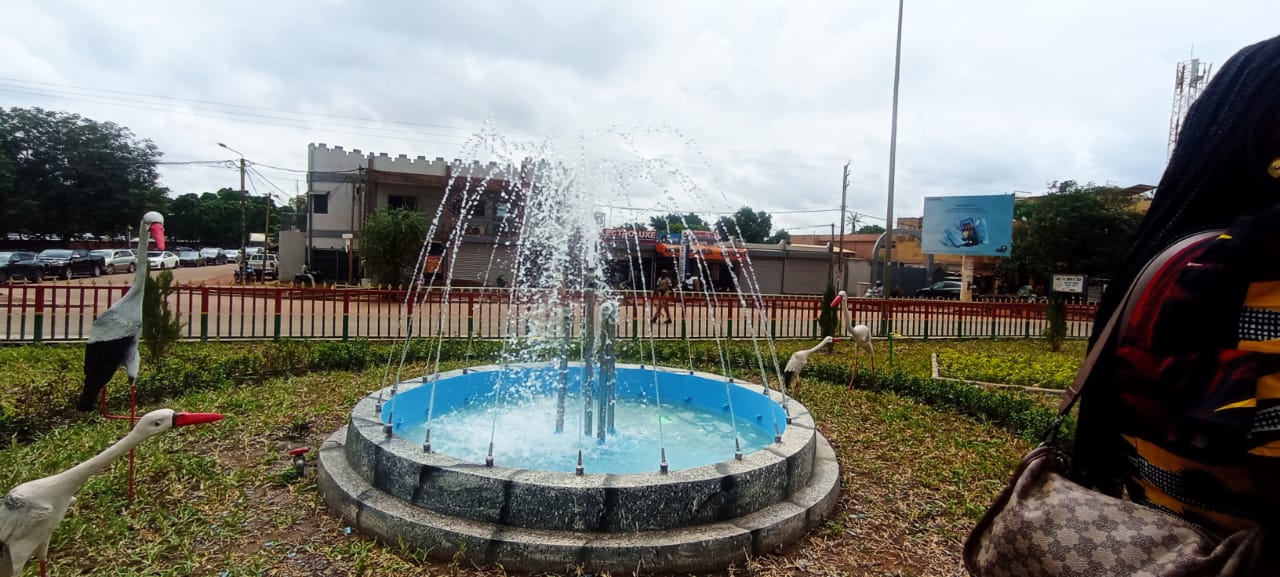
Pour l'administrateur-directeur général de RAYNAL Assurances, Osée Gaëtan Quenum, cette action traduit la conception que l'entreprise se fait de sa responsabilité envers la société. « La responsabilité d'une entreprise ne se mesure pas uniquement à ses résultats financiers, mais à sa capacité de créer de la valeur pour la société, d'accompagner les communautés et de bâtir un environnement où chacun peut mieux vivre et mieux entreprendre. La question de l'environnement a toujours été une de nos préoccupations. Après les différents reboisements que nous avons initiés, nous voici au pied d'un rond-point aménagé. L'aménagement de ce rond-point est né d'une volonté commune du ministère en charge de l'Environnement et de RAYNAL assurances, symbole de la nécessaire collaboration entre le secteur public et privé pour soutenir et accompagner le bien-être social et le développement du Burkina Faso », a-t-il indiqué l'administrateur-directeur général.
L'administrateur-directeur général de RAYNALRaynal Assurances, Osée Gaëtan QUENUM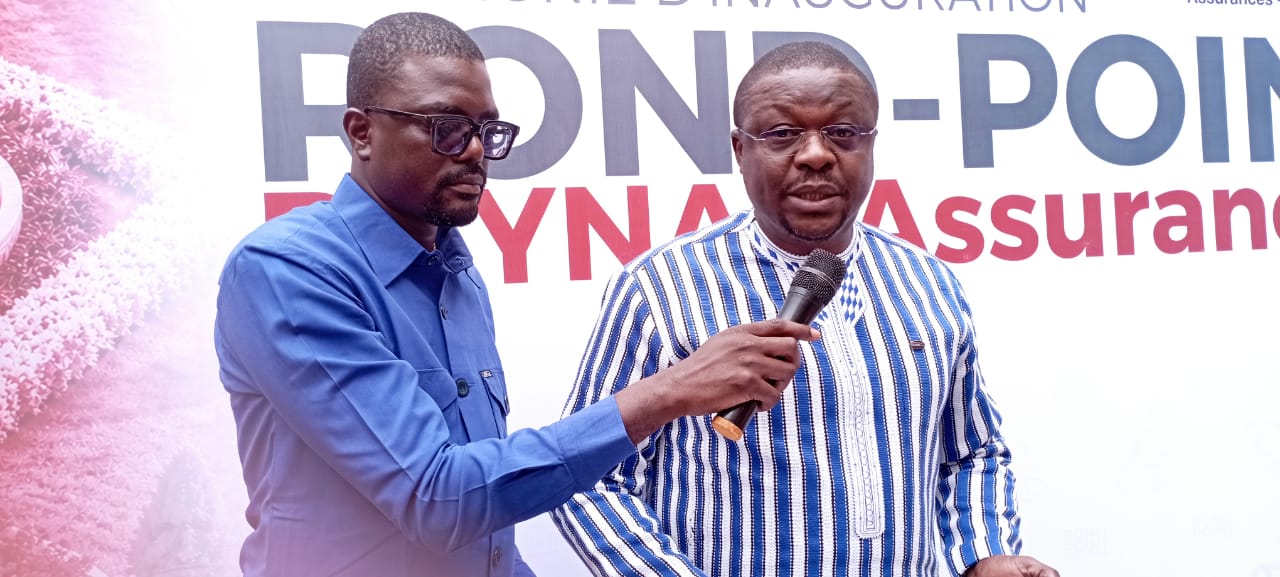
Selon le dirigeant, cette conviction guide l'action de RAYNAL Assurances depuis plusieurs années. L'entreprise affirme ainsi inscrire ses initiatives dans une démarche de responsabilité sociétale et environnementale, à travers des actions citoyennes et le soutien aux valeurs contribuant au développement du Burkina Faso.
Le rond-point Raynal assurances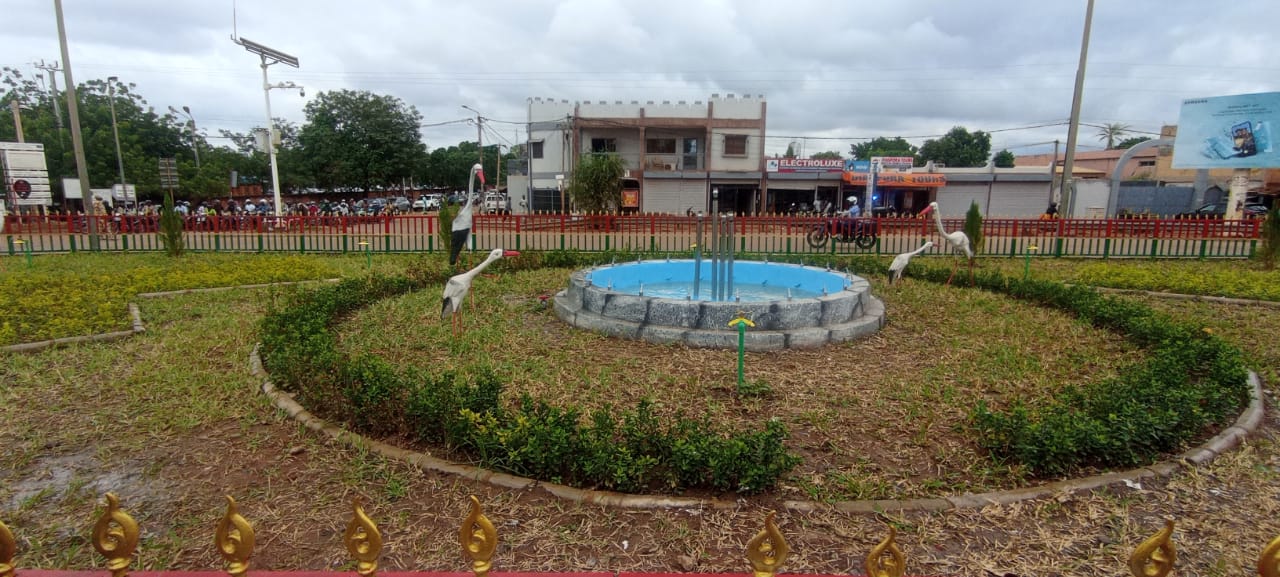
Le chargé de mission au ministère en charge de l'Agriculture, de l'eau et des ressources animales et halieutiques et représentant son ministre, Pamoussa Ouédraogo, a félicité RAYNAL Assurances pour cette infrastructure. Pour lui, l'aménagement de ce rond-point est une réponse à l'appel du président du Faso qui est l'aménagement des ronds-points et des espaces verts sur l'ensemble du pays. Il invite l'ensemble des acteurs du secteur privé à emboîter le pas de RAYNAL assurances pour l'embellissement du pays.
Le représentant du ministre chargé de l'Environnement, Pamoussa Ouédraogo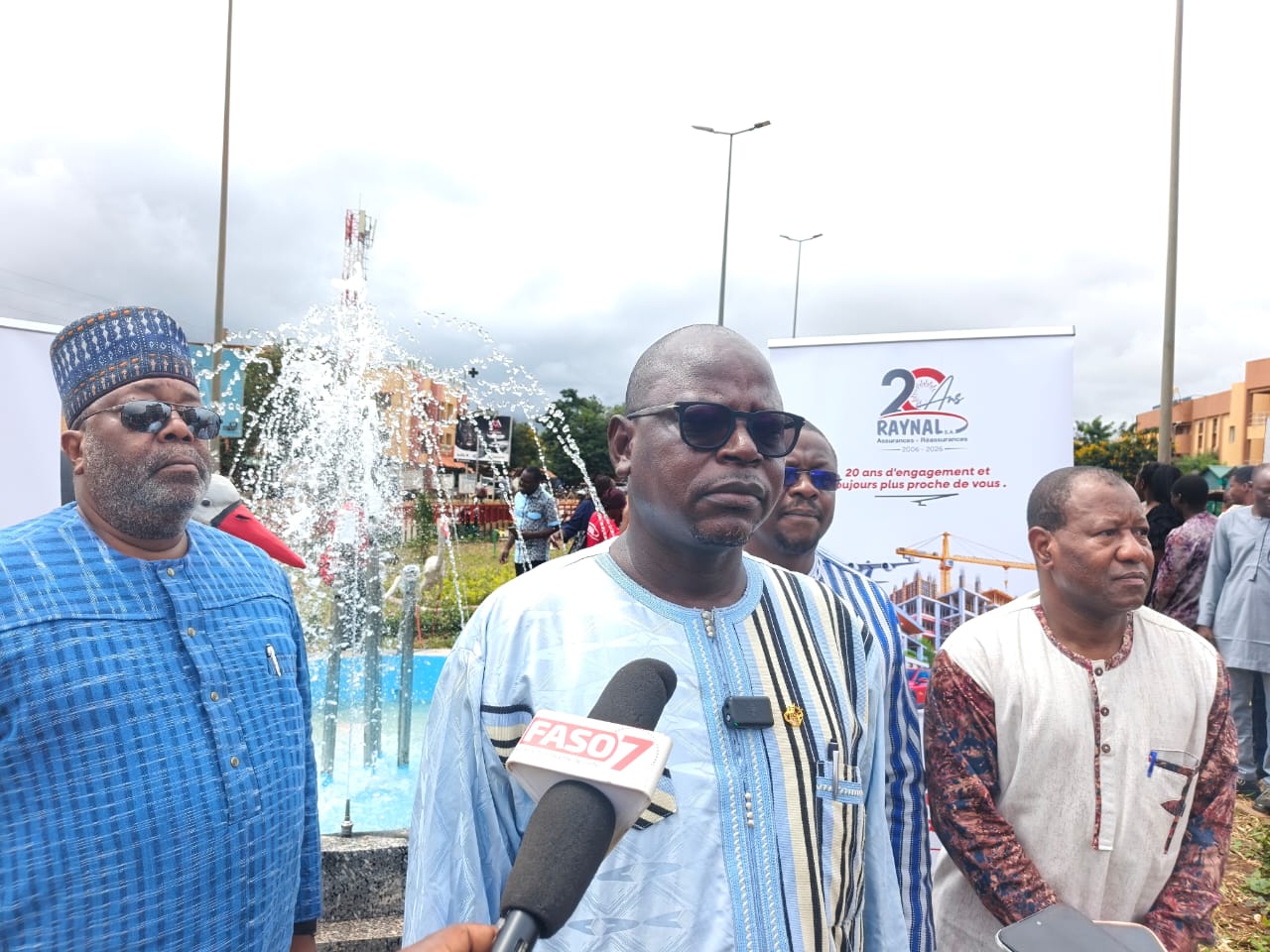
L'aménagement de ce rond-point constitue ainsi l'une des actions marquant les 20 ans de RAYNAL Assurances. Au-delà de la célébration de cet anniversaire, l'initiative traduit la volonté affichée de l'entreprise de renforcer son implication dans la vie de la cité et de contribuer, à son échelle, à l'amélioration du cadre urbain.
Rama Diallo
Lefaso.net
Categories: Afrique
Romuald Wadagni reçu à l'Élysée par Emmanuel Macron
Après le dîner présidentiel de travail organisé par l'Africa-France Impact Coalition (AFIC), dimanche, à l'Elysée, le chef de l'Etat Romuald Wadagni a été reçu ce lundi 5 octobre par son homologue français, Emmanuel Macron dans le cadre de sa visite officielle en France.
Le président de la République, Romuald Wadagni, a été accueilli ce lundi 5 octobre au Palais de l'Élysée, où il a été accueilli par son homologue français, Emmanuel Macron. Cette rencontre au sommet marque une nouvelle étape dans les relations entre le Bénin et la France. Elle ouvre une séquence d'échanges de haut niveau consacrée aux principaux enjeux de la coopération bilatérale et aux priorités communes entre Cotonou et Paris.
Au cœur des discussions figurent notamment les perspectives de renforcement du partenariat entre les deux pays, ainsi que les questions d'intérêt commun liées au développement, à l'économie, à la sécurité, à l'éducation et à la culture.
L'entretien entre les deux chefs d'État intervient dans un contexte où le Bénin entend consolider ses partenariats internationaux et approfondir les relations qu'il entretient avec la France. Pour Paris, comme pour Cotonou, cette visite constitue une occasion de faire le point sur les acquis de la coopération et d'explorer de nouvelles pistes de collaboration.
L'accueil réservé au président béninois à l'Élysée témoigne également de l'importance accordée au dialogue politique entre les deux pays.
Quelques images de la visite à l'Elysée


Categories: Afrique
La combinaison gagnante du tirage de 11 H
LES RÉSULTATS LOTO FORTUNE SONT LÀ !
TIRAGE N°159/26
Lundi 05 octobre 2026 (11H)
84 • 09 • 04 • 85 • 39
Félicitations aux heureux gagnants !
Pas encore gagné ? Gardez le sourire !
Rendez-vous au prochain tirage de 14h pour une nouvelle chance.
Jouez dans les centres de jeux ou en ligne : Tapez 590# ou lnbloto.bj
Jouez avec modération et responsabilité. Le jeu doit rester un plaisir.
VOTRE CROIX DU LUNDI 05 OCTOBRE 2026

Categories: Afrique
À Paris, Wadagni plaide pour davantage d'investissements privés au Bénin
Le président de la République, Romuald Wadagni, a été reçu dimanche 4 octobre 2026 à l'Élysée par son homologue français Emmanuel Macron. La rencontre s'est tenue dans le cadre d'un dîner présidentiel de travail organisé par l'Africa-France Impact Coalition (AFIC), autour de plusieurs enjeux économiques liés au développement du continent africain.
Romuald Wadagni Reçu par Emmanuel Macron à l'Elysée. Au cœur des échanges entre les deux présidents, figuraient notamment les investissements privés, l'industrialisation et le développement des chaînes de valeur en Afrique. Pour le Bénin, cette rencontre constitue une occasion de renforcer son attractivité auprès des investisseurs africains et français et de mobiliser davantage de capitaux privés en faveur de son développement.
Le Bénin veut renforcer son attractivité auprès des investisseurs
Lors de cette rencontre à Paris, Romuald Wadagni a présenté l'ouverture du Bénin aux investissements privés africains et français. Cette orientation s'inscrit dans la stratégie du pays visant à consolider son attractivité économique et à accroître la mobilisation de financements privés.
Les discussions ont également porté sur l'évolution des flux d'investissements en Afrique depuis le sommet Africa Forward, organisé à Nairobi les 11 et 12 mai 2026. Les échanges devraient permettre d'examiner les perspectives de concrétisation des engagements pris lors de cette rencontre internationale.
Le président béninois et Emmanuel Macron ont par ailleurs échangé avec Baïdy Agne, président de Business Africa et du Conseil national du patronat du Sénégal. Les discussions ont porté sur plusieurs priorités économiques pour le continent, notamment le rôle du secteur privé dans l'accélération de la croissance et du développement.
L'industrialisation au centre des discussions
Au-delà de la mobilisation des investissements, les échanges ont accordé une place importante à l'industrialisation de l'Afrique. Les participants ont notamment abordé les moyens de renforcer la création de valeur sur le continent et de développer des projets structurants dans les différentes chaînes de valeur.
La question de l'emploi et des perspectives offertes à la jeunesse africaine figurait également parmi les enjeux évoqués. L'objectif est de favoriser des investissements capables de soutenir la transformation économique du continent tout en renforçant les capacités de production locales.
Cette rencontre qui s'inscrit dans le prolongement du sommet Afrique-France de Nairobi vise à assurer le suivi des projets d'investissements croisés identifiés lors de cette rencontre et à favoriser leur mise en œuvre.
Le dîner organisé à l'Élysée constitue l'un des premiers rendez-vous majeurs de la visite de travail de Romuald Wadagni en France. Il intervient dans un contexte où l'actuel locataire de la Marina entend renforcer les partenariats économiques du Bénin avec ses partenaires internationaux.
F. A. A.
Categories: Afrique
Pages



© 2012-2018 Europa Varietas Foundation © 2015-2018 Europa Varietas Association
www.europavarietas.org | info(@)europavarietas(dot)org | Switzerland




We are looking for sponsors for the English translation of these books, please contact turkeandras(at)gmail(dot)com