
Vous êtes ici
Agrégateur de flux
En Côte d'Ivoire, les ravages des crèmes éclaircissantes pour la santé
Crèmes, savons, lotions... Les cosmétiques font partie du quotidien de millions de personnes. Mais derrière les promesses de beauté se cachent aussi des produits non conformes, aux conséquences parfois graves pour la santé. Illustration en Côte d’Ivoire, où une ONG tire la sonnette d’alarme. Elle affirme avoir recensé ces derniers mois plusieurs dizaines de victimes dont certaines souffrent de séquelles durables. L’organisation appelle à un renforcement des contrôles.
Catégories: Afrique, Biztonságpolitika
Afrique du Sud: Cyril Ramaphosa pessimiste sur le maintien de son pays dans l'AGOA
Le président sud-africain dit se « préparer » au retrait de son pays de l’AGOA. Alors que les relations entre Washington et Pretoria se sont considérablement dégradées depuis le retour de Donald Trump à la Maison Blanche, Cyril Ramaphosa sait que son pays pourrait bientôt être retiré de cet accord préférentiel qui permet d’exporter une liste de produits vers les États-Unis sans droit de douane et choisit de préparer le terrain.
Catégories: Afrique, Biztonságpolitika
Déjà 149 incarcérations en marge du 17 octobre : une répression "historique"
Suite aux mobilisations du 17 octobre, une délégation de plusieurs dizaines d'avocats s'est invitée dans des audiences pour protester contre cette "repression historique" abordé dans une lettre ouverte au bâtonnier de Paris. Les explications de Romain Boulet, avocat pénaliste et président de l'Association des avocats pénalistes.
Catégories: France
Midterms: Pro-Russian Czech communist joins far-right Patriots
Kateřina Konečná spent years in the most far-left group in the European Parliament
Catégories: European Union
Fejétől penészedik a társadalom – Reisz Gábor: Földszint
Reisz Gábor negyedik, Földszint című nagyjátékfilmje napok óta látható a romániai mozikban. Ez egy szatirikus parabola, amelyben egy lakóház működése szépen leképezi a társadalmat, maguk a lakók típuskarakterek, a nyerészkedő, korrupt vezetőtől a főnököt kiszolgáló lojális spicliig több embertípus felismerhető a történetben. A lakóházban terjedő penész metafora, az ellene fellépők a többség által cserbenhagyott egyének. […]
Articolul Fejétől penészedik a társadalom – Reisz Gábor: Földszint apare prima dată în Kolozsvári Rádió Románia.
Catégories: Határon túli magyar portálok összesített hírei
17 octobre : des consignes de fermeté à des tribunaux débordés
Le gouvernement, sous pression, affiche une ligne dure. Le ministre de la Justice a demandé aux procureurs "d'être impitoyables avec les casseurs", assurant que "le peuple français veut de l'extrême fermeté". Depuis lundi 19 octobre, dans nombre de tribunaux de France, ont lieu des comparutions immédiates à rythme effréné. Gérald Darmanin évoque le chiffre de 800 personnes déférées devant un tribunal.
Catégories: France
Centrist MEPs formalise deal on car CO2 emissions standards
The ban on petrol and diesel cars will be repealed – the question is the size of the potential market post-2035
Catégories: European Union
Bulgaria will not help plug Ukraine funding gap
Rumen Radev rules out more support and warns Ukraine cash is 'draining' away
Catégories: European Union
Centrafrique: la cheffe de la Minusca met en garde contre un retrait trop rapide des casques bleus
Alors que le Conseil de sécurité négocie jusqu’au 15 novembre les conditions du renouvellement du mandat de la Minusca, la cheffe de l'opération de maintien de la paix a briefé les diplomates mardi 20 octobre avec prudence. La Rwandaise Valentine Rugwabiza, qui quittera son poste dans quelques jours, a présenté toutes les avancées réalisées par Bangui, mais recommande néanmoins de maintenir la Minusca à un niveau de force suffisant, à cause de situations sécuritaires fragiles dans le nord-ouest et dans le sud-ouest.
Catégories: Afrique, Nyugat-Balkán
Mobilisations en France : les syndicats reçus à Matignon par le Premier ministre
Le Premier ministre Sébastien Lecornu, reçoit les syndicats à Matignon dans la matinée du mercredi 21 octobre. La secrétaire générale de la CGT Sophie Binet estime qu'il "a intérêt à répondre aux revendications" exprimées ces dernières semaines par les étudiants, les lycéens et les travailleurs, soulignant l'existence d'"une colère légitime et énorme" en France. Les explications de Pauline Godart, grand reporter à France 24.
Catégories: France
Immigration au Portugal : vers la fin des soins gratuits pour les étrangers ?
Vers la fin des soins gratuits pour certains étrangers au Portugal ? C’est le signal envoyé par l’Assemblée de la République le 16 octobre 2026. […]
L’article Immigration au Portugal : vers la fin des soins gratuits pour les étrangers ? est apparu en premier sur .
Catégories: Afrique
DRAFT REPORT on a European Parliament recommendation to the Council, the Commission and the Vice-President of the Commission / High Representative of the Union for Foreign Affairs and Security Policy concerning reconstruction efforts as part of a...
DRAFT REPORT on a European Parliament recommendation to the Council, the Commission and the Vice-President of the Commission / High Representative of the Union for Foreign Affairs and Security Policy concerning reconstruction efforts as part of a comprehensive peace process amid shifting paradigms in the broader Middle East
Committee on Foreign Affairs
Sebastião Bugalho
Source : © European Union, 2026 - EP
Committee on Foreign Affairs
Sebastião Bugalho
Source : © European Union, 2026 - EP
Catégories: Europäische Union
DRAFT REPORT on a European Parliament recommendation to the Council, the Commission and the Vice-President of the Commission / High Representative of the Union for Foreign Affairs and Security Policy concerning reconstruction efforts as part of a...
DRAFT REPORT on a European Parliament recommendation to the Council, the Commission and the Vice-President of the Commission / High Representative of the Union for Foreign Affairs and Security Policy concerning reconstruction efforts as part of a comprehensive peace process amid shifting paradigms in the broader Middle East
Committee on Foreign Affairs
Sebastião Bugalho
Source : © European Union, 2026 - EP
Committee on Foreign Affairs
Sebastião Bugalho
Source : © European Union, 2026 - EP
Catégories: European Union
As Winter Approaches, Afghanistan Faces Record Hunger and Mounting Human Rights Abuses
Communities face multi-layered crises in Afghanistan, including underlying poverty, climate-related shocks and the aftermath of four decades of conflict. Credit: UNAMA/Ahmad Khalid Khaliqi
By Oritro Karim
UNITED NATIONS, Oct 21 2026 (IPS)
In recent months, Afghanistan’s humanitarian crisis has severely deteriorated, with the UN reporting record-high levels of acute malnutrition and hunger. Compounded by rampant human rights violations, limited access to basic services, and persistent barriers to humanitarian aid, the UN warns that conditions could considerably worsen in the coming months.
The latest figures from the Integrated Food Security Phase Classification (IPC) show that approximately 15.9 million people—32 percent of the analyzed population—are currently facing Crisis-levels of hunger (IPC Phase 3) or worse. Of those, roughly 3.4 million face Emergency-levels of hunger (IPC Phase 4), just one step away from the highest level, which could entail the onset of famine.
IPC projects that food insecurity could surge from November to April during the winter lean season. As agricultural activity slows down, unemployment remains widespread, and harsh weather hinders aid delivery and basic services, IPC estimates that nearly 19.2 million people—including 10 million children—could face Crisis-levels of hunger or worse, with 5 million at risk of Emergency-levels of hunger.
The World Food Programme (WFP) and the Food and Agriculture Organization (FAO) warn that food assistance, agricultural support, and healthcare operations must be scaled up ahead of the winter season. WFP Country Director John Aylieff stressed that the “window to act” is rapidly closing if families are to survive the winter “with dignity.” Meanwhile, FAO Representative Richard Trenchard underscored that creating dependable income is essential in preparing communities to withstand future shocks.
Ashish Damle, Save the Children’s Country Director in Afghanistan, warned that the country is trapped in a “deadly” hunger crisis with “no end in sight,” as humanitarian needs rise while critical aid funding dries up. Young people are projected to bear the heaviest burdens, as roughly 4.04 million children under five will require treatment for acute malnutrition in 2027—a 9 percent increase from 2026. Severe acute malnutrition is forecast to surge by 16 percent in the coming year, rising from 942,000 in 2026 to 1.1 million in 2027.
With winter approaching, Damle stressed that harsh weather conditions will make survival even harder for children already facing acute malnutrition.“Our doctors and nurses witness the devastating consequences of the hunger crisis every day: malnourished children arriving at our clinics, mothers going hungry so their families have something to eat, and parents desperately seeking help as their children’s health deteriorates,” said Damle.
Despite recent rainfall improvements and promising harvests, widespread unemployment and weak purchasing power still keep adequate nutrition out of reach for most families, even when it is available. Conditions are compounded by the return of over 1.2 million Afghans from Iran and Pakistan in 2026, further stretching already limited resources.
“I saw firsthand that this crisis is not simply about whether food exists, but whether people can afford it, whether they can earn an income, access basic services, or whether they have anything left to fall back on when the next shock comes,” said Olga Cherevko, Spokesperson for the Office for the Coordination of Humanitarian Affairs (OCHA). She added that years of conflict, economic instability, and climate shocks have severely eroded community resilience, leaving families with little capacity to adapt to new shocks.
Cherevko highlighted the Taliban’s systematic exclusion of women and girls from education and public life as a primary driver of the crisis. Figures from the United Nations Children’s Fund (UNICEF) show that Afghanistan stands to lose up to 20,000 women teachers and 5,400 female health workers by the end of the decade. She emphasized that barring women and girls from society has alarming implications for access to healthcare, dietary diversity, education, and the ability to sustain livelihoods.
On October 15, the UN Assistance Mission in Afghanistan (UNAMA) issued a report detailing the persistence of human rights abuses between July and September. During this period, UNAMA documented over 50 cases of women arrested or detained relating to the hijab. Women continue to be barred from accessing health clinics and markets without a male guardian (mahram).
The mission also recorded around 443 cases of arbitrary detention and 97 instances of ill-treatment over minor infractions such as hijab violations, trimmed beards, skipped prayers, and listening to music. It further documented public corporal punishments of 28 individuals, including six women, and the detention of 14 former security force members, with at least four others killed.
Beyond individual rights, Afghanistan has also experienced a severe breakdown of civic space conditions over the past year, marked by the arbitrary suspension of multiple media outlets without clear reasons or opportunities for appeal. New legislation enacted in August bans all demonstrations and protests, effectively silencing civilian dissent across the country.
Cherevko emphasized the need for sustained, expanded humanitarian aid while calling for strategic investments in long-term resilience. She highlighted agriculture, rural livelihoods, local markets, employment, water systems, and health services as key areas for investment, stressing that expanding opportunities for women in the workforce is essential in building communities that are less dependent on emergency assistance.
“We cannot keep asking humanitarian aid to compensate indefinitely for the absence of economic opportunity and essential public services. We must act before winter, not after families have exhausted their options,” said Cherevko.
Ground operations remain significantly constrained due to persistent funding shortfalls. According to OCHA, as of mid-September, the agency had received just 31 percent of the funding needed to support Afghanistan’s 21.9 million vulnerable people. Earlier in August, WFP warned that these shortfalls had forced nutrition programs to scale back when they are needed the most, leaving more children at risk of being malnourished.
Despite these shortfalls, the UN and its partners continue to work on the ground to deliver emergency and essential services, reaching roughly 8.3 million people with at least one form of assistance between January and July.
IPS UN Bureau Report
Catégories: Africa
Who Shapes Gender in the EU Migration Pact: A Network Approach
Gender equality is a foundational value of the EU, enshrined in Article 8 TFEU and put into practice through Gender Mainstreaming (GM) since the Treaty of Amsterdam. The latter is used to incorporate a gender-sensitive perspective in every policy field, to make gender a cross-cutting issue and not a topic that stands on its own. In theory, a gender perspective should run through every policy area and stage. In practice, feminist institutionalist scholarship has consistently found a gap between this commitment and its uneven implementation, especially in fields framed as “gender neutral” such as security, foreign policy and migration.
The 2024 Pact on Migration and Asylum is the latest test. Which perspectives on gender equality made it into the package, and why did they prevail over alternatives? Recent events in Brussels make the question more urgent.
On June 23rd, 2026, a Taliban delegation held talks with the EU in Brussels on the issue of returning failed asylum-seekers to Afghanistan, an entirely unprecedented visit. The Commission said 15 member states took part in a technical meeting co-chaired by Sweden. The stated focus was on people who have committed serious crimes or pose security threats, but the talks also covered resuming consular services and “a dignified return process.”
Human rights activists and MEPs warned that the meeting risks normalizing a regime that has banned girls from attending school beyond the sixth grade and that seeks to erase women from public life. Among them, Human Rights Watch argued that EU countries undermine their credibility by condemning Taliban abuses while cooperating on forced returns.
This exact tension has been analyzed by the literature. After 2021, the EU made women’s rights a central pillar of its Afghanistan policy, including through a “by women, for women” approach. This was enabled by political convenience: the broad recognition of gender apartheid made feminist commitment cheap. Now that migration control is on the table the commitment is being tested at a real cost. Against this backdrop, the contradiction in this event, between promoting Afghan women’s rights in EU external action and negotiating return agreements with Afghan authorities, is precisely why we should analyze how gender is addressed in migration governance.
Texts do not write themselves; someone does. To understand how gender ended up in the Pact, or didn’t, we can look at the architecture of relations that actors built with one another during the negotiations. Social Network Analysis (SNA) maps these relations, and it is increasingly used to study power relations among actors in the same policy domain.
What makes the method valuable here is that it shows not only who was present and who held influence, but also who was not in the room. A network reveals gaps as clearly as connections. It lets us assess whether migrant women’s organizations and other intersectional actors were actually included, or whether access stayed with organizations closer to the EU’s status quo. Established, EU-based women’s organizations have been described as representing predominantly white, professional women, while the women most affected by the Pact may sit at the periphery of the network, if they are represented at all.
While SNA typically employs quantitative data to count interactions and calculate their weight, the integration of expert interviews adds the qualitative layer that moves this method towards capturing the meaning of the relationships under scrutiny and of what actors exchange. As a result, this integrated approach shows which actors pushed explicitly for gender-related objectives, what ideas about gender they brought to the table, and which actors contested those ideas.
Network analysis and gender studies do meet, mostly around gender policy issues such as equality or employment. But few accounts combine the two to study gender within a specific policy field, and fewer still look at gender policy networks in migration. That is the space this research aims to fill.
The interviews conducted so far point to the fact that gender is not simply absent from the Pact’s negotiation. It is folded into the broader language of vulnerability, and intersectionality is diluted along with it. And while this notion provides additional leeway to allow gender-sensitive provisions during implementation, avoiding politically loaded terms that would trigger contestation during the negotiations, its use bears questions about the consequences of not naming gender in policies. This fits what critical border scholarship finds in the Pact’s texts. The issue relates to reducing social categories of age, gender, geographical origin, sexual orientation and disability to a vulnerability “check list”, which does not go under the surface and hence fails to grasp more profound and structural ways in which vulnerability occurs along migration routes.
In the Commission texts analysed by Häkli and Peltonen, for instance, gender appears mainly as a label that flags certain people for care, such as pregnant women or single-parent families. That is not the same as a lens for asking how border policies affect women and men differently. The authors warn that this logic reproduces racialised, gendered and classed hierarchies among asylum seekers. Gender enters the Pact as a marker of fragility, not as a question of equality. My research therefore asks who put it there, and who could have put it differently.
Asking who pushed for gender equality, and who was left out, shows how one of the EU’s founding values fares where security and humanitarian logics collide.
This research is not only relevant for feminist studies, but also vis-à-vis the literature related to EU integration theories and concepts investigating the role and relevance of normativity within European policy, especially in relation to migration. It further responds to the need to bridge mainstream theories with feminist literature for theoretical and societal reasons, to identify the shortcomings of both the EU migration policy’s study and application.
The post Who Shapes Gender in the EU Migration Pact: A Network Approach appeared first on Ideas on Europe.
Catégories: European Union
Au cœur de l'univers obscur des actes de sabotage anti-Poutine menés depuis l'intérieur de la Russie
Deux hommes racontent le travail qu'ils affirment avoir accompli pour soutenir les services de renseignement ukrainiens pendant la guerre.
Catégories: Afrique
AMENDMENTS 550 - 880 - Draft report Implementation of the common foreign and security policy – annual report 2026 - PE796.520v01-00
AMENDMENTS 550 - 880 - Draft report Implementation of the common foreign and security policy – annual report 2026
Committee on Foreign Affairs
David McAllister
Source : © European Union, 2026 - EP
Committee on Foreign Affairs
David McAllister
Source : © European Union, 2026 - EP
Catégories: Europäische Union
AMENDMENTS 550 - 880 - Draft report Implementation of the common foreign and security policy – annual report 2026 - PE796.520v01-00
AMENDMENTS 550 - 880 - Draft report Implementation of the common foreign and security policy – annual report 2026
Committee on Foreign Affairs
David McAllister
Source : © European Union, 2026 - EP
Committee on Foreign Affairs
David McAllister
Source : © European Union, 2026 - EP
Catégories: European Union
Pages


© 2012-2018 Europa Varietas Foundation © 2015-2018 Europa Varietas Association
www.europavarietas.org | info(@)europavarietas(dot)org | Switzerland
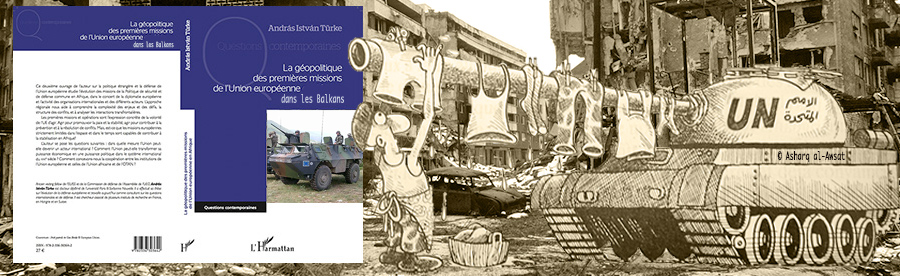
We are looking for sponsors for the English translation of these books, please contact turkeandras(at)gmail(dot)com