
Vous êtes ici
Agrégateur de flux
LOTO STAR 18 H : la combinaison gagnante
LES RÉSULTATS LOTO STAR SONT LÀ !
TIRAGE N°126/26
Mercredi 21 septembre 2026 (18H)
78 • 09 • 02 • 30 • 01

Félicitations aux heureux gagnants
Pas encore gagné ? Gardez le sourire
Rendez-vous au prochain tirage de 20H pour une nouvelle chance.
Jouez dans les centres de jeux ou en ligne : Tapez 590# ou lnbloto.bj
Jouez avec modération et responsabilité. Le jeu doit rester un plaisir.
A TOI DE JOUER #Akaxòa
#LNBSA #XòGbɔnAlɔkpaVo #JeuResponsable #LaChanceAvecModération
Catégories: Afrique
Mali U20 : Mamoutou Kané quitte les Aiglons après l’élimination à Bamako
Mali Actu - maliactu.net - Mali Actualités, Les Actus et Informations sur le Mali
Mali Actu
Mali U20 : Mamoutou Kané quitte les Aiglons après l’élimination à Bamako
La FEMAFOOT a annoncé le 20 octobre 2026 le départ de « Mourlé », après l’élimination des Aiglons au tournoi UFOA-A à Bamako. Une réorganisation des sélections de jeunes est également annoncée.
Mali U20 : Mamoutou Kané quitte les Aiglons après l’élimination à Bamako
Mali Actu :
Mali U20 : Mamoutou Kané quitte les Aiglons après l’élimination à Bamako
Catégories: Afrique
Glucksmann, une histoire de famille
Trois générations, une même famille et des parcours politiques très différents. Dans son livre Les Glucksmann, un étrange appétit de pouvoir, Steve Jourdin retrace l’histoire familiale de Raphaël Glucksmann, de son grand-père espion russe à son père, le philosophe André Glucksmann, jusqu’à ses propres ambitions politiques, à six mois de la présidentielle.
Steve Jourdin, journaliste et historien, nous raconte cette histoire de famille.
Catégories: France
17 octobre : épargné par Macron après les émeutes, Nuñez attendu au tournant le week-end prochain
DÉCRYPTAGE - Le ministre de l’Intérieur est sous le feu croisé des oppositions, même si le chef de l’État a refusé sa démission après les violences urbaines du week-end dernier.
Catégories: France
À Bobigny, deux heures d’audience et des « punitions quasi collectives »
Après les violences du 17 octobre, quatre jeunes comparaissent dans un tribunal débordé. Au terme d’une audience menée au pas de charge, les juges ont écarté l’incarcération réclamée contre tous par le parquet.
Catégories: France
Entwurf der Tagesordnung - Dienstag, 3. November 2026 - PE797.367v01-00 - Ausschuss für auswärtige Angelegenheiten
Quelle : © Europäische Union, 2026 - EP
Catégories: Europäische Union
Entwurf der Tagesordnung - Mittwoch, 4. November 2026 - PE797.368v01-00 - Ausschuss für auswärtige Angelegenheiten
Quelle : © Europäische Union, 2026 - EP
Catégories: Europäische Union
Volodimir Zelenszkij beleegyezne a harcok leállításába a frontvonal mentén
Volodimir Zelenszkij ukrán elnök kijelentette, hogy beleegyezne egy olyan megállapodásba, amely leállítaná a harci cselekményeket a jelenlegi frontvonal mentén, mivel ez szerinte a háború lezárásának megvalósítható módja.
„Most be kell fagyasztanunk a fegyveres konfliktust, és úgy gondolom, hogy ez reális módja a háború befejezésének. Ezt mi tűzszünetnek vagy az öldöklés leállításának nevezzük, ahogyan Trump elnök fogalmaz. Befagyasztani és megállítani. Természetesen ez a minimum, amit ma Oroszországtól elvárunk. Ezután természetesen az Egyesült Államok elnökéhez és az európaiakhoz fordulunk, és biztonsági garanciákat kérünk” – mondta az államfő a Fox Newsnak adott interjújában, amelyből az Ukrajinszka Pravda hírportál idézett szerdán.
Mint mondta, a legfontosabb a béke, de hozzátette, hogy azzal együtt Ukrajna jövőbeli biztonsága is. „Ne kelljen attól tartani, hogy visszatér a megszállás, visszatér az agresszió, és újra elkezdődnek a gyilkosságok, ha nem állítjuk meg mindezt”– emelte ki.
Rámutatott, hogy éppen ezért van szükség a konfliktus befagyasztására és a tárgyalásokra, emellett biztonsági garanciákra az Egyesült Államoktól, valamint Ukrajna partnereinek segítségére az újjáépítéséhez.
„Szükségünk van arra, hogy az a 9,5 millió ember, aki elveszítette az otthonát, és külföldön tartózkodik, visszatérjen Ukrajnába, nyugodtan élhessen, és újjáépíthesse a hazáját” – mondta Zelenszkij.
Szerdán Szentpéterváron találkozott az amerikai elnök különmegbízottja, Steve Witkoff és Vlagyimir Putyin orosz elnök. A találkozó körülbelül három órán át tartott.
Szentpétervárra érkezett Steven Witkoff amerikai elnöki különmegbízottAz oroszországi tárgyalásokra egy nappal azután került sor, hogy Witkoff Oslóban találkozott Volodimir Zelenszkij ukrán elnökkel.
Putyin közölte Witkoff-fal, hogy Moszkva kész november második hetében újrakezdeni az Egyesült Államok, Ukrajna és Oroszország közötti háromoldalú tárgyalásokat – fűzte hozzá az Ukrajinszka Pravda.
Forrás: MTI
Nyitókép: korábbi felvétel, president.gov.ua
Kapcsolódó:
Novemberben folytatódhatnak az ukrán–amerikai–orosz tárgyalásokThe post Volodimir Zelenszkij beleegyezne a harcok leállításába a frontvonal mentén appeared first on Kárpátalja.ma.
Catégories: Határon túli magyar portálok összesített hírei
CNAS : la signature électronique bientôt intégrée aux documents administratifs, à quoi va-t-elle servir ?
La CNAS veut passer progressivement du papier au numérique dans le traitement de ses documents. Mercredi 21 octobre, son Directeur général par intérim a rencontré […]
L’article CNAS : la signature électronique bientôt intégrée aux documents administratifs, à quoi va-t-elle servir ? est apparu en premier sur .
Catégories: Afrique
Que sait-on de l’image des objets pillés, modifiée par l’IA et publiée par la police du Val-d’Oise ?
En marge des manifestations du 17 octobre, de nombreux magasins ont été pillés en France. Depuis, la police est à la recherche des auteurs de ces pillages et des objets volés. Sur X, l’antenne de la police nationale du Val-d’Oise affirme avoir retrouvé certains biens… mais la photo mise en avant n’est pas authentique.
Catégories: France
Meziane Ighil contredit Madjer : « Belmadi a gagné la CAN 2019 seul » (vidéo)
La polémique sur la paternité de la Coupe d’Afrique des nations 2019 vient de connaître un nouvel épisode. Invité d’une émission sportive de la chaîne […]
L’article Meziane Ighil contredit Madjer : « Belmadi a gagné la CAN 2019 seul » (vidéo) est apparu en premier sur .
Catégories: Afrique, Diplomacy & Defense Think Tank News
Were Half of Venezuela’s Oil Revenues Really Stolen? — Part I
Estado Zulia - Venezuela. Credit: Breddyjgalvis, CC BY-SA 3.0 , via Wikimedia Commons
By Francisco R. Rodríguez
DENVER, Colorado, USA, Oct 21 2026 (IPS)
If you’ve been around Venezuelans for long enough, you know that we tend to speak in superlatives. We have the best baseball players, the most beautiful beaches, the tastiest arepas, and the wickedest dictators. But even being used to the scale of our superlatives didn’t quite prepare me for what I read in the May 5 edition of The New York Times, in a story called “In Venezuela, Trump Vowed to Show Accountability. Oil Deals Linger.” The story tells us that a network of shell companies controlled by Carlos Malpica (who is widely believed to be Maduro’s bagman) embezzled $11 billion of the country’s oil wealth in 2021 and 2022. In the Times’ words: “for every two dollars that Venezuela earned selling oil earlier this decade, one dollar was stolen, internal documents and official statistics show.”
Francisco R. Rodríguez
The story is written by Anatoly Kurmanaev, a veteran of Venezuela reporting and one of the most meticulous and careful reporters that I have ever known. As usual, Anatoly’s access to sources and ability to uncover crucial information is impressive. For example, he tells us about how a China-registered company linked to Malpica was allowed to sell oil received from Venezuelan state oil company PDVSA on highly favorable terms that included paying the national development bank in local currency. His story provides us with an exceptional window into the practice of Venezuelan corruption under Maduro.However, it is one thing to document the practice of corruption and another to argue that half of the country’s oil revenues were stolen. That conclusion is inconsistent with what we know about flows of currency into and out of Venezuela. Put simply, $11 billion of oil revenues could not have been stolen because if they had, Venezuela would not have been able to buy the goods that we know it purchased from the rest of the world.
The claim that half of oil revenues in 2021–22 were lost to corruption rests on a specific assumption: that if Venezuela’s state-owned oil company did not receive direct payment for its exports, the money must have been stolen. That interpretation misses one important fact. During this period, Venezuela was highly sanctioned, could not access bank accounts, and was paying for many of its imports directly with oil. That PDVSA did not directly receive cash payment on billions of dollars in receivables is not evidence of corruption; it is evidence of barter.
The mother of all kleptocracies
The claim that $11 billion were stolen is staggering because it would represent by far the largest corruption scandal ever uncovered. To take one example: the largest ever kleptocracy investigation, that for Malaysia’s 1MDB scandal, has been alleged to have diverted $4.5 billion over a seven-year period in a country whose GDP was approximately $270 billion a year. That works out to about 0.2 percent of Malaysian GDP over that period. Were the New York Times’ $11 billion figure correct, it would represent roughly 8 percent of Venezuela’s GDP over the period — approximately 32 times the size of the Malaysian graft relative to its economy. And if you take into account that estimates suggest that every dollar of oil revenue generates about 4 dollars of non-oil activity, you would reach the conclusion that the costs of Maduro’s alleged corruption was around 40 percent of Venezuelan GDP — several orders of magnitude higher than the cost of corruption found in numerous quantitative cross-national studies (and that[s even without counting the money other people were stealing). This would make Venezuela by far the mother of all kleptocracies.
The Times’ $11 billion number, if true, has major implications for the debates about Venezuela. For a long time, proponents of maximum pressure sanctions have argued that we shouldn’t worry about their detrimental effect on the country’s economy because the real cause of Venezuela’s collapse is corruption. That argument has always been strongly flawed: there’s no reason why corruption, mismanagement, poor policies and sanctions can’t all have contributed to the collapse. That said, if it were true that half of Venezuela’s oil income was being brazenly stolen, then the idea that external constraints are at most a secondary cause of Venezuela’s economic malaise acquires a greater ring of truth.
Reality check
Yet the story that Maduro’s henchmen stole $11 billion has a deep problem. If that money had really vanished, then Venezuela would not have been able to pay for the goods that it imported in those years.
In 2021 and 2022, Venezuela sold $26 billion in oil shipments, or an average of $13 billion a year. In addition, it generated another $11 billion in non-oil exports, of which a large part is mining, and received around $7 billion in remittances. That means the country received total foreign currency inflows of $44 billion in those two years. Now here’s the rub. We also know that the country was paying around $44 billion in imports of goods, services, and income payments to the rest of the world over the same two years. In fact, for 2021 and 2022 combined, the country’s foreign currency revenues exceeded its spending by just $0.04 billion. This difference, also known as the current account balance, was essentially zero. It means the country was spending as much money as was coming in, which makes sense for a country that had no assets to run down and no one to lend it money.
In sum in 2021–22, Venezuela was living paycheck to paycheck. And when you’re doing that, it’s very hard for half of your paychecks to go missing without you and everyone around you noticing.
Table 1: Venezuela Current Account Statistics, 2021–2022
Source: Own construction using balance of payments data from Venezuelan Central Bank.
Now you might say: wait a minute, if the money was stolen, then maybe it didn’t come in at all, and instead of those $44 billion we would have had $55 billion in foreign currency earnings. Except that the New York Times story tells us that the oil was sold and invoiced, and that PDVSA never directly received payment for it. But if that’s true, then we know they must have been registered as exports. That’s how balance of payments statistics are built: you count an export when it is sold and invoiced, not when it is paid for.
But what if the Central Bank is lying? What if it’s just claiming that Venezuela sold $26 billion in oil to hide evidence of the corruption? Or what if it’s inflating import numbers with the same purpose?
Certainly, that would not be beyond them. And, in fact, we know there are circumstances under which over-invoicing of imports distorts balance of payments statistics. But that tends to happen in different conditions — for example, when there are exchange controls and people claim to be importing more than they really are.
To check this, I put together data reported by Venezuela’s 31 most important trading partners. Scaling up to the economy’s total trade, I estimate total goods imports of $23 billion for 2021–22, quite close to the Central Bank’s $24 billion.[1] I also looked at estimates of exports from physical oil shipments constructed by independent agencies.[2] Again, the numbers match up with what the Central Bank is telling us.
Francisco R. Rodríguez is a senior research fellow at the Center for Economic and Policy Research (cepr.net) in Washington, DC and a professor and fellow at the University of Denver’s Korbel School of International Studies.
[1] The calculation assumes that the share of trade with these partners remained stable between 2012 and 2021.
[2] Average oil exports from Venezuela in 2021 and 2022 were 627,000 and 616,500 barrels per day, respectively, according to data from Reuters and Refinitiv Eikon. Using these export volumes, the BCV’s implied sales price for Venezuelan oil would be $47.0 and $68.1 per barrel in 2021 and 2022, respectively, implying a discount of 10 percent on average relative to OPEC’s Merey price for those years. This is consistent with evidence that Venezuela sold some of its oil at a lower price than that of the market reference reported to OPEC (see, e.g., this story based on internal PDVSA reports and this New York indictment in a corruption case with direct numbers reflecting discounts on PDVSA sales). For Venezuela to have had a sizable current account surplus, the BCV would have to be understating its oil exports — but this would imply either substantially higher export volumes than those calculated by Reuters/Refinitiv Eikon based on tanker loading data, or that Venezuela was selling its oil at a substantially higher price. Both appear highly implausible.
IPS UN Bureau
Catégories: Africa
La Direction générale de l’armement a commandé quatre systèmes de défense aérienne SAMP/T NG supplémentaires
Initialement, la Loi de programmation militaire [LPM] 2024-30 prévoyait de doter l’armée de l’Air & de l’Espace [AAE] de huit systèmes franco-italien SAMP/T NG [Sol-Air Moyenne Portée / Terrestre de Nouvelle Génération] en 2030 et de porter ce total à douze exemplaire à l’horizon 2035. Mais la version actualisée de ce texte entend accélérer le...
Cet article La Direction générale de l’armement a commandé quatre systèmes de défense aérienne SAMP/T NG supplémentaires est apparu en premier sur Zone Militaire.
Catégories: Défense
L’armée déployée le 24 octobre : des précédents rarissimes en France
Le gouvernement a annoncé mardi l’envoi de la force Sentinelle, samedi, pour "des missions de sécurisation statique" habituellement assurées par des policiers. Des précédents existent mais sont peu nombreux dans l’histoire de la Ve République, les soldats n’étant pas formés au maintien de l’ordre.
Catégories: France
À Marseille, face aux critiques, Gérald Darmanin défend une justice qui « fonctionne bien »
DÉCRYPTAGE - Après l’affaire Lyhanna qui avait révélé de graves défaillances au sein de la Chancellerie, le garde des Sceaux s’est rendu mercredi à Marseille pour souligner les « réussites » de sa politique pénale après les violences du 17 octobre.
Catégories: France
Mer Noire: «On a une pression de la Russie sur l'Otan dans ces zones grises juridiques»
L'Otan va déployer de nouvelles forces armées navales en mer Noire, après une série d'attaques de drones contre des navires marchands imputées à la Russie. En plus de ses attaques, des incursions dans les eaux territoriales de la Roumanie et de la Bulgarie se sont soldées par la mort de 23 marins uniquement sur ces dix derniers jours. La mer Noire constitue une artère maritime essentielle pour l'exportation de céréales, de ressources énergétiques et de matières premières, ce qui rend sa stabilité vitale pour la sécurité alimentaire et énergétique internationale. Le décryptage des enjeux de ce déploiement avec Virginie Saliou, chercheuse en géopolitique des espaces maritimes à Sciences Po Rennes et à l'Institut de recherche stratégique de l'école militaire (Irsem).
Catégories: Union européenne
Háromméteres magasságból zuhant le egy férfi a Rahói járásban
Súlyos sérüléseket szenvedett egy 32 éves férfi, aki mintegy három méter magasból esett le egy fáról a Rahói járásban. A balesethez mentőket riasztottak.
A helyszínre siető szakemberek megállapították, hogy a férfi combcsonttörést, illetve borda tájéki zúzódást szenvedett.
A mentők ellátták a sérültet, majd hordágyon szállították a Rahói Járási Kórházba, ahol további vizsgálatokban és kezelésben részesül.
Forrás: Facebook/103 Zakarpattya
The post Háromméteres magasságból zuhant le egy férfi a Rahói járásban appeared first on Kárpátalja.ma.
Catégories: Határon túli magyar portálok összesített hírei
Why the China-US Naval Encounter at Sabina Shoal Is Different
It’s a new kind of close encounter. Will it become a new normal?
Catégories: Diplomacy & Crisis News
Communiqué de presse - Le Prix Daphne Caruana Galizia pour le journalisme décerné à une enquête sur l’accord migratoire entre l’Italie et l’Albanie
Mercredi, le Prix Daphne Caruana Galizia pour le journalisme 2026 a été décerné à une enquête sur l’accord migratoire entre l’Italie et l’Albanie.
Source : © Union européenne, 2026 - PE
Source : © Union européenne, 2026 - PE
Catégories: Union européenne
Pressemitteilung - Recherche zum Migrationsabkommen zwischen Italien und Albanien gewinnt Daphne-Caruana-Galizia-Preis für Journalismus 2026
Am Mittwoch wurde der Daphne-Caruana-Galizia-Preis für Journalismus 2026 an eine Recherche zum Migrationsabkommen zwischen Italien und Albanien verliehen.
Quelle : © Europäische Union, 2026 - EP
Quelle : © Europäische Union, 2026 - EP
Catégories: Europäische Union
Pages



© 2012-2018 Europa Varietas Foundation © 2015-2018 Europa Varietas Association
www.europavarietas.org | info(@)europavarietas(dot)org | Switzerland

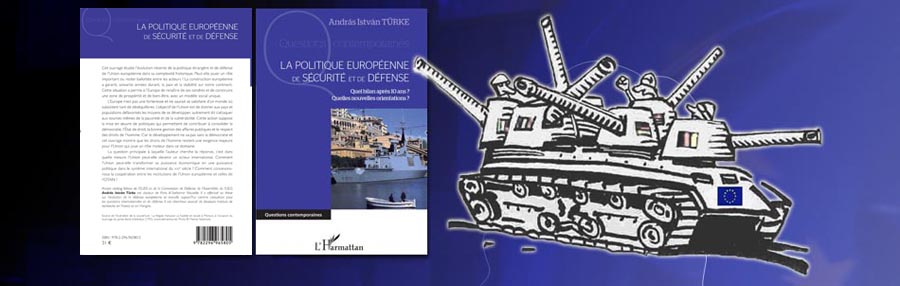
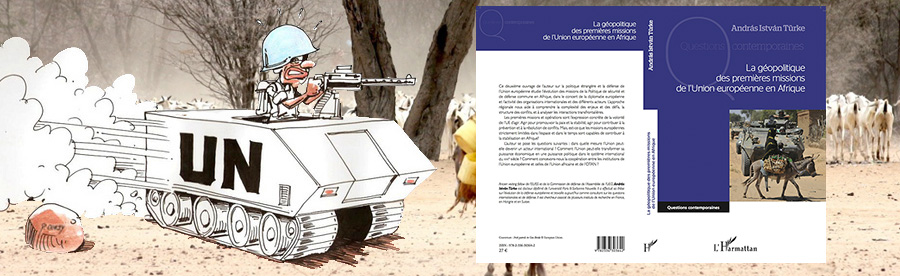

We are looking for sponsors for the English translation of these books, please contact turkeandras(at)gmail(dot)com