
Vous êtes ici
Agrégateur de flux
Who Shapes Gender in the EU Migration Pact: A Network Approach
Gender equality is a foundational value of the EU, enshrined in Article 8 TFEU and put into practice through Gender Mainstreaming (GM) since the Treaty of Amsterdam. The latter is used to incorporate a gender-sensitive perspective in every policy field, to make gender a cross-cutting issue and not a topic that stands on its own. In theory, a gender perspective should run through every policy area and stage. In practice, feminist institutionalist scholarship has consistently found a gap between this commitment and its uneven implementation, especially in fields framed as “gender neutral” such as security, foreign policy and migration.
The 2024 Pact on Migration and Asylum is the latest test. Which perspectives on gender equality made it into the package, and why did they prevail over alternatives? Recent events in Brussels make the question more urgent.
On June 23rd, 2026, a Taliban delegation held talks with the EU in Brussels on the issue of returning failed asylum-seekers to Afghanistan, an entirely unprecedented visit. The Commission said 15 member states took part in a technical meeting co-chaired by Sweden. The stated focus was on people who have committed serious crimes or pose security threats, but the talks also covered resuming consular services and “a dignified return process.”
Human rights activists and MEPs warned that the meeting risks normalizing a regime that has banned girls from attending school beyond the sixth grade and that seeks to erase women from public life. Among them, Human Rights Watch argued that EU countries undermine their credibility by condemning Taliban abuses while cooperating on forced returns.
This exact tension has been analyzed by the literature. After 2021, the EU made women’s rights a central pillar of its Afghanistan policy, including through a “by women, for women” approach. This was enabled by political convenience: the broad recognition of gender apartheid made feminist commitment cheap. Now that migration control is on the table the commitment is being tested at a real cost. Against this backdrop, the contradiction in this event, between promoting Afghan women’s rights in EU external action and negotiating return agreements with Afghan authorities, is precisely why we should analyze how gender is addressed in migration governance.
Texts do not write themselves; someone does. To understand how gender ended up in the Pact, or didn’t, we can look at the architecture of relations that actors built with one another during the negotiations. Social Network Analysis (SNA) maps these relations, and it is increasingly used to study power relations among actors in the same policy domain.
What makes the method valuable here is that it shows not only who was present and who held influence, but also who was not in the room. A network reveals gaps as clearly as connections. It lets us assess whether migrant women’s organizations and other intersectional actors were actually included, or whether access stayed with organizations closer to the EU’s status quo. Established, EU-based women’s organizations have been described as representing predominantly white, professional women, while the women most affected by the Pact may sit at the periphery of the network, if they are represented at all.
While SNA typically employs quantitative data to count interactions and calculate their weight, the integration of expert interviews adds the qualitative layer that moves this method towards capturing the meaning of the relationships under scrutiny and of what actors exchange. As a result, this integrated approach shows which actors pushed explicitly for gender-related objectives, what ideas about gender they brought to the table, and which actors contested those ideas.
Network analysis and gender studies do meet, mostly around gender policy issues such as equality or employment. But few accounts combine the two to study gender within a specific policy field, and fewer still look at gender policy networks in migration. That is the space this research aims to fill.
The interviews conducted so far point to the fact that gender is not simply absent from the Pact’s negotiation. It is folded into the broader language of vulnerability, and intersectionality is diluted along with it. And while this notion provides additional leeway to allow gender-sensitive provisions during implementation, avoiding politically loaded terms that would trigger contestation during the negotiations, its use bears questions about the consequences of not naming gender in policies. This fits what critical border scholarship finds in the Pact’s texts. The issue relates to reducing social categories of age, gender, geographical origin, sexual orientation and disability to a vulnerability “check list”, which does not go under the surface and hence fails to grasp more profound and structural ways in which vulnerability occurs along migration routes.
In the Commission texts analysed by Häkli and Peltonen, for instance, gender appears mainly as a label that flags certain people for care, such as pregnant women or single-parent families. That is not the same as a lens for asking how border policies affect women and men differently. The authors warn that this logic reproduces racialised, gendered and classed hierarchies among asylum seekers. Gender enters the Pact as a marker of fragility, not as a question of equality. My research therefore asks who put it there, and who could have put it differently.
Asking who pushed for gender equality, and who was left out, shows how one of the EU’s founding values fares where security and humanitarian logics collide.
This research is not only relevant for feminist studies, but also vis-à-vis the literature related to EU integration theories and concepts investigating the role and relevance of normativity within European policy, especially in relation to migration. It further responds to the need to bridge mainstream theories with feminist literature for theoretical and societal reasons, to identify the shortcomings of both the EU migration policy’s study and application.
The post Who Shapes Gender in the EU Migration Pact: A Network Approach appeared first on Ideas on Europe.
Catégories: European Union
Au cœur de l'univers obscur des actes de sabotage anti-Poutine menés depuis l'intérieur de la Russie
Deux hommes racontent le travail qu'ils affirment avoir accompli pour soutenir les services de renseignement ukrainiens pendant la guerre.
Catégories: Afrique
AMENDMENTS 550 - 880 - Draft report Implementation of the common foreign and security policy – annual report 2026 - PE796.520v01-00
AMENDMENTS 550 - 880 - Draft report Implementation of the common foreign and security policy – annual report 2026
Committee on Foreign Affairs
David McAllister
Source : © European Union, 2026 - EP
Committee on Foreign Affairs
David McAllister
Source : © European Union, 2026 - EP
Catégories: Europäische Union
AMENDMENTS 550 - 880 - Draft report Implementation of the common foreign and security policy – annual report 2026 - PE796.520v01-00
AMENDMENTS 550 - 880 - Draft report Implementation of the common foreign and security policy – annual report 2026
Committee on Foreign Affairs
David McAllister
Source : © European Union, 2026 - EP
Committee on Foreign Affairs
David McAllister
Source : © European Union, 2026 - EP
Catégories: European Union
AMENDMENTS 203 - 549 - Draft report Implementation of the common foreign and security policy – annual report 2026 - PE796.519v01-00
AMENDMENTS 203 - 549 - Draft report Implementation of the common foreign and security policy – annual report 2026
Committee on Foreign Affairs
David McAllister
Source : © European Union, 2026 - EP
Committee on Foreign Affairs
David McAllister
Source : © European Union, 2026 - EP
Catégories: Europäische Union
AMENDMENTS 203 - 549 - Draft report Implementation of the common foreign and security policy – annual report 2026 - PE796.519v01-00
AMENDMENTS 203 - 549 - Draft report Implementation of the common foreign and security policy – annual report 2026
Committee on Foreign Affairs
David McAllister
Source : © European Union, 2026 - EP
Committee on Foreign Affairs
David McAllister
Source : © European Union, 2026 - EP
Catégories: Défense, European Union
Gambia to pay victims of Yahya Jammeh's rule from proceeds of his seized US mansion
The Gambia has confirmed receiving $2.5m from the sale of the house in Maryland.
Catégories: Africa
Ireland’s health spending faces critical long-term squeeze as population ages [Partner Content]
Think tank says long-term care will drive spending growth, while private funding and a bigger budget share are unlikely fixes
Catégories: European Union
Éthiopie: les troupes fédérales engagées sur plusieurs fronts, le TPLF toujours présent dans le Tigré
En Éthiopie, qu'est devenu le Front de libération du peuple du Tigré ? Après plusieurs semaines de combats qui les opposaient aux forces fédérales, les troupes du TPLF se seraient repliées près de la frontière érythréenne. Le gouvernement fédéral a repris le contrôle des grandes villes de la région et a mis en place une administration intérimaire pour six mois. Mais le TPLF n'a pas dit son dernier mot.
Catégories: Afrique, Nyugat-Balkán
Paul Barril, ancien gendarme de l’Elysée devenu sulfureux mercenaire, est mort
Ancien numéro un du GIGN, il avait par ailleurs assuré la sécurité privée de plusieurs chefs d’Etat africains. Au cœur de la « Françafrique », il joua un rôle complexe pendant le génocide des Tutsi au Rwanda. Il s’est éteint à l’âge de 80 ans, a-t-on appris mercredi.
Catégories: Afrique
"Je ne savais pas que c'était du vol" : à Paris, les premiers procès des violences du 17 octobre
Les prévenus interpellés lors des manifestations du 17 octobre ont défilé mardi dans le box du tribunal judiciaire de Paris, jugés notamment pour violences contre agents, rébellion ou recel, dans un climat électrique, après les propos du ministre de la Justice appelant à l'"extrême fermeté" de la justice.
Catégories: France
Après le 17-Octobre, Marine Le Pen "superpuissante" dans les sondages
À la Une de la presse ce mercredi 21 octobre, l'exécutif sous le feu des critiques, des défilés néonazis à Lyon, Marine Le Pen boostée dans les sondages, un forage gazier controversé en Mer du Nord, et la victoire du PSG.
Catégories: France
Bauwirtschaft könnte Bauleistung ohne Mehrbeschäftigung deutlich steigern
Hoher Baubedarf erfordert mehr Kapazitäten in der Bauwirtschaft – Arbeitskräftemangel macht Erhöhung der Arbeitsproduktivität erforderlich – Bauleistung könnte ohne Mehrbeschäftigung um rund zwölf Prozent höher liegen – Moderne Produktionsmethoden müssten dazu schneller und flächendeckender ...
Catégories: Diplomacy & Defense Think Tank News
Global Ethics Day 2026: Ethics, AI and the Future of Accountancy
As technology accelerates decision-making, commercial pressures grow, and the consequences of business decisions travel further and faster than ever before, accountants are being asked tougher questions. The challenge is no longer simply about following the rules. It’s about applying professional judgement, asking difficult questions, and doing what is right, even when it isn’t easy. In […]
Catégories: European Union
Plusieurs ghettos démantelés à Sègbohouè, des motos saisies
Le commissariat de l'arrondissement de Sègbohouè, dans la commune de Kpomassè, intensifie ses opérations de sécurisation. Lors des interventions menées pendant ce mois d'octobre 2026, les policiers ont procédé au démantèlement de plusieurs ghettos et à la saisie de nombreux objets dont des motocyclettes et une arme de fabrication artisanale.
Depuis le début de ce mois d'octobre, les éléments du commissariat de Sègbohouè ne baissent pas la garde. De jour comme de nuit, ils intensifient les opérations de sécurisation visant à lutter contre les activités illicites et à renforcer la sécurité des populations. Ces interventions ont permis de démanteler plusieurs ghettos. Des fumoirs présumés de chanvre indien ainsi que des pharmacies de rue opérant en dehors du circuit légal ont été également démantelés.
Un fusil artisanal retrouvé chez un ancien détenu
Au cours des différentes opérations, les forces de sécurité ont procédé à la saisie de nombreuses motos suspectes, dépourvues de pièces administratives.
Parmi les faits marquants enregistrés au cours de ces opérations figure la découverte d'un fusil de fabrication artisanale. L'arme aurait été retrouvée en possession d'un individu précédemment condamné et récemment sorti de prison.
Cette découverte met en évidence les enjeux liés à la circulation des armes artisanales et à la surveillance des activités susceptibles de compromettre la tranquillité publique.
F. A. A.
Catégories: Afrique
How Russia Sees the World Now
Dmitry Adamsky, an expert on Russian security and Russian nuclear deterrence strategy at Harvard and Reichman Universities, examines a large-scale shift in Russia’s strategic thinking over the past year, centered around the view that Europe, rather than the United States, is now Russia’s primary geopolitical rival and adversary, and looking at the consequences of this shift for US efforts to end the war in Ukraine.
Catégories: Diplomacy & Crisis News
Guillaume Tabard : « Pour Sébastien Lecornu, se défendre et démasquer Jean-Luc Mélenchon »
CONTRE-POINT - Pour démasquer la stratégie mélenchoniste, le premier ministre n’a d’autre choix que de retrouver un minimum de crédibilité. C’est dire si, les week-ends prochains, il n’a plus droit à l’erreur.
Catégories: France
HARVEST: Fishing for simplification
In today's edition: organic, EU-UK, Black Sea
Catégories: European Union
Pages


© 2012-2018 Europa Varietas Foundation © 2015-2018 Europa Varietas Association
www.europavarietas.org | info(@)europavarietas(dot)org | Switzerland
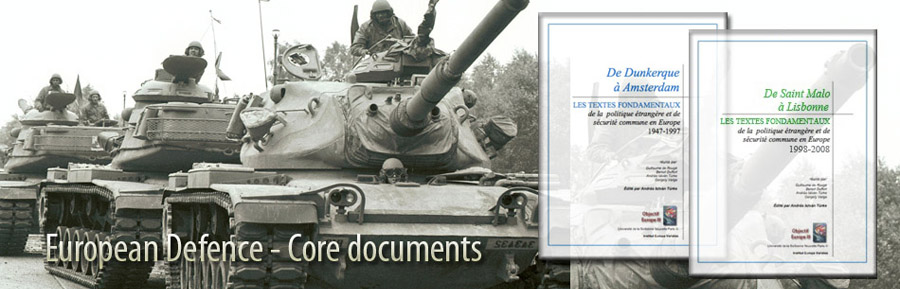
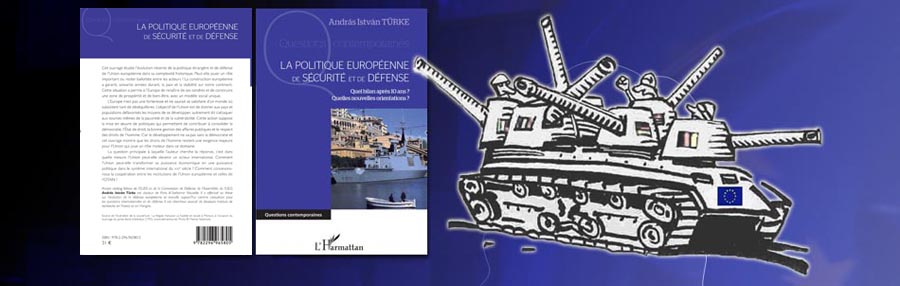
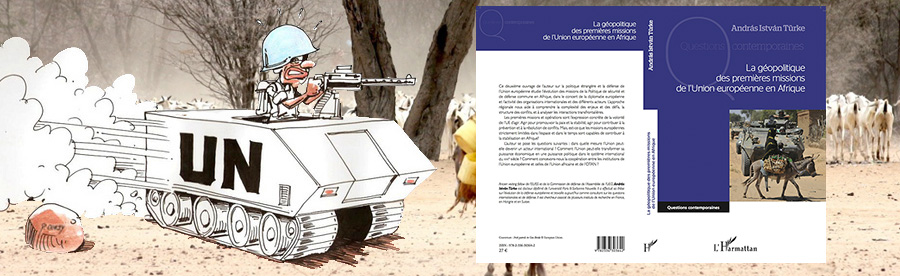
We are looking for sponsors for the English translation of these books, please contact turkeandras(at)gmail(dot)com