
Vous êtes ici
Agrégateur de flux
Un épisode "exceptionnel" : de fortes pluies s'abattent sur le Gard et l'Hérault
Les départements du Gard et de l'Hérault ont été placés en vigilance rouge "pluie-inondation" par Météo-France, à la suite de fortes pluies qui se sont abattues mercredi. Les transports et les écoles ont été perturbés, mais les dégâts matériels sont pour l'heure limités.
Catégories: France
"Une ampleur absolument colossale" : la rafle du Vieux-Port reconnue comme crime contre l'humanité
La justice française a qualifié mercredi de "crime contre l'humanité" les rafles menées à Marseille dans le quartier du Vieux-Port en janvier 1943, une reconnaissance réclamée de longue date par des survivants et leurs descendants.
Catégories: France
Trois décès liés au choléra signalés en une semaine à Fizi
La Division provinciale de la santé du Sud-Kivu confirme ce mercredi 30 septembre, la présence du choléra dans plusieurs localités du territoire de Fizi. Elle rapporte trois décès liés à la maladie entre le 14 et le 20 septembre 2026.
Catégories: Afrique
Botswana condemned for slaughtering 23 elephants for independence celebrations
The government authorises the hunting of elephants and dozens of other wild animals for independence day feasts.
Catégories: Africa
Handball : l’USFAS confirme sa suprématie avec un doublé en Coupe du Mali
Mali Actu - maliactu.net - Mali Actualités, Les Actus et Informations sur le Mali
Mali Actu
Handball : l’USFAS confirme sa suprématie avec un doublé en Coupe du Mali
L’USFAS a frappé fort en finale de la Coupe du Mali de handball 2026 en remportant les trophées féminin et masculin, dimanche 27 septembre au…
Handball : l’USFAS confirme sa suprématie avec un doublé en Coupe du Mali
Mali Actu :
Handball : l’USFAS confirme sa suprématie avec un doublé en Coupe du Mali
Catégories: Afrique
L’Egypte hausse le ton face à l’Ethiopie sur le partage des eaux du Nil
Alors qu’Addis-Abeba s’enfonce à nouveau dans la guerre civile, Le Caire s’emploie à isoler diplomatiquement son voisin pour l’empêcher de contrôler unilatéralement le fleuve, dont l’Egypte dépend presque uniquement pour son approvisionnement.
Catégories: Afrique
NZDF contributes to Humanitarian Assistance and Disaster Relief exercise in Indonesia
A multinational exercise in Indonesia has shown how military capabilities can come together to assist communities in the event of a large-scale natural disaster.
Catégories: Defence`s Feeds
Israeli attacks kill six Palestinians in Gaza as ceasefire violations mount
At least six Palestinians have been killed and several others, including children, been injured in Israeli attacks across the Gaza Strip, medical sources reported amid continued violations of a 2025 ceasefire.
Catégories: Defence`s Feeds
Iraqi resistance group rejects disarmament, vows to maintain support for Lebanon
Iraqi anti-terror resistance group Kata'ib Sayyid al-Shuhada has rejected any surrender of its weapons, with its spokesman stressing that resistance would continue despite pressure and that Iraqi resistance fighters would sustain their support for their fellow fighters in Lebanon.
Catégories: Defence`s Feeds
Press Statement of Kim Yo Jong, Department Director of C.C., WPK
Kim Yo Jong, department director of the Central Committee of the Workers' Party of Korea, issued the following press statement titled "Ringleaders of provocation should be prepared for paying price for the farce of their own making" on Sept. 29:
Catégories: Defence`s Feeds
EU pays extra 100 bln euros for fossil fuel imports amid U.S.-Iran conflict
The European Union (EU) has paid an extra 100 billion euros (about 113.3 billion U.S. dollars) for the same volume of fossil fuel imports since the start of the U.S.-Iran war, EU Energy Commissioner Dan Jorgensen said Tuesday.
Catégories: Defence`s Feeds
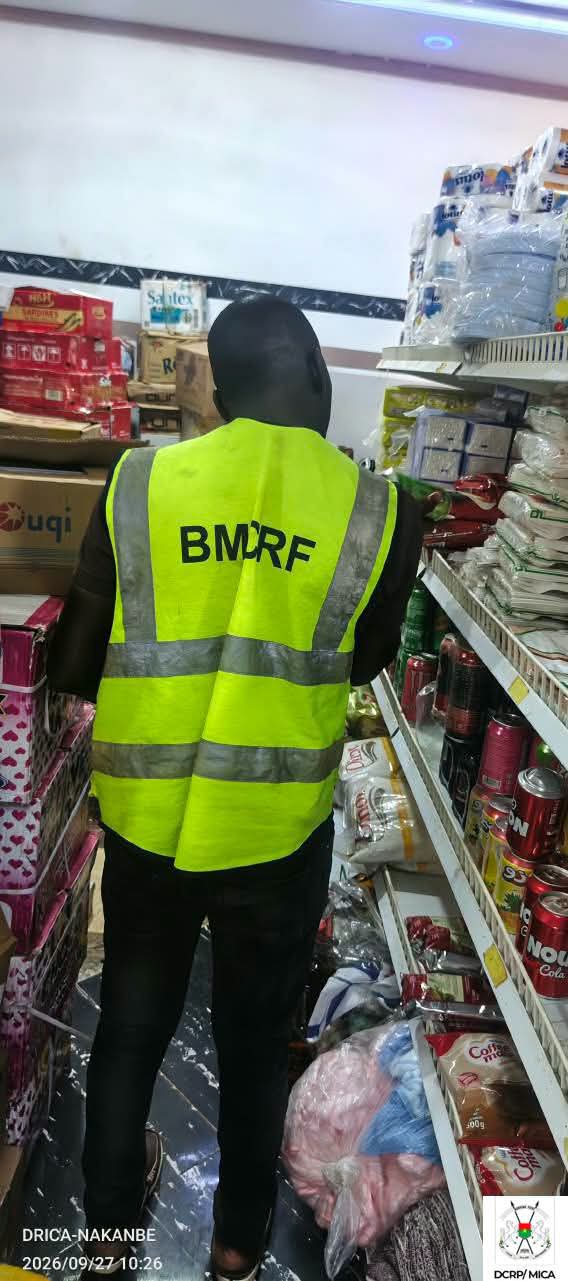
Lutte contre la fraude : Plusieurs produits frauduleux saisis à Garango
Dans le cadre de la lutte contre la fraude et du respect de la réglementation commerciale, la direction régionale de l'Industrie, du Commerce et de l'Artisanat du Nakambé (DRICA-Nakambé) a mené, le lundi 28 septembre 2026, une opération de contrôle dans plusieurs commerces de Garango. L'intervention a permis de saisir d'importantes quantités de produits frauduleux et de procéder au scellement de certains lieux de commerce.
L'opération a porté sur l'ensemble des produits de grande consommation. Elle vise notamment à veiller au respect de la réglementation en vigueur et à lutter contre les pratiques frauduleuses dans le commerce.
La DRICA-Nakambé invite la population à signaler tout comportement contraire à la réglementation auprès des services régionaux chargés du Commerce.
Lefaso.net
Source : Page facebook du ministère en charge du Commerce
Catégories: Afrique
How Far Will the Canada-EU Lovefest Go?
Both Ottawa and Brussels have good reasons to improve ties, but the EU will need to become more flexible.
Catégories: Diplomacy & Crisis News
Karité au Mali : la nouvelle campagne mise sur la qualité et la transformation locale
Mali Actu - maliactu.net - Mali Actualités, Les Actus et Informations sur le Mali
Mali Actu
Karité au Mali : la nouvelle campagne mise sur la qualité et la transformation locale
La campagne 2026-2027 de commercialisation des amandes de karité ouvre une nouvelle étape pour la filière malienne, avec un accent particulier sur la qualité, l’organisation…
Karité au Mali : la nouvelle campagne mise sur la qualité et la transformation locale
Mali Actu :
Karité au Mali : la nouvelle campagne mise sur la qualité et la transformation locale
Catégories: Afrique
Crash de Kenge : Guy Kabombo réaffirme le soutien de l’État aux familles des victimes
Le ministre de la Défense nationale, Guy Kabombo Muadiamvita, a rendu visite lundi 28 septembre à Kinshasa aux familles des victimes du crash aérien survenu vendredi 25 septembre à Kenge, dans la province du Kwango.
Catégories: Afrique
Der neue Grönlandvertrag: Alte Inhalte, neue Chancen
Noch bevor der Vertragstext bekannt wurde, erklärte US-Präsident Donald Trump, die USA dürften fortan tun, was immer nötig sei, um Grönland zu verteidigen. Zurückhaltender äußerten sich die dänische Ministerpräsidentin Mette Frederiksen und der grönländische Ministerpräsident Jens-Frederik Nielsen: Das Abkommen stärke die gemeinsame Sicherheit in der Arktis und sei »gut für die NATO und für Europa«, erklärte Frederiksen. Der »Deal« erkenne, so Frederiksen weiter, die Souveränität und territoriale Integrität des Königreichs sowie das Recht des grönländischen Volks auf Selbstbestimmung an. »Es nützt uns allen«, sagte Nielsen.
Das Abkommen ergänzt und erweitert das Verteidigungsabkommen von 1951. Es erleichtert die Umsetzung notwendiger Maßnahmen (Art. I). Neben der Pituffik Space Base wollen die USA zwei weitere Militärbasen (»Defense Areas«) auf Grönland errichten (Art. IV). Sie sollen in Narsarsuaq im Süden und in Mestersvig an der Ostküste entstehen, wo bislang dänische Soldaten für die SIRIUS-Schlittenhund-Patrouille stationiert sind. Darüber hinaus dürfen die USA weitere Basen zu errichten, deren Errichtung und Erhaltung so weit wie möglich grönländische Unternehmen übernehmen – ein Zugeständnis von amerikanischer Seite.
All dies hätte von Anfang an auch ohne die Drohung der USA mit einer Annexion Grönlands oder einer Militärintervention verhandelt werden können. Kopenhagen und Nuuk haben allzu große Zugeständnisse und eine Eskalation verhindert, die unter Umständen zu einem Bruch der Nato geführt hätte. Das Abkommen nützt allen Beteiligten, wäre aber einfacher zu erzielen gewesen. Trump hat einen Konflikt beendet, den es ohne ihn nicht gegeben hätte. Zugleich eröffnete es eine Chance für die Zukunft.
Mehr Verantwortung für die VerbündetenDie sogenannte GIUK-Lücke erstreckt sich entlang einer Linie von Grönland über Island bis nach Großbritannien. Dieses Seegebiet bildet den Verbindungskorridor zwischen dem Nordatlantik und dem Europäischen Nordmeer sowie dem Arktischen Ozean. In den operativen Planungen der Nato spielt es eine wichtige Rolle, um russische Aktivitäten einzudämmen. Zuletzt hat ein deutscher Seefernaufklärer P-8A Poseidon bei Northern Viking 2026 den multinationalen Übungsverband der NATO bei der U-Boot-Jagd vor Island unterstützt. Allerdings waren dabei erstmals keine US-Schiffe oder Flugzeuge beteiligt.
Die Trump-Regierung betrachtet den neuen Grönlandvertrag als wichtig für die nationale Verteidigung und das Abwehrsystem Golden Dome, das in der Präambel genannt wird. Das Interesse der Allianz sollte dagegen im Sinne eines stärkeren Engagements in der Arktis (Art. II) darauf gerichtet sein, die Grundlagen für die Bündnisverteidigung zu verbessern. Die Nato kann so das Königreich bei seinen Vertragspflichten (Art. VII) unterstützen und die bislang von den USA getragenen Verpflichtungen übernehmen (»burden shifting«). Dazu eignet sich Mestersvig als Nato-Stützpunkt an der Ostküste. Als Basen für Seefernaufklärer kämen neben Narsarsuaq auch Kangerlussuaq infrage. Dadurch kann die Maritime Sicherheitspartnerschaft mit Dänemark, Kanada und Norwegen ausgebaut und ein neuer Übungsbetrieb zum Zusammenwirken bei der Luftverteidigung mittels F-35-Kampfflugzeugen und Drohnen etabliert werden.
Die USA haben im Vertrag zugestimmt, die Umwelt und die Lebenswelt der grönländischen Bevölkerung zu achten (Art. VI). Sie haben zwar Bewegungsfreiheit zwischen den Basen und freien Zugang (Art. VI), sie dürfen aber keineswegs alles tun, »was immer nötig« ist. Neu ist das explizite Verbot militärischer Aktivitäten (Art. IX) und von Investitionen aus Staaten, die weder der Nato noch der EU angehören (Art. X). Bisher lag die Entscheidung darüber allein im Ermessen der zuständigen Regierungen. Der Vertrag bleibt im Falle der Unabhängigkeit Grönlands vom Königreich gültig, und Grönland soll im Nato-Bündnis bleiben (Art. XI).
Catégories: Diplomacy & Defense Think Tank News
UNGA81: UN Leaders Calls for Faster Action on Pandemic Preparedness
Khalilur Rahman (second from right), President of the eighty-first session of the United Nations General Assembly, chairs the High-level Meeting on Pandemic Prevention, Preparedness and Response. Credit: UN Photo/Mark Garten
By Shreya Komar
UNITED NATIONS, Sep 30 2026 (IPS)
The United Nations High-level Meeting on Pandemic Prevention, Preparedness and Response (PPPR) on September 25 called for faster and more sustained investment in pandemic preparedness. Speakers emphasized that future outbreaks will require coordinated action across governments, health systems, and communities.
The meeting, held three years after the General Assembly’s first high-level meeting on pandemic preparedness, focused on lessons from COVID-19 and persistent gaps in global health security.
“No country can protect itself alone,” UN Deputy Secretary-General Amina J. Mohammed said, underscoring the need to turn the lessons of COVID-19 into long-term preparedness.
Opening the meeting, Dr. Khalilur Rahman, President of the General Assembly, highlighted three priorities: closing financing gaps, adopting a stronger “One Health” approach, and ensuring equitable access to vaccines, diagnostics, therapeutics and other essential medical tools.
“All countries need and deserve well-funded community-based systems for detection, surveillance, communication and containment,” Rahman said, calling for predictable and sustainable financing. He also stressed that pandemic preparedness must address the links between human, animal and environmental health, arguing that stronger understanding of these interactions could help prevent outbreaks from reaching human populations. Equitable access to life-saving tools, he said, is both a matter of justice and a critical component of containing outbreaks.
In a press briefing held on the same day, World Health Organization (WHO) Director-General Dr. Tedros Adhanom Ghebreyesus warned that global investment in health security has declined since the acute phase of the COVID-19 pandemic, reviving what he described as a cycle of “panic and neglect.”
Although countries and international institutions have established new mechanisms for pandemic preparedness, Tedros said the scale and speed of investment remain insufficient.
The WHO has launched and supported a range of initiatives since the pandemic, including the Pandemic Fund, strengthened pandemic and epidemic intelligence, vaccine and medical countermeasure initiatives, the mRNA Technology Transfer Programme, the WHO BioHub System and the Global Health Emergency Corps.
Countries have also strengthened the international framework governing pandemic response. In 2024, WHO member states adopted amendments to the International Health Regulations, while the WHO Pandemic Agreement was adopted the following year.
However, recent outbreaks, including Ebola in the Democratic Republic of the Congo, have underscored the continuing risk of infectious diseases crossing borders and becoming international threats. Tedros said the possibility of a future respiratory pandemic remains particularly concerning because of the potential scale of its impact.
A key issue still under negotiation is the Pathogen Access and Benefit Sharing (PABS) system, which is intended to establish arrangements for sharing pathogen materials and information while ensuring that countries providing those resources benefit from vaccines, diagnostics and other products developed from them.
Tedros urged countries to conclude the negotiations. “So today, I leave you with just one request: get PABS done as soon as possible. Please conclude the negotiations as soon as possible,” he said. “We are as strong as our weakest link.”
He also emphasized the importance of investing in countries more vulnerable to pandemics, not as an act of charity, but rather as collective action against the common goal of pandemic prevention. Sustained financing and stronger international cooperation will be central to preventing future outbreaks from becoming global emergencies.
IPS UN Bureau Report
Catégories: Africa
Lycées bloqués : le mouvement se poursuit, 624 interpellations depuis le début de la mobilisation
Le blocus des lycées pour revendiquer de meilleures conditions d'apprentissage en France se poursuit, l'Union syndicale lycéenne annonce un "acte deux" pour la journée du 6 octobre. Les bilans officiels font état de 119 élèves ou personnels blessés et 625 interpellations depuis le début du mouvement lycéen.
Catégories: France
Bulgarie: «Une avancée majeure», la réforme contre les «poursuites-bâillons» adoptée par le Parlement
Ce mercredi 30 septembre, le Parlement bulgare a adopté définitivement une réforme visant à mieux protéger les journalistes, militants et autres participants au débat public contre les « poursuites-bâillons » (SLAPP en anglais).
Catégories: Union européenne
Propos antisémites attribués à Jordan Bardella : le RN fait bloc
Jordan Bardella est accusé par le journal Mediapart de propos et d'écrits antisémites. Le président du Rassemblement national (RN) contre-attaque en déclarant que l'objectif est de "l’abattre politiquement". Cette stratégie de défense peut-elle payer ? En attendant, le RN fait bloc, mais certains estiment que les fuites pourraient venir de l'intérieur du parti. Est-ce envisageable ?
Catégories: France
Pages



© 2012-2018 Europa Varietas Foundation © 2015-2018 Europa Varietas Association
www.europavarietas.org | info(@)europavarietas(dot)org | Switzerland




We are looking for sponsors for the English translation of these books, please contact turkeandras(at)gmail(dot)com