
Vous êtes ici
Agrégateur de flux
A Yamato osztály 07.
A Yamatónak meglehetősen szép szakirodalma van, annak ellenére, hogy a már említett okok miatt igazából valamennyi csatahajó közül róla tudjuk a legkevesebbet. A Yamatóról, melyről leggyakrabban úgy beszélnek, mint egyedi építésű hajóról – a róla szóló japán filmben ha jól emlékszem, még csak meg sem említették a Musashit –, rendszerint valahogy úgy írnak, mint a csatahajók fejlődésének csúcspontjáról, vagy legalábbis egy új generáció, a „szuper-csatahajó” első példányáról. A „szuper-csatahajó” elnevezést gondolom a Queen Elizabeth osztály szakirodalomban rendszeresen visszatérő elnevezése, a „szuper-dreadnought” ihlette, és azt akarják vele sugallni, hogy a Yamato ugyanolyan korszakváltást jelentett a csatahajók evolúciójában, mint annak idején a Queen Elizabeth. Ami viszont így már biztosan nem igaz. Ha nem a méreteket, hanem a csatahajó teljesítményadatait nézzük, láthatjuk, azok nem sokban múlták felül a fő ellenségnek számító kortárs amerikai csatahajókét, már ha egyáltalán felülmúlták őket.
Catégories: Biztonságpolitika
What Women in Indonesia and Malaysia Want From Research on Climate and Health
Women's knowledge and perspectives can strengthen the relevance and contextual grounding of climate-health research and policy action.
Catégories: Diplomacy & Crisis News
France/Italy/Spain : European police use AI video-tracking tools to tackle rioters
Phones have been ringing off the hook in the sales departments of French start-up Orasio and its US-Israeli counterparts Conntour and Senaï. Following the riots and urban violence that erupted in the wake of civil society protests in France, Spain [...]
Catégories: Defence`s Feeds
Saudi Arabia : Military command points finger at intel failures after Houthi attacks
Houthi strikes in Saudi Arabia are intensifying, most recently on 22 October, when an attack on Dammam airport killed two [...]
Catégories: Defence`s Feeds
France : Paris transit officials ramp up security ahead of protests
At the request of Paris police headquarters, several dozen stations of the metro and RER suburban rail network are expected [...]
Catégories: Defence`s Feeds
Ukraine : KLAN FC, the fight club of the Ukrainian special forces
The location is only made known a few hours before the fighting begins. For the most secretive evenings, it comes [...]
Catégories: Defence`s Feeds
United States : AI firm Tesari brings in former CIA officials
As artificial intelligence continues to play a growing role in the national security space, new American AI firm Tesari has [...]
Catégories: Defence`s Feeds
Rights Groups Links Cambodian Security Companies to Scam Compounds
According to a new report by Amnesty International, many Cambodian enablers of the country's scam industry remain at large.
Catégories: Diplomacy & Crisis News
China’s Military Build-up Has Created ‘Pressure’ in Southeast Asia, Australian Defense Chief Says
His comments came as Beijing accused Manila of obstructing its attendance at this week's ASEAN Defense Ministers' Meeting in Cebu.
Catégories: Diplomacy & Crisis News
The Documentary Podcast
The nun who rehabilitates child victims of Uganda’s Lord’s Resistance Army
Catégories: Africa
Drug Pricing in Germany in the Crosshairs of the United States
On 18 June 2026, the United States Trade Representative (USTR) launched an investigation under Section 301 of the Trade Act of 1974 into Germany’s pharmaceutical policy. The investigation could ultimately lead to tariffs being imposed on German exports to the United States. This is the first time the US government has used these legal powers to challenge drug pricing abroad. Although the regulation of pharmaceutical costs falls within national competence, defensive measures against US tariffs fall within the exclusive competence of the European Union (EU), which could consider invoking its Anti-Coercion Instrument. The German government should work with its EU partners to respond to this attempt to interfere with Germany’s public policies on drug pricing. Further partnerships, including with non-EU countries, could help address the transnational issue of drug pricing.
Catégories: Diplomacy & Defense Think Tank News
ASEAN Special Envoy Concludes Humanitarian Mission to Myanmar
During the two-day visit, Philippine Foreign Secretary Ma. Theresa Lazaro oversaw the distribution of humanitarian aid and met with Naypyidaw's foreign minister.
Catégories: Diplomacy & Crisis News
The Promise and Pitfalls of Nvidia’s Venture in Kazakhstan
CEO Jensen Huang received a warm welcome in a country whose aims for AI may exceed its capabilities.
Catégories: Diplomacy & Crisis News
«#OnBloquelExtremeDroite» : qu’est-ce que ce mouvement qui veut réduire la visibilité de certains comptes sur les réseaux sociaux ?
Le mot-dièse «#OnBloquelExtremeDroite», apparu en début de semaine, a gagné en popularité en ligne, notamment sur X.
Catégories: France
Chez HugoDécrypte, Emmanuel Macron manque son pari de la jeunesse
Invité par Hugo Travers pour réagir notamment à la crise lycéenne, le président ne semble pas réussir à emporter avec lui la dizaine de millions d’abonnés du journaliste pourtant si influent en ligne.
Catégories: France
Why Dowry Still Dictating Women’s Fate?
By Shahiduzzaman
DHAKA, Bangladesh, Oct 29 2026 (IPS)
Dowry is still persisting in society in one form or another. This deeply entrenched social practice continues deepen household poverty and cause violence against women. The question is no longer whether Bangladesh has a law against dowry. It does. The more uncomfortable question is why the law has failed to make dowry socially unacceptable and practically difficult to demand. The Dowry Prohibition Act 2018 makes the demand for dowry a criminal offence. Direct or indirect demands can result in one to five years’ imprisonment, a fine of up to Tk 50,000, or both. Giving, taking or assisting in the giving or taking of dowry is also punishable. The law even makes dowry-related agreements void. Yet, the existence of legislation has not eliminated the practice. Instead, dowry has increasingly adapted itself to modern economic and social realities.
Shahiduzzaman
It may no longer always be described as “dowry”. A demand for a motorcycle, cash for a business, furniture, electronics, a car, money for migration, payment of a loan or financial assistance to the groom’s family can be presented as a “gift”, “help” or “family contribution”. In some cases, demands continue years after marriage. This makes dowry harder to identify, document and prosecute.Research published in Development and Change in 2024 provides a disturbing illustration. In a study of 206 cases involving troubled marriages, 52 per cent involved complaints of continuing dowry demands. In 81 per cent of those cases, the demand was accompanied by violence against wives. The cases crossed economic classes, showing that dowry is not simply a problem of poor families.
The human rights consequences are profound. Dowry transforms marriage from a relationship between two individuals into an economic transaction in which a woman can be treated as a source of wealth. When the expected payment is not made, or when the husband or his family believes it is insufficient, the woman may face humiliation, threats, physical assault, psychological abuse, economic deprivation, abandonment or expulsion from the marital home.
The latest national evidence on violence against women makes the wider context impossible to ignore. The Bangladesh Bureau of Statistics and UNFPA’s 2024 Violence Against Women Survey found that 76 per cent of ever-married women had experienced at least one form of intimate partner violence in their lifetime under the broader Bangladesh-specific definition. Nearly half, 49 per cent, experienced such violence during the previous 12 months. The survey specifically identifies dowry practices among the factors associated with increased risk of intimate partner violence.
This is not merely a women’s issue. It is a human rights issue involving the rights to life, dignity, equality, security and freedom from violence. The most frightening consequence is death. According to figures cited by the European Union Agency for Asylum from Ain o Salish Kendra monitoring, Bangladesh recorded 77 reported incidents of dowry-related violence against women in 2024. Of these, 36 women died as a result of the violence, and another seven reportedly died by suicide. During January-June 2025, 45 incidents were recorded, with 23 women reportedly dying from the violence.
These figures should not be interpreted as the total number of dowry-related deaths in Bangladesh. They represent documented cases recorded by a human rights monitoring organisation, and many incidents may never reach police, courts or the media. Indeed, the national violence survey found that 62 per cent of survivors never disclosed the violence they experienced.
The causes of dowry-related deaths are also revealing. They can include severe beatings, burns, strangulation, poisoning, forced or coerced suicide, and other forms of physical violence. In some cases, what is presented as suicide may follow prolonged harassment, threats and economic coercion. This is why every suspicious death of a married woman following allegations of dowry demand deserves an impartial investigation rather than being dismissed as a “family matter”.
Dowry also makes poor families poorer. For a low-income household, arranging a daughter’s marriage can mean selling land, livestock or productive assets, taking loans, borrowing from relatives or using savings accumulated over years. The World Bank has documented the strong relationship between poverty and dowry in Bangladesh.
This creates a vicious cycle. Poverty encourages families to see marriage as a financial necessity; dowry drains household resources; debt weakens the family’s economic security; and economic dependence can make women less able to leave abusive marriages. Dowry can also contribute to child marriage. UNICEF research notes that despite the 2018 law, families continue to face social pressure surrounding dowry. Because dowry can increase as girls grow older, some families marry daughters earlier to reduce the expected financial burden.
Bangladesh is not facing this problem alone. India offers an important comparison. Indian law not only prohibits dowry but also has a specific legal category for “dowry death”. Under Section 304B, now carried forward as Section 80 of the Bharatiya Nyaya Sanhita, a woman’s unnatural death within seven years of marriage can be treated as dowry death when there is evidence of cruelty or harassment linked to dowry demands. The punishment is a minimum of seven years’ imprisonment and can extend to life imprisonment. But India’s experience also demonstrates that stronger legislation alone is not enough. Official Indian data recorded 6,156 dowry-death cases in 2023.
The lesson for Bangladesh is clear: criminalisation must be accompanied by effective enforcement, investigation, prosecution, survivor protection and social transformation. Bangladesh therefore needs to move beyond symbolic prohibition. First, police must treat dowry complaints as serious criminal allegations rather than private family disputes. Second, investigations into suspicious deaths of married women must examine previous dowry demands, financial transactions, messages, threats, medical records and testimony from neighbours and relatives. Third, victims need accessible legal aid, emergency shelter and economic support. A woman who has no income, no safe place to live and responsibility for children may remain with an abusive husband simply because leaving appears economically impossible.
The deeper problem is not the absence of law. It is the gap between law and social reality. A society cannot claim meaningful progress on women’s rights while a woman can be beaten because her family cannot provide money, forced to leave her marital home because a demand remains unpaid, or lose her life because marriage has been turned into a financial transaction.
The writer is the Editor and CEO of News Network
This story was originally published by The Daily Sun
IPS UN Bureau
Catégories: Africa
„Nagyon kell szeretni azt, amivel dolgozol”
Alaptag a kolozsvári rádiósok csapatában, dilemmázó, szakmai kérdésekben kétségekkel számoló, és folyton szintet lépő. Gergely Zsuzsa nemrég kapta meg a MÚRE Majtényi Ágnes-nívódíját. A Tetőteraszra egy könyvbemutatóra való készülődés „szünetében” lépett be. Házigazda: Rostás-Péter István
Articolul „Nagyon kell szeretni azt, amivel dolgozol” apare prima dată în Kolozsvári Rádió Románia.
Catégories: Határon túli magyar portálok összesített hírei
The Lasting Price of Mbappé’s Apology to China
The commercial fallout for Real Madrid may be temporary, but the precedent for censoring speech beyond China’s borders is far more consequential.
Catégories: Diplomacy & Crisis News
Japan Advances Deep-Sea Mining as Support for a Moratorium Grows
As the first country to have continuously retrieved rare-earth mud from such depths, Japan is in a position to influence the future of the maritime order.
Catégories: Diplomacy & Crisis News
Pages


© 2012-2018 Europa Varietas Foundation © 2015-2018 Europa Varietas Association
www.europavarietas.org | info(@)europavarietas(dot)org | Switzerland
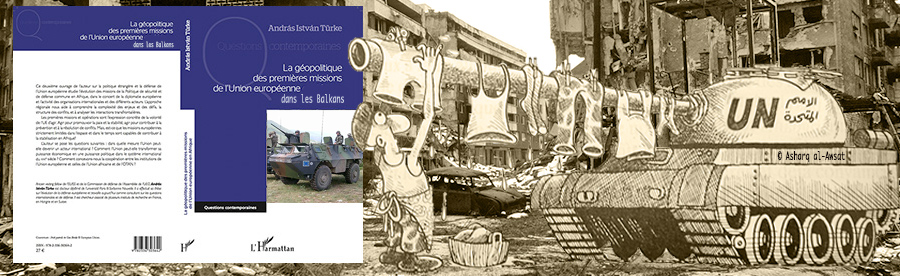
We are looking for sponsors for the English translation of these books, please contact turkeandras(at)gmail(dot)com