
Vous êtes ici
Agrégateur de flux
«Le supplément du dimanche» 1er novembre 2026
L'Ukraine est quotidiennement visée par des missiles et des drones russes, avec une nouvelle génération de drones très redoutables venus de la Russie. Sur la défensive, les Ukrainiens ont fait preuve d'imagination et d'innovation pour développer un véritable arsenal de drones. Une question de survie. Au Gabon, la détresse des familles victimes de crimes rituels prend une toute autre ampleur.
Catégories: France, Union européenne
Sahara occidental : la Russie et les Etats-Unis s’opposent au Conseil de sécurité sur l’avenir de la mission de l’ONU, qui ne sera pas reconduite après trente-cinq ans sur le terrain
La mission onusienne de maintien de la paix dans l’ex-colonie espagnole, que se disputent le Maroc et le Front Polisario, va cesser d’exister à compter du 1ᵉʳ novembre. Le Conseil de sécurité a échoué à en prolonger le mandat, suscitant la crainte d’une reprise des hostilités.
Catégories: Afrique
Royaume-Uni: le Premier ministre se dit ouvert à des excuses officielles sur l'esclavage
Le Premier ministre britannique Andy Burnham a assuré au quotidien The Guardian qu'il était ouvert à ce que son pays présente des excuses officielles pour son rôle dans la traite transatlantique d'esclaves, mais exclut toute réparation financière aux descendants. Des propos tenus avant un déplacement dans les Caraïbes, la semaine prochaine. À Antigua-et-Barbuda, le chef de file des travaillistes doit rencontrer les dirigeants du Commonwealth et le sujet des réparations sera à nouveau abordé.
Catégories: France, Union européenne
L'Afrique Réelle N°203 - Novembre 2026
Sommaire
Dossier : L’Algérie peut-elle se libérer de sa dépendance aux hydrocarbures ?
L’actuelle embellie des hydrocarbures est-elle durable ?
La vision pessimiste du FMI
Le gaz et la nouvelle stratégie sahélienne de l’Algérie
Dossier : L’Ethiopie à la croisée des chemins
L’Ethiopie entre centre et périphéries
La Constitution de 1994 prise dans le balancier ethnique
Les trois guerres d’Ethiopie
La colonisation des Oromo
Afrique, l'histoire à l'endroit
Interview de Bernard Lugan
Livres
Relire Kapuściński
Editorial de Bernard Lugan
ONU : la Russie remercie l’Algérie pour son ralliement à sa propre politique sahélienne
En politique internationale, il faut savoir choisir ses amis et surtout ne pas jouer double jeu. Moscou a fait comprendre cette règle élémentaire à l’Algérie qui est penaudement revenue dans l’alliance russe en abandonnant et en trahissant ses « amis » touareg. Aussi, en remerciement, le vendredi 30 octobre 2026, devant le Conseil de sécurité de l’ONU, la Russie a puissamment soutenu son allié algérien en mettant son veto au projet américain d’appui au plan marocain concernant le Sahara dit « occidental ». Pour rappel, il y a un an, sur la même question, le 31 octobre 2025, la Russie s’était abstenue, laissant ainsi bien isolé et fort humilié son allé historique algérien qui avait eu de « mauvaises manières » avec elle. Que s’est-il donc passé en une année pour que Moscou change ainsi totalement de politique ? Les abonnés à l’Afrique Réelle ne seront pas surpris. Le numéro du mois d’août 2026 de la revue contenait en effet un dossier dont le titre était : Au Sahel, la Russie va-t-elle réussir à redistribuer les cartes ? ainsi qu’un article intitulé L’Algérie va-t-elle sacrifier les Touareg ? Dans ces articles, j’annonçais que Moscou « tordait le bras » à l’Algérie afin de lui faire accepter un alignement sur ses propres intérêts sahéliens.Un retour en arrière s’impose. Ces derniers temps, au Sahel, l’Algérie s’affranchissait de son allié russe pourtant son fournisseur militaire quasi exclusif, à telle enseigne que les politiques d’Alger et de Moscou s’opposaient frontalement. La Russie soutient en effet les juntes sudistes au pouvoir contre leurs rébellions nordistes alors que l’Algérie soutenait tout au contraire ces mêmes rébellions nordistes.Or, cet orfèvre en la matière qu’est Sergei Lavrov, le ministre russe des Affaires étrangères, a fait comprendre à Alger qu’il était temps de « rentrer au bercail ». Une « persuasion » qui s’est faite en deux temps :
1) En refusant l’entrée de l’Algérie dans les Brics. Serguei Lavrov fut alors très clair en insistant sur la « convergence de vues » comme critère d’appartenance, la Russie privilégiant les États partageant une « lecture commune de l’ordre international ».
2) Et pour être encore davantage comprise par Alger, le 31 octobre 2025, lors du vote de la résolution 2797 du Conseil de sécurité sur la question du Sahara occidental, la Russie s’est abstenue et n’a pas utilisé son veto, laissant ainsi l’Algérie face à sa solitude diplomatique.
Avec ces deux exemples Moscou a clairement fait comprendre à Alger que sa politique sahélienne était en contradiction avec ses propres intérêts. Ayant bien « reçu » ce double avertissement, l’Algérie a donc abandonné les Touareg avant de voler militairement au secours du régime du Niger. La Russie l’a donc remerciée en utilisant cette fois son droit de veto au Conseil de Sécurité de l’ONU contre le texte américain qui faisait du plan d’autonomie marocain la seule base de négociation. Une leçon magistrale de grande diplomatie que les « danseurs à claquettes » et les « petits marquis » du Quai d’Orsay feraient bien d’apprendre… et qui est à l’opposé de ces émois moraux qui leur servent de ligne politique.
Une révolte lycéenne, et bien plus
La jeunesse de France se rebelle, entraînant dans son sillage d'autres secteurs d'une société excédée et exténuée par des années de maltraitance néolibérale. Face à cette flambée qu'il n'a pas su prévoir, l'exécutif applique la stratégie habituelle : répression policière, diffamation médiatique, (…)
/ Jeunes, Mouvement de contestation, Répression
Catégories: Diplomacy & Crisis News
De Santiago à Port-au-Prince
Dessinateur hors pair, Ernest Pignon-Ernest pratique, depuis plus d'un demi-siècle le collage in situ — pour troubler les lieux, raviver les mémoires, interroger les consciences. Si son art, qui allie héritage classique et vocation contestataire, a ses racines dans la vieille Europe, entre (…)
/ Art, Peinture, Haïti, Cuba, Chili, Mouvement de contestation, Autobiographie
Catégories: Diplomacy & Crisis News
Ministry of National Defense Issues Press Release Regarding "PLA Joint Combat Readiness Patrol"
No description
Catégories: Defence`s Feeds
Deputy Prime Minister Radosław Sikorski attends G20 Foreign Ministers' Meeting in Atlanta
On 30-31 October, Deputy Prime Minister and Minister of Foreign Affairs Radosław Sikorski participated in the meeting of the G20 heads of diplomacy in Atlanta. The event was hosted by US Secretary of State Marco Rubio.
Catégories: Defence`s Feeds
G20 Foreign Ministers' Meeting - Meeting between M. Jean-Noël Barrot, Minister for Europe and Foreign Affairs, and his Polish counterpart
No description
Catégories: Defence`s Feeds
G20 Foreign Ministers' Meeting - Minister for Europe and Foreign Affairs Jean-Noël Barrot's meeting with his Mexican counterpart
No description
Catégories: Defence`s Feeds
G20 Foreign Ministers' Meeting - Minister for Europe and Foreign Affairs Jean-Noël Barrot's meeting with his Indonesian counterpart
No description
Catégories: Defence`s Feeds
G20 Foreign Ministers' Meeting - Meeting between M. Jean-Noël Barrot, Minister for Europe and Foreign Affairs, and his British counterpart
No description
Catégories: Defence`s Feeds
Suited and booted: How Joseph Kabila went from president to rebel leader
What does Joseph Kabila launching a new rebel movement mean for DR Congo?
Catégories: Africa
Présidentielle 2027 : « Il continue de penser qu’il y a un chemin », Xavier Bertrand trace sa route vers une candidature
RÉCIT - Le président des Hauts-de-France a mobilisé ses amis politiques lors d’une réunion de travail organisée à huis clos, vendredi, au Sénat.
Catégories: France
Fire Devastated a Mongolian Nature Reserve. Who’s to Blame?
The fire in Numrug touches on cross-border capital compliance risks and geopolitical changes impacting Northeast Asia’s ecology.
Catégories: Diplomacy & Crisis News
La dislocation de l'Occident
Les essayistes néoconservateurs et la plupart des médias opposent un axe des puissances autoritaires (Chine, Russie, Iran, Corée du Nord) à l'alliance des démocraties libérales. Qu'y a-t-il de réel dans cette dichotomie ? L'historien Emmanuel Todd, qui la conteste, est rarement invité à exposer (…)
/ États-Unis (affaires extérieures), Russie, Géopolitique, Impérialisme, Conflit russo-ukrainien 2022-
Catégories: Diplomacy & Crisis News
Green Cities Can Make Room for New Homes and the Farms That Feed Them
Land may be assessed primarily for its potential commercial or residential value, overlooking the food, livelihoods and environmental services it already provides. Credit: Jorge Luis Baños/IPS
By Zhimin Wu
ROME, Oct 30 2026 (IPS)
A field at the edge of a growing city may be worth far more than its market price suggests. It may produce vegetables sold in nearby markets, support local livelihoods and provide green space in an increasingly built-up environment. It can also help cities manage water, adapt to climate shocks and strengthen local food supplies. As municipal authorities decide where new homes and infrastructure should go, understanding what their land already contributes can help them plan for housing and food together.
This question lies at the heart of World Cities Day, which the United Nations will mark on 31 October under the theme “Regenerating the City: Adequate Housing for All.”
This does not mean protecting every agricultural plot from development. Cities urgently need more homes, and housing must remain a priority. The task is to make better-informed decisions about where development should proceed and where maintaining productive agricultural land can offer lasting benefits
According to the United Nations, cities are now home to 45 percent of the world’s population and are projected to account for two-thirds of global population growth between now and 2050.
Accommodating this expansion will require enormous investment in housing, infrastructure and public services. It also presents an opportunity to reconsider how food production and urban development can support one another.
Agriculture is already an integral part of the life and economy of many cities around the world. Within urban areas and along their expanding boundaries, farmers cultivate vegetables, fruits and other crops that supply local markets, generate employment and income, particularly for small-scale producers, and improve access to fresh and nutritious food.
Beyond food production, urban and peri-urban agriculture can also strengthen climate resilience, contribute to the restoration of urban ecosystems and support the development of greener, healthier and more sustainable cities.
The proximity of farms to consumers can be especially valuable for perishable produce. Proximity to markets can reduce transport distances and, when supported by adequate handling and storage, help limit losses of perishable produce. Urban and peri-urban agriculture can also diversify food supply chains, giving cities additional sources of food when longer distribution networks face disruptions.³
Yet the contribution of these farms is not always adequately recognized in urban development decisions. Land may be assessed primarily for its potential commercial or residential value, overlooking the food, livelihoods and environmental services it already provides.
As cities expand, these wider benefits deserve greater consideration. Agricultural land can help absorb rainfall, support biodiversity and contribute to urban green infrastructure. With appropriate safeguards, farming can also make use of suitably treated wastewater and safely processed organic resources. Once agricultural land is converted to other uses, such benefits can be difficult to recover.
This does not mean protecting every agricultural plot from development. Cities urgently need more homes, and housing must remain a priority. The task is to make better-informed decisions about where development should proceed and where maintaining productive agricultural land can offer lasting benefits.
Rosario, Argentina, illustrates how municipal policy can bring these objectives together. Following the country’s economic crisis in 2001, the city developed an urban agriculture programme that transformed vacant and underused land into productive spaces. It created opportunities for low-income households, supported fresh-food production and brought agriculture into municipal development planning.
Municipal authorities established arrangements to connect producers with available land, including public and private plots. Rosario subsequently incorporated agriculture into municipal planning and, in 2016, introduced a Green Belt Project to support agroecological production around the city.
Its experience demonstrates how local governments can integrate food production into wider efforts to improve urban livelihoods and the environment.
The lesson extends beyond Rosario. Urban agriculture cannot replace rural farming, which remains indispensable for feeding cities. Its particular contribution lies in complementing rural production, especially through fresh produce, diversified supply chains and stronger connections between urban markets and surrounding agricultural areas.
Realizing these benefits requires sound management. Producers need access to suitable land and safe water, alongside effective food-safety safeguards. Water-efficient irrigation, protected cultivation, improved logistics and the recovery of nutrients from organic waste can help cities use scarce resources more effectively. The most useful innovations are those that local farmers can afford, operate and sustain.
This broader approach is reflected in the Food and Agriculture Organization of the United Nations’ Green Cities Initiative, launched in 2020 with the ambition of improving health and well-being in 1,000 cities by 2030.
The Initiative connects urban and peri-urban agriculture with forestry, green infrastructure and sustainable natural-resource management. Through the Green Cities Network, municipalities can exchange experience, build partnerships and identify practical solutions suited to their circumstances.
World Cities Day offers an occasion for municipal authorities to act. Two measures would make a practical difference.
First, cities can integrate food and agriculture into urban and territorial planning. Mapping agricultural land, identifying its producers and understanding its connections to markets and surrounding rural areas can help governments make more informed decisions about housing, infrastructure and land use.
Second, municipalities can create conditions that encourage sustainable agricultural investment through appropriate zoning, secure access to land, improved market infrastructure and technical support. Rosario demonstrates how municipal policies can help make agriculture a lasting part of urban development.
The cities of tomorrow will need more homes, better infrastructure and thriving economies. They also stand to gain from the agriculture that sustains their populations. Recognizing its full value can help cities make better decisions about what to build, what to preserve and how to grow.
Zhimin Wu is Assistant Director-General and Director of the Forestry Division at the Food and Agriculture Organization of the United Nations (FAO).
Catégories: Africa
Hong Kong’s Deadly 2025 Fire: Accountability on Lee’s Terms
A ministerial resignation, official apologies, and promises of reform leave a fundamental question unanswered: What power do Hong Kong citizens have to demand accountability beyond what their government is willing to offer?
Catégories: Diplomacy & Crisis News
On a Remote Island, Japan Puts Its Deep-Sea Mining Ambitions on Display
Experts argue that Japan’s rush to exploit rare-earth mud from the sea floor near Minamitorishima is driven less by resources than by the political value of being seen to use the island.
Catégories: Diplomacy & Crisis News
Why has Caf abandoned plans to hold Afcon every four years?
The Africa Cup of Nations will remain on a two-year cycle after the Confederation of African Football performed a U-turn on a decision taken last December.
Catégories: Africa
Pages


© 2012-2018 Europa Varietas Foundation © 2015-2018 Europa Varietas Association
www.europavarietas.org | info(@)europavarietas(dot)org | Switzerland
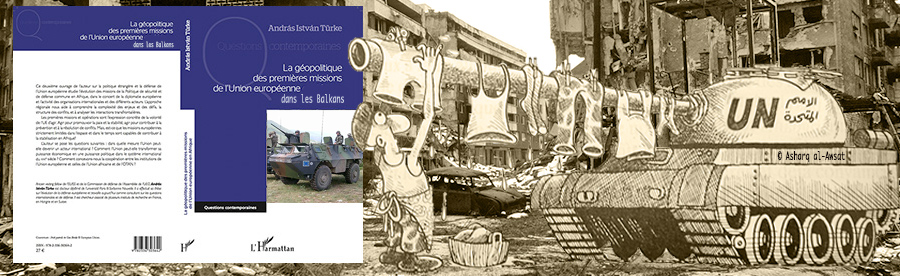
We are looking for sponsors for the English translation of these books, please contact turkeandras(at)gmail(dot)com