
Vous êtes ici
Agrégateur de flux
Why has Caf abandoned plans to hold Afcon every four years?
The Africa Cup of Nations will remain on a two-year cycle after the Confederation of African Football performed a U-turn on a decision taken last December.
Catégories: Africa
Will Islamic Finance Expand Financial Inclusion in Uzbekistan?
Does removing a religious objection make financing accessible and affordable?
Catégories: Diplomacy & Crisis News
Japan-Taiwan Relations Enter ‘Deep Waters.’ Will They Sink or Swim?
Economic, technological, and societal ties between the two sides have never been stronger, yet political constraints are becoming more and more visible.
Catégories: Diplomacy & Crisis News
Midterms 2026 : quelle perception de la politique étrangère des États-Unis à la veille des élections de mi-mandat ?
L’article Midterms 2026 : quelle perception de la politique étrangère des États-Unis à la veille des élections de mi-mandat ? est apparu en premier sur IRIS.
Catégories: Diplomacy & Defense Think Tank News
African Athletes Should Be Free to Be Themselves
The legendary lesbian South African runner Caster Semenya successfully contested regulations aimed at policing women’s bodies by World Athletics, ultimately winning her case at the European Court of Human Rights in 2025. Credit: Shutterstock
By External Source
DAKAR, Oct 30 2026 (IPS)
Senegal is welcoming athletes and visitors from across the globe as part of the 4th Summer Youth Olympic Games, the first-ever Olympics in Africa. Lesbian, gay, bisexual and transgender (LGBT) African athletes, including from Senegal, have repeatedly participated in and won competitions–while advocating their rights to compete and speaking out against discrimination.
In 2024, Cindy Ngamba, an openly lesbian boxer born in Cameroon, made history at the Paris 2024 Olympics by winning the first medal for the Refugee Olympic Team.
The legendary lesbian South African runner Caster Semenya successfully contested regulations aimed at policing women’s bodies by World Athletics, ultimately winning her case at the European Court of Human Rights in 2025. Along the way, she won a total of six medals across the Olympics and World Athletics Championships and debunked arbitrary definitions of femininity and racial stereotypes faced by African athletes.
In 2020, Phuti Lekoloane founded the African Pride Games, creating a safe platform for competition regardless of one’s identity and demonstrating that sport “can drive equality, inclusion, and unity.” After coming out publicly in July 2015, he was one of Africa’s first openly gay male footballers.
The climate of hatred and persecution created by the new law puts LGBT people, including athletes, staff, and fans at the Dakar Youth Olympics, at risk of human rights abuses
Senegal’s hosting of the Youth Olympics, however, shows the need to keep fighting for the rights of LGBT people in Africa.
In March 2026, Senegal’s parliament amended its penal code, doubling to 10 years the maximum prison term for consensual same-sex conduct and criminalizing “promotion” of, or support to, LGBT people and organizations. Between February and July, hundreds of people were arrested in connection with the amendment of the penal code, according to the African Forum for the Defense of Human Rights (Rencontre Africaine pour la Défense des Droits de l’Homme, or RADDHO. Senegalese government officials have frequently used incendiary rhetoric against LGBT people.
The climate of hatred and persecution created by the new law puts LGBT people, including athletes, staff, and fans at the Dakar Youth Olympics, at risk of human rights abuses.
Senegal’s then Prime Minister Ousmane Sonko said in April 2026 that, “any athlete coming solely to practice their sport is welcome and can freely pursue their activity. However, if someone comes for reasons other than sport, the [anti-LGBT] law of the country will apply to them, as it applies to everyone.”
The Senegalese government’s hostility to LGBT rights runs contrary to the Olympic Charter, which prohibits discrimination of any kind, including based on sexual orientation. Olympic hosts are required by their contract with the International Olympic Committee (IOC) to prevent, investigate, and remedy human rights abuses related to the Games, including by engaging with affected groups.
Senegalese authorities, through the Youth Olympic Games Organising Committee, have rolled out measures to promote human rights protections, which they described as a key indicator for the success of the competition. But these protections have so far excluded the rights of LGBT people.
Several athletes have already pushed back against Senegal’s draconian law. Jérémy Clamy-Edroux, an openly gay, former professional rugby player, and Brahim Naït-Balk, an openly gay football coach, were among 29 African leaders who signed a May 2026 letter calling for the Senegalese government to open renewed dialogue on the law.
In their letter, they raised concerns about abuses faced by LGBT people and asserted that Pan-Africanism, previously embraced by Senegal’s President Bassirou Diomaye Faye himself, should advance liberation for all Africans, regardless of their sexual orientation or gender identity.
The Dakar Youth Olympics ends November 13. Before then, Senegal’s government should repeal its anti-LGBT laws and free anyone still detained under the prior amendments. Senegal should use the Youth Olympics to protect LGBT people and fully embrace Olympic values.
Vincent Sima Olé is a senior program and sport and human rights coordinator and Larissa Kojoué is an LGBT rights researcher, both at Human Rights Watch.
Catégories: Africa
What Tokayev’s Economic Agenda Means for Kazakhstan’s International Partnerships
The Kazakh president’s insistence that public spending mobilize private capital, rather than substitute for it, gives the initiative an international dimension.
Catégories: Diplomacy & Crisis News
India’s China+1 Dilemma: It May Need China to Depend Less on China
India wants to rely less on China. Interviews with executives and policymakers suggest that whether Chinese firms take part matters less than what India gets for letting them.
Catégories: Diplomacy & Crisis News
Pakistan’s Trump Bet Meets the US Midterms
The weeks after November 3 will test whether Pakistan’s moment in Washington was a strategy or a stroke of luck.
Catégories: Diplomacy & Crisis News
Governing Just Transitions through policy coherence: challenges and opportunities on the path towards climate-neutral, sustainable futures
Just Transitions have emerged as a central pillar of global climate policy, particularly following their formal inclusion in the Paris Agreement in 2015. Their rapid adoption at both national and international levels is notable given persistent shortcomings in global climate and sustainable development governance. However, Just Transition initiatives remain fragmented, conceptually contested, and predominantly focused on energy, and their governance has received comparatively little academic attention. At the same time, policy coherence, a governance principle concerned with maximising synergies and minimising trade-offs and extensively studied in the context of the 2030 Agenda, is widely invoked in policy discourse as essential for Just Transitions, yet its role in Just Transition governance has received little systematic attention in the literature. This dissertation therefore asks: to what extent can policy coherence enable the governance of Just Transitions, and under which conditions? Just Transitions here are understood as transitions that advance climate-neutral, sustainable futures in ways that are substantively just, with substantive justice defined as the expansion of opportunity freedoms, the reduction of inequalities across all dimensions, and the fulfilment of the 2030 Agenda’s promise to ‘leave no one behind.’ Part I (Chapters 2–3) examines the relationships between policy coherence, Just Transition, goal attainment, and inequality reduction. Drawing on survey data from 131 COP28 delegates (Chapter 2) and empirical analysis of 40 sustainable development policy processes across multiple countries (Chapter 3), the findings indicate that policy coherence is widely perceived as integral to Just Transitions and is strongly associated with multidimensional, cross-sectoral approaches that extend beyond energy. Empirical analysis further shows that higher coherence is linked to greater policy effectiveness in achieving multiple objectives. However, coherence alone does not reliably reduce inequalities and, in some cases, can exacerbate them. Part II (Chapters 4–6) examines the temporal, discursive, and political conditions under which policy coherence can enable the governance of Just Transitions. Drawing on policy document analysis and semi-structured interviews, these conditions are analysed through an in-depth case study of Germany’s energy transition, the Energiewende, a high-stakes transition context. Findings demonstrate that governing Just Transitions through policy coherence requires balancing short-, medium-, and long-term objectives, as temporal dynamics alter policy interactions and reveal trade-offs and synergies that evolve over time (Chapter 4). Moreover, policy coherence is socially and discursively constructed, with actors’ perceptions and interpretations strongly shaping whether policies and their implementation are experienced as coherent or incoherent (Chapter 5). Political inequalities in decision-making around the German coal phase-out and onshore wind phase-in further constrain coherence and can lead to slower climate mitigation outcomes (Chapter 6). Together, the findings indicate that while policy coherence may appear to be a necessary principle for the governance of Just Transitions, it is not sufficient. While widely endorsed, its ability to enable the governance of Just Transitions is context-dependent and contingent on its implications for social justice. In addition, policy coherence should not be seen as a fixed end-state, but as a dynamic and imperfect governance principle that is deeply shaped by politics and discourse.
Catégories: Diplomacy & Defense Think Tank News
Egységes portált fejleszt a gazdáknak az APIA
Új digitális rendszert fejleszt a romániai Mezőgazdasági Kifizetési és Intervenciós Ügynökség, az APIA. A Gazdák Egységes Portáljának célja, hogy egyszerűbbé tegye a mezőgazdasági támogatásokkal kapcsolatos ügyintézést, és csökkentse a gazdák adminisztratív terheit. Az új platformon a tervek szerint elektronikusan lehet majd továbbítani a támogatási kérelmekhez szükséges igazoló dokumentumokat, követni a benyújtott kérelmek és panaszok állapotát, […]
Articolul Egységes portált fejleszt a gazdáknak az APIA apare prima dată în Kolozsvári Rádió Románia.
Catégories: Határon túli magyar portálok összesített hírei
Australia Raises Student Visa Costs and Cuts Working Holiday Maker Slots
To placate those drifting off toward One Nation, the government saw a couple of easy targets in international student and working holiday makers to signal that it was “doing something” about immigration.
Catégories: Diplomacy & Crisis News
Alkalmazkodni mindenképp kell a mezőgazdaságban, a kérdés a hogyan
Nem az a kérdés, hogy kell-e alkalmazkodnia a mezőgazdálkodásnak az egyre kedvezőtlenebb környezeti feltételekhez, hanem a hogyan – nyilatkozta a Kolozsvári Rádiónak a Partiumi Falugazdász Hálózat szervezeti vezetője, Kovács Szabolcs István. De nincs minden gazdaságra érvényes recept, hiszen vidékenként változik a csapadékmennyiség, a talajfeltételek és a földművesek lehetőségei. A megoldásokat a helyi adottságokhoz kell idomítani […]
Articolul Alkalmazkodni mindenképp kell a mezőgazdaságban, a kérdés a hogyan apare prima dată în Kolozsvári Rádió Románia.
Catégories: Határon túli magyar portálok összesített hírei
Refugee athlete to make history for second time at Youth Olympics
Yiech Pur Biel leads the first ever refugee team to take part at the Youth Olympics.
Catégories: Africa
Amid India–China Border Tensions, Mega Hydel Project in Arunachal Pradesh Faces Local Heat
Locals are protesting India’s plans to construct a hydropower project on the Siang River. Delhi says the project is important for national security.
Catégories: Diplomacy & Crisis News
New Biodiversity Pledges Emerge at COP17, But Funding Gap Persists
Diego Mesa, GEF CEO and chairperson, addresses media on the status of finance mobilisation at COP17. Credit: Stella Paul/IPS
By Stella Paul
YEREVAN, Armenia, Oct 30 2026 (IPS)
The second week of COP17 was dominated by discussions on biodiversity finance, with new pledges announced and donor outreach intensifying. Yet as the summit approached its close, the financing gap for implementing the Kunming-Montreal Global Biodiversity Framework (KMGBF) remains largely unchanged.
Prior to COP17, the first global review of progress toward the KMGBF, often called the global biodiversity review, painted an alarming picture: the commitment to mobilise USD 200 billion annually for biodiversity was still far from being achieved. The conference therefore opened amid growing pressure on governments over missed targets, corporate responsibility and Indigenous rights.
Against that backdrop, finance has become one of the most closely watched issues in the negotiations.
“We started the replenishment cycle number 9, for 2026 to 2030, and the initial contributions were announced in June in the General Assembly of the Global Environmental Facility (GEF) in Uzbekistan’s Samarkand. And those initial contributions came at USD 3.9 billion for the next four years,” said Diego Mesa, the recently appointed CEO and Chairperson of the Global Environment Facility, at a press conference.
New and Emerging Donors, Including Cities
Since the adoption of the KMGBF, a notable financing trend has emerged: cities and provinces have begun contributing directly to biodiversity finance mechanisms.
The trend started two years ago when Quebec, the Canadian province that hosted COP15 in 2022, independently donated USD 1.4 million to the GBFF.
At COP17, the trend continued. On Oct 26 – observed as Finance Day, the City of Berlin pledged EUR 50,000 (USD 56,000) to the GBFF, while Quebec announced a second contribution of CAD 1.5 million.
Collectively, national and sub-national governments pledged more than USD 60 million to the GBFF. According to GEF sources, this included contributions from Germany (EUR 50 million), Iceland (ISK 160 million) and Monaco (EUR 1.5 million).
While the expanding donor base is an encouraging sign, the world still needs an estimated USD 200 billion annually by 2030 to halt and reverse biodiversity loss under Target 19. The current pace of finance mobilisation, therefore, remains far slower than what is required.
Mesa acknowledged these concerns about the biodiversity finance gap but argued that GEF funding has a catalytic effect, attracting additional public and private investment. He noted that each dollar committed through the facility typically mobilises several more dollars from other sources, and many donor countries also provide biodiversity finance through bilateral programs outside the GEF system.
“We obviously, you know, are concerned. We’ve read the (global) review report. But what we also need to highlight is that, in addition to the funds that come through the GEF, we have to take into account what I mentioned about being able to mobilise additional funds, whether it’s, you know, a multiplier of 8 or 8.2, on average, if we take GEF 8 as a baseline or blended finance, which is about 18.5,” he said.
Astrid Schomaker, Executive Secretary of the Convention on Biological Diversity, stressed that progress remains insufficient despite some gains.
“We all know that a lot of commitments were made four years ago in Montreal (including) mobilising at least USD 200 billion a year for biodiversity from 2030, from all sources. Reduce harmful incentives by at least USD 500 billion a year and align public and private financial flows with a framework. We have seen biodiversity finance increase quite substantially, but also from very, very low levels. Some figures suggest that we would have achieved USD 19 billion in 2024. That would be close to the 2025 milestone of 20 billion. But we also know that aid budgets are a lot under pressure, so that progress is not yet secure, to say the least,” Schomaker said in an address to the delegates on the Finance Day.
“From the side of the Secretariat, we would point to three questions or priorities that we hope you can discuss at this COP and move forward on. First, bring national biodiversity strategies and action plans into national budgets. Second, reform harmful incentives. And third, make public and development finance go further,” Schomaker said.
New Coalition Targets Harmful Subsidies
While much of the discussion centred on mobilising new biodiversity finance, negotiators also stressed the need to curb environmentally harmful spending. In that context, momentum grew around efforts to reform harmful subsidies with the launch of a new coalition of countries committed to Target 18.
Known as the “Friends of Target 18”, the coalition focuses on the KMGBF target to reduce harmful incentives by at least USD 500 billion per year while scaling up positive incentives for biodiversity.
Led by Colombia and Finland, and supported by the CBD, the coalition also has backing from the International Institute for Sustainable Development (IISD), the Organisation for Economic Co-operation and Development (OECD) and the United Nations Development Programme’s Biodiversity Finance Initiative (UNDP BIOFIN).
“Our work here in Yerevan can influence how natural resources are used, how goods are produced and consumed, and where public and private financial resources are directed,” said Hambardzum Matevosyan, Minister of Environment of the Republic of Armenia and COP17 President.
So far, only five countries have joined the initiative. However, Marina Von Weissenberg, Senior Ministerial Adviser of Finland and co-chair of the Friends of Target 18, expressed confidence that more countries would follow.
“We don’t need to spend more to close the biodiversity funding gap, we need to spend better. Governments have a real opportunity here to reshape public spending with future generations in mind, but they can’t do it alone. International coordination is key to giving governments the confidence to lead change,” she said.
Meanwhile, GEF continues to focus not only on raising new money but also on broadening the donor base.
“This is exactly what we were doing with this pledging session, with the USD 5 million going to the GEF Trust Fund, and with the 60 million going into the GBFF. But also expanding the donor base. And that’s why we were very pleased to announce that we have a total of nine new contributors to the GEF family of funds,” Mesa said to IPS.
GEF Keeps Pledging Window Open
In an effort to attract additional support, GEF has made a significant change to its replenishment process.
Traditionally, pledging windows close when a replenishment cycle ends. Under that system, pledges for the ninth replenishment cycle would have closed earlier in June, when GEF held its Assembly in Samarkand.
This year, however, the window remains open, allowing countries to make contributions throughout the year.
“This is the first time that we kept the window open for pledging. And this is to respond to requests to be more flexible from the donor side. So, we will have, hopefully, one additional pledging session in the UNFCCC COP (COP31) next month,” Mesa told IPS.
“But we also expect additional contributions to take place in the next calendar year. So, the window will remain open,” he added.
IPS UN Bureau Report
Related Articles
- COP17 Celebrates Indigenous Leaders Amid Demand for Greater Inclusion in Biodiversity Decisions
- What a Seawater Sample Can Tell Scientists About Ocean Health
- Farwiza Farhan’s Fight To Save Tropical Hotspot of Indonesia – the Leuser
Excerpt:
This first part of a two-part series on biodiversity finance at CBD COP17 examines the status of finance mobilisation and new funding commitments.
Catégories: Africa
‘People’s Republic of the Disappeared’: Stories of Horror But Also Resilience
“Residential surveillance at a designated location” – a form of enforced disappearance – is becoming a go-to tool for the CCP, as a new book details.
Catégories: Diplomacy & Crisis News
China Owes Climate Accountability to South Asia
Beijing’s responsibility stems not only from its massive contribution to global gas emissions, but also from its capability as a green technology provider and its position as an upstream actor.
Catégories: Diplomacy & Crisis News
Rumen Radev: Bulgaria has been removed from the FATF Grey list for money laundering
Bulgaria has been removed from the Financial Action Task Force (FATF) "grey list" for money laundering - a decision that restores the country's international standing and creates new opportunities for the Bulgarian economy, businesses and citizens..
Catégories: Defence`s Feeds
Pages


© 2012-2018 Europa Varietas Foundation © 2015-2018 Europa Varietas Association
www.europavarietas.org | info(@)europavarietas(dot)org | Switzerland

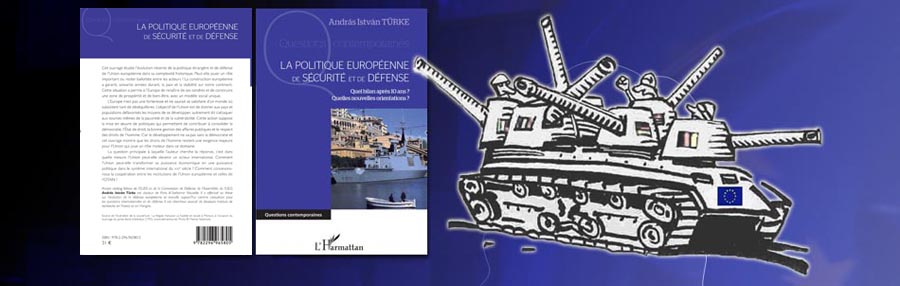
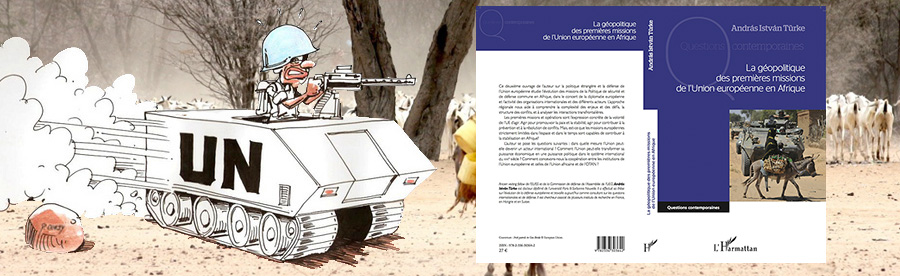
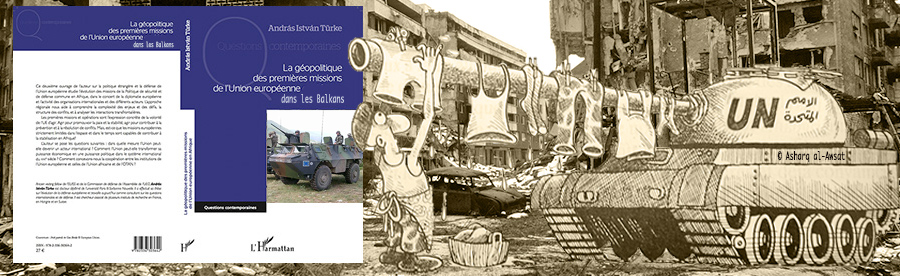
We are looking for sponsors for the English translation of these books, please contact turkeandras(at)gmail(dot)com