
Vous êtes ici
Agrégateur de flux
Des voitures incendiées et des magasins pillés : des violences anti-migrants éclatent en Afrique du Sud
L’Afrique du Sud a connu des flambées de violence récurrentes, ciblant souvent les migrants des pays voisins.
Catégories: Afrique
Minutes - Tuesday, 23 June 2026 - PE790.798v01-00 - Committee on Foreign Affairs , Committee on International Trade
Source : © European Union, 2026 - EP
Catégories: Europäische Union
Minutes - Tuesday, 23 June 2026 - PE790.798v01-00 - Committee on Foreign Affairs , Committee on International Trade
Source : © European Union, 2026 - EP
Catégories: European Union
Nearly 50,000 Women and Girls Killed or Severely Injured in Gaza in Three Years of War – One in 21 Gazan Women and Girls
Children in Gaza wait in the hope of receiving food. Credit: UN News
By UN Women
UNITED NATIONS, Oct 9 2026 (IPS)
Since October 2023, 50,000 women and girls in Gaza have been killed or seriously injured.
- • UN Women estimates that nearly 50,000 women and girls in Gaza have been killed or severely injured since the onset of war in October 2023 [1], amounting to one in 21 Gazan women and girls losing their life or living with lifelong disabilities [2].
• More than 38,000 women and girls have been killed and 11,700 severely injured, the result of Israeli airstrikes and land military operations.
• While most of the casualties recorded took place during the first two years of the war, women and girls continue to be targeted despite a ceasefire agreement entering into effect in October 2025. Two hundred seventy-seven women and girls are among those who have been killed in Gaza over the past year.
Nearly every woman and girl in Gaza is displaced.
- • More than 150 evacuation and movement orders have been issued across Gaza by the Israeli Defense Forces since October 2023, forcing nearly one million women and girls from their homes – nearly every woman and girl in Gaza.
• The majority of women and girls in Gaza live in tents or in the ruins, with no privacy. In conditions that are incompatible with survival and dignity, women and girls are caring for children, the sick, the injured, and for the elderly, cooking and cleaning without the basic means to carry out these responsibilities.
• Women are being forced to deliver babies in unsafe and unsanitary conditions, putting their lives at risk. At the same time, the number of miscarriages reached almost 4,000 in the first six months of 2026, triple the number recorded during the last six months of 2025.
The number of widows and those assuming the role of head of household in Gaza has doubled since October 2023.
- • Nearly one in four households in Gaza – an estimated 86,290 households – is now reportedly headed by a woman, compared to the pre-October 2023 rate of one in nine.
• For women-headed households, the impact extends beyond the grief of losing a husband, father or other loved one. Many are now carrying sole responsibility for providing for, protecting, and holding their families together in increasingly devastating conditions.
Despite the ceasefire, women and girls in Gaza continue to face severely limited access to food, shelter, safe water, and hygiene supplies, alongside ongoing hostilities and insecurity.
- • Intense and widespread bombing has leveled homes, businesses, hospitals, schools, and shops, making it extremely hard for women and girls to access essential services and basic goods.
• Restrictions on humanitarian access and bombardment continue to cause immense suffering. Between July and December 2026, an estimated 702,000 women and girls are projected to face high levels of acute food insecurity (IPC Phase 3+, crisis or worse), with devastating effects on their health, including the risk of malnutrition [3].
The steepest recorded decline in aid is threatening a lifeline to women and girls in Gaza: women’s organizations.
- • UN Women surveyed women’s organizations working on the frontlines of the response in Gaza and the occupied West Bank. Thirteen of the 14 organizations surveyed reported that the level of need among women and girls has increased since 2025. All organizations surveyed had seen an increase in gender-based violence, poverty, and mental health distress since 2025. Thirteen of the 14 organizations had seen an increase in child marriage.
• At the same time, 13 of the 14 organizations surveyed by UN Women reported that they do not have the capacity to meet the growing needs of women and girls. To cope with the lack of funding, nearly two thirds of the organizations told UN Women they had been forced to put women and girls on waiting lists or turn them away.
UN Women is on the ground in Gaza. We work with women-led and women’s rights organizations to provide lifesaving and critical support to women and girls, including protection services and gender-based violence case management, legal aid, mental health and psychosocial support, and emergency cash and livelihoods assistance.
From fitting women and girls with prosthetics and offering counselling to survivors, to ensuring that the humanitarian response is shaped by the experiences and perspectives of women and girls, our support is helping them to stay afloat. But women and girls in Gaza need peace.
UN Women calls for the ceasefire in Gaza to be fully implemented. We call for international law to be upheld, accountability for violations, and the protection of women and girls and all civilians. Humanitarian assistance must reach those in need – at scale and without obstruction. Women and girls must be placed at the centre of response and recovery efforts.
[1] The proportion was calculated by combining women and girls killed or injured (38,000 and 11,700, respectively).
[2] The proportion was calculated by dividing the combined figure of 49,700 women and girls killed or injured (38,000 and 11,700, respectively) by PCBS’s estimated female population of Gaza at the end of 2025 (approximately 1.06 million). This gives 4.69 per cent, equivalent to approximately one in 21 women and girls. The calculation assumes no overlap between the reported deaths and injuries. Population source: PCBS, 8 March 2026.
[3] UN Women estimate based on the IPC Gaza Strip Special Brief, published 13 August 2026. The estimated 702,000 women and girls facing acute food insecurity at crisis-level or worse (IPC Phase 3+) during July–December 2026 is calculated by applying PCBS’s 2025 female population share (49.7 per cent) to the IPC projected caseload of 1,412,421 people. The calculation assumes proportional representation of women and girls across IPC phases and is rounded to the nearest thousand.
IPS UN Bureau
Catégories: Africa, European Union
What Pakistan Will and Won’t Do in Yemen
Operationally, it would make little sense for Pakistan to send in large conventional ground forces to Yemen simply to put the brakes on Houthi advances.
Catégories: Diplomacy & Crisis News
Iran’s Theory of Victory
Tehran’s fight for great-power status in the post-American Middle East.
Catégories: Diplomacy & Crisis News
Trump Is Gutting America’s Core Geopolitical Advantage
Robert Zoellick, an expert on the global economy who served as U.S. trade representative and World Bank president, makes the authoritative case that President Donald Trump’s antagonism toward Canada and Mexico is destroying an economic and security partnership that that enables the United States to project power globally.
Catégories: Diplomacy & Crisis News
Európai partnerség a jövő nátriumion-akkumulátorainak fejlesztésében: régiónkban erősít a piacvezető Clarios
Catégories: Kelet-Közép-Európa
Inter Cars: megújított szerződés és hatszoros növekedés Szigetszentmiklóson
Catégories: Kelet-Közép-Európa
Protection That Holds: Keeping Nature Safe From Extraction
By Madhu Rao and Tyson Miller
SINGAPORE, Oct 9 2026 (IPS)
When governments gather in Yerevan this month for the 17th UN Convention on Biological Diversity, they will weigh a promise nearly 200 countries adopted six years ago: to effectively conserve at least 30 percent of land, inland waters, and sea by 2030. Achieving the ambitious 30×30 target is essential to sustaining the systems humanity relies on for survival—including crop pollination, purification of water and air, and climate regulation—as well as the biodiversity that underpins food production, fisheries, and tourism.
Unfortunately, the world is not on track to achieve this target. Moreover, the emphasis on the quantitative dimension of the 30×30 target has often overshadowed its more critical objective: ensuring that areas of high biodiversity value are protected, conserved, and connected through effective and equitable management.
The struggle to deliver on international commitments reflects a fundamental challenge. The Global Biodiversity Framework requires countries to halt and reverse biodiversity loss while pursuing economic growth, and businesses are increasingly expected to mitigate nature-related impacts. The ongoing expansion in infrastructure, mining, and the energy transition places additional pressure on biodiversity-rich ecosystems, creating difficult trade-offs that must be carefully managed.
The fundamental question remains: how do we reconcile economic development with meeting biodiversity commitments?
A new analysis of tropical countries contains insights vital to answering that question. Most importantly, it found that oil and gas concessions overlap nearly 61 million hectares—roughly two and a half times the size of the United Kingdom—of protected and conserved areas. Mining concessions overlap another 43 million hectares. Such conditions can turn protected and conserved areas into ‘paper parks’: places protected in law but vulnerable to extractive industries in practice.
What the Maps Reveal
The analysis examined a wide range of some of the world’s most vital ecosystems and the industrial pressures closing in on them—oil and gas, mining, industrial logging, and large-scale agriculture—across the Amazon, Central America, the Congo Basin, and Southeast Asia, with further examples from the Global North. The report focused on the tropical forests and marine ecosystems that not only harbor irreplaceable biodiversity but also remain at the center of conflicts between extraction and conservation.
Senegal, for example, is close on paper to protecting 30 percent of its territory, yet oil and gas blocks cover 99 percent of both the country’s protected areas and identified Key Biodiversity Areas. The remaining undisturbed forest in Cambodia largely lies inside protected areas, yet a fifth of those areas face mining concessions and most contain land of interest to oil and gas companies. In the Democratic Republic of Congo, nearly three-quarters of the ambitious new Kivu-Kinshasa Green Corridor overlaps with oil and gas blocks included in a recent licensing round.
This contradiction between conservation in policy and extraction in practice can also be seen in high income countries. The United States has opened Bears Ears National Monument to mining and is threatening new oil drilling in the Arctic National Wildlife Refuge, and the UK also allows fossil-fuel companies to drill in protected areas.
There is further tension. Some of the mining pushing into protected areas is for minerals fueling the energy transition. Securing a stable climate and securing nature are both essential, and one should not be pursued by quietly sacrificing the other.
We need to consider not only how much additional territory must be brought under protection by 2030, but whether areas already counted as protected and conserved are genuinely conserved, effectively managed, and delivering meaningful biodiversity outcomes.
The Path Forward
High-integrity implementation of 30×30 means prioritizing places that matter most for biodiversity and ensuring they remain ecologically intact, connected, effectively conserved, and equitably governed. It means upholding Indigenous Peoples’ and local community rights and protecting these places from incompatible extractive and large-scale industrial activities.
There are four critical components. The first is the mitigation hierarchy, which calls for avoiding harm whenever possible before considering other measures. Areas of highest biodiversity value, including strictly protected areas, should be no-go zones for extractive industry.
The second is policy coherence. A protected area sits with a ministry of environment while a mining concession sits with a ministry of mines or energy, and unless biodiversity is built into the decisions of every economic sector, the two will keep colliding.
The third is biodiversity-inclusive spatial planning, which enables governments to clearly recognize where nature is protected and where development can proceed. Protect here, develop there.
Finally, effective and equitable governance, including rights-based approaches, is essential. Indigenous peoples and local communities steward some of the world’s most intact and biodiverse lands, including many areas of global importance for biodiversity. Their rights, knowledge and leadership are central to effective conservation.
With only four years left, the commitment worth making in Yerevan is durable protection for the areas that matter most, so they remain intact, connected, and free of the industries that would undermine them. We must make sure that 30×30 is not a promise that only exists on a map, but is a pathway to true biodiversity protection for our collective survival.
Madhu Rao, Chair of the IUCN World Commission on Protected Areas and Tyson Miller, Executive Director of Earth Insight
IPS UN Bureau
Catégories: Africa, European Union
The Bangsamoro’s New Government Faces a Test of Public Trust
The main challenge of the incoming administration will be to sustain the peace process with Manila while representing the interests of local residents.
Catégories: Diplomacy & Crisis News
Former Philippine President Duterte Fit to Stand Trial, ICC Says
An independent panel of experts said that the 81-year-old "has the capacity to understand the charges" and "the purpose and consequences" of the trial proceedings.
Catégories: Diplomacy & Crisis News
United Kingdom : Old K2 'gang of three' reunited at Forward Global
A year after London investigator Charles Carr joined Forward Global as partner in the French Strategic communications firm's London office, his two former lieutenants at K2 Intelligence in London, Darren Matthews and Frédéric Maendly, are to join him.
Catégories: Defence`s Feeds
Georgia : Anzor Chubinidze, Ivanishvili's trusted gatekeeper amid Georgian intelligence turmoil
It's a well-oiled system, as described by several former Georgian ministers and security officials. Their phone rings, number withheld: a [...]
Catégories: Defence`s Feeds
Cambodia/North Korea/Russia/Ukraine : Ukraine's GUR hot on heels of Russian drone warfare experts
Ukraine's GUR military intelligence service has for months been tracking the foreign movements of Russian drone warfare specialists. Several such [...]
Catégories: Defence`s Feeds
France/Germany/Taiwan : Taiwan VP's discreet committee steering Taipei's foray into Europe
Taiwan's diplomatic successes in Europe are being spearheaded by a dedicated working committee chaired by Taiwan's Vice-President Hsiao Bi-khim, Intelligence [...]
Catégories: Defence`s Feeds
Vietnam : Space sector latest target of ministries' turf war
The Vietnamese Ministry of Public Security (MPS) has quietly taken on new responsibilities. Over the last few months, some space [...]
Catégories: Defence`s Feeds
United States : Chinese partner in Trump stablecoin project rues second US crypto investment
In late August, Aqua1 Foundation, the China-linked investor which last year put $100m into Trump family-owned crypto firm World Liberty [...]
Catégories: Defence`s Feeds
US Has Opened Direct Talks With Myanmar Government, Report Claims
The outreach, which marks a significant shift in U.S. policy, is aimed at curbing online scamming operations and gaining access to the country's rare earth deposits.
Catégories: Diplomacy & Crisis News
A Raid on a Gay Bar Risks Taiwan’s LGBTQ-Friendly Reputation
An attorney says authorities overstepped legal bounds, and activists warn of discrimination ahead of Asia's largest Pride event.
Catégories: Diplomacy & Crisis News
Pages


© 2012-2018 Europa Varietas Foundation © 2015-2018 Europa Varietas Association
www.europavarietas.org | info(@)europavarietas(dot)org | Switzerland
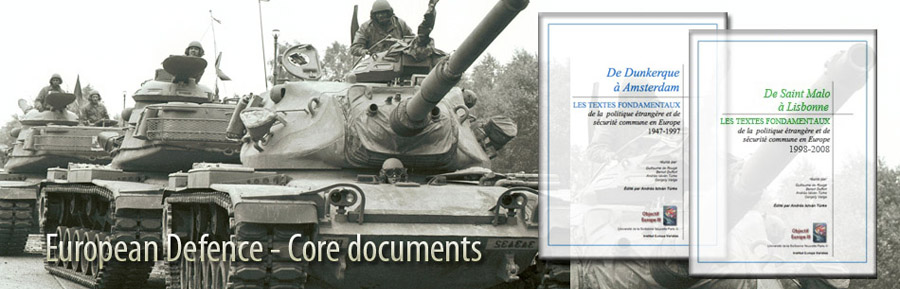
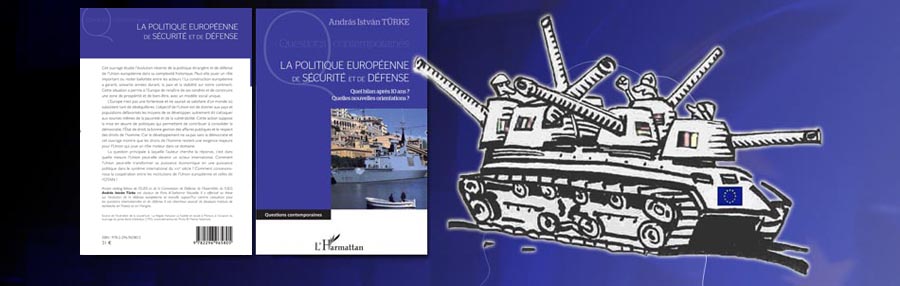
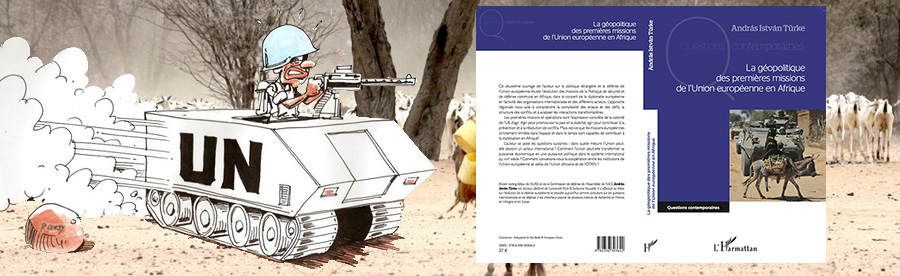
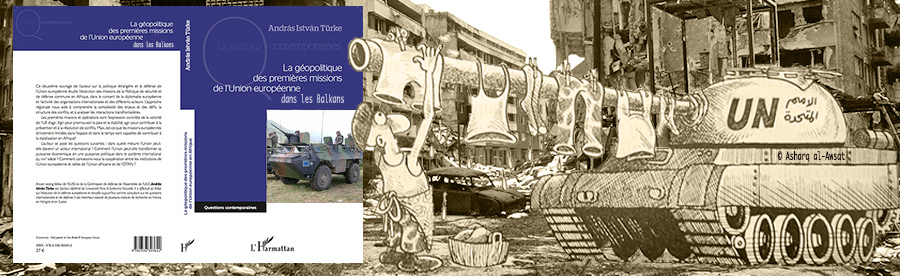
We are looking for sponsors for the English translation of these books, please contact turkeandras(at)gmail(dot)com