
Vous êtes ici
Agrégateur de flux
Mali : le FLA montre des militaires maliens capturés
Au Mali, les rebelles indépendantistes du Front de libération de l'Azawad (FLA) ont rendu public des vidéos montrant des militaires maliens prisonniers qu'ils détiennent.
Cela intervient dans un contexte précis : plusieurs associations de défense des droits de l'Homme ont accusé l'alliance "jihadistes et rebelles indépendantistes" d'avoir exécuté dans le nord du Mali des militaires de l'armée régulière, avant d'appeler à une enquête impartiale.
Catégories: Afrique
Avis de recrutement d'un Technicien(ne) de Chantier/de Production BTP
Le cabinet Nur Conseil RH recherche, pour le compte d'une entreprise partenaire, leader dans les secteurs du transport, du BTP et de la vente de matériaux de construction au Burkina Faso, un(e) Technicien(ne) de Chantier / de Production BTP.
Dans le cadre du renforcement et de la planification de ses activités, ce recrutement vise à identifier un profil dynamique, motivé et rigoureux pour assurer le suivi opérationnel du site de production à Ouagadougou.
I. Missions principales
Rattaché(e) à la direction, vous assurerez la conduite et le suivi opérationnel de la production :
– Gestion et Planification de la production : Planifier les volumes, organiser le travail quotidien des ouvriers, optimiser les coûts, coordonner les livraisons avec les fournisseurs, chauffeurs et clients, et veiller au bon fonctionnement du matériel et des équipements de production afin de respecter les délais de livraison.
– Contrôle Qualité & Technique : assurer le suivi technique du site de production. Contrôler la stricte conformité des matériaux produits ou livrés, et veiller au respect des normes de sécurité et d'hygiène.
– Suivi d'activité : Gérer les stocks de matériaux/matériels, suivre la consommation pour réduire les pertes et rédiger les rapports d'activité journaliers pour la hiérarchie.
II. Profil Recherché
– Être titulaire d'un diplôme technique de niveau Bac+2 en bâtiment, génie civil ou domaine similaire, avec un minimum de deux (2) ans d'expérience professionnelle à un poste similaire.
– OU être titulaire d'un BAC Technique (F4 / Génie Civil ou Bâtiment), avec un minimum de quatre (4) ans d'expérience professionnelle terrain avérée à un poste similaire.
– Compétences techniques : Maîtrise des outils bureautiques (Word, Excel) et des outils de reporting de chantier, avoir des notions solides en maintenance industrielle ou -mécanique de premier niveau (entretien préventif et suivi des équipements de production).
– Savoir-être : Rigueur absolue, bon sens de l'organisation, esprit d'initiative, capacité à travailler sous pression et capacité à encadrer et à motiver des équipes sur le terrain.
– Mobilité : Disponibilité pour des déplacements réguliers sur les chantiers/sites de production.
– Permis de conduire vivement souhaité.
III. Constitution du dossier de candidature
Le dossier de candidature doit comprendre obligatoirement :
– Un Curriculum Vitae (CV) actualisé mentionnant les contacts de vos personnes de référence professionnelle.
– Une lettre de motivation adressée à la directrice générale de Nur Conseil RH, mentionnant une fourchette de vos prétentions salariales.
– Une copie du diplôme requis.
– Une copie des attestations ou certificats de travail justifiant l'expérience.
– Une copie de la pièce d'identité (CNIB ou passeport).
IV. Processus de Sélection
Le recrutement se déroulera en trois (03) étapes progressives et éliminatoires :
– Une présélection rigoureuse sur dossier.
– Un test écrit.
– Un entretien individuel devant un jury et une mise en situation pratique.
V. Conditions du Poste
– Lieu d'affectation : Ouagadougou, NIOKO 2.
– Type de contrat : CDD de 6 mois renouvelable (avec possibilité d'évolution en CDI en fonction de la satisfaction et des performances au travail).
– Disponible : immédiate
VI. Modalité de candidature
Merci d'envoyer votre dossier actualisé uniquement par voie électronique en un seul fichier PDF, les documents étant classés dans l'ordre (CV, lettre de motivation, diplôme, attestations/certificats de travail, pièce d'identité), à l'adresse suivante : nurconseil@gmail.com avec la mention "Candidature-Technicien BTP" en objet.
La date limite de réception des dossiers est fixée au vendredi 14 août 2026 à 16h00 GMT
NB : Le/la candidat(e) retenu(e) devra fournir un dossier administratif complet (casier judiciaire, certificat médical, pièces légalisées) avant la signature définitive du contrat.
Seuls les candidats présélectionnés seront contactés pour la suite du processus. En postulant, vous acceptez que Nur Conseil RH conserve votre dossier dans sa base de données pour d'éventuelles opportunités futures.
Contact : +226 76 87 02 02 / WhatsApp : +226 79 26 00 44
Catégories: Afrique, Oroszország és FÁK
Les Émirats arabes unis ont renforcé les capacités air-sol de leurs Mirage 2000-9
Ayant commandé quatre-vingts Rafale F4, les Émirats arabes unis avaient jusqu’à présent l’intention de revendre les soixante Mirage 2000-9 qu’ils avaient acquis auprès de Dassault Aviation à la fin des années 1990. Au moins trois pays étaient sur les rangs, à savoir le Maroc, la Grèce et l’Égypte. Seulement, les tensions régionales, notamment celles avec...
Cet article Les Émirats arabes unis ont renforcé les capacités air-sol de leurs Mirage 2000-9 est apparu en premier sur Zone Militaire.
Catégories: Défense
Meurtre de Vally Amisi : le principal suspect Benie Mukena interpellé à Brazzaville, son transfèrement vers Kinshasa en cours
Le ministre de la Justice et Garde des Sceaux, Guillaume Ngefa, a annoncé dimanche 2 aout, l'interpellation à Brazzaville de Mukena Mwepu Bénie, recherché dans le cadre de l'enquête sur le meurtre de Vally Amisi, vice-président du club Nouvelle Vie Bomoko FC et entrepreneur congolais établi en Afrique du Sud.
Catégories: Afrique
Xi’s Shanghai Tour Offers No Relief for the Housing Crisis
Aside from making sympathetic noises about living standards, Xi offered no new wisdom or solutions.
Catégories: Diplomacy & Crisis News
SOFITEX : Mathias Dolly prend les rênes du conseil d'administration
La Société burkinabè des fibres textiles (SOFITEX) a un nouveau Président du conseil d'administration (PCA). Mathias Dolly a officiellement pris fonction ce lundi 3 août 2026, au cours d'une cérémonie présidée par le directeur de cabinet du ministre de l'industrie, du commerce et de l'artisanat, Zakaria Gyengani. Il remplace à ce poste Alassane Ouédraogo, appelé à faire valoir ses compétences ailleurs. Cette cérémonie de passation a eu lieu dans la salle de rencontre de la direction industrielle de la SOFITEX, sise à Bobo-Dioulasso.
Nommé à la tête du conseil d'administration de la principale société cotonnière du Burkina Faso le 23 juillet 2026, Mathias Dolly a pris ses fonctions dans la matinée de ce lundi 3 août 2026. Le désormais PCA de la Nationale des fibres textiles du Burkina a exprimé sa reconnaissance aux plus hautes autorités du pays pour la confiance placée en lui. Conscient des défis qui attendent l'entreprise, il a réaffirmé son engagement à œuvrer au renforcement de la performance de la SOFITEX, tout en inscrivant son action dans la vision nationale de souveraineté économique, de transformation locale et de développement industriel.
Le désormais PCA de la SOFITEX.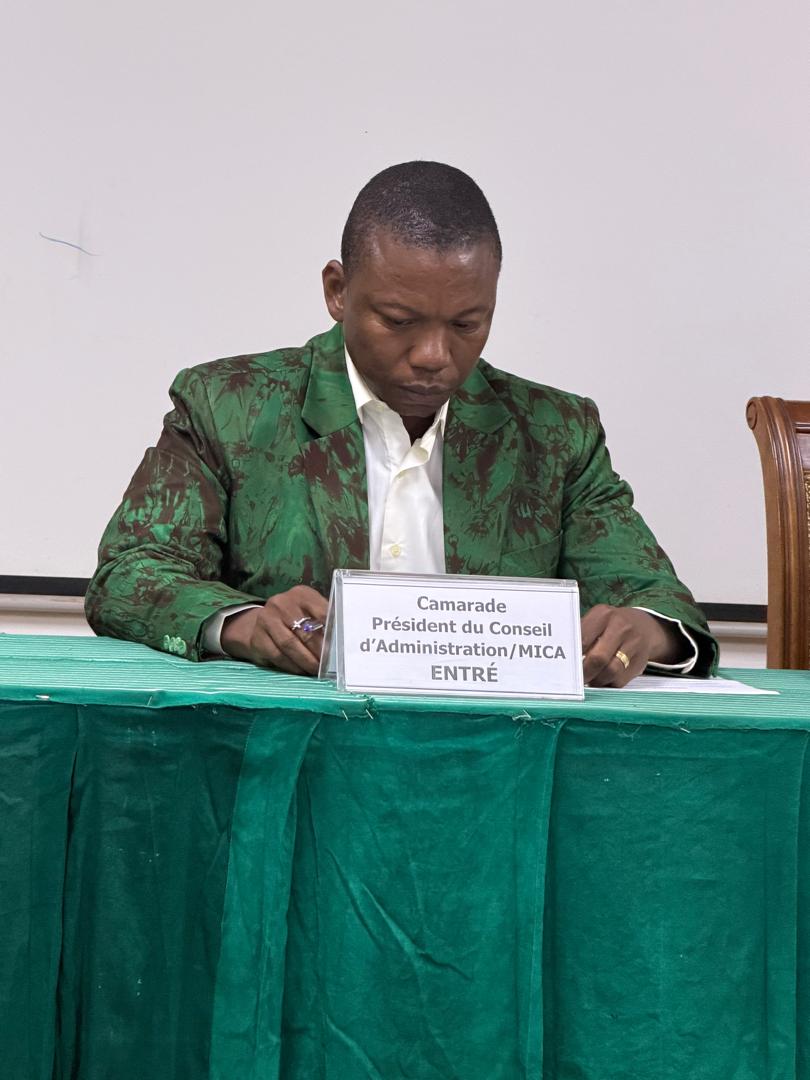
« Mon mandat sera orienté vers plusieurs priorités, notamment la promotion d'une agriculture durable, le renforcement de la compétitivité de l'entreprise à travers l'innovation, la valorisation des ressources humaines ainsi que la consolidation des partenariats avec les producteurs et les différents acteurs de la filière coton », a indiqué le nouveau PCA de la SOFITEX. Il a appelé l'ensemble des administrateurs, des travailleurs et des partenaires à unir leurs efforts afin de relever les défis auxquels la société est confrontée.
Cédant son fauteuil après son mandat, Alassane Ouédraogo a dressé le bilan de son passage à la tête du conseil d'administration. Il a rappelé que cette période a été marquée par d'importantes réformes, notamment la nationalisation de la SOFITEX et son repositionnement comme entreprise stratégique de l'État. Selon lui, ces changements traduisent la volonté des plus hautes autorités de faire de la société un levier essentiel de la souveraineté agricole, industrielle et économique du Burkina Faso.
Le DIRCAB du MICA lors de son allocution.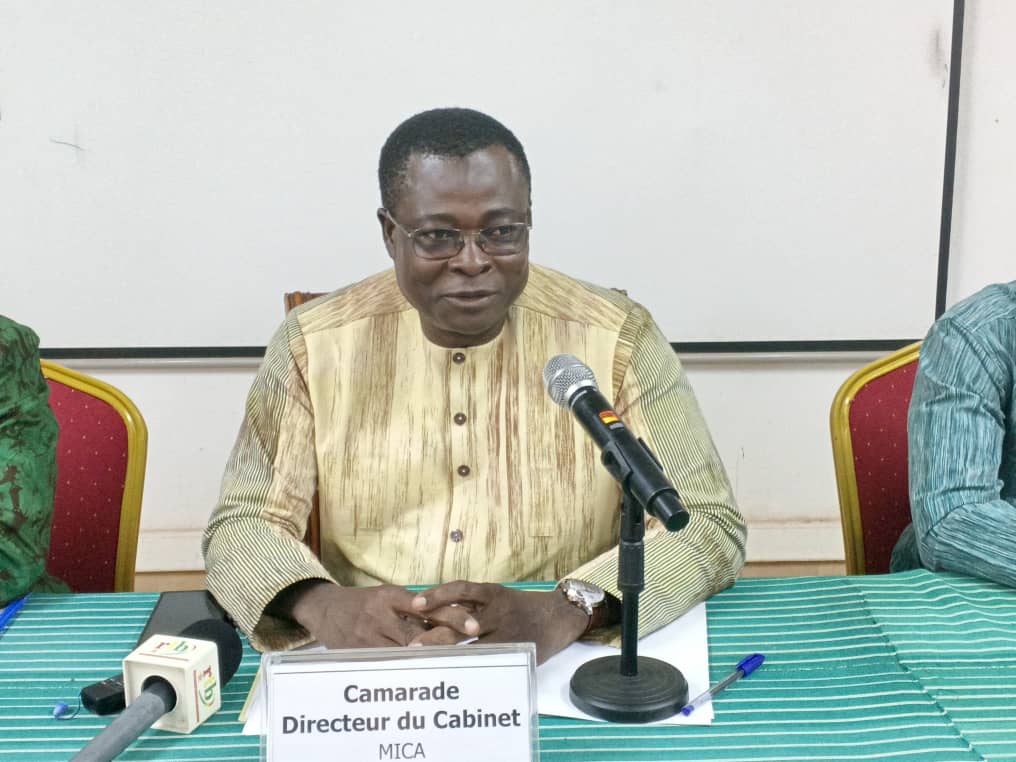
Le PCA sortant a salué le professionnalisme et la résilience du personnel ainsi que l'engagement de la direction générale, des administrateurs, des producteurs de coton et des partenaires qui ont contribué à la mise en œuvre des réformes. Il quitte ce poste avec le sentiment d'une mission accomplie. Avant de quitter ses fonctions, il a adressé ses vœux de succès à son successeur et rendu un hommage aux forces de défense et de sécurité ainsi qu'aux volontaires pour la défense de la patrie. « C'est grâce à vos efforts que nos braves producteurs parviennent à poursuivre leurs activités dans des conditions de sécurité progressivement améliorées », a-t-il reconnu.
Une photo de famille pour immortaliser la cérémonie.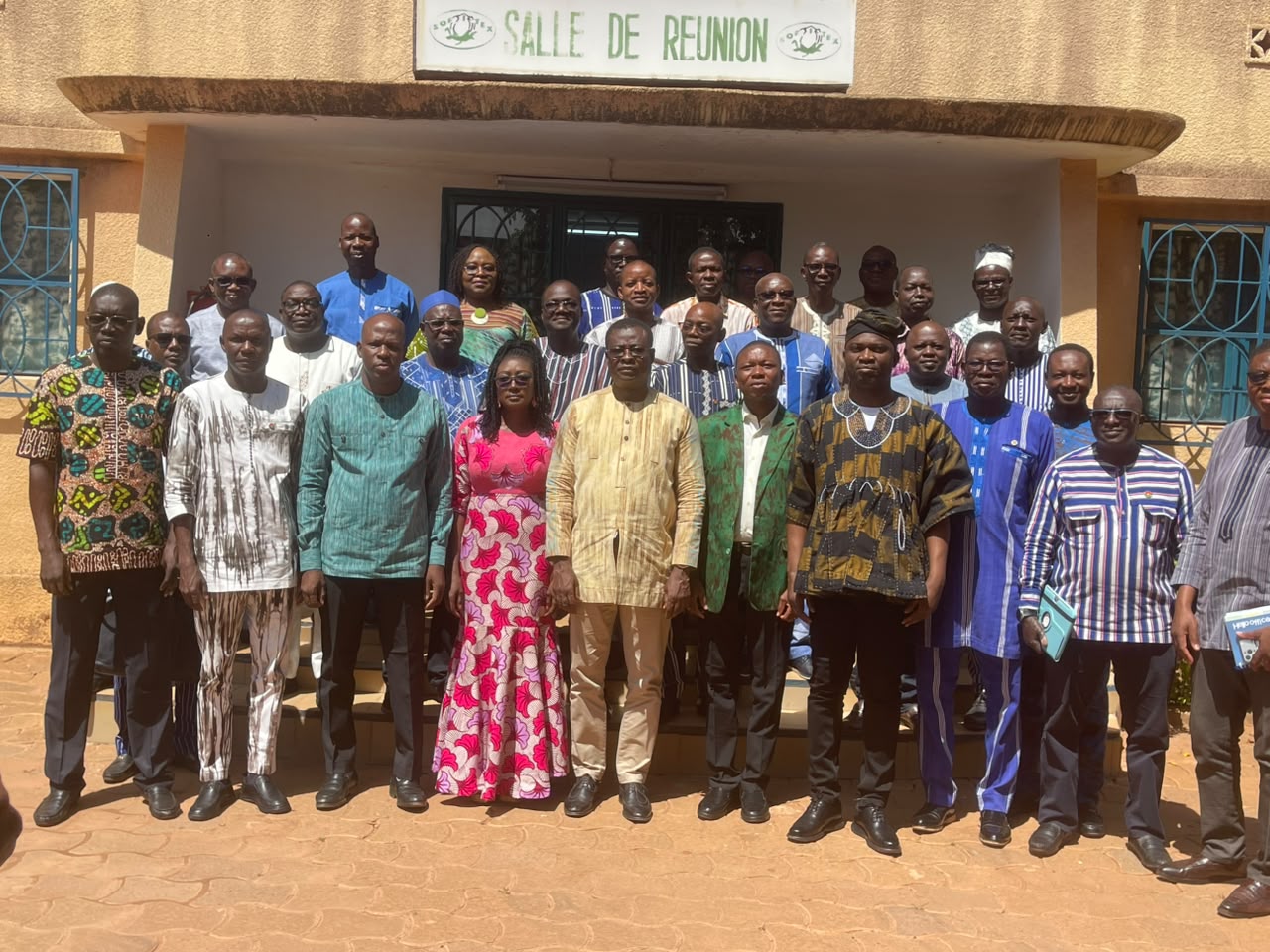
Présidant la cérémonie, Zakaria Gyengani a tenu à saluer le travail abattu par le PCA sortant, tout en l'invitant à demeurer membre de la famille SOFITEX, afin de partager avec eux son expérience. Au nouveau PCA, il a adressé des mots de félicitation et d'encouragement et l'a invité à faire preuve d'une gouvernance exemplaire, fondée sur la rigueur, la transparence et le sens des responsabilités. Il l'a exhorté à être « au four et au moulin » afin d'insuffler une nouvelle dynamique à la SOFITEX et d'accompagner efficacement les ambitions de l'entreprise au service de la filière coton et de l'économie nationale.
Djaryigo Diarra
Lefaso.net
Catégories: Afrique
Cameroun : les œuvres africaines à l'honneur au 9e Salon international de l'artisanat
À Yaoundé, le Salon international de l'artisanat du Cameroun réunit plus de 600 artisans, créateurs, sculpteurs et maroquiniers venus célébrer le savoir-faire africain. Pour cette 9ᵉ édition, la Côte d'Ivoire est le pays invité d'honneur.
Catégories: Afrique
L'univers enchanté des coupe-files
Les coupe-files se sont généralisés dans presque tous les grands parcs de loisirs. De Disneyland au Puy du Fou, chacun doit mesurer combien il est prêt à dépenser pour économiser quelques minutes. Une journée au parc obéissait autrefois à une règle éthique : premier arrivé, premier servi, la (…)
/ Tourisme, Loisirs, Inégalités, Commerce
Catégories: Diplomacy & Crisis News
GENOCOST : Denis Mukwege appelle à faire de la mémoire un levier de justice pour les victimes en RDC
À l'occasion de la Journée nationale du Génocide pour des gains économiques (GENOCOST), célébrée chaque 2 août en République démocratique du Congo (RDC), le Prix Nobel de la paix 2018, Denis Mukwege, a lancé un appel pressant en faveur de la justice, de la vérité et des réparations pour les millions de victimes des conflits qui endeuillent le pays depuis plusieurs décennies.
Catégories: Afrique
Why India’s Cockroach Movement Might Not Collapse Like the Others
The Cockroach Janta Party reflects every hallmark of modern decentralized leadership theories, but is set to leave a lasting imprint on Indian politics.
Catégories: Diplomacy & Crisis News
L'épidémie d'Ebola en RDC : plus de 3 700 cas recensés
À présent, l’épidémie d’Ebola s’intensifie à un rythme exceptionnel, selon l’Organisation mondiale de la Santé. Elle est déjà la plus importante épidémie jamais signalée en République démocratique du Congo.
Déclarée officiellement le 15 mai avec plusieurs semaines de retard, elle était initialement circonscrite à la province de l’Ituri. Depuis, elle s’est propagée à cinq provinces, parmi lesquelles le Nord-Kivu et le Sud-Kivu, deux régions touchées par des conflits armés.
Au total, 3 605 cas ont été confirmés, dont 1 587 décès, selon le dernier bilan de l’OMS.
Avec nous pour faire le point sur cette épidémie, depuis Addis-Abeba, en Éthiopie, notre invité Jean Kaseya, directeur général de l’Africa CDC, le Centre africain de contrôle et de prévention des maladies.
Catégories: Afrique
Cette année Moov Africa vous embarque pour des Vacances Manvo Manvo du 22 juin au 16 août
Catégories: Afrique
Orientations de la coopération franco-coréenne pour la formation des personnels des sous-marins à propulsion nucléaire
À télécharger
Cette note a été initialement publiée en anglais sur le site du Sejong Institute sous la forme d’un Sejong Focus le 21 juillet 2026. Elle fait suite à la note IRIS du même auteur en date du 1er juillet 2026 et sa proposition de développer une « Coopération franco-coréenne pour la construction du sous-marin à propulsion nucléaire (SNA) sud- coréen ». Elle propose également de renforcer la coopération bilatérale entre la France et la Corée du Sud dans le cadre du futur programme de SNA en abordant la question de la formation du personnel sud-coréen navigant et technique destinée à servir dans le cadre de ce programme très important pour Séoul.
Ces deux papiers complémentaires s’inscrivent dans la perspective de la visite du président sud-coréen Lee Jae-myung en France les 7 et 8 septembre 2026 avec le souhait d’approfondir la coopération stratégique entre les deux pays dans un domaine structurant.
L’article Orientations de la coopération franco-coréenne pour la formation des personnels des sous-marins à propulsion nucléaire est apparu en premier sur IRIS.
Catégories: Diplomacy & Defense Think Tank News
Gabon : Libreville sous état d'urgence hydrique depuis plus d'un mois
À Libreville, la capitale gabonaise, l'eau se fait rare. Alors que le gouvernement a décrété l'état d'urgence hydrique depuis un mois avec une promesse de distribution d'eau dans les zones touchées, le précieux liquide se paye toujours au prix fort. Chaque jour, des milliers de familles se livrent une bataille pour quelques litres.
Catégories: Afrique
Félix Tshisekedi, 30 jours sur les routes du Congo : les coulisses d'une campagne marathon
En trente jours de campagne électorale, le président-candidat a multiplié les déplacements, les meetings et les discours à travers un territoire vaste comme l'Europe de l'Ouest.
Catégories: Afrique, European Union
A Saudi-Emirati Thaw Can Help Contain Iran
The Gulf needs a joint front on deterrence, engagement, and freedom of navigation.
Catégories: Diplomacy & Crisis News
Crise migratoire: «L'extrême droite se nourrit de cette actualité pour se développer»
L'afflux de dizaines de milliers de migrants dans l'enclave espagnole de Ceuta a fait réagir la droite européenne sur les contrôles aux frontières et soulève des questions sur l'attitude des autorités marocaines. L'Italie a annoncé ne plus appliquer, provisoirement, les règles de l'espace Schengen vis-à-vis de l'Espagne, et les ministres de l'Intérieur des pays de l'UE échangeront, mardi 4 août, en visioconférence sur la crise migratoire et les tensions diplomatiques qui ont suivi. Benjamin Biard, chargé de recherche au Centre de recherche et d'information socio-politiques à Bruxelles et enseignant à l’Université catholique de Louvain, livre son analyse.
Catégories: Union européenne
« Mettre le feu, c’est le moyen le plus rapide d’être renvoyé chez soi » : au Kenya, le système des internats au bord de l’implosion
Au début du mois de juin, le ministère de l’éducation kényan recensait 204 établissements touchés par des dégradations de la part d’élèves scolarisés. Ces derniers déplorent des conditions de vie trop strictes, des infrastructures vétustes et des punitions physiques. Fin mai, 16 pensionnaires sont morts dans l’incendie de leur dortoir.
Catégories: Afrique
Ituri : des agents de la riposte Ebola manifestent à Mongbwalu pour réclamer trois mois d’arriérés de salaires
Des infirmiers, personnel d’entretien et autres agents de santé engagés contre la maladie à virus Ebola, ont protesté ce lundi 3 août à l'Hôpital général de référence de Mongbwalu en territoire de Djugu en Ituri. Ils réclament le paiement de leurs salaires des mois de mai, juin et juillet.
Catégories: Afrique
Pages



© 2012-2018 Europa Varietas Foundation © 2015-2018 Europa Varietas Association
www.europavarietas.org | info(@)europavarietas(dot)org | Switzerland




We are looking for sponsors for the English translation of these books, please contact turkeandras(at)gmail(dot)com