
You are here
Feed aggregator
Le tribunal administratif de Paris infirme la décision du Collège de France d’annuler un colloque sur la Palestine
Ce mercredi 15 juillet, le tribunal administratif de Paris a infirmé la décision prise par le Collège de France, en novembre 2025, d’annuler le colloque « La Palestine et l’Europe : poids du passé et dynamiques contemporaines » jugée « disproportionnée ».
Categories: France
À bord de l'«Ocean Viking»: au cœur d’une Méditerranée de plus en plus mortelle
L’Ocean Viking, le bateau de l’organisation SOS Méditerranée, effectue une nouvelle campagne de sauvetage en Méditerranée centrale, l’une des routes migratoires les plus meurtrières au monde. RFI embarque à son bord pour cette mission.
Categories: Union européenne
À bord de l'«Ocean Viking»: au cœur d’une Méditerranée de plus en plus mortelle
L’Ocean Viking, le bateau de l’organisation SOS Méditerranée, effectue une nouvelle campagne de sauvetage en Méditerranée centrale, l’une des routes migratoires les plus meurtrières au monde. RFI embarque à son bord pour cette mission.
Categories: Afrique
Des résultats alarmants en Lettres modernes
Les résultats des semestres 3 et 4 du département de Lettres modernes de l'Université de Parakou (UP) suscitent de nombreuses réactions. Sur toute la promotion de deuxième année, une seule étudiante a validé les 12 unités d'enseignement lui permettant d'accéder directement en Licence 3.
Echec cuisant des étudiants de Lettres modernes à l'Université de Parakou. Au terme des résultats des semestres 3 et 4, seule une étudiante a été déclarée admise. Elle a pu valider les 12 unités d'enseignement lui permettant de passer en Licence 3.
Ce résultat lamentable a été également enregistré dans plusieurs autres filières. En Didactique par exemple, un seul étudiant est admis à la session normale sur plus de 1 000 inscrits. La majorité des étudiants devra donc passer la session de rattrapage.
Cette contre-performance des étudiants selon le résident de la Fédération nationale des étudiants de l'Université de Parakou (FNEUP), Rachid Mora Chabi, s'explique à la fois par le faible taux de fréquentation des cours et par la nécessité d'une réflexion sur les méthodes d'évaluation. Il a appelé les étudiants ainsi que les responsables pédagogiques à tirer les leçons de cette session afin d'améliorer les performances académiques.
F. A. A.
Categories: Afrique
Les prix des mèches flambent à Mbuji-Mayi pendant les grandes vacances scolaires
Chaque saison de grandes vacances scolaires, un phénomène bien connu refait surface dans les salons de coiffure de Mbuji-Mayi, au Kasaï-Oriental : la flambée des prix des mèches. À peine les résultats de l’Examen d’État sont-ils publiés que les jeunes lauréates se ruent vers les salons de coiffure pour célébrer leur réussite avec de nouvelles tresses.
Categories: Afrique
« Mon rayon de soleil » : Josiane et Nathalie, deux aides à domicile sur le pont en pleine canicule à Paris
Alors que les personnes de plus de 75 ans ont déjà payé un lourd tribut aux canicules successives, Josiane et Nathalie, agentes de la Ville de Paris, s’assurent, tout au long de leur tournée en binôme dans le 11e arrondissement, de la bonne santé des bénéficiaires du service municipal d’aide à domicile.
Categories: France
Im Ossolatal wütet seit zwei Wochen ein Waldbrand – die Auswirkungen waren bis in die Schweiz spürbar
Eine dichte Rauchwolke zog vom italienischen Tal ins angrenzende Wallis und ins Tessin. Nun sind die Feuer unter Kontrolle, doch Sicherheitsmassnahmen bleiben in Kraft.
Categories: Swiss News
Une actrice franco-algérienne refuse la Légion d’honneur : on vous explique pourquoi
Pourquoi Rachida Brakni refuse-t-elle la Légion d’honneur ? Alors que son nom figurait dans la prestigieuse promotion civile du 14-Juillet, l’actrice, réalisatrice et chanteuse a […]
L’article Une actrice franco-algérienne refuse la Légion d’honneur : on vous explique pourquoi est apparu en premier sur .
Categories: Afrique
« La dernière séance » de Pan Nalin : le regard d’un enfant sur la magie du cinéma
Le cinéaste indien s’inspire de sa propre histoire pour dessiner le portrait de Samay dans un village du Gujarati. Un film familial à la photo splendide.
Categories: France
"Sexe, stratégie et pouvoir" : comment les femmes façonnent "L'Odyssée", le classique d'Homère que Christopher Nolan porte à l'écran
Dans l'épopée d'Homère, le protagoniste Ulysse est un homme héroïque, mais l'histoire est véritablement façonnée par les stratagèmes, la ruse et les séductions des femmes, nymphes, sorcières et déesses qu'il rencontre en chemin.
Categories: Afrique
"Sexe, stratégie et pouvoir" : comment les femmes façonnent "L'Odyssée", le classique d'Homère que Christopher Nolan porte à l'écran
Dans l'épopée d'Homère, le protagoniste Ulysse est un homme héroïque, mais l'histoire est véritablement façonnée par les stratagèmes, la ruse et les séductions des femmes, nymphes, sorcières et déesses qu'il rencontre en chemin.
Categories: Afrique
Special police team to investigate killing of an anti-migrant leader in South Africa
The March and March provincial leader died of his injuries in hospital several days after being shot.
Categories: Africa
La protection des enfants débattue à l’Assemblée : une loi fourre-tout ou une véritable avancée ?
Ayant évolué avec l’actualité concernant les violences sexuelles sur mineurs, le projet de loi réformant l’Aide sociale à l’enfance a perdu de vue sa mission première. Les débats, qui commencent à l’Assemblée ce mercredi 15 juillet, s’annoncent houleux.
Categories: France
Anti-LGBT+, anti-immigration… Qui est François‑Noël Buffet, proposé comme Défenseur des droits
Auditionné ce mercredi 15 juillet par la commission des Lois, le sénateur LR François-Noël Buffet a défendu sa candidature au poste de Défenseur des droits face à une gauche très hostile au regard de ses anciennes positions contre le mariage pour tous, l’extension de la PMA et sa réserve sur l’IVG dans la Constitution. Une opération de déminage au succès mitigé.
Categories: France
Football : l’AS V.Club convoque son assemblée générale extraordinaire et élective le 31 juillet
Le Conseil des sages de l’Association sportive Vita Club (AS V.Club) a décidé, mardi 14 juillet 2026 à Kinshasa, de convoquer une Assemblée générale extraordinaire et élective le 31 juillet 2026, en vue de mettre en place une nouvelle équipe dirigeante.
Cette décision a été prise au cours d’une réunion d’urgence consacrée à l’organisation du processus électoral du club, après la fin du mandat du comité de direction sortant.
Categories: Afrique
Coopération : Le Président de la Commission de l'Union africaine en visite au Burkina
Le Président de la Commission de l'Union africaine (UA), Mahamoud Ali Youssouf est arrivé dans la soirée du mardi 14 juillet 2026 à Ouagadougou pour une visite de travail de 72 heures, informe la direction de la communication du ministère des affaires étrangères.
Cette visite est la première qu'effectue Mahamoud Ali Youssouf au pays des hommes intègres depuis sa prise de fonction. Elle témoigne d'une volonté commune de renforcer le dialogue et la coopération entre l'Union africaine et les autorités burkinabè.
Accueilli à l'aéroport international de Ouagadougou par le ministre des Affaires étrangères, de la Coopération régionale et des Burkinabè de l'Extérieur, Karamoko Jean Marie Traoré, en présence de l'ambassadeur du Burkina Faso auprès de l'Union africaine, Elysée Ouédraogo, le Président de la Commission de l'UA a exprimé sa satisfaction de fouler le sol burkinabè.
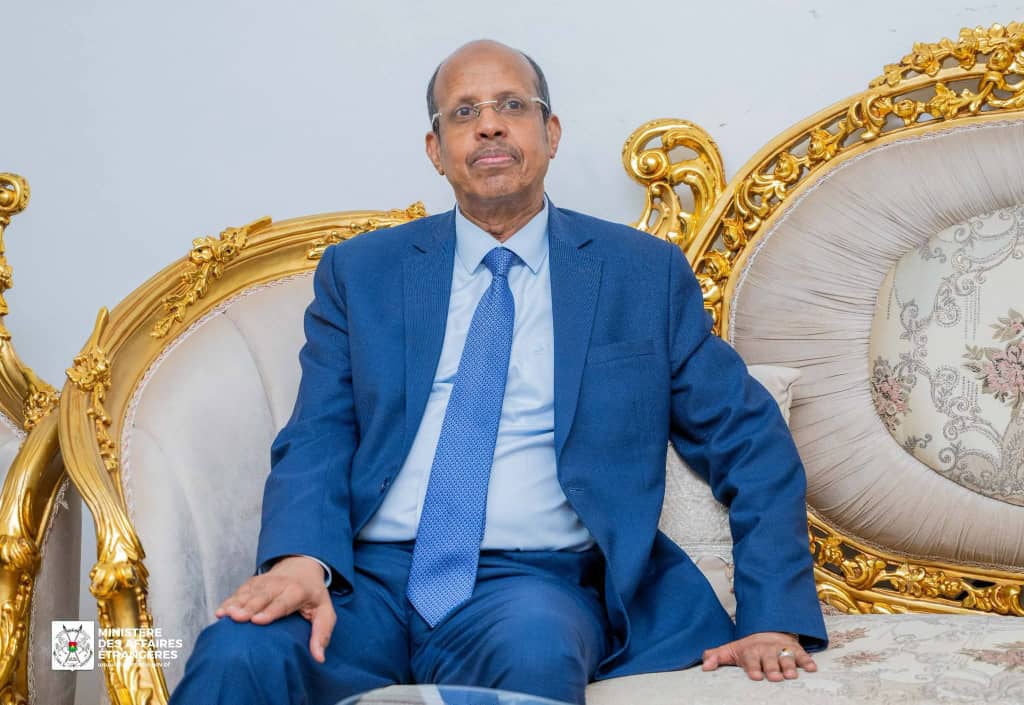
Pour Mahamoud Ali Youssouf, cette visite traduit l'engagement de l'organisation panafricaine à consolider la solidarité entre ses États membres afin de répondre efficacement aux défis communs auxquels le continent est confronté. Il a rappelé que le Burkina Faso, membre fondateur de l'Organisation de l'unité africaine (OUA), occupe une place importante au sein de l'institution continentale.
« Le Burkina est un État membre de notre Union africaine et fondateur de l'Unité africaine. À ce titre, le Président de la Commission est dans l'obligation de venir consulter et travailler avec le gouvernement afin de voir dans quelle mesure un certain nombre de problèmes qui nous sont communs sur le continent peuvent être réglés à travers une solidarité en partenariat », a-t-il déclaré à son arrivée.
Au cours de son séjour, le Président de la Commission de l'Union africaine aura des échanges avec les plus hautes autorités du Burkina Faso. Les discussions devraient porter sur les questions de paix et de sécurité, l'intégration régionale, ainsi que sur les perspectives de renforcement des relations entre l'UA et le Burkina Faso.
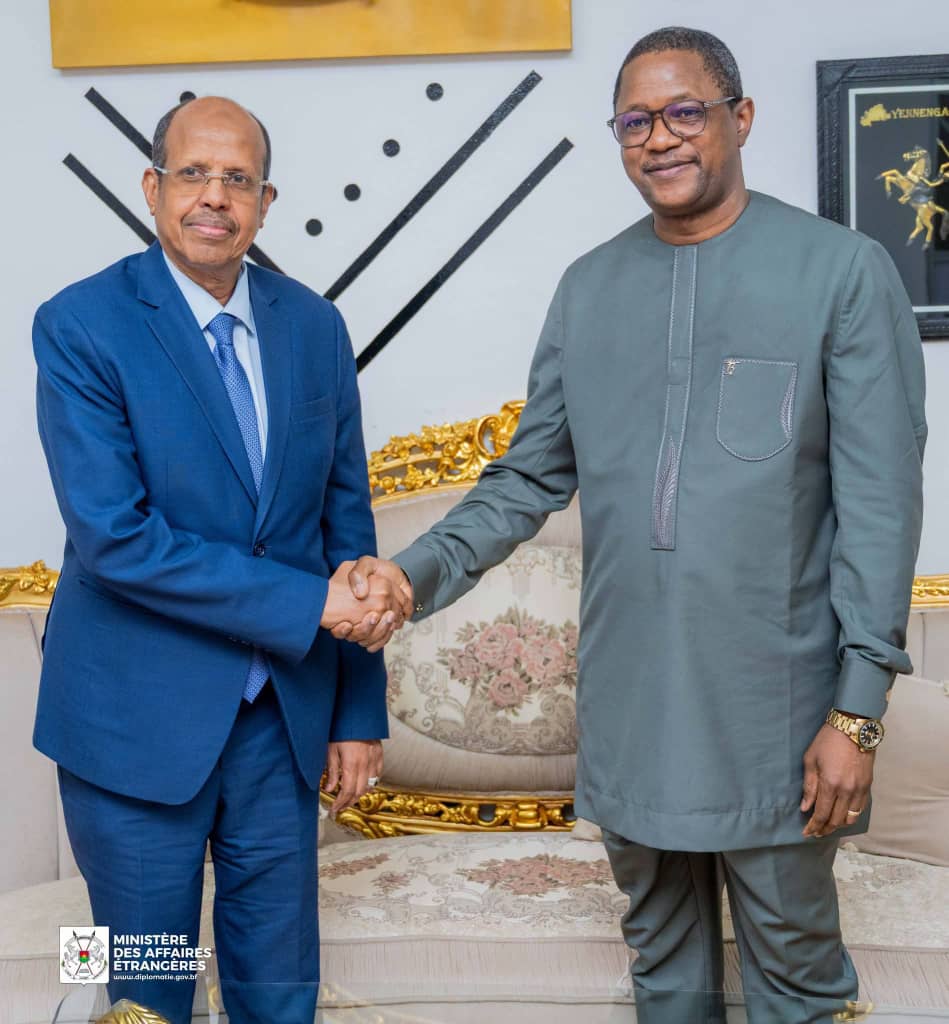
Cette visite s'inscrit dans le cadre d'une tournée au sein de la Confédération des États du Sahel (AES). Avant Ouagadougou, Mahamoud Ali Youssouf a séjourné à Bamako, au Mali, où il a achevé la première étape de sa mission le 14 juillet 2026.
Par cette démarche, l'Union africaine semble vouloir renouer un dialogue plus soutenu avec les pays de l'AES, dans un contexte marqué par la recherche de nouvelles dynamiques de coopération et de concertation sur les grands enjeux du continent.
Lefaso.net
DCRP/MAE
Categories: Afrique, Diplomacy & Defense Think Tank News
Canicule : la Confédération nationale du logement porte plainte contre le gouvernement pour « mise en danger de la vie d’autrui »
Après les vagues de chaleur de fin mai et de ce début de l’été, la Confédération nationale du logement (CNL) annonce déposer une plainte pénale contre l'inaction de l'exécutif face aux logements thermiquement défaillants, où les plus précaires sont les premiers exposés.
Categories: France
Trotz Multikrise, Klimawandel, Inflation: Die Schweizerinnen und Schweizer bleiben zuversichtlich
Das wichtigste Lebensziel der Schweizer: gesund alt werden. Männer klagen über Finanzdruck, Frauen über Belastungen rund um die Familie. Ein Blick auf die neueste Sotomo-Studie
Categories: Swiss News
RDC/ Faure Gnassingbé coincé dans son manteau de médiateur ?
Plus d’une année après sa désignation comme médiateur de l’union africaine, Faure Gnassingbé poursuit toujours ses consultations. Il vient encore de s’entretenir avec le ministre congolais de l’Intégration, à Kara. Sa médiation, à l’instar des autres qu’il a initiées, peine à connaître une issue favorable, les combats étant toujours en cours dans l’Est de la RDC.
Faure Gnassingbé peut-il solutionner la crise armée dans l’Est de la République démocratique du Congo (RDC) ? C’est l’éternelle question qui se pose. Et pour cause, l’homme désigné médiateur dans cette crise qui oppose la RDC au M23 soutenu par le Rwanda, peine à trouver les voies et moyens pour mettre un terme au conflit armé.
Malgré son incapacité à clore le dossier de la guerre dans l’Est de la RDC, Faure Gnassingbé continue de s’afficher en médiateur. La dernière illustration a été faite dans la ville de Kara. Présent dans sa localité d’origine pour la fête traditionnelle des Evala, le président de la République devenu président du Conseil a reçu en audience le ministre congolais de l’intégration régionale, Floribert Anzuluni.
La délégation congolaise a échangé avec le Président du Conseil sur les « perspectives de consolidation de la coopération entre Kinshasa et Lomé », les « défis sécuritaires auxquels est confronté l’Est de la RDC », ainsi que les « efforts de médiation en cours en faveur de la consolidation de la paix et du rétablissement de la sécurité » dans l’Est de la RDC, apprend-on de la Présidence du Conseil.
Une énième rencontre qui ne fait que rallonger la liste des nombreuses réunions déjà intervenues dans le cadre de ce dossier. En effet, pour se mettre dans la peau du médiateur, Faure Gnassingbé et son ministre des affaires étrangères ont voyagé à plusieurs reprises et reçu en audience de nombreuses personnalités. Malgré le tintamarre autour de ce titre de médiateur et les multiples rencontres diplomatiques, les armes peinent à se taire dans ce pays ultrariche en minerais.
En dépit de l’épidémie d’Ebola qui se propage dans la région des Grands Lacs, les combats se poursuivent dans l’Est de la RDC, et avec l’usage d’armes lourdes et explosives. Une situation que déplore le Haut-Commissaire des Nations Unies aux droits de l’homme, Volker Türk.
Dans un message, le diplomate dénonce une escalade des combats « malgré les accords conclus dans le cadre des processus de paix en cours ». Soulignant par la même occasion que les affrontements occasionnent des morts, des blessés, le déplacement des civils et la destruction de leurs moyens de subsistance.
Cette crise dépasse largement les prétendues capacités diplomatiques du fils du Général, à qui l’on prête une certaine proximité avec le président rwandais Paul Kagamé, soutien du M23, et de bonnes relations avec son homologue congolais Félix Tshisekedi. Mais le Rwanda qui joue dans la cour des puissances ne peut pas fléchir devant un dirigeant togolais contesté en interne et dans la diaspora, et qui plus est, ne pèse pas lourd sur le plan diplomatique.
Bref, un chef d’État qui n’a pas réussi à réconcilier les pays de l’actuelle AES (Alliance des Etats du Sahel) et la CEDEAO ne doit pas se prévaloir de résoudre la crise dans une zone aussi convoitée que les Grands Lacs. Si les Etats-Unis ne parviennent pas à imposer la paix aux belligérants, il est fort à parier que le président du Conseil va se casser les dents dans cette mission.
L’évidence, c’est qu’en « quémandant » cette mission de médiation, Faure Gnassingbé cherchait à se donner une crédibilité qu’il n’a pas dans son propre pays. Lui qui ne jouit plus de mandat électif émanant du peuple. Le voilà coincé dans son manteau de médiateur de l’UA.
Jean-Baptiste Edina
Source : Lechiquier
The post RDC/ Faure Gnassingbé coincé dans son manteau de médiateur ? appeared first on Togo Actualite - Premier site d'information du Togo.
Categories: Afrique
Video einer Ausschusssitzung - Mittwoch, 15. Juli 2026 - 12:30 - Ausschuss für Sicherheit und Verteidigung
Dauer des Videos : 180'
Haftungsausschluss : Die Verdolmetschung der Debatten soll die Kommunikation erleichtern, sie stellt jedoch keine authentische Aufzeichnung der Debatten dar. Authentisch sind nur die Originalfassungen der Reden bzw. ihre überprüften schriftlichen Übersetzungen.
Quelle : © Europäische Union, 2026 - EP
Haftungsausschluss : Die Verdolmetschung der Debatten soll die Kommunikation erleichtern, sie stellt jedoch keine authentische Aufzeichnung der Debatten dar. Authentisch sind nur die Originalfassungen der Reden bzw. ihre überprüften schriftlichen Übersetzungen.
Quelle : © Europäische Union, 2026 - EP
Categories: Europäische Union
Pages



© 2012-2018 Europa Varietas Foundation © 2015-2018 Europa Varietas Association
www.europavarietas.org | info(@)europavarietas(dot)org | Switzerland




We are looking for sponsors for the English translation of these books, please contact turkeandras(at)gmail(dot)com