
You are here
Diplomacy & Defense Think Tank News
Wissenschaftsrat stuft Erweiterungsvorhaben des SOEP als exzellent ein
Es ist ein bemerkenswerter Erfolg für das Sozio-oekonomische Panel: Der Wissenschaftsrat bewertet das beantragte große strategische Erweiterungsvorhaben als „exzellent“. In der Gesamtbewertung aller Anträge von Leibniz-Instituten liegt das SOEP auf Platz 1.
In seiner Stellungnahme vom 3. Juli 2026 ...
Categories: Diplomacy & Defense Think Tank News
Derrière la défaite des États-Unis face à l’Iran, une crise du système productif
L’issue de la guerre israélo-américaine contre l’Iran révèle une évolution profonde des rapports de puissance, centrée sur la capacité industrielle et un nouveau cadre d’innovation. La supériorité dépend moins des systèmes les plus avancés et du PIB que de l’organisation industrielle. Celle-ci doit suivre une logique modulaire. Il s’agit de concevoir, moderniser et produire en intégrant rapidement des composants d’origines diverses, et de remplacer sa production à un rythme soutenu, au profit d’une stratégie dissuasive.
Au-delà du fiasco stratégique américain, ce n’est pas tant la prouesse militaro-industrielle de l’Iran qui interpelle, malgré l’état de son économie, que la difficulté des États-Unis à embrasser cette nouvelle donne industrielle mondiale. Les économies occidentales peinent à transformer leur base scientifique historique en capacité productive. Les pénuries chroniques d’armement n’en sont qu’un aspect révélateur. La concentration des ressources, dans le cadre de bulles financières comme celle de l’IA ou dans l’immobilier, y contribue, avec la relégation de compétences clés. Malgré la crise éducative, la génération Z serait capable, contre les clichés, d’engager un redressement rapide. L’analyse de Rémi Bourgeot, économiste et ingénieur, chercheur associé à l’IRIS, auteur du site géoéconomique epistelem.org.
Capacité industrielle et densité d’ingénieursLes pays émergents, dans leur diversité, reposent de plus en plus sur les compétences classiques d’ingénieurs et de techniciens, polyvalents et formés en grand nombre. De nombreux pays, à l’instar de la Chine, poursuivent une montée en puissance industrielle sur cette base, qui se reflète dans les politiques économiques. Cette évolution se traduit sur le plan militaire, autant en Iran que sur le front russo-ukrainien.
Ces conflits récents montrent une inflexion cruciale. Les drones de types très divers, les missiles balistiques, et les systèmes de guerre électronique modifient l’économie de la guerre. La capacité à produire une grande quantité de dispositifs relativement simples devient plus déterminante que la possession d’un nombre limité de systèmes extrêmement sophistiqués.
L’intérêt des drones Chahed iraniens réside moins dans une rupture technologique que dans leur architecture industrielle. Les choix de conception privilégient des composants disponibles, une électronique standardisée, une fabrication simple, des coûts réduits et une adaptation permanente aux contraintes opérationnelles. Les missiles balistiques répondent à la même logique d’amélioration incrémentale. Cette approche évoque celle qui a émergé dans le conflit russo-ukrainien. Les innovations ne proviennent pas uniquement des bureaux d’études, mais aussi des chaînes de production, du terrain et de la capacité à modifier rapidement un système. Ce défi force déjà les États-Unis à tenter une nouvelle approche de production de drones et missiles, massive et moins onéreuse.
Derrière la fantaisie d’un remplacement des ingénieurs et informaticiens par l’IA, cette évolution place les compétences des jeunes générations au centre de la course. L’innovation repose sur un nombre très important d’ingénieurs, de techniciens et de geeks en tous genres, capables de résoudre des problèmes nouveaux. Les pays émergents, notamment la Chine, mais aussi la Russie et l’Iran, forment aujourd’hui proportionnellement davantage de profils scientifiques que la plupart des pays occidentaux. Alors que l’attention reste concentrée sur les entreprises les plus (sur)valorisées, la différence se joue davantage dans la profondeur du tissu technique.
Cela influence également les processus de décision. Lorsqu’une organisation est largement composée d’individus dotés d’une compréhension scientifique, les arbitrages reposent plus naturellement sur les réalités technologiques que sur le politico-administratif. C’est le paradoxe de la montée en puissance de pays centralisés, mais efficaces, comme ce fut le cas de la France sous l’ère gaullienne.
L’Iran présente de nombreuses faiblesses structurelles. Avant même leur l’accroissement de leur poids pendant la guerre, les Gardiens de la révolution exerçaient une influence économique considérable, avec une captation des ressources et, naturellement, une focalisation militaire, souvent au détriment du développement civil. En revanche, son industrie militaire est adaptée aux exigences d’une économie de guerre où la planification industrielle, la décentralisation d’une partie des capacités de production et la résilience des organisations constituent des priorités.
La modularité redéfinit la souveraineté industrielleL’organisation des chaînes de valeur a évolué. Les systèmes reposent sur des architectures de plus en plus modulaires, composées de sous-ensembles électroniques, de logiciels embarqués, de capteurs, de batteries ou de composants radiofréquences qui circulent au sein de chaînes d’approvisionnement internationales. Dans plusieurs de ces segments, l’industrie chinoise occupe désormais une position centrale, abaissant les barrières d’entrée pour de très nombreux pays. Développer un système suppose moins qu’auparavant de maîtriser l’ensemble des procédés industriels nécessaires dès le départ. L’avantage réside souvent dans la capacité à intégrer des composants, à organiser une production capable d’évoluer au rythme des besoins et de poursuivre une stratégie de substitution à des fins d’autonomie.
L’Iran a largement construit son appareil industriel militaire sur cette logique. L’intégration aux chaînes d’approvisionnement chinoises lui a permis d’accéder à une électronique abondante et peu coûteuse, tandis que la modularité des systèmes facilite leur amélioration continue. Les sanctions ont forcé cette capacité d’adaptation à modifier une architecture ou à développer localement certains composants.
Cette ouverture ne réduit pas l’importance de la souveraineté industrielle. Au contraire, la compétition porte désormais sur la maîtrise des dépendances critiques. Il s’agit d’identifier les maillons dont la perte suffirait à interrompre sa capacité de production et concentrer ses efforts sur ceux-ci. La résilience industrielle repose moins sur une autonomie absolue que sur la capacité à continuer de produire malgré les sanctions, les ruptures logistiques ou les destructions d’infrastructures. De plus, la notion de guerre économique développée par les États-Unis est désormais reprise en miroir autant par l’Iran, avec le détroit d’Ormuz, que la Chine, avec les terres rares.
L’avance industrielle chinoise résulte d’une intégration progressive de chaînes de valeur. Les batteries, l’automobile électrique, l’électronique, les terres rares, ou la robotique illustrent cette stratégie. Les restrictions américaines sur les semi-conducteurs illustrent la dynamique. Elles ralentissent temporairement certains développements chinois, mais elles créent également une forte incitation à investir dans des capacités nationales autour de Huawei.
La montée en puissance de l’industrie de défense turque est un autre exemple de cette tendance de développement industriel, en premier lieu dans les drones, où elle s’est positionnée tôt, mais aussi dans les véhicules blindés, armes et munitions, jusqu’à susciter de l’intérêt pour son programme d’avion de chasse. Alors qu’il est resté cantonné à un statut de sous-traitant dans l’automobile, le pays développe désormais ses exportations militaires vers l’UE, répondant aux importants besoins après des décennies de désinvestissement.
Affaiblissement de la culture productive occidentale et potentiel de la « Gen Z »Les États-Unis conservent des atouts exceptionnels, avec leur appareil universitaire ou encore leur indépendance énergétique. Pour autant, une part croissante du capital est orientée vers des activités dont la valorisation dépend principalement de marchés financiers hypertrophiés. Les investissements passifs, les grands indices boursiers et l’abondance de liquidités créent des mécanismes auto-entretenus, où les entreprises les mieux valorisées captent les nouveaux flux.
Le potentiel technologique de l’IA est incontestable. Pourtant, une partie importante des investissements reste concentrée sur des usages destinés au grand public, à la perspective de revenus publicitaires ou à la croissance des plateformes numériques. Les applications susceptibles de transformer durablement l’appareil productif, dont la robotique, occupent encore une place secondaire.
Ces failles influencent également l’allocation des compétences. Les États-Unis continuent d’attirer certains des meilleurs ingénieurs. Cependant, les jeux de connivence l’emportent souvent comme on le voit même dans l’industrie nucléaire civile, avec les « nuclear bros », ces entrepreneurs dont les connaissances en physique nucléaire ne sont souvent pas beaucoup plus poussées que celles des deux négociateurs en chef diplomatiques.
La situation européenne apparaît plus préoccupante. Malgré la persistance de filières scientifiques de pointe, les arbitrages stratégiques relèvent de plus en plus d’une logique administrative ou politique. Le programme Système de combat aérien du futur (SCAF) en est un exemple, avec ses failles indépassables, visibles dès son lancement politique. Les « Chips Acts » font l’impasse sur des chaînes de valeur associant électronique, matériaux, équipements industriels, logiciels et débouchés manufacturiers. On traite un aspect sans vision intégrée ni connaissance scientifique suffisante. Les analyses s’organisent souvent autour d’un appel à un bond en avant dans la construction européenne, de préférence de nature financière, à l’instar du rapport Draghi, davantage que sur la prospective technologique. Les déconvenues dans des secteurs clés comme les batteries, avec la faillite de Northvolt, invitent désormais une approche plus progressive de substitution.
Comme le montrent divers pays émergents, le redressement reste possible. Jamais une génération n’a eu un accès aussi large aux connaissances scientifiques et culturelles, aux communautés ouvertes ou aux contenus de formation voire de rattrapage. Malgré la crise éducative, une grande partie de la « génération Z » développe aujourd’hui, souvent en dehors des institutions, une culture technique qui la familiarise avec la conception de systèmes complexes.
Une économie ne retrouve pas sa dynamique industrielle par l’accumulation d’initiatives politiques de dépense à vue, mais en redonnant un pouvoir de décision à ceux qui comprennent les technologies, maîtrisent les chaînes de production et savent transformer une innovation en capacité productive. C’est sur ce terrain, beaucoup plus que sur celui des seules dépenses, notamment militaires, que se joue la hiérarchie des puissances mondiales et de la prospérité.
L’article Derrière la défaite des États-Unis face à l’Iran, une crise du système productif est apparu en premier sur IRIS.
Categories: Diplomacy & Defense Think Tank News
US stands with PH amid 'provocative' China Pacific missile test -envoy
The United States joined the Philippines in raising alarm over the ballistic missile launch of China in the Pacific, describing the act as "provocative."
Categories: Defence`s Feeds, Diplomacy & Defense Think Tank News
PH to get 5 'Abukuma' destroyer escorts from Japan
The Philippines will be getting five newly-retired "Abukuma"-class destroyers from the Japan Maritime Self-Defense Force (JMSDF), boosting its naval capabilities, Department of National Defense (DND) Secretary Gilberto Teodoro Jr. said on Tuesday.
Categories: Defence`s Feeds, Diplomacy & Defense Think Tank News
Recomposition géopolitique du Golfe après la guerre d’Iran | Les mardis de l’IRIS
Chaque mardi, Pascal reçoit un membre de l’équipe de recherche de l’IRIS pour décrypter un fait d’actualité internationale. Aujourd’hui, échange avec Jean-Paul Ghoneim, chercheur associé à l’IRIS, autour des enjeux pour les pays du Golfe dans le contexte des négociations autour de l’Iran après le protocole d’accord permettant un cessez-le-feu dans la région.
L’article Recomposition géopolitique du Golfe après la guerre d’Iran | Les mardis de l’IRIS est apparu en premier sur IRIS.
Categories: Diplomacy & Defense Think Tank News
Ukraine set to gain new status as NATO allies unveil military pledge in Ankara
Kyiv will be recognised as a 'contributor' to the alliance's security
Categories: Diplomacy & Defense Think Tank News, European Union
Géopolitique des ports de l’Indo-Pacifique : le Quad et son évolution vers les ports et les minéraux critiques dans un Indo-Pacifique sans « indo »
L’actualité stratégique de l’Indo-Pacifique vient de connaître deux épisodes marquants et d’apparence relativement contradictoire. Le premier se réfère à une réunion des quatre ministres des Affaires étrangères membres du Dialogue quadripartite sur la sécurité ou QUAD (à savoir l’Inde, le Japon, l’Australie et les États-Unis) à New Delhi le 29 mai 2026. Le deuxième tient au changement de nom du commandement américain pour l’Indo-Pacifique (USINDOPACOM), redevenu Commandement américain pour le Pacifique (USPACOM) le 16 juin 2026. Un pivot américain vers le Pacifique qui interroge alors que le QUAD semble prendre un nouvel élan.
À téléchargerL’article Géopolitique des ports de l’Indo-Pacifique : le Quad et son évolution vers les ports et les minéraux critiques dans un Indo-Pacifique sans « indo » est apparu en premier sur IRIS.
Categories: Diplomacy & Defense Think Tank News
Défense européenne : le cadre du Traité de l’Atlantique Nord et son interaction avec l’Union européenne
À titre exceptionnel, l’IRIS a décidé de publier cet article collectif. Indépendamment du degré d’accord ou de désaccord avec ce texte émanant de personnes membres d’une structure organisée autour d’objectifs précis, nous considérons qu’il constitue une utile contribution aux nécessaires débats sur les enjeux et les défis de l’édification d’une défense européenne.
À télécharger RésuméL’instabilité croissante du système international, les conflits en cours dans les voisinages oriental et méridional de l’Europe et l’incertitude grandissante quant aux priorités stratégiques des États-Unis ont intensifié le débat sur les responsabilités de l’Europe en matière de défense.
Bien que l’Union européenne soit une puissance économique et régulatrice majeure, elle reste militairement dépendante de garanties de sécurité extérieures. Pour devenir un acteur stratégique plus autonome, l’Europe doit développer des capacités militaires plus solides, renforcer sa base industrielle de défense et améliorer la coordination des politiques entre ses États membres.
Les traités de l’UE prévoient déjà des mécanismes qui pourraient à terme mener à une défense commune, mais la règle de l’unanimité rend les progrès lents et politiquement difficiles. Par conséquent, certains États pourraient rechercher des accords flexibles ou développer des initiatives intergouvernementales pour faire progresser l’intégration de la défense et y inclure des pays partageant les mêmes idées, tels que le Royaume-Uni, la Norvège, l’Ukraine et la Turquie. Parallèlement, le développement d’un pilier européen au sein de l’Organisation du traité de l’Atlantique Nord (OTAN) représente un effort complémentaire visant à rééquilibrer les responsabilités au sein de l’Alliance. Finalement, une coordination étroite entre l’UE et l’OTAN restera essentielle pour éviter les doublons, maximiser les synergies et assurer la sécurité à long terme de l’Europe.
L’ambiguïté de la dissuasion nucléaire américaine en Europe suscite des doutes quant à ses engagements futurs ; les forces françaises et britanniques offrent une dissuasion alternative limitée, mais potentiellement dévastatrice contre la Russie, et leur rôle dans la dissuasion et la défense européennes devrait s’accroître.
L’évolution de la dynamique transatlantique exige que les nations européennes assument la responsabilité principale de la défense continentale. S’en remettre au parapluie de sécurité américain offre une stabilité temporaire, mais engendre des risques stratégiques à long terme. Alors que 60 % du public et du Congrès américain soutiennent pleinement l’OTAN, il existe une demande croissante et légitime pour un partage plus équitable de la charge. Pour garantir sa stabilité à long terme, l’Europe doit passer du statut d’allié dépendant à celui de fournisseur de sécurité autonome.
Pour y parvenir, l’Europe doit résolument bâtir les capacités et les structures nécessaires pour ancrer sa propre défense. Cet effort devrait être mené sur trois axes complémentaires :
- Au sein de l’UE : développer les capacités militaires, l’industrie de défense et les institutions de la Politique de sécurité et de défense commune (PSDC) requises pour une véritable autonomie stratégique.
- Au sein de l’OTAN : renforcer le pilier européen de l’Alliance par un transfert volontariste de capacités et de responsabilités de commandement des États-Unis vers l’Europe.
- Promouvoir le développement d’une Union européenne de défense : en tant que processus politique et opérationnel progressif dont l’objectif est de construire, sur la base des structures existantes, une Europe plus cohérente, réactive et efficace, capable d’assurer sa propre sécurité.
Le document original a été publié en anglais sur les sites d’EuroDéfense et d’EuroDéfense- France. Ce rapport ne reflète que les opinions de ses auteurs et ne représente pas nécessairement la position collective du réseau EuroDéfense.
L’article Défense européenne : le cadre du Traité de l’Atlantique Nord et son interaction avec l’Union européenne est apparu en premier sur IRIS.
Categories: Diplomacy & Defense Think Tank News
Trump, absent des stades, omniprésent dans la Coupe du monde
La Coupe du monde 2026 a débuté le 11 juin dernier aux États-Unis. Alors que Donald Trump avait fait de cet événement un symbole du retour de la puissance américaine, le président ne s’est encore affiché dans aucun stade, pas même lors du premier match de la sélection américaine.
Cette absence peut s’expliquer : Donald Trump cultive l’image de la victoire et maîtrise habituellement le décor de ses apparitions publiques. Or, un match de football est, par définition, imprévisible. Une défaite des États-Unis, des tribunes hostiles ou des huées retransmises dans le monde entier constitueraient un risque politique difficilement contrôlable.
Mais si Donald Trump reste loin des gradins, il ne semble pas rester à l’écart de la compétition. Lors du match entre les États-Unis et la Bosnie-Herzégovine, l’attaquant Folarin Balogun est expulsé et suspendu pour la rencontre suivante. Contre toute attente, la FIFA décide finalement de lever cette suspension à la veille des huitièmes de finale. Donald Trump remercie publiquement l’organisation, tandis que plusieurs révélations évoquent depuis d’éventuelles pressions exercées en coulisses.
L’intervention du pouvoir politique dans le déroulement d’une Coupe du Monde rappelle de rares précédents historiques, notamment l’édition de 1934 organisée par l’Italie fasciste de Mussolini. Faut-il y voir un simple concours de circonstances ou le signe d’une politisation croissante du football mondial ?
Mon analyse dans cette vidéo.
L’article Trump, absent des stades, omniprésent dans la Coupe du monde est apparu en premier sur IRIS.
Categories: Diplomacy & Defense Think Tank News
Nato muss eine Botschaft nach innen und nach außen aussenden
Vor Beginn des Nato-Gipfels in Ankara glaubt der Politikwissenschaftler Marco Overhaus nicht an einen vollständigen Rückzug der USA. Die Europäer müssten dennoch mehr Verantwortung übernehmen - und täten das auch.
Categories: Diplomacy & Defense Think Tank News
Das getarnte Freiheitsversprechen der Tech-Milliardäre
Der Paläolibertarismus der amerikanischen Tech-Elite macht sich auch in Europa breit. Er schwächt den Staat und nur ein scheinbares Ideal: Freiheit für alle., Es gibt Jahrestage, die mehr sind als Erinnerung. Sie mahnen zur Bilanz. Der 250. Geburtstag der Vereinigten Staaten am 4. Juli ist ein solcher Moment. Wenn sich für viele Menschen in Europa und dem Rest der Welt der Blick auf die USA in den vergangenen Jahren grundlegend verändert hat, so bleiben ...
Categories: Diplomacy & Defense Think Tank News
Folgen der stockenden Verhandlungen zum globalen Anpassungsziel für Entwicklungsländer
Bonn, 6. Juli 2026. Gemeinschaften in besonders stark vom Klimawandel betroffenen Ländern passen sich an dessen Auswirkungen an, doch die nötigen Ressourcen bleiben aus.
Die alljährlichen Zwischenverhandlungen der UN-Klimarahmenkonvention im Juni (SB64) erreichten bei mehreren zentralen Agendapunkten, darunter dem Globalen Anpassungsziel (Global Goal on Adaptation, GGA), nur begrenzte Fortschritte. Das GGA ist eine Verpflichtung aller Unterzeichnerländer des Pariser Abkommens. Es soll die Anpassungsbemühungen koordinieren, Rechenschaftspflichten stärken und Finanzmittel für vulnerable Länder mobilisieren. Obwohl die Staaten den Umsetzungsrahmen finalisieren sollten, bleiben langjährige politische Streitfragen ungelöst. Entwicklungsländer kritisierten die Industrieländer, weil die schriftliche Einigung auf mindestens eine Verdreifachung der Anpassungsfinanzierung ausblieb, wie sie im „Mutirão“ der COP30 verankert ist. Ohne diese Einigung zur Finanzierung stocken die Verhandlungen.
Die festgefahrene Situation reicht über die Verhandlungsräume in Bonn hinaus. Für klimavulnerable Länder wächst mit der Lücke der Anpassungsfinanzierung die Kluft zwischen Klimaverpflichtungen und ihrer Umsetzung. Oft reichen nationale Anpassungsbudgets nicht aus und konkurrieren mit anderen dringlichen Entwicklungsprioritäten. Dadurch sind Millionen Menschen weiterhin Klimarisiken ausgesetzt, während hart erkämpfte Entwicklungserfolge gefährdet werden. Zwar wenden viele Entwicklungsländer bereits erhebliche öffentliche Mittel zur Bewältigung der Klimafolgen auf, doch bleiben diese Investitionen deutlich hinter dem notwendigen Umfang zurück und engen zugleich den finanzpolitischen Spielraum für andere Entwicklungsziele weiter ein.
Die jüngsten Mittelzuweisungen im Staatshaushalt Bangladeschs, einem der weltweit am stärksten vom Klimawandel bedrohten Länder, zeigen die Folgen des stockenden Fortschritts beim GGA auf nationaler Ebene. Laut dem nationalen Anpassungsplan von 2023 werden bis 2050 jährlich rund 8,5 Mrd. USD benötigt, um die Herausforderungen der Anpassung zu bewältigen. Der Staatshaushalt für 2026–2027 sieht jedoch nur rund 3,19 Milliarden USD für Klimaanpassung vor. Die auf 25 Ministerien verteilten Mittel fließen in Programme zur Katastrophenvorsorge, klimaresilienten Landwirtschaft, Ernährungssicherheit und für soziale Sicherung. Der Betrag mag hoch erscheinen, deckt aber weniger als die Hälfte des geschätzten jährlichen Anpassungsbedarfs und zeigt deutlich, dass inländische Ressourcen allein nicht ausreichen, um die Anpassungsziele zu erreichen.
Die Mittelzuweisung für Anpassungsmaßnahmen, die rund 4,15 % des Staatshaushalts ausmacht, stellt zwar eine Steigerung gegenüber den Vorjahren dar, verdeutlicht jedoch zugleich die haushaltspolitischen Zielkonflikte. Die öffentlichen Investitionen in den Klimaschutz bleiben begrenzt: Im Haushalt 2026–27 sind lediglich 814 Mio. USD für erneuerbare Energien, Energieeffizienz, emissionsarmen Transport und Aufforstung vorgesehen. Das liegt deutlich unter den geschätzten 1,78 Mrd. USD, die jährlich erforderlich sind, um Bangladeschs Ziele für erneuerbare Energien bis 2030 zu erreichen – darunter 553 Mio. USD an öffentlichen Investitionen –, während die derzeitige Zuweisung von 31,1 Mio. USD lediglich 2,2 % dieses Bedarfs deckt. Die unzureichende öffentliche Finanzierung bremst weiterhin den Ausbau erneuerbarer Energien, während Steuerbefreiungen für den Import fossiler Energieträger die Abhängigkeit von diesen Importen weiter festigen.
Für Länder wie Bangladesch ist eine auf Zuschüssen basierende Anpassungsfinanzierung daher unerlässlich. Ohne sie drohen die Klimaziele weitgehend Rhetorik zu bleiben. Eine anhaltende Unterfinanzierung kann die institutionellen Strukturen der Klimaanpassung schwächen und die über Jahre aufgebauten Umsetzungsbemühungen untergraben. Die Verantwortung dafür liegt jedoch nicht allein bei den nationalen Regierungen. Der Krieg in der Ukraine und zwischen den USA und dem Iran haben die Sorgen um Energiesicherheit, Inflation und wirtschaftliche Stabilität verschärft – und damit finanzielle Ressourcen sowie politische Aufmerksamkeit von Klimaschutz und Anpassung abgezogen.
Zugleich stehen viele klimavulnerable Länder vor einer doppelten Herausforderung: Sie müssen eskalierende Klimarisiken bewältigen und sich gleichzeitig in einem zunehmend unsicheren geopolitischen Umfeld behaupten. Zu der ohnehin langen Liste von Klimagefahren – darunter Meeresspiegelanstieg, Überschwemmungen, Dürren, Versalzung, Ernährungsunsicherheit, Vertreibung und der Verlust von Ökosystemen – sind inzwischen eine unsichere Energieversorgung, Lieferkettenstörungen und wirtschaftliche Schwankungen hinzugekommen.
Der mangelnde Fortschritt beim GGA auf der SB64 ist daher äußerst besorgniserregend. Klimavulnerable Länder benötigen kontinuierliche und ausreichende Finanzmittel, um Anpassungsmaßnahmen umzusetzen und ihre klimapolitischen Verpflichtungen zu erfüllen. Doch der politische und finanzielle Spielraum für Anpassung schrumpft – nicht, weil die Klimarisiken abgenommen hätten, sondern weil konkurrierende Krisen die politische Agenda auf nationaler wie internationaler Ebene zunehmend bestimmen. Die COP31 muss den Verhandlungen neuen Schwung verleihen, indem sie ein umsetzungsfähiges GGA beschließt, das messbar ist, den Finanzierungsbedarf berücksichtigt und auf die Umsetzung ausgerichtet ist. Dafür braucht es gemeinsame Anpassungsindikatoren, klare Rechenschaftsmechanismen und verlässliche Zuschüsse, damit besonders gefährdete Länder ihre Anpassungsprioritäten umsetzen können.
A B M Hasanuzzaman ist Fellow des Internationalen Klimaschutzstipendiums der Alexander von Humboldt-Stiftung 2025 und Gastwissenschaftler am IDOS.
Dr. Aparajita Banerjee ist Soziologin und wissenschaftliche Mitarbeiterin in der Abteilung „Umwelt-Governance“ des German Institute of Development and Sustainability (IDOS).
Categories: Diplomacy & Defense Think Tank News
Folgen der stockenden Verhandlungen zum globalen Anpassungsziel für Entwicklungsländer
Bonn, 6. Juli 2026. Gemeinschaften in besonders stark vom Klimawandel betroffenen Ländern passen sich an dessen Auswirkungen an, doch die nötigen Ressourcen bleiben aus.
Die alljährlichen Zwischenverhandlungen der UN-Klimarahmenkonvention im Juni (SB64) erreichten bei mehreren zentralen Agendapunkten, darunter dem Globalen Anpassungsziel (Global Goal on Adaptation, GGA), nur begrenzte Fortschritte. Das GGA ist eine Verpflichtung aller Unterzeichnerländer des Pariser Abkommens. Es soll die Anpassungsbemühungen koordinieren, Rechenschaftspflichten stärken und Finanzmittel für vulnerable Länder mobilisieren. Obwohl die Staaten den Umsetzungsrahmen finalisieren sollten, bleiben langjährige politische Streitfragen ungelöst. Entwicklungsländer kritisierten die Industrieländer, weil die schriftliche Einigung auf mindestens eine Verdreifachung der Anpassungsfinanzierung ausblieb, wie sie im „Mutirão“ der COP30 verankert ist. Ohne diese Einigung zur Finanzierung stocken die Verhandlungen.
Die festgefahrene Situation reicht über die Verhandlungsräume in Bonn hinaus. Für klimavulnerable Länder wächst mit der Lücke der Anpassungsfinanzierung die Kluft zwischen Klimaverpflichtungen und ihrer Umsetzung. Oft reichen nationale Anpassungsbudgets nicht aus und konkurrieren mit anderen dringlichen Entwicklungsprioritäten. Dadurch sind Millionen Menschen weiterhin Klimarisiken ausgesetzt, während hart erkämpfte Entwicklungserfolge gefährdet werden. Zwar wenden viele Entwicklungsländer bereits erhebliche öffentliche Mittel zur Bewältigung der Klimafolgen auf, doch bleiben diese Investitionen deutlich hinter dem notwendigen Umfang zurück und engen zugleich den finanzpolitischen Spielraum für andere Entwicklungsziele weiter ein.
Die jüngsten Mittelzuweisungen im Staatshaushalt Bangladeschs, einem der weltweit am stärksten vom Klimawandel bedrohten Länder, zeigen die Folgen des stockenden Fortschritts beim GGA auf nationaler Ebene. Laut dem nationalen Anpassungsplan von 2023 werden bis 2050 jährlich rund 8,5 Mrd. USD benötigt, um die Herausforderungen der Anpassung zu bewältigen. Der Staatshaushalt für 2026–2027 sieht jedoch nur rund 3,19 Milliarden USD für Klimaanpassung vor. Die auf 25 Ministerien verteilten Mittel fließen in Programme zur Katastrophenvorsorge, klimaresilienten Landwirtschaft, Ernährungssicherheit und für soziale Sicherung. Der Betrag mag hoch erscheinen, deckt aber weniger als die Hälfte des geschätzten jährlichen Anpassungsbedarfs und zeigt deutlich, dass inländische Ressourcen allein nicht ausreichen, um die Anpassungsziele zu erreichen.
Die Mittelzuweisung für Anpassungsmaßnahmen, die rund 4,15 % des Staatshaushalts ausmacht, stellt zwar eine Steigerung gegenüber den Vorjahren dar, verdeutlicht jedoch zugleich die haushaltspolitischen Zielkonflikte. Die öffentlichen Investitionen in den Klimaschutz bleiben begrenzt: Im Haushalt 2026–27 sind lediglich 814 Mio. USD für erneuerbare Energien, Energieeffizienz, emissionsarmen Transport und Aufforstung vorgesehen. Das liegt deutlich unter den geschätzten 1,78 Mrd. USD, die jährlich erforderlich sind, um Bangladeschs Ziele für erneuerbare Energien bis 2030 zu erreichen – darunter 553 Mio. USD an öffentlichen Investitionen –, während die derzeitige Zuweisung von 31,1 Mio. USD lediglich 2,2 % dieses Bedarfs deckt. Die unzureichende öffentliche Finanzierung bremst weiterhin den Ausbau erneuerbarer Energien, während Steuerbefreiungen für den Import fossiler Energieträger die Abhängigkeit von diesen Importen weiter festigen.
Für Länder wie Bangladesch ist eine auf Zuschüssen basierende Anpassungsfinanzierung daher unerlässlich. Ohne sie drohen die Klimaziele weitgehend Rhetorik zu bleiben. Eine anhaltende Unterfinanzierung kann die institutionellen Strukturen der Klimaanpassung schwächen und die über Jahre aufgebauten Umsetzungsbemühungen untergraben. Die Verantwortung dafür liegt jedoch nicht allein bei den nationalen Regierungen. Der Krieg in der Ukraine und zwischen den USA und dem Iran haben die Sorgen um Energiesicherheit, Inflation und wirtschaftliche Stabilität verschärft – und damit finanzielle Ressourcen sowie politische Aufmerksamkeit von Klimaschutz und Anpassung abgezogen.
Zugleich stehen viele klimavulnerable Länder vor einer doppelten Herausforderung: Sie müssen eskalierende Klimarisiken bewältigen und sich gleichzeitig in einem zunehmend unsicheren geopolitischen Umfeld behaupten. Zu der ohnehin langen Liste von Klimagefahren – darunter Meeresspiegelanstieg, Überschwemmungen, Dürren, Versalzung, Ernährungsunsicherheit, Vertreibung und der Verlust von Ökosystemen – sind inzwischen eine unsichere Energieversorgung, Lieferkettenstörungen und wirtschaftliche Schwankungen hinzugekommen.
Der mangelnde Fortschritt beim GGA auf der SB64 ist daher äußerst besorgniserregend. Klimavulnerable Länder benötigen kontinuierliche und ausreichende Finanzmittel, um Anpassungsmaßnahmen umzusetzen und ihre klimapolitischen Verpflichtungen zu erfüllen. Doch der politische und finanzielle Spielraum für Anpassung schrumpft – nicht, weil die Klimarisiken abgenommen hätten, sondern weil konkurrierende Krisen die politische Agenda auf nationaler wie internationaler Ebene zunehmend bestimmen. Die COP31 muss den Verhandlungen neuen Schwung verleihen, indem sie ein umsetzungsfähiges GGA beschließt, das messbar ist, den Finanzierungsbedarf berücksichtigt und auf die Umsetzung ausgerichtet ist. Dafür braucht es gemeinsame Anpassungsindikatoren, klare Rechenschaftsmechanismen und verlässliche Zuschüsse, damit besonders gefährdete Länder ihre Anpassungsprioritäten umsetzen können.
A B M Hasanuzzaman ist Fellow des Internationalen Klimaschutzstipendiums der Alexander von Humboldt-Stiftung 2025 und Gastwissenschaftler am IDOS.
Dr. Aparajita Banerjee ist Soziologin und wissenschaftliche Mitarbeiterin in der Abteilung „Umwelt-Governance“ des German Institute of Development and Sustainability (IDOS).
Categories: Diplomacy & Defense Think Tank News
Folgen der stockenden Verhandlungen zum globalen Anpassungsziel für Entwicklungsländer
Bonn, 6. Juli 2026. Gemeinschaften in besonders stark vom Klimawandel betroffenen Ländern passen sich an dessen Auswirkungen an, doch die nötigen Ressourcen bleiben aus.
Die alljährlichen Zwischenverhandlungen der UN-Klimarahmenkonvention im Juni (SB64) erreichten bei mehreren zentralen Agendapunkten, darunter dem Globalen Anpassungsziel (Global Goal on Adaptation, GGA), nur begrenzte Fortschritte. Das GGA ist eine Verpflichtung aller Unterzeichnerländer des Pariser Abkommens. Es soll die Anpassungsbemühungen koordinieren, Rechenschaftspflichten stärken und Finanzmittel für vulnerable Länder mobilisieren. Obwohl die Staaten den Umsetzungsrahmen finalisieren sollten, bleiben langjährige politische Streitfragen ungelöst. Entwicklungsländer kritisierten die Industrieländer, weil die schriftliche Einigung auf mindestens eine Verdreifachung der Anpassungsfinanzierung ausblieb, wie sie im „Mutirão“ der COP30 verankert ist. Ohne diese Einigung zur Finanzierung stocken die Verhandlungen.
Die festgefahrene Situation reicht über die Verhandlungsräume in Bonn hinaus. Für klimavulnerable Länder wächst mit der Lücke der Anpassungsfinanzierung die Kluft zwischen Klimaverpflichtungen und ihrer Umsetzung. Oft reichen nationale Anpassungsbudgets nicht aus und konkurrieren mit anderen dringlichen Entwicklungsprioritäten. Dadurch sind Millionen Menschen weiterhin Klimarisiken ausgesetzt, während hart erkämpfte Entwicklungserfolge gefährdet werden. Zwar wenden viele Entwicklungsländer bereits erhebliche öffentliche Mittel zur Bewältigung der Klimafolgen auf, doch bleiben diese Investitionen deutlich hinter dem notwendigen Umfang zurück und engen zugleich den finanzpolitischen Spielraum für andere Entwicklungsziele weiter ein.
Die jüngsten Mittelzuweisungen im Staatshaushalt Bangladeschs, einem der weltweit am stärksten vom Klimawandel bedrohten Länder, zeigen die Folgen des stockenden Fortschritts beim GGA auf nationaler Ebene. Laut dem nationalen Anpassungsplan von 2023 werden bis 2050 jährlich rund 8,5 Mrd. USD benötigt, um die Herausforderungen der Anpassung zu bewältigen. Der Staatshaushalt für 2026–2027 sieht jedoch nur rund 3,19 Milliarden USD für Klimaanpassung vor. Die auf 25 Ministerien verteilten Mittel fließen in Programme zur Katastrophenvorsorge, klimaresilienten Landwirtschaft, Ernährungssicherheit und für soziale Sicherung. Der Betrag mag hoch erscheinen, deckt aber weniger als die Hälfte des geschätzten jährlichen Anpassungsbedarfs und zeigt deutlich, dass inländische Ressourcen allein nicht ausreichen, um die Anpassungsziele zu erreichen.
Die Mittelzuweisung für Anpassungsmaßnahmen, die rund 4,15 % des Staatshaushalts ausmacht, stellt zwar eine Steigerung gegenüber den Vorjahren dar, verdeutlicht jedoch zugleich die haushaltspolitischen Zielkonflikte. Die öffentlichen Investitionen in den Klimaschutz bleiben begrenzt: Im Haushalt 2026–27 sind lediglich 814 Mio. USD für erneuerbare Energien, Energieeffizienz, emissionsarmen Transport und Aufforstung vorgesehen. Das liegt deutlich unter den geschätzten 1,78 Mrd. USD, die jährlich erforderlich sind, um Bangladeschs Ziele für erneuerbare Energien bis 2030 zu erreichen – darunter 553 Mio. USD an öffentlichen Investitionen –, während die derzeitige Zuweisung von 31,1 Mio. USD lediglich 2,2 % dieses Bedarfs deckt. Die unzureichende öffentliche Finanzierung bremst weiterhin den Ausbau erneuerbarer Energien, während Steuerbefreiungen für den Import fossiler Energieträger die Abhängigkeit von diesen Importen weiter festigen.
Für Länder wie Bangladesch ist eine auf Zuschüssen basierende Anpassungsfinanzierung daher unerlässlich. Ohne sie drohen die Klimaziele weitgehend Rhetorik zu bleiben. Eine anhaltende Unterfinanzierung kann die institutionellen Strukturen der Klimaanpassung schwächen und die über Jahre aufgebauten Umsetzungsbemühungen untergraben. Die Verantwortung dafür liegt jedoch nicht allein bei den nationalen Regierungen. Der Krieg in der Ukraine und zwischen den USA und dem Iran haben die Sorgen um Energiesicherheit, Inflation und wirtschaftliche Stabilität verschärft – und damit finanzielle Ressourcen sowie politische Aufmerksamkeit von Klimaschutz und Anpassung abgezogen.
Zugleich stehen viele klimavulnerable Länder vor einer doppelten Herausforderung: Sie müssen eskalierende Klimarisiken bewältigen und sich gleichzeitig in einem zunehmend unsicheren geopolitischen Umfeld behaupten. Zu der ohnehin langen Liste von Klimagefahren – darunter Meeresspiegelanstieg, Überschwemmungen, Dürren, Versalzung, Ernährungsunsicherheit, Vertreibung und der Verlust von Ökosystemen – sind inzwischen eine unsichere Energieversorgung, Lieferkettenstörungen und wirtschaftliche Schwankungen hinzugekommen.
Der mangelnde Fortschritt beim GGA auf der SB64 ist daher äußerst besorgniserregend. Klimavulnerable Länder benötigen kontinuierliche und ausreichende Finanzmittel, um Anpassungsmaßnahmen umzusetzen und ihre klimapolitischen Verpflichtungen zu erfüllen. Doch der politische und finanzielle Spielraum für Anpassung schrumpft – nicht, weil die Klimarisiken abgenommen hätten, sondern weil konkurrierende Krisen die politische Agenda auf nationaler wie internationaler Ebene zunehmend bestimmen. Die COP31 muss den Verhandlungen neuen Schwung verleihen, indem sie ein umsetzungsfähiges GGA beschließt, das messbar ist, den Finanzierungsbedarf berücksichtigt und auf die Umsetzung ausgerichtet ist. Dafür braucht es gemeinsame Anpassungsindikatoren, klare Rechenschaftsmechanismen und verlässliche Zuschüsse, damit besonders gefährdete Länder ihre Anpassungsprioritäten umsetzen können.
A B M Hasanuzzaman ist Fellow des Internationalen Klimaschutzstipendiums der Alexander von Humboldt-Stiftung 2025 und Gastwissenschaftler am IDOS.
Dr. Aparajita Banerjee ist Soziologin und wissenschaftliche Mitarbeiterin in der Abteilung „Umwelt-Governance“ des German Institute of Development and Sustainability (IDOS).
Categories: Diplomacy & Defense Think Tank News
Soudan : urgence humanitaire et risque de fragmentation
La guerre civile au Soudan, déclenchée en avril 2023 entre les Forces armées soudanaises (SAF), l’armée régulière dirigée par Abdel Fattah al-Burhan, et les Forces de soutien rapide (RSF), une organisation paramilitaire commandée par le Général Mohammed Hamdan Dagalo, dit « Hemedti », se caractérise par des violences extrêmes envers les populations civiles. À cela s’ajoute une insécurité alimentaire grandissante et plusieurs épisodes de famine, faisant du conflit la plus grave crise humanitaire au monde. Alors que le conflit entre dans un nouveau tournant de violence depuis le début de l’année 2026, les risques de fragmentation du Soudan s’accentuent. Quelles sont les causes du déclenchement de la guerre au Soudan et en quoi 2026 marque-t-elle un tournant dans le conflit ? Pourquoi la guerre du Soudan est-elle aujourd’hui considérée comme la plus grave crise humanitaire au monde et quelles sont les conséquences de celle-ci pour les pays voisins ? Quel rôle les puissances extérieures peuvent-elles jouer dans la recherche d’une solution politique ? Le point avec Jean-Marc Gravellini, chercheur associé à l’IRIS, spécialiste des enjeux sécuritaires et de développement dans la zone sahélienne.
Quelles sont les origines du déclenchement de la guerre au Soudan ? En quoi le début de l’année 2026 marque-t-il un tournant dans le conflit ?
La guerre civile soudanaise, déclenchée en avril 2023, est le résultat d’un enchevêtrement de facteurs historiques, militaires et politiques. Elle oppose l’armée régulière (SAF) aux Forces de soutien rapide (RSF), issues des milices janjawid du Darfour. Après la révolution de 2019 et le coup d’État de 2021, les deux forces ont co‑gouverné le pays, mais leur rivalité s’est accentuée lorsque le cadre politique de 2022 a prévu l’intégration des RSF dans l’armée. Les désaccords sur le calendrier de cette intégration ont cristallisé une lutte pour le contrôle de l’État, de ses ressources et de ses réseaux économiques. Le 15 avril 2023, les tensions ont explosé à Khartoum, entraînant une guerre totale qui s’est rapidement étendue à l’ensemble du territoire.
Le début de l’année 2026 marque un tournant majeur dans le conflit. D’abord parce que les drones deviennent l’arme centrale des deux camps, provoquant une hausse spectaculaire des pertes civiles et rendant les villes assiégées encore plus vulnérables. Ensuite parce que la géographie du conflit se stabilise en deux blocs : les SAF contrôlent l’est du pays autour de Port‑Soudan, tandis que les RSF dominent le Darfour, le Kordofan du Sud et une partie du Kordofan du Nord. Cette partition de facto transforme la guerre en affrontement territorial durable. Enfin, l’internationalisation du conflit s’accentue : sanctions américaines contre les réseaux d’armement, accusations de soutien étranger aux RSF, effondrement humanitaire total. En 2026, le Soudan devient la pire crise humanitaire du monde selon l’ONU, avec plus de trente millions de personnes ayant besoin d’aide et des zones entières privées d’accès humanitaire.
Dans quelle mesure ce conflit constitue-t-il l’une des plus graves crises humanitaires au monde ? Comment la crise des réfugiés affecte-t-elle les pays voisins et la stabilité régionale ?
La crise soudanaise a des répercussions régionales majeures. Plus de deux millions et demi de réfugiés ont fui vers les pays voisins depuis le début du conflit en 2023 (UNHCR), en particulier le Tchad, le Soudan du Sud, l’Éthiopie et l’Égypte. Le Tchad, déjà fragile, accueille plus d’un million de réfugiés dans des camps saturés, ce qui crée des tensions ethniques et des risques de débordements transfrontaliers. Le Soudan du Sud, lui‑même en crise, subit une pression énorme sur ses ressources. L’Éthiopie, encore marquée par la guerre du Tigré, voit ses régions frontalières déstabilisées. L’Égypte doit gérer un afflux massif dans un contexte économique difficile. Cette crise des réfugiés transforme la guerre soudanaise en menace régionale, avec un risque d’extension du conflit, de circulation accrue d’armes et de mercenaires, et de fragilisation des États voisins.
Pourquoi la ville d’El-Obeid est-elle devenue un enjeu stratégique dans le conflit actuel ? Peut-on s’attendre à un risque de fragmentation du territoire soudanais, notamment dans les régions du Darfour et du Kordofan ? Quel rôle les puissances régionales et internationales peuvent-elles jouer dans une perspective de paix dans le pays ?
La ville d’El‑Obeid acquiert une importance stratégique décisive. Située au cœur du Kordofan du Nord, elle constitue le principal nœud logistique reliant l’est du pays (Port‑Soudan, Khartoum) à l’ouest (Darfour). Pour les SAF, El‑Obeid est indispensable pour maintenir une continuité territoriale et acheminer carburant, nourriture, munitions et aide humanitaire. Pour les RSF, qui assiègent la ville depuis 2025, sa prise permettrait de relier leurs positions du Darfour à celles du Kordofan du Sud, d’isoler totalement les SAF dans l’est et de contrôler les routes menant vers Khartoum et Wad Madani. C’est pourquoi les ONG et l’ONU alertent sur un risque d’atrocités imminentes : la chute d’El‑Obeid pourrait sceller une victoire territoriale des RSF et modifier durablement l’équilibre du conflit.
Cette dynamique nourrit un risque réel de fragmentation du territoire soudanais. Le pays est déjà divisé de facto en deux administrations rivales. Le Darfour, entièrement contrôlé par les RSF, fonctionne comme une entité quasi autonome, dotée de ses propres réseaux économiques et alliances tribales. Le Kordofan du Nord est devenu la zone charnière : si les RSF s’en emparent, les SAF seraient confinées à l’est, créant une partition durable entre un bloc occidental dominé par les RSF et un bloc oriental tenu par les SAF. Certains analystes évoquent même un scénario en trois blocs : un territoire RSF à l’ouest, un territoire SAF à l’est, et des zones centrales contestées autour de Khartoum, du Nil Blanc et du Nil Bleu. Ce serait la plus grande reconfiguration territoriale depuis la sécession du Sud‑Soudan en 2011.
Dans une perspective de paix, les puissances régionales et internationales jouent un rôle déterminant. Les Émirats arabes unis, accusés de soutenir les RSF, pourraient influencer l’arrêt des flux d’armes. L’Égypte, alliée des SAF, peut peser sur les choix du président Burhan, leader des forces loyalistes. Les États‑Unis ont déjà sanctionné des réseaux d’approvisionnement et peuvent renforcer la pression diplomatique. L’Union européenne peut financer une réponse humanitaire massive. L’ONU pourrait imposer un embargo sur les drones, devenus l’arme principale du conflit. La Chine, acteur économique majeur, peut agir via la dette et les infrastructures. Mais aucune paix durable ne sera possible sans trois conditions : couper les flux d’armes, garantir un accès humanitaire aux villes assiégées, et forcer les deux camps à accepter une transition politique inclusive. Sans cela, le Soudan risque une fragmentation durable et une crise régionale prolongée.
L’article Soudan : urgence humanitaire et risque de fragmentation est apparu en premier sur IRIS.
Categories: Diplomacy & Defense Think Tank News
Algeriens Wähler bleiben den Urnen grösstenteils fern
Algerierinnen und Algerier waren diese Woche aufgerufen, ein neues Parlament zu wählen. Von den rund 24 Millionen Wahlberechtigten ging gemäss vorläufigen Ergebnissen nur etwa jeder Fünfte an die Urnen. Wie ist das zu interpretieren? Ein Gespräch mit der Maghreb-Expertin Isabelle Werenfels.
Categories: Diplomacy & Defense Think Tank News
«Die Gewaltenteilung in der Türkei ist weitgehend ausgehöhlt», sagt eine Soziologin
Categories: Diplomacy & Defense Think Tank News
Irans unsichtbarer Revolutionsführer: „Modschtaba Chamenei ist schwächer als sein Vater“
Vier Monate nach seinem gewaltsamen Tod wird Staatsoberhaupt Ali Chamenei beigesetzt. Sein Sohn gilt als schwer verletzt und trat bisher nicht in Erscheinung. Wer hat die Macht in Teheran?
Categories: Diplomacy & Defense Think Tank News
Beyond Fragmentation: Legal Instruments, Capital Markets and the Governance of the EU Single Market
This Policy Paper examines the renewed debate on completing the EU Single Market. It argues that the challenge is not simply to adopt more EU legislation or to choose between regulations and directives, but to turn formal market access into operational market integration. Focusing on capital markets, services and governance, the paper shows that fragmentation persists when legal convergence is not matched by implementation capacity, supervisory alignment and political incentives for compliance. Completing the Single Market means making Europe the natural scale for firms, capital and innovation.
Read here in pdf the Policy Paper by Dr Apostolos Samaras, Research Fellow, European Programme ‘Ariane Condellis’, Hellenic Foundation for European and Foreign Policy (ELIAMEP).
Introduction: From Single Market Completion to European Scale“All those who, in trying to meet the economic challenges set out by the treaty of Rome, neglected the political dimension have failed. As long as [those] challenges will be addressed exclusively in an economic perspective, disregarding their political angle, we will run – I am afraid – into repeated failures”
Paul-Henri Spaak, Discours à la Chambre des Représentants, 14 June 1961.
To date the Single Market is the EU’s most significant economic achievement. However, its relevance depends on its ability to support European competitiveness under rapidly changing global conditions. In January 2025, the European Commission unveiled the so-called “competitiveness compass”, a fresh strategy aimed at revitalising EU’s dynamism (European Commission, 2025a). The Commission views competitiveness as a multifaceted concept, structured around several crucial elements including the functioning of the Single Market, access to capital, innovation, skills and infrastructure (European Commission, 2024). Within this framework, a well-functioning internal market is presented as a central condition for enabling businesses to scale, facilitating investment and supporting productivity growth across the EU.
The European Commission has consistently identified hurdles affecting the functioning of the Single Market, particularly in services and areas requiring administrative coordination (European Commission, 2020a). The aforementioned barriers increase costs for businesses, reduce legal certainty and discourage cross-border activity. Moreover, recent policy reports place these issues in a broader economic context. Draghi (2024) links Europe’s investment gap to structural inefficiencies, including fragmentation within the Single Market. Letta (2024) similarly argues that the Single Market must evolve to support scale, speed and strategic resilience. Institutional policy analysis reinforces this assessment, e.g. the International Monetary Fund (IMF) notes that Europe’s growth potential is restrained by weak productivity and limited scale (IMF, 2024).
The European Council has endorsed a renewed focus on the Single Market as a key driver of competitiveness, emphasising the need to remove barriers and improve its functioning.
These findings are indicated in current EU political priorities. The European Council has endorsed a renewed focus on the Single Market as a key driver of competitiveness, emphasising the need to remove barriers and improve its functioning (European Council, 2026). Market fragmentation is affecting investment decisions, innovation, productivity growth and the global position of European businesses, also having broader strategic implications. As recent policy analysis emphasises, the absence of an integrated internal market limits businesses’ ability to scale and raises capital costs, weakening Europe’s position in an increasingly bloc-based global economy, where size and coordination determine competitiveness (Jacques Delors Institute, 2026).
This paper argues that the next phase of Single Market reform should not be framed simply as a choice between more or less EU legislation. The central question is whether EU legal instruments, enforcement mechanisms and supervisory structures can convert formal market access into operational market integration. Capital markets and services show that fragmentation persists where legal convergence is not matched by administrative capacity, supervisory alignment and political incentives for compliance.
The Problem: What Kind of Fragmentation?Α precise understanding of fragmentation requires distinguishing between its main sources. Two factors are particularly relevant. The first is incomplete regulatory convergence. […] The second is implementation failure. Even where appropriate EU legislation exists, its application may still be uneven.
A precise understanding of fragmentation requires distinguishing between its main sources. Two factors are particularly relevant. The first is incomplete regulatory convergence. In certain areas, EU legislation does not fully eliminate cross-border burdens. Capital markets provide a clear example, where differences in insolvency law, taxation in cross-border investing and market infrastructure continue to create barriers to integration. The second is implementation failure. Even where appropriate EU legislation exists, its application may still be uneven. Although not confined to Single Market law, the persistence of infringement litigation before the Court of Justice of the European Union (CJEU) confirms that uneven application remains a structural problem in EU law enforcement, with 200 infringement actions brought between 2021 and 2025 (Court of Justice of the European Union, 2026). Enforcement mechanisms are often slow and reactive. The Commission has acknowledged the need to strengthen enforcement as part of its broader strategy (European Commission, 2022).
At a deeper level, fragmentation signifies a structural trade-off. Greater market integration entails constraints on national regulatory autonomy, especially in areas such as finance, taxation or supervision.
Moreover, Member States apply EU law within national systems shaped by domestic institutional structures and policy priorities. This can create incentives to preserve regulatory discretion or to delay reforms, particularly in politically sensitive areas, even where legal obligations are clear. At a deeper level, fragmentation signifies a structural trade-off. Greater market integration entails constraints on national regulatory autonomy, especially in areas such as finance, taxation or supervision. The extent to which this trade-off is genuinely accepted varies across Member States and over time, shaping the pace and the depth of integration.
These factors can be interlinked in practice. Regulatory divergence may endure because implementation is weak, whilst domestic political incentives sometimes discourage convergence. The European Commission’s May 2025 Single Market Strategy identifies the “Terrible Ten” barriers disrupting the market, such as restrictive national services rules, long delays in standard-setting and overly complex EU rules (European Commission, 2025b). Evidence from the services sector exemplifies this dynamic. Despite existing EU legislation, barriers remain widespread, reflecting both regulatory and implementation challenges (European Commission, 2020a).
The Digital Single Market provides a useful illustration of this broader pattern. Recent analysis identifies mutually reinforcing bottlenecks: uneven regulatory implementation, nationally siloed infrastructure, barriers to data flows and skills mobility, and insufficient growth-stage finance. This confirms that Single Market reform cannot rely on legal harmonisation alone. Uniform rules must be connected to enforcement capacity, digital infrastructure, public procurement, capital market depth and practical compliance tools if firms are to scale across borders (Aarnio et al., 2026).
IMF staff estimates suggest that persisting internal barriers within Europe may be equivalent to an indicative 110% tariff on services and 44% for manufactured goods […] recent audit evidence finds that only around 20% of services in the EU are provided cross-border, while approximately 60% of barriers identified more than two decades ago remain in place.
IMF staff estimates suggest that persisting internal barriers within Europe may be equivalent to an indicative 110% tariff on services and 44% for manufactured goods (Kammer, 2025). This shows the economic scale of fragmentation. European consumers and businesses face these costs through reduced competition, increased prices and lower productivity. Moreover, recent audit evidence finds that only around 20% of services in the EU are provided cross-border, while approximately 60% of barriers identified more than two decades ago remain in place (European Court of Auditors, 2026). At the same time, weaknesses in prioritisation, enforcement and monitoring suggest that fragmentation persists due to regulatory inconsistencies across the bloc and limited EU strategic capacity to remove the most significant obstacles (European Court of Auditors, 2026).
A competitiveness agenda that creates startups but fails to support scaleups would leave Europe’s structural scale problem unresolved.
Kyriakos Pierrakakis, the President of the Eurogroup, has stressed that Europe faces a pivotal decision: it must swiftly advance toward greater financial integration or face the risk of falling behind in a world that is rapidly changing (ANA-MPA, 2026a). More specifically, Europe’s startup problem is increasingly a scaleup problem. Eurobarometer evidence supports the view that the Single Market should be judged not only by market access, but by its capacity to help firms grow across borders. A competitiveness agenda that creates startups but fails to support scaleups would leave Europe’s structural scale problem unresolved (European Commission, 2025c). EU innovative startups and scaleups continue to face fragmented regulatory regimes, high compliance costs, limited access to late-stage capital, skills shortages and difficulties in using cross-border procurement and institutional markets (Thomadakis & Marcus, 2025).
…EU stock markets have a combined capitalisation of roughly 60% of EU GDP, while the two largest US exchanges alone exceed 200% of US GDP
A credible SIU should therefore be judged by whether it enables firms to scale inside the EU, with institutions such as the European Investment Bank helping to mobilise capital (ANA-MPA, 2026b). It is noteworthy that EU stock markets have a combined capitalisation of roughly 60% of EU GDP, while the two largest US exchanges alone exceed 200% of US GDP (Jacques Delors Institute, 2026). This disparity highlights the structural difficulty of mobilising capital at scale within a fragmented Single Market. The SIU framing places greater emphasis on the role of households and institutional investors, as well as on the integration of savings products and capital markets. Nonetheless, mobilising savings depends on trust in financial systems, consistent regulatory frameworks and efficient cross-border infrastructure.
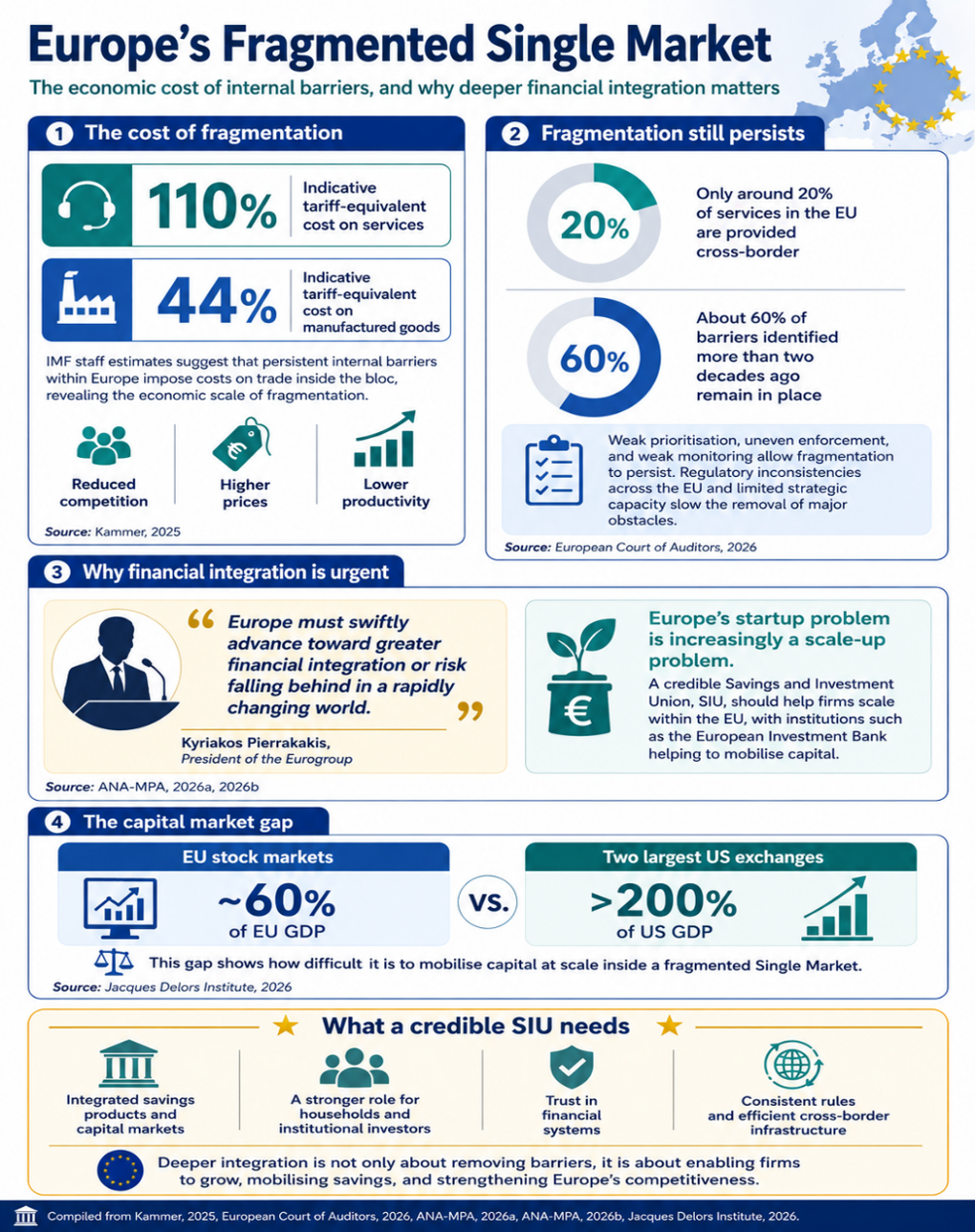
FIGURE 1: Market barriers and the rationale for the SIU
Legal Integration and its Limits
The EU’s legislation governing the Single Market is prima facie comprehensive. It encompasses primary law provisions, specified and complemented by extensive secondary law. This common binding framework establishes directly enforceable rights for economic actors and prohibits a wide array of restrictions on cross-border activities. In that respect, EU law is sound and unavoidable.
Even though it has been established that EU legislation prohibits unjustified restrictions on the free movement of capital, services, goods, and persons, it certainly does not eliminate the conditions under which those restrictions arise.
However, the strength of EU law should not obscure its limits. Even though it has been established that EU legislation prohibits unjustified restrictions on the free movement of capital, services, goods, and persons, it certainly does not eliminate the conditions under which those restrictions arise. Nor does it ensure convergence in administrative practices, regulatory approaches or institutional capacity. These are structural limitations, since the implementation of EU law depends on national authorities that operate within different legal traditions, administrative systems and policy priorities. This leads to the familiar paradox that the same EU legal rule may produce different outcomes across Member States.
…there is increasing support for regulations (Wax & Ionta, 2026), which are binding and directly applicable, reducing the scope for divergence.
Policy debates have focused on this issue, which is also intrinsically correlated to national sovereignty concerns. Directives, as binding legal acts that allow flexibility in national transposition, granting Member States some national discretion to decide how to achieve the set objectives, have often resulted in divergent implementation. In response, there is increasing support for regulations (Wax & Ionta, 2026), which are binding and directly applicable, reducing the scope for divergence. The shift towards regulations is already visible in EU legislative practice: in recent years regulations have become the dominant instrument among legislative acts adopted under the ordinary legislative procedure (Publications Office of the European Union, n.d.). This approach aims to address possible legal confusion among Member States, without being a panacea for every problem, since ultimately all EU rules depend on national enforcement. Legal uniformity, in that sense, mitigates one aspect of market fragmentation, whilst not addressing other disparities in administrative capacity or supervisory practices.
Recent OECD evidence links regulatory compliance costs to weaker productivity and lower business dynamism.
Recent OECD evidence links regulatory compliance costs to weaker productivity and lower business dynamism (Andrews et al., 2026). This matters for the Single Market because firms experience EU law also as compliance tasks, administrative procedures and enforcement practices. Regulations can reduce one important source of fragmentation by limiting divergent national transposition, but they do not remove the practical costs of compliance. Evidence on cumulative compliance costs for SMEs shows that burdens often arise from national interpretation, monitoring and enforcement practices, as well as from the accumulation of obligations over time (European Commission, 2015). These costs may affect firms’ decisions to innovate, enter new markets or expand across borders. The implication is that the choice of legal instrument matters, but it must be accompanied by clear implementation planning, proportionate enforcement and attention to administrative capacity. Otherwise, directly applicable rules may still produce uneven market effects across Member States (European Commission, 2015; Capuano, 2025).
The increasing reliance on regulations should be treated as a governance choice, not as a shortcut to integration.
Even where EU rules are directly binding, Member States remain central to how their effects materialise for businesses and citizens (OECD, 2025). The increasing reliance on regulations should be treated as a governance choice, not as a shortcut to integration. Regulations can limit national divergence, but where they postpone application, rely heavily on implementing acts, or require substantial national administrative adjustment, they may reproduce some of the same practical problems usually associated with directives (Capuano, 2025). The question is therefore not whether regulations are preferable in abstract terms, but under what conditions they can produce uniform market effects without increasing legal complexity or weakening accountability.
Policy discussions have also explored the use of optional EU-wide legal regimes, such as the so-called “28th regime” corporate legal framework, as a means of reducing fragmentation without requiring full harmonization.
Policy discussions have also explored the use of optional EU-wide legal regimes, such as the so-called “28th regime” corporate legal framework, as a means of reducing fragmentation without requiring full harmonization (Hallak, 2026). It would allow businesses to operate under a single set of EU rules across Member States, bypassing divergent national frameworks. This approach is clearly manifesting an attempt to reconcile regulatory uniformity with political limitations on deeper harmonisation. It aims to be a transition towards a legal framework specifically designed to more effectively facilitate cross-border activities in Europe. It goes hand in hand with the argument that before venturing into the global market, European companies should prioritise strengthening their presence within Europe.
Capital Markets as a Stress Test: From Free Movement to SIURegarding the freedom of capital, primary EU law is particularly liberal. Article 63 of the Treaty on the Functioning of the European Union (TFEU) prohibits all restrictions on capital movements within the EU and between Member States and third countries. The CJEU has even interpreted EU law on capital and payments in a dynamic way that reinforces its role as a central pillar of market integration (Samaras, 2022). Even so, further provisions in the TFEU stipulate a number of exceptions to the principle of free movement of capital. Article 65 TFEU stipulates derogations related to taxation, prudential supervision of financial institutions, public policy and public security.
The free movement of capital is enshrined in primary EU law, but in practice it relies largely on trust in banks, institutions, and the country’s economic performance.
Sometimes the implementation of the free movement of capital lacks certainty. As an example, one might cite the experience of “capital controls” in Cyprus (2013-2015) and in Greece (2015-2019) over the past decade, as it provides a picture of the realistic limits of legal integration within the Single Market under conditions of economic turmoil and financial crisis. The free movement of capital is enshrined in primary EU law, but in practice it relies largely on trust in banks, institutions, and the country’s economic performance. When that trust is broken, exceptions become the norm.
Today, although no comparable emergency capital controls are in place in the Member States, the free movement of capital within the EU is still not fully utilised. Capital markets provide a clear test of the limits of the current integration model.
The gradual process of further liberalising the Single Market is not always linear. Naturally, the banking and financial sector’s stability has been prioritised during periods of severe crisis. Exceptional measures have been adopted in the past, in line with EU law. Consequently, the EU’s economic freedoms are not absolutely guaranteed in perpetuity, regardless of the state of the Member States’ domestic economies and the solutions offered by the EU at the time. Even the most liberal Treaty freedom operates within institutional, financial and crisis-management constraints. Today, although no comparable emergency capital controls are in place in the Member States, the free movement of capital within the EU is still not fully utilised.
Capital markets provide a clear test of the limits of the current integration model. Successive CMU initiatives have addressed several layers of capital-market integration, including prospectus rules, securitisation, long-term investment funds, company disclosure through the European Single Access Point (ESAP), trading transparency, listing rules and withholding tax procedures.[1] Yet these measures have not removed deeper structural fragmentation in supervision, insolvency law, taxation, market infrastructure and growth-stage finance.
This means that companies and investors face higher transaction costs and legal uncertainty when operating across borders. The European Commission has identified these frictions as key impediments to the effective functioning of capital markets and to the broader objective of financing growth within the EU (European Commission, 2020b). Recent analysis indicates that the main obstacle to deeper capital market integration lies in the limited centralisation of supervisory powers at EU level, with the European Securities and Markets Authority (ESMA) still lacking the authority required to ensure consistent application of rules across Member States (Gortsos, 2026).
More integrated capital markets support private risk sharing across Member States, improve the allocation of capital and enhance the resilience of the euro area to asymmetric shocks.
The European Central Bank (ECB) has also noted the macroeconomic importance of capital market integration. More integrated capital markets support private risk sharing across Member States, improve the allocation of capital and enhance the resilience of the euro area to asymmetric shocks (European Central Bank, 2024). Fragmentation reduces these benefits, it reinforces reliance on bank-based financing and constrains access to risk capital, particularly for innovative and high-growth businesses. The CMU agenda has addressed some of these issues through targeted legislative initiatives, facilitating cross-border investment and promoting supervisory convergence. Nevertheless, structural differences in national frameworks are still problematic in a cross-border context.
The initiative for a SIU, presented by the European Commission in March 2025, suggests a recalibration into a holistic approach that incorporates the entire EU financial system, attempting to mobilise European savings more effectively and to channel them into productive investment within the EU.
The initiative for a SIU, presented by the European Commission in March 2025, suggests a recalibration into a holistic approach that incorporates the entire EU financial system, attempting to mobilise European savings more effectively and to channel them into productive investment within the EU (European Commission, 2025d). It is designed to transform the foundational work of the two main CMU Action Plans (i.e. the pioneering 2015 CMU Action Plan and the 2020 CMU Action Plan), along with the parallel efforts to develop the Banking Union, into a high-impact, more inclusive and citizen-focused, financial engine. This is closely linked to concerns about the EU’s investment gap and the need to finance large-scale transitions, including digitalisation and decarbonisation (Draghi, 2024).
Towards a results-oriented EU governance approachThe governance of the Single Market is based largely on decentralised implementation.
The governance of the Single Market is based largely on decentralised implementation. Member States are responsible for applying EU law, while the European Commission -acting as the “guardian of the Treaties”- monitors compliance and initiates enforcement when required. It is unavoidable that structural challenges and disputes rise from time to time, since the application of EU law varies in practice across the 27 EU Member States. The infringement procedure against a Member State that fails to implement EU legislation remains a crucial enforcement tool. However, despite its usefulness, it addresses specific Member State breaches of EU law, not systemic patterns of violations. The Commission has framed enforcement as a strategic and preventive function, rather than merely a reactive infringement mechanism, with particular emphasis on own-initiative investigations, incorrect transposition of directives, and infringements that obstruct fundamental freedoms or the effective functioning of the Single Market (European Commission, 2022).
…the main challenge for the EU continues to be ineffective governance.
The completion of the Single Market also requires a credible delivery framework that combines, other than political commitment, a coherent legislative package and clear timelines (Jacques Delors Institute, 2026). Recent EU initiatives point towards a more targeted and measurable enforcement strategy. The “2026 Annual Single Market and Competitiveness” report introduces the first annual “Single Market Enforcement Agenda”, focused on priority barriers such as late payments and obstacles in construction and installation services linked to the green transition, while simplification packages seek to reduce administrative burdens and make Single Market rules easier to apply in practice (European Commission, 2026). Nonetheless, institutional limits hinder enforcement. Coordination mechanisms rely on cooperation and do not always generate strong incentives for compliance. Consequently, the main challenge for the EU continues to be ineffective governance.
A turning point appears to be marked by more recent developments towards a results-oriented EU governance approach. The joint “One Europe, One Market” roadmap, agreed in late April 2026 between the European Parliament, the Council and the Commission, seeks to introduce a structured implementation framework through priority legislative deliverables and clear timelines, as well as regular monitoring through quarterly stocktaking. Europe’s fragmentation was translated into a structured work programme built around five priorities: simplifying rules, deepening Single Market integration, strengthening trade, reducing energy prices while advancing decarbonisation, and driving the digital and AI transformation, supported by more than forty legislative and policy deliverables.
The roadmap shows the political commitment of the EU institutions for setting out concrete steps towards a more operational Single Market governance (Council of the European Union, 2026). It converts a broad competitiveness agenda into a delivery test: capital markets, energy, digital infrastructure and industrial policy are placed within one political framework, with timelines that make delays more visible and politically costly (Letta, 2026a).
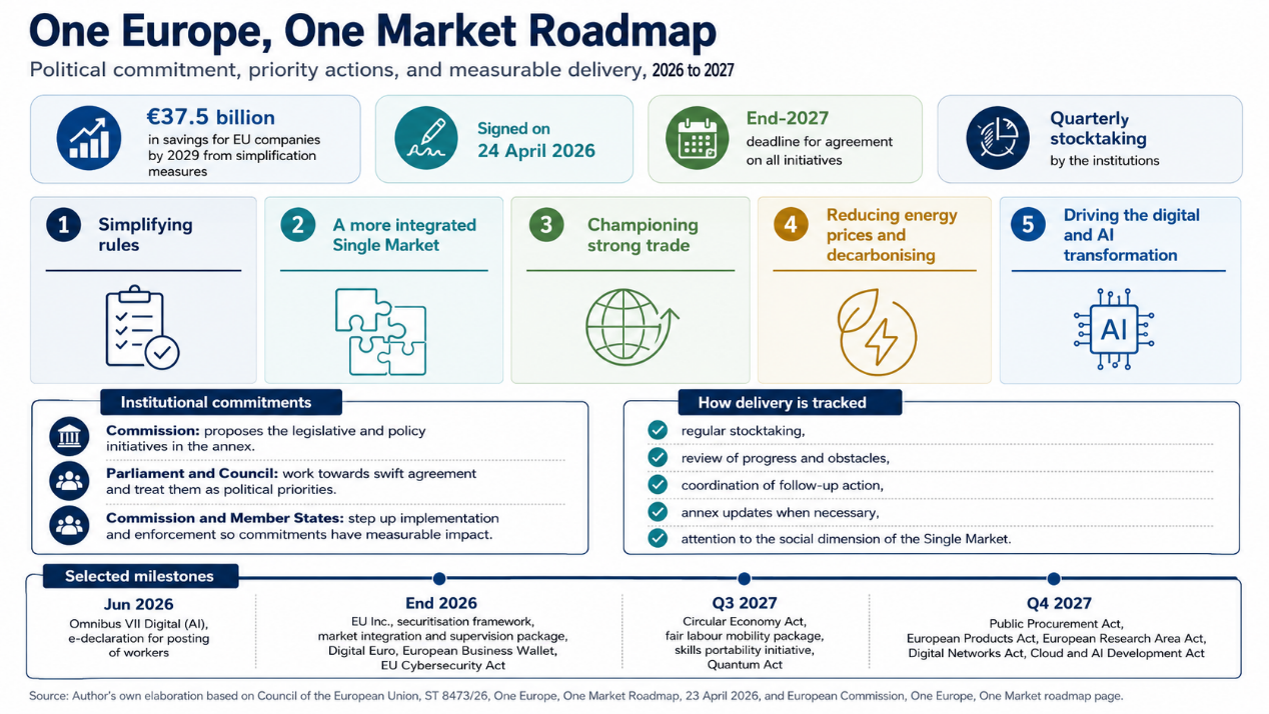
FIGURE 2: “One Europe, One Market” roadmap (April 2026), from political commitment to measurable delivery
The roadmap’s “market integration and supervision package” is particularly relevant in this respect, since the Commission’s December 2025 proposals seek to address capital-market fragmentation through changes to trading, post-trading, asset management and ESMA supervision, confirming that the SIU depends not only on new rules but on a more integrated supervisory architecture (European Commission, 2025e).
Policy RecommendationsCompleting the Single Market requires targeted action. The adoption of these strategic priorities is strongly encouraged:
- Target harmonisation and implementation where fragmentation is structural: EU legislative action should focus on areas such as insolvency, taxation procedures and other market obstacles, where national discrepancies create permanent barriers. Where the Treaty basis allows it, regulations may be more effective than directives, since they reduce transposition delays and limit divergent national implementation. Moreover, the Commission should track the implementation of major Single Market initiatives early, using detailed guidance and reporting to prevent new fragmentation from emerging. Attention should be paid to reducing “gold-plating” (adding extra layers of rules at the national level), which often increases compliance costs without clear policy justification.
- Reinforce supervisory convergence in capital markets: As has been pointed out in the Draghi Report (2024), the EU lacks a single securities market regulator. The ESMA ought to be transformed to serve as the sole common regulator for all securities markets within the EU. The EU should strengthen convergence through the ESMA, reinforcing transparency and technical standards, attaining a more unified supervision of capital markets.
- Constitutional discipline for restrictions on capital movements: Past episodes of capital controls show that EU law can accommodate emergency restrictions on capital movements where they are justified, proportionate and temporary. The unresolved issue is institutional. These safeguards have operated mainly through ad hoc assessment and monitoring, rather than through a permanent framework designed to protect capital-market integration. The EU should therefore develop, first through secondary legislation and eventually through Treaty reform, a stricter constitutional discipline for the use of Article 65 TFEU. Its provisions should not be abolished, since taxation, prudential supervision and public policy/security remain legitimate public interests. Its invocation, however, should be tied to clearer EU-level conditions: notification, time limitation, strict periodic review and consistency with the objective of capital-market integration. The aim would not be to invent new legality criteria, but to make their application more predictable, reviewable and aligned with the completion of the SIU.
Eliminating internal obstacles across the EU is essential for enabling market dynamics to operate effectively on a large scale.
In 2024, the findings and recommendations of the Letta and Draghi reports had been met with widespread enthusiasm (Kritikos, 2024). Eliminating internal obstacles across the EU is essential for enabling market dynamics to operate effectively on a large scale. A true unified market is needed, ensuring that conducting business between Vilnius and Madrid is as seamless as it is between Athens and Thessaloniki. The competitiveness debate is therefore also a debate about scale. The EU’s difficulty is that companies, banks and capital markets are primarily organised around national markets. In a global economy shaped by continental-scale competitors from the United States and China, the relevant benchmark is whether businesses in the EU can achieve sufficient growth to establish themselves as truly European entities, rather than remaining confined to national prominence. This does not alter the fact that slow convergence may be insufficient in sectors where technological cycles and global competition move faster than EU implementation.
A more integrated Single Market needs rules that are clear and sufficiently uniform to support cross-border growth, while avoiding unnecessary procedural burdens that make compliance easier for incumbents than for new entrants.
A more integrated Single Market needs rules that are clear and sufficiently uniform to support cross-border growth, while avoiding unnecessary procedural burdens that make compliance easier for incumbents than for new entrants. National regulatory discretion may protect domestic dominant players and, possibly, reduce unwanted competitive pressure from other Member States. This might explain why many barriers still exist even when their aggregate cost to the EU economy is widely recognised. Completing the Single Market requires confronting the domestic interests that benefit from partial integration.
A functioning SIU should be assessed by whether it enables European firms to grow within Europe, rather than pushing them towards capital markets elsewhere.
Greater scale should not be understood as a goal only for large Member States or large firms. Smaller Member States and SMEs may benefit most from a genuinely integrated Single Market, because domestic scale is structurally limited. Deeper integration can expand their addressable market and create more credible paths from local innovation to European growth. Besides, Europe does not lack startups or entrepreneurial talent, but many firms face a financing and market-size ceiling once they move from creation to scaleup. A functioning SIU should be assessed by whether it enables European firms to grow within Europe, rather than pushing them towards capital markets elsewhere.
Recent EU policy developments set out the way forward regarding greater regulatory uniformity and less economic overreliance on third countries. This direction addresses important aspects of the problem. However, legal convergence does not automatically produce effective integration. The central challenge is mostly operational, since the EU has demonstrated its ability to identify barriers and design policy responses. Ensuring consistent implementation across Member States is more difficult. The long-term political sustainability of the Single Market depends also on ensuring that mobility remains a choice rather than an obligation. As emphasised in recent policy debates, deeper integration must be accompanied by economic and social cohesion in order to remain politically viable (Letta, 2026b).
Completing the Single Market should be understood not only as an economic reform, but as a condition for European resilience and sovereignty.
The link between competitiveness and European security is also central to the Single Market debate. In a global economy, fragmentation weakens the EU’s capacity to invest, innovate and act strategically. Completing the Single Market should be understood not only as an economic reform, but as a condition for European resilience and sovereignty (Letta & Lamy, 2026). It is time for the EU to compete with the dominant players, benefitting from a higher degree of autonomy by boosting its economy. For the EU this requires a decisive shift from agenda-setting to delivery. It implies departing from mediocrity, with stronger enforcement, greater administrative capacity and sustained political commitment.
Completing the Single Market means making Europe the natural scale of economic activity, rather than leaving firms, capital and innovation trapped in national markets.
From the early stages of the internal market, European policymakers recognised that incomplete integration risks reducing the market to a form of managed openness instead of a fully functioning economic space (European Commission, 1985). The struggle over the same strategic choice is still relevant today. The key question is whether Europe can transition from a culture of national protectionism to a European-scale mindset. Completing the Single Market means making Europe the natural scale of economic activity, rather than leaving firms, capital and innovation trapped in national markets.
ReferencesAarnio, R., Bogucki, A., Jorge Ricart, R., Timmers, P., & Vainio, T. (2026). Building One Europe, One Market: Four strategic priorities for the digital single market (Sitra Studies 258). Sitra.
ANA-MPA. (2026a, March 17). Pierrakakis at Euronext: SIU will boost job quality across Europe. https://www.amna.gr/mobile/article/978705/Pierrakakis-at-Euronext-SIU-will-boost-job-quality-across-Europe
ANA-MPA. (2026b, May 13). Pierrakakis: We need greater integration in Europe, bank mergers, larger businesses. https://www.amna.gr/article/992554/pierrakakis-we-need-greater-integration-in-europe–bank-mergers–larger-businesses
Andrews, D., Turban, S., & Tyros, S. (2026). Regulatory compliance costs and productivity: New task-based evidence (OECD Economics Department Working Papers No. 1856). OECD Publishing. https://doi.org/10.1787/1c1da52e-en
Capuano, V. (2025). New legislative approach with old legislative tools: The recent (ab)use of regulations in European Union law. Eurojus, 4, 145–163. https://rivista.eurojus.it/new-legislative-approach-with-old-legislative-tools-the-recent-abuse-of-regulations-in-european-union-law/
Council of the European Union. (2026). One Europe, One Market Roadmap of the European Parliament, the Council of the European Union and the European Commission (ST-8473/26).
https://data.consilium.europa.eu/doc/document/ST-8473-2026-INIT/en/pdf
Court of Justice of the European Union. (2026). Annual report 2025: Statistics concerning the judicial activity of the Court of Justice. https://curia.europa.eu/site/upload/docs/application/pdf/2026-05/ra_en_court_statistiques_25.pdf
Draghi, M. (2024). The future of European competitiveness. European Commission. Part A: https://commission.europa.eu/document/download/97e481fd-2dc3-412d-be4c-f152a8232961_en; Part B: https://commission.europa.eu/document/download/ec1409c1-d4b4-4882-8bdd-3519f86bbb92_en?filename=The%20future%20of%20European%20competitiveness_%20In-depth%20analysis%20and%20recommendations_0.pdf
European Central Bank. (2024). Financial integration and structure in the euro area. https://www.ecb.europa.eu/press/fie/html/ecb.fie202406~c4ca413e65.en.html
European Commission. (1985). Completing the internal market: White paper from the Commission to the European Council (Milan, 28–29 June 1985) (COM(85) 310 final). https://eur-lex.europa.eu/legal-content/EN/TXT/?uri=CELEX:51985DC0310
European Commission [Directorate-General for Internal Market, Industry, Entrepreneurship and SMEs & Centre for Strategy & Evaluation Services]. (2015). Cost of the cumulative effects of compliance with EU law for SMEs: final report. Publications Office. https://data.europa.eu/doi/10.2873/554243
European Commission. (2020a). Identifying and addressing barriers to the Single Market (COM(2020) 93 final).
https://eur-lex.europa.eu/legal-content/EN/TXT/?uri=CELEX:52020DC0093
European Commission. (2020b). A Capital Markets Union for people and businesses: New action plan (COM(2020) 590 final).
https://eur-lex.europa.eu/legal-content/EN/TXT/?uri=CELEX:52020DC0590
European Commission. (2022). Enforcing EU law for a Europe that delivers (COM(2022) 518 final).
https://commission.europa.eu/publications/communication-commission-enforcing-eu-law-europe-delivers_en
European Commission. (2024). The 2024 Annual Single Market and Competitiveness Report (COM(2024) 77 final). https://eur-lex.europa.eu/legal-content/EN/TXT/?uri=CELEX:52024DC0077
European Commission. (2025a). A Competitiveness Compass for the EU (COM(2025) 30 final). https://eur-lex.europa.eu/legal-content/EN/TXT/?uri=celex:52025DC0030
European Commission. (2025b). The Single Market: Our European home market in an uncertain world (COM(2025) 500 final). https://single-market-economy.ec.europa.eu/publications/single-market-our-european-home-market-uncertain-world_en
European Commission. (2025c). Startups, scaleups and entrepreneurship. [Flash Eurobarometer 559]. https://europa.eu/eurobarometer/surveys/detail/3359
European Commission. (2025d). Savings and Investments Union: A strategy to foster citizens’ wealth and economic competitiveness in the EU (COM(2025) 124 final). https://eur-lex.europa.eu/legal-content/EN/TXT/?uri=CELEX:52025DC0124
European Commission. (2025e). Market integration and supervision package. https://finance.ec.europa.eu/publications/market-integration-and-supervision-package_en
European Commission. (2026). The 2026 Annual Single Market and Competitiveness Report (COM(2026) 46 final).
https://eur-lex.europa.eu/legal-content/EN/TXT/?uri=COM:2026:46:FIN
European Council. (2026). European Council conclusions, 19 March 2026.
https://www.consilium.europa.eu/en/meetings/european-council/2026/03/19/
European Court of Auditors. (2026). Single market for services: Commission action to remove barriers to cross-border services still insufficient (Special Report No 13/2026). https://www.eca.europa.eu/en/publications/SR-2026-13
Gortsos, C. (2026). European (EU) capital markets law at (close to) 50: Historical evolution and missing elements (EBI Working Paper No. 207). European Banking Institute. https://papers.ssrn.com/sol3/papers.cfm?abstract_id=6689178
Hallak, I. (2026, April). The 28th regime corporate legal framework (PE 785.710). European Parliamentary Research Service, European Parliament. https://www.europarl.europa.eu/thinktank/en/document/EPRS_BRI(2026)785710
IMF. (2024, October). Regional Economic Outlook for Europe: A Recovery Short of Europe’s Full Potential.
Jacques Delors Institute. (2026). One Europe, One market: Europe’s strongest response to a world in transformation. https://institutdelors.eu/content/uploads/2026/04/One-Europe-One-Market_paper_v3-1.pdf
Kammer, A. (2025, June). Europe’s integration imperative. International Monetary Fund. https://www.imf.org/en/publications/fandd/issues/2025/06/europes-integration-imperative-alfred-kammer
Kritikos, A. (2024). The Letta and Draghi reports: The only way to go, despite the hurdles (European Economy Policy Briefs No. 5/2024). Hellenic Foundation for European and Foreign Policy (ELIAMEP). https://www.eliamep.gr/wp-content/uploads/2024/11/Policy-briefs-special-edition-Leventis-5-EN-.pdf
Letta, E. (2024). Much more than a market. Council of the European Union.
https://www.consilium.europa.eu/media/ny3j24sm/much-more-than-a-market-report-by-enrico-letta.pdf
Letta, E. (2026a, May). One Europe, One Market Roadmap: Building Europe’s capacity to act. Centre for Economic Policy Research. https://cepr.org/system/files/publication-files/299775-one_europe_one_market_roadmap_building_europe_s_capacity_to_act.pdf
Letta, E. (2026b, February 26). One Europe. One market. Time to complete the EU single market. Politico. https://www.politico.eu/article/time-complete-eu-european-single-market-next-step/
Letta, E., & Lamy, P. (2026, March 17). Now more than ever, Europe must complete the Single Market. Project Syndicate. https://www.project-syndicate.org/commentary/eu-completing-single-market-key-to-defense-energy-security-tech-sovereignty-by-enrico-letta-and-pascal-lamy-2026-03
OECD. (2025). Better Regulation Practices across the European Union 2025. OECD Publishing. https://doi.org/10.1787/6f007516-en
Publications Office of the European Union. (n.d.). Legal acts – statistics. EUR-Lex. https://eur-lex.europa.eu/statistics/legislative-acts-statistics.html
Samaras, A. (2022). Οι κεφαλαιακοί περιορισμοί στο σύγχρονο ενωσιακό δίκαιο [Restrictions on the free movement of capital in contemporary EU law]. Nomiki Bibliothiki.
Thomadakis, A., & Marcus, J. S. (2025). Identification of hurdles that companies, especially innovative start-ups, face in the EU justifying the need for a 28th regime (PE 775.947). European Parliament, Policy Department for Justice, Civil Liberties and Institutional Affairs. https://www.europarl.europa.eu/RegData/etudes/STUD/2025/775947/IUST_STU(2025)775947_EN.pdf
Wax, E., & Ionta, N. (2026, April 28). Who killed the directive? Euractiv.
https://www.euractiv.com/news/rapporteur-who-killed-the-directive/
[1] See, indicatively, Regulation (EU) 2017/1129; Regulation (EU) 2017/2402; Regulation (EU) 2023/606; Regulation (EU) 2023/2859; Directive (EU) 2024/790; Regulation (EU) 2024/791; Regulation (EU) 2024/2809; Directive (EU) 2024/2811; Council Directive (EU) 2025/50.
Categories: Diplomacy & Defense Think Tank News
Tempo darf kein Ersatz für Demokratie sein
Die EU-Erweiterung auf dem Westbalkan ist strategisch wichtig. Doch wer den Beitrittsprozess beschleunigen will, darf Demokratie und Rechtsstaatlichkeit nicht zur Nebensache machen. Ein Beitrag von Karina Mross.
Categories: Diplomacy & Defense Think Tank News
Pages



© 2012-2018 Europa Varietas Foundation © 2015-2018 Europa Varietas Association
www.europavarietas.org | info(@)europavarietas(dot)org | Switzerland




We are looking for sponsors for the English translation of these books, please contact turkeandras(at)gmail(dot)com