
You are here
Africa
PSG knock out Bayern to set up Champions League final with Arsenal
Holders Paris Saint-Germain booked a Champions League final against Arsenal as a 1-1 draw in their semifinal second leg at Bayern Munich on Wednesday sealed a 6-5 aggregate victory. Leading 5-4 after last week 39;s thrilling first leg in Paris, Luis Enrique 39;s side stretched their overall advantage early on through Ousmane Dembele.
Categories: Africa, European Union
Hantavirus ship passenger: 'They didn't take it seriously enough'
Ruhi Cenet was surprised when cruise-ship life carried on as usual aboard the MV Hondius, even after the captain announced the first passenger's death. The Turkish travel vlogger had boarded the ship in Ushuaia, Argentina, on April 1 to do a story about one of its stops, Tristan da Cunha, the remote archipelago in the South Atlantic.
Categories: Africa, European Union
2026 BECE: Two invigilators arrested in Bono region for malpractices
The Police have arrested two invigilators at some examination centers in the ongoing Basic Education Certificate Examination (BECE) in the Bono Region, Mr Luke Mensah, the Public Relations Officer at the Bono Regional Directorate of Education, has said.
Categories: Africa, European Union
Breaking the Cycle Between Food Production and Environmental Decline
Healthy soils teeming microbes are the foundations of resilient, sustainable and global food production ecosystems. Credit: Fabiola Ortiz/IPS
By Esther Ngumbi
URBANA, Illinois, US, May 6 2026 (IPS)
A newly published review in Nature Reviews Earth & Environment has revealed disturbing statistics on the growing environmental threats posed by global food production. The global food system, designed to feed and nourish humanity, is now a major contributor to climate change via greenhouse gas emissions, and the largest driver of freshwater depletion, biodiversity loss, and nutrient pollution.
Alarmingly, this new review brings attention to a concerning cruel twist and a deeper problem manifested through feedback loops between environmental change pressures including climate change and global food production.
In this vicious hard to break feedback loop, farmers are forced to use more inputs including fertilizers and toxic pesticides to sustain high yields, which in turn ruins and further compromises the environment while making food production harder in the long term.
In this vicious hard to break feedback loop, farmers are forced to use more inputs including fertilizers and toxic pesticides to sustain high yields, which in turn ruins and further compromises the environment while making food production harder in the long term
The central question then becomes: How do we break these vicious feedback loops that threaten to undermine our global food system in the longer term? What specific foundational strategies stand a chance of reducing environmental pressures and improving global food systems and agricultural production resillience?
First and foremost, the foundations for breaking this cruel cycle begin in the soil, by investing in revitalizing and improving the health of soils and agricultural lands that power global food production. Healthy soils teeming microbes are the foundations of resilient, sustainable and global food production ecosystems.
Healthy soils store and filter water and cycle nutrients, support the growth of nutritious food while simultaneously helping agricultural crop plants to cope with water stress, combat diseases and pests, and use nutrients more effectively, reducing the need for additional inputs such as fertilizers and pesticides.
Convincingly, smart investments channeled towards improving soil health and soil microbiome can help farmers and food producers to produce more and healthy crops with less, limit environmental damage and simultaneously break the emerging feedback loops between global food production and environmental damage.
The good news is that improving and building soil health and soil microbiomes is a top priority for many stakeholders involved in food production in the United States and around the world including farmers, researchers, governments, philanthropists, non-governmental and non-profit organizations, research funding agencies, the African Union and the United Nations.
Excitingly, adoption of several sustainable regenerative practices including cover cropping, crop rotation, conservation tillage, planting diverse crops, integrating livestock and agroforestry, alongside with inoculation of soils with microbes including arbuscular mycorrhizal fungi can improve soil health and quality, improving biodiversity, mitigate climate change, and extend soil longevity beyond 10,000 years. Moreover, research is confirming that these strategies do indeed work.
Second, another intervention that can reduce environmental decline while improving global food production is investing in innovative climate-smart agriculture and precision agriculture practices. Scientific evidence has shown that adopting these practices can sustain global food production while limiting environmental harm.
Complementing and accompanying these foundational strategies is the urgent need to prioritize breeding and developing multi-stress and stress-resilient crops and integrating stress resilient traits from wild relatives of domesticated crops.
Additionally, multi-stress and climate-resilient crops can be grown alongside other annual and perennial crop species while being integrated into broader sustainable and regenerative farming practices including agroforestry. Collectively, these practices can sustain food production while minimizing environmental harm, thereby breaking feedback loops.
Finally, these strategies must be paired with policies and incentives to ensure maximum adoption. Farmers who adopt regenerative and sustainable soil building, climate-smart, precision agriculture practices while planting stress resilient crops should be supported and rewarded.
Alongside policies and incentives, there is a need to ensure that farmers, who are central in global food production embrace and adopt these sustainable feedback loops breaking practices. Embracing these practices can improve agricultural productivity, resilience and efficiency.
Of course, it is critical to understand and be aware of the constraints that still hinder stakeholders in global food production including farmers from adopting these global food production and environmental pressures feedback loop breaking practices.
Feeding our growing world sustainably requires everyone to confront the vicious cycle of food production and environmental decline. Researchers, policymakers, governments, private businesses, civil society, and philanthropists must act with urgency.
We should view mitigation and adaptation as interconnected strategies to address the dual challenge of producing food while protecting the environmental systems that enable it. The most effective and sustainable solutions will strengthen agriculture and reduce environmental harm. Time is of the essence.
Esther Ngumbi, PhD is Assistant Professor, Department of Entomology, African American Studies Department, University of Illinois at Urbana-Champaign
Keep Inputs Moving to Keep Food Affordable
Food prices in 2027 are being influenced by choices made this spring, on farms and in capitals. Credit: Shutterstock
By Maurizio Martina
ROME, May 6 2026 (IPS)
Across Europe, winter wheat is already in the ground. What farmers apply in the coming weeks will determine the size of this year’s harvest. Those decisions are now being made under a sudden surge in costs that did not exist when seeds went in.
The closure of the Strait of Hormuz in late February disrupted energy and input markets that European agriculture cannot avoid. Within days, tanker traffic fell by 90 to 95 percent. European natural gas prices rose by 70 to 75 percent in the first week, with prices approaching double pre-conflict levels by mid-March.
Meanwhile Brent crude began the year at $61 per barrel and finished Q1 at $118, the largest quarterly price increase on an inflation-adjusted basis in data going back to 1988.
Farmers need immediate, targeted support to sustain the use of fertilizers and other key inputs during this narrow window, and governments should act to keep trade in agricultural inputs open while mobilizing rapid financing for countries under pressure
These shifts shape the cost of energy that underpins farming, from machinery and irrigation to the production of nitrogen fertilizers. At the same time, disruptions to Gulf fertilizer exports—representing roughly 20 to 30 percent of globally traded supply—pushed prices higher across all markets.
Europe, though not directly dependent on Gulf producers, buys into this global price system while also facing higher domestic production costs linked to gas. The result is a sustained increase in input costs at the precise moment farmers decide how much nitrogen to apply, decisions that will shape yields at harvest and are already beginning to set the direction of food prices into 2027.
Two priorities now shape the outcome. Farmers need immediate, targeted support to sustain the use of fertilizers and other key inputs during this narrow window, and governments should act to keep trade in agricultural inputs open while mobilizing rapid financing for countries under pressure.
These measures can still stabilize planting decisions and protect yields. Without them, higher input costs will translate directly into reduced application, lower production, and tighter food supply later in the year.
Rising fertilizer costs are already forcing farmers to adjust input use, with direct consequences for yields and food supply later in the year.
When fertilizer prices rise and liquidity tightens, farmers apply less nitrogen. Lower input use reduces yields. The impact does not appear immediately. It becomes visible at harvest, when production falls below potential, and later in markets, when supply tightens and prices rise. By then, the decisions that shaped the outcome cannot be reversed.
European agriculture enters this crisis with already thin margins and limited capacity to absorb further cost increases. Farmers have faced prolonged financial pressure since the 2022 input cost surge, with rising costs only partially offset by prices.
Climate variability and regulatory pressures add further uncertainty. The current surge compounds these conditions and risks eroding confidence at a critical moment. The resilience of European agriculture depends on whether farmers can absorb shocks of this scale without reducing investment or output.
A further pressure sits at the intersection of energy and food markets. Rising oil prices increase the attractiveness of biofuels, drawing crops such as maize and vegetable oils toward fuel production. This tightens food supply and raises prices further. Europe is deeply integrated into this system. Energy volatility feeds directly into agricultural markets, linking geopolitical risk to food prices and inflation.
The window for action remains open, but it is narrowing. Nitrogen has not yet been fully applied. Spring planting across parts of Europe is still underway. Acting now can limit the damage. Waiting until harvest will not.
The immediate priority is to sustain production. Farmers require timely and proportionate support to maintain input use, particularly fertilizers, during this critical phase.
Current policy responses have focused largely on fuel through tax cuts, price caps and targeted subsidies, while support for fertilizers and broader agrifood inputs remains limited. Existing instruments provide a foundation, but the scale and speed of the shock call for greater flexibility. Clear signals of support, combined with measures to ease liquidity constraints, can influence decisions now and reduce the risk of a contraction in output.
Europe’s response must also extend beyond its borders. As a central actor in global agricultural markets, it has both an interest and a responsibility to support stability. Maintaining open trade in agricultural inputs is essential. Export restrictions imposed by several countries risk shifting the burden onto more vulnerable economies. Europe should lead in opposing such measures.
Access to financing remains critical. Instruments such as the International Monetary Fund’s Food Shock Window can provide rapid support to countries facing acute pressure. Complementary approaches, including the Financing for Shock-Driven Food Crisis Facility facilities developed within the Food and Agriculture Organization, enable earlier and more proactive responses before shocks deepen and spread.
Over the medium term, countries should diversify fertilizer supply sources and strengthen regional coordination. Over the longer term, resilience will depend on more efficient input use, investment in alternative production methods such as green ammonia, and reduced dependence on volatile energy markets. Food production should be treated as a strategic asset, alongside energy and infrastructure.
The decisions taken now will shape outcomes far beyond Europe. Food prices in 2027 are being influenced by choices made this spring, on farms and in capitals. Farmers are adjusting under pressure. The question is whether the response they receive matches the urgency of the moment.
Excerpt:
Maurizio Martina is Deputy Director-General of the United Nations Food and Agriculture Organization
Categories: Africa, Diplomacy & Defense Think Tank News
Orphaned baby hippo to be hand-reared by keepers at Kenya sanctuary
The baby hippo, which has been named Bumpy, was found clinging to its lifeless mother at a lake.
Cruise passengers tell of life on board ship stranded off Cape Verde after hantavirus outbreak
While passengers onboard the MV Hondius say the situation is calm, they face days at sea as officials warn the disease may have spread.
Debate: Where does Germany stand after a year of Merz?
Friedrich Merz has headed Berlin's Black-Red ruling coalition for a year now. Promising rapid reforms, the Chancellor deliberately sought to set himself apart from the previous government, the so-called 'traffic-light' coalition, which appeared to be stuck in a rut. Europe's press debates to what extent he has fulfilled the high expectations in his first year and what tasks lie ahead.
Categories: Africa, European Union
Debate: How to guarantee Europe's security?
The conviction that Europe must take charge of its own defence is growing ever stronger. Russia's attack on Ukraine, the Kremlin's constant threats and the gradual but inexorable withdrawal of the US as a security guarantor are driving member states to rearm. Commentators take stock of Europe's defence capabilities.
Categories: Africa, European Union
Solidarity instead of German hegemony | The Guardian - United Kingdom
Categories: Africa, European Union
Sudan accuses Ethiopia and UAE of orchestrating drone attacks on airport
Sudan's foreign minister says Ethiopia and UAE has chosen the "wrong path" and would regret it.
Press release - MEPs back fairer and clearer rules on social benefits for EU mobile workers
The updated rules seek to ensure access to social security for EU workers who live or work in another EU country, while distributing obligations fairly among member states.
Committee on Employment and Social Affairs
Source : © European Union, 2026 - EP
Committee on Employment and Social Affairs
Source : © European Union, 2026 - EP
Categories: Africa, European Union
VENEZUELA: ‘The Credit Goes to Detainees’ Families, Human Rights Organisations and the International Community’
By CIVICUS
May 6 2026 (IPS)
CIVICUS discusses the status of political prisoners in Venezuela with Manuel Virgüez, director of Movimiento Vinotinto, a Venezuelan human rights organisation that works for citizen empowerment, democracy and justice.
Manuel Virgüez
On 3 January, US special forces abducted Venezuelan President Nicolás Maduro and took him to New York to stand trial on narco-terrorism charges. Instead of supporting the opposition leader Edmundo González Urrutia, rightful winner of the 2024 presidential election, the Trump administration backed Maduro’s vice-president Delcy Rodríguez as interim president. Rodríguez signed an amnesty law in February, but hundreds of political prisoners remain in detention.What’s the status of political prisoners?
Following the 2024 presidential election, the state detained around 2,000 people as part of what it called Operation Tun Tun. In early 2026, around 1,000 remained in detention, although various organisations put the total at between 950 and 1,200, depending on the classification criteria they use. Since 8 January, when Jorge Rodríguez, President of the National Assembly, announced imminent releases, and following the approval of an amnesty law, that number has fallen to around 450.
Among those released were human rights defender Rocío San Miguel, activist Javier Tarazona and journalist Eduardo Torres. The vast majority of those released were members of civil society or political activists. On 16 April, it was unofficially reported that around 50 former employees of Petróleos de Venezuela, detained in 2025, had been released. If this is confirmed, the current number of political prisoners remaining would be around 380.
The group that remains in detention consists mainly of dissident military personnel and former public officials. The authorities are reluctant to release them because they pose a direct threat to the regime’s stability. They are the ones who have suffered the worst treatment: various organisations, including Movimiento Vinotinto, have documented enforced disappearances, inhuman treatment, torture and persecution of family members. In some cases, people remained missing for weeks or months, with no knowledge of their whereabouts or whether they were still alive. These are some of the most serious violations recorded in recent decades in Venezuela.
How did these arrests differ from previous ones?
Two things distinguished them from previous waves of repression. The first was the abusive use of the concept of ‘eradication’, provided for in the Organic Code of Criminal Procedure, to transfer all cases to courts in Caracas. People detained in states such as Bolívar, hundreds of kilometres from the capital, were required to appear there. This was an unprecedented violation of the procedural principles of Venezuelan law. Not even in the 1960s, in the face of guerrilla movements, was there such a concentration of cases in a single court.
The second thing was the criminalisation of everyday acts. The state used anonymous reports via mobile apps to identify and arrest people, and a simple WhatsApp status update could be treated as an act of terrorism. The presumption of innocence ceased to exist in practice and the burden of proof was reversed: it was the detainee who had to prove they were not guilty.
What does the amnesty law entail and what does it exclude?
The law provides for the closure of cases linked to political events from different periods in Venezuelan history. This is no minor matter. After years of mass detentions and restrictions on freedom, the state implicitly acknowledges that those people should not have been imprisoned. The credit goes, above all, to the detainees’ families, human rights organisations and the international community.
But the law falls short. It does not provide for any mechanism of redress for those who were unjustly detained. Nor does it provide for the restitution of property. Many political prisoners had their businesses, homes and vehicles confiscated and won’t recover them on release. The law also offers no clear guarantees for those in exile. On 16 April, former legislator Alexis Paparone returned to Venezuela and was detained for several hours before being brought before a court, demonstrating that returning remains risky.
The law effectively excludes dissident military personnel and makes no provision for the thousands of politically motivated dismissals that have taken place, in violation of International Labour Organization Convention 111, nor for political disqualifications. As long as leaders such as María Corina Machado are unable to exercise their political rights, there can be no talk of a genuine transition.
What conditions are required for a genuine democratic transition?
There can be no reconciliation without justice. What Venezuela has experienced is one of the darkest periods in South America’s recent history. Bringing victims and perpetrators together without a prior process of accountability is not reconciliation; it is impunity. Where there’s no justice, there’s vengeance, and that generates endless cycles of violence. Societies that have not dealt with their crimes have carried that wound for generations.
For there to be justice, profound institutional reform is needed: in the armed forces, the electoral system, the judiciary and the public prosecutor’s office. Cosmetic changes are not enough. It will be a long-term process, but the first steps must be taken to call general elections and move towards real economic recovery.
What’s possible, and necessary, is a pact of coexistence: an agreement to respect the constitution and live without mutual persecution. But such a pact requires the Chavista regime to acknowledge its mistakes and its crimes. Without that, any transition will remain incomplete.
Even so, I am optimistic. Venezuelan civil society, despite all it has lost, remains standing. There are signs that something is changing, and we must seize this opportunity. I’m confident that we will be able to lay the foundations for a democracy that says ‘never again’ to authoritarianism.
CIVICUS interviews a wide range of civil society activists, experts and leaders to gather diverse perspectives on civil society action and current issues for publication on its CIVICUS Lens platform. The views expressed in interviews are the interviewees’ and do not necessarily reflect those of CIVICUS. Publication does not imply endorsement of interviewees or the organisations they represent.
GET IN TOUCH
Website
Facebook
Instagram
LinkedIn
Twitter
YouTube
SEE ALSO
Venezuela: ‘People once again believe they can influence what happens in their country’ CIVICUS Lens | Interview with Pedro González Caro 29.Mar.2026
Venezuela: democracy no closer CIVICUS Lens 29.Jan.2026
Venezuela: ‘We are seeing an economic transition, but no democratic transition’ CIVICUS Lens | Interview with Guillermo Miguelena 29.Jan.2026
Follow @IPSNewsUNBureau
!function(d,s,id){var js,fjs=d.getElementsByTagName(s)[0],p=/^http:/.test(d.location)?'http':'https';if(!d.getElementById(id)){js=d.createElement(s);js.id=id;js.src=p+'://platform.twitter.com/widgets.js';fjs.parentNode.insertBefore(js,fjs);}}(document, 'script', 'twitter-wjs');
Categories: Africa, Diplomacy & Defense Think Tank News
Pages


© 2012-2018 Europa Varietas Foundation © 2015-2018 Europa Varietas Association
www.europavarietas.org | info(@)europavarietas(dot)org | Switzerland

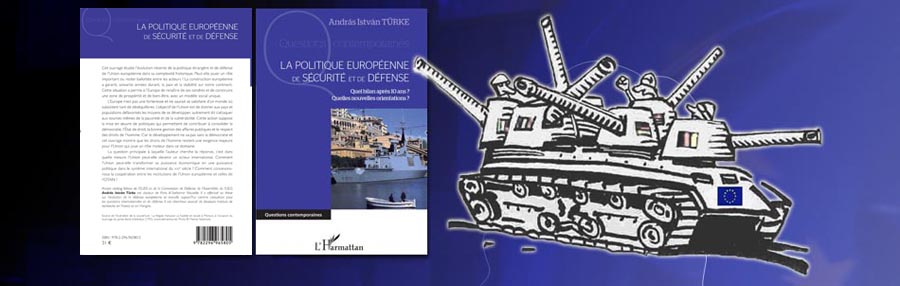
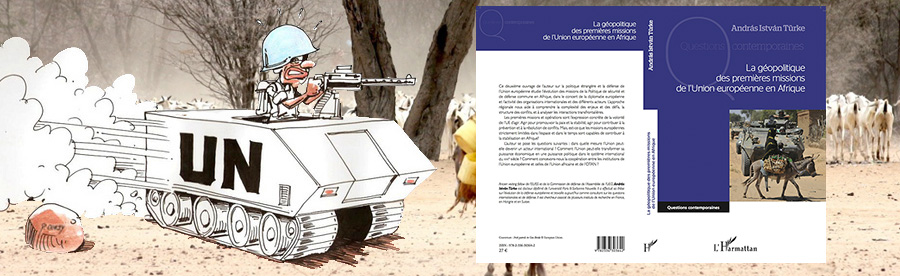
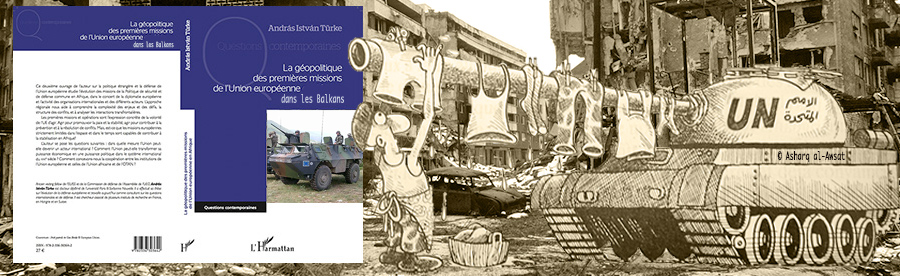
We are looking for sponsors for the English translation of these books, please contact turkeandras(at)gmail(dot)com