
Vous êtes ici
Agrégateur de flux
KURZMELDUNGEN - Schweiz: Berichte belegen Diskriminierung – Reform der Stadtpolizei Lausanne wird verschärft
Catégories: Europäische Union, Swiss News
Test de recrutement externe d'un Ingenieur financier et comptable : Resultat provisoire par ordre de merite
WYN-009-2025
Sous réserve d'un contrôle approfondi, les candidats dont les noms suivent sont déclarés admis au test de recrutement externe au poste de :
POSTE : INGENIEUR FINANCIER ET COMPTABLE BAC+5
LISTE DES ADMIS
Rang : 1er
Nom et Prénom(s)
SAWADOGO Malick
Sexe : M
Résultat : Admis
Arrêté la présente liste à Un (01) nom.
LISTE D'ATTENTE
Rang : 1er
Nom Prénom(s)
THIOMBIANO Inoussa
Sexe : M
Résultat : Liste d'attente
Rang : 2e
Nom Prénom(s)
HEBIE Aboubacar
Sexe : M
Résultat : Liste d'attente
Arrêté la présente liste à Deux (02) noms.
Aboubakari OUEDRAOGO
Administrateur Général
Catégories: Afrique, European Union
Showering Trump With Flattery Is a Risky Political Strategy
Latin American conservatives love to lavish praise upon the U.S. president. But doing so could undermine the region’s long-term interests.
Catégories: Diplomacy & Crisis News, Europäische Union
Décès de ILBOUDO Koudnoaga Léonard : Remerciemments
Jésus lui dit : “Moi je suis la résurrection et la vie. Celui qui croit en moi, même s'il meurt, vivra ;” Jean 11 : 25
Sa Majesté le Naba Saga de Dapelgo,
Les grandes familles : ILBOUDO,SANKIMA, OUEDRAOGO, ZONGO, COMPAORÉ .
Les familles alliées : COMPAORÉ,BOUDA,TAPSOBA, DERRA,BAMOGO,SAWADOGO,ZOUNGRANA, ROUAMBA,
Les enfants : Donald, Nadine, Crépin, Fabrice et Ange
Les frères et sœurs, les neveux et nièces et les petits enfants du défunt,
Réitèrent leurs remerciements sincères et leur profonde reconnaissance à toutes les personnes qui, de près ou de loin, ont témoigné leur compassion, leur solidarité et leur soutien multiforme lors du rappel à Dieu le 28 janvier 2026 à Ouagadougou suivie de l'inhumation le 30 janvier à Dapelogo et de la messe de requiem le 1er février 2026 de leurs frère, père, époux et grand-père de Monsieur ILBOUDO Koudnoaga Léonard
Que chacun trouve ici l'expression de leur profonde gratitude pour les marques d'affection et de réconfort reçues durant ces moments.
Puisse Dieu, le tout miséricordieux, rendre à chacun le centuple de ses bienfaits.
“Que par la miséricorde de Dieu son âme repose en paix.”
Catégories: Afrique, European Union
Minutes - Thursday, 11 December 2025 - PE782.169v01-00 - Committee on Foreign Affairs
Source : © European Union, 2025 - EP
Minutes - Thursday, 11 December 2025 - PE782.169v01-00 - Committee on Foreign Affairs
Source : © European Union, 2025 - EP
Catégories: Afrique, European Union
Un F-35C de l’US Marine Corps a abattu un drone iranien pour protéger le porte-avions USS Abraham Lincoln
Ces dernières semaines, pendant que le régime iranien réprimait avec une violence extrême un vaste mouvement de révolte [il est question de 30 000 tués et de 50 000 arrestations], les États-Unis ont significativement renforcé leur posture militaire au Moyen-Orient, avec notamment le déploiement du Carrier Strike Group 3 [groupe aéronaval n° 3] formé autour...
Cet article Un F-35C de l’US Marine Corps a abattu un drone iranien pour protéger le porte-avions USS Abraham Lincoln est apparu en premier sur Zone Militaire.
Hearings - SEDE-ITRE Joint Public Hearing on "Cyber-defence and cybersecurity” - 29-01-2026 - Committee on Security and Defence - Committee on Industry, Research and Energy
The Committee on Security and Defence (SEDE) and Committee on Industry, Research and Energy (ITRE) are organising a joint public hearing with the title: “Cyber-defence and cybersecurity”, which will take place on 29 January 2026.
The hearing will highlight the interplay between civil and military ecosystems, while emphasising on dual use technologies, cybersecurity and cyber-defence, as well as the crucial role of public-private partnerships and industrial policies in reinforcing Europe's resilience.
Location : ANTALL 4Q2
Programme
Poster
CV-Luca Tagliaretti
CV-Nataliya Tkachuk
CV-Paulina Uznanska
CV-Ferdinand Gehringer
CV-Iva Tasheva
Presentation-OSW
Presentation-ECCC
Source : © European Union, 2026 - EP
The hearing will highlight the interplay between civil and military ecosystems, while emphasising on dual use technologies, cybersecurity and cyber-defence, as well as the crucial role of public-private partnerships and industrial policies in reinforcing Europe's resilience.
Location : ANTALL 4Q2
Programme
Poster
CV-Luca Tagliaretti
CV-Nataliya Tkachuk
CV-Paulina Uznanska
CV-Ferdinand Gehringer
CV-Iva Tasheva
Presentation-OSW
Presentation-ECCC
Source : © European Union, 2026 - EP
Catégories: Biztonságpolitika, Europäische Union
Hearings - SEDE-ITRE Joint Public Hearing on "Cyber-defence and cybersecurity” - 29-01-2026 - Committee on Security and Defence - Committee on Industry, Research and Energy
The Committee on Security and Defence (SEDE) and Committee on Industry, Research and Energy (ITRE) are organising a joint public hearing with the title: “Cyber-defence and cybersecurity”, which will take place on 29 January 2026.
The hearing will highlight the interplay between civil and military ecosystems, while emphasising on dual use technologies, cybersecurity and cyber-defence, as well as the crucial role of public-private partnerships and industrial policies in reinforcing Europe's resilience.
Location : ANTALL 4Q2
Programme
Poster
CV-Luca Tagliaretti
CV-Nataliya Tkachuk
CV-Paulina Uznanska
CV-Ferdinand Gehringer
CV-Iva Tasheva
Presentation-OSW
Presentation-ECCC
Source : © European Union, 2026 - EP
The hearing will highlight the interplay between civil and military ecosystems, while emphasising on dual use technologies, cybersecurity and cyber-defence, as well as the crucial role of public-private partnerships and industrial policies in reinforcing Europe's resilience.
Location : ANTALL 4Q2
Programme
Poster
CV-Luca Tagliaretti
CV-Nataliya Tkachuk
CV-Paulina Uznanska
CV-Ferdinand Gehringer
CV-Iva Tasheva
Presentation-OSW
Presentation-ECCC
Source : © European Union, 2026 - EP
Highlights - Challenges facing the EU and NATO in today's complex geopolitical environment - Committee on Security and Defence
On 26 January, NATO Secretary General Mark Rutte will engage in an exchange of views with Members of the Committees on Security and Defence (SEDE) and Foreign Affairs (AFET) as well as in association with the Delegation for relations with the NATO PA (DNAT).
Source : © European Union, 2026 - EP
Discussion topics will include the significant challenges facing the EU and NATO in today's complex geopolitical environment, efforts to strengthen Europe's defence also in view of Russia's ongoing war of aggression against Ukraine, the state and prospects of transatlantic relations as well as issues of burden-sharing, political cohesion and strategic adaptation.
Source : © European Union, 2026 - EP
Catégories: Biztonságpolitika, Europäische Union
Highlights - Challenges facing the EU and NATO in today's complex geopolitical environment - Committee on Security and Defence
On 26 January, NATO Secretary General Mark Rutte will engage in an exchange of views with Members of the Committees on Security and Defence (SEDE) and Foreign Affairs (AFET) as well as in association with the Delegation for relations with the NATO PA (DNAT).
Source : © European Union, 2026 - EP
Discussion topics will include the significant challenges facing the EU and NATO in today's complex geopolitical environment, efforts to strengthen Europe's defence also in view of Russia's ongoing war of aggression against Ukraine, the state and prospects of transatlantic relations as well as issues of burden-sharing, political cohesion and strategic adaptation.
Source : © European Union, 2026 - EP
« Ouvrir les portes et les fenêtres ! » : en quête d’oxygène, Les Républicains se tournent vers leurs adhérents
Conformément à une promesse du président Bruno Retailleau, le parti LR ouvre ses bureaux aux Français avec la volonté de rapprocher ses dirigeants de la base. Décryptage d’une méthode, sur fond d’ambitions présidentielles de plus en plus affirmées...
Catégories: Balkans Occidentaux, France
Latest news - Next SEDE meeting - Committee on Security and Defence
The next meeting of the Committee on Security and Defence (SEDE) is scheduled to take place on Monday, 23 February 2026, 15.00 - 18.30 and on Tuesday, 24 February 2026 from 9.00 - 12.30 and 14.30 - 18.30 in Brussels (room SPAAK 1A2).
Further information about the SEDE meetings can be found here.
_______________________
SEDE missions 2025:
- Djibouti - 27-29 October 2025
- Greenland - 15-19 September 2025
- Norway - 27-30 May 2025
- Moldova and Ukraine - 14-17 April 2025
- Bosnia and Herzegovina - 24-27 February 2025
- Israel and Palestine - 5-8 February 2025
- United Kingdom - 28-30 October 2024
- Ukraine - 25-26 October 2024
SEDE Committee meetings' calendar 2026
SEDE Committee meetings' calendar 2025
EP calendar 2026
Source : © European Union, 2026 - EP
Catégories: Biztonságpolitika, Europäische Union
Latest news - Next SEDE meeting - Committee on Security and Defence
The next meeting of the Committee on Security and Defence (SEDE) is scheduled to take place on Monday, 23 February 2026, 15.00 - 18.30 and on Tuesday, 24 February 2026 from 9.00 - 12.30 and 14.30 - 18.30 in Brussels (room SPAAK 1A2).
Further information about the SEDE meetings can be found here.
_______________________
SEDE missions 2025:
- Djibouti - 27-29 October 2025
- Greenland - 15-19 September 2025
- Norway - 27-30 May 2025
- Moldova and Ukraine - 14-17 April 2025
- Bosnia and Herzegovina - 24-27 February 2025
- Israel and Palestine - 5-8 February 2025
- United Kingdom - 28-30 October 2024
- Ukraine - 25-26 October 2024
SEDE Committee meetings' calendar 2026
SEDE Committee meetings' calendar 2025
EP calendar 2026
Source : © European Union, 2026 - EP
Europe Is Finally Treating Its PTSD
After decades of trauma and denial, the continent is confronting the reality of war.
Catégories: Diplomacy & Crisis News, Europäische Union
Saif al-Islam Kadhafi : ce que nous avons de sa mort
Cet homme de 53 ans, qui était autrefois largement considéré comme la deuxième personnalité la plus puissante de Libye, a été tué mardi, selon les médias libyens.
Catégories: Afrique
‘We Are Seeing an Economic Transition, but No Democratic Transition’
By CIVICUS
Feb 4 2026 (IPS)
CIVICUS discusses the situation following the US intervention in Venezuela with Guillermo Miguelena Palacios, director of the Venezuelan Progressive Institute, a think tank that promotes spaces for dialogue and democratic leadership.
Guillermo Miguelena Palacios
On 3 January, a US military intervention culminated in the arrest and extradition of President Nicolás Maduro, who had stayed in power after refusing to recognise the results of the July 2024 election, which was won by the opposition. However, power did not pass on to the elected president, Edmundo González, who remains in exile, but to Maduro’s vice-president, Delcy Rodríguez, under a pact that preserves the interests of the military leadership, ruling party and presidential family. Hopes for a restoration of democracy are fading in the face of a process that is prioritising economic and social control.What led Donald Trump to intervene militarily in Venezuela?
The US intervention responds to a mix of economic pragmatism and the reaffirmation of a vision of absolute supremacy in the hemisphere.
First, it seeks to secure nearby stable energy sources in a context of global instability. In his statements, Trump mentioned oil and rare earth metals dozens of times. For him, Venezuela isn’t a human rights issue but a strategic asset that was under the influence of China, Iran and Russia, something unacceptable for US national security.
Second, it represents the financial elite’s interest in recovering investments lost due to expropriations carried out by the government of former president Hugo Chávez. Trump has been explicit: the USA believes Venezuela’s subsoil owes them compensation. By intervening and overseeing the transition, he’s ensuring the new administration signs agreements that give priority to US companies in the exploitation of oil fields. It’s an intervention designed to ‘bring order’ and turn Venezuela into a reliable energy partner, even if that means coexisting with a regime that has only changed its facade.
How much continuity and change is there following Maduro’s fall?
For most Venezuelans, the early hours of 3 January represented a symbolic break with historical impunity. The image of Maduro under arrest shattered the myth that the regime’s highest leaders would never pay for their actions. However, beyond the joy experienced in Venezuelan homes and in countries with a big Venezuelan diaspora, what happened was a manoeuvre to ensure the system’s survival
Chavismo is not a monolithic bloc, but a coalition of factions organised around economic interests and power networks. Broadly speaking, there are two main groups: a civilian faction and a military faction. Both manage and compete for strategic businesses, but the military is present, directly or indirectly, in most of them as coercive guarantors of the system.
The civilian faction controls areas linked to financial and political management, while the military faction secures and protects logistics chains, ports, routes and territories. Within this architecture there are various conglomerates of interests. There’s oil, an opaque business managed through parallel markets, irregular intermediation and non-transparent financial schemes. There’s drug trafficking, sustained by territorial control and institutional permissiveness. There’s the food system, which historically profited from exchange controls and the administration of hunger. And there’s illegal mining, where the military presence alongside Colombian guerrilla groups such as the National Liberation Army (ELN) is dominant and structural.
Maduro’s downfall appears to have been part of an agreement among these factions to preserve their respective businesses: they handed over the figure who could no longer guarantee them money laundering or social peace in order to regroup under a new technocratic facade that ensures they can enjoy their wealth without the pressure of international sanctions.
A revealing detail is that, while Maduro and his wife, Cilia Flores, were captured, their children remain in Caracas with their businesses intact. Their son, Nicolás Maduro Guerra, continues to operate in the fishing sector and in the export of industrial waste such as aluminium and iron. This suggests the existence of a family protection pact.
We are seeing an economic transition, but by no means a democratic transition. Rodríguez has the reputation of being much more efficient and has had greater international exposure than the rest of Chavismo. She’s backed by a new business elite, young people under 45 who need to launder their capital and gain legitimacy in the global market. Their goal is to improve purchasing power and reduce hunger in order to confer respectability on the regime, while maintaining social control.
What caused the recent resurgence of the territorial conflict with Guyana?
The conflict over the territory of Essequibo is neither new nor improvised: it’s a historical dispute and Venezuela has legal and political arguments to support its claims over the territory. For decades, the two states agreed on a mechanism to contain the dispute, which involved a temporary cessation of active claims and a ban on exploiting the area’s natural resources while a negotiated solution was sought.
In this context, Chávez chose to de-escalate the conflict as part of his international strategy. To gain diplomatic support, particularly in the Caribbean, he reduced pressure on the Essequibo, and as a result several Caribbean Community countries supported Venezuela in multilateral forums such as the Organization of American States. Guyana interpreted this not as a tactical pause but as an abandonment of the claim, and decided to move forward unilaterally and grant concessions to ExxonMobil to conduct oil exploration. These operations revealed the existence of large reserves of high-quality crude oil.
The reactivation of the conflict is, therefore, a combination of legitimate historical claims and political expediency. This wasn’t simply Maduro’s nationalist outburst but an attempt to capture new revenue amid the collapse of Venezuela’s traditional oil industry.
Oil remains the linchpin of the regime’s geopolitics. Although Venezuela has the largest reserves in the world, most of it is extra-heavy crude, which is expensive to extract and process and profitable only when international prices are high. In contrast, the oil discovered off the Atlantic coast of the Essequibo is light, comparable to Saudi oil, and therefore much cheaper to produce and refine. This economic differential explains much of the regime’s renewed aggressiveness in a dispute that had been contained for years.
What’s the mining arc and what role does it play?
In addition to oil and gas, there’s another source of strategic wealth that sustains the regime. The Orinoco Mining Arc is a vast exploitation zone in southern Venezuela, rich in coltan, diamonds, gold and rare earths. The ELN operates there under the protection of the army. It’s a brutal extraction system that generates a flow of wealth in cash and precious metals that directly finances the high military hierarchy, maintaining its loyalty to the system regardless of what happens to oil revenues or the formal economy.
It is noteworthy that, despite the US intervention and the rhetoric about strategic resources, the mining arc has hardly been mentioned. We presume it was part of the negotiation so the military would not resist Maduro’s arrest. The USA appears to have chosen to secure oil in other areas of Venezuela and let the military maintain its mining revenues in the south, since intervening there would mean getting involved in guerrilla warfare in the jungle.
What’s your analysis of the announcement of the release of political prisoners?
The announcement was presented as a gesture of openness, but the so-called releases are actually simple discharges from prison. This means political prisoners are released and go home, but still have pending charges and are therefore banned from leaving Venezuela and must appear in court periodically, usually every few days. In addition, they are absolutely prohibited from speaking to the media and participating in political activities.
This reduces the political cost of keeping prisoners in cells, but maintains legal control over them. Released prisoners live under constant threat. The state reminds them and their families that their freedom is conditional and any gesture of dissent can return them to prison immediately. This is a mechanism of institutional whitewashing: it projects an image of clemency while maintaining repression through administrative means that are much more difficult to denounce before the international community.
What’s the state of social movements?
Social and trade union movements are in a state of exhaustion and deep demobilisation. After years of mass protests between 2014 and 2017 that resulted in fierce repression, people have lost faith in mobilisation as a tool for change. Increasingly, the priority has been daily survival, particularly food and security, with political struggles taking a back seat.
Authorities have been surgical in their repression of the trade union movement: they imprisoned key leaders to terrorise the rank and file and paralyse any attempt at strike action. While organisations like ours have continued to provide technical support and training in cybersecurity, activism is now a highly risky activity.
What are the prospects for a democratic transition?
I see no signs of a genuine democratic transition. The regime’s strategy seems to be to maintain for the next two years the fiction that Maduro has not definitively ceased to hold office and could return, in order to circumvent the constitutional obligation to call immediate elections, which the opposition would surely win. During those two years, which coincide with the final two years of Trump’s term, they will flood the market with imported goods and try to stabilise the currency to create some sense of wellbeing. They will surely use the Supreme Court to interpret some article of the constitution to justify that there’s no definitive presidential vacancy.
Halfway through the term, they would no longer need to call elections. Instead, they could declare Maduro’s ‘absolute vacancy’ so that Rodríguez could finish the 2025-2031 presidential term. Thus, they would try to reach the 2030 election with a renewed image and a recovered economy, on the calculation that a sense of economic wellbeing would prevail over the memory of decades of abuse. They could even enable opposition figures to simulate a fair contest, but would maintain total control of the electoral system and media.
We are concerned the international community will accept the idea of an ‘efficient authoritarianism’ that reduces hunger but maintains censorship and persecution of dissent.
GET IN TOUCH
Facebook
Instagram
LinkedIn
Twitter
SEE ALSO
Venezuela: the democratic transition that wasn’t CIVICUS Lens 30.Jan.2025
Venezuela: ‘Each failed attempt at democratic transition reinforces the power of the authoritarian government’ CIVICUS Lens | Interview with Carlos Torrealba 25.Jan.2025
Venezuela struggles to hold on to hope CIVICUS Lens 15.Aug.2024
Follow @IPSNewsUNBureau
!function(d,s,id){var js,fjs=d.getElementsByTagName(s)[0],p=/^http:/.test(d.location)?'http':'https';if(!d.getElementById(id)){js=d.createElement(s);js.id=id;js.src=p+'://platform.twitter.com/widgets.js';fjs.parentNode.insertBefore(js,fjs);}}(document, 'script', 'twitter-wjs');
Catégories: Africa, Biztonságpolitika
Im Gedenken an Ägyptens gescheiterte Revolution
15 Jahre sind seit Beginn der ägyptischen Revolution vergangen, die am 25. Januar 2011 Präsident Mubarak stürzte. Statt Feierlichkeiten sind die Jahrestage von Trauer geprägt, von erzwungenem Schweigen und stillem Gedenken an jene, die im Streben nach einem verratenen Traum gefallen sind. Die Revolution wurde demontiert, umgeschrieben und ihres Sinns entleert – nicht nur wegen dem, was verloren ging, sondern auch dem, was niemals Wirklichkeit wurde. Revolutionen werden nicht an Parolen oder Momenten kollektiver Euphorie gemessen, sondern daran, ob sie radikale institutionelle Veränderungen bewirken, die über den Moment der Straße hinaus Bestand haben. Gemessen daran ist die ägyptische Januarrevolution politisch, wirtschaftlich und moralisch gescheitert.
Catégories: Diplomacy & Defense Think Tank News, Union européenne
Im Gedenken an Ägyptens gescheiterte Revolution
15 Jahre sind seit Beginn der ägyptischen Revolution vergangen, die am 25. Januar 2011 Präsident Mubarak stürzte. Statt Feierlichkeiten sind die Jahrestage von Trauer geprägt, von erzwungenem Schweigen und stillem Gedenken an jene, die im Streben nach einem verratenen Traum gefallen sind. Die Revolution wurde demontiert, umgeschrieben und ihres Sinns entleert – nicht nur wegen dem, was verloren ging, sondern auch dem, was niemals Wirklichkeit wurde. Revolutionen werden nicht an Parolen oder Momenten kollektiver Euphorie gemessen, sondern daran, ob sie radikale institutionelle Veränderungen bewirken, die über den Moment der Straße hinaus Bestand haben. Gemessen daran ist die ägyptische Januarrevolution politisch, wirtschaftlich und moralisch gescheitert.
Im Gedenken an Ägyptens gescheiterte Revolution
15 Jahre sind seit Beginn der ägyptischen Revolution vergangen, die am 25. Januar 2011 Präsident Mubarak stürzte. Statt Feierlichkeiten sind die Jahrestage von Trauer geprägt, von erzwungenem Schweigen und stillem Gedenken an jene, die im Streben nach einem verratenen Traum gefallen sind. Die Revolution wurde demontiert, umgeschrieben und ihres Sinns entleert – nicht nur wegen dem, was verloren ging, sondern auch dem, was niemals Wirklichkeit wurde. Revolutionen werden nicht an Parolen oder Momenten kollektiver Euphorie gemessen, sondern daran, ob sie radikale institutionelle Veränderungen bewirken, die über den Moment der Straße hinaus Bestand haben. Gemessen daran ist die ägyptische Januarrevolution politisch, wirtschaftlich und moralisch gescheitert.
Catégories: Afrique, Diplomacy & Defense Think Tank News
Pages


© 2012-2018 Europa Varietas Foundation © 2015-2018 Europa Varietas Association
www.europavarietas.org | info(@)europavarietas(dot)org | Switzerland
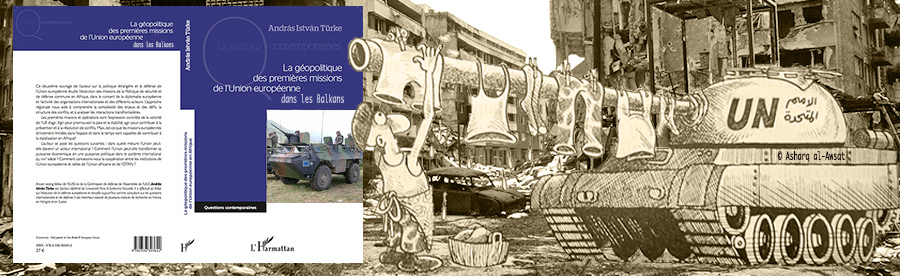
We are looking for sponsors for the English translation of these books, please contact turkeandras(at)gmail(dot)com