
Vous êtes ici
Agrégateur de flux
Russia’s Wildberries Finding Fertile Ground in Central Asia
The Russian e-commerce retailer has announced yet another new logistics facility, this time in Uzbekistan.
Catégories: Diplomacy & Crisis News
Nord-Kivu : des symptômes suspects du Bunchy Top signalés dans les bananeraies de Rwenzori
Les services agricoles de Beni ont alerté, mercredi 7 octobre, sur l’apparition de symptômes suspects pouvant être associés à la maladie du Bunchy Top dans des plantations de bananiers du secteur de Rwenzori, au Nord-Kivu. Aucune confirmation officielle de la maladie n’a toutefois encore été établie.
Catégories: Afrique
Morocco’s First F-16 Block 72 Has Flown
The aircraft, a two-seat F-16D, is not only the first of Morocco’s new Vipers to fly, but also the first new-build F-16 Block 72 to take to the air.
The first F-16D Block 72 destined for the Royal Moroccan Air Force (RMAF) has conducted its maiden flight. Lockheed Martin announced the milestone on Oct. 6, 2026, saying that the aircraft completed its first flight from the company’s F-16 production facility in Greenville, South Carolina.
Notably, the aircraft is not only the first of Morocco’s new Vipers to fly, but also the first new-build F-16 Block 72 to take to the air. Morocco became the launch customer for the Block 72 variant when the U.S. government approved the proposed Foreign Military Sale (FMS) in March 2019.
Morocco’s first @LockheedMartin F-16 Block 72 aircraft has taken flight in Greenville, South Carolina. The milestone marks another step toward delivering the most advanced F-16 configuration to the Royal Moroccan Air Force.
— Lockheed Martin News (@LMNews) October 6, 2026
This first flight now marks a major milestone in Morocco’s effort to expand and modernize its F-16 fleet, including both new-build and upgraded Block 72s. The aircraft will now undergo further flight testing before being delivered to Morocco.
A seven-year wait for the Block 72Morocco’s acquisition dates back to March 2019, when the U.S. State Department approved a possible Foreign Military Sale (FMS) covering 25 new F-16C/D Block 72 fighters for an estimated $3.787 billion. The FMS notice did not specify how many twin-seater F-16Ds were included in the 25-aircraft total.
The proposed package included 29 Pratt & Whitney F100-PW-229 engines, of which four are spares, as well as 26 AN/APG-83 AESA radars, 26 modular mission computers, Link 16 systems, LN260 embedded navigation systems and Joint Helmet Mounted Cueing Systems. The package also included weapons and targeting equipment, including AIM-120C-7 AMRAAMs, GBU-38 JDAMs and GBU-54 Laser JDAMs, GBU-39 Small Diameter Bombs, GBU-49 Enhanced Paveway II laser-guided bombs and AN/AAQ-33 Sniper targeting pods.
A Royal Moroccan air force F-16 flies above Morocco during Exercise African Lion April 20, 2018. | Source: U.S. Air Force photo by Senior Airman Malcolm Mayfield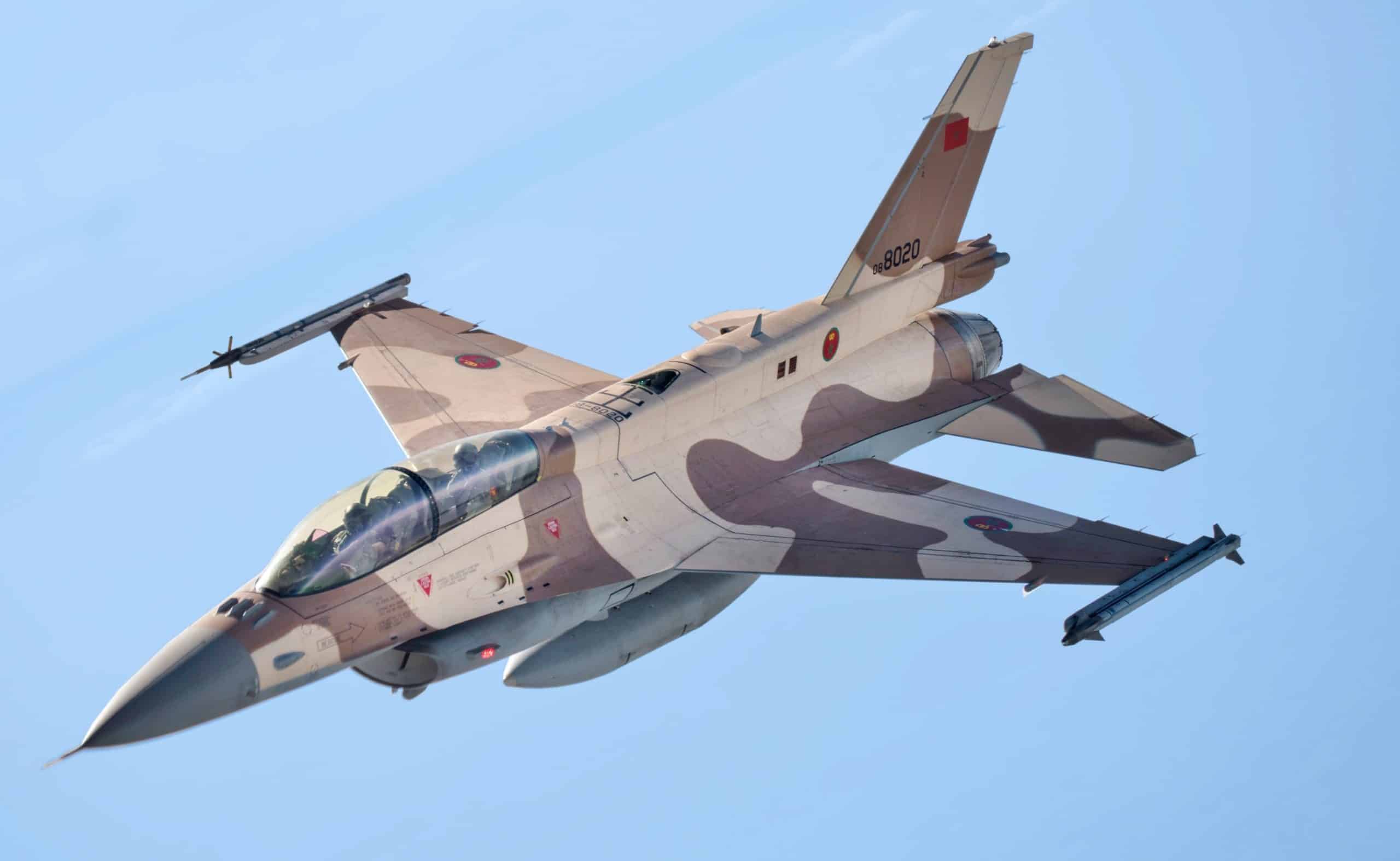
The Block 72 is part of the latest-generation F-16 Block 70/72 family, which incorporates a major modernization of the aircraft’s avionics, sensors, mission systems and cockpit while retaining the basic F-16 airframe. The distinction between the two configurations is primarily the engine.
In fact, the F-16 Block 70 is powered by General Electric’s F110-GE-129, while the Block 72 uses Pratt & Whitney’s F100-PW-229. The two versions otherwise share the same systems, mirroring the earlier Block 40/42 and Block 50/52 families.
The choice of the Block 72 is particularly relevant to Morocco because the RMAF already operates F-16C/D Block 52+ aircraft powered by the Pratt & Whitney F100 engine family. Using the same engine family on the new aircraft provides a degree of commonality in maintenance, logistics and personnel training, especially with the planned upgrade of the existing aircraft to the F-16V Block 72 configuration.
Expanding Morocco’s F-16 fleetThe 25 new F-16s Block 72 are only one part of Morocco’s broader F-16 modernization effort. In fact, alongside the purchase of the new-build aircraft, Washington approved a separate package in 2019 to upgrade Morocco’s existing F-16C/D Block 52+ fleet to the F-16V Block 72 configuration.
Four Royal Moroccan Air Force F-16 Fighting Falcon aircraft fly in formation with a U.S. Air Force B-52 Stratofortress aircraft assigned to the 23rd Expeditionary Bomb Squadron during a Bomber Task Force mission over Morocco, May 23, 2025. | Source: U.S. Air Force photo by Staff Sgt. Bryan Guthrie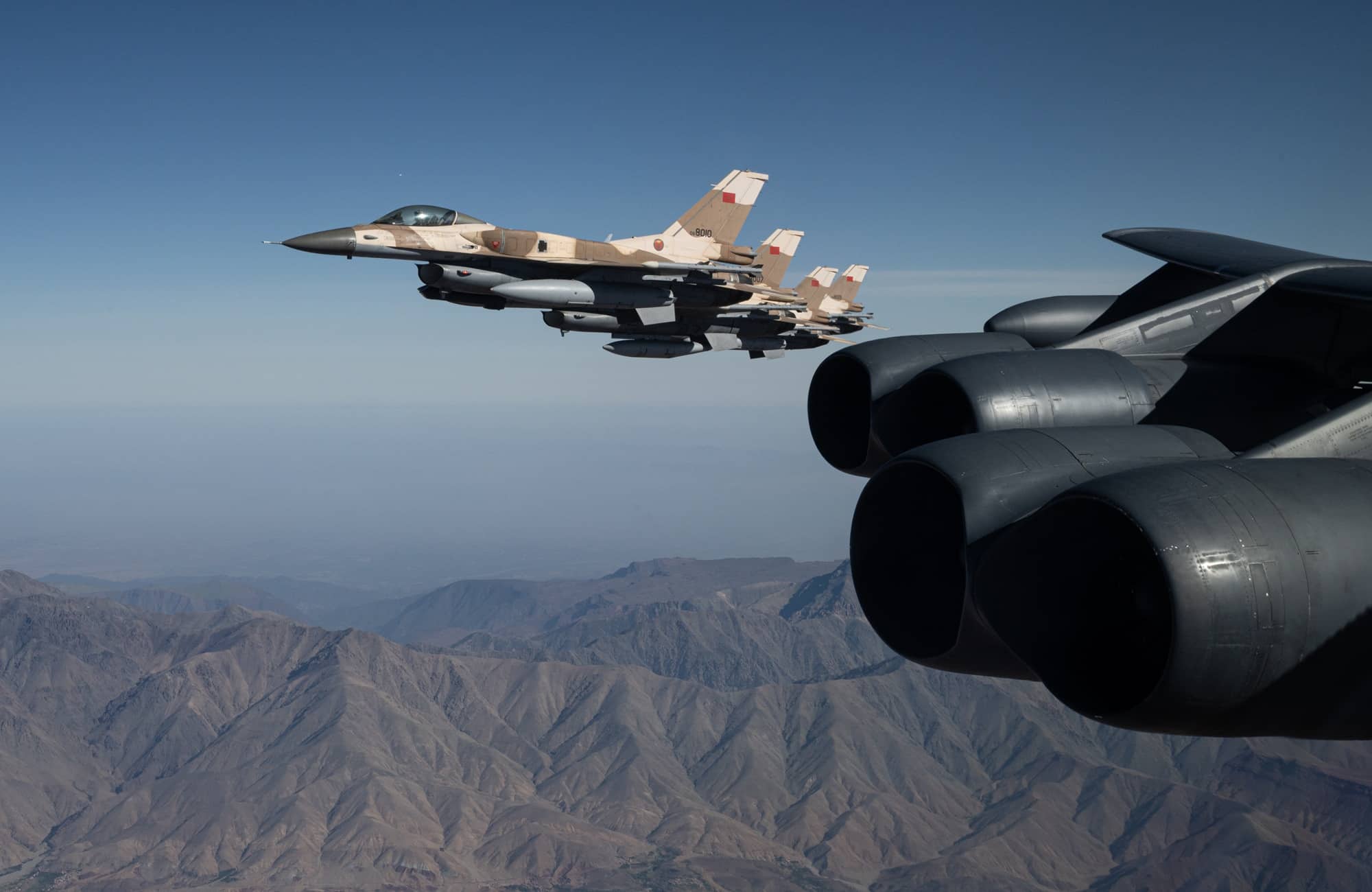
Among the new systems installed during the upgrade we can find the APG-83 AESA (Active Electronically Scanned Array) radar, a new Center Pedestal Display (CPD), the AN/APX-126 Advanced IFF (Identification Friend or Foe), Link 16 datalink, full NVIS (Night Vision Imaging System) and JHCMS II (Joint Helmet-Mounted Cueing System II) compatibility, a new Embedded GPS/INS (EGI), a modern commercial off-the-shelf (COTS)-based avionics subsystem, a high-volume, high-speed data bus and the Automatic Ground Collision Avoidance System (Auto GCAS).
The combination of new-build aircraft and upgraded fighters is intended to give the RMAF a much more homogeneous and capable F-16 fleet. The service initially received 24 aircraft ordered in 2009, with the new order now doubling the fleet.
Catégories: Defence`s Feeds
Sénégal: la rentrée scolaire reportée de cinq jours dans tout le pays à cause des inondations
Au Sénégal, les élèves n'ont pas repris le chemin de l'école mercredi 7 octobre. La rentrée scolaire a été exceptionnellement reportée de cinq jours, à lundi 12 octobre, en raison des inondations provoquées par les fortes pluies du week-end. Ce report, décidé pour l'ensemble du pays, est inédit.
Catégories: Afrique
Double Chance : les numéros gagnants
LES RÉSULTATS DOUBLE CHANCE SONT LÀ !
LOTO STAR Tirage N°120/26
Mercredi 07 Octobre 2026 (14H)
– Zone A (5 premiers numéros) :
80 • 13• 19 • 05 • 36
– Zone B (5 derniers numéros) :
11 • 68 • 23 • 29 • 37
Félicitations aux heureux gagnants.
Pas encore cette fois ? Gardez le sourire !
Rendez-vous à 18H pour le prochain tirage.
Jouez avec modération et responsabilité. Le jeu doit rester un plaisir.
A TOI DE JOUER #Akaxòa
#LNBSA #XòGbɔnAlɔkpaVo #JeuResponsable #LaChanceAvecModération
Catégories: Afrique
600 milliards de centimes envolés : le procès Berraki ajourné
Le pôle pénal économique et financier, près le tribunal de Sidi M’hamed, a décidé de renvoyer au 20 octobre prochain l’examen du dossier impliquant Arezki […]
L’article 600 milliards de centimes envolés : le procès Berraki ajourné est apparu en premier sur .
Catégories: Afrique
The Strategic Implications of China’s Military Facility in Laos
Ban Keun poses only a limited direct threat to the South China Sea or Taiwan, but it will enhance China’s ability to place pressure on U.S. naval forces.
Catégories: Diplomacy & Crisis News
La France suspend l'utilisation de grenades assourdissantes après qu'un garçon a eu la main arrachée lors de manifestations étudiantes
Cette mesure fait suite aux plaintes de plusieurs groupes dénonçant l'usage disproportionné de la force par la police envers les adolescents.
Catégories: Afrique
INTERVIEW - «Für die Ukraine wird dieser Winter ausserordentlich hart»
Die Lage habe sich stark verschlechtert, sagt Jacques Gerber, der Ukraine-Delegierte des Bundesrats. Neue Schweizer Hilfsprojekte sollen die kritische Infrastruktur des Landes sichern.
Catégories: Swiss News
Grande mosquée de Bamako : 36 nouvelles latrines inaugurées
Mali Actu - maliactu.net - Mali Actualités, Les Actus et Informations sur le Mali
Mali Actu
Grande mosquée de Bamako : 36 nouvelles latrines inaugurées
Inaugurées le 6 octobre 2026, les 36 latrines de la Grande mosquée de Bamako s’inscrivent dans un projet saoudien d’environ 100 millions de FCFA.
Grande mosquée de Bamako : 36 nouvelles latrines inaugurées
Mali Actu :
Grande mosquée de Bamako : 36 nouvelles latrines inaugurées
Catégories: Afrique
Accidents de la route en Algérie : quelle catégorie de conducteurs est la plus impliquée ?
Malgré une discrète amélioration des indicateurs nationaux sur les huit premiers mois de l’année 2026, la réalité du terrain reste sombre pour une catégorie précise […]
L’article Accidents de la route en Algérie : quelle catégorie de conducteurs est la plus impliquée ? est apparu en premier sur .
Catégories: Afrique
Ecobank à votre écoute
Catégories: Afrique
Kénes Kata: a legújabb pókfaj Európában
Új barlanglakó pókfajt írt le Európában egy biológuscsapat, és közöttük erdélyiek is vannak. A Cataleptoneta sulfur szinte átlátszó, parányi pókfajta, amely magyarul a Kénes Kata nevet kapta az éjjel – mondta el „keresztapja”, Urák István arachnológus. Abban a barlangban bukkantak rá, a görög-albán határon, ahol több mint 100 négyzetméteres, nemezhez hasonló állagú hálót szőttek az […]
Articolul Kénes Kata: a legújabb pókfaj Európában apare prima dată în Kolozsvári Rádió Románia.
Catégories: Határon túli magyar portálok összesített hírei
Mauvaise nouvelle pour les voyageurs algériens : la Roumanie suspend les demandes de visa
L’ambassade de Roumanie en Algérie annonce la suspension temporaire et immédiate de l’ensemble de ses services consulaires à compter de ce mercredi 7 octobre. Traitement […]
L’article Mauvaise nouvelle pour les voyageurs algériens : la Roumanie suspend les demandes de visa est apparu en premier sur .
Catégories: Afrique
Sajtóklub: Piszkos Fred megtisztul
Többször foglalkoztam az elmúlt másfél évben, s többször készítettem interjút is a ChatGPT-vel, legutóbb 2026 február közepén. A mesterséges intelligenciát, a nyelvi modelleket gyors ütemben, folyamatosan fejlesztik, úgy gondoltam, itt az ideje folytatni ezt a hiánypótló sorozatot. Tudtommal a magyar nyelvű hangzó médiában ezen a téren úttörő volt a Sajtóklub. 2025-ben itt hangzott el az […]
Articolul Sajtóklub: Piszkos Fred megtisztul apare prima dată în Kolozsvári Rádió Románia.
Catégories: Határon túli magyar portálok összesített hírei
Mali : Amnesty accuse l'armée et Wagner de crimes de guerre
Des civils exécutés, des détenus torturés, des familles frappées par des drones : dans un rapport publié le 29 septembre 2026, Amnesty International accuse les forces armées maliennes et leurs alliés de Wagner de crimes de guerre.
L'enquête couvre des opérations menées entre juin 2023 et décembre 2025, notamment près de la frontière mauritanienne. Elle repose sur les témoignages de 119 réfugiés maliens recueillis en Mauritanie. Faute de pouvoir accéder aux régions concernées, les enquêteurs ont travaillé auprès de populations ayant fui Ségou, Mopti et Tombouctou. Le rapport décrit les conséquences d'opérations conjointes sur des habitants déjà exposés aux violences des groupes armés.
Des civils tués jusque sur les marchés
Amnesty a documenté au moins 34 civils tués dans sept localités. Selon l'organisation, ces victimes ne participaient pas directement aux hostilités. Certaines auraient été abattues pendant leur fuite ou après leur arrestation. Le rapport fait aussi état de personnes égorgées et de corps brûlés. Ces accusations portent sur des actes précis, pour lesquels l'ONG réclame l'établissement des responsabilités individuelles. Deux frappes de drones attribuées à l'armée malienne font également l'objet de l'enquête : l'une sur un marché d'Ejdeir, le 16 mars 2025 ; l'autre sur une maison familiale à Tangata, en novembre suivant. Au moins 23 personnes, dont cinq enfants, auraient été tuées. Amnesty affirme n'avoir trouvé aucun élément établissant la présence d'un objectif militaire sur ces sites. Pour Ejdeir, l'armée avait annoncé avoir visé un rassemblement terroriste. L'ONG demande que ces frappes soient examinées comme de possibles crimes de guerre.
La torture derrière les murs des bases militaires
Les témoignages recueillis décrivent aussi des sévices lors de patrouilles et dans les bases militaires de Léré et de Nampala. Quinze survivants évoquent des coups, des électrocutions et des simulations de noyade. D'autres témoins rapportent cinq décès liés aux tortures et aux conditions de détention. Selon Amnesty, des membres de Wagner, désormais Africa Corps auraient principalement infligé ces violences, en présence de soldats maliens.
Établir les responsabilités, protéger les populations
Les victimes appartiennent majoritairement aux communautés peules, arabes et touarègues, indique l'organisation. Leur identité et leur présence dans des zones d'activité des groupes armés auraient suffi à les soupçonner de complicité. Le rapport soulève ainsi une question centrale : comment les opérations distinguent-elles les combattants des populations civiles ?Amnesty réclame des enquêtes impartiales, la protection des habitants et une clarification du commandement des forces étrangères. Elle demande également la publication de l'accord encadrant Africa Corps, qui a succédé à Wagner en juin 2025. Selon l'ONG, les autorités maliennes, informées de ses conclusions le 3 août 2026, n'avaient pas répondu à la date de publication. L'enjeu est désormais de soumettre ces accusations à une enquête judiciaire et de permettre aux victimes d'obtenir justice.
Catégories: Afrique
Tényleg az ipar „mentette meg” Romániát a bóvlitól?
„2030-ra vagy 2035-re képzeljük el azt, hogy hogyan kellene kinéznie egy modern ipari ágazatnak, és ha látjuk a célt, azt az utat kell támogatni, ami elvezet oda. Hogy az ipart kell támogatni, azzal egyetértek, de nem mindegy, hogyan. Ha nem magas hozzáadott értékű ipari tevékenységeket támogatunk, akkor az nem a hosszútávú fejlődést szolgálja” – mondta […]
Articolul Tényleg az ipar „mentette meg” Romániát a bóvlitól? apare prima dată în Kolozsvári Rádió Románia.
Catégories: Határon túli magyar portálok összesített hírei
WAPCo se positionne pour accompagner l'essor industriel du Bénin
La West African Gas Pipeline Company Limited (WAPCo) entend renforcer son accompagnement du Bénin dans la satisfaction de ses besoins énergétiques futurs. À Cotonou, mardi 6 octobre 2026, ses responsables ont échangé avec la presse sur les enjeux liés au transport du gaz, à la sécurité des infrastructures et aux perspectives de développement de ses activités dans le pays.
Depuis près de deux décennies, WAPCo assure le transport du gaz naturel du Nigeria vers le Bénin, le Togo et le Ghana à travers le Gazoduc de l'Afrique de l'Ouest. Au Bénin, l'entreprise entend désormais renforcer son rôle dans l'accompagnement du développement industriel.
Face aux médias béninois, Angela Yasmin Heymann, chargée des affaires d'entreprise et porte-parole de WAPCo, a salué l'accompagnement constant de la presse. Elle a notamment insisté sur son rôle d'interface entre l'entreprise, les communautés et les pouvoirs publics.Dans un secteur aussi technique et sensible que l'énergie, la responsable a souligné l'importance d'une communication claire sur la sécurité, l'intégrité du gazoduc et la protection de l'environnement. WAPCo affirme également poursuivre des actions sociales et communautaires au profit des populations riveraines.
L'essor industriel du Bénin ouvre de nouvelles perspectives pour WAPCo. L'interconnexion avec BGTS doit notamment permettre de renforcer la desserte en gaz de nouveaux consommateurs, avec en ligne de mire la Zone industrielle de Glo-Djigbé (GDIZ).L'objectif est de répondre à une demande énergétique appelée à augmenter avec le développement des activités industrielles.Pour Abbey Bodunrin, Managing Director de WAPCo, l'ambition est de « rester dans la durée pour accompagner le développement du Bénin dans la durée ».Cette volonté se traduit également par une collaboration avec la Société béninoise de production d'électricité (SBPE) autour des besoins énergétiques futurs du pays. WAPCo travaille notamment au renforcement de ses capacités de livraison de gaz au Bénin.
Sécuriser l'énergie pour soutenir l'industrie
Au-delà du transport du gaz, WAPCo veut ainsi contribuer à la sécurisation de l'approvisionnement énergétique du Bénin. L'enjeu est stratégique : soutenir les besoins de la GDIZ et, plus largement, répondre à la croissance de la demande énergétique liée à l'industrialisation.Avec le renforcement de ses infrastructures et la consolidation de ses partenariats au Bénin, WAPCo entend donc inscrire son action dans une perspective de long terme
Catégories: Afrique
„Azzal fekszünk le minden este, hogy nem biztos, hogy felkelünk”
Az ukrán fővárost és annak civil infrastruktúráját hetek óta folyamatos orosz légitámadások érik. Vasárnap délelőtt drón csapódott a közlekedő autók közé a kijevi Északi hídon, a támadásban ketten megsérültek. A város másik fontos útvonalát, a Déli hidat kevesebb mint huszonnégy óra alatt ötször találták el, de nemrégiben az Ukrán Nemzeti Tudományos Akadémia központi épületét is […]
Articolul „Azzal fekszünk le minden este, hogy nem biztos, hogy felkelünk” apare prima dată în Kolozsvári Rádió Románia.
Catégories: Határon túli magyar portálok összesített hírei
Pages



© 2012-2018 Europa Varietas Foundation © 2015-2018 Europa Varietas Association
www.europavarietas.org | info(@)europavarietas(dot)org | Switzerland




We are looking for sponsors for the English translation of these books, please contact turkeandras(at)gmail(dot)com