
Vous êtes ici
Agrégateur de flux
Press release - 2027 EU budget: press conference with lead MEPs on Wednesday at 14.30
Parliament’s rapporteurs for the 2027 EU will brief journalists following the plenary vote on its position.
Committee on Budgets
Source : © European Union, 2026 - EP
Committee on Budgets
Source : © European Union, 2026 - EP
Catégories: European Union
MÚZEUM A SZIKLÁN, 2. RÉSZ
A nagy hangár
A máltai repülési múzeumban tett sétánk következő helyszíne a nagy hangár, amely méreteivel, nagy belmagasságával, és formájával is teljesen eltér az előző helyszíntől, a szerény Romneytól.
A repülőgépeket és helikoptereket a hangár falai mellé rendezték, középen egy C-47-es terpeszkedik, és bőven van hely a hajtóművek, repülőtéri kisegítő eszközök és néhány jármű bemutatására is. Kétoldalt az olasz-málta katonai kapcsolatok révén beszerzett gépek állnak, a hátsó traktus pedig a „brit birodalom”. Járjuk körbe a hangárt a baloldalon kezdve.
Catégories: Biztonságpolitika
«Chaos», «casseurs déterminés», «pourrissement»… La classe politique condamne la violence des manifestations mais ne s’accorde pas sur les causes
Pour une partie de la gauche, le pourrissement de la mobilisation qui a rassemblé entre 550.000 et 800.000 personnes en France est surtout le fruit d’une «doctrine de maintien de l’ordre» violente.
Catégories: France
DIGITAL 08 H : la combinaison gagnante
DIGITAL 08H : Avez-vous tenté votre chance ?
Le tirage DIGITAL 08H N°280 a livré son verdict !
Lundi 19 Octobre 2026
Avez-vous joué ?
Avez-vous misé sur vos numéros porte-bonheur ?
RÉSULTAT : 44 • 45 • 57 • 88 • 02
Félicitations aux heureux gagnants !
Pas encore cette fois ? Gardez le sourire.
Rendez-vous à 11H pour le prochain tirage.
Jouez dans les points de vente ou : Tapez *590# ou rendez-vous sur lnbloto.bj
Jouez avec modération et responsabilité. Le jeu doit rester un plaisir.
A TOI DE JOUER #XòGbɔnAlɔkpaVo
#LNBSA #JeuResponsable #LaChanceAvecModération
LA CROIX DU JOUR

Catégories: Afrique
Europe’s Credibility Gap
Ngaire Woods, Dean of Oxford’s Blavatnik School of Government, Claas Mertens, also at Oxford, have written a piece arguing that Europe, despite its attempts at self-sufficiency, remains dependent on an unpredictable United States. The continent needs to address this vulnerability so that it can convince other countries, many of which find themselves similarly vulnerable to great-power coercion, that it is a worthy partner.
Catégories: Diplomacy & Crisis News
A Better “America First”
Charles Kupchan, who served in the Clinton and Obama administrations, argues that many aspects of Trump's foreign policy are worth keeping and align with changes in the international system. He explains how the next president can marry the good impulses of "America first" with the best of liberal internationalism.
Catégories: Diplomacy & Crisis News
Mobilisation du 17 octobre : comment Jean-Luc Mélenchon espère tirer profit d’une «convergence des luttes»
DÉCRYPTAGE - Aux avant-postes du mouvement lycéen, les Insoumis prendront part ce samedi à la mobilisation contre la «vie chère» et tentent de tirer profit des colères sociales.
Catégories: France
Ukraine: Marco Rubio affirme qu'il n'y a eu «aucune pause» dans le partage de renseignements avec Kiev
Pour le secrétaire d'État américain, Marco Rubio, il n'y a eu « aucune pause » dans le partage de renseignements avec Kiev. Monsieur Rubio a cependant appelé, lundi 18 octobre 2026, le président ukrainien Volodymyr Zelensky à « se concentrer » sur la manière de « mettre fin à la guerre ».
Catégories: Nyugat-Balkán, Union européenne
CHINA: ‘My Sister Has Been in a Chinese Prison for Eight Years Because I Exercised My Freedom of Speech’
By CIVICUS
Oct 19 2026 (IPS)
CIVICUS discusses the persecution of Uyghurs and activism in exile with Rushan Abbas, an Uyghur American activist, founder and executive director of Campaign for Uyghurs and chair of the Executive Committee of the World Uyghur Congress.
Rushan Abbas
On 31 August, the World Uyghur Congress urged the United Nations (UN) and states to step up pressure on China over its treatment of Uyghurs in the Xinjiang region. Its call came two months after a new ‘Ethnic Unity Law’ took effect as part of a broader push to impose a single national identity. The date also marked four years since a landmark UN report found that abuses in the region may constitute crimes against humanity. Amnesty International and Human Rights Watch estimate that over a million people have been detained in harsh conditions in ‘re-education’ camps since 2017.Why did you leave Xinjiang?
I was born in Ürümchi, Xinjiang’s regional capital, during the Cultural Revolution. I started my activism as a student at Xinjiang University, where I co-organised pro-democracy protests in 1985 and 1988. In 1985, we mobilised over 20,000 students from seven universities, institutes and technical schools across the city. We demanded equality and an end to the forced sterilisation of Uyghur women and to nuclear testing in the region.
Those years brought a brief period of openness, but retaliation against the organisers came quickly. I was interrogated and, although I graduated with the highest academic honours, my job offer was withdrawn. All my prospects were denied. So in 1989, I left for the USA to pursue higher education and look for freedom and democracy.
Has danger followed you into exile?
It has, and it hit my family directly. In the early 1990s, as soon as I started working with US politicians, my father, a high-level academic in Ürümchi, lost his job at 59 in retaliation for my advocacy. In 2018, just days after I spoke publicly at the Hudson Institute, a Washington DC think tank, about the mass detentions, Chinese authorities abducted my sister Gulshan Abbas. She’s a retired physician, a mother of two and a grandmother of four, and she had never been political.
In December 2019, Chinese state media outlet CGTN denied my sister existed and accused me of making up cases and spreading rumours overseas. In December 2020, the authorities finally acknowledged Gulshan had been secretly sentenced to 20 years in prison, obviously on fabricated charges. Her case is one of the clearest examples of how the Chinese Communist Party (CCP) uses kin punishment and transnational repression to silence Uyghurs. My sister turned 64 this June. She’s still in a Chinese prison because I exercised my freedom of speech. We have no picture or video of her. No one has been able to visit her and we have received no independent report on her health or wellbeing.
I quit my job after Gulshan’s detention to campaign full time for her freedom and for the Uyghurs suffering what’s effectively an ongoing genocide. Transnational repression has followed me ever since, in the form of cyberattacks, defamation, fabricated court documents, harassment and intimidation. A video appeared on YouTube calling for my execution and that of my husband, Abdulhakim Idris. I have received emails asking what colour rifle I would prefer to be shot with. After I published my memoir, fake books claiming to tell my life story appeared on Amazon. My organisation, Campaign for Uyghurs, has experienced persistent cyberattacks. My case is not unique. Uyghurs in the diaspora and those who speak out continue to suffer transnational repression.
Why does the Chinese government target Uyghurs?
The Chinese government targets us because of our distinct ethnic identity and heritage and because we are the owners of the land we inherited from our ancestors. Our Muslim faith and our culture and language stand in the way of Beijing’s absolute control. Our faith in God, rather than the CCP, as the ultimate authority threatens the regime. This fear drives the regime to try to erase our culture and beliefs.
Economic interests are also at stake. The Uyghur region is rich in natural resources, including coal, natural gas, petroleum, rare earths and critical minerals such as uranium. It accounts for 20 per cent of the world’s cotton, 35 per cent of its solar-grade polysilicon, used in solar panels, 10 per cent of its aluminium and PVC production and 70 per cent of China’s tomato production.
Geography matters too. The region connects China with Central Asia and the Middle East and is a gateway to Africa and Europe, including the Balkans. Once the heart of the ancient Silk Road, it now hosts four of the six major Belt and Road Initiative land routes, part of China’s global infrastructure programme. This makes it key to China’s economic and geopolitical ambitions. The result has been ever-tighter control and securitisation, which has escalated into full-fledged genocide.
What does this persecution look like?
The CCP imposes forced labour, mass arbitrary detention and imprisonment, mass surveillance and restrictions on cultural and religious life. In 2025, there were 3.36 million forced labour transfers and over a million children were placed in state-run boarding schools, where they are raised cut off from their cultural heritage. The Uyghur language is banned in schools. Uyghur books and religious texts have been burned. Uyghur women are subjected to forced abortion, sterilisation and marriage to men from the dominant Han ethnic group.
China’s government claims these policies bring stability, but stability for who? This is a system where the government exercises unchecked power to detain, punish, silence and watch people for their beliefs, their identity and their demands for human dignity.
How is Campaign for Uyghurs pushing for accountability?
We document abuses, bring evidence to policymakers and international institutions and support Uyghur-led advocacy. Central to our work is equipping Uyghur women and young people in the diaspora with the knowledge and practical skills to lead advocacy efforts. We have run around 20 advocacy workshops worldwide, and we are proud to see a new generation of young Uyghur activists taking the lead.
We also work with civil society groups, interfaith organisations, think tanks and universities to turn evidence into tangible policy action. Our campaigns have contributed to US laws, including the Uyghur Forced Labor Prevention Act and the Uyghur Human Rights Policy Act of 2020, and our coalition-building has helped put the Uyghur crisis on the political agenda.
With investigative partners, we exposed Volkswagen’s sham audit and its attempts to conceal links to state-imposed forced labour. We worked with The New York Times to reveal that cotton from the Uyghur region was used to make the viral Labubu dolls manufactured by Pop Mart. This work connects evidence from the ground with public scrutiny and action.
Why has there been so little international action since the UN’s landmark 2022 report?
China has enormous economic and political leverage. Many governments and companies are reluctant to jeopardise diplomatic, trade and investment ties, or have simply been pressured into silence. Such is China’s influence that the UN refused to debate human rights abuses in the Uyghur region.
There is also an often underestimated propaganda problem. China has spent years building a global media apparatus. It uses state broadcasters, partnerships with foreign media outlets, sponsored trips for journalists and influencers and coordinated messaging to drown out credible research and human rights reporting. China does not necessarily need the world to believe its propaganda. Creating doubt and making people hesitate to act can be enough.
Time is another obstacle. Every day without meaningful consequences normalises abuses, and a human rights crisis becomes the accepted status quo.
What should governments and the UN do?
Lawmakers should pass legislation to address transnational repression, ban products made with state-imposed forced labour and provide stronger protection for Uyghurs seeking refuge.
Governments should use existing sanctions tools, including the Global Magnitsky Act, which allows sanctions on individual human rights abusers, to hold officials responsible for the genocide accountable.
Governments should also refuse to extradite Uyghurs to China. No one should be sent back to a country where they may face genocide.
Governments and international institutions must keep individual cases and the broader human rights crisis on the agenda. They should keep existing official genocide determinations in place and secure the release of political prisoners such as my sister. Human rights should never be treated as secondary to broader relations with Beijing.
CIVICUS interviews a wide range of civil society activists, experts and leaders to gather diverse perspectives on civil society action and current issues for publication on its CIVICUS Lens platform. The views expressed in interviews are the interviewees’ and do not necessarily reflect those of CIVICUS. Publication does not imply endorsement of interviewees or the organisations they represent.
GET IN TOUCH
Website
Facebook
Instagram
Twitter
Rushan Abbas/Instagram
Rushan Abbas/Twitter
SEE ALSO
Transnational repression: a world without refuge CIVICUS Lens 03.Sep.2026
China: ‘The Ethnic Unity Law means there is one acceptable way to be Chinese’ CIVICUS Lens | Interview with Gulchehra Hoja 30.Jul.2026
Transnational repression: ‘China feels emboldened to globalise its political red lines’ CIVICUS Lens | Interview with Barbora Bukovská 19.May.2026
Catégories: Africa
Minutes - Monday, 28 September 2026 - PE796.341v01-00 - Committee on Security and Defence
Source : © European Union, 2026 - EP
Catégories: Europäische Union, France
Minutes - Monday, 28 September 2026 - PE796.341v01-00 - Committee on Security and Defence
Source : © European Union, 2026 - EP
Catégories: Defence`s Feeds, European Union
Professor S.I. Keethaponcalan on Two Years of the AKD Presidency in Sri Lanka
“The NPP government made a sensible decision to accept and continue most of the economic policies and programs Ranil Wickremesinghe introduced.”
Catégories: Diplomacy & Crisis News
What Is Behind Bangladesh’s Continuing Law and Order Crisis?
The government must rebuild public trust in the police force and insulate law enforcement from political influence.
Catégories: Diplomacy & Crisis News
Pakistan’s Counterterrorism Campaign Is at an Inflection Point
If the new security framework fails to adopt a holistic approach to counterterrorism, it will once again end up treating the symptoms while ignoring the causes.
Catégories: Diplomacy & Crisis News
Two Summits in Bangkok: IMF/World Bank and Finance Ministers Inside, the People’s Assembly Outside
Top: Annual Meetings of the IMF and the World Bank inside the Queen Sirikit Convention Center in Bangkok Credit: (IMF photo/N.Karlin).
Bottom: Opening of the People’s Assembly.
By Isabel Ortiz
BANGKOK, Thailand, Oct 19 2026 (IPS)
Bangkok hosted two summits last week. Inside the Queen Sirikit Convention Center, more than 15,000 finance ministers, central bank governors and CEOs of the world’s largest banks and corporations attended the Annual Meetings of the International Monetary Fund (IMF) and the World Bank. They flew in business class and slept in five-star hotels to talk about growth, inflation and public spending, and thus to decide the destiny of billions of people they will never meet. Outside, hundreds of social movements and civil society organizations held the People’s Assembly, for the 99% whose voice would not be heard. They flew economy and often shared modest rooms. The first was the summit of money and power. The second, the summit of the rest of us.
Isabel Ortiz
These are turbulent times, marked by crises that are not natural but man-made: war, energy shocks, cost of living crisis, debt crisis, climate crisis, inequality crisis, many aggravated by the Trump administration. Inside the convention center, instead of working to solve these crises, the IMF and the World Bank told countries to be “resilient” and to build “buffers”, that is, to cut public spending now to survive the next crises. Rich countries were told to “take some pain today for growth tomorrow” and low-income countries, in the IMF Managing Director’s own words, “may be forced to cut much-needed development spending”. In other words, accept the man-made disaster, and make the people pay for it with more austerity, cuts to wages, pensions and public services. Only military spending is spared, as a “competing spending priority” to be accommodated, and Europe’s rearmament is counted as growth.The IMF report World Economic Outlook lifts global growth to 3.1% for 2026 on the back of investment in artificial intelligence (AI), a boom confined to only a handful of countries and a technology the IMF itself says will affect 40% of jobs worldwide, and that a third of jobs in high-income countries are at risk to be replaced by IA.
Both institutions presented private finance as the engine of development: the World Bank’s Development Committee agenda in Bangkok was centered on mobilizing private capital with public guarantees. In plain language, subsidizing large corporations with public money while prescribing cuts to the public services ordinary people depend on.
No communiqué was agreed in any ministerial committee. The corridor talk was how far both institutions have bent to the will of Washington: directors replaced (at the World Bank by private sector executives, most with no development experience); work on climate and gender shelved; and, above all, the chainsaw of Trump’s Department of Government Efficiency applied worldwide, with the myth that tax cuts for the wealthy and austerity cuts that impoverish the working and middle classes are necessary.
Outside the convention center, the story was completely different. The People’s Assembly worked through the alternatives in over 50 sessions to formulate a new system accountable to people and planet, not to the 1%. Behind them stand nearly 400 million people: 200 million small farmers of La Via Campesina, 191 million workers of global unions, and tens of thousands of civil society organizations. There were protests in Bangkok, and in more than 150 cities across 38 countries, including Argentina, Congo, Germany, India, Nigeria, Pakistan, Philippines, Uganda and the United Kingdom, with people marching peacefully under banners such as “We are the 99%” or “Tax elites and corporations” reflecting the aims:
- • Tax the 1% not ordinary people: Progressive taxes on wealth, large corporations and big tech, and an end to tax havens, with an equitable UN tax convention, instead of consumption taxes and other taxes squeezing the working and middle classes.
• End austerity cuts: Public services and social protection for all; fund the right to health, education, social security, housing, water, instead of privatization and public private partnerships that shift costs to people.
• Debt justice: No country should cut health or education to pay creditors as happens in 51 countries today; audit and cancel illegitimate debts, end IMF surcharges and loan conditions, and a UN framework convention on sovereign debt instead of restructurings run by creditors.
• Climate justice: Make polluters pay, phase out fossil fuels, and a just transition.
• Democratize global economic governance: The IMF and World Bank are not the solution but part of the problem, as a few rich countries (and their corporations) hold most of the voting power (and only the US has a veto); move decisions on debt, tax and finance to the UN, where every country has one vote.
• Gender justice: Women are half of the world population but just an afterthought for policy makers, gender-responsive policies and budgets, public services, redistribution of care work.
• Decent jobs: Employment respecting international labor standards and living wages, union rights and protection for migrant workers.
• Food sovereignty, fair crop prices for farmers, agroecology instead of agrobusiness, land rights for indigenous peoples and small farmers, and rights guaranteed by the UN Declaration on the Rights of Peasants.
• Industrialization of developing countries, oriented to domestic and regional markets, instead of exporting raw materials and importing everything else.
• No more corporate impunity, promotion of private finance and privatization: public services can be funded by taxing the 1%, a binding UN treaty on business and human rights, and fair trade rules instead of investor-state arbitration that lets corporations sue governments.
• AI: Slow down and put AI under public control, binding public regulation of AI covering data harvesting, manipulation of public opinion, job destruction, civil liberties and environmental damage.
• Stop authoritarianism and the far-right: Defend civic space, Human Rights and democratic institutions against the authoritarian turn of governments.
• Peace and an end to the militarization that diverts budgets from social spending to rearmament, and an end to occupation and genocide in Palestine.
Another world is possible, and last week it was formulated a short distance from the IMF/World Bank convention center. Finance ministers must now choose whom they serve: the millions of citizens who elected them, or the 1%, by bending to pressure from the IMF and the World Bank that deepens inequality.
Isabel Ortiz, Director, Global Social Justice, was Director at the International Labor Organization (ILO) and UNICEF, and a senior official at the UN and the Asian Development Bank.
IPS UN Bureau
Related Articles
Catégories: Africa
After War of Words, China Says Relations With Philippines at ‘Critical Juncture’
Growing political polarization has the potential to undermine Manila’s ability to handle its ongoing maritime disputes with Beijing.
Catégories: Diplomacy & Crisis News
United States : Despite move to Pentagon, intelligence community college still struggling to find leadership
The Pentagon's takeover of the American intelligence community's college – renamed the National Intelligence College (NIC) for the occasion – was accompanied by the exit of the institution's entire management team and a large proportion of its teaching staff. Intelligence [...]
Catégories: Defence`s Feeds
China/France/North Korea/United States : William Burns' book tour, prize-winning French spy novel, Pyongyang under Beijing's influence
United States - William Burns preparing book promotional tourFormer CIA Director William Burns is finalising plans for the publicity tour [...]
Catégories: Defence`s Feeds
Israel : The French-Israeli experts monitoring TikTok and eyeing new business in Europe
The Israeli start-up Senaï is actively courting several European governments in a bid to sell its mass video data processing [...]
Catégories: Defence`s Feeds
France : New bosses appointed for DGSI's counter-espionage and counter-terrorism
It is probably the most important and secretive post in France. It is the one where the activities of foreign [...]
Catégories: Defence`s Feeds
Pages


© 2012-2018 Europa Varietas Foundation © 2015-2018 Europa Varietas Association
www.europavarietas.org | info(@)europavarietas(dot)org | Switzerland


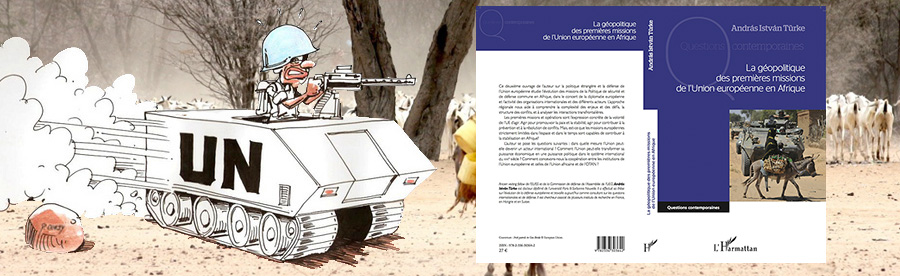
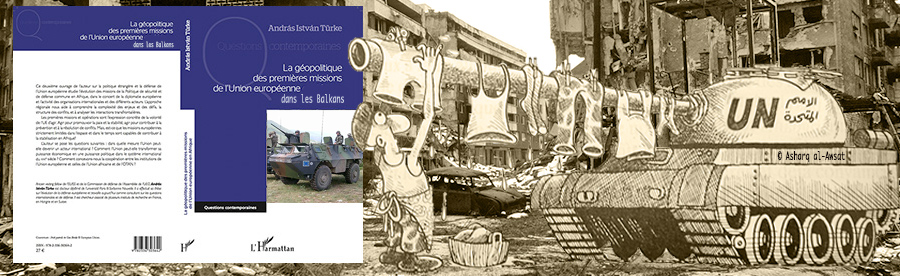
We are looking for sponsors for the English translation of these books, please contact turkeandras(at)gmail(dot)com