
Vous êtes ici
Agrégateur de flux
RD Congo : Martin Fayulu blessé dans des affrontements au sit-in contre la réforme constitutionnelle
En RD Congo, l'opposition poursuit sa mobilisation contre le projet de changement de la Constitution porté par la majorité au pouvoir. Elle accuse le président Félix Tshisekedi de vouloir se maintenir au pouvoir au-delà de son second mandat qui expire en 2028. L'opposition a appelé ses militants a tenir un sit-in dans la capitale, Kinshasa... une mobilisation dispersée par les forces de l'ordre.
Catégories: Afrique, Europäische Union
A-10s Return From Operation Epic Fury With Nose Art, Bomb Markings And Iranian Vessel Kill Markings
The bomb markings on the returning A-10 Thunderbolt II jets hint at the variety of weapons the Warthogs used against Iran, while the kill marks offer clues about some of the targets they hit.
On Jun. 12, 2026, 11 A-10C Thunderbolt II aircraft, belonging to the 75th Fighter Squadron of the 23rd Wing, from Moody Air Force Base, Georgia, arrived at RAF Lakenheath, UK, from Aviano Air Base, Italy, on their way back to the U.S. following their deployment to the CENTCOM AOR (Area Of Responsibility). During the deployment, they took part in Operation Epic Fury and also carried out missions over Iraq and Syria.
The Warthogs (as the A-10s are nicknamed) arrived in the UK split into four cells:
TABOR 11-13:
80-0175/FT “King Dedede”
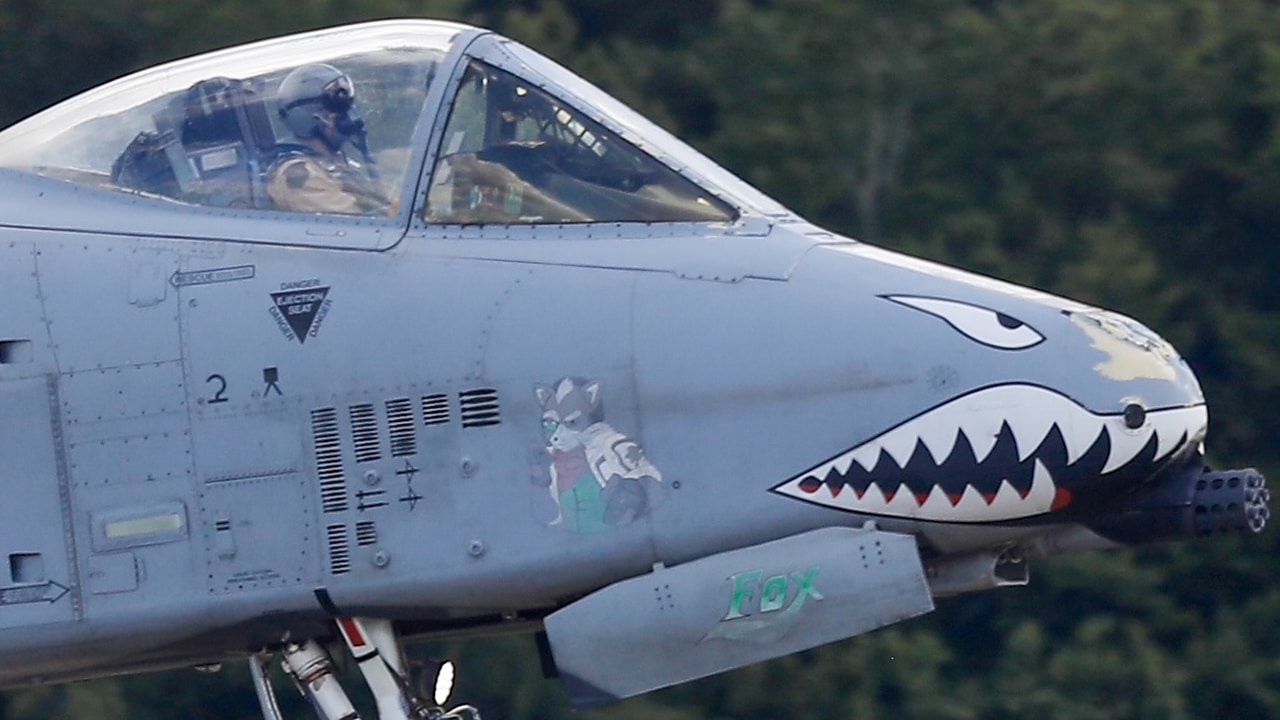
79-0157/FT “Fox”
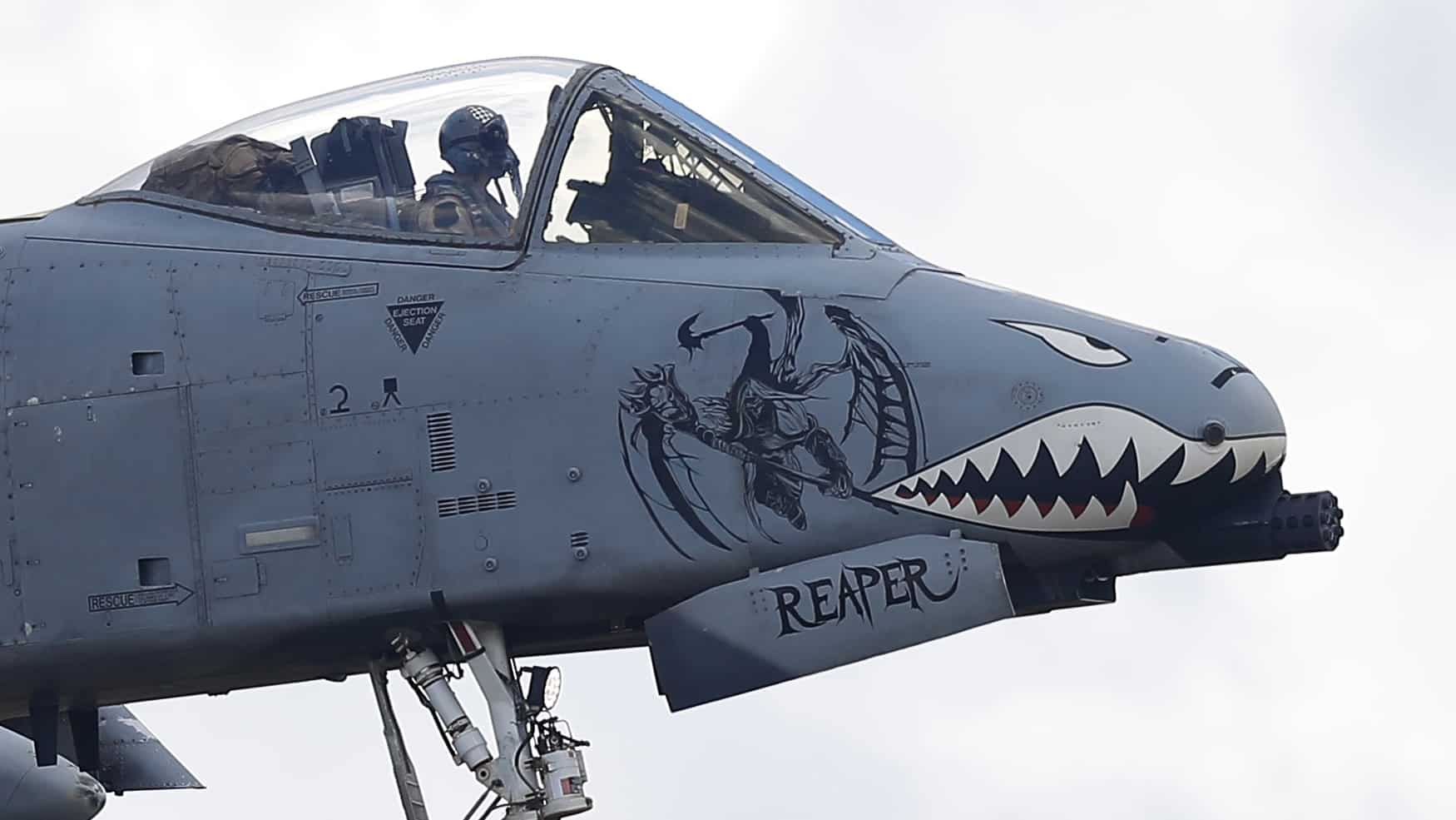
78-0649/FT “Reaper”
TABOR 14-16:
78-0613/FT “Diddy Kong”
80-0243/FT “Samus”
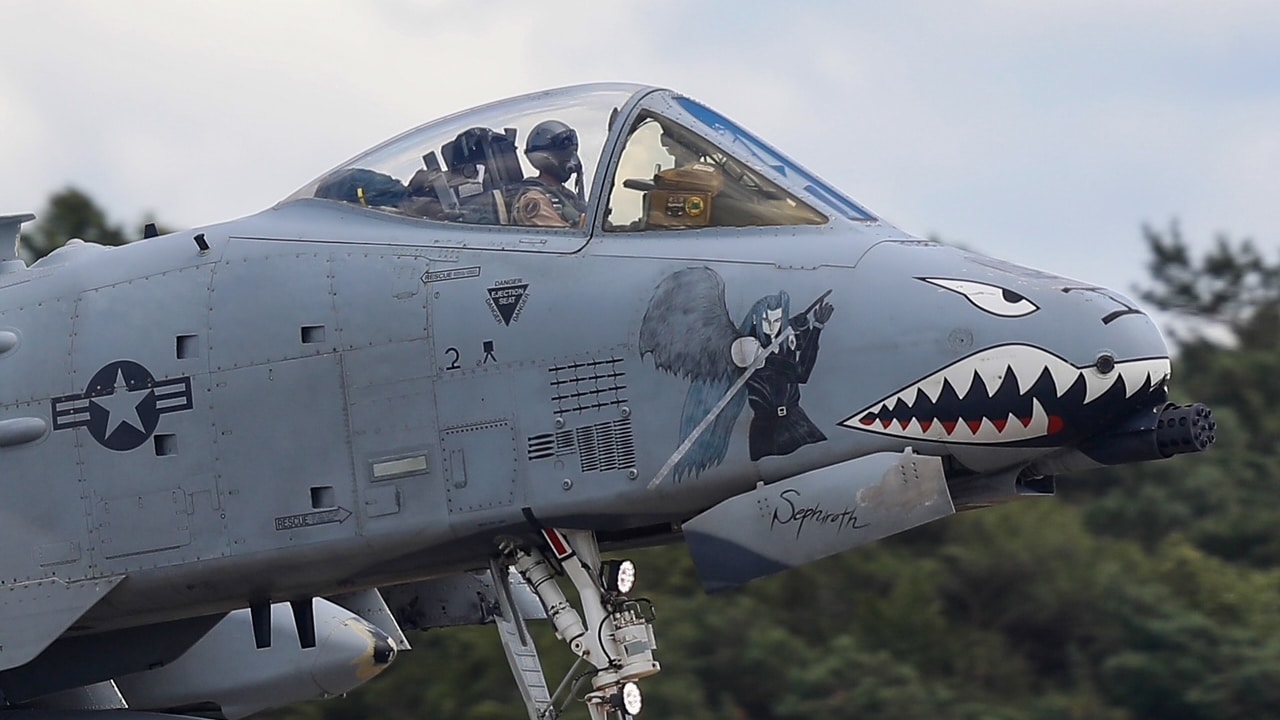
78-0583/FT “Sephiroth”
Tabor 21-23
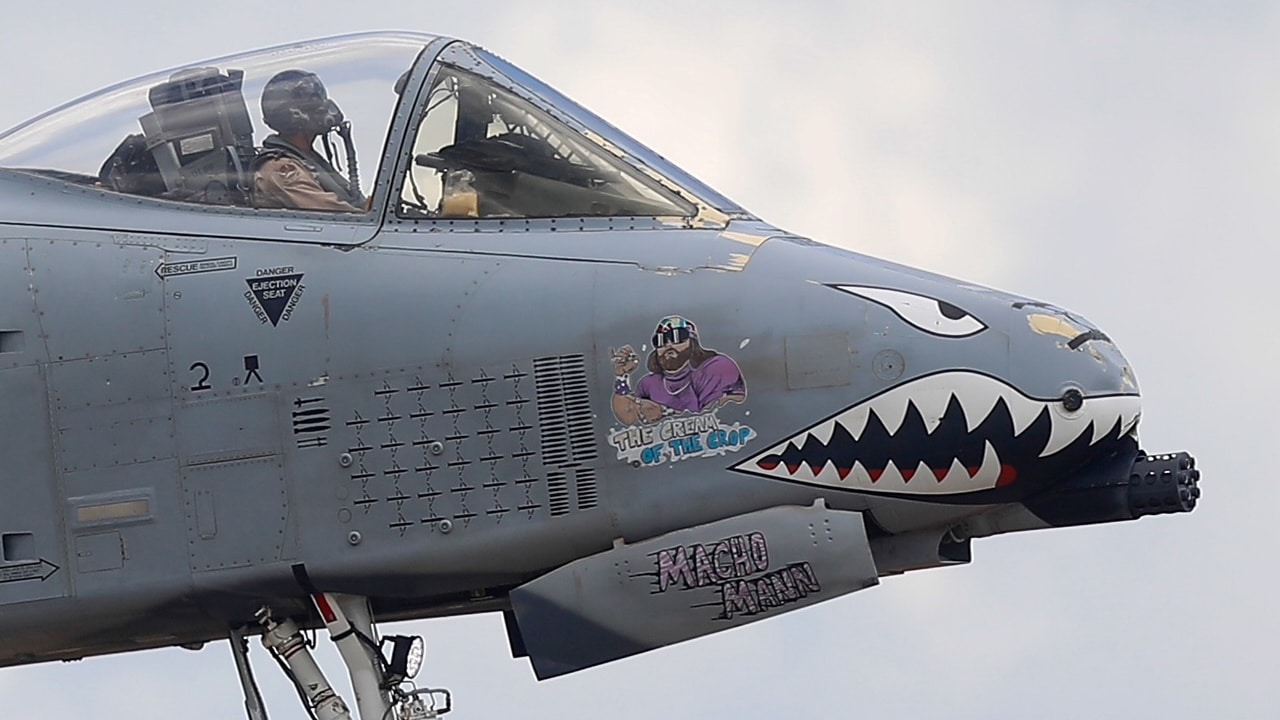
80-0188/FT “Macho Man”
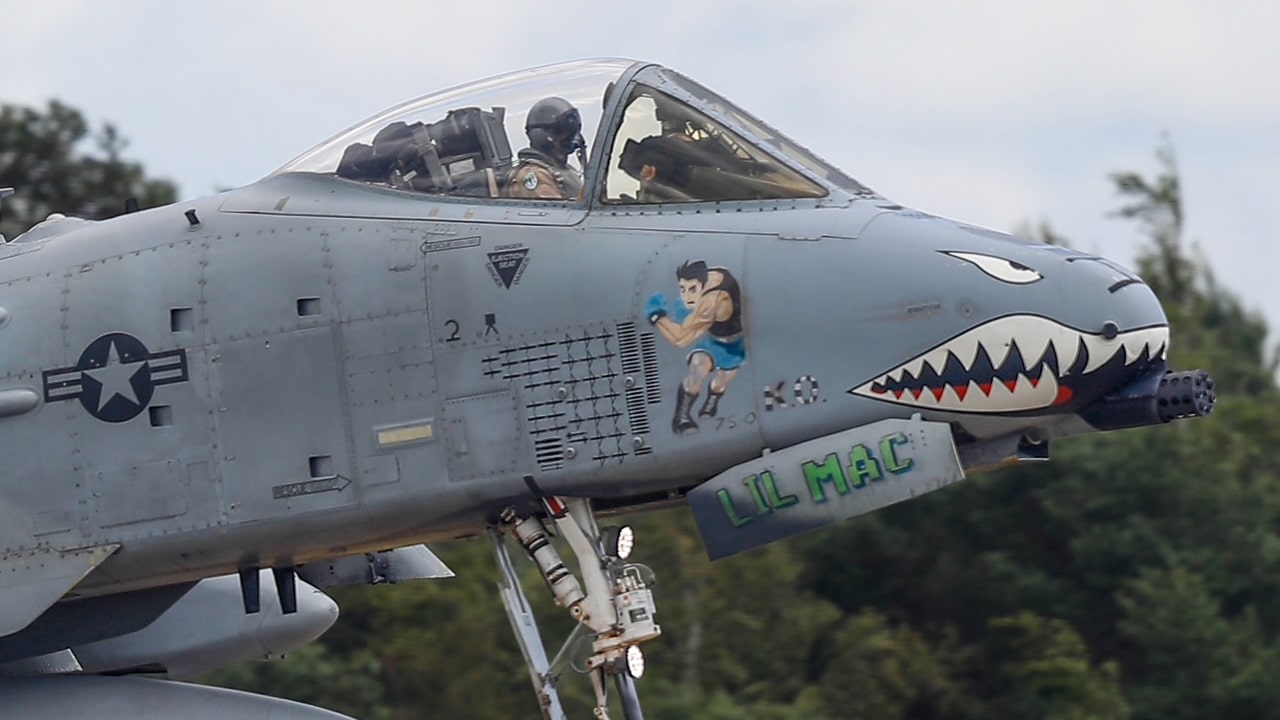
79-0095/FT “Lil Mac”
80-0273/FT “Kirby”
Tabor 24-25
81-0988/FT “Ridley”
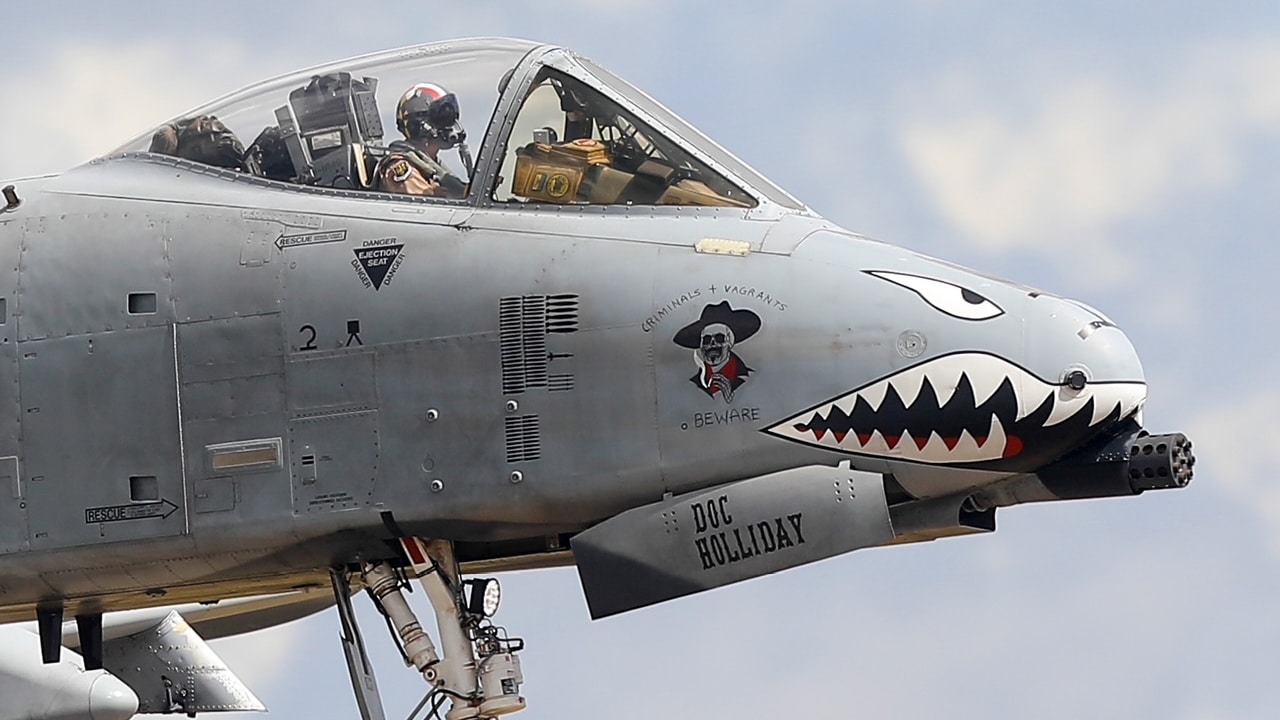
78-0586/FT “Doc Holiday”
As per tradition, during their stay at Muwaffaq Salti Air Base in Jordan, the Warthogs received nose art along with bomb markings. For what deals the nicknames, based on the photos taken by our contributor and friend Stewart Jack, most appear to follow a Nintendo/Super Smash Bros. theme we had already identified from photos released by CENTCOM, with references including King Dedede, Fox, Diddy Kong, Samus, Sephiroth, Little Mac, Kirby and Ridley. Macho Man, Reaper” and Doc Holiday seem to be possible outliers from the video-games theme.
King Dedede | Source: Stewart Jack Doc Holliday (All images, credit: Stewart Jack, unless otherwise stated) | Source: Stewart Jack Macho Man | Source: Stewart Jack Lil Mac | Source: Stewart Jack Sephiroth | Source: Stewart Jack Fox | Source: Stewart Jack Reaper | Source: Stewart Jack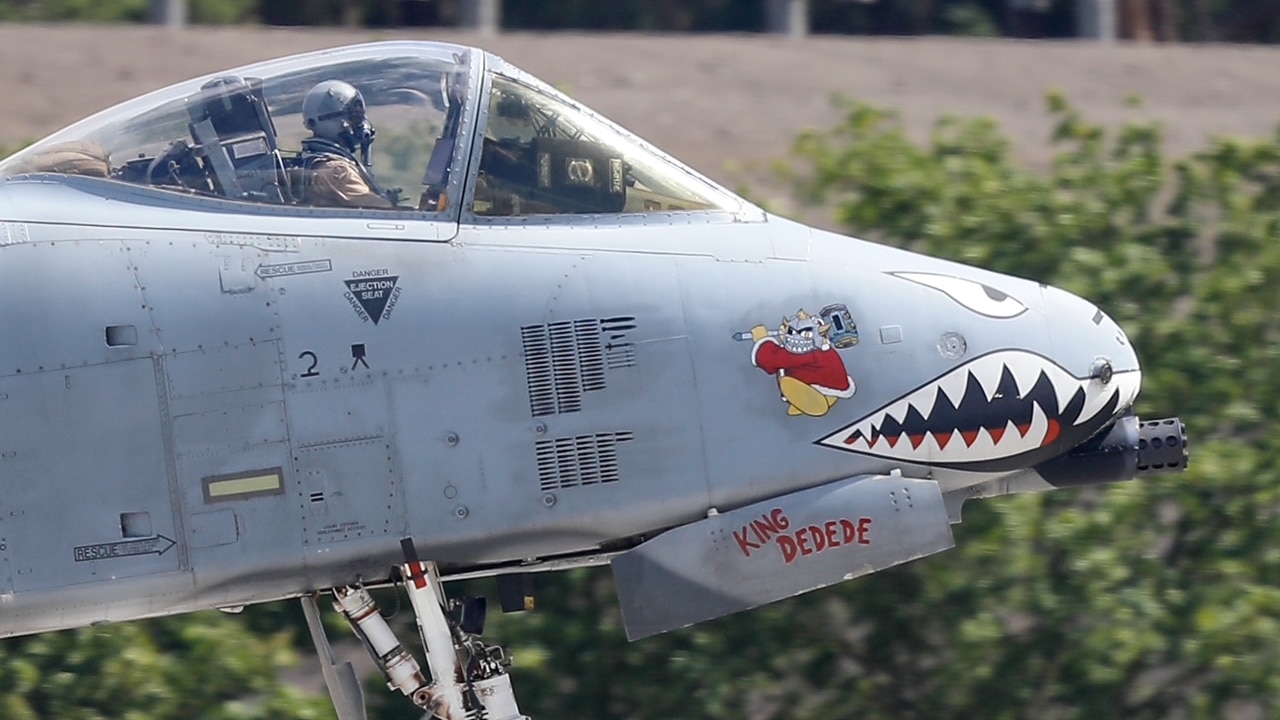
One notable missing A-10C is the one nicknamed “Toad” (#78-0614), that was depicted in the official Operation Epic Fury imagery in March. Its fate is currently unknown so we can’t rule out it is the Thunderbolt II aircraft lost during the air war in Iran..
A-10C “Toad” (Image credit: USAF) | Source: U.S. Air Force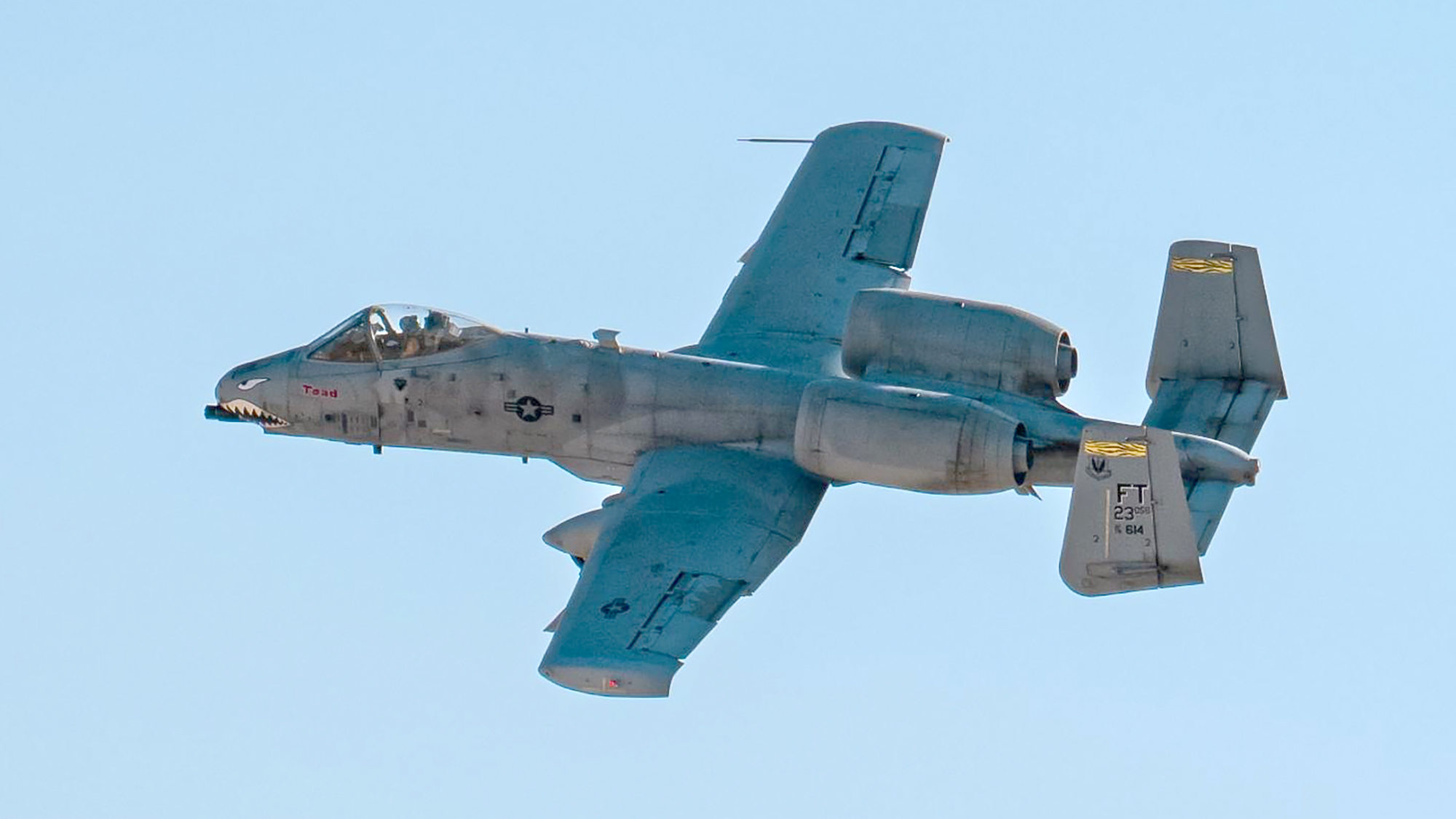
The bomb silhouettes offer a glimpse at the wide variety of weapons the A-10s expended in theater. Although some markings are not completely identifiable, overall, the aircraft show what appear to be 2,000-lb GBU-31(V)1/B bombs, mid-sized GBU-38/54 JDAMs (Joint Direct Attack Munitions) or Laser-JDAMs, AGM-65 Maverick air-to-surface guided missiles, Advanced Precision Kill Weapon System II (APKWS II) guidance kit-equipped Hydra 70 rockets, along with plenty of 30-mm rounds fired by the A-10’s trademark GAU-8 Avenger hydraulically driven seven-barrel Gatling-type gun.
Diddy Kong with several SDBs and MALD markings | Source: Stewart Jack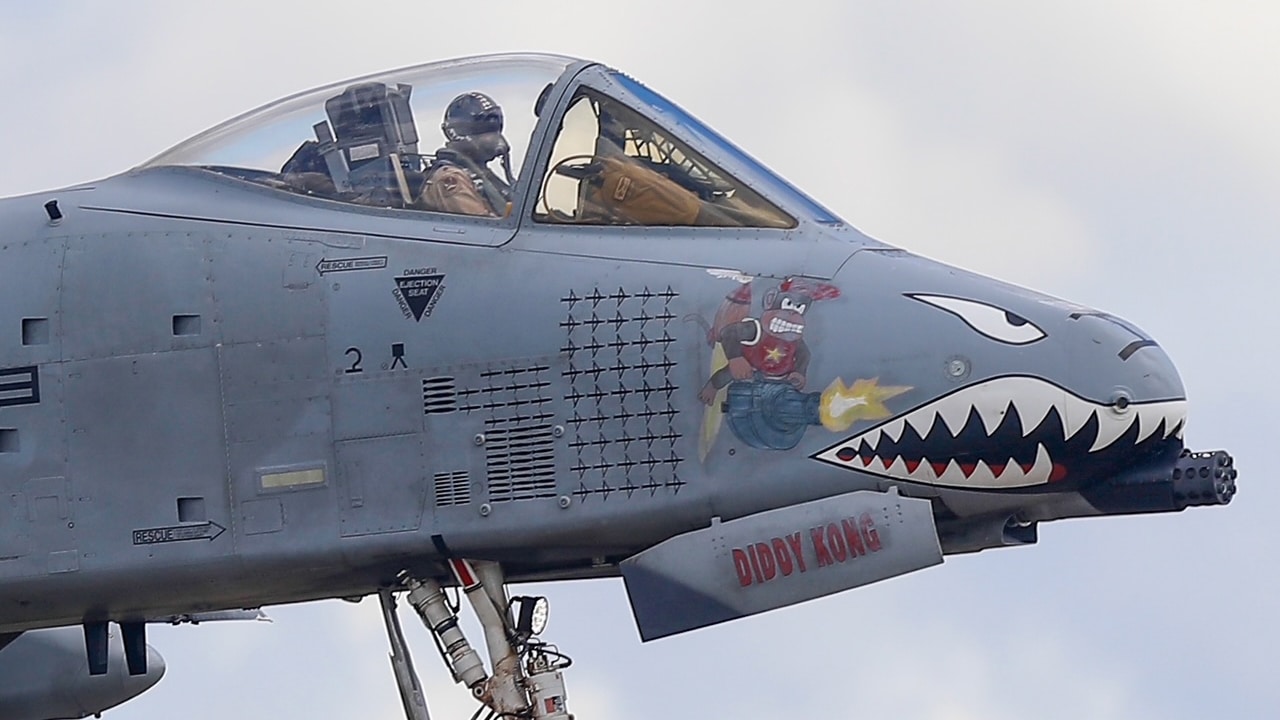
Interestingly, there are several marking that appear to depict MALDs (Miniature Air Launched Decoys). “MALDs are designed to mimic other aircraft, making them invaluable assets in diverting enemy fire away from pilots,” says Moody AFB website in an article dating back to 2024, when training with MALDs was being incorporated. “When MALDs are fired they deceive defense systems and enemy cruise missiles giving the illusion the decoy is an aircraft. MALDs can mimic the signal of various aircraft such as F-16s, B-52s, and F-35s”
U.S. Air Force Airman 1st Class Kyler Stenke, 74th Fighter Generation Squadron load crew member, tightens bolts to secure a Miniature Air-Launched Decoy onto an A-10C Thunderbolt II at Moody Air Force Base, Georgia, Feb. 14, 2024. (U.S. Air Force photo by Airman 1st Class Sir Wyrick) | Source: U.S. Air Force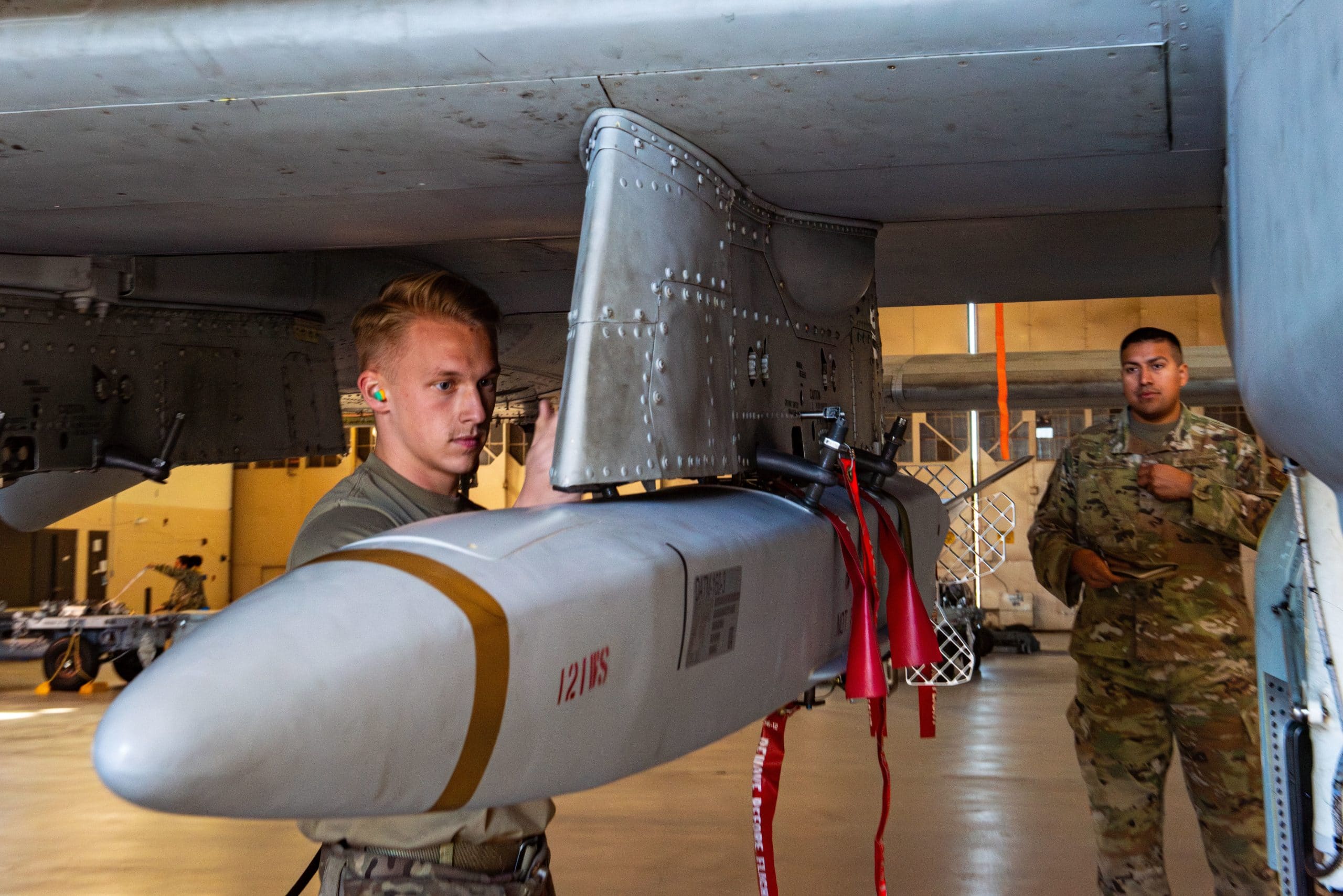
But, probably, the most interesting things are the two kills markings of two Iranian vessels sported by “Samus”. In fact, along with the traditional CAS (Close Air Support) role, the A-10s have flown the maritime strike mission in support of Operation Epic Fury.
Samus | Source: Stewart Jack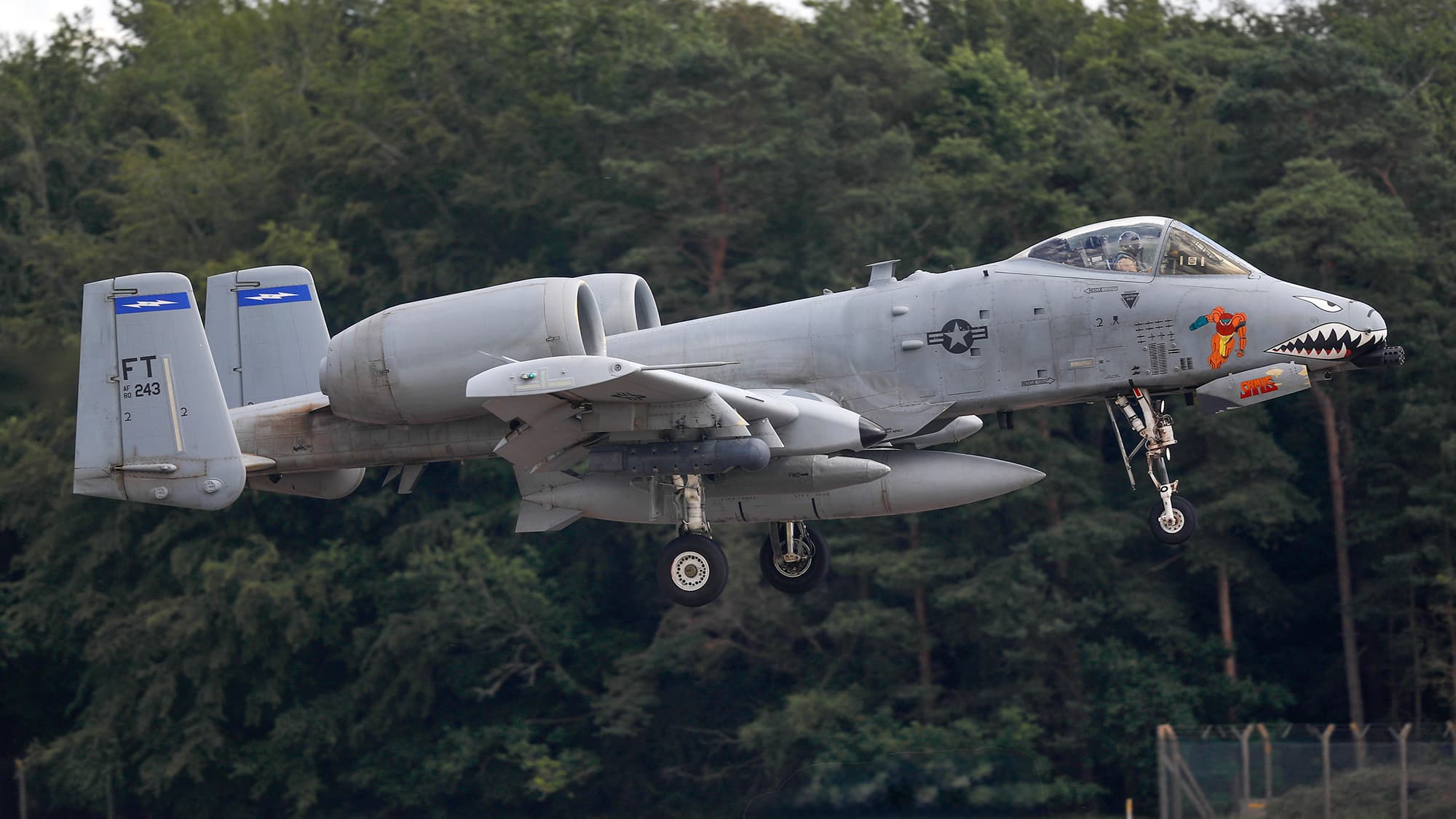
This is an excerpt of what we wrote in a previous story that you can find here.
The shift to the maritime domain, whether from Jordan or another forward operating base in the region, makes a lot of sense, considering the type has regularly taken part in U.S. submarine escort and live-fire exercises in recent years. Moreover, the U.S. Air Force had released images of its A-10s deployed to the region escorting U.S. warships in the 5th Fleet Area of Operations last month.
In 2024, we reported about Warthogs practicing overwatch of a U.S. nuclear submarine during one of the most vulnerable phases of its navigation through the Strait of San Juan de Fuca, on the Pacific Northwest coast, between the state of Washington and Vancouver Island, British Columbia, Canada.
Few months later, a formation of six A-10Cs, assigned to Moody Air Force Base, escorted an Ohio-class ballistic missile submarine, the USS Wyoming (SSBN 742). The aircraft, were also involved in a live fire exercise with their GAU-8 30 mm gun and 70 mm rockets.
Born as a pure Close Air Support and anti-tank platform, the A-10 has rarely been employed in the maritime domain until roughly 15 years ago. In 2011, during Operation Unified Protector, when an A-10 and a P-3C Orion engaged together a patrol boat and several small attack craft in the port of Misrata, Libya.
More recently, following the renewed attention towards these types of asymmetric threats caused by the attacks in the Red Sea or the skirmishes between the Ukrainian USVs (Unmanned Surface Vehicles) and the Russian Navy in the Black Sea, the type has been used to target swarms of boats and strike small vessels in several training scenarios.
In the 2020s, the Warthog took part in multiple Maritime Surface Warfare exercises and conducted unit defense training. One of the exercises saw, in Sept. 2023, two A-10s engage simulated surface threats in the Gulf of Oman with the Arleigh Burke-class guided-missile destroyer USS Stethem.
High Value Targets, like U.S. warships and civilian ships and tankers could be attacked and overwhelmed by coordinated swarms of USVs, challenging the traditional naval defense strategies. The A-10’s maneuverability at low airspeeds and altitude, flexible armament, highly accurate weapons-delivery capabilities, and extended loiter time are all key attributes that make it highly effective at against fast naval targets in the Persian Gulf and beyond.
Another interesting marking is the F-15E tail with the text “So others may live” painted on “Ridley,” that might suggest the aircraft was involved in the recovery operation of DUDE 44, the Strike Eagle shot down over Iran.
Ridley | Source: Stewart Jack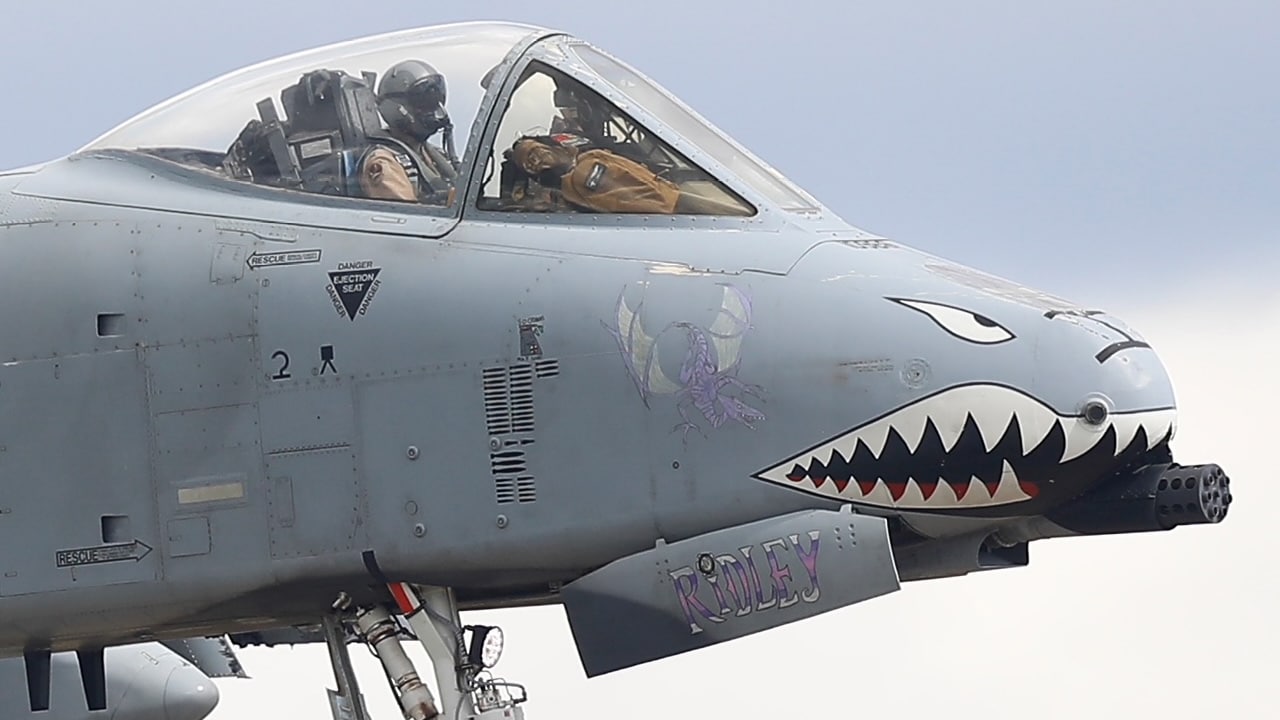
Another marking that might be worth investigating is the one sported by “Kirby”: a pickup truck, possibly a “technical,” with an explosion or mushroom cloud rising from it….
Kirby | Source: Stewart Jack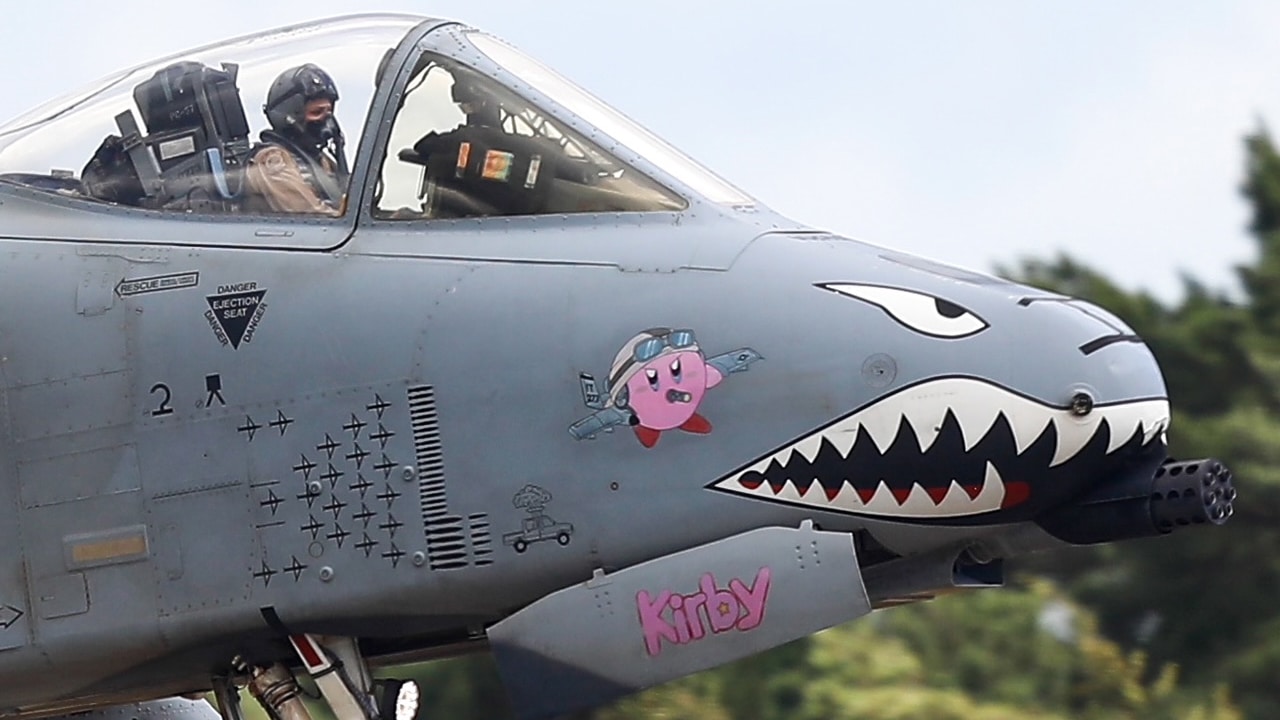
Catégories: Defence`s Feeds, Europäische Union
Impressive little one...
When I first saw the vid and saw her pre-lift shennanigans I was like WTF! Then I realized that her dad had taken the time to get her involved in the sport, probably by having her watch him workout and then by her WANTING to do it too and she was simply modeling his behavior before a heavy lift. So good on her and her dad. I consider this impressive by any standard. Well done.
New PR at The Arnold! pic.twitter.com/wr8SyiR1AA
— Gym Fiesta (@GymFiesta) June 7, 2026
Catégories: Defence`s Feeds, Európai Unió : hírek magyarul
RD Congo : Fayulu et Sesanga blessés, l'opposition dénonce une dérive du pouvoir
La tension monte en République démocratique du Congo. Plusieurs opposants ont été blessés à Kinshasa lors d'une manifestation contre le projet de réforme constitutionnelle porté par la majorité présidentielle. L'opposition accuse le président Félix Tshisekedi de vouloir ouvrir la voie à un troisième mandat malgré les dispositions actuelles de la Constitution.
Patrick Mbamu, secrétaire exécutif de l'ECiDé France, le parti de Martin Fayulu, est l'invité du Journal de l'Afrique. Il revient sur les violences qui ont émaillé le rassemblement, les accusations visant les forces de l'ordre et les craintes de l'opposition face à ce projet de réforme.
Catégories: Afrique, Europäische Union
Breaking Down the State of Play in Sino-North Korean Ties
The Xi administration has been slow to adapt to its ally’s developments, and this summit represented an attempt to reset relations.
Catégories: Diplomacy & Crisis News
Who Is Asim Munir, Trump’s ‘Favorite Field Marshal’?
He's the main driving force behind Pakistan’s image overhaul and at the forefront of Pakistan’s mediation in the Iran crisis. But who, exactly, is Asim Munir?
Catégories: Diplomacy & Crisis News
Boeing Will Not Bid For U.S. Navy’s New Trainer Jet
Boeing determined the T-7A does not meet the U.S. Navy’s Undergraduate Jet Training System requirements and thus decided to not bid for the T-45’s replacement.
In a surprise move, Boeing has decided to not take part in the competition that will select the successor of the T-45 Goshawk. The company said in a short statement on June 12, 2026, that its T-7 Red Hawk does not meet the requirements of Undergraduate Jet Training System (UJTS), leading to the decision.
Here is the full statement:
“Boeing is focused on meeting our commitments, and we bid for programs where we believe we can provide the right solution tailored to our customers’ needs and requirements. After careful evaluation, we have determined the T-7A does not meet the U.S. Navy’s Undergraduate Jet Training System requirements. We have therefore informed the Navy that we will not bid on the current RFP. We remain committed to delivering the T-7A as a modern, growth-oriented training solution for 4th, 5th and 6th generation pilots as requirements evolve. We look forward to providing and sustaining both current and future capabilities for the Navy.”
The company did not disclose which requirements were not met. However, Aviation Week and Breaking Defense reported that, according to a company spokesperson, the T-7’s F404 engine would need long-cycle development to meet UJTS engine qualification requirements, which would hamper Boeing’s ability to quickly reach initial operational capability.
It should be noted that the Navy knows well that engine, as it is the same that powers the F/A-18 Hornet and served as the base for the F414 engine that powers the F/A-18E/F Super Hornet. Boeing is now the second company to leave the UJTS competition.
A T-45C Goshawk training aircraft from Training Squadron (VT) 9 performs a touch-and-go on the flight deck of the Nimitz-class aircraft carrier USS Dwight D. Eisenhower (CVN 69) (IKE). | Source: U.S. Navy photo by Mass Communication Specialist Seaman Apprentice Theodore Morrison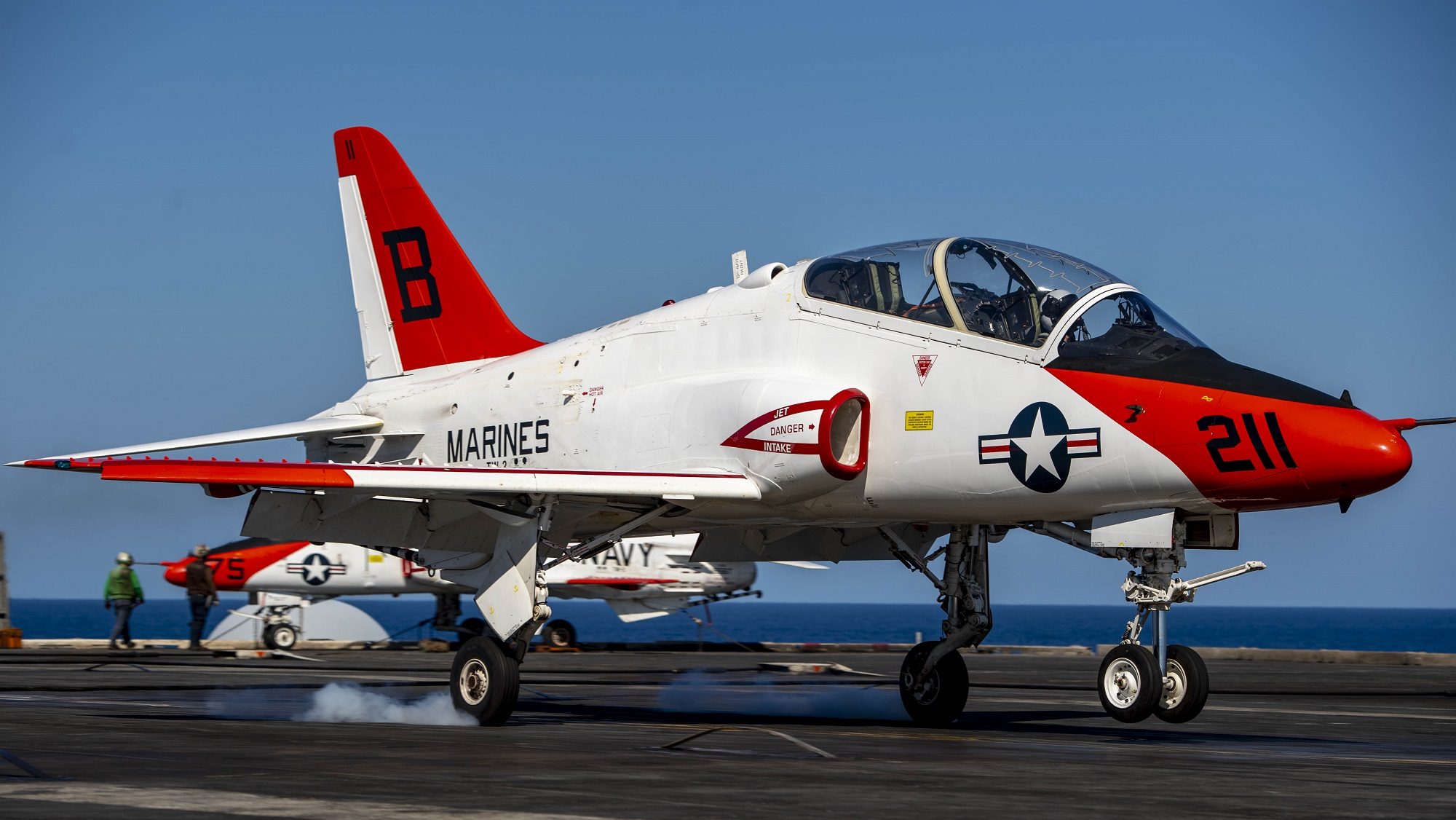
In fact, in March 2026, Lockheed Martin notified the U.S. Navy the decision to not pursue the bid after it determined the TF-50N “would not be the best solution for this program due to the required level of U.S. content and other reasons.” Notably, the TF-50N uses the same F404 engine.
This now leaves only SNC and Beechcraft in the competition. SNC is offering its Freedom trainer with Northrop Grumman and General Atomics, while Beechcraft is offering the M-346 through a partnership of parent company Textron Aviation Defense and Leonardo.
SNC’s proposal is described as a clean-sheet design also able to conduct carrier operations, although it is still on the drawing board. On the other hand, the M-346N is a variant of the M-346 trainer that has been flying operationally since 2015 for over 100,000 flight hours.
The Navy released the long-waited Request for Proposal (RFP) in March 2026. The RFP confirmed once again that the service does not plan for the new trainer jet to land on aircraft carriers or to conduct Field Carrier Landing Practice (FCLP) to touch down.
The T-7A Red Hawk lands for the first time at Joint Base San Antonio-Randolph, Texas, Dec. 5, 2025. | Source: U.S. Air Force photo by Benjamin Faske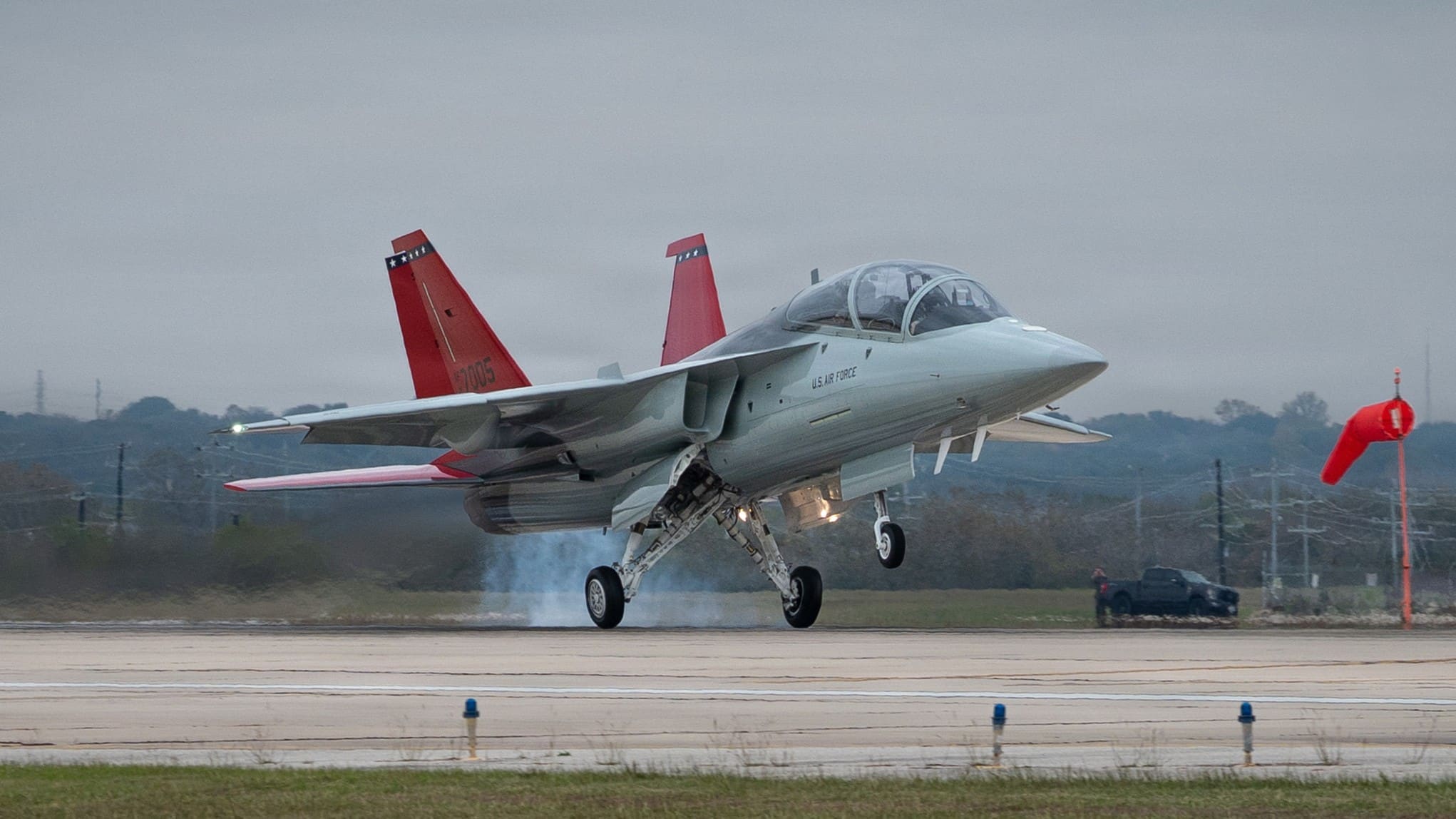
Later on, in May 2026, the Navy raised the cost ceiling for the Engineering and Manufacturing Development phase by about $1 billion. The decision was based on feedback received after the release of the RFP, according to statements.
The RFPThe U.S. Navy has released on Mar. 26, 2026, the final Request for Proposals (RFP) for the Undergraduate Jet Training System (UJTS) program, which will replace the aging T-45 Goshawk trainer fielded in 1991. The service is looking to acquire a new aircraft on an “accelerated procured timeline” as it keeps facing problems with the T-45.
The RFP covers the Engineering, Manufacturing, and Development (EMD) phase, as well as the procurement of the first lot of Low-Rate Initial Production (LRIP) aircraft, Ground-Based Training Systems (GBTS) and Interim Contractor Logistic Services (I-CLS). The contract’s award is expected in March 2027.
An estimated fielding schedule attached to the RFP confirms that the service intends to procure 216 aircraft, with the first lot of seven LRIP aircraft to be delivered in 2032. The production would then increase to 12 aircraft in 2023 and 20 in 2034, before a full-rate production of 25 aircraft per year from 2035.
The M-346N on the ground at the Beech Factory Airport in Wichita, Kansas. | Source: Textron Aviation Defense/Greg L. Davis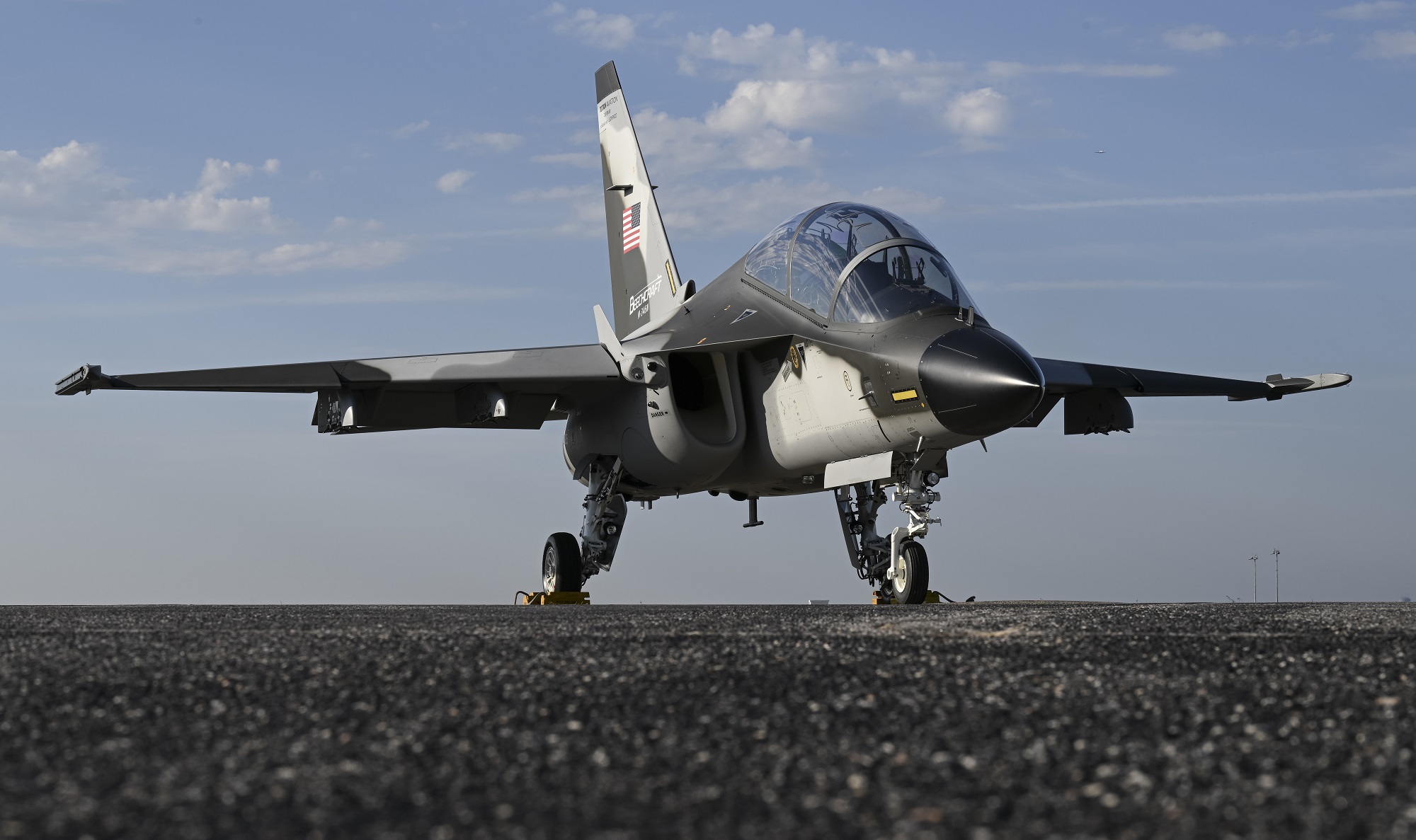
These aircraft will be divided among three locations, with Naval Air Station (NAS) Meridian, Mississippi, receiving 95 aircraft starting in 2033, NAS Kingsville, Texas, receiving 95 aircraft from 2039, and the remaining 26 aircraft going to NAS Pensacola, Florida, from 2042.
The cost will be also an important part of the selection process. Key parameters in the cost evaluation will consider if the price is reasonable and realistic, said the service.
The new aircraft will notably be used in a much different way compared to the T-45, which has been used to train future naval aviators to land on aircraft carriers. In fact, the Navy said “the UJTS air vehicle will only be required to conduct Field Carrier Landing Practice (FCLP) to wave off.”
As we previously reported, a good portion of the training command’s syllabus is centered around the FCLP, which allows new pilots to train on land bases for the entire approach and landing maneuver as performed on the aircraft carrier, just short of the arrested landing. With the new requirement, future student pilots will only perform the approach phase of the current FCLP, going around once reached the minimums, without touching down on the runway.
The Freedom trainer jet proposed for the U.S. Navy’s UJTS program. | Source: SNC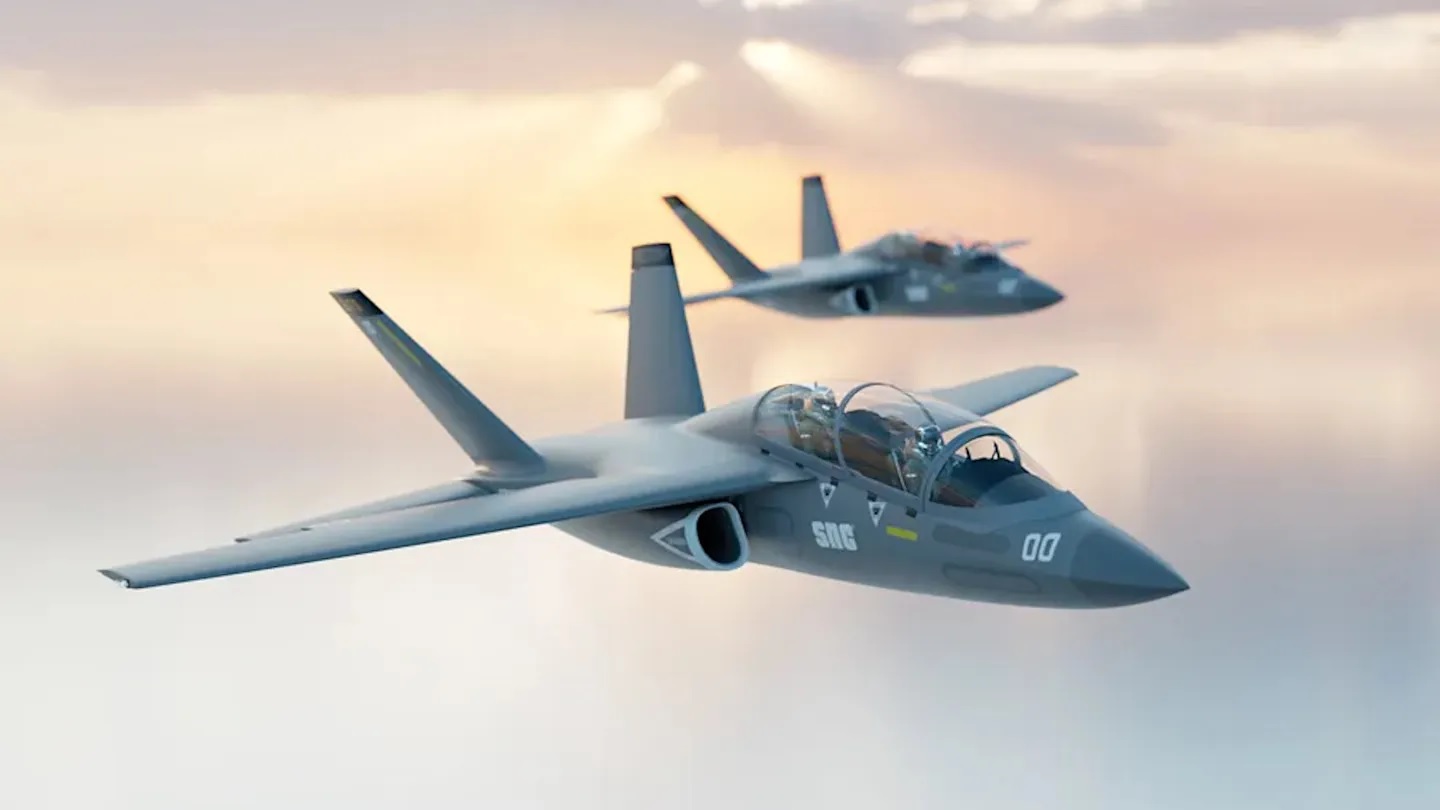
The Navy says that this decision, which sets a completely different route compared to the T-45 Goshawk and, previously, the T-2 Buckeye, is “due to advancements in operational platform landing modes and in ground-based simulation.” This means the new naval aviators will rely more on automation and perform complete FCLPs only in the flight simulator.
This has sparked controversy, as the service is now planning to move this part of the training to the Field Replacement Squadrons (FRS), where the newly appointed naval aviators transition to their assigned aircraft. That would seem counterproductive as FRSs fly much more expensive aircraft, thus increasing the cost of training.
However, this choice has also reflections on the timeline. In fact, removing the FCLP portion of the training program from UJTS allows a much quicker fielding of the new aircraft, which could now be also an already operational type.
Thus, the new trainer aircraft will not require complex and lengthy structural modifications to be adapted to the new role. Normally, an aircraft that has to trap on the carrier and launch from a catapult, or at least conduct FCLPs, has to be designed from the ground up on that premise because the structural design needs to account for very significant stresses during carrier operations.
Catégories: Defence`s Feeds, Europäische Union
Die schönsten Inseln Europas
Europa ist ein Kontinent, der für seine Vielfalt und Schönheit bekannt ist. Besonders malerisch sind die zahlreichen Inseln, die in den verschiedenen Meeren und Ozeanen verstreut liegen. Jede Insel hat ihren eigenen Charme und bietet einzigartige Erlebnisse.
Von den atemberaubenden Stränden Sardiniens bis hin zu den spektakulären Sonnenuntergängen auf Santorin gibt es unzählige Gründe, diese Juwelen genauer kennenzulernen. Entdecken Sie faszinierende Kulturen, historische Stätten und fantastische Naturlandschaften – all das erwartet Sie auf den schönsten Inseln Europas.
Das Wichtigste in Kürze- Europas Inseln bieten atemberaubende Strände, historische Stätten und einzigartige Kulturen.
- Sardinien, Mallorca und Santorin sind für ihre Strände, kulturellen Schätze und Sonnenuntergänge bekannt.
- Kreta und Island faszinieren mit historischen Stätten, Bergen und unvergleichlicher Natur.
- Korsika und Hvar locken mit spektakulären Wanderwegen, Stränden und Lavendelfeldern.
- Reisezeit, Visabestimmungen und Kinderfreundlichkeit variieren je nach Insel.
Erleben Sie die einzigartige Schönheit Sardiniens mit seinen prächtigen Stränden, kulturellen Schätzen und seiner köstlichen Küche. Die Insel bietet kristallklares Wasser und endlose Traumstrände, die zum Entspannen einladen. Besuchen Sie historische Stätten wie die Nuraghen, um einen Einblick in die antike Geschichte zu bekommen, oder genießen Sie lokale Spezialitäten wie Pecorino-Käse und frischen Fisch in einem der zahlreichen traditionellen Restaurants.
Siehe auch: Teneriffa Karte Europa: Inselparadies
Mallorca: Natur, Städte, Strände und lebendige KulturDie schönsten Inseln EuropasMallorca ist bekannt für seine beeindruckende Natur, malerische Städte und herrlichen Strände. Die Insel bietet eine lebendige Kultur, die sowohl traditionelle als auch moderne Aspekte umfasst. Genießen Sie die atemberaubenden Ausblicke auf das Tramuntana-Gebirge oder spazieren Sie durch die stimmungsvollen Gassen von Palma de Mallorca. Der Süden der Insel lockt mit türkisblauem Wasser und feinem Sandstrand, während im Norden dramatische Klippen und versteckte Buchten warten. Vergessen Sie nicht, die lokale Küche zu kosten: Die ensaimadas und Tapas sind ein besonderer Genuss!
Sich auf eine Reise zu begeben bedeutet, die Welt mit neuen Augen zu sehen und tiefer zu verstehen. – Marc Aurel
Santorin: Weiß-blaue Häuser, Sonnenuntergänge, Santorin-Weine genießenSantorin ist bekannt für seine charakteristischen weiß-blauen Häuser, die einen unverwechselbaren Charme ausstrahlen. Besonders beeindruckend sind die malerischen Sonnenuntergänge, die den Himmel in warme Orangetöne tauchen und ein beliebtes Fotomotiv darstellen. Während Ihres Aufenthalts sollten Sie unbedingt die berühmten Santorin-Weine probieren, die durch das besondere Klima der Insel einen einzigartigen Geschmack entwickeln.
Zypern: Antike Ruinen, Strände, herzliche Gastfreundschaft entdeckenEntdecken Sie die faszinierende Insel Zypern, bekannt für Ihre antiken Ruinen und beeindruckenden Strände. Auf Ihren Reisen werden Sie überall die herzliche Gastfreundschaft der Einheimischen spüren. Vergessen Sie nicht, auch die malerischen Dörfer zu besuchen und lokale Köstlichkeiten zu genießen!
Empfehlung: Günstige Urlaubsziele in Europa
.table-responsiv {width: 100%;padding: 0px;margin-bottom: 0px;overflow-y: hidden;border: 1px solid #DDD;overflow-x: auto;min-height: 0.01%;} Insel Besonderheiten Aktivitäten Sardinien Prächtige Strände, kulturelle Schätze Historische Stätten besuchen, lokale Küche genießen Mallorca Impressive Natur, lebendige Kultur Tramuntana-Gebirge erkunden, essenensaimadas und Tapas Santorin Weiß-blaue Häuser, spektakuläre Sonnenuntergänge Santorin-Weine probieren, Sonnenuntergänge bewundern Kreta: Historische Stätten, Berge, traditionelle Küche kosten Kreta: Historische Stätten, Berge, traditionelle Küche kosten – Die schönsten Inseln EuropasKreta ist ein Paradies für Geschichts- und Kulturliebhaber. Die Insel bietet eine Vielzahl an historischen Stätten, darunter der weltberühmte Palast von Knossos, der als Zentrum der Minoischen Kultur gilt. Sie können auch beeindruckende Berge wie den Psiloritis besteigen, den höchsten Berg Kretas, und die atemberaubenden Panoramen genießen.
Doch Kreta hat noch mehr zu bieten. Probieren Sie die traditionelle kretische Küche mit Gerichten wie Moussaka, Souvlaki und frischem Fisch, begleitet von einem Glas Raki oder kretischem Wein. Jeder Bissen enthüllt die reichen Aromen und Traditionen dieser einzigartigen Insel.
Auch interessant: Flugwetter Europa Turbulenzen: Was Sie wissen müssen
Island: Gletscher, Vulkane, heiße Quellen bewundernIsland ist bekannt für seine atemberaubende Natur, einschließlich gewaltiger Gletscher, aktiver Vulkane und malerischer heißer Quellen. Besucher können die eisigen Giganten der Gletscherlandschaften bestaunen und beeindruckende Wanderungen auf den zahlreichen Vulkanen unternehmen. Ein besonderes Highlight sind die zahlreichen heißen Quellen, in denen man wunderbar entspannen kann.
Korsika: Wanderwege, Strände, Bergdörfer erkundenKorsika bietet eine Vielzahl an aufregenden Aktivitäten für alle, die Natur und Abenteuer lieben. Die Insel ist berühmt für Ihre spektakulären Wanderwege, darunter der legendäre GR20, einer der anspruchsvollsten Wanderwege Europas. Entdecken Sie die malerischen Strände, die zu den schönsten in Europa zählen, und genießen Sie entspanntes Sonnenbaden oder spannende Wassersportarten. Außerdem laden charmante Bergdörfer dazu ein, ihren einzigartigen Charakter und Ihre lokale Küche kennenzulernen.
Hvar: Lavendelfelder, Strände und historische Altstadt besuchenHvar ist ein wahres Paradies für alle, die Lavendelfelder lieben. Die Insel begeistert mit ihren bunten Feldern, die während der Blütezeit einen bezaubernden Duft verströmen. Entdecken Sie außerdem die idyllischen Strände, die zum Schwimmen und Sonnenbaden einladen. Ein Besuch in der historischen Altstadt von Hvar rundet das Erlebnis ab. Hier können Sie durch gepflasterte Gassen schlendern und prachtvolle Gebäude bewundern.
FAQ: Antworten auf häufig gestellte Fragen Was ist die beste Reisezeit für einen Besuch der Inseln? Die beste Reisezeit variiert je nach Insel und persönlichen Vorlieben. Generell sind die Sommermonate von Mai bis September ideal für einen Besuch, da das Wetter warm und sonnig ist. Für Wanderungen oder kulturelle Besichtigungen eignen sich die Frühlings- und Herbstmonate, da es dann weniger heiß ist. Benötige ich ein Visum, um die Inseln Europas zu besuchen? Die Visumspflicht hängt von Ihrer Nationalität und dem Ziel ab. Als EU-Bürger benötigen Sie kein Visum für Reisen innerhalb der EU. Besucher aus Nicht-EU-Ländern sollten sich im Voraus über die spezifischen Visabestimmungen des jeweiligen Landes informieren. Gibt es auf den Inseln gute öffentliche Verkehrsmittel? Die Verfügbarkeit und Qualität der öffentlichen Verkehrsmittel variieren je nach Insel. Größere Inseln wie Mallorca und Kreta haben gut ausgebaute öffentliche Verkehrssysteme, während kleinere oder abgelegenere Inseln möglicherweise weniger frequentierte Verbindungen haben. Oft sind Mietwagen oder Fahrräder eine gute Alternative. Kann ich auf den Inseln gut wandern? Ja, viele der europäischen Inseln bieten hervorragende Wandermöglichkeiten. Korsika ist zum Beispiel bekannt für den GR20, einen der anspruchsvollsten Wanderwege Europas. Auch auf Kreta, Sardinien und Island gibt es zahlreiche Wanderwege, die durch beeindruckende Landschaften führen. Sind die Inseln kinderfreundlich? Ja, viele der Inseln sind familien- und kinderfreundlich. Es gibt zahlreiche Aktivitäten und Einrichtungen, die speziell auf Familien ausgerichtet sind, wie kinderfreundliche Strände, Freizeitparks und familienfreundliche Unterkünfte. Es ist immer ratsam, im Voraus zu recherchieren und Unterkünfte und Aktivitäten zu wählen, die den Bedürfnissen Ihrer Familie entsprechen. Wie sind die Unterkunftsmöglichkeiten auf den Inseln? Die Unterkunftsmöglichkeiten sind vielfältig und reichen von luxuriösen Resorts und Hotels über charmante Bed & Breakfasts bis hin zu Ferienwohnungen und Campingplätzen. Je nach Insel und Budget gibt es zahlreiche Optionen, die Ihren Bedürfnissen entsprechen.Der Beitrag Die schönsten Inseln Europas erschien zuerst auf Neurope.eu - News aus Europa.
Catégories: European Union
Trieste, concentré d'histoires
James Joyce (1882-1941) l'Irlandais y a traîné ses souliers, le romancier Italo Svevo (1861-1928) et le poète Umberto Saba (1883-1957), deux figures majeures de la modernité italienne, y sont nés et y ont toujours vécu. Trieste est un mythe littéraire, cultivé par certains auteurs contemporains, (…)
/ Italie, Frontières, Culture
European Parliament Plenary Session – June 2026
Written by Clare Ferguson with Áine Feeney.
European Union enlargement and competitiveness are prominent issues on the agenda for the European Parliament’s June plenary session. Jakov Milatović, President of Montenegro is expected to address Parliament in a formal sitting on Tuesday. During the question time session, a European Commissioner will respond to Members’ questions on the state of play on its pledge to reduce the reporting burden, particularly for small and medium-sized enterprises. The Council and Commission will also make statements ahead of the European Council meeting taking place from 18‑19 June 2026. Andrzej Poczobut, laureate of the 2025 Sakharov Prize for his defence of freedom and democracy in Belarus, is expected to address a formal sitting on Wednesday following his recent release from imprisonment in that country.
The path to accession for[CF1] new Member States is a key topic at this plenary session, with Members set to debate several own-initiative reports from the Committee on Foreign Affairs (AFET) on enlargement candidates in the Western Balkans on Tuesday. The AFET report on Montenegro welcomes the country’s progress and encourages sustained momentum on accession negotiations. The committee also commends Albania‘s dedication to EU integration, but expresses concern about the impact of corruption and calls for full implementation of anti-corruption reforms. The [AC2] AFET report on Kosovo* reaffirms that the country’s future lies with the EU, and stresses inclusion in EU programmes and policies is vital for gradual integration. AFET’s report on Bosnia and Herzegovina expresses support for EU accession and urges political leaders to renew their commitment to EU membership. Similarly, the AFET report on North Macedonia reaffirms its support for the country’s EU membership aspirations, although it regrets the lack of progress since its 2025 report.
Despite applying for accession as far back as 1999, progress towards Türkiye’s EU membership bid has faced numerous delays since accession talks began in 2005. On Tuesday, Parliament is set to consider an AFET report on Türkiye, which reaffirms Parliament’s appreciation for the majority of Turkish people’s aspiration to EU accession and maintaining Türkiye’s candidate status. It also reiterates Türkiye’s relevance as a NATO ally and a country with which the EU has multi-layered relations. However, AFET regrets that, despite the Turkish government’s repeated statements recommitting to the EU membership goal, serious concerns raised in previous AFET reports regarding shortcomings affecting the accession process remain unaddressed.
On Wednesday, Members are also due to consider an AFET report on the status of Georgia’s EU accession status. The report deplores the continued democratic backsliding in the country and echoes Parliament’s position of non-recognition of the legitimacy of the Georgian parliament. It also reiterates calls for the EU to impose sanctions against key officials and regime enablers.
On Monday evening, Parliament is due to consider the trilogue agreement reached on the proposal for two regulations to implement the EU’s tariff commitments under the EU-US Joint Statement. The Committee on International Trade (INTA) adopted its reports in March 2026. The agreement empowers the Commission to suspend the application of the regulation if the US fails to meet its commitments and introduces additional safeguards, including stronger suspension mechanisms and protections against import surges that could harm domestic producers. If adopted, a comprehensive review of the measures will be conducted in 2029, with the possibility of extension.
Parliament is committed to ensuring that there are robust legal frameworks to regulate artificial intelligence (AI) in the EU. On Monday evening, Members are expected to consider adoption of a provisional text on the ‘Digital Omnibus on AI‘, a set of amendments to the AI Act. Parliament favours fixed deadlines for applying high-risk AI rules, and proposes a ban on AI systems that generate non-consensual sexual content. The co-legislators reached a provisional agreement in May 2026, since approved by the Committees on the Internal Market and Consumer Protection (IMCO) and Civil Liberties, Justice and Home Affairs (LIBE) jointly. The agreed text upholds Parliament’s position on the generation of non-consensual sexual content and prohibits AI practices generating child sexual abuse material. If adopted, application of certain parts of the AI Act will be postponed, without impacting the act’s core provisions and risk-based approach.
Despite playing an important role in the food-supply chain, farmers have faced mounting difficulties in recent years. On Tuesday, Parliament is expected to consider a provisional text on a regulation strengthening farmers’ position in the food-supply chain. Based on a report by the Committee on Agriculture and Rural Development (AGRI), Parliament reached agreement with the Council in March 2026. The agreed text aims to ensure that food prices better reflect the production costs borne by farmers and includes support for the dairy sector, such as the introduction of mandatory written contracts. It also reinforced the bargaining power of producer organisations and includes clarification on labelling to ensure consumer protection and fair competition.
Similarly, on Wednesday, Members are due to consider regulations on horticulture. A provisional agreement reached with the Council on the Commission’s proposal on plants obtained by new genomic techniques, aims at aligning existing EU legislation on genetically modified organisms (GMOs) with new scientific developments. Parliament’s negotiators supported the simplification of rules for low-risk genetically modified plants (NGT1), provided they are similar to conventionally bred plants and do not have certain excluded traits. The agreement also includes provisions intended to address concerns related to market concentration and access to seeds for breeders and farmers. The Committee on Environment (ENVI) is expected to vote on the provisional agreement on 15 June 2026, which could be put to a plenary vote during the same week if it is approved without amendment.
Water scarcity and water bankruptcy are serious global issues, and mitigating violations of the human right to water remains crucial for regional stability and sustainable development. On Wednesday, Members are set to consider a recommendation to the Council, Commission and High Representative regarding transnational water governance. An AFET committee report notes the importance of transnational water governance for conflict prevention and peace, underscoring the growing political and security dimensions of water issues. The report calls on Parliament to condemn the weaponisation of water in conflicts and urges the EU to increase funding for transboundary water management and to take the lead in advancing the UN Sustainable Development Goal on clean water.
The improper management of end-of-life vehicles can damage the environment and lose millions of tonnes of material that could be recycled to the benefit of the EU economy instead. On Thursday morning, Parliament is due to consider a provisional agreement on circularity requirements for vehicle design and end-of-life vehicles. The agreement sets out requirements for passenger, commercial, and heavy-duty vehicles. Each vehicle type must include recycled plastic, in line with progressively rising targets and minimum recycled content requirements. Manufacturers and producers will also be obliged to clearly label refurbished parts and provide information regarding safe access to, removal, and replacement of parts.
* This designation is without prejudice to positions on status, and is in line with UNSCR 1244/1999 and the ICJ Opinion on the Kosovo Declaration of Independence.
Further reading:European Parliament Plenary Session June 2026 – agenda
- Question time: State of play on the European Commission’s pledge to reduce the reporting burden, in particular for SMEs
- Digital Omnibus on AI: Adoption in plenary
- EU-US tariffs agreement
- Strengthening farmers’ position in the food supply chain
- Circularity requirements for vehicle design and end-of-life vehicles
- Promoting transnational governance on water in the interests of conflict prevention and peace
- Plants obtained by new genomic techniques
- 2025 Commission report on Georgia
- 2025 Commission report on Montenegro
- 2025 Commission report on Albania
- 2025 Commission report on Türkiye
- 2025 Commission report on Kosovo
- 2025 Commission report on North Macedonia
- 2025 Commission report on Bosnia and Herzegovina
- Laureates of the 2025 Sakharov Prize
- Supporting democracy in Belarus
- Current membership of the European Council
Catégories: European Union
BERICHT über den Bericht 2025 der Kommission über Bosnien und Herzegowina - A10-0165/2026
BERICHT über den Bericht 2025 der Kommission über Bosnien und Herzegowina
Ausschuss für auswärtige Angelegenheiten
Ondřej Kolář
Quelle : © Europäische Union, 2026 - EP
Ausschuss für auswärtige Angelegenheiten
Ondřej Kolář
Quelle : © Europäische Union, 2026 - EP
Report on the 2025 Commission report on Kosovo - A10-0166/2026
Report on the 2025 Commission report on Kosovo
Ausschuss für auswärtige Angelegenheiten
Riho Terras
Quelle : © Europäische Union, 2026 - EP
Ausschuss für auswärtige Angelegenheiten
Riho Terras
Quelle : © Europäische Union, 2026 - EP
Georgia’s Upgraded Partnership With China: A Louder Signal, An Empty Promise
The new "comprehensive strategic partnership" between Tbilisi and Beijing tells us more about Georgian Dream's political anxieties than about any genuine deepening of bilateral ties.
Catégories: Diplomacy & Crisis News
Aux confins de la Pologne et de l'Ukraine, l'ombre des minorités effacées
Depuis l'invasion russe, des millions d'Ukrainiens ont trouvé refuge en Pologne. Mais les relations entre les deux pays comportent leur part d'ombre. Leurs déchirements pendant la seconde guerre mondiale avaient contraint les autorités soviétiques et polonaises à procéder à un gigantesque (…)
/ Violence, Pologne, Nationalisme, Ukraine, Communisme, URSS, Conflit russo-ukrainien 2022-
Catégories: Defence`s Feeds, Diplomacy & Crisis News
BERICHT über den Bericht 2025 der Kommission über Nordmazedonien - A10-0162/2026
BERICHT über den Bericht 2025 der Kommission über Nordmazedonien
Ausschuss für auswärtige Angelegenheiten
Thomas Waitz
Quelle : © Europäische Union, 2026 - EP
Ausschuss für auswärtige Angelegenheiten
Thomas Waitz
Quelle : © Europäische Union, 2026 - EP
« Si j'avais su que la personne que j'épouserais me crèverait l'œil, je ne me serais pas mariée »
Rosana dit que son mari lui tenait des propos très durs chaque fois qu’ils se disputaient, mais elle, elle les prenait à la légère.
Catégories: Afrique
« Si j'avais su que la personne que j'épouserais me crèverait l'œil, je ne me serais pas mariée »
Rosana dit que son mari lui tenait des propos très durs chaque fois qu’ils se disputaient, mais elle, elle les prenait à la légère.
Catégories: Afrique
Après les élections, l'Arménie toujours entre Moscou et Bruxelles ?
Le résultat des élections législatives du 8 juin 2026 semble avoir conforté le tournant pro-occidental du premier ministre arménien Nikol Pachinian ainsi que sa politique en faveur de la paix avec l'Azerbaïdjan. / Élections, Ukraine, Géopolitique, Conflit, Caucase, Arménie, Azerbaïdjan, Russie
/ Élections, Ukraine, Géopolitique, Conflit, Caucase, Arménie, Azerbaïdjan, Russie
Catégories: Afrique, Diplomacy & Crisis News
Press release - EU-US trade: press briefing on tariff legislation and media seminar
MEP Bernd Lange will hold a press briefing on Tuesday at 14.00 on tariff legislation affecting EU-US trade relations, followed by a media seminar on EU trade issues.
Committee on International Trade
Source : © European Union, 2026 - EP
Committee on International Trade
Source : © European Union, 2026 - EP
Catégories: European Union
Press release - MFF negotiations: press conference with lead MEPs on Tuesday at 15.30
Parliament’s co-rapporteurs for the multiannual financial framework (MFF) will brief journalists on their reaction to the Council’s recently-released draft negotiating position.
Committee on Budgets
Source : © European Union, 2026 - EP
Committee on Budgets
Source : © European Union, 2026 - EP
Catégories: European Union
Pages



© 2012-2018 Europa Varietas Foundation © 2015-2018 Europa Varietas Association
www.europavarietas.org | info(@)europavarietas(dot)org | Switzerland




We are looking for sponsors for the English translation of these books, please contact turkeandras(at)gmail(dot)com