
Vous êtes ici
Agrégateur de flux
Debatte um Kinderspiele: «Wer hat Angst vorm schwarzen Mann?» – Diese Kinderspiele gelten heute als problematisch
«Wer hat Angst vorm schwarzen Mann?» oder «Cowboys und Indianer» – Generationen von Kindern sind mit Spielen aufgewachsen, die heute als problematisch gelten.
Catégories: Swiss News
Polizei-Befragung, Dutzende Seiten Justiz-Akten und Tausende Franken Gerichtskosten: «Schwarzer Peter» rassistisch? Chindsgi-Lehrerin angezeigt!
Ein Streit um das Kartenspiel «Schwarzer Peter» beschäftigt Justiz und Schule. Nachdem eine Kindergartenlehrerin an der Zürcher Goldküste das Spiel in ihren Unterricht integrierte, musste sie sich gegen eine Rassismus-Anzeige wehren. Die Folgen sind einschneidend.
Catégories: Swiss News
Coupe du monde 2026 : l'Argentine renverse l'Angleterre en fin de match et se qualifie pour la finale
Menée jusqu'aux dernières minutes de la rencontre, l'Argentine a réussi une spectaculaire remontée pour s'imposer 2-1 face à l'Angleterre, ce mercredi 15 juillet. Grâce à des réalisations d'Enzo Fernández et de Lautaro Martínez en fin de match, l'Albiceleste décroche son billet pour la finale de la Coupe du monde 2026.
Les premières minutes de la rencontre ont été particulièrement disputées, avec de nombreux duels et plusieurs fautes commises par les Argentins. L'Angleterre a rapidement cherché à imposer son rythme et à mettre son adversaire sous pression.
Malgré l'intensité de la partie, les Argentins sont progressivement parvenus à contenir les offensives anglaises. La plus grosse occasion de la première période est intervenue à la 33e minute, lorsque Declan Rice sur coup franc offre une passe vers John Stones. Ce dernier a placé une tête, mais sans parvenir à tromper le gardien argentin.
À la 39e minute, Enzo Fernández a tenté sa chance de loin, mais sa frappe est passée juste au-dessus de la barre transversale. Les deux équipes ont regagné les vestiaires sur un score nul et vierge (0-0).
Au retour de la pause, les deux formations ont affiché des intentions plus offensives. Dès la 47e minute, Julián Álvarez a failli ouvrir le score, mais Jordan Pickford s'est montré vigilant.
L'Angleterre a finalement trouvé l'ouverture à la 55e minute grâce à Anthony Gordon, qui a repris un centre de Morgan Rogers pour donner l'avantage aux Three Lions.
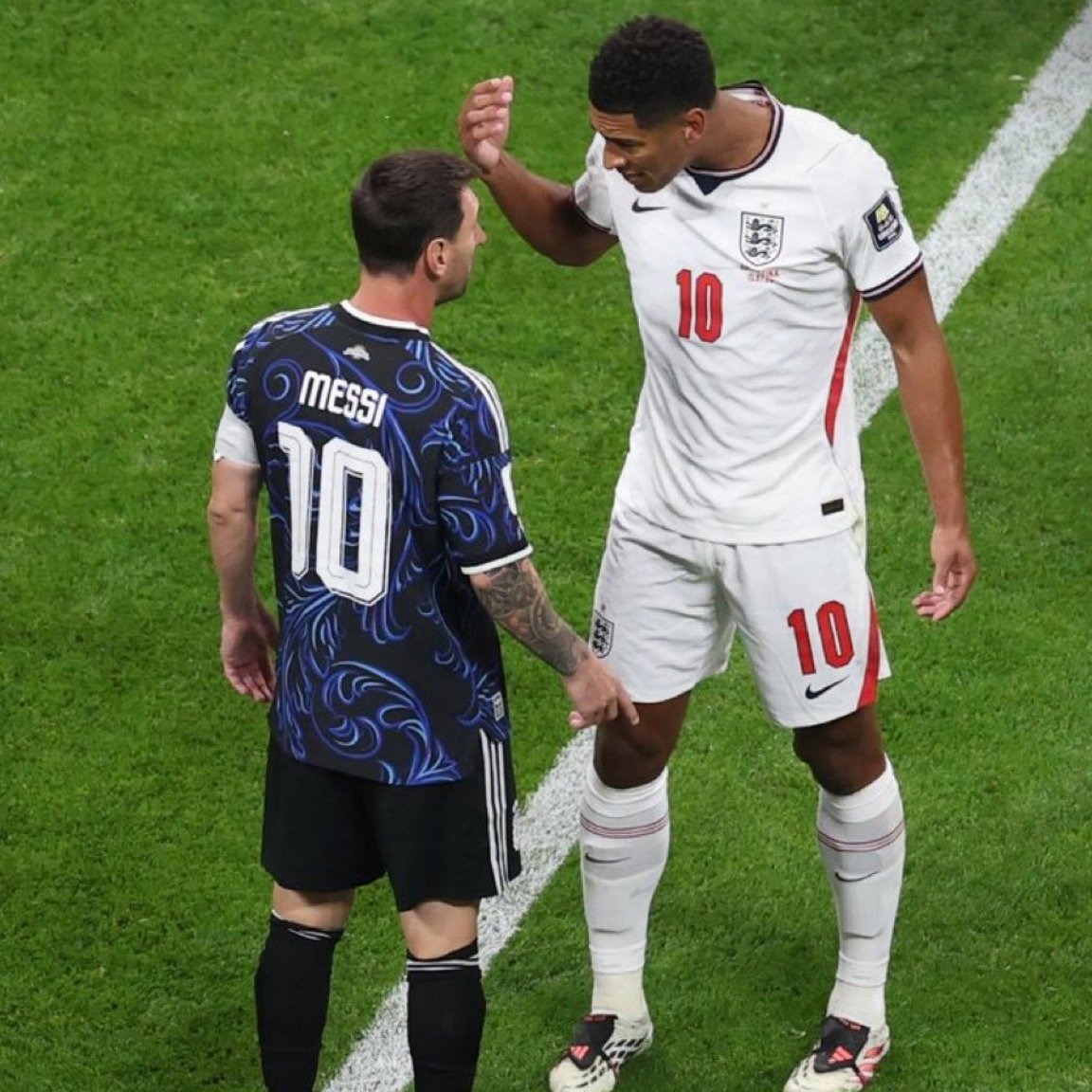
Menés au score, les champions du monde en titre ont tenté de réagir mais ont trouvé en face un gardien anglais très inspiré qui parvient à résister aux tentatives argentines comme la frappe de Nicolas Gonzalez à la 69e.
Quelques minutes plus tard, à la 76e minute, c'est au tour de Mac Allister d'essayer de rétablir la parité. Sans succès.
Alors que l'Angleterre semblait se diriger vers la victoire, l'Argentine a renversé la rencontre dans les dernières minutes. À la 85e minute, parfaitement servi par Lionel Messi, Enzo Fernández a décoché une frappe lointaine qui a terminé au fond des filets pour égaliser.
Dans le temps additionnel, Lionel Messi a une nouvelle fois été décisif en délivrant un centre repris victorieusement par Lautaro Martínez, auteur du but de la victoire.
Au terme d'une seconde période spectaculaire, l'Albiceleste se qualifie ainsi pour une deuxième finale consécutive de Coupe du monde. Lionel Messi disputera, quant à lui, une troisième finale mondiale après celles de 2014 et de 2022.
En finale, l'Argentine affrontera l'Espagne le dimanche 19 juillet 2026 au MetLife Stadium.
Jean Élysée Nikiéma
Lefaso.net
Catégories: Afrique
«Uns den Sieg gekostet»: Englands Ex-Stars rechnen mit Tuchel ab
Englands Trainer Thomas Tuchel stellt mit der Führung im Rücken im WM-Halbfinal gegen Argentinien auf eine Fünferabwehr um – und erleidet damit Schiffbruch. Die Kritik aus dem Mutterland des Fussballs lässt nicht lange auf sich warten.
Catégories: Swiss News


Kylian Mbappé pourrait bientôt rejoindre le Real Madrid, une excellente nouvelle pour les fans
Mali Actu - maliactu.net - Mali Actualités, Les Actus et Informations sur le Mali
Mali Actu
Kylian Mbappé pourrait bientôt rejoindre le Real Madrid, une excellente nouvelle pour les fans
Bonne nouvelle pour les supporters du Real Madrid : si Kylian Mbappé inscrit au moins un triplé contre l’Angleterre, cela signifiera que Lionel Messi ne…
Kylian Mbappé pourrait bientôt rejoindre le Real Madrid, une excellente nouvelle pour les fans
Mali Actu :
Kylian Mbappé pourrait bientôt rejoindre le Real Madrid, une excellente nouvelle pour les fans
Catégories: Afrique
En Suède, les colonies de vacances sont un pilier des politiques sociales et de la mixité
Les parents suédois n'hésitent pas à envoyer leurs enfants en colonie de vacances, la confiance envers les institutions est globalement élevée dans le pays et les colonies sont soumises à des règles strictes en matière d'encadrement et de protection de l'enfance. Alors qu’en France, la fréquentation des colonies de vacances a été divisée par plus de deux depuis les années 1980, les « kollos » suédoises sont même presque considérées comme un droit : largement financées par les communes, elles restent un pilier des politiques sociales et de la mixité, précieux dans un pays où la criminalité recrute des adolescents de plus en plus jeunes. Chaque été, des milliers d’enfants partent quelques semaines en pleine nature sans leurs parents.
Catégories: Union européenne
Sommerzeit das ganze Jahr: USA vor Abschaffung der Zeitumstellung
Seit Jahren wird auch in Europa und der Schweiz über ein Ende der Zeitumstellung gestritten – passiert ist bisher nichts. Zweimal pro Jahr die Uhr umstellen? Für die USA könnte das bald Geschichte sein.
Catégories: Swiss News
Créer en langues africaines: la littérature en kiswahili [4/4]
Au Kenya, le kiswahili est désigné par la Constitution comme langue nationale. Il unifie les plus de 40 communautés du pays et il est enseigné à l’école. C’est donc naturellement qu’une littérature en kiswahili s’est constituée et enrichie dans le pays ces dernières décennies, même si les difficultés du secteur de l’édition limitent encore son développement.
Catégories: Afrique
En Zambie, à qui profite la richesse minière?
En Zambie, dans la province de la Copperbelt, se trouvent d'immenses réserves de cuivre et d’autres minerais de la transition, essentiels pour la fabrication des batteries électriques. Une région stratégique pour toutes les grandes puissances mondiales qui souhaitent s’accaparer ces minerais et pour la Zambie qui espère tirer profit de ces ressources pour sortir de son endettement évalué à environ 30 milliards de dollars en 2024. Le président sortant, Hakainde Hichilema, candidat à sa propre succession, a ainsi fait une promesse de campagne : tripler la production de cuivre pour renflouer les caisses d’un État déclaré en faillite en 2021. Mais sur place, le constat est amer.
Catégories: Afrique
Auf Vorarbeit von Messi: Hier köpfelt Lautaro Martinez Argentinien in den WM-Final
Argentiniens Traum von der erfolgreichen Titelverteidigung lebt weiter. Lautaro Martinez erzielt in der zweiten Minute der Nachspielzeit gegen England den entscheidenden Treffer zum 2:1.
Catégories: Swiss News
Le projet BenkadiBaara lance deux nouveaux appels à projets pour développer la formation-insertion professionnelle des jeunes dans les métiers de l'énergie solaire et de la mécanique/réparation d'équipements
Au Burkina Faso, chaque année, des milliers de jeunes arrivent sur le marché du travail avec l'ambition de construire leur avenir professionnel. Dans le même temps, les secteurs de l'énergie solaire et de la mécanique/réparation d'équipements connaissent un développement soutenu et offrent des perspectives d'emploi croissantes. Les entreprises de ces filières recherchent aujourd'hui des jeunes qualifiés capables d'accompagner leur développement et de répondre aux besoins d'une économie plus verte, plus compétitive et plus résiliente.
Pour répondre à cette dynamique, le projet BenkadiBaara, financé par l'Union européenne et mis en œuvre par LuxDev, en partenariat avec les Conseils régionaux des régions d'intervention, lance deux nouveaux appels à projets destinés à soutenir des parcours de formation-insertion professionnelle au profit des jeunes de 16 à 35 ans.
L'objectif est de permettre à plusieurs milliers de jeunes femmes et hommes d'acquérir des compétences directement recherchées par les entreprises, de bénéficier d'une expérience professionnelle de qualité et d'accéder durablement à un emploi dans les régions du Kadiogo, du Nando, du Bankui (Dédougou et province des Balés) et du Guiriko.
Au-delà de la formation, les projets retenus devront démontrer leur capacité à accompagner les bénéficiaires jusqu'à leur insertion professionnelle effective, en développant des partenariats solides avec les entreprises des secteurs concernés.
Deux filières stratégiques pour l'emploi des jeunes
Les appels à projets portent sur deux secteurs clés de l'économie verte :
L'énergie solaire
Les projets pourront notamment concerner les métiers liés :
• à l'installation de systèmes photovoltaïques ;
• à l'installation de solutions solaires à usage productif ;
• à la maintenance d'équipements solaires ;
• à l'installation et à l'entretien de pompes solaires ;
• à la maintenance d'équipements hydrauliques ;
• à l'électricité spécialisée en solaire ;
• aux fonctions technico-commerciales dans le domaine des équipements solaires.
La mécanique et la réparation d'équipements
Les projets pourront notamment porter sur les métiers liés :
• à la mécanique automobile, moto et cycles ;
• au froid et à la climatisation ;
• à l'électricité automobile et industrielle ;
• à la maintenance industrielle ;
• à la maintenance informatique et électronique ;
• aux équipements électriques et aux nouvelles mobilités (motos électriques, bornes de recharge, etc.) ;
• ainsi qu'à d'autres métiers techniques répondant aux besoins des entreprises du secteur.
Qui peut déposer un projet ?
L'appel est ouvert :
• aux entreprises privées ;
• aux centres et établissements privés de formation reconnus ;
• aux unions, groupements d'entreprises et organisations professionnelles ;
• aux ONG, associations et organisations de la société civile légalement constituées.
Au-delà de leur statut juridique, tous les candidats devront démontrer un ancrage solide dans le secteur productif et leur capacité à mobiliser des entreprises partenaires afin de proposer des parcours de formation, de stage et d'insertion répondant aux besoins réels du marché du travail.
Modalités de soumission
Les candidatures sont ouvertes exclusivement en ligne, via la plateforme Good Grants, du 29 juin au 20 juillet 2026.
Les dossiers doivent impérativement être enregistrés sur la plateforme au plus tard le 20 juillet 2026.
Lien de soumission : https://benkadibaara.grantplatform.com/
Critères de sélection
Les projets seront évalués notamment au regard :
• de leur pertinence par rapport aux objectifs de l'appel ;
• de l'expérience et de la capacité technique du porteur ;
• de la cohérence et du réalisme du budget proposé ;
• de la qualité du dispositif de formation-insertion professionnelle ;
• de la stratégie envisagée pour assurer une insertion professionnelle durable des jeunes bénéficiaires.
Informations et demandes de clarification
Pour toute demande de clarification, les candidats sont invités à adresser leurs questions, selon l'appel concerné et leur région d'intervention, aux personnes de contact ci-dessous.
Appel à projets – Énergie solaire
Régions Kadiogo et Nando
adama.nacanabo@luxdev.lu – (+226) 03 48 41 91
Copie : drissa.fayama@luxdev.lu
Régions Guiriko et Bankui (Dédougou et province des Balés)
mariam.sidibe@luxdev.lu – (+226) 03 42 82 04
Copie : samba.biba@luxdev.lu
Appel à projets – Mécanique et réparation d'équipements
Régions Kadiogo et Nando
malick.guiguemde@luxdev.lu – (+226) 03 17 14 05
Copie : drissa.fayama@luxdev.lu
Régions Guiriko et Bankui (Dédougou et province des Balés)
zoumana.traore@luxdev.lu – (+226) 02 40 88 27
Copie : samba.biba@luxdev.lu
Un webinaire de présentation des appels à projets est prévu le 03 juillet 2026 10h00 GMT.
Lien : Rejoindre : https://teams.microsoft.com/meet/341935713542400?p=jzpePeIv7Q72EOYjja
Numéro de réunion : 341 935 713 542 400
Code secret : 25gk7hY9
Catégories: Afrique
Israel faces reserve troop, tank shortages: Army Radio
Told ya so! Oh and trust me that this is just the tip of the iceberg. The IDF is NOT designed for extended conflicts. Its built for short, sharp fights in which a decision is achieved in days, weeks at most. This what I don't understand about the view of the fight by their civilian leadership. We haven't even talked about the toll this is taking on their economy. But enough of my chest thumping. Check out the article below.
via MiddleEastMonitor.com
Israel’s army is facing shortages of reserve personnel and combat-ready tanks, with some reserve formations nearing “effective collapse,” according to a report by Israeli Army Radio on Tuesday.
Under the headline “The Army’s Warning of the Collapse of the Reserve Forces,” the broadcaster said reserve brigades and battalions are operating below strength, with insufficient tanks available for combat.
It said a reserve armored brigade was recently deployed to a key operational sector in Lebanon, but accounts from commanders and soldiers painted a different picture from the one presented by decision-makers.
“These are not full brigades,” the report said. “They are far from it.”
According to the broadcaster, the military no longer has enough combat-ready tanks after many were damaged in fighting and taken out of service, forcing reserve armored companies to operate with fewer tanks than required.
----------
Army Radio also said the military’s method of calculating reserve attendance rates gives a more favorable picture by issuing call-up orders to fewer reservists, while some of those mobilized serve only limited periods.
As a result, it said units reporting attendance rates of between 50% and 70% are, in practice, operating at much lower effective strength at any given time.
“Reserve units today are empty. A battalion is not a full battalion, and a company is not really a company,” the broadcaster quoted an unnamed reserve commander as saying.
“The public and decision-makers hear about full brigades in Lebanon, but in reality, they are much smaller formations,” the commander said. “The numbers of soldiers, tanks, and vehicles are significantly lower.”
He added that some reserve formations are in “effective collapse.”
“There are units in better shape and others in worse condition. Everyone is doing their utmost, but it is difficult to continue under these circumstances,” he said.
All this and they're in Lebanon about to be locked down in trying to hold a buffer zone which will attract every terrorist in the Middle East. The crazy thing? They're lining up Turkey as being the next target they go after.
IF THEY DO SO THEN THAT WILL BE PURE IDIOCY!
Isn't Turkey a NATO member? Unless Turkey's leadership does something stupid (like strike Israel) then we're looking at an Article 5 situation where the US will have to pick between NATO and Israel.
There is no win in that situation but what worries me is that Netanyahu might actually make a run against Turkey.
I have no confidence in that guy having an off switch.
We live in interesting times.
Catégories: Defence`s Feeds
Les rastafaris d’Afrique toujours en quête de reconnaissance
La justice kényane a rejeté, le mercredi 15 juillet, la demande de la communauté rastafarie d'utiliser le cannabis dans son culte religieux. Un jugement qui met en lumière le statut ambigu des rastafaris sur le continent africain, entre reconnaissance de façade et marginalisation persistante.
Catégories: Afrique
Retrait des troupes rwandaises de l’Est de la RDC : l’ultimatum américain ignoré ?
En RD Congo, l’objectif affiché par Washington dans le conflit qui ravage l’Est du pays n’a pas été atteint. Le 4 juin dernier, le secrétaire d’État américain, Marco Rubio, disait espérer un retrait des troupes rwandaises de l’Est de la RDC avant la mi-juillet. Mais sur le terrain, la situation reste tendue et les combats se sont même intensifiés.
Catégories: Afrique
Les trois vies d’Hissène Habré, l’ancien dictateur tchadien, dans son précaire refuge de Dakar
« Chefs d’Etat africains en exil » (4/6). Chassé du pouvoir en 1990, le dirigeant tchadien s’est exilé au Sénégal, au terme de huit années de règne sanguinaire. Après une décennie dorée sous protection, il est inculpé de crimes contre l’humanité et d’actes de tortures commis au Tchad. Son réseau d’influence lui permettra un temps d’échapper aux procédures, avant d’être condamné à la prison à perpétuité.
Catégories: Afrique
Wer krönt sich zum Weltmeister?: Der Spielplan der WM 2026 mit Turnierbaum
Frankreich und England mussten gegen Spanien und Argentinien bittere Halbfinal-Niederlagen verkraften. Am Samstag haben die beiden immerhin die Chance, ihre WM-Kampagne im Spiel um Platz 3 mit einem Sieg zu beenden. Einen Tag später gehts in New Jersey um die Krone.
Catégories: Swiss News
Décès de KIENTEGA Sibiri Léonce : Faire part
La grande famille KIENTEGA,
Les familles alliées KONKOBO, SAMBA, BONKOUNGOU, SERE, SAWADOGO, OUEDRAOGO, KABORE,
La veuve Mariétou KIENTEGA/SERE et ses enfants : Tony Rachid et Anita Tara Rakiswendé,
Les frères Sidiki, Samuel, François,
A NAZOANGA/NANORO, BOBO-DIOULASSO, PENI, NIANGOLOKO PILIMPIKOU,
Ont la profonde douleur de vous annoncer le rappel à Dieu de leur fils, époux, père, frère, beau-frère, neveu,
KIENTEGA Sibiri Léonce, précédemment Directeur Général de CEDEL, le jeudi 09 juillet 2026 à l'hôpital Yalgado OUEDRAOGO des suites de maladie, suivi de l'inhumation le dimanche 12 juillet 2026 à ZAGTOULI, dans sa 59ème année.
Ils réitèrent toute leur gratitude et leurs remerciements à toutes les personnes qui leur ont apporté leurs soutiens moral, financier, spirituel, matériel et physique lors de cette douloureuse épreuve. Ils se réservent de citer des noms de peur d'en oublier.
Ils voudraient faire une mention spéciale à tous les voisins, aux jeunes et à la Communauté Catholique de Base (CCB) du quartier ZAGTOULI, à ses promotionnaires et amis ainsi qu'aux collaborateurs et travailleurs de CEDEL.
Ils prient le Dieu Tout-Puissant, dans son infinie miséricorde, de combler chacun, de Ses Grâces et de vous bénir abondamment.
Les informations relatives à la grande messe seront communiquées ultérieurement.
« En effet, si nous croyons que Jésus est mort et qu'il est ressuscité, nous croyons aussi que Dieu ramènera par Jésus et avec lui, ceux qui sont morts »
1 Th 4 : 14
Catégories: Afrique
Communiqué de l’État-Major Général des Armées: point sur les opérations en cours
Mali Actu - maliactu.net - Mali Actualités, Les Actus et Informations sur le Mali
Mali Actu
Communiqué de l’État-Major Général des Armées: point sur les opérations en cours
Mali: les FAMa mènent plusieurs frappes à Tinzaouatène et Anefis L’État-Major Général des Armées informe l’opinion nationale que, dans le cadre des opérations permanentes de…
Communiqué de l’État-Major Général des Armées: point sur les opérations en cours
Mali Actu :
Communiqué de l’État-Major Général des Armées: point sur les opérations en cours
Catégories: Afrique
Décès du pasteur Bayé K. Pierre : Faire-part
Catégories: Afrique
Pages



© 2012-2018 Europa Varietas Foundation © 2015-2018 Europa Varietas Association
www.europavarietas.org | info(@)europavarietas(dot)org | Switzerland




We are looking for sponsors for the English translation of these books, please contact turkeandras(at)gmail(dot)com