
Vous êtes ici
Agrégateur de flux
Attentat de Trappes : "Il y a une continuité entre les discours de haine et les actes"
Le discours des partis d'extrême droite, Rassemblement national et Reconquête !, est mis en cause depuis l'attaque terroriste raciste qui a fait un mort à Trappes. Le Premier ministre, Sébastien Lecornu, a dénoncé mardi devant l'Assemblée nationale "les mots qui finissent par armer ceux qui passent à l'acte". Une analyse à laquelle souscrit la sémiologue Cécile Alduy, spécialiste des discours de l'extrême droite.
Catégories: France
Második világháborús kézigránátokat találtak egy ungvári ház padlásán
Két második világháborús kézigránátra bukkantak felújítási munkálatok közben egy ungvári ház padlásán, a Ruszka utcában. A veszélyes robbanóeszközöket a katasztrófavédelem tűzszerészei elszállították és megsemmisítették.
A padláson dolgozó munkások figyeltek fel a robbanóeszközökre hasonlító gyanús tárgyakra. Értesítették a ház tulajdonosát, aki azonnal segítséget kért a mentőszolgálattól.
A helyszínre érkező tűzszerészek megállapították, hogy két magyar gyártmányú 36M Vécsey kézigránát került elő, melyeket a második világháború idején használtak. A robbanóeszközöket az előírásoknak megfelelően egy kijelölt helyre szállították, majd megsemmisítették.
Forrás: Facebook/ГУ ДСНС України у Закарпатській області
The post Második világháborús kézigránátokat találtak egy ungvári ház padlásán appeared first on Kárpátalja.ma.
Catégories: Határon túli magyar portálok összesített hírei
Prix cheminots jeunesse : 3 500 participants pour une deuxième édition ouverte aux plus petits
Des centaines de jeunes ont affirmé, mercredi 28 octobre à Paris, leur goût pour la lecture en récompensant leurs livres préférés, à l’initiative du comité d’entreprise de la SNCF.
Catégories: France
Hungary still on the hook
Also, in tonight’s edition: Spanish election campaign hit by train disaster
Catégories: European Union
San et Koutiala : Benso vise à prévenir les conflits liés aux ressources naturelles en 2026-2028
Mali Actu - maliactu.net - Mali Actualités, Les Actus et Informations sur le Mali
Mali Actu
San et Koutiala : Benso vise à prévenir les conflits liés aux ressources naturelles en 2026-2028
Lancé à San le 28 octobre 2026, Benso vise à prévenir les conflits liés aux ressources naturelles dans les zones de San et de Koutiala jusqu’en 2028.
San et Koutiala : Benso vise à prévenir les conflits liés aux ressources naturelles en 2026-2028
Mali Actu :
San et Koutiala : Benso vise à prévenir les conflits liés aux ressources naturelles en 2026-2028
Catégories: Afrique
Tokayev Proposes Dipping Into National Fund to Turn Kazakhstan into a ‘Big Construction Site’
In his annual state of the nation address, Tokayev laid out an ambitious spending spree focused on infrastructure and investment.
Catégories: Diplomacy & Crisis News
« Octobre rose, et après ? »
Les signataires de cette tribune s’inquiètent qu’Octobre rose s’inscrive dans une campagne de communication qui présente le cancer du sein comme produit de comportement individuel, exonérant les causes environnementales et la responsabilité des industriels pollueurs. Ils revendiquent que le statut de maladie professionnelle soit attribué au cancer du sein.
Catégories: France
Inflation : les Français contraints de réduire les dons, ce sont les plus pauvres qui continuent de donner le plus
Après deux ans de hausses consécutives, le don moyen annuel des Français recule de 18 euros cette année, de 222 à 204 euros. Principal enseignement à retenir du sondage Odoxa pour Leetchi rendu public mercredi 28 octobre : cette baisse est le résultat du coût de la vie qui ne cesse d’augmenter.
Catégories: France
German conservatives clash over Germany’s next president
Friedrich Merz under pressure as Bavarian conservatives press for a right-wing candidate while he dithers
Catégories: European Union
Élections en Israël : l’électorat des Palestiniens de 1948 plus que jamais présent dans les urnes
Relégués au rang de citoyens de seconde zone, les Palestiniens de 1948 se sont massivement rendus aux urnes malgré la campagne de peur de Benyamin Netanyahou. Ils entendent porter la question des discriminations qui se sont aggravées depuis le 7-Octobre.
Catégories: France
Élections en Israël : Benyamin Netanyahou usera de toutes les roueries pour tenter de se maintenir au pouvoir
Son parti, le Likoud, a beau être arrivé en tête, Benyamin Netanyahou a perdu les élections législatives du 27 octobre. La coalition qu’il forme avec les partis religieux et l’extrême droite suprémaciste d’Itamar Ben Gvir et Bezalel Smotrich est passée de 68 sièges à 53, en deçà des 61 requis pour former une majorité à la Knesset. La sanction est nette.…
Catégories: France
Les commerçants de Beni maintiennent la grève contre la pression fiscale dans un contexte d’insécurité
Les activités socio-économiques restent largement perturbées depuis lundi 26 octobre dans la ville de Beni, au Nord-Kivu. À l’origine de cette situation, un mouvement de grève lancé par les commerçants pour protester contre certaines taxes et obligations fiscales qu’ils jugent difficiles à supporter dans un contexte marqué par une insécurité persistante.
Catégories: Afrique
Le Japon face au défi Trump. Avec Robert Dujarric
Le Japon opère aujourd’hui un tournant sécuritaire dans un contexte de préoccupations croissantes quant à la fiabilité des garanties de sécurité offertes par Washington. Depuis la fin de la Seconde guerre mondiale, le Japon avait renoncé à se doter de capacités offensives, au profit d’une doctrine de pacifisme, qui reposait en grande partie sur ces garanties états-uniennes.
Cette politique est peu à peu remise en cause face à ce que Tokyo perçoit comme une intensification des menaces dans sa sphère régionale. Le pays s’inquiète de la montée en puissance de la Chine et de ses velléités sur Taïwan. La guerre en Ukraine conduit également le Japon à considérer la Russie comme une menace potentielle, notamment en raison de son contrôle de plusieurs îles revendiquées par Tokyo. La Corée du Nord constitue par ailleurs toujours une menace latente. Face à ces enjeux et face à un allié états-unien peu fiable aux yeux de Tokyo, le Japon cherche donc à élargir ses partenariats et développer ses propres capacités militaires.
Comment le Japon s’adapte-t-il à l’imprévisibilité des États-Unis depuis le retour de Donald Trump ? Peut-il encore compter sur la protection militaire de Washington ? Comment Tokyo se positionne-t-il dans les tensions sino-taïwanaises ? Le débat sur l’acquisition de l’arme nucléaire est-il relancé ? L’Europe a-t-elle une visibilité auprès le Japon ? Vers quelles régions le Japon cherche-t-il à étendre son influence ?
Autant d’enjeux abordés avec Robert Dujarric, universitaire au Japon et co-directeur de l’Institute of Contemporary Asian Studies (ICAS) de Temple University à Tokyo.
L’article Le Japon face au défi Trump. Avec Robert Dujarric est apparu en premier sur IRIS.
Catégories: Diplomacy & Defense Think Tank News
Zelenszkij: Nagy-Britannia 10 milliárd fonttal támogatja Ukrajnát
Nagy-Britannia összesen 10 milliárd font értékű kiegészítő pénzügyi támogatást nyújt Ukrajnának. Ebből 7 milliárd fontot a következő három évben gazdasági támogatásra fordítanak, további 3 milliárd font pedig brit exportfinanszírozás formájában segíti elsősorban a szükséges fegyverek szállítását – jelentette be Volodimir Zelenszkij ukrán elnök.
Zelenszkij közlése szerint a támogatásról Andy Burnham brit miniszterelnökkel folytatott megbeszélésén született döntés. Az ukrán államfő hangsúlyozta, hogy az újabb pénzügyi segítség kiegészíti a Nagy-Britannia által évente biztosított támogatást.
Az ukrán elnök fontosnak nevezte a bejelentést, amely szerinte
egyértelmű jelzés Moszkvának arról, hogy Ukrajna nem marad magára az orosz agresszióval szemben.
Úgy véli, minden olyan intézkedés, amely erősíti Ukrajna védelmi képességeit, közelebb viheti Oroszországot a háború befejezéséhez.
A felek a megbeszélésen a szankciós politikáról is egyeztettek. Zelenszkij szerint London továbbra is következetesen támogatja az Oroszországgal szembeni korlátozó intézkedéseket.
Az ukrán államfő köszönetet mondott Nagy-Britanniának, a brit kormányfőnek és munkatársainak, valamint mindazoknak, akik támogatják Ukrajnát.
Nyitókép: korábbi felvétel, Henry Nicholls via AFP/Getty Images
The post Zelenszkij: Nagy-Britannia 10 milliárd fonttal támogatja Ukrajnát appeared first on Kárpátalja.ma.
Catégories: Határon túli magyar portálok összesített hírei
Pour la première fois, Charles III reconnaît (prudemment) les ravages de la colonisation
Pressé par les demandes de réparation sur l’esclavage, le roi britannique a admis « les grandes souffrances du passé », aux Bahamas, alors qu’il commence un périple de neuf jours dans les Caraïbes qui s’achèvera par un sommet des chefs d’État du Commonwealth.
Catégories: France
Netherlands to give Ukraine ‘whatever we have’ in air defence supplies
Jetten says he is reaching out to partners to ask them to do more for Kyiv
Catégories: European Union
San : 12 enquêteurs en formation pendant cinq jours pour fiabiliser les données du cheptel
Mali Actu - maliactu.net - Mali Actualités, Les Actus et Informations sur le Mali
Mali Actu
San : 12 enquêteurs en formation pendant cinq jours pour fiabiliser les données du cheptel
À San, 12 enquêteurs, dont deux suppléants, se forment du 28 octobre au 1er novembre 2026 pour améliorer la collecte des données sur les troupeaux.
San : 12 enquêteurs en formation pendant cinq jours pour fiabiliser les données du cheptel
Mali Actu :
San : 12 enquêteurs en formation pendant cinq jours pour fiabiliser les données du cheptel
Catégories: Afrique
Yémen : 14 morts dans des frappes saoudiennes ; les houthistes ciblent l’aéroport d’Aden
Les houthistes, pro-iraniens, et la coalition militaire menée par l’Arabie saoudite, qui appuie les forces gouvernementales yéménites, échangent quasi quotidiennement des frappes depuis la reprise en juillet du conflit au Yémen.
Catégories: Afrique
Pétrole : l’Algérie exporte 3,4 millions de barils d’exception à 8 pays en 2026
L’Algérie a exporté 9 cargaisons exceptionnelles de produits pétroliers par voie maritime, pour un volume total de 3,4 millions de barils, durant la période allant […]
L’article Pétrole : l’Algérie exporte 3,4 millions de barils d’exception à 8 pays en 2026 est apparu en premier sur .
Catégories: Afrique
GA-ASI and Saab Test AEW Payload on MQ-9B
GA-ASI and Saab are testing the LoyalEye radar installed in the MQ-9B’s new Airborne Early Warning pods, which first flew in May 2026.
General Atomics Aeronautical Systems (GA-ASI) and Saab announced that they started the testing of the new Airborne Early Warning (AEW) payload for the MQ-9B Uncrewed Aircraft System (UAS). According to the press release, the testing was conducted over the past few months using a company-owned MQ-9B carrying a Saab LoyalEye radar and flying from GA-ASI’s Desert Horizon facility in Southern California.
The radar was carried inside the AEW pods which flew for the first time on the MQ-9 in May 2026. The test is part of the joint effort between the two companies to develop an unmanned, persistent and cost-effective air surveillance capability, first announced in June 2025.
In the recent flight tests, MQ-9B demonstrated simultaneous tracking of multiple airborne and maritime targets at long ranges using the LoyalEye AEW radar aboard the advanced #UAS.
Read the news: https://t.co/MRFR60QljU
#MQ9B #AEWC https://t.co/fuNMFPLKL4
— General Atomics Aeronautical Systems, Inc (GA-ASI) (@GenAtomics_ASI) October 28, 2026
GA-ASI previously stated that testing of the MQ-9B with the AEW payload was planned for the summer of 2026. The two companies also previously mentioned 2026 as the year the system would be operational.
Advanced flight testing of AEW payloadAccording to GA-ASI, the flight test demonstrated “simultaneous tracking of several airborne and maritime targets at long ranges,” in what Saab described as “a representative operational scenario.” GA-ASI further specified that the airborne targets tracked included “multiple instrumented red fighter jets and several commercial aircraft.”
The mention of “red fighter jets” could possibly be a reference to the F-5 Advanced Tigers employed by Tactical Air Support, which have often taken part in GA-ASI’s test events. The company, however, did not provide additional details on this.
The MQ-9B equipped with the AEW pods. | Source: GA-ASI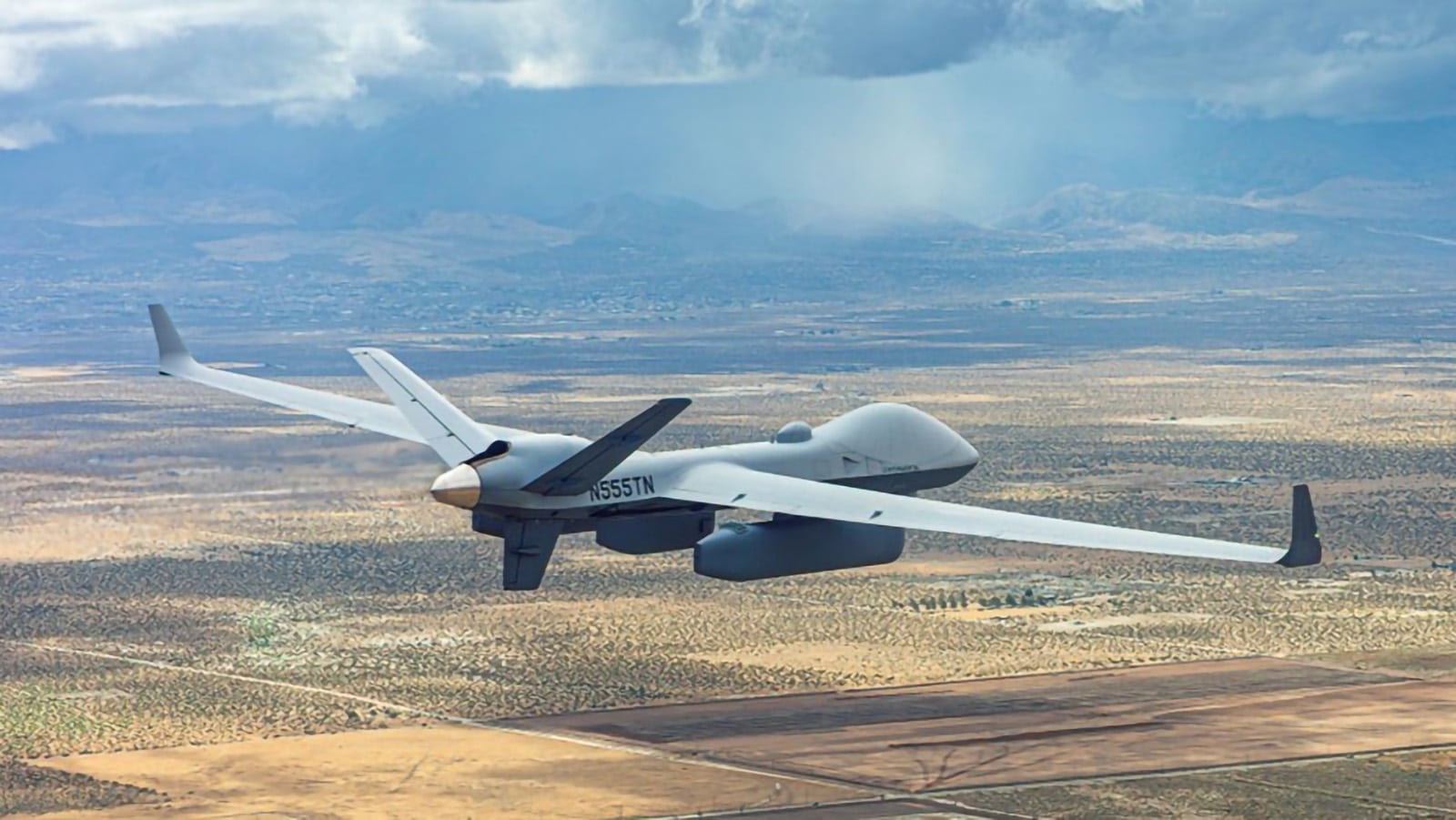
“This has been one of the most highly anticipated flight tests we have performed,” said GA-ASI President David R. Alexander. “The level of customer interest in AEW capability on MQ-9B throughout the world is extremely high. It just makes sense.”
The company did not explicitly identify the customers, however it was revealed last year that a possible customer is the United Kingdom. In fact, the UK’s Secretary of State for Defense said in May 2025 that the MQ-9 is being considered as a candidate for the Royal Navy’s requirement for Carrier Strike Airborne Early Warning.
“This flight test underscores Saab’s commitment to evolving airborne early warning capabilities to meet future operational needs,” said Carl-Johan Bergholm, Head of Saab’s business area Surveillance. “LoyalEye complements existing capabilities by adding flexibility, extending reach, and enabling a more efficient use of resources in demanding environments.”
Unmanned AEW capabilityIn the press release, GA-ASI notes that, historically, the AEW capability has depended solely on large, crewed aircraft. The company says that the AEW payload on the MQ-9B introduces a new approach, combining long endurance, persistent airborne sensing on a UAS.
“MQ-9B’s ability to surveil large areas for extended periods expands coverage, and establishes persistent surveillance in operating environments where endurance, geographic reach, and reduced aircrew exposure are critical,” said GA-ASI.
The MQ-9B during the first flight with the new LoyalEye AEW pods. | Source: GA-ASI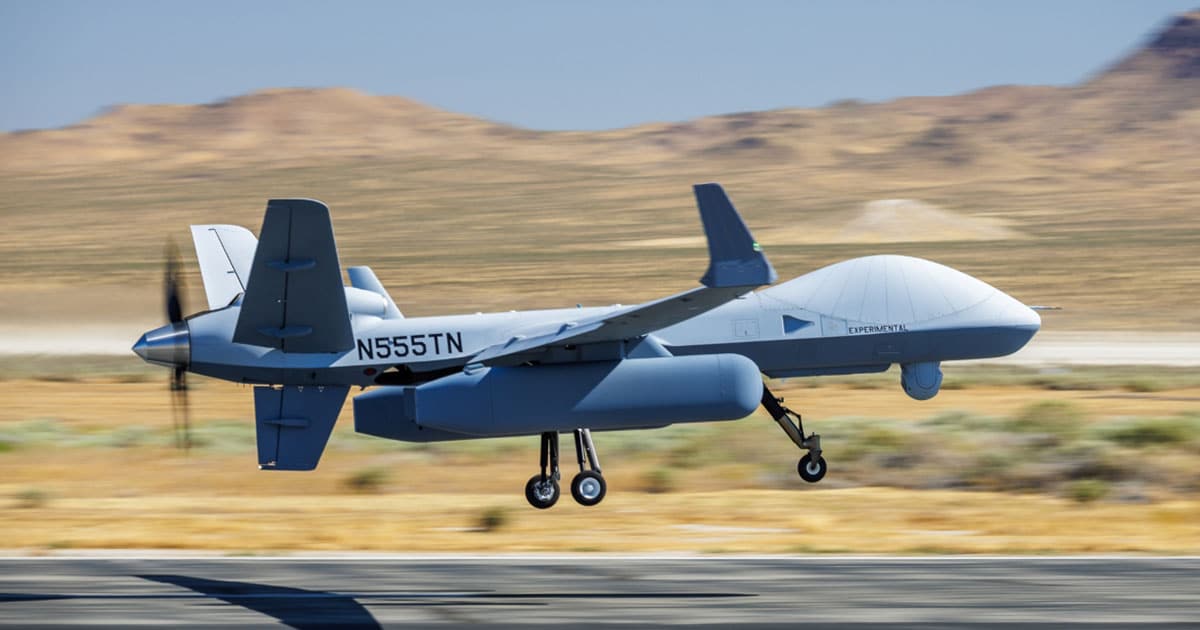
Additionally, the company says that an unmanned AEW capability would allow to also introduce a distributed Battle Management Command & Control (BMC2) capability, increasing the platform’s flexibility. BMC2 is one of the capabilities that is usually found on manned AEW&C aircraft, and GA-ASI says the MQ-9B could offer this capability when coupled with appropriate infrastructure “on the ground, on a ship or on an existing manned AEW aircraft.”
One of the advantages mentioned in the press release is the ability to deploy AEW in areas where it previously was unavailable, without risking the loss of crew. When coupled with a manned AEW aircraft, as suggested in the BMC2 concept, the unmanned MQ-9 would be able to get its sensors closer to contested airspace while the manned aircraft stays at a safe distance.
The partnershipGeneral Atomics Aeronautical Systems and Saab first announced the collaboration for the development of a podded Airborne Early Warning and Control (AEW) on June 15, 2025. At the time, the companies stated that the new capability would be operational by 2026 and available for the SkyGuardian, SeaGuardian, the United Kingdom’s Protector RG1, and the new MQ-9B STOL (Short Takeoff and Landing).
GA-ASI said that the goal was to develop an affordable AEW solution which can be used “against both sophisticated cruise missiles and simple but dangerous drone swarms.” Additionally, the new platform would be able to operate where larger platforms are not feasible.
The renderings released by the two companies show the MQ-9B equipped with three specialized pods for the AEW mission. Two pods, one under each wing, are understood to host the radar arrays, while a third pod installed on the centerline would be used for the processing units.
Concept rendition of Saab’s AEW&C pods on an MQ-9B. | Source: GA-ASI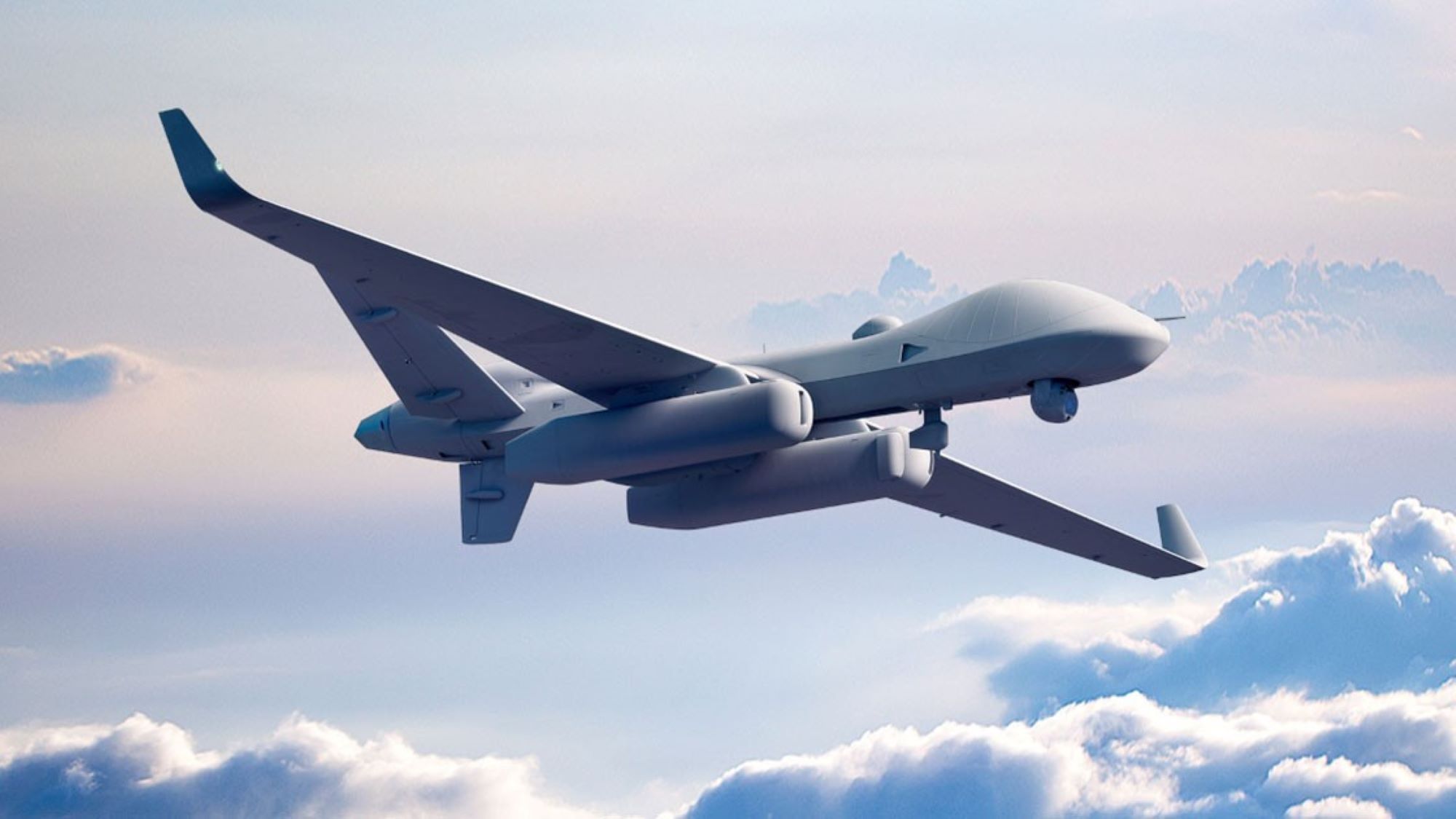
Notably, Saab is also the developer of the Erieye aerial AESA radar system, the main component of the GlobalEye AEW&C aircraft. It is however unclear if there is a relation between LoyalEye and Erieye.
The companies did not specify if they already received interest by possible customers. However, the UK’s Ministry of Defense said in May 2025 that the MQ-9 is being considered as a candidate for the Royal Navy’s requirement for Carrier Strike Airborne Early Warning.
The MQ-9-based AEW capability would replace the Crowsnest Airborne Early Warning system, based on the AW101 helicopter, when it reaches the end of its service life. The drones would be carrier-based, as the Royal Navy assessed that the MQ-9 can be modified to operate from the Queen Elizabeth class aircraft carriers.
Catégories: Defence`s Feeds
Pages



© 2012-2018 Europa Varietas Foundation © 2015-2018 Europa Varietas Association
www.europavarietas.org | info(@)europavarietas(dot)org | Switzerland



We are looking for sponsors for the English translation of these books, please contact turkeandras(at)gmail(dot)com