
Vous êtes ici
Diplomacy & Defense Think Tank News
Resilience in the circular economy: Perspectives for better alignment
This perspective article addresses the role of systemic resilience in circular economy (CE) debates. It underlines resilience as an important feature and proposes ways of how CE metrics and decision-making could be better aligned.
Catégories: Diplomacy & Defense Think Tank News
Eskalation im Westjordanland: "Es herrscht Angst, dass das Gebiet zu einem zweiten Gazastreifen wird"
Nach einem Hamas-Angriff, bei dem israelische Soldaten getötet wurden, lässt Premier Netanjahu das Westjordanland abriegeln. Was bedeutet das für die Menschen und für die Wahl am Dienstag?
Catégories: Diplomacy & Defense Think Tank News
Nahostexperte über Wahlen in Israel „Die arabische Bevölkerung könnte Netanjahu verhindern“
Am 27. Oktober wählt Israel sein neues Parlament. Das Land ist gespalten, die Bevölkerung heterogen. Wer für wen abstimmt, erklärt Nahostexperte Peter Lintl.
Catégories: Diplomacy & Defense Think Tank News
Plötzlich attraktiv? - Warum Kanada mit der EU flirtet
Kanada strebt ein Assoziierungsabkommen mit der Europäischen Union an. Wird die EU in unruhigen Zeiten für demokratische Staaten wieder interessant?
Catégories: Diplomacy & Defense Think Tank News
Irans Nukleardoktrin im Wandel
Israel und die USA haben Iran innerhalb von acht Monaten zweimal militärisch angegriffen. Die Militäroperationen haben das iranische Atomprogramm zwar zurückgeworfen, das Proliferationsrisiko aber nicht beseitigt. Noch immer verfügt die Islamische Republik über das technische Wissen, das Spaltmaterial und die grundlegende Anreicherungskapazität, das Atomprogramm wieder auszuweiten. Derweil ist der Anreiz in Teheran für den Bau von Nuklearwaffen gestiegen. Darauf deutet auch der iranische Diskurs hin, in dem die atomare Bewaffnung von einer randständigen Forderung zu einem breiten politischen Anliegen geworden ist. In ihrer Nukleardoktrin setzt die Islamische Republik nicht länger auf Latenz, sondern gezielt auf Ambiguität. Obwohl das Proliferationsrisiko hoch bleibt, ist es den USA nicht gelungen, in laufenden Verhandlungen Fortschritte zu erzielen. Das macht ein ergänzendes europäisches Engagement umso dringlicher.
Catégories: Diplomacy & Defense Think Tank News
Why European Union’s new security strategy needs a Middle East horizon
- The Middle East is on European Union’s security agenda, not yet in its new strategy. On 28 September 2026, the High Representative grouped Hormuz, the Bab el-Mandeb and the Black Sea as “critical maritime choke points”; the EEAS scoping paper of March 2026 on the new strategy named no southern region.
- European exposure to the region is direct. Migration, organised crime, energy and connectivity tie European economies and domestic politics to the region.
- Europe is present across the region but codifies downwards and ex post. Its missions and frameworks each draw their own map of the region, and southern shocks are answered with what 27 governments can agree upon. Over Hormuz, the EU produced sanctions and an energy letter; the naval response came from a coalition outside the EU.C
- European divergences make improvisation costly. ASPIDES has relied on a handful of contributors, and past naval operations saw member states suspend or withdraw their participation; the response must be agreed in advance.
- The two theatres are one contest, and the method allowing earlier action already exists. A strategy that files the South under energy costs and migration weakens its own eastern priority. The integrated approach, defined by the Council in 2018, prescribes regional and preventive action; the EU should apply it to the Middle East.
- Five recommendations for the strategy. Name the Middle East and the Gulf as the southern dimension of the eastern priority. Set regional objectives to 2030 and place the existing frameworks under them. Make anticipation a principle and give every task its means. Operationalise Article 44 TEU so that willing member states act inside the EU framework rather than beside it. Make solidarity and partnership direction-neutral, from the Emergency Security Protocol and EU-NATO cooperation to a standing EU-GCC security mechanism, to be launched at the rescheduled EU-GCC summit.
Read here in pdf the Policy paper by Andreas C. Hatzidiakos, Research Fellow, ELIAMEP and Constantine Capsaskis, Research Fellow, ELIAMEP.
Catégories: Diplomacy & Defense Think Tank News
Tankrabatt-Monitor: Weitergabe zuletzt wieder etwas höher
Drei Wochen nach Einführung des Tankrabatts zieht Wettbewerbsexperte Tomaso Duso, Leiter der Abteilung Unternehmen und Märkte im Deutschen Institut für Wirtschaftsforschung (DIW Berlin), Zwischenbilanz. Täglich verfolgt der Tankrabatt-Monitor des DIW Berlin die Preisentwicklung für Benzin und Diesel ...
Catégories: Diplomacy & Defense Think Tank News
Der »Sicherheitsschild der Amerikas«
Mit dem »Sicherheitsschild der Amerikas« (Shield of the Americas) haben die USA eine Initiative auf den Weg gebracht, die Maßnahmen zur Drogenbekämpfung, zur militärischen Zusammenarbeit und zur Veränderung des geopolitischen Wettbewerbs in einem einzigen Rahmen verbindet. Die Trump-Administration verfolgt damit ein hemisphärisches Ordnungskonzept unter eigener Führung, das zugleich auf die ideologische Verbundenheit der Partner setzt, um die Kooperation im multilateralen Rahmen zu vertiefen und Lieferketten sowie die Rohstoffversorgung zu sichern. Es bleiben jedoch viele Fragezeichen hinsichtlich der Verbindlichkeit der Vereinbarung und der Effektivität der Kooperation, da kein Aktionsplan entwickelt wurde und auch keine nachfolgenden Implementierungsschritte festgelegt worden sind. Außenpolitisch binden sich Lateinamerika und die Karibik damit zwar stärker an Washington, doch werden wichtige Staaten der Region auch weiterhin Europa als Diversifizierungspartner wirtschaftlich und politisch in den Blick nehmen.
Catégories: Diplomacy & Defense Think Tank News
Meziane Ighil contredit Madjer : « Belmadi a gagné la CAN 2019 seul » (vidéo)
La polémique sur la paternité de la Coupe d’Afrique des nations 2019 vient de connaître un nouvel épisode. Invité d’une émission sportive de la chaîne […]
L’article Meziane Ighil contredit Madjer : « Belmadi a gagné la CAN 2019 seul » (vidéo) est apparu en premier sur .
Catégories: Afrique, Diplomacy & Defense Think Tank News
Massacre du 17 octobre 1961 : le documentaire censuré «Octobre à Paris» retrouve les salles françaises
Censuré pendant des décennies, le documentaire historique Octobre à Paris ressort en salles françaises ce mercredi 21 octobre. Tourné par Jacques Panijel au lendemain du […]
L’article Massacre du 17 octobre 1961 : le documentaire censuré «Octobre à Paris» retrouve les salles françaises est apparu en premier sur .
Catégories: Afrique, Diplomacy & Defense Think Tank News
Consulter un spécialiste sans se déplacer : cette wilaya donne le coup d’envoi de la « télémédecine »
Le directeur général de la digitalisation au ministère de la Santé, Mouhoub Messaoudi, a révélé aujourd’hui le lancement officiel de la phase expérimentale du service […]
L’article Consulter un spécialiste sans se déplacer : cette wilaya donne le coup d’envoi de la « télémédecine » est apparu en premier sur .
Catégories: Afrique, Diplomacy & Defense Think Tank News
Reviewing the implementation design of energy subsidy reforms: insights from novel cross-country data
Over the past two decades, energy subsidy reforms have increasingly gained importance as mitigation measures to fight climate change. Still, many countries subsidize fossil energy consumption, and reforms are often short-lived. This paper presents harmonized cross-country data on the design of energy subsidy reforms, obtained from a structured literature review of both implemented and failed consumption subsidy reforms between 1978 and 2021. This standardized data enables the identification and validation of key design characteristics, including the motivation for reform, the use of gradual approaches, communication strategies, pricing mechanisms, and social protection measures, as well as their use in implementing reforms. The data highlight significant regional heterogeneity and emphasize the importance of context-specificity in shaping reform designs. The study also demonstrates the connection between key aspects of reform design and reform implementation, as well as associations with subsidy levels. It offers lessons for middle-income countries, especially those planning to implement carbon pricing policies. Lastly, this paper lays the groundwork for future research to explore these factors in greater detail; one avenue is to link design characteristics and political economy factors.
Catégories: Diplomacy & Defense Think Tank News
Schicksalswahl in Israel – Verliert Netanjahu die Macht?
Catégories: Diplomacy & Defense Think Tank News
Bauwirtschaft könnte Bauleistung ohne Mehrbeschäftigung deutlich steigern
Hoher Baubedarf erfordert mehr Kapazitäten in der Bauwirtschaft – Arbeitskräftemangel macht Erhöhung der Arbeitsproduktivität erforderlich – Bauleistung könnte ohne Mehrbeschäftigung um rund zwölf Prozent höher liegen – Moderne Produktionsmethoden müssten dazu schneller und flächendeckender ...
Catégories: Diplomacy & Defense Think Tank News
11. ÖAW-STAT Lecture: Sabine Zinn über die Bedeutung von Langzeitstudien für evidenzbasierte Politik
Wie lassen sich gesellschaftlicher Wandel, soziale Ungleichheiten und individuelle Lebensverläufe über die Zeit hinweg verstehen? Mit dieser Frage beschäftigt sich die 11. ÖAW-STAT Lecture am 21. Oktober 2026 in Wien. Zu Gast ist Sabine Zinn, Direktorin des Sozio-oekonomischen Panels (SOEP) am ...
Catégories: Diplomacy & Defense Think Tank News
A (re)newed case for the UN: Europe and the future of UN leadership
The transition to a new United Nations (UN) Secretary-General (SG) comes at a challenging moment, both for the organisation and its member states. It raises questions about how the next SG can guide the UN through volatile times and what they should prioritise amid mounting agendas and tightening budgets. It also gives member states an opportunity to reassess what they need from the UN and how they engage with it. Drawing on dis¬cussions at a convening of thinkers from across Europe, part of the Guidance and Regional Intelli¬gence for the Transition of UN Leadership project, this brief identifies key trends in Europe’s engage¬ment with the UN and lays out how the next SG can set priorities that matter to Europe and use the tools of their office to keep Europe engaged.
The challenge:
• Despite Europe’s significant financial contribu-tion, there is a perception that its influence at the UN is declining as global power shifts. Ear-marked funding still gives it consi¬der¬able say over the UN system, but its influence in formal settings is weakened by its own inconsistencies and by limited outreach to other regions.
• Europe’s interest in the UN may also be fading. Domestic pressures and competing crises push the organisation down the political agenda, as priori¬ties shift towards security, defence and competitiveness.
Priorities for the next SG, as seen from Europe:
• Among numerous agendas, two criteria for prioritisation emerged: (i) relevance to member states’ concerns; (ii) whether the UN can play a distinctive and valuable role.
• For Europe, this points to three areas: (i) peace and security, with the UN contributing to a future peace process and post-war reconstruction in Ukraine; (ii) migration, for which the UN offers a multilateral framework to tackle root causes such as conflict, climate change and global inequality over the long term; (iii) AI governance, where the UN can bring fragmented initiatives together and ensure they complement rather than compete with or duplicate one another.
Recommendations:
• Delivering on these priorities depends not on new mandates or processes – these should be avoided – but on the SG making better use of existing tools, such as their good offices function, their convening power and agenda-setting and their willingness to take political risks. It also depends on adequate financing by member states and on their political support.
• For Europe, the SG should lead with a strategy linked to issues salient to European audiences, act as a bridge-builder between Europe and other regions, and work with Europe’s interests at the UN, including demonstrating how sharing power and supporting a more equitable UN could serve both Europe and other regions in the long term.
Catégories: Diplomacy & Defense Think Tank News
Pages


© 2012-2018 Europa Varietas Foundation © 2015-2018 Europa Varietas Association
www.europavarietas.org | info(@)europavarietas(dot)org | Switzerland
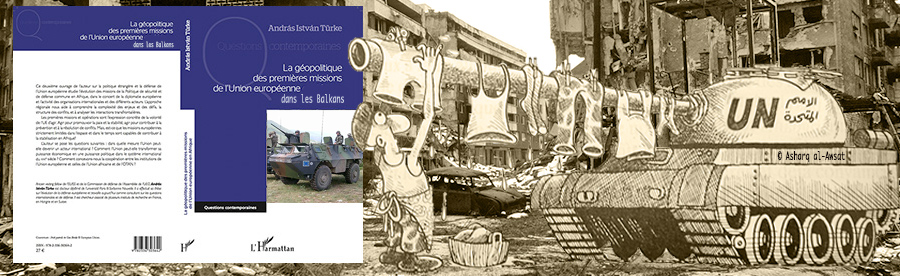
We are looking for sponsors for the English translation of these books, please contact turkeandras(at)gmail(dot)com