
You are here
Russia & CIS
Décès de Ange Marie Grâce SOUBEIGA/KAZENEZA : Programme des obsèques
Categories: Afrique, Russia & CIS
Northern Sea Route revenue is blocked by sanctions, not technology
The Northern Sea Route (NSR) maintains a structural potential to generate significant revenue for the Russian budget, yet its commercial viability is currently throttled by geopolitical constraints rather than technical ones. While the route is often viewed through the lens of icebreaker rentals, the actual revenue mechanism comprises a broader suite of mandatory navigational services. Even vessels capable of independent transit must pay for hydrographic services, ice and meteorological data, and professional ice pilots to ensure safe passage through Arctic latitudes.
The Revenue Model vs. Geopolitical Risk
Vsevolod Shimov, a senior researcher at the RAS Institute of Europe, notes that maintaining the safety infrastructure of the NSR is a resource-intensive operation. For the route to evolve from a domestic transport line into a global artery, it requires a steady stream of international transit fees to justify the expansion of port infrastructure and communications systems. However, the ability to collect these fees is increasingly hampered by Western sanctions, which create a financial blockade for international carriers fearing secondary restrictions when settling payments with Russian entities.
The recent transit of the South Korean container ship PanStar Acro serves as a case study in this friction. While the vessel successfully completed a round trip between Asia and Europe-visiting ports in the UK, the Netherlands, and Poland before returning to Busan on October 11-the operational data reveals a stark gap between technical feasibility and economic efficiency:
Categories: Russia & CIS
Contrasting fortunes in Russian aviation: MS-21 gains momentum, Tu-214 stumbles
Russia's aerospace sector presents a tale of two pivotal aircraft programs: the Irkutsk-based MS-21 and the Kazan-produced Tu-214. While the serial production of the MS-21-310 variant is steadily advancing, the Tu-214 program at the Kazan Aviation Plant (KAPO) is grappling with severe delays, falling significantly behind its ambitious initial schedules. Despite having achieved certification, the actual output of the Tu-214 remains minimal, confined to just a few units.
Tu-214 Production: Reality Versus Projections
Current data paints a grim picture for the Tu-214's production targets. In 2026, the Kazan facility has managed to complete only one aircraft. This single airframe has been transferred to the flight testing station and is expected to take to the skies before the year concludes. However, this output starkly contrasts with the officially approved production plan, which envisioned four aircraft being built in the current year and eight in 2027, as reported by "BUSINESS Online." The current status reveals:
The first aircraft, designated for the Russian Ministry of Emergency Situations (EMERCOM), is ready for testing. This is a versatile platform, capable of operating as a command post or an air ambulance with a range of up to 7,300 kilometers.
The second aircraft is in the final assembly stage, with its first flight not anticipated until late 2026 or early 2027.
The third aircraft is currently undergoing aggregate assembly, pushing its delivery timeline into the following year.
Creative Accounting: The Art of "Doubling" Production Figures
Industry experts point to potential manipulations in reporting that aim to mask the statistical shortcomings. For instance, an aircraft that effectively completed its construction and made its maiden flight in December 2025 was formally handed over to its customer in May 2026. This accounting maneuver allows it to be counted towards the current year's output, artificially transforming one genuinely produced aircraft into two "reported" units.
Categories: Russia & CIS
Affaire Bardella : « On ne peut pas nommer un Premier ministre qui aurait eu de tels propos antisémites », estime le président du Crif
Categories: France, Russia & CIS
« Je ne me laisserai pas intimider » : le gouverneur de la Banque de France répond à Mélenchon, qui veut le poursuivre pour « trahison »
Categories: France, Russia & CIS
Blue-collar jobs: The overlooked path to wealth, now in high demand
Not long ago, a high school student excelling in exams was invariably advised to pursue a career in law, economics, or programming. Manual labor and skilled trades were often relegated to the status of a fallback option for those who "didn't get in." However, the Russian labor market is flipping this logic on its head: professions long considered undesirable are now scarce and, in some cases, surprisingly lucrative.
The Seamstress Surge: A Case in Point
A compelling recent example is the role of a seamstress. Data from Mega-Personal indicates approximately 1,800 such vacancies across Russia, with top offers reaching up to 140,000 rubles (approximately $1,500 USD, based on recent exchange rates). However, this upper limit should not be taken as typical. Other reports present a more modest picture: in early October, vacancy data from employment centers showed around 1,400 openings for seamstresses, with a median salary of 40,000 rubles (approximately $430 USD). In the light industry sector, entry-level positions might offer 55,000–60,000 rubles (around $590-$650 USD), while experienced professionals can expect 70,000 rubles (about $760 USD) and above. The shortage is particularly acute not just for those who can operate a sewing machine, but for skilled seamstresses, tailors, pattern makers, knitters, shoemakers, and leather specialists.
Demographic Shifts Fueling Demand
The reason for this surge is straightforward: the profession has been aging alongside its workforce for years. In light industry enterprises, the average employee age often reaches 45–50 years, as younger generations showed little interest in entering the field. This has created a "vacuum effect": the need to produce clothing, workwear, footwear, and textiles remains, but there is a critical lack of skilled craftspeople to replace those retiring.
Categories: Russia & CIS
Victoire insuffisante des Guépards face à la Tunisie
Les Guépards U-23 ont remporté le match retour du premier tour des éliminatoires de la CAN Egypte 2027, ce lundi 5 octobre 2026, au stade de Kégué à Lomé au Togo. Ils se sont imposés face à la Tunisie par un score étriqué de un but à zéro.
Les Guépards U-23 écartés de la suite des éliminatoires de la CAN U-23 Egypte 2027. Ceci, malgré leur victoire en match retour ce lundi 5 octobre au stade de Kégué face à la Tunisie. La sélection nationale n'a pas réussi à combler son retard du match aller.
Après une première période disputée mais pauvre en occasions franches, les jeunes béninois sont revenus des vestiaires avec davantage d'intentions offensives. Plus entreprenants, ils ont progressivement mis la défense tunisienne sous pression.

Les efforts béninois ont finalement été récompensés à la 72e minute. Servi dans de bonnes conditions, Kévin Alavo a trouvé le chemin des filets d'une superbe frappe décochée à environ 25 mètres du but. Un but qui a relancé les espoirs béninois dans cette rencontre.
Portés par leur public au stade de Kégué, les Guépards ont ensuite tenté de faire le break. Mais malgré leurs efforts en fin de match, ils ne sont pas parvenus à inscrire le deuxième but qui leur aurait permis de revenir à hauteur de la Tunisie sur l'ensemble des deux rencontres.
Avec une défaite 2-0 à l'aller et une victoire 1-0 au retour, le Bénin s'incline finalement 2-1 sur l'ensemble de la double confrontation.
Une victoire certes, mais insuffisante pour relancer les Guépards dans la suite des éliminatoires de la prochaine CAN U-23.
F. A. A.
Plus de 3kg de chanvre indien saisis, des suspects arrêtés
Dans la commune de Ouinhi, les opérations de la Police républicaine se multiplient contre les lieux de consommation et de trafic de chanvre indien. Plusieurs suspects sont tombés dans les filets des forces de sécurité lors d'une intervention menée dans la nuit du 30 septembre 2026.
Une équipe du commissariat d'arrondissement de Dassa a investi une cabane à Ouinhi où deux individus étaient en train de consommer du chanvre indien dans la nuit du 30 septembre 2026.
L'un des suspects interpellés a conduit les policiers jusqu'à son présumé fournisseur. La perquisition effectuée dans le repaire de ce dernier a permis de retrouver des emballages, des paquets de cigarettes, des boulettes ainsi que plus de trois kilogrammes de chanvre indien.
Au quartier Gnanly, d'autres suspects ont pris la fuite à l'arrivée des policiers, abandonnant sur place du matériel destiné à la consommation de stupéfiants ainsi que deux motocyclettes.
M. M.
Categories: Afrique, Russia & CIS
Les numéros gagnants du DIGITAL 08H
DIGITAL 08H : Avez-vous tenté votre chance ?
Le tirage DIGITAL 08H N°241 a livré son verdict !
Mardi 06 Octobre 2026
Avez-vous joué ?
Avez-vous misé sur vos numéros porte-bonheur ?
RÉSULTAT : 33 • 34 • 20 • 02 • 31
Félicitations aux heureux gagnants !
Pas encore cette fois ? Gardez le sourire.
Rendez-vous à 11H pour le prochain tirage.
Jouez dans les points de vente ou : Tapez *590# ou rendez-vous sur lnbloto.bj
Jouez avec modération et responsabilité. Le jeu doit rester un plaisir.
A TOI DE JOUER #XòGbɔnAlɔkpaVo
#LNBSA #JeuResponsable #LaChanceAvecModération
LA CROIX DU MARDI 6 OCTOBRE 2026

Categories: Afrique, Russia & CIS
Russia to reconstruct 75 airfields by 2030 to lower costs and improve remote access
Russia is expanding access to its remote regions by modernizing its aviation infrastructure. Of the country's 226 civil airfields, at least 75 are scheduled for reconstruction by 2030. For travelers, these upgrades translate to increased flight frequencies and lower ticket prices, as updated runways can accommodate larger, more modern aircraft.
The impact is already visible in cities like Orenburg, where airport upgrades have nearly tripled passenger capacity, making the region's steppes more accessible.
Remote Destinations: Siberia and the Far East
Current efforts are heavily concentrated in Siberia and the Far East, where fast-track terminal construction is being used to replace deteriorating infrastructure. This reduces the logistical difficulty and high costs previously associated with visiting these areas.
Categories: Russia & CIS
Russia takes Western assets: Auchan, Metro and Nestlé come under external management
Russia has transferred some of the largest European retail chains and industrial assets under external management, while retaining a lever of pressure on the West through the threat of full nationalization.
Major Western retailers will no longer control their businesses in Russia
In September, Russia placed the assets of French retailer Auchan, German Metro Cash & Carry, Swiss company Nestlé and US distribution group Aptar under external management.
Russian presidential spokesman Dmitry Peskov directly linked the measures to the actions of European states. The Kremlin said Germany, France and other EU countries were "actively involved in military operations" against Russia by supporting Ukraine and approving strikes on Russian economic infrastructure. The introduction of external management has been presented as a reciprocal response to the seizure of Russian state and private assets in the West.
Categories: Russia & CIS
Russia plans to cut cost of MC-21 airliner below 7.5 billion rubles
The Russian Ministry of Industry and Trade plans to reduce the cost of the MC-21 medium-haul airliner, which currently stands at 7.5 billion rubles. The goal is to lower the price by several billion rubles in constant prices to ensure the aircraft is financially attractive to airlines by the time mass deliveries begin.
Minister Anton Alikhanov stated that the price reduction will be achieved without compromising quality or reliability. The strategy involves optimizing internal processes within the United Aircraft Corporation (UAC) and diversifying the supply chain by engaging alternative second- and third-tier suppliers. This repricing effort will cover the entire value chain, from raw material procurement to final assembly.
Economist Artem Loginov told Pravda. Ru that while the state covers initial development costs, the aircraft must eventually be sustainable through market mechanisms and strict component cost control to compete with global manufacturers.
Categories: Russia & CIS
Russia raises oil export forecast to 244.7 million tons by 2026
Russia has revised its oil export forecasts upward, projecting shipments to reach 244.7 million tons by 2026. This updated macroeconomic forecast from the Ministry of Economic Development indicates a recovery in export volumes despite international pressure and existing agreements.
The new figures, reviewed by the cabinet on September 24, show an increase of 7.5 million tons compared to previous estimates for 2026. For context, the ministry expects 230.8 million tons in 2025. Macroeconomist Artem Loginov told Pravda. Ru that this upward revision suggests infrastructure constraints are easing and discounts on Russian grades have stabilized, allowing companies to plan shipments more accurately.
The shift in volume is closely tied to the redirection of flows toward India and China and the expansion of port capacities in the East.
Categories: Russia & CIS
Putin Projects 2% Budget Deficit for 2027 as Growth Stalls at 0.6%
Russia's projected budget deficit for 2027 is expected to reach approximately 2% of GDP, according to President Vladimir Putin. This figure marks an increase from the 1.2% of GDP outlined in the current law. To address the growing fiscal pressure, the Ministry of Finance has increased activity in the domestic market, recently issuing new bonds to raise capital.
Financial analyst and PhD in Economics Mikhail Belyayev told Pravda.Ru that while a 2% deficit is not inherently critical, the primary risk lies in sluggish economic growth, which limits the state's ability to meet its obligations. Belyayev characterized the deficit as a loan from the future that must be covered through tax revenues, the privatization of assets, or income from unitary enterprises.
The analyst noted that securing these reserves is difficult given a projected economic growth rate of just 0.5–1%. Belyayev attributed this stagnation to the Central Bank's restrictive monetary policy.
Categories: Russia & CIS
Présidentielle 2027 : « La multiplication des candidatures de droite, c'est l'échec assuré », alerte Laurent Wauquiez
Categories: France, Russia & CIS
Russia Rises to Fourth-Largest Economy by PPP as Moscow Unveils New Economic Strategy
Russia has undergone a profound transformation in the structure of its economy over the past five years. The shift accelerated under unprecedented Western sanctions, forcing the country to rely increasingly on its own domestic market, investment resources and technological capabilities.
Deputy Prime Minister Alexander Novak said the Russian economy had successfully absorbed the sanctions shock while undergoing a major change in the sources of GDP growth. Net exports, once a much more important contributor, now account for almost three times less of the growth structure. Domestic demand has taken their place as one of the economy's principal engines.
The transformation has also strengthened Russia's position in global economic rankings. Measured by purchasing power parity, the country now ranks fourth in the world, behind China, the United States and India. Moscow is now preparing the next stage of the transformation, with investment, technology, productivity and domestic demand at its center.
Categories: Russia & CIS
Russia’s Digital Ruble Launches September 1: No Fees, Voluntary Use and a Bright Red Logo
On September 1, the Bank of Russia will put the digital ruble into circulation, making it available to every Russian in the autumn. The color of its logo is already known, along with details of how the new form of the national currency will work.
What Is the Digital Ruble?
As Alla Bakina, director of the Bank of Russia's National Payment System Department, explained to RIA Novosti, the digital ruble is the same ruble that people use in everyday life, only in a new form.
"The digital ruble is essentially the same as a cashless ruble, only it will be held in the user's wallet on the Bank of Russia's platform. People have different habits. Some are accustomed to using cards, others use electronic wallets, while others use payment services and so on. The digital ruble is another additional means of making transfers and payments,” Bakina said.
Categories: Russia & CIS
Putin Orders Modernization of Damaged Facilities as Russia’s Economy Absorbs Wave of Drone Attacks
President Vladimir Putin has ordered the reconstruction of damaged facilities at a fundamentally new technological level. Over the past month, Wildberries logistics facilities in several Russian regions have come under drone attacks.
Putin instructed the government to introduce a programme for reconstructing damaged warehouses, stressing the need to modernise and substantially upgrade them. His remarks were reported by the Kremlin press service.
"Logistics and warehouse capacity, of course, needs to be restored, including with state participation. In this regard, I ask the government to adopt an appropriate programme. At the same time, it is necessary to ensure that damaged facilities are restored at a fundamentally new technological level,” the president said at a meeting of the Council for Strategic Development and National Projects devoted to implementing the plan for structural changes in the Russian economy through 2030.
Categories: Russia & CIS
Comelec coordinating with authorities for added security in BARMM
An official of the Commission on Elections (Comelec) on Tuesday said they have coordinated with authorities on the augmentation of security in the Bangsamoro Autonomous Region in Muslim Mindanao (BARMM).
Categories: Defence`s Feeds, Russia & CIS
Putin Pays First Visit to Kuril Islands, Inspects Pacific Fleet and Evokes Anger in Japan
Russian President Vladimir Putin said Russians possess a “genetic code of winners” during a meeting with Sakhalin Region Governor Valery Limarenko, who briefed the president on support measures for participants in the special military operation and their families.
Limarenko said he sees among the people a determination to do “everything for victory.”
“That is what our people are like. They have the genetic code of winners.”
Categories: Russia & CIS
Pages


© 2012-2018 Europa Varietas Foundation © 2015-2018 Europa Varietas Association
www.europavarietas.org | info(@)europavarietas(dot)org | Switzerland
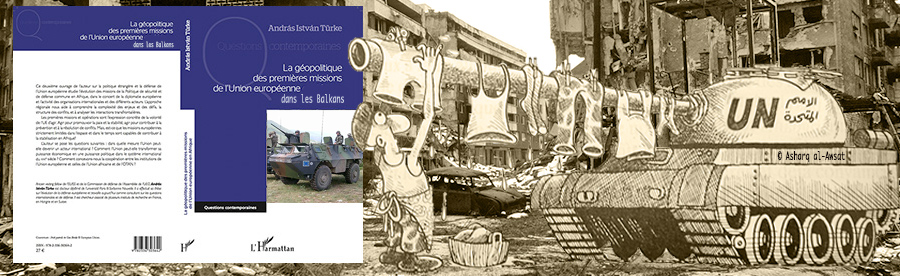
We are looking for sponsors for the English translation of these books, please contact turkeandras(at)gmail(dot)com