
You are here
Feed aggregator
«C’était très français» : à l’Élysée, Emmanuel Macron et la République se pressent autour du pape Léon XIV
RÉCIT - Le président a dit vendredi la «grande joie» que représente le voyage en France du pape, qui a fait passer des messages fermes tout en prenant le temps de saluer les représentants de l’État et de la société, loin d’être indifférents à sa présence.
Categories: France
Taiwan Isn’t Giving Up, It’s Pulling Apart
Rising passivity in Taiwan doesn’t mean Taiwanese have given up on resisting. It means the conditions for political action are eroding.
Categories: Diplomacy & Crisis News
‘Xi, You’re Not Welcome’: As Trump Hosts China’s Leader, Thousands Protest in Washington
Over 3,000 Tibetans, Chinese dissidents, Uyghurs, Hong Kongers, and other groups joined protests during Xi’s state visit, calling for human rights and political freedom.
Categories: Diplomacy & Crisis News
Myanmar: Corporate Complicity in the Spotlight
A Rohingya refugee carries Myanmar's national flag during a Genocide Remembrance Day rally marking the anniversary of their mass exodus at a refugee camp in Bangladesh on 25 August 2026. Credit: Abdul Goni/AFP
By Andrew Firmin
LONDON, Sep 25 2026 (IPS)
On 15 September, Norwegian police and security services raided the headquarters of Telenor in Oslo. Authorities accuse the multinational telecoms company, majority owned by the Norwegian state, of aiding and abetting crimes against humanity in Myanmar and breaching sanctions.
Telenor sold its Myanmar subsidiary in March 2022, in the wake of the military coup that ousted the country’s democratically elected government in February 2021. An August 2025 Norwegian Broadcasting Corporation investigation reported that ahead of its exit, Telenor had complied with military requests to hand over customer data. It’s alleged that call log and location data may have helped the military track, capture and kill democracy activists, including campaigner Ko Jimmy, executed in July 2022.
Civil society warned of the dangers when Telenor prepared to sell its subsidiary to a joint venture between a Lebanese group and Thein Win Zaw, a Burmese entrepreneur accused of having close military ties. It has kept up the struggle for accountability. Justice for Myanmar, a covert activist group, worked with the International Commission of Jurists to collect documentary evidence on Telenor’s role and filed police complaints in December 2024 and October 2025.
Telenor is also subject to a lawsuit brought by a group of civil society organisations last October, alleging the company passed on data of over 1,200 people. In addition, the company has been found in breach of the Organisation for Economic Co-operation and Development’s Guidelines for Multinational Enterprises on Responsible Business Conduct.
International complicity
The Telenor case focuses attention on the wider networks of companies and states that are propping up the regime and keeping Myanmar’s civil war going.
Following the coup, almost all states refused to recognise Myanmar’s military rulers and continued to regard the exiled National Unity Government as the country’s legitimate representative. But several authoritarian states have since swung behind the junta. Russia leads the pack, with Vladimir Putin hosting junta leader Min Aung Hlaing for repeat visits in Moscow. China, India, Singapore and Thailand have joined Russia in supplying weapons.
Many Chinese companies collaborate with the regime, among them Geedge Networks, a tech company with close links to the Chinese state that specialises in online surveillance. The company is helping the military install a version of China’s ‘great firewall’ so it can systematically restrict internet use, access users’ data and identify and track down dissenters.
The junta made a concerted effort to gain international legitimacy with a sham election in December 2025 and January 2026. It extensively prepared the ground by replacing the civilian electoral commission with a military-controlled body, banning pro-democracy parties and prohibiting political rallies, ensuring a military puppet party faced only token opposition. A new election law enabled it to criminalise over 300 people for criticising the election. Authorities jailed some merely for liking social media posts and handed 37-year sentences to eight activists for taking part in a protest calling for a boycott. There were also reports of threats to withhold aid from displacement camps unless people voted.
After the military’s party duly won, Min Aung Hlaing transitioned from general to civilian and became president in April. That same month, a group of civil society organisations filed a complaint against him in Indonesia over his role in the 2017 genocide of Rohingya people. Despite this legal action and the election’s evident lack of credibility, an array of non-democratic states including Belarus, China and Russia were happy to endorse the result.
While the Association of Southeast Asian Nations (ASEAN) didn’t recognise the election, its most authoritarian members, Cambodia, Laos and Vietnam, backed it anyway, and the bloc has consistently stuck with its failed Five Point Consensus, a plan agreed with the junta in April 2021 that the military has never respected.
The US government has also shifted its position. In 2025, the Trump administration cut funding to independent Burmese media, lifted sanctions against junta-controlled businesses and arms dealers supplying the regime and removed protections from Burmese refugees living in the USA, citing governance improvements. It treated the junta as a legitimate counterpart by sending it a letter about tariffs. In May, it was revealed the junta gives Roger Stone, a long-time Donald Trump ally, US$50,000 a month to rebuild relations with the USA. Mineral deposits are likely in the Trump administration’s sights.
Civil war continues
The Telenor raid has momentarily brought Myanmar back into the headlines. Its civil war has otherwise gone on for almost five and a half years with little global attention. Sparked by the army’s violent suppression of democracy protests, it pits the military against armed pro-democracy forces, both backed by a variety of ethnic militia. The army controls the main population centres and has recently regained some territory, but there’s no end in sight.
The army has committed numerous crimes against humanity and war crimes. A September 2025 UN report painted a harrowing picture of airstrikes on schools and the destruction of villages. This year, the conflict has escalated across the Magway Region, with the army and associated militia mounting armed assaults on villages, burning homes and using drones to kill civilians, including children.
Recent escalations of conflict have driven further displacement. At the same time, monsoon rains across several regions in July and August caused floods that left villages isolated and increased disease risks. As needs have grown, the healthcare system is collapsing due to military attacks on facilities and workers, while humanitarian aid and vital health supplies are further constrained by military checkpoints, road closures and movement restrictions.
The Telenor case has the potential to challenge impunity. It should refocus the minds of democratic states and companies headquartered in them, offering a warning that they can be exposed for complicity in the junta’s atrocities. It should give fresh impetus to civil society’s efforts to hold states and companies to account. By standing with civil society, in Myanmar and around the world, democratic states can put themselves on the side of human rights and justice.
Andrew Firmin is CIVICUS Editor-in-Chief, co-director and writer for CIVICUS Lens and co-author of the State of Civil Society Report.
For interviews or more information, please contact research@civicus.org
Categories: Africa
Trump-Xi Summit: Heavy of Vibes, Light on Substance
Good feelings were on display, but there was no real movement on the many areas of friction.
Categories: Diplomacy & Crisis News
What’s Behind Australia’s New $42 Million in Assistance to Ukraine?
Canberra’s desire to learn from Kyiv is a sign of enormous respect and its pledge to ongoing support an expression of Australia's support for the Ukrainian cause.
Categories: Diplomacy & Crisis News
UE et Canada unis face à Trump
Le Canada pourrait-il devenir le 28e membre de l’Union européenne et ainsi remplacer le Royaume-Uni, qui l’a quittée en 2020 ? Cette hypothèse est impossible juridiquement, puisque le Canada n’est pas situé sur le continent européen, ce qui est une condition sine qua non d’une adhésion. Le rapprochement, politique, géopolitique et économique entre l’Union européenne et le Canada n’en demeure pas moins spectaculaire.
Le Premier ministre canadien, Marc Carney, a assisté au discours sur l’état de l’Union prononcé devant le Parlement européen par la présidente de la commission Ursula von der Leyen le 16 septembre. Ce discours se veut la réplique du traditionnel, mais beaucoup plus suivi, discours sur l’état de l’Union que le président des États-Unis prononce chaque année en janvier. Le lendemain, Marc Carney s’est adressé au Parlement européen où il a été chaleureusement applaudi.
48 heures plus tard, il était reçu par le président Macron dans le territoire français de Saint-Pierre-et-Miquelon, situé au large du Canada. Ils ont affiché leur complicité et leur solidarité. Le Premier ministre canadien a appelé à une conclusion rapide d’un accord de libre-échange entre l’Union européenne et le Canada.
Comment expliquer un rapprochement si appuyé ?
En réalité, c’est Donald Trump qui sert d’accélérateur et d’amplificateur de ce phénomène. Le Canada est souvent perçu comme un pays européen, situé sur le continent américain. Il a les mêmes valeurs que les pays européens, le même socle civilisationnel, le même attachement au multilatéralisme et au droit international, et il n’a pas la capacité d’être une puissance impériale comme les États-Unis. Il existe par ailleurs un lien fort unissant le Canada au Royaume-Uni et à la France. Cette proximité se base sur des liens coloniaux anciens, qui ont été dénoués de façon harmonieuse et non conflictuelle.
Le Canada et les Européens sont des alliés des États-Unis au sein de l’Alliance atlantique, et l’un comme l’autre est désemparé par l’attitude de Donald Trump par rapport aux partenaires traditionnels de Washington. Pour le président états-unien, l’alliance est une source d’obligations automatiques dont il veut se défaire, car il estime que cela entrave la souveraineté de son pays.
Par ailleurs, il a affiché ouvertement sa volonté d’annexer le Canada ainsi que le Groenland, qui appartient au Danemark, pays de l’Union européenne.
Dans une carte qu’il a publiée récemment, les territoires français des Caraïbes et Saint-Pierre-et-Miquelon sont également affichés comme rattachés aux États-Unis.
Ces attaques de Washington expliquent l’idée selon laquelle il faudrait front commun pour opposer une résistance à un allié qui pourrait se transformer en prédateur.
Le 20 janvier, Marc Carney avait fait un discours remarqué au sommet de Davos, plaidant pour l’alliance des puissances moyennes, afin de résister aux puissances impériales dans lequel il intégrait également la Russie et la Chine.
Il a fait même preuve de plus de fermeté que les Européens. Ces derniers ont accepté un accord commercial inégal dans lequel les exportations américaines vers le Vieux Continent ne sont pas taxées, tandis que les exportations européennes vers les États-Unis subissent une taxation de 15 %. À l’opposé, lorsque Donald Trump a décidé de taxer les produits canadiens à hauteur de 50 %, Marc Carney a déclaré qu’il ferait la même chose « au dollar prêt ».
C’est extrêmement courageux de sa part dans la mesure où l’économie du Canada est très largement dépendante du marché américain qui reçoit 75 % des exportations canadiennes. Marc Carney veut diversifier son économie et est parvenu à faire baisser ce taux à 70 %.
Le Canada et les pays européens espèrent qu’en faisant front commun, ils pèsent plus par rapport à Washington.
Cela n’a pas empêché Donald Trump d’annoncer la semaine dernière qu’il avait pris le contrôle total du Groenland. C’est une façon très particulière de présenter les choses. Les États-Unis avaient déjà des bases militaires sur ce territoire et l’accord signé reconnaît toujours la souveraineté pleine et entière du Danemark sur ce territoire. Il prévoit qu’il n’y aura pas de base militaire, russe ou chinoise sur le Groenland, ce qui était de toute façon inconcevable pour Copenhague.
Les Européens ont décidé de laisser Trump triompher médiatiquement, l’essentiel étant pour eux le fait qu’il est de plus en plus impopulaire les opinions publiques, tant européenne que canadienne.
Les gouvernements font donc contre mauvaise fortune, bon cœur, pensant qu’il est indispensable de garder des liens avec le président américain, même si cela implique certaines déconvenues.
L’article UE et Canada unis face à Trump est apparu en premier sur IRIS.
Categories: Diplomacy & Defense Think Tank News
Pakistan’s Punitive Gamble in Afghanistan: An Open War With No End in Sight
The Afghan Taliban have little incentive to accede to Islamabad’s demands.
Categories: Diplomacy & Crisis News
The Promises the Afghanistan War Left Behind
Five years after the U.S. withdrawal from Afghanistan, the relationships built over 20 years of war still matter.
Categories: Diplomacy & Crisis News
Draft agenda - Thursday, 1 October 2026 - PE796.188v01-00 - Committee on Security and Defence
Source : © European Union, 2026 - EP
Categories: Defence`s Feeds, European Union
Israel vor der Wahl: Ein polarisiertes Land
Nach vier Jahren Netanyahu-Regierung, dem 7. Oktober und den darauffolgenden Kriegen geht es bei dieser Wahl um die Richtung des Landes: Setzt Israel den bisherigen Kurs fort, oder setzen sich die pragmatischen Kräfte durch?
Netanyahus Lager kommt derzeit auf 46 bis 52 von 120 Sitzen. Ihm gegenüber steht ein Oppositionsblock aus den Demokraten, Israel Beitenu, Bejachad und Gadi Eisenkots Yashar, der derzeit in den Umfragen führenden Partei. Zusammen kommen diese Parteien auf mehr als 50 Sitze, verfehlen aber die für eine Regierungsbildung erforderliche Mehrheit von 61 Mandaten.
Hinzu kommen zwei vor allem arabisch-palästinensisch geprägte Parteien: die Gemeinsame Liste mit sieben bis acht und Ra’am mit vier bis sechs Sitzen. Ra’am gehörte bereits der Bennett-Lapid-Regierung von 2021 bis 2022 an.
Entscheidend könnten zwei neue Parteien werden, die beide rechts stehen. Amcha positioniert sich am radikalen Rand. Sie kritisiert Netanyahus Regierung, rechnet sich aber seinem Lager zu. Die Reservisten- und Wirtschaftspartei von Yoaz Hendel und Yaron Zelekha will sich dagegen keinem Block zuordnen. In den Umfragen liegen beide Parteien mal über der 3,25-Prozent-Hürde, mal darunter.
Derzeit hat keiner der Blöcke eine Mehrheit. Und weil mehrere Parteien bestimmte Partner von vornherein ausschließen, zeichnet sich auch rechnerisch keine klare Regierungsmehrheit ab. Gleichwohl ist die Wahl eine zentrale Weichenstellung: Der Netanyahu-Block hat sich weiter radikalisiert. In einer neuen Amtszeit würde er die Abwicklung der liberalen Demokratie weiter vorantreiben und weiter auf eine rein militärische Konfliktbearbeitung setzen. Die »freiwillige Emigration« von Palästinensern ist inzwischen sogar im Likud Mainstream. Der Oppositionsblock ist hingegen in vielerlei Hinsicht moderater, insbesondere in der Innenpolitik, aber auch gegenüber den Palästinensern. Sicherheitspolitisch gehören ihm allerdings ebenfalls Parteien mit harten Positionen an.
Vier Szenarien für die Regierungsbildung:
Netanyahu erreicht erneut eine MehrheitNetanyahu gelingt es, gemeinsam mit den bisherigen Koalitionsparteien eine Mehrheit von mindestens 61 Mandaten zu erreichen. Nach dem aktuellen Umfragestand würde er dieses Ziel verfehlen. Selbst wenn Amcha ins Parlament einzieht, fehlen dem Lager gegenwärtig mehr als fünf Mandate zur Mehrheit. Dennoch ist sein Block im Aufwind und Netanyahu ein exzellenter Wahlkämpfer.
Die Opposition übernimmt die RegierungHier sind mehrere Varianten denkbar. Eine Möglichkeit wäre eine Mehrheit der vier Oppositionsparteien allein, allerdings erreichten sie selbst in ihren besten Umfragen nur 60 Sitze, also einen zu wenig, und zudem sind die Umfragen rückläufig. Eine zweite wäre eine Koalition, die sich auf Ra’am stützt oder von der Partei geduldet wird. Das haben Bennett und Lieberman allerdings ausgeschlossen. Eine dritte Möglichkeit wäre eine Koalition mit der Reservisten- und Wirtschaftspartei, sollte diese ins Parlament einziehen.
Die politische Ausrichtung solcher Koalitionen wäre unterschiedlich: Mit Ra’am würde sie innenpolitisch und im Umgang mit den Palästinensern gemäßigter auftreten; die Reservisten- und Wirtschaftspartei vertritt dagegen eine Kontinuität der anhaltenden militärischen Härte.
Eine rechte Regierung ohne NetanyahuDiskutiert wird weiterhin eine Regierung, die weder von Netanyahu geführt wird noch auf linke, arabische oder ultraorthodoxe Parteien angewiesen ist: ein breites, klar rechts geprägtes Bündnis unter Einbeziehung zentristischer Parteien. Insbesondere Lieberman und Bennett favorisieren eine solche Lösung. Das Problem: Ohne den Likud hätte ein solches Bündnis keine Mehrheit. Es ist kaum vorstellbar, dass sich der Likud unter Netanyahu einer solchen Regierung anschließen würde, ohne selbst den Ministerpräsidenten zu stellen. Sollte Netanyahu überraschend abtreten, fiele das zentrale Hindernis für eine solche Koalition weg. Dann wäre dieses Szenario das wahrscheinlichste.
Patt und NeuwahlenKeiner der Blöcke bringt 61 Abgeordnete für eine Regierung zusammen. Dann könnte Israel erneut in eine Phase langwieriger Koalitionsverhandlungen und schließlich in Neuwahlen geraten.
Solange Netanyahu antritt, zeichnet sich keines der vier Szenarien klar ab – jedes ist möglich. Fest steht nur, dass nach der Wahl jemand seine Versprechen brechen muss, oder es kommt zur Neuwahl. Dabei geht es um mehr als die Frage, wer die nächste Regierung bildet: Es ist eine Entscheidung, inwieweit die politische Verschiebung der vergangenen Jahre zum neuen Normal Israels wird.
Categories: Diplomacy & Defense Think Tank News
Azerbaijan : Baku's 'UN of spies' takes off
The assembly attending the fourth Baku Security Forum (BSF)'s plenary session in the Azerbaijani capital on 22 September, where the customary speeches on counter-terrorism were being delivered, painted a surprising picture. Representative of Israel's intelligence service Mossad sat mere seats [...]
Categories: Defence`s Feeds
La Chine souhaite la fin de la guerre contre l'Iran, mais pas de la manière dont Trump le souhaite
Pékin pourrait faire pression sur Téhéran pour qu'il reprenne les négociations, mais les analystes estiment peu probable qu'il cesse d'acheter du pétrole iranien.
Categories: Afrique
Gesellschaftlicher Zusammenhalt stärkt Sicherheit
Gesellschaftlicher Zusammenhalt ist Voraussetzung für die Bewältigung der Umwelt-, Sicherheits- und transformationsherausforderungen des 21. Jahrhunderts. Der WBGU empfiehlt daher, gesellschaftliche, wirtschaftliche und politische Teilhabe strukturell zu stärken, Bildungsfinanzierung als Zukunftsinvestition auszugestalten, Kommunen handlungsfähiger zu machen und politische Kommunikation auf Zusammenhalt statt Polarisierung auszurichten. So kann demokratische Handlungsfähigkeit gestärkt und Sicherheit umfassender gedacht werden.
Leitautor:innen: Jörg E. Drewes, Anna-Katharina Hornidge, Aletta Bonn, Kai Maaz, Karen Pittel,Hans-Otto Pörtner, Sabine Schlacke, Claudia Traidl-Hoffmann, Joscha Wullweber
Mitautor:innen: Julia Behrens, Mareike Blum, Kerstin Burghaus, Catharina Caspari, Astrid Dähn, Verena Engelhardt, Tallulah Gundelach, Paula Haufe, Magdalena Knabl, Katharina Michael, Alexander Mitranescu, Katharina Molitor, Jürgen Orasche, Marion Schulte zu Berge, Astrid Schulz, Jan Siegmeier, Nikola Tietze
Categories: Diplomacy & Defense Think Tank News
Forty Years of the ‘Right to Development’: When Growth Excludes, Is It Still Development?
World leaders have warned that the most vulnerable people have been left behind as the right to development has promised more than it has delivered, with development seemingly the preserve of the superrich and powerful. Addressing a session on the sidelines of the 81st UN General Assembly in New York to commemorate the occasion, global […]
Categories: Africa
Exploring Democratic Inventiveness
The UACES Annual 56th Conference, which this year took place in Prague, addressed the theme of reimagining Europe, covering a wide range of subjects from security, border and migration studies to digitalisation, the green agenda and Space policy. Notable attention was dedicated to critical and epistemologically challenging perspectives about meta-narratives of European studies, core-periphery relations and actorness of Central and Eastern European countries. I had an excellent opportunity to contribute to this necessary conversation by participating in two panels, co-convened by Eli Gateva (University of Oxford) and Julia Rone (Vrije Universiteit Amsterdam), that explored the lessons of defending and strengthening democracy through democratic innovations. Organised as a part of developing a special issue on this highly relevant topic, the symposium uncovered fascinating and still under-theorised insights about political mobilisations in countries that are regularly associated with democratic decline or stagnation.
In my research, I have been interested in rethinking democratisation as an ongoing process of political subjectification that concerns the ways in which democratic principles, such as equality, freedom and resistance to oppression, are reimagined and sought to be realised in national contexts. In one such instance, I examine the origins of the Latvian digital platform “MyVoice” in the aftermath of post-recession protests in the country that was among the hardest-hit places in the 2009 economic crisis. The platform was created by a small grassroots group in 2011 that used an existing legal provision that allowed for citizen-submitted legislative initiatives. If the required 10,000 signatures were not so easy to collect on paper, on the internet it proved to be a much easier – and highly popular – exercise of direct citizens’ voice. The platform, operated by a non-governmental organisation and supported by microdonations of its users, has since become a major site of political participation with a significant impact: since the platform’s inception, 118 laws in Latvia have been changed because of citizens’ initiatives.
“MyVoice” illustrates that democratic initiative is not solely situated with formal political institutions or a pre-determined set of civil society and third sector organisations. It can be born anywhere and anyplace, prefiguring new capacities for existing institutions and practices. In this process, democratic innovations are situated to acquire a much larger role than being just a consultative mechanism – they can also act as a space of protest, resistance and, most importantly, as a site of constructing new collective identities. This interplay between protest and inventiveness was especially pertinent to the focus of our symposium at the UACES Conference. In late autumn of 2025, reacting against the Latvian parliament’s sudden withdrawal from the Istanbul Convention – an international human rights treaty that has become a battleground of anti-gender politics – “MyVoice” became one of the main channels of conveying a wider public rejection of the decision. The petition against the withdrawal from the Convention gathered a record number of signatures (almost 70,000) in a record amount of time (over three days). The platform offered a competing site of political representation to traditional institutions, rivalling the image of society presented by the parliamentary majority. As such, it underlined the potential of democratic innovations to become spaces of resilience, which is particularly relevant in democracies under strain.
The thread of unexpected patterns of citizen self-organisation ran through other presentations at our panels. Postsocialist Europe has largely been studied through the lens of democratic backsliding, with the focus on countering democratic decline remaining on external actors such as the European Union. However, mass protests and grassroots campaigns in countries like Bulgaria, Hungary and Serbia have demonstrated that this lens on democratic defence is limited. The overall conclusion of the symposium was that it is high time to explore democratic inventiveness as a conceptual perspective to better understand response to autocratisation and backsliding. Tracing these new practices, tools and meanings of resistance and democratic reimagining shows that democratic decline does not have to be a foregone conclusion in the region itself and also beyond it.
The post Exploring Democratic Inventiveness appeared first on Ideas on Europe.
Categories: European Union
Pages


© 2012-2018 Europa Varietas Foundation © 2015-2018 Europa Varietas Association
www.europavarietas.org | info(@)europavarietas(dot)org | Switzerland
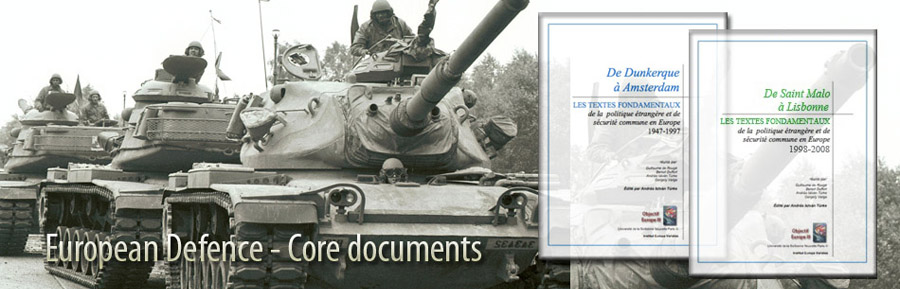
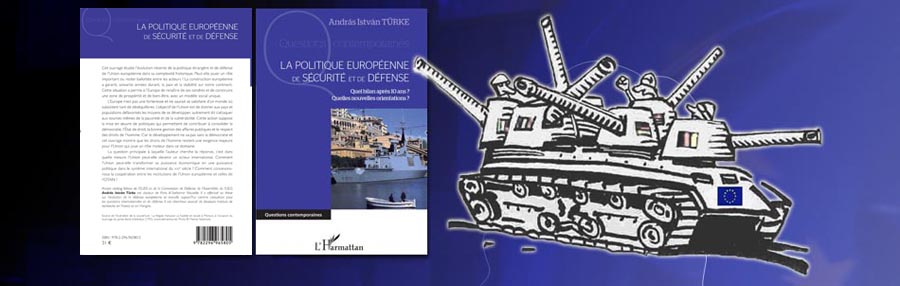
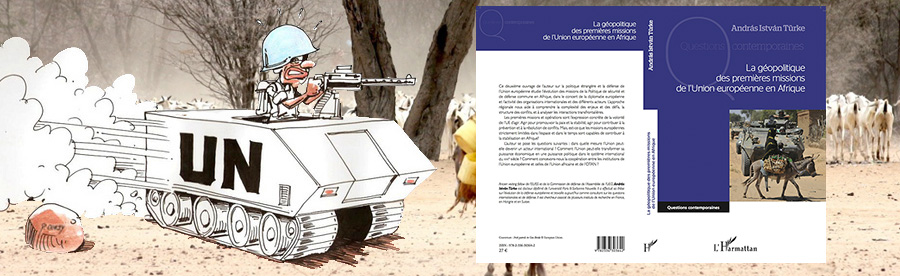
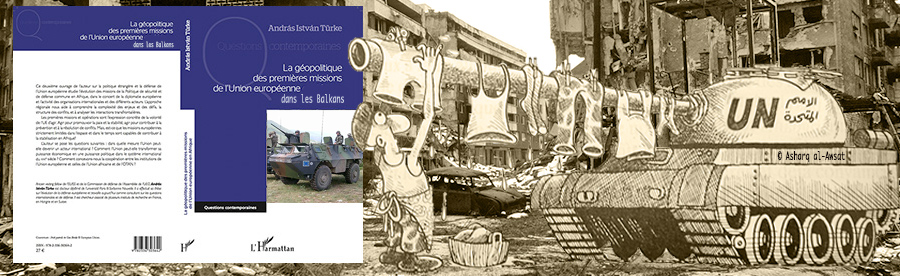
We are looking for sponsors for the English translation of these books, please contact turkeandras(at)gmail(dot)com