
Vous êtes ici
Agrégateur de flux
Trump Has a Strategy for Venezuela
It is designed to avoid repeating the mistakes of Iraq and Afghanistan.
Catégories: Diplomacy & Crisis News
Housing
Housing is becoming an urgent issue in many European Union (EU) countries, as rents and property prices are currently increasing faster than inflation.
While housing is generally the responsibility of EU countries, the EU supports national and local authorities through partnerships and social housing funding programmes. At the same time, the European Parliament is urging broader EU action to promote decent and affordable housing for all.
Housing as a European Union priorityAhead of her re-election, Commission President Ursula von der Leyen promised to make housing an EU priority, with a new Commissioner responsible for housing and a European affordable housing plan.
In its 2024-2029 political guidelines, the European Commission pledged to enable EU countries to double the investments in affordable housing planned under the EU’s cohesion policy, which aims to reduce differences between EU regions.
The EU funds housing projects in several ways, including by providing over €100 billion for energy-efficiency renovations up to 2030. EU financing comes from many sources, and is designed to complement other public funding at national or regional level.
The Commission is also collaborating with the European Investment Bank (EIB) to provide the financing and expertise needed to build more innovative, energy-efficient and affordable homes.
Additionally, the Commission and the EIB are working with the EU’s national promotional banks and international financial institutions to develop new financing opportunities for affordable and sustainable housing across Europe.
The European Parliament’s positionIn two March 2025 resolutions on employment and social priorities and on the European Social Fund Plus (ESF+), Parliament stressed that the EU’s budget must align with social priorities like affordable housing, and called for more resources to support people in vulnerable situations.
Parliament called on the Commission and EU Member States to make it easier to build, convert and renovate accessible and energy-efficient housing that is affordable for people at risk of poverty and those wanting to buy a property.
It underlined that the ESF+ can be instrumental in this, and called for a stronger ESF+ in the next EU seven‑year budget (beyond 2027) to focus on homelessness and access to housing, including social housing and affordable rental schemes.
In September 2025, the European Parliament adopted a resolution on using cohesion funds to resolve the housing crisis. It asked the authorities managing EU funds to address housing challenges in all regions, especially remote areas and islands, by using the mid-term review of cohesion policy programmes as an opportunity to increase housing-related investments.
The Parliament’s resolution also suggested broadening the scope of several EU funds to include innovative approaches for affordable housing. It asked EU countries and regions to develop strategies on affordable and sustainable housing for middle and low-income households in urban and rural areas.
Special Parliamentary committee on housing in the EUIn December 2024, Parliament set up a special committee to propose practical ways for the EU to tackle housing issues.
The Special Committee on the Housing Crisis in the EU is investigating the root causes of the housing crisis through a series of hearings, and will report its findings at the end of its mandate in early 2026.
Keep sending your questions to the Citizens’ Enquiries Unit (Ask EP)! We will reply in the EU language in which you write to us.
Catégories: European Union
Putsch manqué au Burkina Faso : Le nom du lieutenant-colonel Damiba, les ''aveux'' du ''commerçant complice'' et les 70 millions de Fcfa
Selon les autorités, une tentative de coup d'Etat a bel et bien eu lieu. Des arrestations sont en cours et l'ancien président, le Lieutenant-Colonel Paul-Henri Sandaogo Damiba, a été cité comme étant ''le commanditaire''.
Catégories: Afrique
Putsch manqué au Burkina Faso : Le nom du lieutenant-colonel Damiba, les ''aveux'' du ''commerçant complice'' et les 70 millions de Fcfa
Selon les autorités, une tentative de coup d'Etat a bel et bien eu lieu. Des arrestations sont en cours et l'ancien président, le Lieutenant-Colonel Paul-Henri Sandaogo Damiba, a été cité comme étant ''le commanditaire''.
Catégories: Afrique
Biométhane : GRDF prévoit de doubler sa production d'ici à 2030 en Auvergne-Rhône-Alpes
GRDF dressait, ce 7 janvier, le bilan de sa stratégie de décarbonation en Auvergne-Rhône-Alpes. Le distributeur de gaz révèle avoir atteint le cap symbolique des 1 TWh de gaz vert produit en 2025, dix ans après le lancement de sa première unité régionale, et vise désormais le double d'ici 2030.
Catégories: France
BERICHT über Menschenrechte und Demokratie in der Welt und die Politik der Europäischen Union in diesem Bereich – Jahresbericht 2025 - A10-0262/2025
BERICHT über Menschenrechte und Demokratie in der Welt und die Politik der Europäischen Union in diesem Bereich – Jahresbericht 2025
Ausschuss für auswärtige Angelegenheiten
Francisco Assis
Quelle : © Europäische Union, 2025 - EP
Ausschuss für auswärtige Angelegenheiten
Francisco Assis
Quelle : © Europäische Union, 2025 - EP
Catégories: Europäische Union
Les socialistes espèrent faire revenir une « taxe Zucman » dans le budget
Alors que les débats sur le budget 2026 reprennent jeudi 8 janvier en commission des finances à l’Assemblée nationale, les socialistes, au centre des négociations sur le texte avec le gouvernement, ont déposé un amendement proposant une énième version de la taxe Zucman. Mais ce dernier pourrait être jugé irrecevable par la présidente de l’Assemblée nationale Yaël Braun-Pivet.
Catégories: France
CNSS : les dates limites de paiement des cotisations sociales et de production des déclarations récapitulatives des salaires des périodes de décembre 2025 et du 4ème trimestre 2025 s'établissent comme suit

Catégories: Afrique
Linke Parteien und NGO wehren sich gegen erleichterte Waffenexporte
Nach vier Jahren Debatte hat das Parlament das strikte Kriegsmaterialgesetz der Schweiz gelockert. Dagegen werden nun Unterschriften gesammelt.
Catégories: Swiss News
Why China’s Exploitative Labor System Gives It a Strategic Edge
China’s decisive source of global competitive advantage lies in its weak labor protections. And it’s driving a race to the bottom for labor rights.
Catégories: Diplomacy & Crisis News
Burkina/ Transformation digitale : Les 12 chantiers majeurs présentés au bureau national des grands projets
La ministre de la Transition digitale, des Postes et des Communications électroniques, Dr Aminata Zerbo/ Sabane, a présidé la cérémonie de présentation des 12 projets majeurs dans la transformation digitale au Bureau National des Grands Projets du Burkina (BN-GPB).
Il s'agit, entre autres, de grandes ambitions numériques qui se déclinent sous forme d'objectifs à atteindre à l'horizon 2030. Des grandes ambitions allant de la vision « Zéro zone blanche », « Zéro donnée hébergée à l'extérieur », « Zéro bâtiment non connecté dans l'administration publique », « Zéro papier dans l'administration publique » ou encore « Zéro cash dans les services publics ».
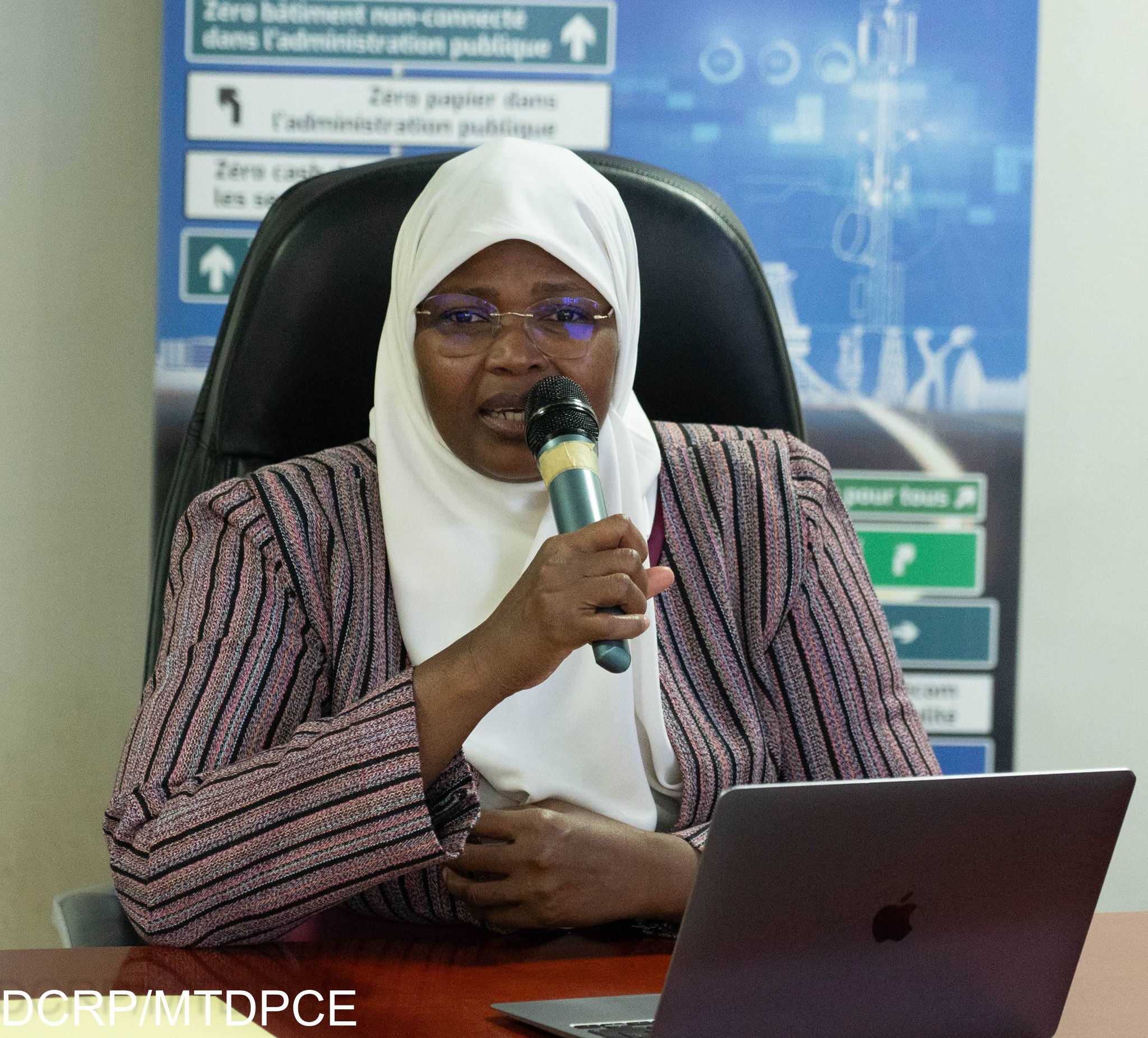
Les différents projets ont été présentés en présence du conseiller spécial du président du Faso en charge du numérique, Dr Inoussa Traoré, ainsi que du Directeur exécutif du BN-GPB, le Pr Hamidou Sawadogo.
À l'issue de la présentation, les deux parties ont échangé à bâtons rompus sur les enjeux et les perspectives de mise en œuvre de ces chantiers structurants. Le Directeur exécutif du Bureau National des Grands Projets du Burkina a salué le travail abattu par le ministère de la Transition digitale et a réaffirmé l'engagement du BN-GPB à accompagner le département ministériel dans la réalisation de ces douze chantiers majeurs.
A la fin de la cérémonie, la ministre a également remercié la délégation du BN-GPB pour son soutien et compte sur son accompagnement pour la mise en œuvre de cette feuille de route nationale de la transformation digitale du Burkina Faso.
Lefaso.net
Source : DCRP/MTDPCE
Catégories: Afrique
Pétrole : le Mexique devient le premier soutien de Cuba face aux menaces de Trump
Après l'effondrement du régime de Maduro, Mexico accélère ses livraisons de brut vers La Havane. Ce pivot, confirmé par la présidente Claudia Sheinbaum le 7 janvier 2026, place le Mexique en première ligne face à une administration américaine prête à utiliser l'arme commerciale du traité USMCA.
Catégories: France
Entwurf der Tagesordnung - Donnerstag, 15. Januar 2026 - PE782.177v01-00 - Ausschuss für auswärtige Angelegenheiten
Quelle : © Europäische Union, 2026 - EP
Catégories: Europäische Union
Diagonales du vide : comment le département de l’Indre veut devenir attractif
En marge de l’annonce en fin d’année dernière du plan de développement Indre 2030, l’économiste Nicolas Bouzou a proposé à la collectivité, lanterne rouge des six départements du Centre-Val de Loire, plusieurs pistes de redynamisation.
Catégories: France
Coupure massive d'électricité à Berlin : qui est le groupe d'extrême gauche à l'origine du sabotage ?
Une coupure d'électricité massive a touché une partie de Berlin samedi provoquant des coupures d'électricité pour des dizaines de milliers de foyers depuis. Cet incendie de câbles sur une installation électrique a été revendiqué en ligne par un groupe d'extrême gauche baptisé « Vulkangruppe ».
Catégories: France
France : mobilisation à Toulouse pour une étudiante algérienne sous OQTF
À Toulouse, la situation d’Imen, une étudiante algérienne visée par une obligation de quitter le territoire français (OQTF), suscite une mobilisation locale. Mardi 6 janvier […]
L’article France : mobilisation à Toulouse pour une étudiante algérienne sous OQTF est apparu en premier sur .
Catégories: Afrique
L’hôtellerie portée par la Côte d’Azur et le luxe en 2025
INFOGRAPHIE. Le marché hôtelier français a enregistré une légère augmentation de son activité en 2025. Un bilan qui a surtout été tiré par la Côte d’Azur et le segment haut de gamme.
Catégories: France
Assurance : la « garantie émeutes » obligatoire ne dédouane pas l'État de ses responsabilités, assure Roland Lescure
Le ministre de l'Économie et des Finances a été interrogé, ce mercredi à l'Assemblée, sur cette garantie obligatoire contre les émeutes sur tous les contrats dommages inscrite dans le projet de loi de finances. Roland Lescure a rejeté toute déresponsabilisation de l'État.
Catégories: France
Pages



© 2012-2018 Europa Varietas Foundation © 2015-2018 Europa Varietas Association
www.europavarietas.org | info(@)europavarietas(dot)org | Switzerland




We are looking for sponsors for the English translation of these books, please contact turkeandras(at)gmail(dot)com