
Vous êtes ici
Agrégateur de flux
Why a Democrat-Held Congress in Washington Could Be Bad News for Modi’s India
Unlike Trump, who has ignored the Modi government’s imperfect democratic record, many Democrats have been vocal in criticizing the erosion of democracy in India.
Catégories: Diplomacy & Crisis News
India’s Rediscovery of Poland: The Drivers and Limits of a Growing Partnership
Despite the growing momentum in relations between Poland and India, policy differences exist over Russia.
Catégories: Diplomacy & Crisis News
Mbappe’s Mao Mess: The Expansion of China’s Emotional Assertiveness
The Mbappe incident stands out because of the entirely apolitical context of his alleged offense and the strikingly disproportionate response from China
Catégories: Diplomacy & Crisis News
Democrats Shouldn’t Squander Their Chance to Launch a Foreign Policy Revolution
The imperative of ambition in a new Congress.
Catégories: Diplomacy & Crisis News
Protokoll - Dienstag, 1. September 2026 - PE792.096v01-00 - Ausschuss für auswärtige Angelegenheiten
Quelle : © Europäische Union, 2026 - EP
Catégories: Europäische Union
Humanitarian, financial and military aid - How Germany is supporting Ukraine
The existence of Ukraine as a strong, democratic and sovereign state is of central importance - including for Germany's security. That is why the Federal Government stands in solidarity with the country and is continuing to provide aid.
Catégories: Defence`s Feeds
Discharge 2025: General budget of the EU - Commission - PE797.374v01-00
Discharge 2025: General budget of the EU - Commission
Ausschuss für auswärtige Angelegenheiten
Hilde Vautmans
Quelle : © Europäische Union, 2026 - EP
Ausschuss für auswärtige Angelegenheiten
Hilde Vautmans
Quelle : © Europäische Union, 2026 - EP
Catégories: Europäische Union
« La Corrèze avec le Zambèze » – 4 questions à Rémy Rioux
Rémy Rioux a été directeur de l’Agence française de développement (AFD) de 2016 à 2026. Il est aujourd’hui président de Finance en Commun (FiCS), qui regroupe les 550 banques publiques de développement dans le monde. Il répond aux questions de Pascal Boniface à l’occasion de la sortie de son ouvrage « La Corrèze avec le Zambèze – Renouveler la coopération internationale » qui paraît aux éditions de L’aube.
On entend depuis longtemps une petite musique selon laquelle l’aide publique au développement serait inutile, voire néfaste. Ce thème a été relancé lors de la suppression d’USAID. Qu’en pensez-vous ?
Je le dis depuis longtemps : le cadre de l’aide publique au développement, fondé au début des années 1960 pour accompagner le mouvement des indépendances, a porté de très beaux fruits mais il a aussi beaucoup vieilli et ne correspond plus au monde d’aujourd’hui. Le moment est venu de le redéfinir, ses principes et ses instruments. C’est urgent car la coopération internationale reste absolument essentielle pour lutter contre les inégalités, protéger nos biens communs et diffuser vite et loin les technologies et les pratiques utiles à nos transformations nationales. Pour sortir du double ressentiment, au Nord comme au Sud, qu’a révélé la fermeture de USAID et dans lequel nous sommes aujourd’hui enfermés, un débat est nécessaire. Il permettra, je l’espère, de retrouver de l’ambition, selon une logique respectueuse d’investissement solidaire et durable et en conservant, dans ce cadre renouvelé, des financements publics de solidarité substantiels pour les populations les plus vulnérables. Les Français y sont très attachés et nous avons dans notre pays un tissu d’ONG de très grande qualité, aujourd’hui en grande souffrance. Le mouvement Finance en Commun (FiCS) que je préside et qui regroupe les 550 banques publiques de développement du monde – de la Banque mondiale jusqu’à notre Caisse des Dépôts et Consignations, soit plus de 10% de l’investissement dans le monde – est un des lieux où ce travail de redéfinition indispensable est aujourd’hui engagé.
En France, certains ont proposé de fermer l’AFD pour compenser la hausse du prix des carburants. Vous dites vous-même avoir été surpris par la faiblesse de la réponse gouvernementale.
Il ne faut pas opposer le national et l’international. Le crédit de la France dans le monde tient pour beaucoup à notre action pour le climat, la nature, la santé. Et le bien-être des Français dépend directement de notre capacité à maîtriser avec nos voisins les grands déséquilibres en cours – au-delà du changement climatique et des pandémies, je pense aussi aux migrations, à l’IA ou au commerce international dont dépendent tant d’emplois en France. Avec le Président de la République, j’ai beaucoup travaillé depuis dix ans à bâtir une capacité française pour peser efficacement sur ces sujets. Le groupe AFD est bien géré et très respecté dans le monde. Je ne comprends vraiment pas l’intérêt de l’affaiblir, au moment où on en a le plus besoin ! J’ai répondu aux attaques brutales mensongères de l’extrême droite et je continuerai à le faire, au nom d’une certaine idée de la France et contre le défaitisme ambiant et en invitant tout le monde à garder le sens de la mesure : la France a besoin de réduire ses déficits tout en investissant dans son éducation et sa modernisation ; mais la politique de développement, c’est moins de 1% du budget de l’État…
On vous a également reproché de coopérer avec la Chine, en partant du principe qu’elle n’a plus besoin d’être aidée.
Ne confondons pas l’aide et la coopération. La Chine est la deuxième puissance économique du monde et il n’est pas question de l’aider. En revanche, je crois utile de continuer à coopérer avec ce grand pays, comme avec les autres puissances émergentes pour qu’elles accélèrent leurs transitions climatiques et environnementales – notre avenir en dépend ! –, pour défendre les intérêts de la France, et aussi pour contribuer progressivement à rebâtir un ordre mondial. Je ne suis pas naïf et je sais que les relations avec la Chine sont multiples, complexes et souvent tendues. Mais pourquoi renoncer à des liens positifs et constructifs, dès lors qu’ils servent nos intérêts et ne coûtent pas un euro d’argent public ? Vous connaissez la formule de Charles Péguy: « Ils ont les mains blanches mais ils n’ont pas de mains ». La France et l’Europe doivent continuer à agir.
Vous définissez trois intérêts précis dans la coopération internationale pour la France. Quels sont-ils ?
Il y a toujours eu trois intérêts entremêlés dans la politique de coopération internationale. L’intérêt des autres d’abord, puisqu’il s’agit d’investir hors de nos frontières pour y tisser des liens d’amitié et de progrès avec nos voisins. L’intérêt commun aussi : réduire les émissions de gaz à effet de serre, au meilleur coût et partout dans le monde, c’est heureux pour tous. L’intérêt national enfin, qui a toujours été présent dans la coopération internationale, et dont il faut donner une interprétation large – diplomatique, économique et culturelle. Ces trois intérêts se sont combinés différemment selon les époques, formant des paradigmes successifs et superposés : celui de la reconstruction après la Deuxième Guerre mondiale; celui de la décolonisation dans les années 1960 ; celui de la mondialisation et de la lutte contre la pauvreté dans les années 1990 ; enfin celui de la protection des biens publics mondiaux depuis 2015. Nous sommes en train de définir un nouveau paradigme, repondéré et, j’espère, clarifié et relégitimé. C’est un sujet politique, bien sûr, et plusieurs options sont possibles. J’ai voulu contribuer à ce débat en partageant mon expérience et mes réflexions dans ce livre, à l’approche de l’élection présidentielle en France.
L’article « La Corrèze avec le Zambèze » – 4 questions à Rémy Rioux est apparu en premier sur IRIS.
Catégories: Diplomacy & Defense Think Tank News
She lost her sight - now she is fighting to make history for Africa
After losing her sight in 2009, Nigeria’s Rukayat Suleimon has overcome isolation and limited support to make history as the first blind woman to win gold at the World Sambo Cup.
Catégories: Africa
Poland : Nawrocki sounds out loyalty of generals amid tensions with Tusk
According to our Polish sources, President Karol Nawrocki, together with several of his advisers, is quietly engaging in behind-the-scenes talks [...]
Catégories: Defence`s Feeds
ÄNDERUNGSANTRÄGE 1 - 300 - Entwurf eines Berichts Menschenrechte und Demokratie in der Welt und die Politik der Europäischen Union in diesem Bereich – Jahresbericht 2026 - PE797.432v01-00
ÄNDERUNGSANTRÄGE 1 - 300 - Entwurf eines Berichts Menschenrechte und Demokratie in der Welt und die Politik der Europäischen Union in diesem Bereich – Jahresbericht 2026
Ausschuss für auswärtige Angelegenheiten
Isabel Wiseler-Lima
Quelle : © Europäische Union, 2026 - EP
Ausschuss für auswärtige Angelegenheiten
Isabel Wiseler-Lima
Quelle : © Europäische Union, 2026 - EP
Catégories: Europäische Union
ÄNDERUNGSANTRÄGE 601 - 838 - Entwurf eines Berichts Menschenrechte und Demokratie in der Welt und die Politik der Europäischen Union in diesem Bereich – Jahresbericht 2026 - PE797.439v01-00
ÄNDERUNGSANTRÄGE 601 - 838 - Entwurf eines Berichts Menschenrechte und Demokratie in der Welt und die Politik der Europäischen Union in diesem Bereich – Jahresbericht 2026
Ausschuss für auswärtige Angelegenheiten
Isabel Wiseler-Lima
Quelle : © Europäische Union, 2026 - EP
Ausschuss für auswärtige Angelegenheiten
Isabel Wiseler-Lima
Quelle : © Europäische Union, 2026 - EP
Catégories: Europäische Union
Why Geohazards Must Be Part of the Pacific’s Resilience Agenda
Mount Bromo in East Java of Indonesia was erupting at sunrise. Countries sitting in the Right of Fire should enhance regional geohazard coordination for a unified regional strategy. Credit: Pexels/Daneswara Eka
By Daisuke Maruichi, Litea Biukoto, Emilia Gaspoz and Temily Baker
BANGKOK, Thailand, Nov 6 2026 (IPS)
For years, global discussions of disaster risk in the Pacific have been dominated by climate change. Rising seas, intensifying cyclones and coastal erosion have rightly captured international attention. This focus, while warranted, should be complemented by greater recognition of geohazards, which are just as consequential and in many cases, more immediately devastating. Addressing this gap requires a more coordinated approach, supported by sustained investment and stronger partnerships, to foster cooperation and strengthen resilience across the Pacific.
Earthquakes, tsunamis, volcanic eruptions and landslides remain a constant threat across the Pacific. While less frequent than climate-related hazards, their impacts are often sudden, severe and far-reaching. Geophysical hazards account for a significant share of disaster-related deaths and economic losses. ESCAP analysis indicates that approximately 73% of the population and 65% of economic assets in Small Island Developing States (SIDS) in the Pacific are exposed to seismic hazards, which are the second most costly and deadly disaster types in the Asia-Pacific region.
This high level of exposure is fundamentally shaped by geography. The Pacific Islands lie along the Pacific Ring of Fire, a vast zone of tectonic activity encircling the Pacific Ocean, stretching from New Zealand and Indonesia through Japan and the Aleutian Islands to the west coasts of North and South America. The Pacific Ring of Fire accounts for approximately 90% of the world’s earthquakes and about 75% of its active volcanoes. These hazards rarely occur in isolation. An earthquake can trigger a tsunami within minutes; volcanic activity can destabilize slopes and lead to landslides; a single event can cascade across systems and across borders.
Recent disasters highlight both the scale and persistence of this risk across the Pacific. In 2024, an earthquake in Vanuatu left over 80,000 people in need of assistance and damaging critical health, shipping and aviation infrastructure in the capital, Port Vila. The Hunga Tonga–Hunga Haʻapai eruption and tsunami in Tonga in 2022 affected around 84% of the country’s population and caused disaster losses of about US$90.4 million, with the most significant impacts concentrated in infrastructure and the agricultural sector. Overall, landslides were a key contributing factor to fatalities and to the severe isolation and disruption of infrastructure in affected communities. Taken together, these cases highlight a critical point: geophysical hazards have the potential to cause catastrophic, destructive and widespread cascading disruption across Asia-Pacific.
The case for regional geohazard coordination
Despite their undeniable impacts, investment in geohazard systems across the Pacific has not kept pace with the scale of the risk. Efforts to strengthen monitoring, observatories and early warning systems have often been delivered through short-term, project-based initiatives rather than sustained institutional support. As a result, many countries continue to operate with limited technical capacity, incomplete monitoring coverage and systems that are not fully integrated. Momentum is now growing toward a more coordinated approach to geohazards.
At the 2023 UNESCO Regional Geohazards Meeting, experts emphasized that earthquakes, tsunamis, volcanic eruptions and landslides are interconnected hazards that require a unified regional strategy. This was followed by an agreement among Pacific Member States in 2025 to establish a regional body dedicated to geohazards, signaling a clear commitment to strengthening coordination and aligning existing mechanisms.
A key opportunity to operationalize this emerging regional vision lies in the complementary roles of the ESCAP Trust Fund for Tsunami, Disaster and Climate Preparedness and the Pacific Community (SPC). The Trust Fund provides a catalytic financing mechanism to support regional cooperation and strengthen disaster preparedness, aligning well with the aspirations of a regional geohazard coordination mechanism. At the same time, SPC, through its role as the convener of Pacific Disaster Risk Management Ministers, provides an important platform for collective action, enabling geohazard-exposed countries to coordinate priorities, share experience and expertise as well as advancing coherent national and regional approaches.
Together, these complementary roles offer a pathway for translating regional momentum into concrete action by mobilizing and pooling resources, strengthening governance structures, coordination arrangements and sustaining regional cooperation that is responsive to the priorities and needs of countries and territories in the Pacific.
The challenge, therefore, is not a lack of knowledge or political commitment, but the need to translate existing momentum into sustained investment and institutional action. A more balanced approach, one that systematically integrates geohazards into regional resilience efforts, is both necessary and achievable. By strengthening geohazard systems, investing in national and regional capabilities and deepening regional cooperation, the Pacific can move towards a more comprehensive model of disaster resilience, protecting communities not only from rising seas, but also from the powerful forces beneath them.
Daisuke Maruichi, Economic Affairs Officer, ICT and Disaster Risk Reduction Division, ESCAP
Litea Biukoto, Deputy Director, Disaster and Water Resilience Programme, GEM Division, Pacific Community (SPC)
Emilia Gaspoz, Consultant, ICT and Disaster Risk Reduction Division, ESCAP
Temily Baker, Programme Management Officer, UN Office for Disaster Risk Reduction
IPS UN Bureau
Catégories: Africa
Sixty Years on, UN Is Finally Interpreting Freedom of Association
The Palais des Nations, Geneva, Switzerland. Credit: Mathias Reding on Unsplash
By Sigrid Lipott
GENEVA, Nov 6 2026 (IPS)
A right under pressure
No one disputes freedom of association. It is in the Constitutions of almost every country, the Universal Declaration of Human Rights, Article 22 of the ICCPR, and in regional Articles in Europe, America, and Africa. What it has never had, at the universal level, is sincere implementation by governments.
Regional organisations and courts have filled that space in limited ways. Courts and human rights commissions have issued decisions that have not always been followed. States are left to interpret these obligations themselves for citizens and non-citizens in their jurisdiction.
Violations of the right to free association have risen 50% in two years, according to CIVICUS Monitor. The rise is not only a matter of scale. Governments are no longer relying mainly on administrative interference or political pressure to constrain civil society. They devise restrictive laws governing who can organise, on what terms, and access to resources. Restricting international funding for civil society, particularly through foreign agents’ laws, is now a global trend and poses unprecedented significant challenges. In 2025, restrictive laws affecting civic freedoms were recorded in at least 66 countries, the ninth most prevalent civic space violation worldwide.
Sigrid Lipott
The Committee is preparing to adopt General Comment No. 38 on Article 22 of the ICCPR, which guarantees everyone the right to freedom of association. General Comments are the Committee’s official interpretations of the Covenant. They clarify a right’s meaning and scope and set out how States may implement it. They serve as a reference point for national courts, litigators, and human rights institutions.Rights and recognition for everyone
Article 22 clearly says everyone has the right to come together, but it does not specify who counts. On protest rights, General Comment No. 37 says all citizens and non-citizens hold the right, including migrants , asylum seekers, refugees and stateless people. Article 22 should follow the precedent.
Most of the world’s organising happens in grassroots movements, digital networks, and fluid conflict and humanitarian contexts, not with registered organisations. Restrictions fall hardest on those already excluded from decision-making and resources.
The article defines qualifications on national security, public order, and safeguards and rights of others. Without clarity, they have remained fluid since 1966. The Committee needs to clarify the scope.
States cannot be left to interpret the article. Amid rising authoritarianism and divisive politics impacting civic life and participatory governance, minorities and excluded people need strong freedom of association protection to defend their rights.
Registration is among the worst restrictions because authorities treat it as routine paperwork rather than a decision about whether a group may exist at all. The Committee should state plainly that registration means notifying the authorities, not asking permission, and that any procedure must be simple, quick, and free of official discretion. Organisations should not be required to comply with “national interest ” or meet disproportionate reporting demands. Penalties for administrative slip-ups should fit the offence, and only a court should be able to shut an organisation down, as a last resort.
Funding is critical for survival
Foreign agents’ laws have spread from a handful of states to dozens, with vague definitions of “foreign influence” and “political activity” that let officials choose their targets. These come with heavy reporting duties, frequent audits, and penalties ranging from fines to licence withdrawal and prison.
Other measures achieve the same effect without the label: prior approval for foreign grants, punitive taxes, or rules forcing funds through state-controlled accounts. Where foreign support is the only resource available, organisations will struggle to survive.
Funding is critical to securing freedom. The Committee should recognise the right to seek, receive and use resources from domestic, foreign and international sources, whether or not a group is registered.
Online and across borders
Groups now recruit, debate and organise online, so internet shutdowns and surveillance strike directly at freedom of association. Governments imposed a record 313 shutdowns in 2025, up from 304 the year before, according to Access Now, and people in 100 countries have lived through one since tracking began. Blanket shutdowns are disproportionate, even in conflict zones.
Governments increasingly pursue critics abroad through surveillance, harassment of relatives back home, misuse of Interpol and stripping of nationality, cutting exiles off from organisations at home. This transnational repression is also a restriction on association and should be named.
No justification without limits
In dozens of countries, counter-terrorism laws criminalise people for exercising basic freedoms. A government’s own definition of “security” cannot override its treaty obligations, and none of these grounds justifies criminalising organisations for lawful work. Emergency powers follow the same pattern.
At least 50 states restricted freedom of association during the pandemic, and many of those measures outlasted the crisis, as independent UN human rights experts warned they might. The Committee should set out categories of emergency and the limits each can justify, matching the real scale of the threat.
Enabling environment without
Governments must also create the conditions for civil society to thrive, including laws that meet international standards, access to information, a real say in decisions and lasting access to resources. A good law achieves little if officials publicly smear the groups it protects.
That means protecting people from intimidation, arbitrary arrest, smear campaigns, travel bans and reprisals for cooperating with the UN. Freedom of association cannot be separated from freedom of expression and peaceful assembly. According to the CIVICUS Monitor, just 7% of the world’s population lives in countries where these civic freedoms are broadly respected.
Building on regional courts
The European Court of Human Rights has built a rich body of case law treating freedom of association as essential to a pluralist democracy. In 2020, the EU’s Court of Justice struck down Hungary’s 2017 law on foreign-funded organisations as incompatible with freedom of association. The African and Inter-American human rights commissions have also set progressive standards.
But these rulings apply only within their regions, and even there, groups defending minority rights or exposing sensitive issues still come under attack. A universal standard would give everyone, everywhere, something to invoke.
Sixty years, one opportunity
Article 22 has waited, and the wait has had consequences. Restrictive laws survive because the standard is vague enough to accommodate them: a registration regime is presented as administration, a funding restriction as transparency, a ban as security. At the global level, nothing has tested those claims.
General Comment No. 38 can change that. It can give parliaments, courts and governments the detail they need to draft laws, interpret them and respect the limits of their power, at a moment when restrictions are spreading faster than the standards meant to contain them.
Freedom of association is a right that makes other freedoms enforceable. The Covenants turn sixty this year. At this critical juncture, the Committee must give it the clarity it deserves.
Sigrid Lipott is an international treaties specialist and the UN adviser at CIVICUS. Based in Geneva, Switzerland, she leads CIVICUS’s engagement with UN human rights mechanisms. CIVICUS is a global alliance of more than 17,000 civil society organisations and activists from 175 countries working to strengthen citizen action and defend civic freedoms worldwide.
IPS UN Bureau
Excerpt:
The UN Human Rights Committee (the Committee) will adopt its first interpretation of Article 22 of the International Covenant on Civil and Political Rights (ICCPR). It has a unique opportunity to set what the right to freedom of association requires of States. Sixty years after the UN General Assembly adopted it, that provision remains without an authoritative interpretation, while restrictive legislation tests its limits worldwide.
Catégories: Africa
Abschaffung der abschlagsfreien Frührente nach 45 Jahren: Keine guten Alternativen in Sicht
Zusammenfassung:
6. November 2026 – Die Reformdebatte zur gesetzlichen Rentenversicherung dreht sich derzeit vor allem um die Rente für besonders langjährig Versicherte. Statt einer Abschaffung werden strengere Anrechnungsregeln oder eine längere Wartezeit diskutiert. Beide Varianten würden Kosten senken, aber unterschiedliche Gruppen treffen: Ohne Kinderzeiten verlöre knapp jede vierte Person die Möglichkeit, von der abschlagsfreien Frührente zu profitieren – bei den Frauen mehr als die Hälfte. Eine Wartezeit von 47 Jahren träfe mehr als vier von zehn der heute Begünstigten, besonders häufig in Ostdeutschland. Sozial zielgenauer wäre ein Ausbau des Grundrentenzuschlags.
Catégories: Diplomacy & Defense Think Tank News
France : Macron gathers specialists for Élysée briefing on AI security
Intelligence Online can reveal that French President Emmanuel Macron will host a meeting at the Élysée Palace in Paris on [...]
Catégories: Defence`s Feeds
The True Meaning of Power
What the godfather of realism can teach Trump.
Catégories: Diplomacy & Crisis News
Don’t Soak the Rich
Weak institutions—not private fortunes—deform democracy.
Catégories: Diplomacy & Crisis News
Qui sont les grands vainqueurs de la soirée triomphale des démocrates lors des élections de mi-mandat aux États-Unis ?
Nous vous présentons quelques-unes des figures de proue de la « vague bleue » démocrate qui a remporté mardi une victoire écrasante, portant un coup dur aux politiques de Trump.
Catégories: Afrique
Pages


© 2012-2018 Europa Varietas Foundation © 2015-2018 Europa Varietas Association
www.europavarietas.org | info(@)europavarietas(dot)org | Switzerland


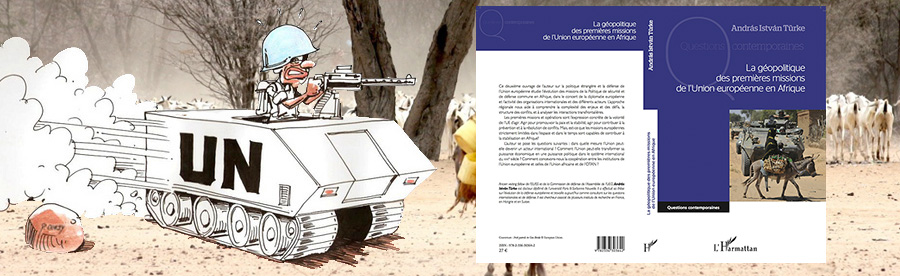
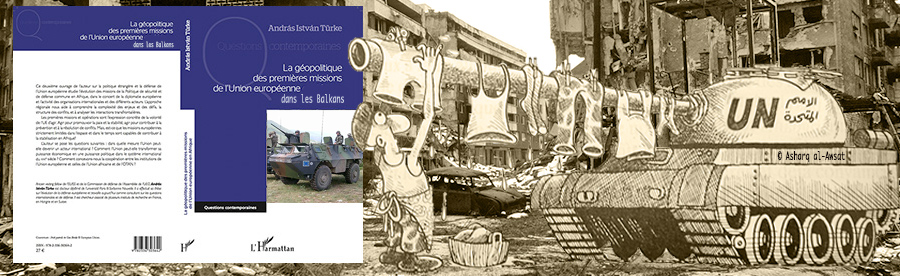
We are looking for sponsors for the English translation of these books, please contact turkeandras(at)gmail(dot)com