
Vous êtes ici
Agrégateur de flux
Au Sénégal, travailler sous 38 °C toute l’année
La photographe Adrienne Surprenant raconte les défis climatiques auxquels les agriculteurs sénégalais font face dans le nord-est du pays et leurs tentatives d’adaptation.
Catégories: Afrique
Sommet de la francophonie : Emmanuel Macron appelle à l’« unité » et au « consensus » face aux tensions entre la RDC et le Rwanda
Kinshasa, qui accuse Kigali de soutenir le groupe armé rebelle du M23 dans ses provinces de l’Est, s’oppose à la reconduction de la Rwandaise Louise Mushikiwabo à la tête de l’OIF.
Catégories: Afrique
My mother told me I would die if I sought treatment for Ebola - I am proof you can survive
Fear and misinformation surrounds the Ebola outbreak in DR Congo - Dr Kamwanga's mother was not immune.
Catégories: Africa
Enseignement supérieur en Afrique : l'UM6P, un modèle d'excellence à suivre ?
L'Afrique peut-elle former ses propres élites sans les envoyer étudier à l'étranger ? Au Maroc, l'Université Mohammed VI Polytechnique (UM6P) s'impose parmi les établissements africains les mieux classés à l'international. Recherche, intelligence artificielle, robotique, agriculture : l'université mise sur des formations de pointe pour répondre aux défis du continent. Mais cette excellence est-elle accessible à tous ? Et ce modèle peut-il être reproduit ailleurs en Afrique ? Sa Benjamin Traoré, professeur de droit public et directeur du programme Droit et Gouvernance à l'UM6P, est l'invité de Fatimata Wane dans le Journal de l'Afrique sur France 24.
Catégories: Afrique
Présidence de la Francophonie : Louise Mushikiwabo "candidate jusqu'au bout"
C’est une information révélée par nos confrères de Jeune Afrique : la France aurait demandé au Rwanda de retirer sa candidature pour le poste de secrétaire général de l’Organisation internationale de la Francophonie. Les pays membres sont en ce moment réunis au Cambodge et doivent choisir qui sera à la tête de l’OIF. Et cela a bien évidemment fait réagir sur le continent…
Catégories: Afrique, Diplomacy & Defense Think Tank News
«Je suis un pur produit français» : le candidat Teddy Riner s’offre un premier bain de foule au salon du Made in France à Paris
REPORTAGE - Pour son deuxième déplacement de campagne, Teddy Riner a arpenté pendant plus de trois heures les allées du salon du Made in France, à Paris.
Catégories: France
L'agité du Quai d'Orsay
Misère du ministère des affaires étrangères : la Ve République a transféré l'essentiel de ses prérogatives au président, dont la diplomatie est le « domaine réservé » ; son influence s'est amoindrie un peu plus avec le recentrage atlantiste de la politique extérieure française et les intrusions (…)
/ Personnalités, France, Diplomatie, Relations internationales
Catégories: Diplomacy & Crisis News
« Je cherche la pâte humaine » : Catherine Nay, l’indétrônable romancière du pouvoir
PORTRAIT - La grande voix d’Europe 1 poursuit son exploration des passions du pouvoir avec un livre consacré à Emmanuel Macron, Ce pays dont le prince est un enfant (Plon). Derrière l’allure souveraine et les traits mordants, une journaliste amoureuse du romanesque que ni les succès ni les chagrins n’ont guérie du doute.
Catégories: France
COP31: National Oil Companies Must Lead Global Shift Away from Fossil Fuels, Says NRGI Expert
A civil society protest at COP 31 demands a transition from fossil fuels. Credit: UN Climate Change/Kubilay Ciftci
By Umar Manzoor Shah
ANTALYA, Türkiye, Nov 14 2026 (IPS)
The shift away from fossil fuels is made more difficult by the powerful, often overlooked role of national oil companies. These companies are deeply embedded in their countries’ economies and political systems.
During the COP31 climate summit in Antalya, Inter Press Service (IPS) spoke exclusively with Amir Shafaie, Legal and Economic Program Director at the Natural Resource Governance Institute (NRGI), about the role of state-owned oil companies in the energy transition, the financial risks of continued fossil fuel investments and the policies governments need to adopt to meet global climate goals.
Shafaie said national oil companies produced 54 percent of the world’s oil and half of its gas in 2025. Their share of global production could rise to around 62 percent by 2050 if current trends continue.
Excerpts from the interview:
Amir Shafaie, Legal and Economic Program Director at the Natural Resource Governance Institute (NRGI). Photo: Supplied
IPS: National oil companies account for nearly half of global fossil fuel production. How significant is their role in the global transition away from fossil fuels, and why have they received less attention in climate negotiations?
Shafaie: National oil companies are even more significant than the question suggests. In 2025 they produced 54% of the world’s oil and half its gas, and their share is projected to reach around 62% by 2050. Last year (2025) NOC capital expenditure was around US$240 billion — more than three times what the oil majors spent. So, the pace of the transition away from fossil fuels will be significantly shaped by these state-owned companies.
NOCs are also politically sensitive. They often have a massive role in the national political economy and significant influence over government: they fund national budgets and public services and are often bound up with national identity.
Given their importance, it’s time to stop treating them as a footnote in transition conversations.
They deserve to be a headline.
IPS: What specific steps should national oil companies take to align their business strategies with the global goal of limiting temperature rise to 1.5°C?
Shafaie: There is no single model — NOCs differ widely in mandate and capability — but every NOC needs a deliberate strategy of transformation to navigate the energy transition, and government owners of NOCs need to ensure that is the case.
As a first step, NOCs must stop treating business as usual as a neutral option and start to seriously assess the risks – and opportunities – presented by the global energy transition. Every NOC should test its planned investments against various demand scenarios, including those in which countries meet their climate pledges and oil and gas demand falls — and publish the results. Many projects that NOCs view positively today may not pay back. In 2023, NRGI analysis found that NOCs plan about US$1.8 trillion of upstream spending over the 2023-2032 period and that roughly a quarter, about US$425 billion, of that public money would be lost if oil demand falls in line with governments’ climate pledges.
Moreover, in these assessments, NOCs shouldn’t assume a pivot to gas eliminates risk: demand destruction from the recent crisis, with countries switching to renewables that can be cheaper and less geopolitically volatile, works against that; and there is still a lot of gas and LNG coming on to the market in coming years, so projects will need to be competitive.
Governments and NOCs also need a credible plan for the new business areas NOCs pursue, identifying sectors and technologies in which the NOC holds genuine comparative advantages.
Finally, NOCs are not only commercial entities—in many producing regions they are anchor employers and service providers, and their transformation carries real consequences for workers and communities. Governments and NOCs must anticipate the just transition needs of different regions as NOCs transform.”
IPS: How can governments persuade state-owned oil companies to reduce fossil fuel production while balancing energy security, economic growth and employment concerns?
Shafaie: Balancing these various concerns is not easy, but governments need to weigh all the factors (energy security, economic growth, employment concerns and production plans), not focus on just one or some of them. Governments are also well placed to do this with NOCS.
They own these companies or hold large stakes in them, so this is less about persuading NOCs than about setting a clear policy, including around how much revenue can go back into new oil and gas and requiring investments to be tested against different demand scenarios.
And there is room to balance these factors. The recent energy crisis shows that energy security and energy transition are not opposites: oil dependence is itself a security and cost-of-living risk, and NOCs often end up absorbing the cost, as Pertamina has with subsidised fuel prices.
The challenge also looks different for NOCs in net-importing and net-exporting countries. In net importers such as Thailand, producing more at home offers little protection from world prices, so the energy security gains come from cutting demand and diversifying supply. In large net exporters such as the UAE or Norway, the main risk is volatile revenues, and today’s windfalls are an opportunity to diversify their economies. Many NOCs, including Pemex, Pertamina, NNPC and increasingly Ecopetrol in the case of gas, sit in between and face both challenges at once, so governments need mandates that address both.”
IPS: What risks do continued investments in new oil and gas fields pose to developing countries, particularly in terms of stranded assets, public finances and long-term energy security?
Shafaie: The risks are significant, and they fall on ordinary people in producing countries. Our 2023 analysis finds that if governments meet their existing climate pledges, around a quarter of NOCs’ planned upstream investments for 2023–2032 may never break even. For some — Uganda’s UNOC and Cameroon’s SNH — the figure exceeds 80%.
When a state company’s assets lose value, the hit lands on public balance sheets, leaving less for health, education and diversification. Current high oil prices can mask these vulnerabilities in the short term, but they don’t remove them. The longer-term dynamics from the energy transition are still there. It is particularly important for NOCs and the government to exercise fiscal discipline in the current context, where market signals may lead them to take greater risks. As UN Secretary General Guterres said at COP31 ‘taxpayers should not underwrite investments that lock in fossil fuel dependence’.
IPS: The COP30 roadmap seeks to accelerate the transition away from fossil fuels. What concrete policy measures, financial incentives and accountability mechanisms are needed to ensure national oil companies become part of this transition rather than obstacles to it?
Shafaie: The Brazil COP roadmap is a significant step forward in taking the “transition away from fossil fuels” from an abstract idea to a basis for national planning. What happens at the national level is what really matters now.
The roadmap rightly asks countries to start now and equitably recognises that what this means in each country will differ, depending on exposure and capacity. The approach looks different in each country and can range from starting the phase-out of licensing and production in rich Global North producers to starting serious transition risk – and opportunity – assessments and associated planning in low- and middle-income producer countries.
The COP30 Presidency Roadmap also rightly recognises the distinctive role of NOCs at the intersection of public revenues, energy security and industrial development. Accordingly, for countries with NOCs, discussions around the NOC’s future should be central from the start if transition plans are to be credible.
International cooperation can also play a vital role in supporting NOC transformations through peer learning around scenario-based planning, disciplined investment decisions, decarbonisation and methane emissions abatement and finance for credible diversification into renewable energy and other business areas.
IPS UN Bureau Report
Catégories: Africa
Meeting with KFOR Commander
The Chief of the Serbian Armed Forces General Staff, General Milan Mojsilović, met today with KFOR Commander, Major General Roberto Vergori, to discuss the security situation in Kosovo and Metohija.
Catégories: Defence`s Feeds
The OIC Calls from Brussels for Strengthening Humanitarian Response in the Sahel and Lake Chad Regions
Ambassador Abdulkhaleq Al-Yafei, Permanent Observer of the Organization of Islamic Cooperation (OIC) to the European Union, participated in a senior officials' meeting on humanitarian crises in the Sahel and Lake Chad regions. The meeting was co-chaired by the European Commission (DG ECHO) and the Irish Department of Foreign Affairs and Trade, with the Director-General of the OIC Office in Niger and the Humanitarian Affairs Department of the OIC General Secretariat participating via videoconference.
Catégories: Defence`s Feeds
The OIC Participates in Media Forum on the Israeli Settlement Plan (E1)
The Organization of Islamic Cooperation (OIC) participated today in the media forum on the Israeli settlement plan (E1) and Al-Quds, organized by the Permanent Mission of the State of Palestine in cooperation with the Union of OIC News Agencies (UNA).
Catégories: Defence`s Feeds
China's 10-ton electric commercial aircraft makes successful maiden manned flight
China's independently developed 10-ton-class electric commercial aircraft, the CE-25A, completed its first crewed flight using its intelligent flight in East China's Shandong Province on Saturday, Xinhua News Agency reported, citing the Commercial Aircraft Corporation of China (COMAC).
Catégories: Defence`s Feeds
China develops first 20-kg hydrogen-powered unmanned helicopter with dual propulsion systems for low-altitude economy
A Chinese research team has developed China's first 20-kilogram-class hydrogen-powered unmanned helicopter, while developing two propulsion systems: one powered solely by a pure hydrogen fuel cell and the other combining hydrogen-lithium hybrid technologies to provide greener propulsion for the low-altitude economy, the Science and Technology Daily reported on Friday.
Catégories: Defence`s Feeds
Zelenskyy: US Floated Trading Donbas For NATO Membership
Ukrainian President Volodymyr Zelenskyy has said US negotiators asked for the first time whether Kyiv would withdraw its remaining forces from the Donbas in exchange for NATO membership.
Catégories: Defence`s Feeds
Update 375 - IAEA Director General Statement on Situation in Ukraine
The instability of the Ukrainian electrical grid due to military activity resulted in several reductions of power of some operating units in nuclear power plants (NPPs) in Ukraine this week, stated International Atomic Energy Agency (IAEA) Director General Rafael Mariano Grossi.
Catégories: Defence`s Feeds
Taiwan monitors Chinese ships after radio clash off eastern coast
Taiwan's Coast Guard Administration (CGA) said on Saturday it continued monitoring Chinese Coast Guard vessels operating off Taiwan's eastern coast after the two sides clashed over radio broadcasts and competing territorial claims.
Catégories: Afrika, Defence`s Feeds
Foreign Minister Tsahkna: Neither Estonia nor Europe will discuss Finland's withdrawal from NATO with Putin
It is positive that Europe has reached a common understanding on who should represent it in negotiations. However, Russia's repeated insistence on the ultimatums it issued in 2021 once again demonstrates that Moscow's objectives have not changed. Neither Estonia nor Europe will ever discuss Finland's withdrawal from NATO with Putin, nor any other issue concerning the sovereign security choices of European nations. Europe's security is decided by European countries themselves, not by Russia.
Catégories: Defence`s Feeds
Joint Statement by the Foreign Ministers of Pakistan, Algeria, Djibouti,Egypt, Indonesia, Jordan, Kuwait, Lebanon, Libya, Mauritania, Oman,Qatar, Saudi Arabia, Somalia, Sudan, Turkiye and the United Arab Emirates
The Foreign Ministers of Pakistan, Egypt, Kingdom of Saudi Arabia, Türkiye, Jordan, Qatar, United Arab Emirates, Indonesia, Palestine, Algeria, Mauritania, Sudan, Libya, Djibouti, Somalia, Lebanon and Oman condemn in the strongest terms the Israeli airstrike on the Nasser Medical Complex in Khan Younis, which caused casualties among patients and medical personnel, in violation of international humanitarian law, which affords special protection to medical facilities and healthcare workers.
Catégories: Defence`s Feeds
US Seeks To Disrupt Iran's Supply Networks Beyond Naval Blockade
The US military is expanding its efforts to disrupt Iran's supply networks beyond the naval blockade of its ports, turning its attention to the country's land borders and the Caspian Sea.
Catégories: Defence`s Feeds
Pages


© 2012-2018 Europa Varietas Foundation © 2015-2018 Europa Varietas Association
www.europavarietas.org | info(@)europavarietas(dot)org | Switzerland
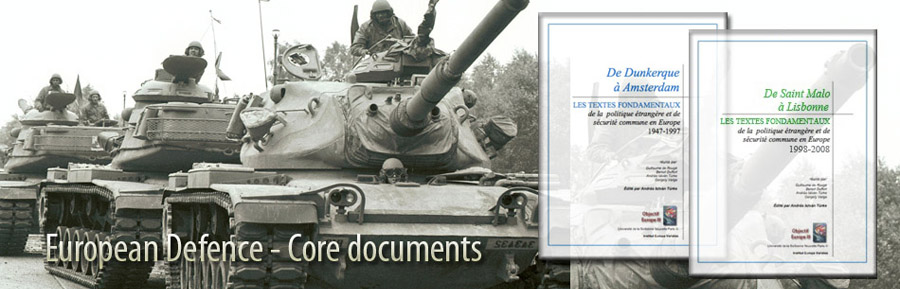
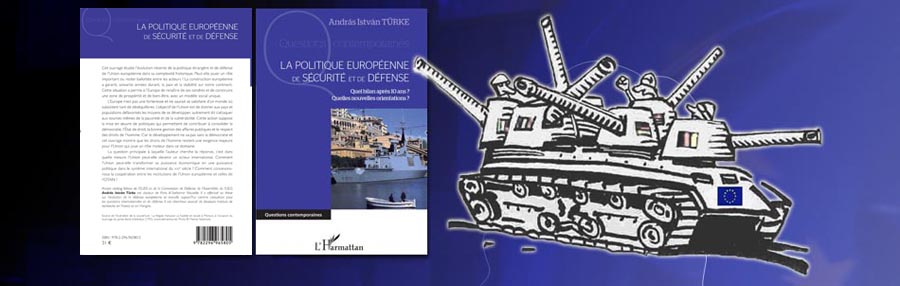
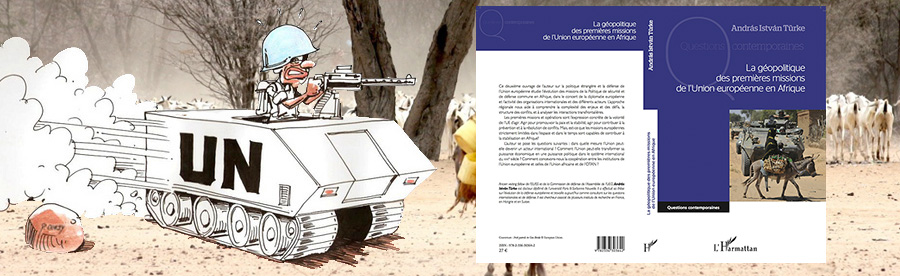
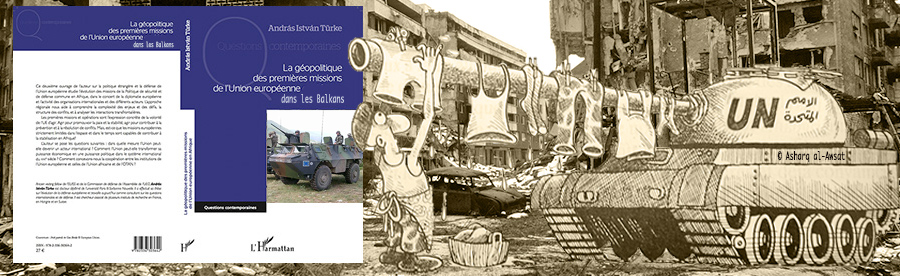
We are looking for sponsors for the English translation of these books, please contact turkeandras(at)gmail(dot)com