
Vous êtes ici
Agrégateur de flux
DIGITAL 08 H : les numéros gagnants
DIGITAL 08H : Avez-vous tenté votre chance ?
Le tirage DIGITAL 08H N°283 a livré son verdict !
Mardi 20 Octobre 2026
Avez-vous joué ?
Avez-vous misé sur vos numéros porte-bonheur ?
RÉSULTAT : 72 • 04 • 37 • 29 • 32
Félicitations aux heureux gagnants !
Pas encore cette fois ? Gardez le sourire.
Rendez-vous à 08H pour le prochain tirage.
Jouez dans les points de vente ou : Tapez *590# ou rendez-vous sur lnbloto.bj
Jouez avec modération et responsabilité. Le jeu doit rester un plaisir.
A TOI DE JOUER #XòGbɔnAlɔkpaVo
#LNBSA #JeuResponsable #LaChanceAvecModération
https://www.facebook.com/share/1KBuSTtrTK/
LA CROIX DU MARDI 20 OCTOBRE 2026

Catégories: Afrique
Les prestataires de la riposte contre Ebola à Rwampara menacent d’arrêter le travail sous 48 heures faute de paiement
Les prestataires engagés dans la lutte contre Ebola dans la zone de santé de Rwampara, à Bunia, en Ituri, menacent d’observer un arrêt de travail collectif si leurs arriérés de primes ne sont pas payés dans un délai de 48 heures.
Catégories: Afrique
Beyond markets: how to achieve just and transformative biodiversity conservation
Conservation needs reform as current approaches have failed to halt biodiversity loss. Increasingly, environ¬mentalists are questioning whether market-based approaches and conventional policy instruments, particu¬larly protected areas, can make a substantial contribution towards mitigating the bio¬diversity crisis. Moreover, serious concerns about their equity and justice implications have been voiced by indigenous rights organisations, peasant movements and scholars.
In light of these concerns, this policy brief provides a number of suggestions on how to make biodiversity conservation more just, equitable and effective. It builds on discussions held during the sixth Enjust Conference “Offsetting Justice? Environmental justice in the age of market and militarized con¬servation”, which took place in Bonn from 3 to 5 December 2025. The conference brought together environmental justice scholars, political ecologists, activists as well as development and conservation practitioners from around the globe.
Our reflections and proposals support policymakers, members of parliament, conservation practitioners, and Indigenous Peoples and Local Communities (IP&LCs) at the local and regional levels in initiating reforms of the protected area system and other conservation mechanisms for more effective, trans¬parent and fair protection.
Key messages:
• Just conservation: Conservation policies that contribute to environmental justice have the greatest potential to achieve long-term, sustainable and legitimate conservation outcomes for people and the planet.
• Land rights-based conservation: Land rights reconfigure power relations and are a key pre¬requisite for environmental justice. Collective land titles such as Colombia’s Peasant Reserve Zones (ZRCs) are a promising instrument.
• Towards distributive justice by reforming conservation finance: IP&LCs should benefit more directly from forest, climate and biodiversity funding and should have a say in how money is spent in their communities. IP&LC-led funds and designated funding windows for IP&LCs are promising options.
• Basic Income for Nature and Climate (BINC): We suggest BINC as a promising measure to improve the livelihoods of IP&LCs and to overcome the transactional logic of market-based instruments. BINC compensates for past environmental injustices and enables recipients to make land-use decisions that are less influenced by precarity and market forces.
Professor Dr Fernanda Figueroa currently works at the Facultad de Ciencias, Departamento de Ecología y Recursos Naturales, Universidad Nacional Autónoma de México.
Dr Lasse Loft is a senior scientist at the Leibniz Centre for Agricultural Landscape Research (ZALF) in Müncheberg, Germany.
Professor Dr Maano Ramutsindela is Professor of Human Geography at the University of Cape Town and the UP-UCT Future Africa Research Chair in Sustainability Transformations at the University of Pretoria and the University of Cape Town, South Africa.
Georg Buchholz is team leader of the International Forest Policy sectoral project at GIZ, Germany.
Dr Juan Sebastián Vélez Triana is a postdoctoral researcher with the Fonds de la Recherche Scientifique – FNRS / UCLouvain, Belgium, and a research associate at the Centre for Alternatives to Development (CEALDES), Colombia.
Professor Dr Florian Dünckmann heads the Cultural Geography Research Group in the Department of Geography at Kiel University, Germany.
Dr Ina Lehmann is assistant professor of Governance of Global Biodiversity at the Environmental Policy Analysis section at the Institute for Environmental Studies (IVM), Vrije Universiteit Amsterdam, The Netherlands.
Professor Dr Silja Klepp is professor of Human Geography at Kiel University, Germany.
Dennis Schüpf is a PhD student in the Department of Geography, University of Bonn, Germany.
Anne Rose Atkins is a doctoral candidate in the Social Geography of Coastal and Marine Areas working group at the Geography Department of Kiel University, Germany.
Dumisani Chirambo is the founder of Seeds of Opportunity in Malawi.
Felice Diekel is a PhD candidate at the Department of Civil Engineering & Management at the University of Twente, Enschede, The Netherlands.
Salome Gikonyo is part of the coordination team of the EnJust Network for Environmental Justice, Germany.
Dr Rina Mardiana is a lecturer in the Human Geography Study Program, Faculty of Social Sciences and Human Ecology, at IPB University in Bogor, Indonesia.
Dr Adnan Mirhanoğlu is an F.R.S.-FNRS postdoctoral researcher at the Centre d’Études de la Coopération Internationale et du Développement (CECID), Université libre de Bruxelles, Belgium.
Kim Nierobisch is part of the coordination team of the EnJust Network for Environmental Justice, Germany.
Kelly Peña is a PhD student at the Institute of Geography, Friedrich-Alexander-Universität Erlangen-Nürnberg, Germany.
Professor Dr Prakash C. Tiwari works at the Centre for Ecology Development and Research in Dehradun, India.
Catégories: Diplomacy & Defense Think Tank News
Éric Ciotti au Figaro : «Si nous renonçons à employer la force contre les barbares, c’est la République qui s’effondrera»
ENTRETIEN - Parquet national antiterroriste, réponse pénale et pénitentiaire, privations d’aides et de logements sociaux... Après les violences du 17 octobre, le président de l’UDR expose les solutions qu’il imposerait avec Marine Le Pen si elle était élue en 2027.
Catégories: France
The True Cost of Europe’s E-Commerce Crackdown [Promoted Content]
Europe’s customs crackdown is working, and that is the problem. Belgium reports parcel declarations halved and €224 million collected in seven weeks. But the €3 duty, national fees and a €2 handling fee raise prices and leave Europe less competitive.
Catégories: European Union
La combinaison gagnante du DIGITAL 08 H
DIGITAL 08H : Avez-vous tenté votre chance ?
Le tirage DIGITAL 08H N°283 a livré son verdict !
Mardi 20 Octobre 2026
Avez-vous joué ?
Avez-vous misé sur vos numéros porte-bonheur ?
RÉSULTAT : 72 • 04 • 37 • 29 • 32
Félicitations aux heureux gagnants !
Pas encore cette fois ? Gardez le sourire.
Rendez-vous à 08H pour le prochain tirage.
Jouez dans les points de vente ou : Tapez *590# ou rendez-vous sur lnbloto.bj
Jouez avec modération et responsabilité. Le jeu doit rester un plaisir.
A TOI DE JOUER #XòGbɔnAlɔkpaVo
#LNBSA #JeuResponsable #LaChanceAvecModération
Catégories: Afrique
Violences du 17 octobre : critiqué de toutes parts, Emmanuel Macron promet d’être « intraitable »
RÉCIT - De la mobilisation lycéenne jusqu’au chaos du 17 octobre, la réponse du pouvoir exécutif, pris au dépourvu, s’est révélée fluctuante. Évoquant la «honte» et la «colère» face aux violences, Emmanuel Macron a promis la «transparence», lors d’une allocution dimanche soir.
Catégories: France
FIREPOWER: Military mobility trilogue heads to Strasbourg
In today's edition: Arctic security, mines, drone evacuation
Catégories: European Union
THE HACK: EU to connect Greenland
In today's edition: DNA compromise, Lithuanian presidency, French riots
Catégories: European Union
VOLTAGE: ETS2 siege gathers steam
In today's edition: Made in Europe, deep-sea mining, Brexit divergence
Catégories: European Union
17 octobre 2026, le jour où la France a pris conscience qu’elle est effectivement devenue la « colonie de ses colonies »
Ce qui s’est passé le 17 octobre 2026 est la
démonstration par l’exemple de ce que j’ai écrit et annoncé dans mon livre
« Comment la France est devenue la colonie de ses colonies ».
A savoir que nous sommes désormais dans la phase finale de cette
contre-colonisation parfaitement résumée par Houria Bouteldja dans sa déclaration
de guerre aux Français « de souche » :
« Notre simple existence, doublée d’un poids démographique relatif (1 pour 6) africanise, arabise, berbérise, créolise, islamise, noirise, la fille aînée de l’Eglise, jadis blanche et immaculée, aussi sûrement que le sac et le ressac des flots polissent et repolissent les blocs de granit aux prétentions d’éternité (…) ».
Aujourd’hui, les pillards largement issus de nos anciennes colonies justifient leur conquête territoriale par une phrase traduisant clairement leur volonté de revanche ou même de vengeance historique : « Si nous sommes ici, c’est que vous étiez là-bas ».
Une conquête méthodiquement préparée depuis quatre ou cinq décennies par ces élites ethno-masochistes qui dirigent notre pays et qui ont inventé la notion de la prétendue « culpabilité française ».
N’était-ce pas Roselyne Bachelot alors ministre de la Culture, qui osa déclarer, ès-qualités, à un journal algérien « Nous devons reconnaître que la colonisation est un crime, une barbarie et que nous y avons pris notre part » (Roselyne Bachelot à l’Opinion, le 10 novembre 2020) ?
N’était-ce pas Emmanuel Macron qui, le 17 février 2017, alors qu’il n’était encore que candidat à la présidence de la République, déclara à la télévision algérienne que « la colonisation (…) est un crime contre l’humanité, une vraie barbarie » etc…
Résultat, parmi les millions de néo-Français et de clandestins, nombreux sont ceux qui ne s’identifient pas à une France « criminelle ». Hafsa Askar, alors vice-présidente du syndicat étudiant UNEF fut ainsi été très claire le 15 avril 2019 quand elle déclara à propos de l’incendie de Notre-Dame :
« Je m’en fiche de Notre-Dame de Paris, car je m’en fiche de l’histoire de France…Wallah …on s’en balek (traduction : on s’en bat les c…), objectivement, c’est votre délire de petits blancs ».
Pour les razzieurs du 17 octobre, la France n’est pas une lente construction historique dont ils seraient les héritiers, mais une terre à prendre, à conquérir. Une terre sur laquelle ils cherchent à réaliser une revanche historique de nature psychanalytique.
Ne nous y trompons pas, chez eux, il ne s’agit pas de « séparatisme » comme le psalmodient les cocus de l’histoire et les sociologues, mais de volonté de conquête. Ils ne veulent pas faire sécession, mais tout au contraire imposer à la France leurs normes philosophiques, sociales, politiques et religieuses, leur mode de vie et leurs mœurs... En un mot, ils veulent la soumettre.
Cela leur semble d’autant plus facile à réaliser que, comme l’a justement annoncé Houria Bouteldja, la démographie va mathématiquement leur assurer une place de plus en plus déterminante dans la vie politique française à travers l’ethnomathématique électorale si bien comprise par Jean-Luc Mélenchon. Or, en face, les Français de « souche » ont été désarmés physiquement, juridiquement et mentalement. Ayant perdu leur instinct de défense avec leurs repères civilisationnels, ils ne croient plus en rien, leurs femmes ne font plus d’enfants et l’exacerbation féministe y a dévirilisé les mâles…
La responsabilité historique de la gauche dite « républicaine » dans le drame existentiel que connaît aujourd’hui la France est abyssale. C’est elle qui, à partir de la décennie 1960, ne cessa, au nom de l’antiracisme, de soutenir l’immigration. Ce furent ses intellectuels qui sapèrent méthodiquement, les-uns après les autres, les principes et les institutions sur lesquels reposaient jusque-là la cohésion et la cohérence de la société française. C’est elle qui a pavé la route des pillards du 17 octobre. Mais en même temps elle s’est suicidée intellectuellement. Elle a en effet organisé, promu et soutenu une contre-colonisation dont les conséquences ont mis à bas ses grands principes fondateurs universalistes.
Voilà pourquoi, face aux monstres dont ils sont les géniteurs, les hommes de gauche demeurent sans voix, mais tout en refusant toujours de voir la réalité en face. Acculés dans une impasse idéologique et sociétale, ils continuent pathétiquement à s’agripper aux « droits de l’homme », à la « laïcité » et à l’incantation quasi religieuse à la « République ». Autant de bouées crevées qui n’empêcheront pas leur noyade…
Pour la gauche non mélenchoniste le choix est donc désormais clair :
1) Soit la « soumission », comme l’a prophétisé Michel Houellebecq, c’est à dire l’entrée en dhimmitude. Une partie l’acceptera. Certains par masochisme, les autres pour ne pas devoir remettre en cause leurs principes philosophiques. Plutôt l’esclavage que la renonciation aux dogmes fondateurs.
2) Soit la remise en question de la philosophie et des impératifs moraux qui ont permis et engendré la situation actuelle, donc, le basculement dans un paradigme de survie identitaire qui répudiera les vieilles lunes idéologiques.
Pour la « droite », l’heure est également à la profonde redéfinition des concepts, à l’abandon des « Nuées » comme le disait Charles Maurras, donc à la remise en question des anciennes lubies comme l’assimilation ou l’intégration. Si tant est qu’elle veuille que la France survive, elle devra se laisser guider par les porteurs de forces créatrices, cette avant-garde consciente qui, depuis des décennies, n’a cessé, en vain jusque-là, de l’alerter. Et qui, aujourd’hui, dans le chaos de la tempête est seule à avoir un cap. Celui du courage de dire aux pillards et à certains « Français dits de papier » que si leur sort leur est ici insupportable…elle leur souhaite « bon vent »…et heureux retour « au pays ». Mais que, si, toutefois, ayant tout de même décidé de rester en France pour y jouir de ses largesses, ils persistaient à y indisposer les autochtones, ils devraient alors méditer l’adresse de Cicéron devant le Sénat romain : « Quo usque tandem abutera, Catilina, patientia nostra ? « Jusques à quand, enfin, Catilina, abuseras-tu de notre patience ?».
Car ce serait alors un autre cri qui jaillirait des profondeurs de notre histoire millénaire : « Contre les Huns, tous aux Champs catalauniques !!! ».
Offre spéciale pour mon livre « Comment la France est devenue la colonie de ses colonies »
- France métropolitaine 28 euros au lieu de 34 euros port colissimo compris
- UE 32 euros port compris
- Reste du monde 50 euros port compris paypal.HostedButtons({ hostedButtonId: "7PMCLC4M3RPKN", }).render("#paypal-container-7PMCLC4M3RPKN")

« Notre simple existence, doublée d’un poids démographique relatif (1 pour 6) africanise, arabise, berbérise, créolise, islamise, noirise, la fille aînée de l’Eglise, jadis blanche et immaculée, aussi sûrement que le sac et le ressac des flots polissent et repolissent les blocs de granit aux prétentions d’éternité (…) ».
Aujourd’hui, les pillards largement issus de nos anciennes colonies justifient leur conquête territoriale par une phrase traduisant clairement leur volonté de revanche ou même de vengeance historique : « Si nous sommes ici, c’est que vous étiez là-bas ».
Une conquête méthodiquement préparée depuis quatre ou cinq décennies par ces élites ethno-masochistes qui dirigent notre pays et qui ont inventé la notion de la prétendue « culpabilité française ».
N’était-ce pas Roselyne Bachelot alors ministre de la Culture, qui osa déclarer, ès-qualités, à un journal algérien « Nous devons reconnaître que la colonisation est un crime, une barbarie et que nous y avons pris notre part » (Roselyne Bachelot à l’Opinion, le 10 novembre 2020) ?
N’était-ce pas Emmanuel Macron qui, le 17 février 2017, alors qu’il n’était encore que candidat à la présidence de la République, déclara à la télévision algérienne que « la colonisation (…) est un crime contre l’humanité, une vraie barbarie » etc…
Résultat, parmi les millions de néo-Français et de clandestins, nombreux sont ceux qui ne s’identifient pas à une France « criminelle ». Hafsa Askar, alors vice-présidente du syndicat étudiant UNEF fut ainsi été très claire le 15 avril 2019 quand elle déclara à propos de l’incendie de Notre-Dame :
« Je m’en fiche de Notre-Dame de Paris, car je m’en fiche de l’histoire de France…Wallah …on s’en balek (traduction : on s’en bat les c…), objectivement, c’est votre délire de petits blancs ».
Pour les razzieurs du 17 octobre, la France n’est pas une lente construction historique dont ils seraient les héritiers, mais une terre à prendre, à conquérir. Une terre sur laquelle ils cherchent à réaliser une revanche historique de nature psychanalytique.
Ne nous y trompons pas, chez eux, il ne s’agit pas de « séparatisme » comme le psalmodient les cocus de l’histoire et les sociologues, mais de volonté de conquête. Ils ne veulent pas faire sécession, mais tout au contraire imposer à la France leurs normes philosophiques, sociales, politiques et religieuses, leur mode de vie et leurs mœurs... En un mot, ils veulent la soumettre.
Cela leur semble d’autant plus facile à réaliser que, comme l’a justement annoncé Houria Bouteldja, la démographie va mathématiquement leur assurer une place de plus en plus déterminante dans la vie politique française à travers l’ethnomathématique électorale si bien comprise par Jean-Luc Mélenchon. Or, en face, les Français de « souche » ont été désarmés physiquement, juridiquement et mentalement. Ayant perdu leur instinct de défense avec leurs repères civilisationnels, ils ne croient plus en rien, leurs femmes ne font plus d’enfants et l’exacerbation féministe y a dévirilisé les mâles…
La responsabilité historique de la gauche dite « républicaine » dans le drame existentiel que connaît aujourd’hui la France est abyssale. C’est elle qui, à partir de la décennie 1960, ne cessa, au nom de l’antiracisme, de soutenir l’immigration. Ce furent ses intellectuels qui sapèrent méthodiquement, les-uns après les autres, les principes et les institutions sur lesquels reposaient jusque-là la cohésion et la cohérence de la société française. C’est elle qui a pavé la route des pillards du 17 octobre. Mais en même temps elle s’est suicidée intellectuellement. Elle a en effet organisé, promu et soutenu une contre-colonisation dont les conséquences ont mis à bas ses grands principes fondateurs universalistes.
Voilà pourquoi, face aux monstres dont ils sont les géniteurs, les hommes de gauche demeurent sans voix, mais tout en refusant toujours de voir la réalité en face. Acculés dans une impasse idéologique et sociétale, ils continuent pathétiquement à s’agripper aux « droits de l’homme », à la « laïcité » et à l’incantation quasi religieuse à la « République ». Autant de bouées crevées qui n’empêcheront pas leur noyade…
Pour la gauche non mélenchoniste le choix est donc désormais clair :
1) Soit la « soumission », comme l’a prophétisé Michel Houellebecq, c’est à dire l’entrée en dhimmitude. Une partie l’acceptera. Certains par masochisme, les autres pour ne pas devoir remettre en cause leurs principes philosophiques. Plutôt l’esclavage que la renonciation aux dogmes fondateurs.
2) Soit la remise en question de la philosophie et des impératifs moraux qui ont permis et engendré la situation actuelle, donc, le basculement dans un paradigme de survie identitaire qui répudiera les vieilles lunes idéologiques.
Pour la « droite », l’heure est également à la profonde redéfinition des concepts, à l’abandon des « Nuées » comme le disait Charles Maurras, donc à la remise en question des anciennes lubies comme l’assimilation ou l’intégration. Si tant est qu’elle veuille que la France survive, elle devra se laisser guider par les porteurs de forces créatrices, cette avant-garde consciente qui, depuis des décennies, n’a cessé, en vain jusque-là, de l’alerter. Et qui, aujourd’hui, dans le chaos de la tempête est seule à avoir un cap. Celui du courage de dire aux pillards et à certains « Français dits de papier » que si leur sort leur est ici insupportable…elle leur souhaite « bon vent »…et heureux retour « au pays ». Mais que, si, toutefois, ayant tout de même décidé de rester en France pour y jouir de ses largesses, ils persistaient à y indisposer les autochtones, ils devraient alors méditer l’adresse de Cicéron devant le Sénat romain : « Quo usque tandem abutera, Catilina, patientia nostra ? « Jusques à quand, enfin, Catilina, abuseras-tu de notre patience ?».
Car ce serait alors un autre cri qui jaillirait des profondeurs de notre histoire millénaire : « Contre les Huns, tous aux Champs catalauniques !!! ».

Offre spéciale pour mon livre « Comment la France est devenue la colonie de ses colonies »
- France métropolitaine 28 euros au lieu de 34 euros port colissimo compris
- UE 32 euros port compris
- Reste du monde 50 euros port compris paypal.HostedButtons({ hostedButtonId: "7PMCLC4M3RPKN", }).render("#paypal-container-7PMCLC4M3RPKN")
Catégories: Afrique
La CNDH lance une mission de contrôle de l’accessibilité des services publics aux personnes vivant avec handicap
La Commission nationale des droits de l’homme (CNDH) a lancé lundi 19 octobre à Kinshasa une mission de contrôle de l’accessibilité des personnes vivant avec handicap aux services publics sur l’ensemble du territoire national.
Catégories: Afrique
Kallas sounds alarm over EU aid cuts
Budget negotiations have so far taken an axe to the EU's aid external spending
Catégories: European Union
FIRST AID: Why France changed drug pricing policy
In today's edition: rare diseases, Lithuanian presidency, tobacco
Catégories: European Union
From negotiations to implementation: the EU’s strategic repositioning ahead of COP31
This blog draws on discussions at a closed-door roundtable titled “EU Climate Diplomacy: Promoting EU and Global Climate Goals in the Evolving Climate Regime,” held in Brussels on 3 September 2026 and co-organised by ETTG, IDDRI and IDOS. The session convened senior officials from DG CLIMA, EU member states and experts. Views expressed reflect the range of positions raised in the discussion and are not attributed to individual participants or institutions; they do not necessarily represent the position of ETTG or its member institutes.
Catégories: Diplomacy & Defense Think Tank News
HARVEST: A day in Strasbourg
In today's edition: organic, CMO, Hungary’s price cap
Catégories: European Union
Pages



© 2012-2018 Europa Varietas Foundation © 2015-2018 Europa Varietas Association
www.europavarietas.org | info(@)europavarietas(dot)org | Switzerland


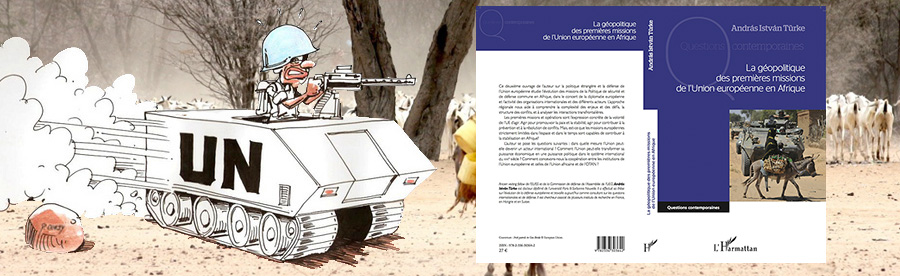
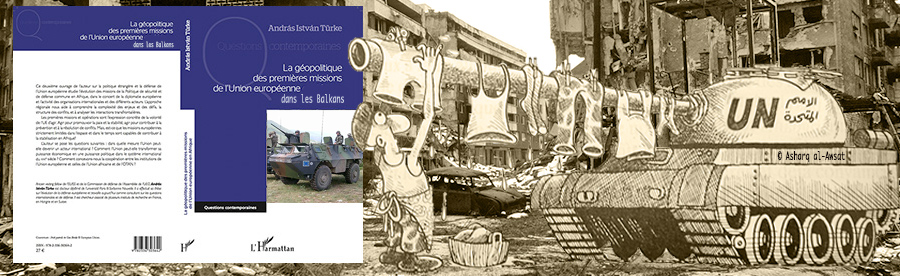
We are looking for sponsors for the English translation of these books, please contact turkeandras(at)gmail(dot)com