
Vous êtes ici
Agrégateur de flux
The Global Diesel Crisis, Explained
How did the world reach a tipping point, and who holds the leverage?
Catégories: Diplomacy & Crisis News
Why Afghanistan’s Neighbors Have Not Backed Pakistan’s Strikes on the Taliban
China, Uzbekistan, and Tajikistan are less exposed to the impact of cross-border terrorism – and less willing to risk smooth relations with Kabul over the issue.
Catégories: Diplomacy & Crisis News
UNICEF Warns Impending El Niño Threatens Education, Health, and Safety for Millions
A mother and her child stand in the wreckage of their destroyed home in Toamasina, Madagascar, following a devastating cyclone. Credit: UNICEF/Tsiory Ny Aina Andriantsoarana
By Oritro Karim
UNITED NATIONS, Oct 9 2026 (IPS)
New figures from the United Nations Children’s Fund (UNICEF) project that the impending 2026-2027 El Niño cycle could be one of the strongest on record. Marked by unusually wet and dry conditions, this cycle is forecast to trigger a host of extreme weather events, threatening the health, security, education, and development of over 347 million children worldwide.
“For children, El Niño is far more than a weather pattern. It can mean increased displacement, malnutrition, water shortages, and disease outbreaks. Children are also at risk of schools closing, while families could experience added financial hardship,” said UNICEF Executive Director Catherine Russell, emphasizing that anticipatory action is critical in protecting communities from climate shocks in the coming months.
Nearly half of the world’s children—roughly 1.1 billion—are already exposed to at least three overlapping climate hazards, including droughts, extreme heat, and floods. The impending El Niño cycle could affect children and communities across nearly 100 countries and territories between October and December 2026.
Rohini Sampoornam Swaminathan, UNICEF Statistics and Monitoring Manager, tells IPS that children are uniquely vulnerable because of their early developmental stage and dependence on essential services and caregivers. This significantly limits their ability to withstand climate shocks, especially as basic services begin to disappear when extreme weather hits.
“Communities may not have fully recovered from one shock before another one strikes, causing the impacts to compound over time,” she said.
The Asia-Pacific region is projected to face the heaviest toll, with roughly 190 million children estimated to be at risk. Substantial populations are also critically vulnerable across East and Southern Africa, with 41 million children vulnerable to climate shocks, alongside another 41 million in Latin America and the Caribbean. Approximately 22 million children are similarly vulnerable in Europe and Central Asia, followed by 20 million in the Middle East and North Africa, and 20 million in West and Central Africa.
El Niño’s regional impacts are expected to vary significantly and could compound pre-existing humanitarian crises. Swaminathan underscored that climate shocks that are manageable in some areas can become pronounced humanitarian crises in others.
Tropical nations—such as Colombia, Papua New Guinea, Fiji, and the Philippines—are forecast to face unusually dry conditions, driving weaker agricultural outputs and severe water scarcity. This, in turn, could elevate rates of acute malnutrition and adverse health outcomes among children.
Conversely, communities in the Greater Horn of Africa could face alarmingly high levels of rainfall, particularly in Somalia, where there is a greater risk of riverine and flash flooding. Children in this region are especially vulnerable to outbreaks of water-borne diseases.
Between 2016 and 2023, weather-related disasters displaced more than 20,000 children daily. Swaminathan stressed to IPS that regions facing wetter climates could experience exacerbated displacement as floods push more communities far from their homes and into crowded, temporary shelters, which amplifies protection risks.
In protracted conflict or crisis zones such as Chad and Afghanistan, El Niño poses a direct threat to survival for children. Already bearing the burdens of extreme hunger, displacement, and an overwhelming lack of access to essential services such as protection, these children have no safety net when climate shocks ravage their communities, as they are already on the brink of collapse.
Beyond physical hazards, UNICEF’s findings highlight that disruptions to schooling are among the most alarming consequences of the impending cycle. Severe droughts and floods threaten widespread school closures, declining attendance, and rising dropout rates. In 2025 alone, extreme weather patterns interrupted education for an estimated 171 million students globally.
Swaminathan warned that climate-induced disruptions to schooling carry profound risks for children’s safety, exposing them to heightened risks of violence, exploitation, and child marriage. Girls bear the brunt of these impacts, often taking on family caregiving roles that can lead to compromised health and nutrition, as well as limited access to essential services. “When girls leave school, they are often less likely than boys to return,” she noted.
UNICEF estimates show that every US $1 invested in disaster risk reduction and prevention efforts can yield up to $15 in saved recovery costs. Yet less than 1 percent of humanitarian funding is allocated for anticipatory action, even with months of warning and massive projected losses.
The agency continues to call on governments, donors, and partners to invest in lifesaving anticipatory intervention before peak impacts hit vulnerable communities. UNICEF highlights building climate resilience, securing essential services, and guaranteeing humanitarian access as key priorities in its response.
Swaminathan underscored that children with disabilities, who already face persistent barriers in education, healthcare, and nutrition, must be considered in disaster preparedness. She emphasized that inclusive planning is essential in addressing structural inequalities and ensuring every region is adequately prepared.
“Despite efforts to plan for disasters, most resources are mobilized only after the damage occurs, and the focus is often on the immediate response phase of a crisis,” said Swaminathan. “With forecasts providing months of warning, UNICEF is urging governments, donors, and partners to act before needs escalate by investing early and before impacts peak. Building resilience is not only about infrastructure and early warning systems, but also about strengthening the services and institutions children rely on and addressing the inequalities that make some communities far more vulnerable to climate shocks than others.”
IPS UN Bureau Report
Catégories: Africa, European Union
The US and China Cannot Slow the AI Race, But They Can Make It Safer
The United States does not need to trust China, share frontier models with China, or slow its own AI development to have a national security interest in AI safety cooperation.
Catégories: Diplomacy & Crisis News
Michel Barnier au Figaro : «Je souhaite un seul candidat à la fin et que ce soit Bruno Retailleau»
ENTRETIEN - En marge du Sommet de l’élevage, ce vendredi 9 octobre à Cournon-d’Auvergne, l’ex-premier ministre explique pourquoi il pense que le candidat des Républicains s’imposera comme l’homme du rassemblement de la droite. Tout en pressant l’exécutif de ne pas laisser filer la dette du pays.
Catégories: France
Espagne, la grève contre la rente
Une expulsion empêchée, un immeuble occupé, une assemblée de quartier… En Espagne, la lutte pour le logement a depuis longtemps dépassé la défense des ménages menacés d'expulsion. Elle a formé des militants, inventé des pratiques de solidarité et contribué à transformer la vie politique du pays. (…)
/ Espagne, Logement, Travail, Mouvement de contestation
Catégories: Diplomacy & Crisis News
Afcon move to every four years under review by Caf
The Africa Cup of Nations may continue to be held every two years, with discussions under way to reverse its proposed switch to a four-year cycle.
Catégories: Africa
Écusson brodé ou tissé : comment faire le bon choix ?
Choisir entre un écusson brodé et un écusson tissé peut sembler anodin, mais cela a un impact significatif sur l’apparence et la durabilité de votre produit. Les écussons brodés sont souvent associés à une texture riche et à des détails précis, tandis que les écussons tissés offrent une finition plus lisse et un rendu plus […]
Catégories: Défense
Myanmar’s Leaders Tried to Erase My Rohingya Identity 11 Years Ago
The repression of Rohingya identity is connected to Myanmar’s broader failure to establish an inclusive political order. It's time for ASEAN to realize that.
Catégories: Diplomacy & Crisis News
Watch: Who is Nobel Peace Prize winner Navi Pillay?
BBC correspondent Joe Inwood explains how Pillay's childhood in South Africa led her to become a driving force in international law from Myanmar to Gaza.
Catégories: Africa
Why Kim Jong Un Should Want a 4th Summit With Donald Trump
Here’s what Pyongyang’s Foreign Ministry might be telling Kim about a possible summit.
Catégories: Diplomacy & Crisis News
Tanzania’s Biggest City Bets on Elevated Bridge to Dodge Chronic Flooding
Each morning on her way to Kariakoo, Clementina Nyangwine looks out of her commuter bus as it crawls through Jangwani and watches giant foundation piles rising above the muddy Msimbazi valley. Workers in safety helmets and high-visibility vests move among towering reinforcement cages. Cranes swing over the site while excavators, concrete mixers and trucks rumble […]
Catégories: Africa, European Union
New Governor, Old Problem: Koja Confronts US Base-Related Crimes in Okinawa
Whoever is governor, waves of Okinawan anti-base sentiment and protest will continue in the wake of every violent crime.
Catégories: Diplomacy & Crisis News
Central Asia’s Leaders Gather in Turkmenistan for 8th Consultative Meeting
Grand outcomes aren't necessary at every meeting to prove the value of a format. But at a certain point, the lowest hanging fruit has been picked.
Catégories: Diplomacy & Crisis News
Espèces d'espaces
C'est un texte court, ce qu'on appelle souvent une novella, et c'est un texte ancien (2008), mais il est une parfaite introduction à l'univers d'un des plus importants auteurs de science-fiction d'aujourd'hui. Ian McDonald fait montre dans Aspects d'une imagination rarement déployée avec autant (…)
/ Espace, Science, Fiction, Littérature
Catégories: Diplomacy & Crisis News
Debunking Alarmist Narratives on the ‘China Air Base’ in Laos
The most widespread narratives regarding the Laos-China Support and Training Center lack evidence and demonstrate a limited understanding of air power.
Catégories: Diplomacy & Crisis News
The 0.7% ODA target: a norm in retreat
The 0.7 per cent official development assistance/gross national income (ODA/GNI) target, adopted by the UN General Assembly in 1970, is best understood as a partially successful norm that is now in active retreat. In this paper we discuss the history of the target using Finnemore and Sikkink's (1998) norm life cycle framework. We compare the 0.7 to analogous targets in defence, climate, education, health, and biodiversity. We argue that systematic underperformance is a structural feature of politically negotiated international input targets. The rise and retreat of the 0.7 is then not a distinct feature of development finance. The NATO 2 per cent/5 per cent case demonstrates that cascade is achievable under conditions of salience and enforcement. However, these are conditions that the 0.7 has not had. We propose ways forward based on the 0.7 target’s original rationale.
Catégories: Diplomacy & Defense Think Tank News
Pages


© 2012-2018 Europa Varietas Foundation © 2015-2018 Europa Varietas Association
www.europavarietas.org | info(@)europavarietas(dot)org | Switzerland

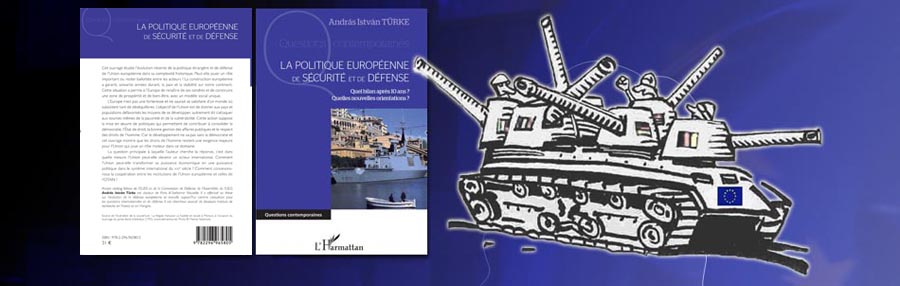
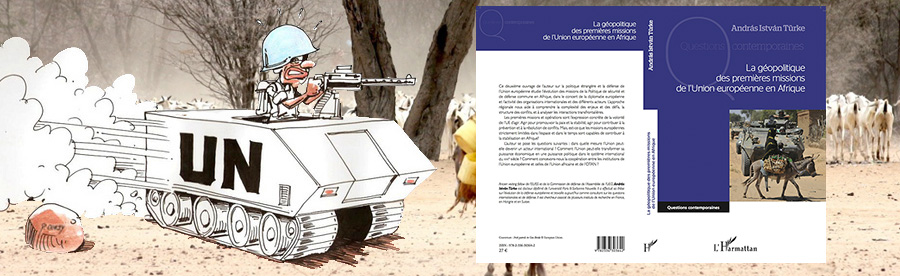
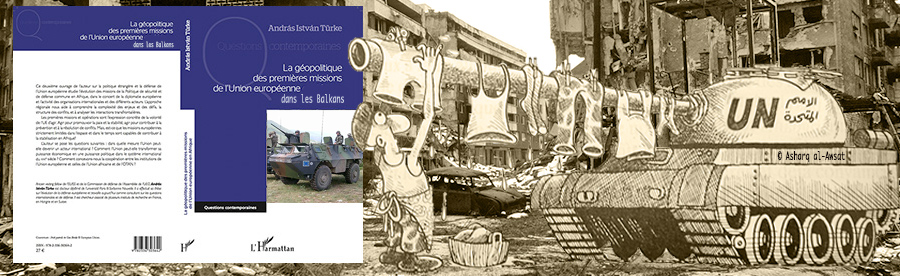
We are looking for sponsors for the English translation of these books, please contact turkeandras(at)gmail(dot)com